Get Cash for Your Business or Investments in 60 Days or Less - Chuck Sutherland
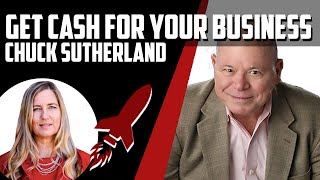
Chuck Sutherland walks through a six-step process to raise capital in 60 days or less by building relationships and using creative financing. He stresses starting conversations before you have a deal, matching investor needs to opportunities, and documenting everything with clear contracts. His approach relies on mindset, listening, and an abundance mentality.
Chapters
Without going to banks.
Awesome. I love it. Well, I'm really glad that you're here. I'm really glad that you're sharing some knowledge. Chuck, your knowledge is absolutely invaluable for this particular group because I think this is really where people get stuck, is not having cash, not having the ability to have liquid cash where they can make these investments and sort of living that paycheck to paycheck, icky feeling. And it never has been so clear as it has been when Covid hit. And suddenly people were like, without a paycheck. And as soon as that happened, lots of people were like, I am not going to be able to make the mortgage payment. Like, that's it. Like, I did not expect this to happen. I did not expect to not have a paycheck. And I think this kind of crisis can make people very aware of how important passive revenue streams can be. Do you agree with.
Yeah, absolutely. And then the gap is between where you're at now and where you want to go. And how do you bridge not having money to being able to have money to invest, to make money? So, like, how do you bridge that gap? And that's what I'm going to talk about today.
Awesome. Well, all right, let's get started. So you have. How many strategies are you going to share with us today?
Well, I'm going to share at some point. I'm going to share a six process.
All right.
And it's a simple process. But what I want to say first is that the process is that when I first came into the real estate in business, back in, and mostly as an investor or builder and developer now. And I first came in, I was, I was. Went to school at the University of Michigan to study real estate and learn the right way to do it. And what I. And when I got out, none of the thing I was taught actually worked in the real world, and we're still taught the same ways today is a way that doesn't work. It's theoretically really great. It's taught by professors in universities, but it doesn't, it actually doesn't work in the real world. So if I can let me share why that's so. So if you, if you, if you're an investor, real estate investor, or you're forming a business, the same process.
You have a dream, you have something you want to accomplish. So let's say it's a piece of real estate. So you spend your time, you look for a good piece of real estate, you analyze it, you get the cost of remodeling it, you do comparable analysis. You write a contract, buy it, you negotiate the contract back and forth. And then once you've got it under contract, then you got to get your construction costs and you put together a financing package, and then you get approved by the bank. And then theoretically, then you go get your investors or somebody to loan you money for the equity. And it doesn't work, because by that time, in a boom time, that deal's gone.
Yep.
And in a recession, when prices are really low and other people are out trying to buy stuff, that that deal won't wait around for you to go find the money. So we're taught the wrong way. We're just taught the wrong way. It just does not work. And it doesn't work because it's based in this idea that banks are going to loan someone off the street money. I started in the 70s. I started in the middle of a recession. And what I discovered was that if I went to the bank and.
And I went in there and I had wanted to borrow money, which I did at the beginning, nobody would talk to me.
Oh, whoops.
I didn't have may. Right.
Whoops. You froze there for a second. I just heard. Nobody would talk to me. And then you kind of went away. But you might be back.
I think you're here.
I think you're freezing just a little bit. But because your stuff is so valuable, I definitely want to make sure that you guys can.
Hear. Chuck, are you there?
Let me change the microphone. Can you hear me now?
I can hear you now.
Okay. Hopefully we won't freeze.
Yeah, looks great.
So where was I? So when I started, I could not find. I could not raise money to buy anything. So I had to. I had. I had to survive in the business. And the only way I could survive at the time was through creative real estate financing principles. And, you know, I worked on that for a long time, but it just barely got me by. It was survival. And then this one day, I had the dark night of the soul. I don't know if you've ever had those, but I had this dark night of the soul when I was sitting on my chair in a broken chair that didn't have legs on it because I couldn't get it fixed. And I was raising four kids as a single parent, and I had no money, and I was bawling my eyes out, you know, like, most guys won't say that, you know, but I was just, like, struggling. And I had this epiphany that I was doing my life, my business, My investing by myself. I was trying to do everything because my dad told me that partners were bad. Partners were bad. They would, they would, wouldn't be good. You couldn't. The banks were bad, they would lie to you. And I could not. And I, I said, can't go on like this. So I picked up the phone the next day and I called one of my person that I'd done a little work for as a, as a researcher consultant in real estate at the down times. And I said, I gotta pick your brain. He was a very successful rich real estate guy. And I went in and we sat down and talked. And by the time we got done talking for about two hours, he said, you know what, you know, you're a smart guy. I want you to come and work with me. I want to work on this new development we're going to do in the south, some self storage projects. And I was blown away. I didn't go in looking for a job, I didn't go in looking for a partnership, but I was offered something and we developed a whole lot of self storage projects. So this is the beginning of when I started putting together this whole process which was I gotta be talking to people now. Not when I got my act together, not when I got everything figured out.
I gotta be out talking to people now to raise money to get a deal going.
That's a really good point, is you can't get all of your ducks in a row first and then start. That's really cool. Actually. I was just telling a friend that I don't think my ducks have ever been in a row. I think every once in a while I get them in a huddle. And that's, that's about the best I could do for my ducks.
Even if they got them in a row, they'd be out of row pretty fast.
You're right, absolutely.
So what I learned in that was this was the beginning of this process that I started thinking, working through for myself, which was I talk, I got to go talk to people when I don't have my act together yet.
Yeah.
Because I can start a process and get a whole long ways along the way. And I started doing that with people.
And again I'm going to get, I'm going to share the process. But I started talking to people about different kinds of deals. I talked to a man I knew in that North Carolina and he and I were looking at the same property in North Dakota to buy a hotel. And so we just, I, I just called him up and said, let's Talk about this deal. And we formed a partnership and we went and did it, but we formed the partnership first. We didn't even look at the property before we went and did that. So this whole thing about getting it all figured out first does not work. And same thing's true with joint. People trying to raise money for their, like their business they want to open, you know, you're never going to have it all figured out in time. So let me just start walking through the process and then we can talk about it in a little more depth. So this whole process builds on two fundamental principles. One is that, for example, in real estate, people are more important than property. People are more important than property. It's all about relationships. In the relationships, you can find deals, you can find property, you can find money, you can find talent. The more you work from relationship, the better chance you have to make a transaction. And then the second part is that you really have to get outside the world of what everyone says about how to do things. You want to start getting in the world of creativity and thinking things through. I was telling you about the man. I formed the joint venture to do a remodeling, take over a big hotel and remodel it. Conventional hotel. And I was mostly on the boots, on the ground there. He was the guy with the money and I was the guy with the work ethic, you know. So I was up there and one day he calls me and he says, you know what? I just bought a 11 foot tall Remington sculpture and I'm going to ship it to North Dakota and I'd like you to put it out in the parking lot. I thought he was crazy. Like put it in a parking lot on a pedestal. I thought he was crazy. Who does that? So we put it. So I said, okay, I've seen a lot of his crazy things there. But we put it out. We put it out in the parking lot on a pedestal. And people came from all over the state of North Dakota to look at it. They learned that this hotel was being remodeled. It became a news focus. So that was not how you supposed to do things.
Creativity, though, I love it. I think that was really sort of out of the box thinking, I love it.
Yeah. And so we proceeded to buy public art and put it in the facility. Developed a reputation of being a ordered the arts. And it just. So that's an example of you got to go outside the box. And that was at the end. And then I was doing some more work up there in North Dakota too, is a great place to work in the Boyle patch was just starting to boom. And.
I'll tell you what got me to. I've written three books on creative financing. And how it got me there was. How I got there was I one day came home and I had. We're going to go second. We'll get to the. What the six steps are. But I developed. I went to the. If it didn't feel well, I told my wife I need to go to the hospital. And she said, what's going on? You never go to the hospital. I said, something wrong? And I went to the hospital and they diagnosed me with kidney cancer. And for a brief time, I literally thought I was going to die. I literally thought I was going to die. And I devoured that. Whatever time I had, I was going to take everything that I learned in terms of creative financing and, you know, give it to people through writing books. Because I thought that was the way that you get stuff out there. And a friend of mine during the process says, chuck, here's what you got to deal with. You got to manage your mind. You got to manage your mind because you can't beat the cancer unless you manage your mind. And so we. I went through that, wrote my books, and we beat the cancer. And so I started. That's where I started writing, writing things and teaching and talking about this whole area of raising money. And it was a. It was. It's really. You can see I'm a little emotional about it because it was a big deal to be able to start sharing this stuff in a way that people could use. So I want to walk through the process. I want to walk through the process as I kind of like how I learned it. And it is a six step, simple process. I just giving this right. The first step is that you do got to manage your mind. Your mind will stop you from starting. Starting is better than, you know, start is better than done. So if you're starting, if you just start things, but you got to manage your mind because your mind will keep you from going, you know, starting things because you won't want. Mind doesn't want you to make a mistake. We're so afraid of failing that we don't start. So you got to get your mindset right. And part of that is because we're going to start going out and finding money in an imperfect way. In other words, not. We're not going to know how it's going to go before we get there. So the first step is to start raising. To start raising money right now, not when you need not when you got it all figured out down the line. So I'm going to give you something called this. It's a statement followed by a magic question. It's a magic question. I've taught this to people who have done this and raised millions of dollars in 10 days. And here's what it is. I'm going to say the statement. So you're sitting next to somebody in an airport or this is people you don't necessarily know. You might have a little chit chat with them and small talk. You ask a very simple question, here's how it goes. I say.
I'm planning on buying some really good property with really good income in a really good location. Who do you know who might be interested in investing with me? I don't ask them. Ask them who they know because if I ask them.
This is before you even have anything to invest in.
Absolutely, absolutely. It's not the same as a blind pool. You're just asking people you know, you're looking for property to buy. Who do you know?
I'll say the whole thing again, which goes something and you can make it your own, which is I'm looking at buying some property in a really good location with really good profits and a really good cash flow. Who do you know who might be interested in investing with me? I have asked that question question countless times and my people, I've told it to ask people and almost always the person they ask will tell them somebody, they'll come up with a name and then they say, well, can I, could I invest with you? I only have $100,000. Could I invest with you? Would that possible? It happens, it happens. So amazing. It's amazing. I have a friend of mine out of Wichita, Kansas, which where I'm from and I told him about this and he was at the airport and he sat down, he was talking to a guy and they're as they're waiting for their plane. This was actually earlier this year and he was talking to the guy, he asked that exact question. The guy said, well, you know, I do, I am a hedge fund manager.
But I'd really rather invest my own money. Can I do that?
Wow.
And he asked the guy at a later conversation, that was the first conversation. Then they continue to build relationship because you don't even have a deal yet. You're just talking. And at some point he asked the guy that he talked to, he said if you had to, it was a pinch.
Maybe, how much money could you raise to buy it, buy into a deal? And he said, Well, I had to. Maybe eight, nine million. Oh.
Well, there you have it.
But it was completely unexpected.
Sure.
It was not predictable. And that's the whole beauty of this process, is that you don't have to try to do it in a predictable way. You just start talking to people. You want to build a relationship first, but it doesn't take 10 years to build a relationship. You can build the beginnings of a relationship in five minutes. Yeah. Especially if you listen to people, which we mostly are not taught to do. You listen to people. So that's the second step, which is to start raising cash right now by asking the magic question.
All right?
Then the third step is you want to raise the cash in the right way. So you've got somebody who said, they've got money, oh, I'd love to be investing with you. But the thing is, you don't want to put them in a bad deal.
You don't want to make an offer to them that's not going to fit what they're trying to accomplish. And so you want to raise the money in the right way. You want to find a place for them to fit into the deal.
Maybe it's a partner, maybe it's a lender. I know plenty of people that have borrowed money from investors and put a first mortgage on a property they bought as an example to cover that, to secure them, and both of them got a good return.
So you want to raise the money in the right way with each investor.
And then you want to have. But basically, these are all just like how you make it all work out. At the end of the day, once you have a person who's interested in working with you and you want to have the right deal for the cash, and then you want to structure the deal so that it's going to be profitable no matter what. There's ways to structure deals so that.
I don't want to say number three was raise cash in the right way and number four is structure the deal.
No. Number is find the right. Sorry, I didn't say that. So number four is find the right deal for that cash.
So you. So you. Before you get to structure, you got to find the right deal. You got to find the. If you're buying an investment or you're going to do some remodel, a property or you're going to build a building, no matter what it is, you have to then find the right deal for that cash because that person is coming into a particular transaction. You don't want to force them into a deal that doesn't fit them. That's the beauty of having conversations with a lot of people. If you have conversations with a lot of people and you're asking them these kind of questions, you'll have plenty of people that have money that they want to put with you. We live, we're taught, scarcity. There's not a scarcity of money, it's an abundance. In the last recession, there was billions and trillions of dollars put out there in the marketplace. Now we have billions and trillions of dollars being putting out there in the marketplace. There's no shortage of money. And so the point is, is that you want to, you want to find the right deal for that money because there's no shortage of money and no shortage of people who want to invest. So the fifth step is structure the deal. Right. So you've found a property, you found the deal that fits the money, and how do you structure it? And I'm going to say something that, you know, a lot of people I know in the real estate investing business do not believe in, which is, I do operate from that. There's enough for everybody in the deal.
Yep.
So you can actually work a deal out where everybody is satisfied with the deal. Now, I don't mean everybody going to make everybody happy. No, it's not about being happy. Are they satisfied with a structure that works for everybody in the deal? If there's enough for everybody, then you can afford to be generous in the transaction. But I've seen so many people mistreat sellers and property, trying to nibble and dim them down and beat them down, and they do the opposite of build relationship or they build relationship. It's a bad relationship. So you want to structure a deal. Right. And that means including with everybody in the deal, the sellers, the lenders. It doesn't mean everybody has to be happy with it. But as long as they're satisfied, you can maintain relationship. And guess what? Now you've got new people who know other people who can invest money with you or find. Find deals for you.
So you guys know that the reason that I invite certain speakers to talk is because their hearts are all in the right place, Right. We're talking right now about passive income and generating passive income. But we're not talking about generating passive income at the expense of other human beings. We're talking about making deals that happen, that benefit everybody involved so that the way you leave the relationship is better off than, than before you guys got involved together. And that's what Chuck's talking about, is generating an opportunity where they win where the deal's right for everybody. Where you win, they win. And the people that you're buying the property and everybody wins. Right. This is not like, let's see if we can scam somebody about this way or trick them into buying or trick them into giving it. None of that is on this summit all about creating relationship and building relationship and making it a win, win, win. And that's the abundance mentality. So thank you for bringing that to the forefront, Jack.
Yeah, my pleasure is. It is actually the most workable way to run a business. You know, you build goodwill with people and you never know. You know, we had a hotel in Dallas, and we had ended up in the Hurricane Katrina. We had. We had 255 rooms, and we'd run a special for people out of New Orleans because of the fact that we'd done it the previous year when there was a hurricane. And we had a lot of people come from New Orleans and stay at our hotel because we had a special look, we did the same thing again, and literally they couldn't eat the next day because their banks were literally underwater. And I reached out to a network of people I know and I said, I got to help these people. They can not only can't afford to pay for their room, they can't eat. They have no money, no job, no mailbox. There is no mailbox for the money. And I had people that I had built relationship with over the years who just sent money. They said, here, here's 15,000. Here's money. And it was like we had 100 volunteers the first weekend at the hotel, bringing everything from toiletries to food to shoes. It was like. But it was all built upon this structure, this foundation of creating relationships that work for everybody. The whole relationship itself provides support for everybody. And it's been a way, you know, I'm not trying to stand on a soapbox, but it's a way that has worked for me and I know for countless other people.
Yeah, absolutely.
So the last piece of this whole.
Number five is structure the deal right. And I know that we got kind of wrapped up in that, but structure the deal right is for. Right for everybody in the deal.
That's correct. Everybody.
Structure the deal right means. Okay, thank you.
Absolutely.
All right.
What's number six, then? Number six is you want to. This is a more of a technical kind of thing. You want to close the cash in the right way. So, for example, while it might be nice to shake hands with your best friend and say, hey, let's be in this together.
In business, it doesn't work. It's just not workable not to have clarity of contracts and clarity of agreements. See, you know, I love, for example, I love the way to put together a transaction is in a limited liability corporation because then everybody can, you know, everybody's kind of protected. You have your, it's a past, it passes through the income for tax purposes. So you get, it's just a simple, clean structure. But the thing I like about it most is you can figure out in the middle who's going to get what in the deal. It's not like 50, 50, it's like, how do you do this? Who's going to get the money back first? Somebody's going to get, puts up this money, they get their money back first and then maybe a return and then you split everything above that. You know, that's one way to do a transaction. And then there's other ways, which is we put the money in, I do all the work, I get paid something, but you get your capital back and then I get my capital back on the backside. That's another one. There's lots of ways to do it. So the point is you got to not only structure the deal. Right, you got to structure the entity, the contracts Right. For the parties involved in the deal. Otherwise it just won't stand the test of time. I've tried to do deals on handshakes almost always. Almost always I don't have the same memory of the deal. Sometimes after the fact, sometimes that.
And that can create burdens on the relationship. Right. Like I remember saying it this way. This is what I thought I meant to say. Yeah.
If you put it down, if you spend the time to write it down and who's going to do what and how this is going to work, then, then you have a lot of clarity and then it lends itself to continuing to build the relationship, business wise over the long term.
Yeah.
This all starts, this all starts, however, with that first piece, which is being out talking to people and building a relationship. Maybe five minutes, maybe, you know, five hours, maybe five days, maybe five years. You're building a relationship over time and then you're asking them a question that is designed to provide you what you need to do a deal with. The idea that's going to give them what they need as well so that everybody's going to win out of the deal. So that is the magic question. Which is, which is you start with the statement, you know, I'm looking to buy some property. Or you could do this One, I'm going to start a business, and we're going to. We're going to make ice cream in the park, and we're going to make. We're going to sell it to all the people that come to the park every day.
And then, you know, anybody who would like to be a part of that with me.
Exactly.
And you ask that question. And you know what, what's amazing is that people are. People are pretty generous when you're not asking them directly if they, you know, if they have, you know, if they'll invest with you. You're not asking them that. All you're doing is exploring. This is a creative process.
I like the way that Chuck is approaching this. Give me a heck yeah or a boy howdy or a yeah, man or wherever your local dialect is. I want to hear from the chat box that people are there. We want to make sure that you guys are playing along with us. I definitely have some comments in the chat box. Denise says it's so true everything in writing, regardless, even if it's close family or friends. That is absolutely true. Don't you think, Chuck? I think I've heard so many stories with people who really were friends and they just understood things a different way and they really, you know, it can sour a relationship very, very quickly if you don't have things in wr. And the more you put it in writing, the more everybody's clear on it right up front and, you know, the better the. You know that even if you just get an email out to them, this is my understanding of our deal, you know, that's better than nothing at all. Right. Just make sure that you have communicated to them and they've communicated to you that. Yep, that's what I see, too. And the more in writing, the better, especially with family and friends, especially.
Oh, especially because then you have. You have a different relationship with them, especially with family where, you know, like, you're all six years old again, you know, and it's like, well, you said this and you said that he did this and you did that. You know, it's like back and forth, you know, it's like, that's not going to go anywhere.
Yeah. And when your heart's in the right place and you're trying to make the best deal for everybody, it will go more smoothly. But still, you don't want to feel like you gave the farm away and somebody else is like, well, that wasn't quite even enough, you know, so you just, you just don't want to put yourself in a situation where you all don't think right up front you're getting a really good deal. I actually, this just happened with a really good friend of mine, and it happened in a really good way. Right up front. We were structuring a deal, and the more we put together, the more I was like, I think this is way in my favor. Like, are you going to have enough fun doing this? Like, I'm. I'm cleaning up on this, but I don't know if that's enough fun for you. I don't want to move forward until I know that this is going to be good for you as well. And tell me about that, because I actually put the brakes on. Like, I think you're going to be unhappy when this all shakes out and I'm making a ton of money and you're not making enough or you're not getting enough out of the deal. I was bringing them to a very large tribe and promoting them in a very big way, but at the same time, I wanted it to be really successful for them as well. And I just didn't feel like it was. So even putting the brakes on when you think you're getting the best deal, being like, is this, you know, is this gonna wreck the relationship later or, you know, does it. So just keep in mind that you're trying to do what's best for every single person in the deal, and that's you, your partner, and the audience at large. Yeah.
And we're talking about the long term. You know, we're not talking like this year. We're talking about long term. What are we gonna be doing in 20 years together? I. I still have partners from 30 years ago. 30 years ago. We have partnership interests together. And that takes some. It takes something strong to last for 30 years. Marriages don't sometimes even most of the time really probably lasts for 30 years, you know, and you know, it just. So that it takes something special in creating that relationship so that you're continually looking out for the other person as well as yourself in a deal. Because if you're taking advantage of somebody, they'll resent it.
Yeah. Yeah. So I totally agree with that. Really. I love your come from. I love that you're coming from the heart and making sure that people get what they need in order to build relationships that work long term. And I love it. So let's talk a little bit about how you can do this as quickly as possible. I love. Right off the bat, I love that you are looking for money before you even have a deal. You know, When I teach entrepreneurs about building courses and throwing new products out there, one of the first things I want you to do is make sure that you ask your people what they want before you build it. Right. So go out to them and say, what would you like for me to create for you that you would pay for? And make sure that they would be interested in buying that from you before you go out and create it. Chuck has done the exact same thing, only with investment money. Right. I want to find people who would be willing to invest me with me when I do find the deals. And I'm not asking them for money today, but I am asking for them to start building relationship with me so that I can figure out if we're going to be good partners when the time comes. Because the other piece of that is if you have a list of 10 people and they've all said, sure, I'll be your partner, and you haven't taken time to build relationship, and you take money from all 10 of those people, then chances are 1, 2, 3, 5 or 9 of them are going to turn out to be not the partners that you thought they were going to be. Right?
Right. And you know, you can, you know, you talked about how, you know, doing it in 60 days or we're talking about doing it in 60 days or less. Absolutely. That is easy to do if you're talking to enough people. If you just do this once every 5, 9, 10, 20 days, you're not going to build up the momentum because again, there's a abundance of people out there who want to invest their money to make money or for some other purposes, whatever it is. So you want to be talking to people and asking them these kind of questions and not have to have it right and perfect when you're, when you're starting out.
Okay.
I want to pull the audience two things I want you to say. Yes, I would like to be involved with Chuck the next time he does a deal because he's an honest, totally, totally great person. Right. And the next time he finds a deal, I want to know about it. Or option two, if you're not willing to do that, which is totally fine if you're not ready to do that yet. Option two is, I am willing to take Chuck's advice and ask people if they are willing to invest with me the next time I find a really good deal. So throw that in the chat, because you got to be on one or the other. Either you have the money and you want to hear about good deals, or you don't have the money and you want to start making something happen. And you can't really do that if you're not willing to take the initiative and actually step out there and make sure that you are asking people if they would like to be. If they know any investors or if they know anybody who would want to invest. So make the commitment now. Thank you guys for already making the commitment. There's a lot of people who are willing to make the commitment. Oh, both options are good for me. Thank you, May. That's awesome. Want to hear about the deal? Bonita wants to hear about the deal. So perfect. Alright, so we got some people with money, some people with time. And whichever way they're gonna, they're willing to go out and make the stretch and do that. So thank you guys for diving in and answering that. I appreciate that. Chuck, you actually have something really cool for our folks and we're not selling anything here today, but you do have something really cool for our folks. That's a checklist, is that right?
Well, the three books I wrote on creative real estate financing.
Back a few years back, like not that long ago, I.
Made checklists for how to think through processes of different ways to do deals based on the different strategies I had in the books I created. And the strategies were all like real world. Either I did them or people I know did them for either residential or for commercial. So this checklists are designed to walk through and like, okay, could I do this, could I do that? Maybe this would work. It's like a brainstorming checklist kind of sheet. And I like to give that away so that people can start thinking through the. Even if you know, the part of raising money is also raising finance and sometimes that investor is the seller of a property or maybe it's the people that would supply your business with different materials. I mean it's a. You have people around you. I think of it like seller financing, but it's like other people financing and supporting you. So that's. That's. That's the offer, that's the gift I have. It's there about. I think it's a total of about 30 pages. Of 30 and also has 30 pages.
That's awesome. Check. I mean to be able to tap into your knowledge and your years of experience. And I know you said 50 years. That's very hard for me to believe. You must be started when you were two. But you are an awesome human being to share that large amount of experience with our friends and family here on the Passive Income Web Summit.
I really appreciate that it is my pleasure. My pleasure.
Yeah. I appreciate you putting that together for us. So fantastic. Would somebody go into the chat and grab that link and make sure it works? Just so that I know that you guys are out there and that things are getting through all the way to you? I would appreciate that. And Chuck, you have given amazing value. It works fantastic. Thank you, Marguerite. And thank you very much for everybody who said, I'm interested in working with Chuck. I'm interested in hearing about deals, I'm interested in talking to other people about money. And I'm willing to take his advice. Thank you for that because he's a smart cookie. It's like having your grandfather whispering in your ear, kimberly, you need to do it this way instead. And it's like, that's right. I gotta remember to do it that way. I gotta remember to put myself out there. So it really, really good stuff tonight, Chuck. I really appreciate it. So what can people do if they want to work further with you? If they could. If they connect through this checklist, do you have programs available to help people with funding? Do you have programs available to help people with deals? What? How can people work further with you?
Well, they can go on my website where they'll find the checklist and they could find a link and, you know, they could, you know, if they wanted to work with me, they could, you know, apply to work with me. But also, really just, I got my email address or linked in there. And so, you know, just so that I, you know, I'm not a spring chicken, so to speak.
You gotta move fast with Chuck. He's gonna retire any minute.
And I want to get. I want to get as much of this knowledge out as you could say, a legacy to people so that they can use it and not be stuck with old models that don't work or work for people that have a billion dollars.
Yeah, it seems like some of those models, like, are the ones like, okay, well, so and so can definitely do that because they've got every dime available to them. And I don't. So how do I even get started? And this is a really great way to get started. Like just having conversations, building relationships, getting started before you're ready and doing it without all your ducks in a row. Just start. Just start.
Yep.
I love it.
Just start and then. And be willing to. Be willing to not go the way you thought it was going to go. Or like, it can go any different way. It's serendipitous.
Sometimes I do want for somebody to talk a little bit about, you know, like when there are bumps in the road, ride through them. You know, I feel like, you know, it doesn't like no deals go, go through as smoothly as we think they will. And you've just got to be able to ride with it and be like, you know what, their intentions were in the right place. My intentions were in the right place. Their intentions were in the right place. Nobody was trying to hook up anybody with anything bad. And I know that based on our relationship that even if things didn't go the way we expected, which lord knows oftentimes they don't. Right. It does not mean that anybody's bad intentions were there. So I wish somebody would just train a little bit more on, you know, bumps in the road. And they happen all the time. So just let it go and be easy with the people that you love.
Yeah, I heard somebody once, somebody once told me that you can either look if you're driving a car, you can either look in the rearview mirror or look forward, but you can't look in both places at the same time. So if you're going to go someplace, look for where you're going.
That's a great, that's great advice. I love that you have a come from an abundance mindset. I love that you have great things to share with people and that you want to have a win win and your heart is in the right place. And also, Chuck's wife Marilyn is amazing as well. They are like there's this super couple that are totally adorable that work together and she's got her business and he's got his and you guys are absolutely a sensational couple. So thanks so much for being with us today.
All right, well, we are at time, but before I let you go, are there any final words that you have for our crew? Any last minute words of advice?
Don't sit on the couch, go do something.
Netflix can wait. That's our.
Alright, great. Next up is. Oh my gosh. Thanks, Mercy. Next up is me. I'm going to teach you all about how to create and sell an audiobook on Amazon and Audible and iTunes in 60 days or less and get those royalties going for you. All right, ladies, I think I'll stay.
On for that one. I think I'll stay on for that one.
Yeah, we can make it up as we go along. It's awesome. Actually, I do have an audiobooks production company. We've produced over a hundred audiobooks and many of them in way less than 60 days. So definitely a doable thing.
All right, we'll see you later.
I appreciate it. We are going to dance our way out of here. If I can get my music playing again, because I like dancing. And just hang on until the music ends. We'll just dance together. It'd be great.
About to dance today.
All right. That was an amazing expert. We're here with Kimberly, who is the.
Rocket fuel for entrepreneurs. She's on a mission to help you launch your business.
Nobody lives out loud better than Kimberly. Bye. Bye.