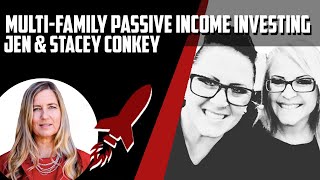
Multi-Family Passive Income Investing - Jen & Stacy Conkey
Transcript of a YouTube session (Passive Income Web Summit) hosted by Kimberly Crowe with guest Stacy Conkey discussing multifamily real estate investing. Covers definitions (small multifamily vs. apartments), Stacy’s background in property management and turnarounds, operational best practices (strict rent collection, systems), comparisons between single-family and multifamily strategies, getting started with little/no cash (partnerships, private lenders), wholesaling and remote wholesaling, investor packets, vacancy/value-add opportunities, room-by-room rentals, and cautions (local laws, bad property managers, Section 8 concerns).
Chapters
Welcome our host, Kimberly from Entrepreneurs Rocket Fuel Web Summit and a warm welcome to you. Thanks for joining us. And we've got an exciting guest coming right up. Kimberly, take it away.
Well, hello folks. It's Kimberly Hobscheid from Entrepreneurs Rocket Fuel and the Passive Income Web Summit. I'm excited we have Stacy back. She is coming to talk to us about apartment housing, multifamily housing. We're very excited to have her back and be able to tap into this resource. Stacy is also from San Diego, Beautiful San Diego, gorgeous out here and has some really good tips for us. So welcome back to the program, Stacy.
Thank you.
Awesome. Glad to have you here. All right, so yesterday we talked a little bit about single family housing and being able to start getting into the investment game in real estate. And today you're going to talk about multiple doors, multifamily housing. Whether that is, I don't know whether that's apartments, multi like major, major apartments or even just smaller duplexes. Is that.
Yeah. So multifamily essentially refers to it depends on the context of a conversation. But to me, when I talk multifamily, it's really anything that's more than two units. The way that we differentiate is by saying small multifamily, which tends to refer to two to four units, which would still be considered residential real estate and or five or more units would be five to, you know, 200 units. We consider those apartment investing. It's considered commercial real estate from a financing standpoint. So I'd say small multifamily and then apartments and that's it's really four units and down, five units in, up.
Got it. Okay, cool. All right, so tell us a little bit about how you have gotten into multi family and how it has propped up your passive income streams.
Sure. So I have, I've been investing since 2003 and pretty much in the first year it was in 2004, I started immediately with getting into duplexes. I did a lot of like fixer uppers and would get them rented and then refinance them. And so I started off pretty early in my career getting into multifamily. When I started a property management company in 2004, 2006, it was in Detroit. And my clients, many of which were from California, would be like just jaw dropped by the prices there and how low they were compared to they would buy these 20, 30, 40 unit buildings because they seem so cheap. So how could you go wrong? And they'd say, okay, here I want to manage them. So I was running a property management company and investing. And the thing that I learned really quickly is, wow, buying a multifamily building, like you better be, you better know what you're doing going in. But my clients didn't. So I had to learn really quickly how to take something that was a disaster from a performance standpoint and really turn it around into something that was. It was on systems. And every month, like, the tenants knew what to expect. They knew when the rent was due. They knew how to. How to ask for something to be fixed, like, everything. So I learned back in those couple of years how to do. They call it a value add now. I was always calling them management turnarounds because I was on the management side. But yeah, so I learned how to do, basically take underperforming buildings back then and turn them into performing. And the thing about apartments and multifamily in the five plus, the value of that real estate is based on the net income or the net operating income of the building. So your ability to go in and improve the management and improve the revenue and lower the expenses and increase the net income has a direct impact, a very large impact on the actual value. So that was where it all started for me. And I just have a passion for doing it. It's. First of all, it's just fun. It's fun to increase the value. It's fun to turn something that's not performing into something that is. So that's kind of where it started for me. And then, you know, we've done performing buildings, we've done underperforming, we've done value add, we've just done regular buy and hold. So a little bit of everything. And I don't know, it's just. It's fun to have all those different rents coming in because it helps to spread the risk. Compared, like if you work for someone and you have paycheck coming in, that's nice. And they seem secure, it seems secure. But, you know, your entire ability to live is relying on one company or one person making the right decisions to keep the company going. And when you're multifamily, you have a lot of different people paying rent and all of their employers paying them to pay you. So it helps to hedge the risk of just your financial risk. So I like multifamily for that reason.
Well, I love that you came into this world sort of from the property management side, so you could see some of the bumps and bruises that people were taking and be able to come around the other side of that and Be like, all right, when I'm investing in my property, I'm going to make sure that I choose properties that are X, Y and Z. Tenants that are X, Y and Z. You know, in neighborhoods and this particular neighborhood, it doesn't do well. In this particular neighborhood, it does. What did you learn from being a property manager that that changed how you showed up when you were a landowner?
Well, I was already. Yeah, I was already investing when I started my property management company. So I came at the property management company standpoint, from the investor standpoint, but then I was like, wow, there is so much more to being an investor than just what I had thought because now I was dealing with bigger properties than I had purchased so far. But definitely one of the biggest lessons that I learned from the property management standpoint that I've carried forward with me in all of my investing is now this is when it's already performing. There's a whole process that you have to go through to create a performing asset out of something that was not, but once it's performing. One of the biggest shifts I made very quickly was strict rent collections. And we talked about this a little bit yesterday. But is having a process in place, like, rent is due on the day it's due, and you have whatever grace period you have, and once that passes, that very next day, the notice to pay or quit goes out. And when you establish that kind of cadence with your. With your tenants, they know there's no wiggle room. Like, it's okay for you to call and say, I'm late. I'm like, okay, I appreciate that. There's going to be a late fee. There's also going to be a notice to pay or quit. So if you see that come out, just know the process has started. Obviously, if you can get your rent taken care of before we hit the time, we would go to court. We don't want you to move, we want you to stay. But the process is starting regardless. And that way, if someone was just BSing us, frankly, about their excuse and they were just gonna not pay. We've already started the timeline, but it sends the other message, like, we're not messing around. Like, this has to be your highest priority.
Absolutely. And I think that sometimes people do need a few extra days, but they sometimes feel that those few extra days just got like, maybe they just forgot. And now they're regularly paying on the 6th or they're regularly paying on the 10th. And that seven days warning is like, no, in seven days. That's it. Right? So. So it's totally fine that you didn't Pay on the 5th. I mean, not totally fine, but I got that you didn't pay on the 5th. Maybe you need a few extra days. You got seven days before you need to be out. Now, it's different in different states and different rules. There are some that are more tenant friendly, some that it might take you forever to get a tenant out, but making sure that you're consistent. We talked about this yesterday. Consistent with everybody. And not just doing somebody a favor because you like them, but across the board, you put that notice on every single time and give them the appropriate warning. And maybe they did just need a few extra days. Maybe something happened and they, I don't know, caught a cold and didn't have access to their laptop to pay you. I have no idea. But sometimes it does happen. And giving them that notice and letting them know, no, seriously, we need to get this knocked out is as long as you're consistent with it and it's not personal, then I think it's fair across the board. Yeah.
And the thing when you're not that I want this whole thing to go down the route of eviction, but you know those in some markets it's 10 day notice to quit. Some it's a five day notice. So depending on what market it's in, that notice just creates the timeline that allows you to go and file it in court. Even then, as long as the tenant pays it off, plus their court fee, whatever you incurred, like they don't have to leave, they can still stay, but it puts you in a position that if they don't get caught up, you're not now starting from scratch, 25 days into it. Because the timeline, it takes as long as it takes. In some markets you can get someone out in, you know, 45 days. In some markets it takes a really long time. So you need to start the process early as possible. And of course, if they end up paying, cool, then we'll just cancel it all. But they do have to pay. So I think that was just the biggest thing is making sure that, that the message is sent. Like, I will do my part by making sure that you have a clean, safe, functional home, that it's repaired when there's an issue. Your part is to pay your rent on time. But if you don't, this is the process and we don't want you to leave. But you can't stay if you're not paying. And just being. It's like loving, it's like hard, it's just, it Is, it's just these are the rules. Don't put your nails and your new rims at a higher priority than your rent because it doesn't fly here. If your rent isn't paid, then we start the process. It's just really consistent.
Got it. So let's talk and switch gears a little bit and talk about the advantages of having multifamily and how you get into it. Because I know a lot of people are like, gee, that'd be great. But buying a house, even a small little townhome might seem a little overwhelming to them. But then they might think, well, there's some advantages by having that multifamily aspect to it as well. So share with us a little bit about what it's like to enter your first multifamily deal.
So multifamily versus single family homes. It's interesting because from a strategy standpoint, you will you tend to make more equity or have the value of the property go up more if it's single family because there's more buyers out there. But the other side of that is there's much higher risk, whereas multifamily, the risk is lower. And here's why. When you have, let's say we're talking about a four unit building, right? Something that's fairly easy to get into. A four unit building, that means you have four different rents coming in. If one of your tenants doesn't pay, you still have three rents coming in. You're probably fine covering the mortgage, covering all the expenses. Yeah, it would have been nice to get all four, but you're still okay with three. With a single family home, if your 110 it doesn't pay, you have no income, you still have to pay the mortgage, you still got to pay the taxes, utilities, like everything. So multifamily from that standpoint actually reduces the risk because you have more rents coming in and it's not any harder or easier to get into than a single family home.
Look, I get a question.
I was on mute. Sorry. So, yes, I actually do have a question on that because you said it's not any harder to get into. It's not harder to get into multifamily homes and own an apartment complex than it is to own a single family home.
Yeah. So if you think about the whole process of what it takes to get an investment property, you have to select your market, right? That's the same analysis. Regardless, you have to select your team. That's the same process, regardless. The main difference is in how you analyze it. Whether you're analyzing it as a single family home or analyzing it with multiple rents coming in. Like, the analysis is still similar. If you're, if you're rehabbing, you're still hiring the contractor. Whether it's two units or four units or 10 units or one unit, there's still management of the contractor. There's still a property manager in place. So people think that it's this really big leap to go from a single family home into multifamily, and it just isn't. It's a mindset shift. And now you have. If you were managing it yourself, it would be different. But I am talking about being the CEO, not being the landlord that's going to get burned out because they're trying to manage their own properties. That is not something we condone at all because you're just. You're basically taking on a hobby that's going to burn you out to death and then you're going to end up being one of those motivated landlords. So what we teach, what we do is you hire professional management to manage the property. So getting into it, you're still dealing with all of the same things. Analysis, due diligence, lending, funding, closing. Doesn't matter whether it's 1 unit or 10 units. That whole process is the same. The due diligence is a little bit more hefty when you have multiple units because you're looking at multiple leases to verify. But it's not a big difference. It's more of a mental, mental difference. Obviously, financially, if you get into higher, higher units, depending on the cost in the area, you might end up investing more, but not necessarily. If we buy a house In San Diego, one unit, you know, or 20 units in some Midwest town, it's going to be the same price.
Yeah. And your diversification of people in it, having more people in it in different properties and having those paychecks come from a variety of different people can really reduce your risk because you're really just doing diversification. So I love it. Yeah. So do you primarily do deals outside of the San Diego market?
Yeah. So San Diego doesn't make any sense at all from investing standpoint as a cash flow market for us because it costs so much money to get into a property here. And the rents are. Although the rents are high, they're not that high to make it financially doable. So we do all of our investing in the Midwest. And a couple things, even if the numbers technically work here, which they don't, it costs so much, it takes so much capital to get into a deal here in San Diego compared to a deal in St. Louis or Kansas City or Indianapolis. Like, we, you know, we've bought duplexes before for 40 to 50,000. That will put, you know, $40,000 into, in rehab. So we're all in between 80 and 90,000 and we'll pull in $1,500 of rent. You know, when you do that over and over and over, like, we couldn't, we couldn't even touch numbers like that in San Diego ever. And just the, the ability to get into deals, it's just so much easier because it doesn't require that much capital, which means you could do more deals and have more rents coming in and really build a portfolio that then appreciates over time. Rents go up, market rents go up. And as long as you're keeping up with the property and raising them, the value of your portfolio is increasing also. So what if you don't have a.
Whole lot of cash to get in? We have some people who are like, I definitely want to play in the real estate game, but I don't have a lot of cash to get in. In the front. How much do you need in order to get started with multifamily?
You really don't, you don't need to have cash, anything to get started. But let me qualify that statement. When I started back in 2003, I did not have my own funds. My credit was like, it was all right, I did not have my own funds. So but to me, I was like, I don't care. I will figure out a way to do this. So when you're getting started, if you don't have your own capital, you're not going to be buying the building on your own, with your own ownership without help. It's when they talk about no money down real estate, it doesn't mean, it doesn't mean, it doesn't require capital. It just doesn't have to be your capital. So when you're the person who's learning how to do this and you know how to go to any market, usa, identify the market, build the team, get lead generation coming, you know how to analyze it, you know how to do due diligence, you know how to close it, you know how to manage it, or you have hired the property manager or the contractor, you have something very, very valuable that a lot of people are never going to take the time or invest in themselves to learn. So there are lots and lots of people who want to get into real estate that have no idea how to do it. And they're not going to invest the time to learn or figure out or be here on a web summit to see what they can learn. They're just like, I want it, but frankly, I'm just too busy with everything else. That's the exact person that you want to be networking with as either a potential partner or as a potential private lender. Because you can really serve them. You can help them get into real estate. They can help you by providing the funding. You bring those things together, whether it be in partnership or through a private loan. Now you both get to benefit. And that's how I started. That's how I started growing. And eventually, as I was making enough money on my portion, I didn't need to have partners anymore.
Well, I think if you are starting out, I mean, it's, you're either trading your work or your cash. And those seem to be like, you either have the chutzpah and you're ready to go for it and you're ready to learn, or you have the cash and you're ready to do deals and sit back and let other people bring you deals. And you can go from one to the other because as you grow and you learn by doing, you can also learn to evaluate other people's deals as well. So maybe somebody comes to you with a deal and says, hey, I'm ready. You know, like, I've been bird dogging this deal and it looks really good to me. You'll know what to look out for as an investor once you've been through a few of them. I bet, you know, people will bring you. Do people bring you deals from time to time and say, hey, Stacey, I think this would be a really good one for you and Chet.
Yeah, well, we actually, what we see more of, we do have that time to time, but we see more of is like people who are in our mastermind. We have some people who are going out and finding the deals and they're like, well, I'm not ready to be a buy and hold investor yet. But we have more of our people in our mastermind are like, well, I'm looking for buy and hold. So they end up like wholesaling the deals to each other. Like one person finds them and they basically sell the deal to the other people in our mastermind. So they're closing on them. So it's like we see a lot. What's that?
Yeah, let's talk about both of those things. So you said wholesaling and then you also mentioned your group. So I'm going to put in the chat box the Facebook group for passive income real estate investment investing. And it is a group that you can join. It's private, meaning that you have to answer some questions in order to get in. So that it's just like entrepreneurs rocket field. But there is no charge to join the passive income group. So go ahead and go on in. I think one of the questions is, where did you hear about this from? And definitely answer that it was from the Passive Income Web Summit or Kimberly Hobsheid or whatever you want to put in there. But that would be awesome. But then when you join the group, then you're going to be involved in a group, sort of a mastermind with other people who are wanting to do deals, some people who are wholesaling and some people who are. Who have investment capital. So that said, tell us what wholesaling is and give us sort of a rundown on that piece.
Sure. So wholesaling is, let's say that you're like, you want to get into real estate, you don't have the capital yet, and you're not maybe ready mentally to buy and hold something. There's money to be made in the skill of being able to go find and vet a deal. So for example, there's a lot of people who, they love to have $1,500 a month coming in with an only, you know, $100,000 investment. And. But they have no idea how to find that. So someone who wholesales is the person who's going to go do the market research, the lead generation, building the team and all that. Write an offer, get it accepted, do the due diligence, and then say, okay, here's all the numbers, here's the deal. This is the value of the property. Here's the market rents, here's what it's rented for right now, or here's how much rehab it needs, depending on the project. And this deal is available for X amount of. There's some fee that they would charge, usually between 2,500 and $5,000. So that wholesaler makes, you know, a quick couple thousand dollars for their efforts. And they're like, cool. Maybe they're just, they're using that money to live on and they're not ready to buy and hold yet. But then the buy and hold investors like, cool, because that saves me a whole lot of time. So there's a place for, you know, for both. Both. It just depends on where the person who's doing it, what their goals are. If their goals are buy and hold, you're probably not wholesaling, but if your goal is just to make some quick cash, that's a great place. It's a great way to start.
Awesome. So if you guys are in the chat, throw a note in the chat. If you feel like you might be more interested in wholesaling, which is, I don't have the cash, but I do have the time, and I'm willing to do some learning and figure out how to start playing in the sandbox and. Or if you're like, nope, I really. I just want to figure out how to make my money. Make money. If you're. That definitely put a note in the chat box that you are. What would you call that? A passive investor.
Just that you're just investor. That you're just an investor. You're either the wholesaler or you're the investor. Yeah.
Okay. So if you have the cash and you're wanting to invest. Now if you have the cash and you're wanting to invest, you could do it a couple of ways. You could actually do it while somebody else is doing the work or hire a team out, or you can do the work yourself. But when you are the investor, you're probably making. There's. There's money to be made on all pieces of it. Finding the deal, working the deal, and funding the deal. Is that right?
Yeah, we don't. We don't promote people doing the work. When you say doing the work, I guess I don't know what you mean, but we don't promote people going and, like, physically doing any of the work. We always say, like, yeah, okay, but, like, doing the work of, like, finding the team and making the calls and bringing the deals in. Absolutely. If you. If most of the people that we work with are doing the whole thing, it's just we have probably 15 people in our. In our group who are like, hey, I love all that. I want to go there. I just want to start my wholesaling. And we have, like, this whole other community. We have 25 people, 2500 people in our group who are like, I'm ready to invest. So, I mean, if you could save me all the. All that time and bring me a deal, I don't care about paying you because you just saved me, I don't know, months of figuring it out. So it's just, you know, there's just. It's like the best of both worlds, and people can work together.
Awesome. Okay, so Wade says wholesaling. Rita says wholesaling sounds like a good strategy for me to get into Real estate investing. Okay. So let's. Let's sort of rotate toward wholesaling. So it looks like we have people that are looking to get started without cash. So do you want to speak a little bit to that when we're talking about multifamily?
Sure. So, like, we have. We have a wholesale course that we launched, I don't know, about a month and a half ago, maybe two months ago. And one of the things I told everybody when we started we launched that I was like, look, there's so many people who teach wholesaling in a model that you kind of have to be where you're wholesaling. Well, I'm not. First of all, I don't. That model doesn't work in San Diego when the prices are so high. So I'm going to teach you how to do something different, which is you have to go find the people who are interested in cash flow, because you can go find cash flow properties all day long. They don't even have to be discounted. They just have to work for that person. And your job is to go find that deal, build that team, find the deal, vet it, and connect it with that buyer. And so our approach to wholesaling is. It's all virtual. We call it remote wholesaling. You don't have to leave your house to do it. You're not putting up signs and driving around looking for fixer uppers or talking to desperate sellers. Like, we don't teach any of that. It's. First of all, it's just. It's been taught to death. And it's so competitive and it's expensive. People are sending letters and skip tracing, and we don't do that. Everything that we do is about relationships and building relationships with people. Hey, what is it that you're looking for? Oh, you want passive cash flow? Well, if I find a property that's bringing in, you know, that's got renters in there already, it's already coming in. Is that something you'd be interested in? You know? Yeah. Okay. So you build a list of people like that, and then once you have your deal, you're communicating with those people and saying, here's the investor packet. Has all the information about the deal and here's all the due diligence. It's already been done. Here's what the numbers look like.
So you're looking to build relationship with multiple people who have. And we actually have had several people on this web summit who do different real estate pieces. Mike Wolfe was on before we actually have Another guy, Hawk, who's coming on later, who does Airbnb stuff. All kinds of different people who figured different ways to handle real estate. But as a wholesaler, you probably are looking to build relationship with multiple people who would be wanting to buy deals or create opportunity or take a look at the deals that you have and then you teach. Maybe. I don't know if you teach this, but share with us, if you do have a course that teaches people how to put that investor packet together to say, hey, here's the deal. This is what I want for it and this is what you're going to.
Get out of it.
And this is like the picture, maybe pictures of the property and things like that. Is that what it would. Pretty much. I mean, as an investor, that's what I would want to do.
Yeah, that's that, yeah, that's something that we teach in our wholesale courses. We have like a template that we've put together for our wholesale people to be able to put together this really nice, professional looking presentation that they can then send out to their wholesale buyers and say, here's what the deal looks like. Here's the due diligence that's done. Here's what the market rents are. Here's the proof, here's the arv, here's the proof. Here's what's going on in the area. Here's what the market has been doing over the past 10 years as far as population. So we teach them how to put together. It's almost like I tell them, it's almost like a sales document. You're saying like, here's all the things, here's all the benefits to you if this is a deal that you want to step into. So. But yeah, that's. Yeah, the investor pack is definitely a key part of that.
Awesome. All right, so start working on relationships. I think Chuck made a mention last night of talking to people sort of just pretty much everywhere. Like, I am looking at getting some really interesting properties together. Do you know anybody who might be interested in working with me when I find a property that is worth moving forward on very quickly and then starting to build that reputation, starting to build that, that group of human beings that you can reach out to when you do find the deals that are ready to go? And then when you put the deal together, whether it's multifamily or single family, being able to reach out to all of those people and saying, here is the deal that I have, would you be interested? Would you be interested? Would you be interested kind of at the Same time and then being able to build those relationships and go forward with that, that's a really good way to do wholesaling. If you are bird dogging deals now, how do you find these deals? Where do you go to find multifamily deals that are good enough deals to attract investors? What do you look for in a deal and what do you shake your head in? I mean, I know I've seen a few like that is not going to make anybody any money. I don't know why anybody is even looking at that one. Right. Primarily in San Diego, but that's beside the point. Yeah. So tell us what you look for when you see sort of a deal brought to you and what would make it and what would not?
Well, it really depends on what the. Like what is the strategy? What is the intended strategy? If the intended strategy is this is a property that is for cash flow, then what you're looking at in the deal is does it produce positive cash flow? What is the return on investment? How much of a down payment is it going to require? Then how much of a return on investment am I going to make and is that something that's going to be appealing? So if I put together a deal that I'm going to wholesale and at the end of the day it's going to give someone a 4% return on investment that's not going to be very attractive to them, you know, whereas I put a deal together and show them, look, you're going to have a 10% or 12% return on investment. Plus you're going to have an asset that appreciates over time with tenants that are already in their management, that's already in place. It's a set it and forget it kind of strategy for them, you know. But it's just. So what I look for is that it is positive cash flow, that the, the asking price of the property and the rents are at least in line with the 1% rule that on a monthly basis the property brings in income that is at least 1% of what the asking price is.
A little bit yesterday, but let's. For the people who are new to the call today, let's talk a little bit about that. 1% means that if you have a property that's $200,000 in, in the sale price, not your mortgage, but the sale price, $200,000, you're looking for $2,000 a month in rent. That's the 1% rule. Ideally that is the best math to go with. If you can get more than that, fantastic. But many Properties don't pencil out at that, they actually pencil significantly below that. For example, you might have a half million dollar house in San Diego or a million dollar house in San Diego that there is no way you'll get $10,000 or $5,000 a month in rent in order to get that 1% rule. So you would have to have a ton of appreciation to make up for it. And you can't really guarantee appreciation over time. Depends on when you buy and when you sell, of course. And California, the, the markets fluctuate so much. I bought one of my properties in San Diego 20 years ago and it was $485,000 and it was the top of the market at that time. Now it's worth 1.3 million, you know, and so that's a significant amount of appreciation. And it took 20 years to do that. Now there have been times in between where it was a million dollars and went down to 790. You know, that's like, oh, I just took a $200,000 hit. Did it really? I don't know, like, it depends on when you buy and when you sell, right? So now it's worth one point. If I sell it now that's awesome. If I sell it. If I sold it when it was 790, it still would have been more worth more than when I bought it. But you know, it's just that whole, you cannot, you cannot guarantee appreciation at any given time because you know, the people who bought it at 1 million and there were many people that did bought, you know, bought in at the million dollar price and it went down to 790. Now they owe more than they, than they, you know, they might have an 800 or $900,000 mortgage on a house is worth 790, you know, rough, rough times. So you can't really guarantee that. That 1% rule is a really good rule to look at in order to make, to make that profitability work month after month. Now you know about vacancy. Can we talk a little bit about vacancy, like the turnover in properties? What do you look for when you see properties that are out there and you're doing evaluations, you're like, okay, it's at the 1%, but it's got X, Y and Z, which are going to indicate maybe a higher vacancy or turnover rate.
So when I'm looking at, let's say I'm looking at a 20 unit apartment building. If I see a lot of vacancy, what I look at, what I see is, okay, there's an opportunity to do A value add project, because the current purchase price of the property is going to be based on the financial performance of the building. Well, if there's four or five vacancies, that means it's performing low, which means I'm going to pay less for the property. So if I can come in there with focused attention and in communication with my property manager, who's going to be doing all this, get those four or five units filled, that greatly increases the net operating income of the building, which increases the value. I think one of the big differences between buying a single family home in San Diego and yeah, you can definitely get a large appreciation over time. It depends on when you buy. And so there's.
We just.
We don't do that because for us it's like, that's a gamble. We're more cash flow investors. So, you know, if I'm in a market and the. Well, the market value doesn't shift like that when you get into apartment buildings, because the value of the property is based on the performance of the property. So if you let your property, like, you know, just fall apart and you're not, you know, operating it well, then the value will go down, but it's less driven by the, the ups and downs of the real estate market. And even so, if you're buying it for cash flow and the value goes down, like in that case, by 200,000. Okay, good to know. It doesn't matter because I'm not buying it for that. I'm buying it for the rents coming in. And on a long enough timeline, the value will go back up. But it's multifamily. Over five units just isn't valued that way. It's based on the performance, so you have a lot more control to mitigate risk. So if there's vacancy when I'm buying it, personally, I love that because that means that there's a lot of upside to it. You know, if you're buying something that you're buying into cash flow immediately, then that would be something you'd want to, like, back away from. Because if you have vacancy coming into it, you're not going to cash flow as well. But again, those are my favorite because that's where you make the most money, frankly.
Awesome. So when you have, when you're evaluating a deal and maybe you can share with us some experiences just from your experience from the Facebook group, because you're running this group of human beings that are like, okay, I'm a wholesaler, I'm an investor, maybe you can share with us some of the deals that have come through where you're just shaking your head like that is actually not a deal. Or maybe some of the great stories where you're like, wow, that was a screaming deal. And here's why. Can you just share with us some of your, some of what you've seen over the years?
Yeah, well, so, yes, actually just yesterday somebody posted a deal for. It was in San Diego. It was like near the beach, 2.5 million, seven bad, seven bedrooms, five baths. And I was like, oh, Lord have mercy. Now the way that that realtor was presenting it was, it was a fixer upper opportunity. So it really doesn't fit in the cash flow world. But I was like, I mean, that's never going to cash flow, you know. But where I see something come in and someone's like, look, it's 10 units, there's two units that are vacant that can be filled and the market rents in the area are 650 each. So I know I can go up another $1300 a month. And hey, here's the property manager, they're already in place. The two units that are vacant need X amount of dollars of repairs. So I can very quickly evaluate is there some opportunity there? Or like yesterday somebody who's in our mastermind, Cassie, had posted a deal where if you rented it out as a regular duplex, it was like 8 and a half percent capitalization rate. So it's kind of like 8% return without getting into all the details, or if you rent it room by room. And it happened to be near a medical university where duplex could be rented room by room. So there was actually six rents instead of just like a family in two sides, that the net operating income went way up because the per room rent was higher. And so I was like, well, this is interesting. Let's see what she has to say. Because my first question is, what about the management? Yeah, and so she called, she had called beforehand, had called property managers to see are there any property managers in the area that do that kind of rental? And she had found two. And so that she includes that in her investor packet and presented it to our group.
So let's talk about the per room rate because that's actually going to come up a different way through Airbnb because we have a speaker that's coming to talk about Airbnb and renting out per room, which is really interesting. But let's talk about the per room rate because in college towns where you've got college students and they each want their own room Are you renting? Do you, do you want one person on the lease or do you want like four or five people on the lease? What if one person breaks the lease? What if, what, what happens? Like, like what, what would you recommend there? And, and we are talking college students, which is different from like a medical industry where you're renting the program to, you know, adults. Single, Single adults, I guess you would say. What about the risky properties and, and college properties?
Well, first of all, we don't do that kind of investing, so. But here's how I would evaluate a situation like that. Just from being a landlord, property management. I always want to have as many people responsible as possible, because if one jets, the other ones are also responsible. So that's more. If you, if you're getting like a group of people coming in and they're each gonna rent a room, that more of a college thing. I just, I don't do those kind of rentals. Not that I never would. I just haven't. But everybody is responsible. Just like when we rent, we rent, you know, one of our properties and it's a, it's a three bedroom and there's two different people and their friends or whatever, they're coming in together. It's, you're all, you're both on the lease. And I don't care if one jets or the other one doesn't. Both of you are 100% responsible because if you leave without paying, both of you will be on the notice when we go to court and we'll come after both to make sure that we can mitigate our risk of ending up, you know, losing money on something. So I would recommend if someone's doing room by room, that everybody who's in that is responsible. But if you're renting it out like you're renting individuals one room, and they're, they don't know each other. They didn't come in. I don't think you, you couldn't do that. So I don't know. That's a really different strategy.
All right, so I don't know. I mean, I don't know how you would say you're responsible for $700 a month in rent and you're responsible for $800 a month in rent, but you're both responsible for $1,500 a month in rent. I don't know how you would actually.
Do that, but I don't, I don't think you could. You'd have to say the rent is 1500, however you guys split it up I really don't care. But that's when people are coming in to rent a place together. I think what she was. What she was presenting was here's an opportunity to rent three different living spaces to three different people. In that case, it's. It would be each person is only responsible for their own lease. So that's not something we've done before. But I was like, oh, that was an interesting spin. And she presented it both ways. So she said, here you could do it as a regular duplex, three bedroom, one bath, really nice area. Or because of its proximity to this, I think it was a medical school. So they are students, but they're like medical students. So, you know, not your average crazy, you know, crazy, wild teenagers that there would be the opportunity to rent it out per room. But you. But she was like, look, here's the two different ways. Here's the way the numbers would work. You could run it either way. They're both profitable. This would be a little bit more profitable. But. And if you decide to do that, I have a couple of managers who specialize in that kind of rental. So it was almost like what she did was she looked at it from the standpoint of the investor and sought to handle all of their objections that they might have or their concerns ahead of time. She had three different. Four different contractors walk the property and give bids on what it would cost to renovate it, at what level, to attract what kind of tenant. So she thought about, what is it going to look like from my buyer standpoint? And let me put everything in place to answer those questions for them so they don't feel like they have to go do more due diligence. Actually, it was just really well thought out and put together, so that was kind of cool.
All right, I like it. So let's get back to a little bit about how people can work with you. Like, if they are ready to move to the next level, the first level of engagement would be just please join their Facebook group, which I think Mercy just actually put our Facebook group on there. Join our Facebook group, too, if you are interested in getting any of the replays. They're awesome. And join this Facebook group that I just put in. I think that went out to everybody.
Click on it.
Make sure that you can get it. You should be able to go straight to Facebook and then maybe answer some questions so that you can get into that Facebook group. But join the Facebook group and then begin. What would they do? Just begin interacting. Do they start to get information from you? What happens next?
So when people come into our group, so our group really is about, like, we do a lot of education. So there are some people in our group who are really experienced. A lot of the people in the group are new to newer. So we do a lot of like free classes and free webinars and things like that to start laying a foundation so that people can kind of get an idea of where they want to focus or what they want to learn. And we just, that's just part of us nurturing our community and educating our community and making it a place people want to come spend time. When we have people who are like, okay, I want to learn to do this, but I don't really want to just try it out and lose $15,000 figuring it out. So I really want to be educated first. Then we have programs for that. We do like group coaching, and that's called our mastermind. So the people come in and they're getting coached every week and they have the course that they have access to anyway. So when someone's ready to start investing and they don't want to just do school of hard knocks, let me figure it out on my own. You know, we want to be there. We obviously want to be their first choice. And so we just, we're really active. That's why we do a lot of free stuff in our community just to educate people. And then if they're like, I want to take it to the next level or I really want help, then, you know, then hopefully they, they seek it from us because they see that we know what we're doing. We have very high integrity. We care at the depths of our souls about the success and the journey of our students. Like, we just don't want it to be as hard for them as it was for us. Everything for us was so difficult. Like, it took so much to learn and it was hard to get information. And anyway, we just want a different experience for people. So if they decide I want to get educated, you know, we obviously want to be their go to. So we just do a lot for free so that people feel like they know us and trust us and they're ready to move to the next place, you know, hopefully they come to us and not just, you know, some random place.
And there are so many mistakes you can make with real estate. Buying in the wrong location, not knowing about the local laws. I just had one person say that they actually, I was on a three day event last weekend and we were talking about doing a group home, but this was actually for foster kids. Doing a group home in Jacksonville. And they said they had to move to Orlando. And I said, why is that? They said, well, there's fire laws in Jacksonville that say if you have four or more people in a house, that you have to have a sprinkler system. And this particular thing didn't have a sprinkler system. And I couldn't understand what she meant by sprinkler system, but it was the fire sprinkler system, not like outside.
Right.
I mean, I just didn't catch it right away. But then eventually I was like, oh, yeah. So it's important to know your local laws. And having a group or a mastermind or a coach or somebody who can take you through the trials and tribulations of it and steer you away from making huge mistakes is really, really, really key and important. So if you are interested in this, definitely check out the Facebook group. Send a note to supportrfsummit.com if you want to know more from all of our real estate people, because there's a variety of different folks that you can work with in order to make sure that you don't step in some of the icky parts of real estate when you're doing passive income investing. Because there's a lot out there. And, you know, I have my fair share of stories. I don't know if I said this to the same group yesterday, but I actually had a property manager one time who was booting people from one property and putting them into another one of our properties and just signing a new lease. Like, oh, it's a fresh human being. No, I recognize that name. Not a fresh human being. Different. That human being still owes us money. Do not sign them on the new lease. Like, really, really ugly, bad stuff. And then, I mean, I've heard stories about Section 8 tenants who have. I heard stories and people are like, wait, the rent is guaranteed in a Section 8 student? Do you have any of these people, like, Section eight people do you ever do business with? Not anymore.
I used to do Section 8 and I just, I don't care for it. I know it's technically guaranteed, but it's just. To me, it's just not worth all the headaches that you go through. The mentality of the tenants, I'm just.
Like, yeah, no, yeah. I had some friends who did Section eight and they're like, it's guaranteed rent. It's absolutely the best thing you could possibly do. You just got to keep renting it out no matter what. You're going to get your rent and the guy actually left the property, did not pay. Left the property, but poured cement down the toilet and flushed it multiple times. So they had to, like, gut the entire house, like, upstairs, too. So they had to gut the entire house. They had to re put in all the plumbing. It was a nightmare. And it was just, you know, like, you can get into some really, really scary stuff if you're dealing with the wrong kinds of people. If you don't know what you're doing, if you don't have somebody helping you who knows what they're doing, sort of watching over your shoulder and giving you some mentoring and guidance so that you can avoid some of those really hairy mistakes of getting into some stuff. But there's lots of ways to do it. Whether you have lots of money to invest or no money to invest, there's lots of ways to get on the bandwagon and play in the sandbox. So thank you so much for coming to talk to us today. Stacey, you are a wealth of information on all kinds of things, multifamily as well as single family, and just really good advice for people who are wanting to get into it. So thanks for being here today. My pleasure, My pleasure. All right, perfect. Super glad. And we are going to dance our.
Way out of here.
But before we do, I'm going to ask you the same thing I ask everybody. Do you have any final words for our crew before I let you go?
I just. I think the main thing is if you know that you want to get started in real estate, don't let more time pass because life gets so busy and it just passes. Regardless of whether you do anything for your future or not, time is going to pass. So if it's something that you have any inkling about, which if you are here, I am assuming you do, if you are watching this, then spend some time and really just start getting educated about it. Like, come to our group. We have tons of free resources for you. You know, if you want more training, it's available. But even if not, it's a really great place to get started. Don't let more time pass. Life passes fast enough. That's my main thing is, like, just get in there and get started.
Absolutely. All right, cool. Thanks, guys. And we'll see you back at the top of the hour. The next one up is Shahi Shadid Eliezer. I don't know how to pronounce his name. I apologize. He's going to talk about how to publish and grow rich using the blueprint to wealth through content. So he's going to talk to us about how to make our contact or our content pay, because content is king. We'll see you guys back at the top of the hour. Thanks, Stacey. You're awesome.
Thank you. Bye, guys.
That was an amazing expert. We're here with Kimberly, who is the rocket fuel for entrepreneurs. She's on a mission to help you launch your business to new heights. Nobody lives out loud better than Kimberly.