From Zero to Three Exits: William King's Raw Lessons on Startups, Grit, and Finding the Right People
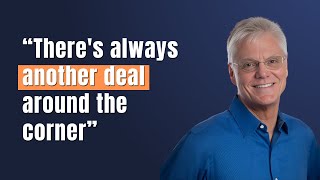
William King founded four companies and sold three. His first was a 900-number auto service funded on credit cards with $20k; he spent $2k on ads the first month and made $15k. He stresses finding good people, networking early, keeping your day job when you can, and remembering there's always another deal.
Questions this video answers
Founded four companies and sold three.
About $20,000.
Spent $2,000 on advertising and grossed $15,000 in the first month.
Around 1994–1995.
Chapters
At the time, though, when you're building and your whole life is consumed by that startup and that's your baby, it's hard to really think about, well, yeah, okay, there's another deal around the corner. You know, it feels like this is everything, but I do understand there is another deal. No matter even if you think it's. If your whole life is wrapped up in it, there's still another day.
Hello, hello, hello. Today we have an amazing guest, William King. He is founder of four amazing companies and he sold three of them. And today he is an angel investor and he is ready to share his experience and secrets of his success. Please meet William King.
Hello. Good to be here. Good to see you again, Leon.
Hi, William. It's amazing to have you on my podcast and I think my audience will be very interesting about some very specific insights you can share about how actually it's possible to sell three companies. So it's a huge success. Out of four companies, you sell three. Wow. Amazing. So, please, let's start from your first company. How did you find idea? How did you build, what kind of mistake you have done and if you. And what you learn actually from your first business?
Well, I don't think you want to hear about my mistakes because that could take the whole, whole podcast and 10 others, because there have been a lot of mistakes along the way, but there's not really any mistakes. Right. You learn and it just helps you succeed next time. You know, when I started my first business, I didn't know anything. I mean, I didn't have a mentor. I really, I did not know the first thing. I happened to have the good fortune. I was, I was a business manager at a Ford dealership here in town. And I got some decent business experience in that as far as negotiating and just seeing that business run and being a manager there had a little experience, but as far as entrepreneurship, I didn't know the first thing. And I mean, I couldn't have been more green. You know, my father died early when I was 8 years old. My mother raised me. She was a school teacher. So I just didn't have any type of mentorship or anything at all. So I was as green as you could possibly be. And at that time, I was in the car business. I started a 900 automobile related 900 number back many years ago. A lot of people probably listen to today don't even know what a 900 number is, but it was a number you could call and get information and the, the bill would show up on your, your telephone statement each Month. And so it was a. I basically wrote a pamphlet detailing various things about how to buy a car if you had poor credit and whatnot. Um, and we just, you know, gave that information out over a 900 number. And if you left your address, we'd send you the pamphlet and that sort of thing. But I didn't know the first thing I had. I think I'd spent about $20,000 on credit cards to get this everything set up and going before we even could test it. I didn't know anything about MVP or testing before you go in. Uh, so I went in and expecting to win and, and we did, we did, did well with it. Very, very. I, I think it was luck more than anything at that point in my, my, my life. But we spent $2,000 the first month on advertising and we grossed 15,000. And so we're off to a good start.
And.
You know, it was just a lot, lot. I, I think I just had luck involved. We just happened to hit something that worked right off the bat. Ended up scaling up over time, borrowing money from friends and family again, knowing nothing about raising money. I had an uncle show up in my office with a grocery bag full of cash. I mean, it was just as it was, as bare bones and as green as it could possibly be. But we figured it out as we went.
Yeah, that's very interesting because, you know, it's some kind of paradox happens that time you couldn't find a mentor because people didn't know how to build companies yet. It's. Everything just started so you have to learn by yourself. Even I started in 2008 like an entrepreneur. I couldn't find the mentor, good mentor. People didn't make exits yet to become mentors and to spend time on teaching somebody else. All accelerators just getting started. So, you know, yeah, that time. But what paradox is that really everything was very, very expensive. You should spend a lot of money just for Internet, for building something people didn't do, didn't know what to do. But at the same time the field was clear. Any idea could bring you business, could make you money. Market wasn't so red like today. It was totally blue ocean. So from one side you don't have any experience and nobody can help you. From another side, nobody can compete with you. So it's interesting. Today you have whole industry is working for you and helping you, but it's so much red ocean, you cannot swim there at all. So I don't know what is better, but I think your time is much better because you are the first and in the blue moon ocean. And I like this very much. And if it's not a secret, how much have you raised for your first company? Or did you raise.
Yeah, you know, I don't. It was been so long, it would probably just have been in the tens of thousands. It wasn't a big amount of money. I just didn't have any money myself. I was putting all the advertising on credit cards. And there for a while, our advertising, we were spending low six figures a month on advertising. And the trick at that time was to have enough credit on the credit card. So we had a lot of different credit cards. We were putting 5,000 on this one and 20,000 on that one. And one thing, one trick I had at a time and they've. Since they don't allow you to do this anymore. But I remember when it occurred to me I would send the credit card more money than I owed on it. So I would send tens of thousands more. So that would give me a credit. So I could charge a lot more than, than the limit on the car. But you can't do that anymore. But, but at that time, that was a trick that, that I used to, to be able to, you know, use those credit cards to, to buy advertising. But, but you're right, you make an interesting point, Leon. There is, there was a lot less competition. It was definitely more of a BL that time. And I think a lot about right now compared to the early days of the Internet, I guess. My third company was a company that was a web services company. And so we started around 94, 95. And so I see a lot of similarities now with AI, but I think a lot about how we were able to just be gritty and get in there and start a company. I'm just wondering, I could see where it's a little trickier now because there are so many people aware and ready to jump in.
Yeah, interesting. And what is the biggest multiplier you did when you sold your company? I mean, ratio between how much did you invest and your sales price?
You know, I don't know that figure right off the bat. But one thing that I really think about a lot is how much you leverage by starting a business. Like when you're investing, you can invest, let's just take six figures. You put a hundred thousand dollars into something, whether it be real estate or some sort of venture. Right. You're really hoping for a 10x, right? You're hoping for a 10x. So you're hoping to return a million on that 100,000. But you can start a company for, you know, close to zero. You can leverage other people's money and that can turn into millions and millions of dollars or tens of millions or you know, there's, there's really no limit. But I do think a lot about that and, and, and I, I enjoy that as a, you know, as an entrepreneur, you know, that that's really something that, that is really special and something you, that, that, that you, you know, I don't know of any other way to do it right. But you can just have an idea and turn that idea literally into millions of dollars. You're spending a lot of time. It's not like there's no risk involved. When you are an entrepreneur, you're, you know, your head's down, you're consumed with it. You know, there are opportunity costs, there are costs to your family and friends that, because you're consumed with it. But it is to me, one of the really cool things about life is that you can start a business for a little or no capital and turn it into, to a substantial amount of money.
Yes, exactly. That's interesting. And even more. For example, I teach entrepreneurship in the university and what I learn is impossible to teach. I teach something that's impossible to teach, it should be somewhere inside. So I immediately, when I talk to people, I immediately recognize if this guy is entrepreneur, has entrepreneurial mind or not. And I think only maximum 5% of people have some entrepreneurial mind and capability to build a company. But many people, much more people start the business trying this and thinking they could raise money, they could succeed and they're going to accelerators. Accelerators teaches entrepreneurship as well. But again, there is a huge difference between mindset, right mindset and wrong mindset. And how to understand. Exactly. You're angel investor as well today. So how do you understand that this specific entrepreneur has all capabilities to deliver?
Well, that's a really good question. And you touch on something there that uh, it's certainly not my area expertise, but I have noticed over the years I have, you know, come up with various ideas and in my head I saw it as clear as crystal. Right. I, I, I have the idea, I know exactly how to execute on it. I know the market is ready for it, that kind of thing. But you share that with someone else and they just can't see it. And I don't know how to explain that. I don't know what to make of that. But I do think that has a component of what you're talking about that the entrepreneur needs to be able to have that vision and they need to be passionate about it because I don't care what you're starting, you're going to go through a lot. It's not easy. I mean, to take an idea from inception to the market, you know, testing and everything that's involved. There's a lot that has to happen. It's a lot of work. You have to be absolutely hell bent on making that work. So, you know, you have to have the vision and you have to have the, you know, just the grit and the stick to itiveness. You, you just won't be denied. You know, you have, you have to win. You have to, you have to wake up every morning with it on your mind. You're in the shower with, you know, you're in the car, it's on your mind, you're obsessed with it and that's what it takes. You know, somebody I was listening to this was many years ago. It was a financial planner named John Cestina. And he said something at that time that didn't make sense to me at that time, but makes perfect sense to me now. And when you're talking about assessing those teams and that this is what comes to my mind, he said, it's better to be in a bad deal with good people than to be in a good deal with bad people. And at that time in my life, I was in my 20s and I was just like, I just want to be in any deal, you know, I'd love to be in a deal with bad people as long as it pays off, you know, I don't, you know. But now, man, I really, really understand that because the people are so important, you know, that founding team, it's so important that you're, that you have good quality human beings, that they're smart. And that Venn diagram is important. You know, the complimentary skills, if you're weighted in one direction, you have to balance that out because you have to sell, you have to get it built. You know, you have to have all of the different skills on that team. But being a good human being, I tell you, there's no replicating. You have to have that. It has to be at the core.
Yeah, I saw a lot of entrepreneurs, they just looking for the money. They believe in what they're doing and they don't pay attention on whom they take money from and whom they partner with. And because they think, okay, I, I was in same situation, okay, in future I will solve this. What I need today, I need money to make it. And in five years you recognize that you can lose everything. So you spend five, seven years on building something. But because it was wrong movement, wrong money, bad money, bad people, you can lose everything. And this happens all the time. So today I understand that maybe it's better not to do something as you said, than doing something with bad people and bad money.
Yes, absolutely. Yeah, you really have to find the right people, the right team and, and, and make sure you're dealing with, you know, really good quality human beings. I, I, I, I just think that's where it starts. You can build from that. And I mean you can, you can, you know, you can overcome various challenges as long as that's the core. But if that core is messed up, I mean, I've seen it, I've experienced it firsthand. And you just, yeah, you're, you're, you're not going to be able to, you know, create success with, with the wrong people.
And there is an interesting attraction low. I, I could sell some opposite to attraction low. When you start, you attract bad people and that money because people who couldn't work with some experienced entrepreneur, they come to you and try to screw you. And because you cannot recognize in time what happens, you can lose as well. So this law of attraction, of law of bad attraction, it happens all the time. When you are looking for money investor, when you are looking for a partner, when you start first sales and first deals. Every time when you just start not only but most of the people you are dealing with, bad people and bad deals. Because I think you are eager to do it and if you want something very much, you attract bad, bad things.
Yep, yep. You gotta be careful of that sometimes, you know, Leon, you know there, there are trade offs, right? Sometimes you're in a spot and you have to take the money because without the money you don't survive. But you certainly, you want to try to avoid those situations as best you can by making good decisions and surrounding yourself with the right people. And one thing, talking about the right people, that I would say that I would definitely advise young founders. And one thing that I didn't do a good job of is start networking early. Really get out there, force yourself. I had social anxiety when I was growing up and earlier in my career I feel like I've overcome that for the most part. But that was one of the reasons that I didn't network very much. But I would definitely encourage young founders to go out and network and meet as many people as you can and really get to know them, spend some time with them and Networking is very, very important, especially in your local area, depending on the type of business. I know a lot of engineers are not really big on going out and being social. I'm not an engineer, but I can relate to that. But it's very important to get out there and meet people. You'll learn so much from it. It'll be invaluable and that will help you get to that smart money you're talking about as opposed to having to take money from people. You might.
And what about exit? Let's talk about exit. You, you had three exits. So how you. I would like to know your view on the exit, when to start to think about it, how to make the deal. So could you share your experience?
Well, it's all different. You know, every single one was different. The first one was a situation where I owned a franchise and the, the A company, a big public company came in and bought the whole, you know, know all the franchisees out. So that, what a lot of thought in mind. I, I wasn't expecting to sell, just sold. So, you know, the, the situations vary. But one person I did have as a mentor, you know, along the way that I still have to this day, really close friend of mine, you know, he told me that there's two, there's two purposes in business. You either want to turn it into a money machine or you're going to sell it one or the other. So, you know, just have that in mind. I think that, I don't think you need to go in with the. Out with the, with an exit in mind. I think the right mindset is to go in knowing you're going to build something of value, something that's going to be long standing, not, not, you know, something that's just going to be a flare and just, you know, something of that. Anything that someone's going to pay a lot of money for, it needs to have legs, right? So I think going in, thinking of it as a legacy, but also you have to be open to the fact that, that you may have, you may have the opportunity to sell is important. You know, and then if, you know, I've had company, I have friends who have spent a lot of time hiring companies and consultants that come in and help you get your business in order to sell. I listened to Patrick Be David's podcast he was talking about years ago. He was going to sell, but he met with a consultant and there were a couple of things that they needed to really dial in before selling to really get the right value. And that took a couple of years. It was a process to get those things in place. I don't remember the details, but, you know, having the right expertise in all of these areas, you know, whether it be investing or in anything, the right knowledge and expertise is very important. But, you know, I would just say, you know, going in as a founder, you know, plan to build something that's going to be viable, not something that you're planning on selling, but if the time comes and it makes sense to sell, I would just say, you know, make sure you're getting the right counsel and, and the right people to help you do that. Because it's a, it's a very specialized process and man, you want to get it right because, you know, in all these things there, there are gotchas along the way you want to avoid.
Many investors, they ask founders, how are you going to sell? You know, in a pitch deck that say exit slide. So show me your a exit opportunity. So many. I have a lot of friends doing a lot of exits. And they all said, we start thinking about exit from the beginning. So we build a company, we identify our potential acquirer, and we build a company just that feeds the requirements to be acquired by these potential companies. And at the same time, we are looking for, like, investors. We are looking for skin in the game, and we are looking for the founder who is going to build the company not because of exit, but because he's going to bring some value. So here another paradox happens. So how to get out of this for the founder? What do you think?
Yeah, you know, it's a good question because investors are, they want to know how they get their money back. And on a lot of these deals, an exit is what it's going to require really to get the money back. But I just, you know, again, the one guy who is sort of a mentor to me, he's kind of old school and he thinks in terms of, you know, you need to pay dividends, get the, get the investors paid back through dividends, something that's actually making a profit and the exit will take care of itself. So that's kind of an old school way of looking at it, but that is the way I look at it. But I do appreciate the fact that as an investor, you want to know how you're getting your money back and you're going to be targeting a 10x or whatever it is. And a lot of tech companies, that is the goal going in. Your goal is to be acquired. But I just think from a founder's standpoint, you really need to believe you need to believe in what you're doing and you need to be completely passionate about it and you need to focus on something you're building long term. The exit. I think in the way I think of it, the exit will take care of itself. But really focus on, make sure you're building something of value and that has legs. And the other thing I would say, and this was something I learned early on, that was hard at that time and this was when I was in my 20s. My friend said, william, there's always another deal. And so at the time though, when you're building and your whole life is consumed by that startup and that's your baby, it's hard to really think about, well, yeah, okay, there's another deal around the corner. You know, it feels like this is everything, right? But there is always another deal. I mean, I, I've had companies where my whole life, my whole purpose, everything was wrapped up in the company. But you know, we ended up, you know, various companies, you know, either exited or, you know, turned into a long term, long tail, whatever. But, but, but I do, I do understand there is another deal. No matter even if you think it's, if your whole life is wrapped up in it, there's still another day. They'll, there'll be a completely new focus for you. There's always something to do.
Yeah. Thank you. Great insights and actually everything what you're talking about, you share some great experience and amazing insights. So just last question, what would you share with founders? Some very valuable advice based on your mistake.
I would just say. Well, I'll say two things. Number one, if you're employed, keep your job as long as you can. A lot of people think founders are risky, but founders aren't necessarily risky. They're willing to take a chance, but keep that job as long as you can. The first company I had, I had a job, I was working 70 hours a week, but I started it part time and it was making, you know, took over my income part time before I, before I left the job. And if I had to do over again, I'd probably keep my job longer. So, you know, I don't think entrepreneurs are as, you know, I think they're more risk averse than you think. I just think that they have a vision and they feel like they can execute it and something inside of them is compelling them to go through with it. But that doesn't mean you have to risk, you know, everything in, you know, your life, your family, your everything. Right. You can, you can sort of walk and chew gum at the same time. So I would just say keep that stability as long as you can, as long as it makes sense. And just surround yourself by the right people, network, learn as much as you can. Make sure you're an expert at whatever you're doing. Go in deep and, you know, just put the blinders on and get after it. And you know, go after what? Everything. You're, you're, you, you can because that's what it's going to take.
Thank you, Willy. It was amazing conversation and I learned a lot. I learned a lot. I didn't have free exits, so that's, that's really nice. So thank you very much for, for sharing your insights. We had amazing meeting with William King, entrepreneur investor who experienced three meaningful exits. And please don't forget to subscribe to my podcast, Venture Growth with Leon Eisen. Thank you very much.
More from Leon

Claire Hayek: Neuroscience of Decisions Under Fire or Why Smart Leaders Break Under Pressure.

5 Fundraising and Startup Lessons from David Klein, Founder of Click Therapeutics.