Gregory Shepard, Founder with 12 Exits, Philanthropist and Author of "The Startup Lifecycle."
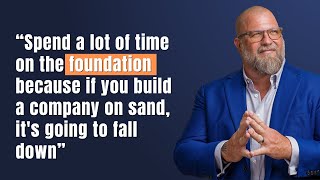
Gregory Shepard spent $500k researching why founders fail and built a platform and 250-page book around his findings. He argues most startup failures come from bad advice and fragmented tools, and that founders need a strong foundation, standardized processes, and an early exit plan.
Questions this video answers
12
Five years
About $500,000 ("a half a million")
4,867 accelerators and 1,100 investors
"200-something thousand" case studies (reported as '200 something thousand')
Chapters
My advice to startups is spend a lot of time on the foundation, spend a lot of time on the, on the bottom of the building, because you need to support a company and if you build a company on sand, it's going to fall down. So you have to make sure that you build a company with the right structure at the roots and then you'll build, your company will grow. And that's like ideation, vision, choosing the right people, really thinking about the future of your company. Like, think about the future of your company when you start. Don't think about it as you go. Foreign.
Today I have an amazing guest. Startup veteran venture capitalist and serial entrepreneur Gregory Shepherd. Gregory combines 12 startup exits, four private equity awards, and he is an actionable strategist for netting out your startup and achieving success. And most important, he is going to present his new upcoming book called the Startup Life Cycle, the definitive guide to building a Startup from idea to exit. Gregory, great to meet you. I'm really happy to have you in my podcast and thank you. Thank you for coming to me.
So it's a pleasure and thank you for having me. I appreciate it.
My first question is very simple. Why people should read your book. What's something unusual there? Because everybody thinks he knows everything about startups and startup world, so why they have to read your book?
Well, I can tell you that, you know, when I, I've read every book on startups there is, and when I read the books and I looked up the authors, a lot of times I found that the authors were writing books based on things that they study, not things that they experienced. And so I thought, coming from a, as a neurodivergent person and coming from a background with nothing and fighting my way up from nothing to where I am, that I needed to talk to founders from the perspective of somebody that actually has done it multiple times over the last 35 years, that combined with the fact that 90% of startups fail, which has been a standard for the last 30 years. And I thought that that was Einstein's definition of insanity. So what I did is I said, I'm going to write it. I'm going to study why, when, and how founders fail. So I did that for five years. I spent a half a million on it. And then I decided I'm going to write a book that explains why, when and how founders fail so that the founders can see where the landmines are that they could be walking into when they start a business. So I did this huge research project and then I decided, you know, What? I'm going to take my experience and the research and I'm going to write a book and try to help founders and then create a platform because I could only fit 250 pages in a book. So I wanted to. There was way more information, you know, to give them. So I built a platform to give them the rest of the information and to watch, listen, read and experience. Those are the four places people learn. And there's QR codes in the book that will get you into the platform for free. And inside the platform, there's investors, there's grants. You can, you can find your acquirers, your partners, your competitors, there's classes on everything. You can automate your market sizing. I mean, it's, it's meant to pull the whole fragmented ecosystem of the startups into one platform. Sorry, that was so long worded. I appreciate you asking me the question.
That's amazing. So your platform just integrate some other interesting information or you also create your information and publish this on your platform?
Yeah, it's a combination. The videos and all the stuff is produced by really professionally. They're like eight minute long so people can watch them and not fall asleep. And the, it integrates a lot of stuff. We do integrations every day. To try to take the. When I was studying founder failure, what I found is that the majority of the founders failed for the same reasons, like almost 90%. So I was thinking, well, if I can help that group, maybe not the outlier issues that are, you know, specific, but the, the crowd of people that are failing for the same reasons, then I could increase the number of founders that were successful. So I worked for, I mean, it's been years and millions to build the platform in order to try to take the fragmentation, which was the biggest issue associated with founders failing, because, you know, it's like anything else, right? You go online and you get a lot of bad information and you get a lot of bad advice from people that shouldn't be doing it. Well, the founders don't know what's good advice and what's bad advice. So oftentimes they'll go online and then they'll pick up bad behaviors online and then they'll fail. So I said, well, I'm going to create a book that spells everything out and I'm going to create quick videos that just explain what. It doesn't tell them what to do. It just explains what these things are. And that was my gift to founders to try to give back to people who are trying to make their life better.
That's really very important. But what do you think? What is the key reason of their failure? I'm not sure if this is because of wrong information or something like this. There is a specific denominator for all companies, startups which failed.
Yeah. The number one reason is bad decisions. So you have to ask the question, what are the bad decisions? The bad decisions were coming from bad advice and the bad advice was coming from investors, mentors and program managers, believe it or not. So the same people that were trying to help them are hurting them. So I asked myself the question, if all of these people are trying to help them, then why are they giving bad information? And it turns out they have bad information a lot of times. So they think that they're passing along good information but their information is based without research. It's their opinions versus real, empirical, you know. So you have a lot of scenarios where you have people, you know, like if you're in, if, if you are a founder and take money from an investor, the investor is looking at your business through an investor's eyes, not through a practitioner, not through somebody that's doing the startup themselves. Right. And if you talk to a mentor, well, maybe you're talking to an early stage mentor but your later stage or you're talking to a later stage mentor and you're early stage. Maybe you're talking to somebody in the same vertical or industry that you're in. But they don't know go to market, they know product or they don't know ideation, they know scaling. So you know, it is a mistake to have the same mentor the whole time because they have different expertise. There's different areas where they specialize in. So the disinformation, the bad information and advice was coming from people that didn't intend on doing that and just wanted to stay with the startup for a variety of reasons. Sometimes they're consultants and they're making money. But I found that a lot of the places that I spoke to didn't necessarily. They never did anything to hurt the founder on purpose. They were just trying to help, but they didn't have the experience and they didn't want to be honest with themselves about the experience. And that's very much.
Yeah, that's what I see as well. And.
Oh good.
Yeah. And here I have really two questions for you just on the go. First question, it looks like there is a, I don't know, lack of tools, thinking tools that founder could use. For example for design there is a so called innovative thinking, sit systematic innovative thinking. How to think Design, but startup is the same, it's a business design. So should be some tools. How to decide. For example, I by myself developed so called quantum business thinking tools. It helps, but not in all situations, but it should be. I think people with experience should think and create tools that help startups and founders to thrive. So what do you think about it?
Yeah, I agree 100%. I think that there isn't just a lack of tools, they're spread out all over the place. So that's why I wanted to pull it all into one platform. Because, you know, I interviewed 4867 accelerators, 1100 investors and thousands of founders. And what I found in all of these situations is that the average founder is dealing with at least 15 different platforms. They have 15 different logins and 15 different bills and expenses that are associated with the products that they, that they're buying to run their business. So the data is spread out all over the place and their tools are spread out all over the place. But really they should all be in one place because they all are related and they're tangled together, you know, so something like your cap table and your valuation are two separate tools. They shouldn't be. Or something like, you know, your investor relations and your mentors should be in one place. Things like market sizing, your investor list, grants, you know, there's so many things that you could go on and on about. Things that are now all these separate little platforms and the founders don't know which one to go to, how much, and they all cost money and the data is spread out all over the place. So I think that that is a real problem. You know, if you. I did a research project where I put a bunch of founders in front of computers. These were new founders, you know, that they're like, I have an idea, you know, and they're all excited and I put them in front of computers and I said, now I want you to tell me how you would go about a startup. And I watched it and what you see is the, they do the same thing people do online. They go all over the place and they're looking and they don't know if something is good or bad. So they're already at a disadvantage because they don't know if what they're looking at is overpriced, underpriced, if it does what they want, if it needs to integrate to something else. And so all these systems then take data from the founder and then when the founder leaves, when they find a good tool that works for them, their Data is stuck with the previous provider. So it's like moving email. Right now you have a separate login with part of your information and a third login over here that you want to use. So I was trying to solve these issues because they lead to failure. You know, they lead to failure because of cost. They lead to failure because maybe they get a platform before they need it and now they're distracted trying to run all these software platforms they don't even need yet. So understanding where the founder is and what they need at that point in their journey is something that I was trying to solve.
Amazing. So we're talking now about strategy. This is I think the main problem, the lack of strategy. Founder tries this, tried that and actually doesn't succeed because doesn't think about strategy. And what's important back to what you said about advisory and bad advisors, that's just natural extension of what you said now because if I need marketing guru, I hire marketing advisor. Who this guy? This guy could be some previous VP of big corporation. How can he help me with marketing for my free people?
Oh my God. This is exactly what I found.
Yeah, it's exactly problem and then I hire somebody for, I don't know for product development. How this advisor could help me. He doesn't see whole picture about marketing and all this stuff about the products and the. So he understands the product. That's why many companies, they just hire marketing. We need to grow, they hire marketing and they forgot about operations and operations or customer success very far behind and the retention rate goes down gen.
So let me tell you'll love this. So the startup life cycle, you know the book, what it's about is the seven stages of a startup. And you'll really like this because I agree with you 100% and it's exactly what I found in the research. This was five years of research, right? So this was a significant, you know, 200 something thousand case studies. I mean it was a big research project. And what you said is exactly right. You see the mentors come in or a marketing person come in or somebody come in and they work for a big company and then the startup hires them, but all they know how to do is hire other people. They don't know how to do the work themselves. So what you have is you have somebody comes on that costs you money, that hires other people, that cost you money. And this person doesn't even know how to do the work, so they hire somebody else. Because this person only knows how to hire and manage people that actually do the work. But in a startup you need like one person that knows how to do all of the work in a certain functional area, you know. And so the other thing that you brought up that was really significant is, and the startup life cycle, the way it goes is you have the very beginning, which is vision, right? You have your vision and then you go from vision to product where you create your prototype and your product and then you get your product market fit and all that stuff. And then you go from there into standardization or go to market. And after go to market, you go to standardization and then you go to growth. And the reason why I did that is because in the research, what I see is a lot of investors pressuring at go to market. They skip over standardization and they go on to growth. And what standardization does is it prepares the company for growth, so takes things and documents best practices. It documents where the efficiencies are and the inefficiencies are and it gets the whole team aligned for growth. Because what I see, just exactly what you say I see more than often in the research that you see people skip over standardization, they go into growth and then they put themselves out of business because they didn't prepare for growth. People don't realize you have to prepare for growth. You can't just go into it, right? I mean it's, it's a big, big undertaking to go into growth. So if you're, if you have little problems in go to market and then you, you move into growth, those little problems, they grow with the growth, right? So all the problems you have, they grow equal to the growth of the company. So in standardization the concept is to get your company ready so that the problems go away before you go into growth and inflate the problems and put yourself out of business. I'm sorry, I interrupted you. I just got so excited about when you were saying that. I was just like, oh, somebody else sees the same thing, you know, I mean it's really impressive that you see that even though you didn't do the research, it's like that shows a lot of experience.
Yeah, thank you, thank you. I appreciate it. And what I did, the article wrote article about the growth of the startups and there are three type of growth. There is a linear growth, there is, there is exponential growth. And I introduce so called quantum growth. And if we talk about linear and exponential growth, they go like this. They are not linear or not exponential. Yeah, averaging may be exponential, but actually like this. And why exactly? Because what you explained the reason. You explained the reason, but in Quantum grow, you grow by leaps. So you get to some stage and you close all the gaps with all these five functions of the startup. It's market, it's liability, it's a product, it's, I don't know, team dynamics, it's customer. So when you close this gap, you move all these frontali to this level, you jump to another level. So you will never make something non homogeneous in your startup. And I call it quantum leap. And this really works. But what's interesting, what you said, that all these problems started in fundraising stage because in fundraising stage they have to build the homogeneous system to raise funds and they don't. And because of these, they end up with numbers game in fundraising. Instead of growing their company, they looking for investors for years instead of making homogeneous business. And I call it fundraising project process, it's not funding. There is a difference between funding and fundraising and funding happens only if you have very good fundraising process. And if you skip it and finally raise money, you will get the same problems as you said at the next stage.
Yeah, yeah. The problems move with you and they get bigger.
Yes, exactly.
It's like a kid, right? I think of a startup as a baby and as this baby grows, everything grows. The baby's arms, the limbs, everything. Right. It's not just like the baby grows up, the whole body grows and a startup is just like a baby. So if you have something on your, you have something on your startup that you don't want to grow, you need to deal with that before it grows. Because more often than not I see startups failing because they make these fundamental mistakes and, and they don't know they made these mistakes or they skip over things like you said, you know, they'll skip over really important processes and when they skip over those processes, it creates a problem and then as that company grows, the problem grows and before they know it, they, it's like cancer, you know, they'll like, they'll like go, oh my God, now I have cancer. Right? And it's too late. And that's a lot of times the, the same situation that happens with a startup. It's really sad to watch. You know, you're like, it would have been a great company but they missed or they skipped over or they took some bad advice, you know.
Yeah, exactly. It totally makes sense. And in SaaS startups sometimes it called technical debt when they try, instead of changing all the systems, they try to make some, you know, local things and I call it management arrow propagation. So if arrow could be very small, but during Some time it started to propagate. This comes from mathematics and now there is a propagation of arrow in mathematics. It's exactly the same. So it starts to propagate and grow and blow up the company 100%.
You need to write a book.
I writing book called Quantum Business. Thinking about this.
Yeah, you should send it to me. I would love it. I'll send you my book because I think yeah, we should collaborate on something. I have a publisher and everything and I think that you have some really, really great concepts and the way that you're thinking is 100% in line with what I studied. So yeah, you know, it's like, it's very factual, right? Like the, the concepts that you see in the research are the same concepts that you're talking about. It, it's. It shows that you have a lot of real experience, you know.
Yeah, I did my all. I did my own research. Just looking at the mirror that works.
That works.
All mistakes that possible. So those are one.
I think, I think we all have made. It's funny that even when you know stuff, even when you know things, right. You still make those mistakes. Because the mind is so sometimes the brain can give you artificial facts, right? Because you're, you're founding a company and you're so excited that you can even trick yourself, you know, cognitive bias. And you can sit there, you can have a bias towards your own startup or your own way of doing something and think that you know better than the historical data. But the fact is you don't know better than the historical data. You know, data is factual.
I would like to ask you about what you think about exit. Any advice, good advice about exit. Because I know I'm an entrepreneur turned to venture capitalist. So I, I'm from both sides. I called, I move to that dark side of the business. Right.
So yeah.
And what I started to understand that founders. That's very important to. For founders to think about exit from the beginning. Because for example, some founders come to me and say, we created technology. We can make thousand products from this technology. We start from these three products and move to 10 products then. And I say, okay, you have to focus to one product. They don't want. No, we try three products. Musk, Elon Musk succeeded in three products. We're going to do it as well. So good. And I start to think, is there any justification in this? Because all my time I was focusing on one product and this was some reason of success and I found justification and it's on the surface. So even they don't understand this. And I try to explain them that when you think about many products, you should set up your company for Exit through IPO because you're going to serve the public. But if you're going to focus on one specific product, you have to search to specific acquirer who need your product, your company to extend their business. And this should be reflected on how you're on all operations of your startup. And that's interesting how it works. So what do you think about Exit? And I didn't have chance to read your book yet and thank you for your willingness to send me because it's not published yet, it's upcoming. I found Amazon 24 wow. Very soon. I'm eager to read it and it.
Took me four years to write it.
Wow, wow, wow. Including procrastination, right?
Yeah. No, I mean this just like really grinding, you know, it's just, it's hard to take, you know, thousands of pages of notes and put it into a 250 page book. You know, it takes a long time to figure out.
Mark Wen said that I'm not so genius to write very short novels. So what about Exit? What do you think? What do you suggest to startups about it?
I think it's really, first of all it's a really good question. And so what I tell people is. So let me back up for a second to answer the question. When you build the product, you always have a customer in mind, right? And that's because you're building product for a customer. When companies buy other companies, they buy them for one of two reasons, either to make money or to save money. The majority of the time it's to make money. And the way they make money is they already have a huge customer base. And their cact ltv, let's say, is based off of the number of products they sell to the customers that they've already paid to acquire. So when a company buys another company, essentially they're buying a product. They're not buying your company, they're buying your product to sell to their customers that they already have. So just like if you were to start building a product, you build a product for a customer, you should build a company for an acquirer right in the beginning because if you don't, you end up at the end of the road and you do what I did. And I made this mistake where I had a big list of customers and I went to the acquirers and they said we don't want these customers. It was like half my customers. So I had to get rid of those customers and rebuild with the good customers. It took me like five years. And then sell the business. So, you know, it's really important that your ideal acquirer's customer and your customer are the same customer. So the ideal customer, the icp, you know, the ideal customer that you have and the ideal customer for your require must be the same because they're buying you to sell your product to those customers. So when it comes to exit, I tell everybody, plan it in advance, figure out right in the beginning who you're, because you can't fix it, right? Let's say you go all the way out and now you're in your growth stage, you've paid all this money, you spent all this time, you've got all these customers and your business is growing. And then you find out half of your customers don't fit with the acquirer, which is what I. That's the mistake I made, right? And you learn after that. You learn, man, you got to figure out who's going to acquire a customer and, or your business and what their customer Personas are before you move forward because you don't want to get caught in that track. The other thing I tell people is that selling the startup, you know, a lot of people, they'll hold on and hold on and hold on. And if you're selling the startup to another company, you have to realize that maybe that company has maybe five different things they're looking for. And one of those five things is your spot, right? Is your product. Now, first of all, you have to know what that is. But second of all, you have to realize there might be a hundred startups trying to sell this one spot, so there's going to be people left over. So the speed of moving through to the acquisition and not waiting, because a lot of investors will say, no, no, hold on, hold on, keep waiting, keep waiting. Because they need to make a big exit to make a difference, like to move the needle on their side. But the founder, on the other hand, loses everything if they don't sell because there's no spot for them with the acquirer. So what I tell people is sell it early, don't hold on to it forever. Sell it early. Like most of my exits are like 50 million, 25 million, 10 million. You, you, what you want to do is you want to move the company and exit it, because an exit is an exit. People ask, how do you do 12 exits? And that doesn't even include my investments, you know, and the reason why is because I move them right through I get it to the point I can sell it and then I sell it before somebody else takes my spot, you know, Amazing thing.
It's amazing advice. You know, I also figure out some third reason big companies, big at old companies like General Electric, why they buy new startups. Yeah, One of the reason, just because they're going to die, they just went for their peak and now in this stage of their existence, in down, down in down of their existence, they try to add the fresh blood.
Yeah, I mean what I've learned. So I'd interviewed a lot of these corporates, right. And it's really interesting what you find. So out of the, the Forbes 1500, the top 1500 companies in the world, right, the majority of those come and I mean the far majority of those companies, it's, it there's only a few that don't depend on accelerator startup studios, incubators, you know, the startup ecosystem. They depend on the startup ecosystem. They shut down most of them their own research and development because they kept getting passed by startups. So what they started to do instead is they started to look at the startup ecosystem and then they find startups there and bring them in. So when I researched these corporates, what I found out, I said why are you buying startups? So here's the top three reasons. Number one is talent. Exactly what you said. They want good people and they find them in the startup ecosystem. Number two is to become a customer. They want a problem solved in their business for their customers, but they don't want to build it and they don't know how to build it. And number three is acquisition. And people usually think that acquisition is number one. But the path to get to acquisition is data talent, product acquisition. So they go through this process, you know, to figure out who they're going to buy most. Start most of these big companies, they don't even have research and development and innovation anymore. It is the start of ecosystem that is their innovation. It's really fascinating to watch it because what you see is that you see a, a group thinking, you know, a culture. So if you go to, because I was at ebay, right, and when you get to a big company, everybody's thinking the same way. So it's really hard to innovate when everybody's thinking the same way and the company is training them. You know, with IBM, they call blue washing, you know where they was the company and make it an IBM company. Well, that ruins the innovation. What I learned is that they, they just don't understand these things. But it seems to me that you do because you keep bringing them up ahead of me and I just think it's amazing. And you haven't even read the book, so I think it's amazing. I can't wait for your book to come out, actually.
Oh, thank you very much. So now we have to wrap up. And what was, what is your final advice? Just summarizing everything, what we were talking about. Your final advice to startups who will watch our amazing conversation.
I will tell you a quick story. When I was about 19 years old, I was trying to get into the startup ecosystem and I had a mentor, an older guy who was, turned out to be a really good friend. And he took me out to a bus stop and he dropped me off every Wednesday for an hour at this bus stop across the street from the bus stop was at first it was just a coming soon sign. And then for weeks and months they dug this huge hole and built this foundation. And then the rest of the building went up really fast. And my mentor asked me, he said, what did you learn? And I didn't know how to answer the question. And what I ended up learning was that the foundation took a long time, but the rest of the building flew up really fast. So my advice to startups is spend a lot of time on the foundation. Spend a lot of time on the, on the bottom of the building because you need to support a company and if you build a company on sand, it's going to fall down. So you have to make sure that you build a company with the right structure at the roots and then you'll build, your company will grow. And that's like ideation, vision, choosing the right people. Really thinking about the future of your company. Like think about the future of your company. When you start. Don't think about it as you go because it's, it's a different. You can get yourself into a pretty bad situation by doing that. That would be my advice. Exit strategy. Think about it in advance, in advance customers, think about it in advance. Price tolerance. Does your Persona, you know, the ICP is the company and the Persona is the person. Is the person, price tolerance wise, able to pay for your product. Like all this stuff you got to think about ahead of time. You can't stumble into a startup. You have to plan your way and strategize your way into a startup.
Amazing advice. Thank you very much. So thank you very much, Gregory for, for this meeting. It was amazing experience. It was incredible wisdom. And today we, we discussed the startup success with 1212 times entrepreneur, 12 times exit. Venture capitalist after Gregory Shepard. Thank you. Thank you very much.
Thank you very much for your time. I appreciate it.
More from Leon
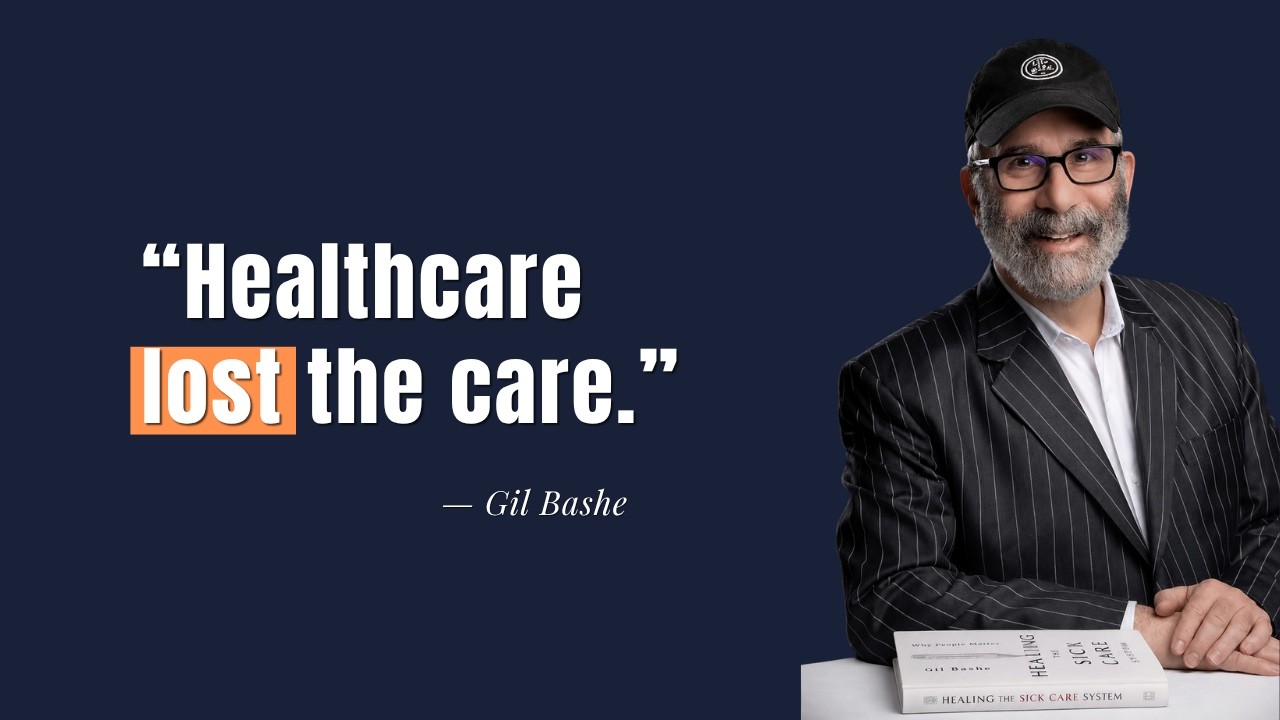

Claire Hayek: Neuroscience of Decisions Under Fire or Why Smart Leaders Break Under Pressure.

5 Fundraising and Startup Lessons from David Klein, Founder of Click Therapeutics.