Lou Adler teaches how to prepare for job interviews by learning the role's performance objectives first, then framing your accomplishments to match them. Interviewing is a skill separate from doing the job, and it improves with mock interviews and practice.
Hey.
Hi everyone. This is Lou Adler. In this course, I'm going to describe.
What you need to do to get.
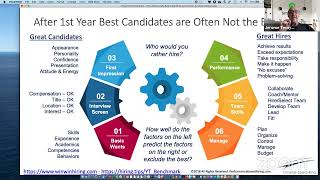
Fully prepared for your next job interview. Now, you might have found this course on your own, or someone might have suggested it to you to help you get a better job. And in some cases, a recruiter could have advised you to take this course to properly prep for an upcoming interview. Regardless of how you got here, this course will give you more confidence when you interview help you answer all types of interview questions, including how to handle compensation issues. Most important of all though, it will increase your odds you'll be considered a serious candidate for any job you're qualified to handle. Now, after debriefing hundreds of candidates and hiring managers, it was very clear to me that too many interviewers overvalued the candidate's first impression and presentation skills rather than the person's ability to handle the actual performance requirements of the job. Now, to minimize this serious problem, I started to prep my candidates to be able to ensure they are objectively and accurately interviewed, whether they made a good first impression or not, or whether they were nervous or extroverted or introverted or not. What I cared most about was whether they were first competent to handle the work and second, if they could effectively present themselves during the interview. This course is based on that same process. By prepping properly as suggested throughout this program, it will help you do a better job in every interview and get more job offers. If you've read my LinkedIn profile, you know I've been a full time executive recruiter for 25 years. Then I created a training company to train recruiters and hiring managers to implement performance based hiring. You also know that I've written a number of books, including three editions of Hire with youh Head and my most recent book, the Essential Guide for Hiring and Getting Hired. In the Essential Guide, I cover a lot of the materials in this course. And while you don't need to purchase a book, it is a great study aid. But before we begin the program, let me cover some of the big steps. The biggest one though, is worth repeating many times. Practice, practice, practice and practice answering these answers until they become natural and comfortable. That will be a great day.
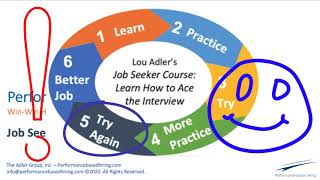
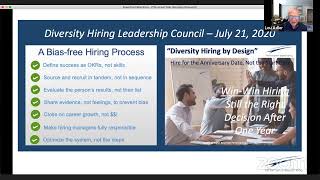
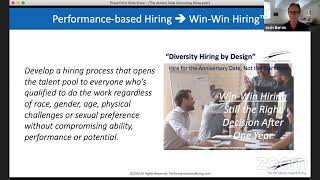
Let's get started. First, you got to go through the materials. It takes about 45 minutes to an hour to go through it once, go through it pretty quickly, then go through it again and write down all the notes. And there's a lot of exercises you have to do for you to get ready. Then you got to practice getting ready in fact, I would urge you to conduct mock interviews where you're being interviewed by someone where you would actually get nervous, then go out and actually be interviewed. Real job interviews, if you can, probably won't do too well, but you probably do better than you normally would. Then figure out how to get better, practice again, and then go out for a couple more interviews. I suspect by that second round of interviews, you'll do very, very well and you'll start getting some job offers that'll put you in a position to actually select opportunities that best meet your career needs. Now, I want to make some critical points as you start making career decisions. As far as I'm concerned, too many candidates like yourself, recruiters and hiring managers whom you'll meet will focus more on the start date rather than if the job represents a career move. Primary reason is they don't understand what the real requirements of the job are. During this course, you'll learn how to ask those types of questions to make sure you understand real job requirements, and then you'll learn how to provide examples of work you've done that best meet those needs. This is called Win Win Hiring Hiring for the anniversary date, not the start date. This means that you, the job seeker, are glad you made the decision a year after you started and the hiring manager is glad he or she hired you. It is not easy to achieve this outcome. It takes work on everybody's part. This course describes what you have to do to make it happen, even if the hiring manager isn't fully aware of what's going on. Now, it's important to note that Win Win hiring came very naturally to me since I always ask my hiring manager clients to define success as a series of performance objectives. Call them KPOs, key performance objectives, or OKRs that define the task. The action result. I always felt this was far superior in assessing candidates rather than a list of experiences, skills and competencies. Now, during the interview I had with my candidates, I would dig into their accomplishments, most related to those required performance objectives, to see if they were both competent and motivated to do that work. Then I would prep them to make sure they were interviewed accurately. The big part of the prep involved my candidates asking the hiring managers to describe the performance objectives of the job in if it wasn't naturally discussed at the beginning of the interview, then the candidates could describe examples of accomplishments that best met those needs. Now, it does take some work on your part to be interviewed accurately this way. Despite that, I want to make this critical note. Interviewing for a job is not the same as doing the job. So don't take it too hard. If you don't do well in the interview has nothing to do with you, a good person or not. It just means you have to work harder on your presentation skills and how you describe how you do your work. During this course, you'll learn how to do that. Let's get started. I'll see you in the next lesson.