Lou Adler - The Almost Daily RECRUITING Show
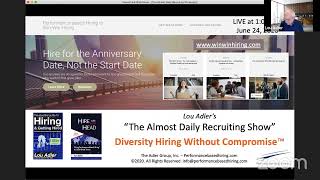
Lou Adler (June 24, 2020 LinkedIn Live/YouTube) leads a live session on 'diversity hiring without compromise,' promoting his performance-based 'Win Win Hiring' method. He argues job descriptions should be defined by 5–7 performance objectives (KPOs/OKRs) and candidates assessed by comparable accomplishments, not by checklists of skills. He gives tactical advice for job seekers (ask forced-choice questions in interviews, network via trusted referrers) and for recruiters (direct sourcing, employee referrals, LinkedIn Recruiter). He also discusses fit (job fit, organizational pace, decision-making culture, managerial fit) and measuring motivation through repeated accomplishment-based questions.
Questions this video answers
June 24, 2020; Lou Adler states it was LinkedIn Live (timestamp mentions 1:01 Eastern DST /June 24, 2020).
From ~300 million applicants over five years: ~6% phone screened, ~4% interviewed, ~1% hired (Lou's cited ballpark figures).
Chapters
Let me just try that. See what this happens so people can see it multiple times. This is actually going to be kind of weird. No, I don't want to do that. That's weird. But we are live. Brian, I don't know if you could find the link.
I found the link and it's going good.
Okay, so we are LinkedIn Live, everybody. I just want to make sure that, you know, we're live. It is now 101 Eastern Daylight Savings Time. I guess that's 16, 1801 GMT, and it's June 24th and is the year is 2020. So if you see something that says LinkedIn live or live, and it's not that time, it might appear to be live, but quite frankly it won't be. It'll be a recording. But it's going to be so exciting, it doesn't matter whether we're live or not. You'll still have a good time. So what I want you to do first is if you want to say hi, I'd like you to put in a hiring challenge first. Tell me if you're a hiring manager, recruiter, company leader, looking for a job. But just describe something you're doing, a challenge you're facing from that point of view. What I want to focus on today is diversity hiring without compromise. And even I'll even ask you, what do you think that means? What do you think diversity hiring without compromise means to you? Just those words alone, without any explanation whatsoever. So let's leave it at that so I can at least get a sense of that. So what is diversity hiring without compromise mean to you, Brian? I know we got Esther from Minneapolis. We've got James from somewhere I can't go too fast from. We got people from Holland. So wherever you're from, what does that mean to you? Diversity hiring without compromise. Because that's what I want to talk about today from all perspectives. And if you're on the zoom meeting you in chat. Put that in there, too. So we want everybody who do. I do we have anybody waiting in the. You can actually admit people, I think, Brian, if there's anybody in the waiting.
Yeah, I just admitted one and I'll keep an eye on that. It pops up.
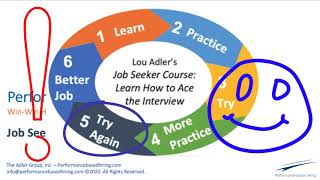
Okay, so I'm gonna do this with Brian. Okay, so, Stephan, that's a good question. Stephanie, this is. I assume you're a job seeker, not a candidate. They're not a sourcer. Had 20 interviews and mess them up in three to four weeks. Well, I got an idea for you. Okay, here's what I want you to do, Stephanie, I want you to go to win winhiring.com right now, www.winwinhiring and sign up for this course. No, actually, wait till the end of this because I'm gonna give you some tips. But everybody who's looking for a job, go to that. It's a free course. You don't have to pay. I think it's free for 10 days or 20 days. And it's five bucks a month. So it's not. We're not talking big bucks here. I just don't want people to abuse it. It tells you how to ace the interview. So, Stephanie, you already got the interview. You have a job to do, Stephanie, and I need you to do this. I want you to read go to this course and tell me what you didn't do in the 20 or 30 interviews you had this last month. And I want to see if you think this course would help. That will be invaluable. So please do that. That would be great. Any questions coming in as to why people think what diversity hiring without compromise means? Brian?
Yeah, I've got one right here from Laura C. That says diversity hiring without compromise is to hire more non traditional candidates without the perceived notion that they were less qualified than the traditional applicant.
God. Thank you very. Who was that, Brian? That was Laura C. Well, that's great. Thank you very much because that's what I meant it to be. People who know performance, I don't know if you know performance based hiring. That's what it's meant to be. Hey, if you do it right, and we're going to show you how to do it right today, at least give you an overview of it. It's really designed to do that. Hey, you don't have to compromise, but we have to make some changes to pull it off. So let me kind of get into some of these issues here of what changes need to take place. Now you can tell just from the video that I'm not this young spring chicken. I'll tell you. I am 74 years old. I became a recruiter before every. Just about everybody on this call was born. In 1978, I became a recruiter. And that wasn't my first gig. I was running a manufacturing company when I was 32 years old, had 300 people in it. And I just hated my. The group president. I just quit. I said, I don't need this. I'm going to become a recruiter. And it was just kind of a stupid decision, emotional decision. I don't want to deny that. But when I became a recruiter, I realized it was just like a business process, just like building a part. Hey, you got to have a right spec, you have to have the right process, you got to track the yield. And it was a business process. You had to do it all the time. But in 22 years later. So I was a recruiter 20 years and I wrote a book called hi with your head. And the subtitle at the time was irrational way to make a gut decision. But in 1998, technology was really coming into the HR space. Before LinkedIn, it was really coming in. I had this cartoon drawn. I just told the cartoonist, I said, you know, I got this idea that we're wasting a lot of money on advertising. Job postings are boring. It was hard to get interviewed. People didn't interview people properly. Recruiters, box check skills. It was hard to find a job. They said, just draw a cartoon, something like that. This was 22 years ago. Has anything changed in your mind? Has anything changed in 22 years? And if you're on the zoom meeting, we see your reaction instantly. If you're on the LinkedIn meeting, it takes a little bit of time to get there, but has anything changed? We had one person last week said the bucket's bigger and the holes are bigger and we're spending more money, but I don't think anything has changed. So I want to change anything there coming in, Brian. Well, don't say it, we're late. You got to remember the problem is when I ask a question, just so you know, if I'm. If you're in the zoom meeting, it's instantaneous. If you're on LinkedIn Live, there's a 30 second delay, so. And that's. I don't know. They don't help me out. Or maybe they do.
And Lou?
Yeah, Brian, what does it say?
So Stanley says by shifting to a performance qualified attracting, an assessment process, there is never a need to compromise on ability, fit or motivation.
That's not the question, Brian. The question was what has changed in 22 years from that? So different. Different topic.
Yeah, different topic. It's not coming in yet.
Well, I'm seeing one. It said nothing changed. LinkedIn user said nothing's changed. There we go.
Nothing's changed.
Well, not.
He says, more digital communication, less phone work, more emails.
Oh, good, jj. Right. So I think you're right. All it is is there's less touch, more impersonal, more transactional. And I think you're right. So in many ways it's basically saying hey, the bucket's bigger, the holes are bigger, and it's less personal. And I'm going to say, let me say the reason is, is that how many people apply to jobs they shouldn't have applied to because they made it so easy to apply. So you just apply and hope for the best. Well, that's not a great use of technology because now you have to use technology to prevent, to eliminate the people who shouldn't have applied to begin with. There probably some real good people in there that should deserve an interview, but they don't get hidden. So you got to use a mechanical way to sort people out. So I have a different approach. This is my diversity without hiring compromise. What? Brian, you got a point there.
Yeah, a couple came in. Candidates often hate recruiters as they feel they stand in their way.
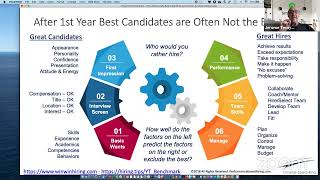
Yeah, it's probably true. And again, let me say the reason is it's sad, but when you have 100 people and this is really statistics, I'm not going to show this chart today, but I've tracked and asked different ATS vendors to tell me what the ratio of candidates who apply get interviewed and candidates who actually apply apply to the job. Posting hired 4%. This is based on about 300 million over the last five years. 300 million people who have applied. Only 4% get interviewed. Maybe 6% get phone screened. Only 1% get hired. And the reason is, is that. So now somebody said they hate recruiters. Well, you gotta. Recruiters are dealing with 100 people who didn't apply. They get to get down hiring managers putting pressure on them. And they say, hey, you don't know the job. Just box check the skills. So recruiters are put in a, in a box that makes them become box checkers. And you got candidates on one end, you got recruiters in the middle, you got hiring managers. You got all these three decision makers trying to figure out how to do it right. Well, I'm going to change the rules. I'm going to first rule say if you're a candidate, don't apply for a job you're not qualified for. I'll show you at the end. I'll answer your question, how to get the job, but it's not by pushing the apply button. You got to go through the hidden job market. And I'll give you a hint, a hint of where the hidden job market is, but I'll wait till the end to do that. My idea, and it's been since 19, I became a recruiter in 1978, but in 1982 or 83, I decided to change the rules that I would impose. I said, I'm going to hire for the anniversary date. I'm going to guarantee this person is good a year after they start. But we got to change how you do that. It took me a lot to figure it out, to get it done. Took a while to figure it out. But I want the candidate to say after a year, I'm saying, yes, that was a great job. And I want the hiring manager. I'm glad I hired that person. And it turned out when you did the process and it wasn't intended to be diverse hiring, but it worked. It didn't matter whether you're black or white, older, yellow, greener, greener with them from Mars or Jupiter, didn't matter. It didn't matter how old you were. If you could do the work, you deserve the job. But. So that was the idea. And it wasn't intended to be a diverse hiring process. It just turned out that that was the outcome because we changed the rules. So we were high. And it's a high touch process. Let me kind of get into some of the details with respect to that. And this is the first one. And Brian, who's. Hey, Brian. He's he. I just listened to one of the training sessions. Brian is the chief operating officer of our company and head of marketing and sales, etc. Etc. I've been showing a chart like this for 20 years and I make the statement that the best candidates are often not the best hires. So in a training program we had last for recruiters and hiring managers, we had last week, Brian asked a question to the hiring manager recruiters there, have you ever made a hiring mistake? So he said the question have you ever made a hiring mistake? And he just said, why? And everyone said, yes, of course. They said, and why? And it turned out the why was because they were focusing on interviewing candidates as opposed to interviewing great people. And I'm going to say this is a fundamental problem with every single hiring process in the world today. If you don't have the skills listed on the job description, that piece of technology will exclude you. Even though I ask hiring manager, have you ever hired someone who has all the skills, is not competent? Of course. That's why they make mistakes. And I say, you ever hire someone who has a different mix of skills, who is competent? And they think about it. I said, well, every single person you promote, a lot of diverse candidates have a different mix of skills. Oh yeah, I remember this person. I remember that person. So having the skills listed isn't a great predictor of ability. So if you screen people on the skills, you're hiring people who might be good, but you're also missing people who could be better. So the number one, that's the first step, the second step is you get on a phone call. If you get on a phone call with a recruiter, he or she will start box checking. First off, they box check your skills, then they box check your compensation before you even know the job. You actually have to agree to a compensation before you know the job, which is stupid as heck. So any recruiter does that. I got to tell you, you're stupid. And don't give me this idea that you're doing it for efficiency. You're doing efficiently because you got the wrong process that you need to be efficient on. So being more efficient, doing the wrong things is not a good thing. And I can actually tell candidates and recruiters, like, if you, if the candidates making a little bit more money than you want, maybe get make the job bigger because you got three other jobs, the hiring manager will increase the job. On the other hand, good candidates will say, if the job is a real true career move, I'll take a little less money. So don't filter. Don't make people negotiate it. Use compensation as a negotiating item, not a filtering item. But that's what we all do. And then if you get past that series of ridiculous filters, filter one and filter two, you're judged on your first impression. And I guarantee if people like you, they'll ask you easier questions. If they don't like you, they'll ask you harder questions to prove you're no good. None of that stuff predicts performance. But since 1990, I started training hiring managers through different business groups. Pure luck, apparently. Best marketing idea in the world. And I had nothing to do with it. My next door neighbor says, hey, would you speak to my business group? And I did. And that group said, speak to this group. And within 10 years, we spoke to 400 different business groups of presidents and VPs. And at every one of those presentations in 10 years, I asked this. We still do it today, but that was pretty intense in those days. I just asked a question. Tell me what great people look like. What do they do? Define the best people you hired after you've worked with them for six months, after a year. And this is what they say. They get the job done. They make it happen. They don't make excuses. They've got good team skills. They don't say, hungry, humble, smart. I say, they got good team Skills. It's a lot easier to figure out than using the humble, hungry, smart idea. And they get it done. They're good managers. They plan themselves. Whether self management team. They plan, they organize, control the manager. They get stuff done on time. Then I asked this question, and I'll ask you guys this question too, particularly the folks in the Zoom meeting. Who would you. I asked this. This is actually between Brian and I and the 400 programs. We probably asked 20 to 30,000 hiring managers this question. Who would you rather hire? Someone who's got all the skills, makes a good first impressions, willing to agree to the compensation ahead of time or someone who can deliver the results. What do you think? They say you got choice of one or two, left side or right side skills or results. Who do you want to hire? Then I see. What do you think they all say here? Somebody say results. Yeah. 99.9. 9.9% of 25,000 people say results, hiring managers. There was one person in New Jersey, that's the point. One, maybe it's 99.9 now. But the one person who said I don't know was a guy who lived in New Jersey. That's why I grew up on Long Island. That's why I said I knew that New Jersey, they were weird there. I apologize if you're in New Jersey. It was just that one person. But I bet you all know that one person, New Jersey. Then I asked this question, which is the more important question. How old are the factors on the left predict? The factors on the right, how all the skills, agreeing to compensation, a good first impression, predict on the job performance. And I asked the question before they answered, have you ever met someone who's got all of those things, who's not a top performer? They all say yes. Have you ever met someone who's got a different mix of skills, maybe a little nervous in the interview, maybe willing to modify his or her compensation needs or maybe took a bigger job. Who is a top performer? They all say yes. So Brian, what are people saying? How well do the factors on the left predict the factors on the right?
Not so well, Lou. They're not great predictors.
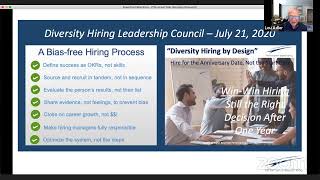
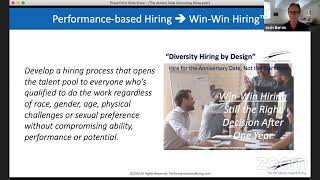
Yeah. Imperfect, terrible, not very good. Yeah. The issue is they do not predict performance. So the idea is you have to change the rules if you want to hire a great person. And I will tell you, diverse candidates have a different mix of skills and experiences than. And I'm even going to call the non diverse people come up with this job description that lists five years of this, six years of that, seven Years of this must have this academics, and they believe that that predicts performance. It doesn't. And diverse candidates always have a different mix of skills and experience. That's the definition of diversity. So let me kind of describe our process, our performance based hiring process, which is win win hiring. And I'm going to contend if you implement performance based hiring and win win hiring, you will hire diverse talent without compromise. Here's the quick take if you want to, and I tell this to hiring managers. You want to hire a great person, irrespective of age, irrespective of race, irrespective of sexual preferences, whether the person's physically challenged or not. I don't care if they're old or young, black or white, from Mars or Greener. If they can do the job, they deserve it. And if you want to hire diverse talent without compromise, you got to offer that person a great job. And a great job is not a laundry list of skills and experiences. At best, that's an ill defined lateral transfer. In my mind. I ask candidates, forget the job description. You've got a bunch of lists of skills and experiences here. And I've done this thousands of times. Tuesday, what's today? I did it Friday. Last week I asked the hiring manager, what does the person need to do to be successful. This list of skills and experiences is not a job description. It is a person description. A person is not a job. A job doesn't have skills. A job doesn't have experiences. A job has things a person needs to accomplish. Tell me what those are. Build a team of accountants to launch a new international reporting system. Great. Take over new territory and build it. Design a widget that accomplishes this in six months. They do stuff. Every single job in the world, from entry level person in the mailroom to chairman of the board can be defined 80% that job can be defined by six or seven performance objectives. I call them KPOs key performance objectives or OKRs objectives and key results. That's a great job. We advertise, hey, this is where I think it's important. We don't list a bunch of skills in our job postings. We say, hey, if you can do this work, tell us what you can do. Here's what we need done. What have you done that's similar in my mind? If you're a candidate, you should just describe the work you've done that's most comparable to that. And don't ever say, I need a job. Say, here's what I can accomplish. I know what you're Looking for, here's what I can do. And we promote this as a career move. We interview. And our interview process is digging deep in that candidate's accomplishments to see if they've done comparable work. And I guarantee if they've done comparable work, they've got all the skills and experiences needed. The work determines the skills. The skills don't determine if they can do the work. That's a big logic issue that needs to be overcome. Then we don't close on compensation. We close on, hey, this is the best career move. I know we have to be competitive about the comp. But if this is not a career move, you won't be happy. We clarify those expectations in the onboarding. We deliver on the promise and that's how you raise the talent bar. That's diversity hiring without compromise. It's a business process to hire great people. And if you get hired this way, you've earned your stripes. You don't have to say, hey, I'm as good as anybody. And I think there's people, diverse people get hiring. Everybody else say, oh, you're hired because you're a diverse candidate. No, our process is you're as good as anybody. You deserve that job. Fundamentally different process. Let me let that sound in. And Brian, any questions related to anything we've discussed so far, if not, make up some.
Well, I think that the issue is certainly from the job seeker side. How do you get managers to have that point of view when sometimes they don't have that? They have a very traditional point of view on how they're selecting candidates. More skills based, less performance based, less career based. So how do you switch that script?
Well, I think now I don't remember the name of the person who had 20 interviews. I'm going to say it was Samantha. But I could be wrong about that. And this is going to be part in that. In that little lesson I said, the job seeker lesson that we give away for free. It basically says ask a forced choice question. And this could be to the recruiter or the hiring manager, but it says very quickly, if you're in an interview situation on the phone or in person, just ask the person. Before we get too deep into this interview, could you just tell me about a few of the accomplishments or some of the objectives of this job or some of the performance requirements of the job? I'd like to give you examples of work that I've done that's most comparable. That's called a forced choice question. You should kind of know going in, if you just look at the job description, you probably have a sense of that now. You have to get an interview to be able to ask that question. But as far as I'm concerned, once you get in the interview, you got to be asked, which is what I do as a recruiter. Hey, what does a person need to do to be successful? I'll find people can do that work. You have to switch the criteria from skills and experiences and personality and first impression into performance. What do you need done? Let me tell you what I've accomplished to see if it's comparable. So I'm going to. Angela. Angela, I will give some ideas on how to find a job in a minute. I'll do that at the end.
We do have a couple of questions about networking if you're open to those.
No, not yet. I don't want to do that yet. I want to kind of focus on this stuff first. I definitely want to talk about networking and how to get the interview, but I want to save all of that to the end. Great. So just tell. I mean that's important. If you have any questions, make sure you're doing it. I want to kind of set the stage of how I am presenting this to hiring managers and recruiters first though. So I want you guys, you're getting in. If you're a job seeker, you're seeing the inside of how I train recruiters and hiring managers. And I just helping we. And we go in with companies, big companies. I'm working with the chairman, I'm working with the president of a company to hire a new vp. Just took on the assignment the other day and I'm going to sit in, I'm going to coach them through the process. I'm going to coach their recruiting team to find candidates using this methodology. But this is the big issue and I think so I'm going to reverse engineer this and you. If you're a job seeker, you have to do it. I always get that's not true that I always. But most of the time when I take a search assignment, I don't really do search anymore. I just help companies do search, help the team do it. So we kind of project manage the effort. But when I look at job descriptions, even look on Indeed or LinkedIn or Glassdoor or ZipRecruiter, wherever they are. Most job descriptions list skills, experience and competencies. Again, that's not a job description, that's a person description. So right away the process is flawed. We just showed it. Having all those skills doesn't mean you're any good and not Having the skills doesn't mean you're bad. So I always reverse it by saying, hey, what does a person need to do in this job to be successful? And it's always a series of five or six performance objectives. If they can do the work, the person obviously has the right mix of skills. Having the mix of skills doesn't mean they can do the work or motivated to do the work. So this, as a job seeker, you have to get an understanding of what the job really is. And just asking the question, hey, can you tell me a little about this job? What are some of the performance objectives? Just asking the question is going to make you a stronger candidate because you got the confidence to ask the question. When I debrief with hiring managers, they always say, wow, that candidate asked some great questions about the job, then clarified it, hey, what does the person need to do to be successful? Oh, they got to organize a project to do this. Then the candidates got to say, well, what are the resources like, what's the schedule like? What's some of the bottlenecks? What's the team like? What do you feel is the biggest technical challenge involved with that? What's the biggest business challenge involved with that? You ask those kinds of questions, they know you know how to get there, put the plan together. So just asking the question and clarifying it puts you in the top half. Then if you've done something comparable, you're going to top quartile. That's pretty cool process. And all you have to do is, hey, tell me about some of the objectives of the job and I'll give you some examples of work that I've done. Any questions coming in with respect to that, Brian, related to this specific topic?
No, I think they've got it, Lou. I think the makes sense.
Okay, so here's what I tell hiring managers. If they can do the work, they have the skills. And this is the key difference to hire diversity without compromise, you have to define the work. And I tell my clients, I will not compromise on that work. I will not compromise. If they can do that work, they deserve the job. But give me a little relief on the mix of skills and experiences. And to me, that's the game changer. This took me a lot of time to figure this little quote out. It's pretty simple, but it took me 10 or 15 years to figure it out of doing this. It's what you do with what you have that makes a person successful, not what you have. It's what people do with what they have that made them successful. So if I can find someone with two to three years experience that can do five or ten years of work, that's a top performer. And during my interview, I generally ask people, hey, walk me through your resume now. What have you accomplished? And I'm looking for people who've accomplished the most with the least. That means you're a great person. Or if you got into a different situation that you didn't never handle before and you've accomplished something pretty significant, you're a good person. But if you're not interviewed that way, you got to force the interview that way. So this is pretty profound. This little slide here is real profound. From whatever you are on the desk, whether you're a hiring manager, define the work. If you're a recruiter, find people who can do that work. If you're a candidate, make sure people are judging you on the work you've done. It's what you've done, not what you have, that makes you successful. That makes you a worthy person. And if you pass that filter, you deserve all the credit for getting that job of being a top performer. So that's really the whole thing we've got here. And here's the hire I'm going to. We have enough time to go through this. Here's my hiring formula for success that I give to candidates. And now, jj, I know somebody asked a question earlier I saw come through about cultural fit. So I'll let you ask that question. I have a formula for success. We have a scorecard. We have a whole process around diversity. Well, performance based hiring, which is diversity. Hiring without compromise, ability to do the work. Let me just read it. Ability to do the work in relationship to fit, which I'll define drives motivation. And because motivation to do the work is so important, it's squared the force multiplier that equals results. When I talk about what's a great person, do they get the results. But if you break it down into pieces, they have to have the ability to do the work. I don't know if it's five years or 10 years. It's enough to do the work. They got to fit with the organization. They got to be motivated to do that work. And equal results. Let me dig deep one level into that. In my mind, ability to do the work is a combination of hard and soft skills. Soft skills is management, organization, collaborating. And I basically said without soft skills, your hard skills are wasted. It's the combination of soft and hard skills. They're not independent, they're integrated. You have to have both and you can have all of those soft and hard skills, but if the fit doesn't work, it's underperform. Fit. Fit with a job. If you're not intrinsically motivated to do that work, you'll underperform. You just. And it's just hard. If you don't want to do the work, you won't do it no matter what somebody tells you. Now, you might do it for a while if you have an economic need, but you're not going to do it forever. Jj, why don't you ask the question about culture? I know there was a question that came in earlier about culture. What was that one?
Yeah, this particular person on LinkedIn actually has a unique culture in their company and wondering how you can assess cultural fit in the interview.
Okay, so that's a great question. Let me first define it and then answer JJ's question. I consider fit three dimensions. Fit with a job, you got to do the work. If you don't know the work, how do you know if they're motivated to do it? Pace of the organization in my mind is part of culture. If you're a fast growing company and the person's been in a big bureaucracy that's slow paced, that's a tough fit. Culture itself, in my mind, the proxy for culture is the decision making process. How people collaborate together on teams. And I'll give you some ideas on how to do it. But decision making process and pace of the organization to me are great proxies for culture. That's how I measure it. I just say, okay, I'm talking to a clump. What's the pace? How are decisions made? Is it intense? Is it hardworking? Is it collaborative? Is decision, is it bureaucratic? You get a lot of sense just from those two things. The pace of the organization, the decision making process. Then I want to understand the value system that they perceive to be correct. But I want to put that in a performance objective. So I said, if the performance objective is build a new reporting system that accomplishes ABC and do it in three months without a big staff, that's pretty intense pace. How are they going to make decisions? How are you going to get the budget? So those are the things that I ask as important, if not all three of these. Are all four of these important Managerial fit. Let's be real frank. You can have the greatest culture in the world that's team oriented, collaborative. But you got a manager who's an sob, which some people don't know. Yeah, everyone knows what that means. You're not going to work Too hard. I love the job I had, but I hated the group president. The culture of the company was fine. I fit with the culture, I fit with everything. But I didn't like my manager. Every other week this group president came down to tell me how bad I was. And yet I was turning a division around. This is when I was 31 or 32, before I became a recruiter. I wanted to do that. I just quit because of him. Biggest demotivator in the world. And I quit four times in one year. I'm going back 40 plus years. Chairman, the group, the CEO of the company, the chairman all tried to talk me back and I did. Four times. I came back third time. I said I can't do it. But that drives motivation. You gotta be motivated to do the work in that environment with that manager, with that culture, motivated to do that. And if you don't know that your motivation is to get the job, it's false. Oh, he said he would do the work. I'm a cynic. You can tell me if you're a job seeking to me, oh, I want to do that work. I say bs. When have you done it recently and if it was 10 years ago, you're overqualified. Even if you're competent, you're overqualified. It's competent and motivated. And in my mind motivated is more important and both equally as important. I say the worst mistake I've ever made is hire a motivated person who is incompetent. I mean he blew the company up. That was a costly mistake. So motivated and competent is critical. Without motivation, you're done. So to me that equals results. Make it happen. This is the hiring formula for success. And we have an interviewing process that drives at home. So the ability to do the work in relationship with it drives motivation and ultimately successful performance. Yeah. Somebody asked here a question, Brian, bad manager. And it's in my mind I quit. I just wasn't going to suck it up and I was confident enough I could get another job. So that was the issue. I just did it. So I don't have a lot of patience. But if you have patience, you can work with them. You can be frank any. Brian, what's your take on that when a bad manager, you've probably been in that way that I put you in a situation like that 20 plus years ago. Well, you did.
My answer to that is nobody who good, who's good will work for a bad manager for long if they know that they're a bad manager up front. So I think you have to Work around that situation in terms of good people. And if they're great for the organization, you have to figure out another place or another opportunity for them because good people will not put up with a bad manager, just like you didn't. But managers can be coached, and I think that's the other side of that, which is you can have managers who can learn what they need to learn to be able to attract the talent they need to do the work.
So those are two. I think somebody else here wrote, please, I need a job. Do not say that to anybody. I typically knock people off who say, please give me a job. Nobody wants to hire someone with a please give me a job. That is not a good marketing technique. Instead, say, here's really the work that I've done best at and I'm really good at. You need somebody to change that component. Don't say, give me a job. Nobody is interested in hiring somebody who is pleading for a job. Number one, once you get it, you won't do any work. So why. It's a terrible, terrible, terrible thing to do. Don't say, please, I need a job, or where can I send you my resume? Instead, write down the best thing you've ever accomplished in your life and find people who need to do that work and say, hey, I can do this work. Do you need someone who needs to improve a process, build a team, grow sales? If you can do that work, I'll talk to you, but I don't want to talk to anybody neither. Not a single person world cares about. You need a job. What can you do for them? Not what can they do for you? This is not a free ride. If you get a job using this process, you deserve that job. I'm not. I don't know why I have this. We're not going to do it. So how did we even get into. Okay, I guess we're getting close. Let's open it up to more questions here, Brian. Somehow I. And I can. I think I've got a couple of the things on job seekers. Let me kind of just. I'm going to screw this up a little bit while you look for a few questions, Brian. And then I'm going to. Anything going on there, Brian, that you can add ask?
Well, one of the questions that came up from a job seeker standpoint is the whole they know that networking is the way to get a job, but they seem to hit a lot of roadblocks when they try to network directly with a hiring manager. They're not open to it. They don't have time. They don't respond to people who approach them. So what's your advice to somebody who wants to network but gets sort of the door slammed in their face as they're doing it?
Okay, so let me kind of. I did this with. Hold on. I want to make sure you can share my screen. I want to just. I had to restart that because I wanted to edit a bit. Can you see my screen there, Brian?
I can now, yes.
Okay, I just want to make sure. So the question was about networking and I think JJ asked a similar question about that too.
Jj, I have some questions actually from the recruiter side regarding networking. So that'll be a good follow up.
Okay, so here's what I tell job seekers. Networking is not about talking to as many people as you can. Networking is talking to two or three people or four people who can vouch for your ability. Hey, you're really good at this or really good at that. You talk to those people personally. Get them on the phone. Now it's probably better on the phone, talk with them and say, hey, I'm looking for a job. I work with you in this capacity. And these are people who trust you and if they knew about a job, they would give it to you. But only three or four, the four best people. Then you ask those people, can you introduce me to three or four people whom you know who might lead me to another job somewhere or anybody you know. It could be a lawyer, could be their accountant, could be there, anybody, a friend they work with, their. A co worker, their boss. But you have to get three or four names from each of the three or four initial people who can vouch for your capabilities. You then talk to those additional three or four people from the three or four. So now you're up to 10 or 12 additional people. You meet each one of them and you describe to each one of them why you're a good person and what you can. And don't say. I need a job. That will not help. You tell them, when I work for this person whom you know, this is what I accomplished. This is. And I'm looking for something similar to that. And would you just keep your eyes and ears open to see if you find anything. In addition, could you introduce me to two or three people you know who might be aware of something going on now? Now you're going to be up to 12 times. You're at the 25 to 35 people now. It is hard work. It's ego depressing work. But if you're good, you have to do it. And then if you do it in 30 days, you'll get three or four opportunities to get real jobs, real careers. That's true networking. So now let me say, I'm going to kind of summarize it, but jj, you said it was. And let me. I was talking to somebody else. Who was I talking. It was a career counselor guy called me on Monday and he said when you do networking, you're giving something. You're like putting money in a banking account. And if you have no money in a banking account, you earn zero and zero interest, you get nothing. Even if you got some level of interest but no money in the bank, you get nothing. When you get a referred to somebody important, you owe that person who made you the referral and they will be willing to do it because they trust you. But recognize that it is a bond that you've made with someone who can vouch for your experience that they're going out on a limb to vouch for you. You have to deliver on that promise. That's what networking from a job seeker standpoint is about. It's critical, it's important. That's how you start getting into the hidden job market. Jj, you said it was a question from a recruiter.
Yeah, we've got two questions actually from recruiters. Do you think that networking is replacing the traditional recruiting process? That's the first question here.
Let me make that statement. It's a great question. What are you talking about? Is my answer. It is never replaced. It is what I've done for 40 years. I only network. 50 to 60% of the people that I present to my clients are networked. So it's not replacing it. It is the basis of passive candidate recruiting top performers. So one example I do is when I get a search assignment. I have a rule in our training. It says fish with the big fish. Now I do direct sourcing. Direct sourcing. I look for people performance qualified, meaning he or she can do the work. They have the achiever pattern indicating they're a top third top quartile their peer group and they would see the jobs or career move. Or someone who can lead me to someone who's a semifinalist. I call those people semifinalists. But I would say two thirds of my work is talking to people who are semifinalists who can lead me to. So I'm looking for a national accounts manager. I'm going to talk to buyers at stores or the buyer. If I'm looking for a sales rep, I'm going to look for sales managers whom I know can get me great sales reps. If I'm looking for an engineer I'm going to talk to project managers who've worked with that person. If I'm looking for someone in the logistics and supply chain I'm going to look for a warehouse manager. So to me networking is the core of what you do. It's not a replacement or it's not a new thing, it's the old thing. And to me if you use LinkedIn Recruiter properly recognize LinkedIn Recruiter is a network of 600 million plus people. Most recruiters think it's a database of 600 people and they try to source people who meet these skills requirements which is a non starter to begin with. Use LinkedIn Recruiter to direct source semifinalists performance qualified achiever pattern see the jobs or career move and our course does that and get nodes people who can get you referrals. To me that's the heart and soul of great recruiting. It's not replacing it is recruiting. What's the next question JJ the next.
Question is that there is no doubt that networking is the key to hiring great employees. But do you think that most organizations know this and if so how can they best sort their networking pool to find the best candidates? Especially when most hiring managers say they don't have time to network.
Well let's say this so I just talked to a number of people who are working with small businesses and SMB. A small business, small medium sized business is companies that say have 100 to 1,000 people. We are seeing a trend and I validated this trend with people who sell HR technology is that hiring managers and small companies want to do it themselves. They and but to do it themselves they have to be measured on the quality of the people they hired and they have and this means the company hey you hiring manager are going to be measured on the quality of people you hire and you're going to be measured based on win win hiring and you can measure on diversity. So diversity win win hiring meaning that the person's a top performer A year from now you agree this is a person's a great performer or you make that person a great performer. And and the county says this was a great opportunity for me. So I think there's it's not the hiring manager's responsibility. Well that's not true. A lot of hiring managers say they don't have time for it. Well they shouldn't be hiring managers then. But most of them once they realize that hey if they're measured on the quality of the people they hire, they'll make time for it. Right now they're not measured on that. So they don't have to worry about hey, give it to delegate it to recruiters. But I think so now let me that's so I think you have a hiring manager issue which is one issue that was stated in your question. JJ the other issue is, is how do you do it? In my mind this is where LinkedIn recruiters LinkedIn recruiter it is an expensive proposition but if you're a company you can afford one or two licenses. It's big time bucks. But it's the most, it's the best investment you'll ever make because on LinkedIn Recruiter you can connect, you can search as a recruiter, you can search on your first degree connections. Connections. So if I'm connected to the vice president of marketing at a company and I'm a recruiter at that company, I can connect on the VP of marketing and see look on his connection. Say let's say look, I'm looking for a managing marketer of advert advertising manager. Well if I have someone in my company who's a VP of marketing and in some previous company they're connected to people in advertising, I can just search on that person and then I can call the VP marketing say hey, I know when you were at this prior company you have this person. What do you think of this person? Oh, great person. Don't know if they're looking but they're a great person. But use my name. That's called proactive employee referral program a perp tap into your employees who might know those people and proactively look for names of people they know you do those things. Networking is a piece of cake and just force it. Hey, I'm gonna, I'm looking for diverse candidates. So look for, you know how to do reverse candidates search on LinkedIn for diverse candidates or look from who are the first candidates? Performance coffee and achiever pattern career move. Find people who know those people and get a referral for those people and they'll call you back. Now that simply stated, it's a lot of work. We have training that does that. Let me kind of just. Sorry guys, let me show this and I'm going to go back down to that. Any questions? Brian? So let me just say this. If you go to winwinhiring.com, take the free job seeker class, everybody can sign or everybody can sign up for these two free classes. Performance based hires, an introduction, Win Win hiring for job seekers Let me focus a little bit more on one or two more questions. I like these class, these LinkedIn live to only go 45, 50 minutes at most. So let me take a couple of questions, maybe from the hiring company side and from the job seeker side. JJ or Brian, Anything?
Yeah, Brian, go ahead.
I'll jump in. One question was, how do you really measure somebody's true motivation.
When you question. I got it. Yeah. Yeah. Excellent question. And it's not by being seduced by that person's energy and enthusiasm. You can be the quiet, quietest, most nervous, most introverted person in the world. But during the interview, my question to every single candidate is, tell me about your biggest accomplishment, the best thing you've done your whole life. Tell me about the best thing you've done. And during that question, which takes about 10 or 15 minutes to fully understand it, is I say, where did you take the initiative in that project? Where'd you go the extra mile? Where did you do work you didn't have to do? You just wanted to do it? What about that? Where you really took work that you really like to do? Show me where you just really got in a state of flow where you just were totally motivated. Then it's interestingly enough, and I probably got examples of three or four where this person went the extra mile. But then it's interesting is, hey, tell me about another accomplishment at a different job. Describe that to me. Another major accomplishment. Where'd you go? The extra mile? What did you like to do the most where you just worked as hard as you could. What kind of work did you go the extra mile where you really didn't like to do? You just knew you had to. And I asked it again and again. So over two or three interviews, I've asked the same question for three or four different accomplishments, and I start seeing a pattern of where a person has taken the initiative. Then I compare that to what needs to be done on the job. Now, if you go to the Win Win hiring program and we have an interviewing course which shows you exactly how to do it. But that's how I do it. Let's say this. I am the biggest cynic in the world. If you get past my interview, you are a good person, you might not be a good interviewer. And that's why I created this class. I don't care if you're a great interviewer. I'm not hiring you to be a great interviewer representing you. I'm hiring you because you're a good person. And if I got to clean up your interviewing, so be it. I want to know if you're good, you can do the work. I don't care if you're black or white, green or yellow, physically challenged or not, you deserve the job if you're good and I'll go to bat for you. But you got to go to bat for yourself and you got to learn to be good interviewers as best you can. As best you can. But it's focused on asking for choice questions, digging deep and trying to clarify them. Demonstrate that you really are the person that they're going to hire. And if you get hired for that job, you take great pride in it because you are focused on your performance. That's what diversity without compromise is. It's hard work, but it's worth every penny of it, whether what side of the desk you're on. Any other questions there, Brian? Jj, you had a few, right, jj.
One actually was specifically about race. And do you think that race is a factor in securing a even in today's world? Do you think it's a factor?
Yeah, because people are. You can't control bias. They will look for you to exclude you. And even if you look at the skills based job descriptions, diverse people by nature have a different background. So that's why a skills based job description by its very nature is biased. That's why I don't use them. I use a performance based job description. First impression is biased. I mean, we just lost somebody because for a job. One of our companies that work with us on searching lost a candidate because the hiring manager said the person wasn't humble enough. Now there's a book and you might have seen it. Hungry, humble smart. And if you really dig it, it's about how to develop team skills and the person. You have to be both hungry smart and humble smart, meaning you're smart enough to understand what these other people on the team need. Hungry means you're pushing your position forward in a collaborative manner. Humble means you're not just thinking about yourself, you're thinking about the group. And it's to me, yeah, interesting concept, but a little bit convoluted. Somebody came up with it, Good guy, but he came up with something. He's selling the heck out of it. But what I do as part of it. So Brian asked me, how do I determine motivation? How do I determine good team skills? I just ask candidates, hey, what kind of teams you've been on? How did you get assigned to that team? What role did you have on that team? What happened as a result of that? Team. Did you get assigned to another team? Who put you on the team? How did you convince that team to do this? So I just look at the teams you've been on, the results and the recognition you got on a team and what happened next. And if I see people growing, putting on and over time being involved in more important, more cross functional, collaborative teams. They're hungry, humble and smart. They've got great team skills. I don't have to make a judgment of whether I think you have good team skills or not. Your people who work with you determine if you have good team skills. So now going back to the question is, yeah, I think most companies are biased. Their systems are biased, their people are biased. If you can't, if you have a language problem, it's hard to understand somebody. I have that problem, so. And communication skills is where I have a real problem. I have a hearing, it's not terrible, so don't feel sorry for me, but I don't hear too well. So if someone has an accent, it's hard for me to understand what they're saying. But the way I overcome it is I task the hiring manager. How is this person demonstrate good communication skills on the job? What do they have to do? Are they going to make a presentation to the senior management every month? Then I ask candidates, hey, you have to make senior presentations to a diverse senior management team. Have you ever done that before? Walk me through how it turned out. So I take a. I create a performance objective around it and try to understand it to see if it makes sense. So I don't impose my criteria of what good communication skills on. I understand what that looks like on the job. One last question, Brian or jj, anything that just stands out that you think is a great closing statement? Not one, huh? Pretty good.
I don't see any from our LinkedIn crowd, Lou, right now.
Brian, anything on your side? I'm seeing a few here. Brian, did we lose you? We can't hear you.
If we did, I think JJ's getting cut off. Lou, can you hear me?
Yes, I can now. Well, I guess we can. We can't hear you, Brian. You're gone. So let's pass. I will end it by saying getting a real job is much more significant than pushing the apply. Pushing the apply button. So if you're a job seeker, I would find companies that need you. I would put together a little video or a quick summary or sample of your work that you've done and say, hey, this is the work I can do and I would not apply. I would bypass the HR recruiting department. Most HR recruiting departments are box checkers. Sad to say, but they are. They're not looking for great people. Hiring managers are looking for great people. There is a movement to hiring managers. Do it yourself. I would prove to you that you can do the work. Hey, it looks like you need people who can do this work. Here's what I've done that's most related. Is there someone at your company I can talk to about this? If you get a referral that way, you've just changed the game. Then ask ask questions here. And a woman, and I'm not sure her name was Samantha, but if it was, please do that and just tell me if this course would have helped. If you're a hiring manager, don't let your recruiter go out in the field looking for candidates unless they know the performance objectives of the job. And if you're a recruiter, don't start looking for candidates unless you understand the performance objectives of the job. You do those things, you will hire great people every time. You will hire diverse candidates without compromise. Thank you very much. Hopefully this was helpful. I'll see you next two weeks at LinkedIn Live. And I got Jerome Turney Turnick, CEO of Smart Recruiters. That will be a great show. July 8th. Follow me on LinkedIn or go to Eventbrite, but hopefully we have your names here. I'll put some information out there. Have a great day, guys. Hopefully this is helpful. Bye now. It.