Lou Adler - The Almost Daily RECRUITING Show
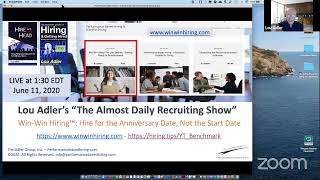
This is a recorded LinkedIn Live session (June 11, 2020) in which Lou Adler critiques common hiring practices (ineffective job postings, apply-button inefficiency, poor interviewing) and presents his "win-win hiring" approach: hire for year-one/anniversary success by defining performance objectives rather than filtering on resumes/skill lists. He gives practical advice for candidates (use postings as leads, network via referrals, convert interviews into performance-focused conversations using a forced-choice question) and for employers (benchmark top performers, train hiring managers to define work-driven objectives).
Chapters
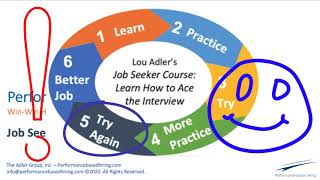
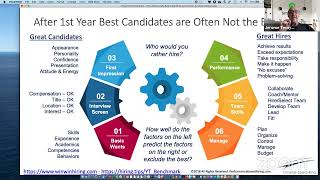
Hey. Hi, everybody. I'm getting ready to go LinkedIn live. We're going to talk about lots of issues today. Want to make sure that we're there. Let me make sure that I can see you guys. Hide that little puppy. Okay, we're going LinkedIn live. I want you to start putting in in the chat area any of the hiring challenges you're facing. But as you tell me what the hiring challenges you're facing are, please give me the perspective. Are you a manager, talent leader, recruiter, job seeker? And feel free to add any of your comments. I'm just warming up here. I want to see it. I see we have some people from the Middle east, which is great. But again, what I'd like you to do as you join this live event, and I will say it's live at 1:30 Eastern Daylight Savings Time on June 11, 2020. If you're seeing it anytime other than that, you know that it's not live. But they say you can't see me. You're from Uganda. Good morning. Larry David of recruitment. Oh, that's me, right? Yeah. Thank you, Sacheen. I think you're on here a lot. Okay. What I need you to do is give me some of your hiring challenges, and we'll kind of discuss the issues from a number of different perspectives. Perspective one is let's understand the difference between getting a job and getting a career. The difference between what you have to do, if you feel you're being ineffectively assessed, and if you're one of the people doing the interviewing, what you need to do. So we're going to look at all of those kinds of things. So let me kind of give the highlight here. As you know, I tend to take a different kind of perspective on the hiring process. I tend to look at the world differently than most. But this isn't the slide deck I wanted to have. So we've got to kind of rethink this. I'm going to start over again. As you're putting in your comments here, this is not what I thought I had here. That's not what I thought I had. Okay, I got to find out where I am. Sorry, guys. I had this all planned out and I messed up. I can't believe I messed up. I don't mess up. This is where I wanted to be. So let's go here. We're not actually that far off. Oh, I know what I was at. I was at the end, not the beginning. I have a couple of websites you can get to. We have this one over here. On the left or www.winwinhiring.com I have a job course or a free course for job seekers and an introduction of performance based hiring. So if you're going to be interviewed at all, make sure you take that prep course first. At least do that you, if you get an interview, you will do a better job of interviewing if you follow the directions in that course. And I'll give you some. Today we have another free course on just an introduction of performance based hiring. I don't know that being overqualified and being a woman are related. I will describe exactly Shalonda, what it means to be overqualified and how to handle it and we'll go through all those issues again. Give me your perspective. Job seeker, manager, recruiter, try to find people and I want to give you my perspective first and we'll answer all your questions. When I wrote my first book, I probably wrote it 25 years ago. It got published 22 or 23 years ago. In 1998 or so, I had this cartoon drawn staying and it was describing the state of the hiring market in 1998. I felt that companies were spending a lot of money on job postings. They were boring and they were largely wasted. Candidates would respond to jobs even though they weren't qualified for them. It was hard to find a job. You actually had to work very hard to find a job. People who interviewed candidates weren't very good at it. And I had been debriefing thousands of managers by that time and I know that they made judgments about wrong things. Recruiters weren't very good at recruiting people. They tend to box check people as opposed to recruit them. It was very long to get hired and the systems that were not fully integrated that did all this work. So I figured a lot of time being wasted. So I've shown this slide for literally thousands of people over the last 22 years. And I asked people what's changed? What has actually changed with this process? And I don't think much has changed. So as you look at that, first I want you guys, whether you're a job seeker, hiring manager, recruiter, Paul Sourcer. Look at that cartoon that was drawn. I didn't draw it. I had a cartoonist draw it. I just said he drives something like this and he came up with that idea that a lot of money was wasted. What has changed in 22 years? What has changed in 22 years? I mean, obviously we got through economic cycles and please do not use the word please. If I hear one more, okay, I'm getting Rid of you. You're off the list. Sacheen. You've been on here before, but I'm killing you. Sorry. You are now disbarred. Blocked. You are blocked. I don't want to hear the word please. As people know, I'm very direct. Please get me a job is not the way you get a job. The way you get a job is, hey, this is the work that I can do real well. Do you need someone to do this work? If not, let's go on. Or do you know someone tell describe people what you can do not please. Nobody wants. Please do desperate. So you're banned. So my first banning, but we banned somebody. So here's what I've over the years, and I've been a recruiter for a lot of years is I believe in what this process called win win hiring. You hire for the anniversary date, not the start date. Yeah, Brett, Nothing's changed. I mean, I see. And nothing's changed for a variety of reasons. And I'm going to prove it in a minute. I'm going to say the big reason is most people want real good jobs. And most. And job postings don't describe real good jobs. They describe this mechanical thing that makes no sense. And you hope and pray that you get a job. It makes no sense. Technology can actually work properly. There are very few people who actually make it work properly. So this one, when hiring says, after a year on the job. After a year on the job, candidate says, I'm glad I took this job. It was more than a job as a career. And the hiring manager says, great. This was a great person to hire. Achieving that has been my goal forever. I am still fighting that battle. I know I don't have 22 years left. I am 74 years old. I do not have 22 years left. I'd like to solve this problem in the next few years, at least watch it happen. But here's what I've done. And this is kind of unusual. I know it's rocket science, but I said, okay, how do the best people actually get great jobs? I mean, this is kind of. It's called benchmarking. Yeah. It's really this exotic idea. Hey, just talk to 100 or 200 of the best people you've ever worked with and say, how'd you get that job? And you'll discover some interesting things. One of them is very few of them applied. You talk to 200 people of how they got a great job. Maybe six or so got it because they applied. But the Other 194 did it differently. So I'm going to focus on in general how do good people get jobs. So I want to understand it. First off, we have two halves to the talent market. The top half which is people above average and the other half which are people below average. It's not rocket science, it's the kind of basic math and companies want to hire people in the top half. So if you think you're in the top half of anything, look for a job where you're in the top half. You'll get a better chance. But don't look for a job where you're in the bottom half. You don't have a chance. And if you get it, you won't do too well and you'll be unhappy three months into the job. So if you're in a top half, you had to prove it. You don't know got to know someone to get hired. Morgan, you might think you do, but there are ways to find people. I'm going to show you how to do that. Today, companies want to hire the most qualified people. That's the top, third, top quartile. A lot of people apply to jobs who are totally unqualified based on the job description. And that's the problem. Many of you apply to jobs based on the job description. The job description is not descriptive at all. It says you must have five years of this, two years of that, a degree like this and you must make a good first impression. That's not a job. That's a beauty contest at best. But it's not a job. It is an ill defined something of hey, if you've done some work like this and you want to do it again, it's basically what it says, but that's what it is. So a lot of people push that apply button. The stupidest design concept in the world is the apply button. It's stupid, it doesn't work. But job boards like indeed and ZipRecruiter and Glassdoor get paid for having you folks apply. So they the fact that doesn't work, it doesn't matter. They get paid, they pay the job board for you pushing that button. And now the companies have to say, oh, you shouldn't have pushed it. So they have to buy technology to prevent people, not prevent it from thinking about how to the people who shouldn't have applied to begin with. Unapply. So finding a job, ill defined as it is, is a high technology process and impersonal and transactional. Finding a career is a high touch process. And I know that someone said you have to know somebody. Well, you do have to figure out how to know somebody. You don't have to know somebody right away. I'm going to give you an idea today that in 30 days you will get to know enough people to get known. But you don't have to start with knowing people. You got to figure out, how do I use a network to build a group of people to get to know them? And it is harder than pushing the apply button. Pushing the apply button, that is nothing. So don't be disappointed when you don't hear about it. I pushed the apply button. I pushed the apply button a thousand times and I didn't get hired. Well, it wasn't that hard to push the apply button. On the other hand, if you go out and try to network with people and I'm going to show you how it's a little bit harder, your ego's on the line, but it actually will work. And if you actually talk to people that way, your ego's on the line and you actually might get a couple of job interviews. I'm going to give you the class to do if you get a couple of job interviews. But this is the idea. Now here's a problem. These are actual statistics I'm going to give you. Now, I've listed statistics for 300 million people who've applied to job postings. 4 to 5% of those people actually get interviewed. 4 to 5% of 300 million. Only 1% of those 300 million or 3 million people actually got jobs. So that's a pretty inefficient market. So the job applying for job button is a very inefficient process. A 1 in 100 shot, but only if you meet all the criteria on the job description. So why would you apply to a job description that you don't meet the criteria? Now, even on LinkedIn, they got a lot of job postings. I look at them and I've applied for some just to see what would happen. And it says right there, 73 people have applied for the same job. You were in the bottom quartile before you even push the button. Why would you push the button? If there's 73 people better than you, you're not. The system will kick you out right away and then you'll get aggravated because you applied to a job and didn't respond to tell you you weren't qualified, even in a nice way. I'm not pretty cynical about this stuff, but after doing this for 40 years, it's easy to Be cynical and you guys should be cynical. But then the idea is don't be cynical, do something different. And that's what I'm going to try to suggest. So if you think about the outcome, here's the high touch process. Companies try to attract people in the top, third, top quartile. It's an outbound process. They reach out to people who look qualified as a recruiter. I look at LinkedIn profiles and I say, oh, this person looks pretty good. Let me see if I should reach out to that person. I'm looking for criteria that would say this person could be good for this job. When I contact the person, I try to, it's a slower process. I understand what their capabilities are, I understand what their, where the career trajectory is going. I, I understand a lot of issues. But if we put a win, win hiring process together, the goal is a year from now, this will be a great job. Well, it'll also be a good job in the first 30 days, 60 days, six months, et cetera. But I know that if I understand what drives this person to be highly motivated, they will be highly satisfied on the job, there will be lower turnover, they will improve quality of hire as a company. But the focus is on ROI and the impact this person can make on the business. That's why you want people in the top half, people who can make a contribution, not just get paid. And that's why this person who said, please find me a job. It's not about please, here's the work I can do and let me demonstrate to you that I can do that work. And this is kind of the hint is, but let me kind of save that for the end. Here's the problem with applying the job is to weed out the week based on criteria that doesn't even predict the week. But that's the way it is. You know the job description. If you don't have all the skills, you're not going to get interviewed. And yet there's probably 10 other 20 other jobs that you could be qualified for, but you never get a chance to talk about them. So you got to say, hey, I got to use the back door to get an interview. How do I get into the back door to get an interview? So use the job posting as a lead. If you see a company hiring people in marketing or accounting or whatever the field is, go look at all of the jobs they have in that field. Maybe look at collateral. Okay, maybe they're also looking at engineers, they're looking for marketing people, they're looking for customer Success people, they're looking for warehouse and logistics people. Ah, they're looking for a lot of people in these kinds of fields. How would I meet somebody who's doing work in that field? So use the thing as a lead. Don't use it as I'm going to apply to the job. It'll be a waste of time. Unless you're perfectly qualified, the system will kick you out. But when you hire people on this process, the company hires the best of the person who applied. And very rarely a good person doesn't need a good. Let me just be real frank. If you're in the top half of anything, you don't need to apply to a job. Somebody knows you're good. And that's where I think Morgan said, you have to know somebody. Well, if you're real good, you definitely don't have to know somebody. But if you're real good, here's what I tell people. If you've ever been good at all in a job, really good, reach out to those four or five managers you work with or people you've worked with who know you're really good at something where you are hard worker, you're committed, you got it done, you didn't make excuses, you helped other people. That's what a real good person does. So find managers or people you work with who can vouch for you and say, hey, could you introduce me to three or four other people, you know, who might be hiring who? You could vouch for me as a good person. Then they'll say, well, I sure could, because you're a good person. They would give you three or four names. You then talk to those three or four people. So now you're up to eight people. And you ask, well, if you have three or four, and each, if you have three people each gives you four people, you're up to 12 people each. Ask each of those 12 people now to give you three or four more names and you're up to 24, 30 people. And in a month you'll have a job. Because now that's how you meet people. That's networking you. Yes, I know it's time consuming and your ego's on the line and you're afraid of it. But hey, guys, that's selling. That's what salespeople do. They meet people who possibly could introduce them to customers. Well, look like you're a salesperson for yourself. But being a salesperson for yourself, you don't just call everybody and hope for the best. No, you go out and reach out to people. So, Engineer Farhan, let's see, to who are you talking? I'm talking to everybody, Gabrielle. I don't know who I'm talking to. You got to tell me. You just got to find people. Who's the. Tell me who's spamming comments and I'll connect. I'll. I can actually delete people unless you're speaking in some language where I don't know the language to who you talk. Maybe it's this person. Okay, I'm gonna. I'll delete this person. I think that's his code. I'm sorry if I have to delete you, but people are aggravated with whoever this is. I can't pronounce the name. I gotta block that user. So I tend to block people if they're idiots. Sorry, but I don't have time for this. I'm too old to play around. Try to be patient and politically correct. I want to be engineering or analytically correct. So this is the idea. Let's kind of take it one step further and I'll be happy to. So here's the fundamental. Let me do this. Let me present the fundamental problem and then we'll kind of, kind of navigate it. Whatever side of the desk you're on. I make the contention that someone who's defined as a great candidate is not necessarily the best hire. This is foundational stuff, but will help you if you're a great person but not necessarily a perfect candidate to get a job. But you got to understand this part first. So this is a slide that I've shown 20,000, maybe 30,000 hiring managers. And it basically looks at what the definition of what appears to be. And it's artificial. So I want to make this statement. This is artificial. It's not true. It is not a great candidate. But this is what people perceive to be a great candidate. They have all the skills and experiences that you need to have. And yet I tell people, have you ever met someone who has all those skills and experiences, is not a great person? They say, oh, sure. I said, have you ever met a great person who doesn't have that same mix of skills and experience like all the people you promote? Oh, yeah, sure. So we already know that the skills and experience you list on a job description don't predict on the job performance. They sometimes filter out good people who are high potential people or people, you know, who can do the work, or diverse candidates or people with different industries who are really good. But you filter those people out and you're left with a group of People who might or might not be skilled, but if they were actually in the best in the top half, they don't want to do the same work over again. So basically you're going, if you use those skills and experience, you're actually hiring. You've eliminated the best you're going to get is people in the top of the bottom half by using that criteria. And managers kind of buy into that argument. I said, but let's make it worse. Recruiters then get these best of the bottom half on the phone and they have to agree to the compensation before they can tell them about the job. That's like going to the store to buy a TV or something and say, no, what's your budget for TV? You can only look at those TVs. What's your budget for a blender or appliance? No, you can't look at the other ones. What's stupid? Nobody would do that in hiring, we do something stupid. You have to agree to the compensation, the title of location, before you can even talk to anybody about the job. Now, is that a stupid idea? And recruiters will tell you, I do it because of efficiency. No, you do it because you don't understand what's going on in the real world. And now let's assume you meet filter. What? So now all we have is people who the top of the bottom half who also agree to the compensation and everything else. They negotiate the offer before they can even meet the hiring manager. And then they're judged on first impression. Is that Sema? God, I tried to block that person, but I can't. You gotta. I can't. I thought I blocked that. Well, if I see, I thought I did block that person. I believe I did, but I can't be positive. And I seen some comments here because I can't read those letters. I can kind of roughly look at the graphical characters. So I think I did. I think I blocked them, but maybe not. If I see another comment come up like that, I will block it. Okay, so here's the idea. This is all flawed stuff, but that's what happens when you apply to a job. So now I tell managers, forget that. Tell me about the best people you've ever worked with. And you might want to think about that too. Tell me about the best. And I've trained 20,000 hiring managers, 30,000 recruiters. Tell me about the best. After you work with someone six months for a year, they're really good. Tell me about him. And, and I've been asking this question since 1978. It was the same 40 years later. It's exactly the same. Here's what a great person looks like. They get the job done. They don't make excuses. They figure out how to overcome bottlenecks. They take responsibility for it. They're committed. They get it done. They don't have to be perfect. They just have to be good enough to get it done. They also work well with the team. They collaborate. They don't complain. They're not demotivators. They flexible. Hey, okay, I recognize that this isn't my job, but I'll do it anyway. I'll help you. If they're managers, they build good teams and develop people and they get the stuff done. They're good managers. They plan, they organize and control. They manage the budget, their own budget or their team's budget. That's a good person. It's been a good person probably forever, but I know it's been a good person for the last 50 years. Then I ask managers this question, and I'll ask you this question as well. Who would you rather hire? Someone who has all the criteria of a great candidate, the skills, willing to negotiate the comp and makes a great first impression. Someone who can deliver the results. Who would you rather hire? I'll ask you that in the chat area. If you were a manager, who would you rather hire? Maxine, take my course. And if you have a phone interview in an hour, get off of here and jump. Now, I'm going to give you one tip in a minute and that'll be helpful. This is all you can do. So I've asked 20,000 managers. People are going to start saying here. Obviously people want people who can deliver the results, have the skills. But here's the real tricky. Here's the. That's not real deep psychology. The factors on the left of a great candidate don't predict the factors on the right. There are plenty of great people who have a different mix of skills and experiences than what's listed on the job description. There are plenty of great people who will reduce or negotiate their compensation once they know the job. So why would you filter on that? There are plenty of good people who don't make a good first impression, but who would get nervous in the interview. So all the stuff on the left excludes good people. This means you have to fundamentally rethink how you hire people. Fundamentally rethink the entire process. I just got this great award. I received 100 chats on Restream. Oh, God. Why would people give you an award for getting people to chat? So here's Maxine. You got an interview. Here's what you've got to do. So here's what I tell candidates to do all the time. If you feel you're being misinterviewed, meaning not being interviewed correctly, somebody asks you a silly question, somebody's box checking skills, somebody ask anything. And I'm going to ask other questions. I'll answer other questions. Do this very early on in the interview. You ask this question. Would you mind telling me some of the performance objectives for this job? I'm a little bit unclear of what you really want this person to do on this job. And then what I'd like to do is give you an example of something I've done that's most comparable. You have to do this. I call it a forced choice question. You're forcing the interviewer to ask you a good question. Hey, I'm a little bit unclear what the job is. Would you mind, before we get too deep into this interview, tell me some of the challenges you have for this job, some of the things you want this person to do or what you how you're going to define on the job success. I'd like to then give you some examples of work that I've done that are most comparable. And you might want to ask some clarifying questions. Oh, I need someone to lead an accounting department to improve the performance of the reporting. What does that look like? What's the reporting now look like? What are some problems you have with that reporting? Who is going to use this reporting? Who's the report for? If you really know that job, you will be able to ask the right questions. So just asking, hey, tell me about the performance objectives for the job and asking clarifying questions. They already know if you can do it. Good people already know what questions they ask. Okay, this is the project. You're going to be signed on day one. You would naturally ask these questions. So naturally ask them in the interview. Now you've kind of doing a mini staff meeting like you would handle in the first week on the job. You've just changed the interview to. That's a misleading discussion to see if you're a nice person and have some of the skills, but about the real work. And this is what so I always tell people, convert the interview to a conversation, like if it was a staff meeting where the person just started in the first week. I tell this to hiring managers too. But most hiring managers that you'll interview will forget that. They'll make a judgment about your first impression, how busy they are. They're not even going to be thinking about it. They had not prepared. So this is how a candidate can take charge of the interview to make sure he or she is assessed accurately. On the other hand, if you can't answer the question, you're not competent. Now, I know somebody asked me a question. That's a good question, Manuel. How could you possibly know what you're applying for? Must have five years of experience. Must be familiar. Must have a degree in accounting. Have a CPA from a major accounting firm. And here's our job. You wouldn't know. Nobody tells you what the performance objectives are in a job. You show me one if you want to highlight a job. Emanuel, send me a job description that you. That knows what the job is. You don't know what job it is. It's. It doesn't. They're vague. I've looked at plenty more than you have. I've looked at least 10,000 job descriptions. None of them tell you what the job is. They tell you what the skills you need to have, not what the job is. So let me kind of. I think I have this one slide here that I might have. Let me just go out of this. Let me go here. That's a very fair question, though. Try it and you'll discover that it does. But still a fair question. Manual. So I don't want to minimize that because I think it's a fair question. But when I train hiring managers and recruiters, I basically say, and let me go back many, many years, my first many assignments, I have never used the job description to define a person. A manager tells me, I need a person with five years of this, two years of that, a degree from this background, it's got to be results oriented. And I then say to the hiring manager, you know, that's not a job description. That's a person description. You're looking for an accountant. What does the accountant need to do to be considered successful? Oh, they got to do upgrade to reporting systems. Okay. How many people are they going to have to upgrade those reporting systems? How fast? What's the reporting system you now have? What are you going to try to convert the reporting system to? I mean, there's so many questions about it. So I just tell managers, hey, let's put the job. The person description, which is really not a job description. Person in the parking lot, what do you want the person to do? So, so I focus on person needs to do, not what a person needs to have. And it's always about performance objectives. And they kind of know it, you just got to pull it out of them. And this is, and when you think about it, if the person can do the work, he or she has all the skills needed. If the person has all the skills, doesn't mean he or she can do the work. Emmanuel, you might have five years experience, you might have exactly what's on the background. And, but if the work requires you to get a project done in 90 days with no staff, where you could probably do it with six people and you could do it in four or five months with the right resources, you're going to be a failure. So because you know the job doesn't mean you understand the environment, the circumstances, the manager's leadership style. There's so many variables you don't know. But getting in a conversation about that, change it from you, from that manager. Assessing your skills to, to assess, wow, this person really knows how to put a plan together. This person really understands the resources we have. This person, you can't get that done in. So if the manager says, I need this done in 90 days. And you say, well, tell me what the status is right now. And you say, you can't put that accounting system on an SAP platform in 90 days from where you're starting from. It's going to take six months, you're going to have to do this. Manager. Wow, you really know this job, don't you? Manual. I mean, that's the idea of trying to do this. Still a very fair question. Yes, Steven, you will find, I mean, they record all of these things, so if you look up Blue Adler recorded live, it'll be, it'll be, in fact, it was up in like minutes. So you'll definitely be able to get it. So this is something that took me a long time and this is actually a mathematical relationship. The work itself drives the skill set. The skills don't define the work. And if you don't ask the manager what the work is, you're going to wind up there. So, so the thing, everybody. Have anybody here ever taken a job where you weren't 100% sure what it was? Yeah, you know what accounting managers do, but you don't know if the situation is there. You know what the platform is, you don't know how it's used. And assuming that you know the work means you don't know the work. You have to cross collaborate with the users, all these kinds of things. But this little quote right here took me 10 years to figure out. 10 years. I must be stupid. I look at this, it's what people do with what they have, not what they have that determines success. So when I interview candidates, I say, tell me, let's go through your background and what did you accomplish? And that's really this question that I have here. Oops. This question is, hey, sorry guys, I apologize for that. It's this question, what do you want this person to do? Then ask clarifying questions which will change the whole dynamic of the meeting. Hey, we need someone to set up a reporting system. We need someone to launch a new product. We need someone to improve that process. We need someone to upgrade their logistics system. Well, let me walk, let me ask a few questions about it. If you know that job, you will ask the right questions. Then you'll describe a situation of something you've done that's comparable because most times how many years experience do you have? Okay, I'm going to answer some questions now. Okay, so let me kind of summarize again. This was live, it's now 2 o' clock Eastern Standard Time on June 11th. I'm going to answer a few questions. Yes, Sima, that's a great question. How do you train managers? I have a course and if you go on this class here, we have a free class here at Win Win Hiring. You got to go. Www.WinWinHiring.com we have that. There's another YouTube video of that other benchmarking process. You can cut and paste both of those in there for yourself. But we have courses for hiring managers. Some are self paced, some are training. We've got a number of companies that we train a lot of hiring managers. But you have to systematize it. But I try to. I also prep my candidates exactly the way this is how I prep 2000 candidates over 40 years. Because I know that hiring managers will make judgments. Skill sets in the interview. And the way you demonstrate those skill sets in an interview is this. Ask the hiring manager, what does this person need to do to be successful? Clarify that and then give examples of work you've done. You got to prep for that too. So you got to be confident enough to do it. But a couple people already said it. They said, I tried the prep class and it's working like a charm. So it's also in this book if you want to get. This book is my most recent one. You can get that off Kindle $10. But if you combine both that with this class, you're in the game. You'll definitely do well in the interview. Actually, I don't believe that competency based questions work, Warren. I'm sorry to say that I believe that's another myth that people use if it's not related to the job. Without context, the competency based questions is useless. Hey, one of the things we behavior, one of the things we need are people who are results oriented. Can you give me an example when you're results oriented? Well, star situation. No, it's not going to give it. What's the work that needs to be done? Hey, we need people to collaborate with marketing and engineering and accounting to put together a new product plan. Tell me about something you've done that's most related to that. Within that, where did you go the extra mile? Within that, how did you collaborate with different kinds of people? So if you don't tie that competency to a performance objective and the environment in which it takes place, it's just about useless. Sorry Warren, but that's the truth. I've looked at the statistics, I've talked to the people who did that research and what you really get, the research is that it's a structured interview. It doesn't really increase assessment accuracy because you've already limited all the people who wouldn't apply and people who are any good wouldn't have applied or take that. They know the interviewer asking those questions doesn't really know how to interview for performance. The interview for competencies fundamentally totally different. I get kicked out of a lot of meetings, Warren, because of these statements, but so be it. But it's still a fair question. Okay, so there was somebody else and I don't know who it was who said about being a Rolanda, I think might have been Rolanda. I don't know if you're still on the call Rolanda, but you talk about being overqualified and a woman. Just to give you a sense. I was placing a lot of people in accounting for 10 years. This was in the 90s in Southern California. So I knew a lot of people. It turned out that I placed of all the positions I had, which are 100, 200, I would say 50 to 60% were women. And I just felt that women were. Well, first off, they were equally as competent. I felt there were better leaders, more collaborative and they didn't argue so much about the money for the guy. It was always oh, I got to get the most money. And I said no, it's about the best career. So I placed a lot of women who in manager and director levels who became controllers in VP finance. They were just easier to work with. They weren't putting in a ego, they just tell me about what the work they could do. But now I want to go to the point of overqualified. So let's assume the person is Rolanda. I don't know that it is. Maybe it is Shalonda. It was Shalonda. Thank you, Shalonda. So I would ask you, Shalonda, we need someone to handle this type of project. And I said, tell me about something you've done handling this project. Then I'll go to Warren and I'll ask, let me just say I will ask all the behavioral fact finding questions. But, but I'll tell within that project. Tell me about it. When did you take the initiative? How did you help people in that project? I put all of the competency based questions under the umbrella of an accomplishment. So I understand that. But then when I say but Shalonda, the idea is you might be competent. But Shalanda, you said that accomplishment took place nine years ago. Tell me about a recent accomplishment where you did that work. Well, I haven't done that work in a long time. But I'm competent to do it. No, you're not competent to do it. You might be competent, but you're not motivated to do it. You're taking a short term outlook where you recognize that a company, when they hire you, it's a big decision on a company standpoint. So being competent is not the full issue. Being competent and motivated is the issue. And doing it in the recent past. So if you haven't done that work in the recent past or something similar in the recent past, it's just, we know it's you're just taking it for the job making reasons, not for the career reasons. So again, when people say they're over competent or overqualified, if you can demonstrate to me that you just love that work, Shalonda, and you've been doing it recently and you still love it, then you're perfectly competent. I don't, I mean you are competent and motivated. To me, those are the two criteria to get to win Win hiring. Remember, my focus is win win hiring, not day one hiring. Day one hiring is yes, you are competent, but you're not motivated. So you'll be disappointed in three to six months and you'll be underperforming three to six months. So I'm not hiring you for day one, I'm hiring you for year one. So that's why I need competent and motivated in this environment. Those are the two criteria. And I think that's where people don't look at it that way. But when you look at win Win hiring. It's a complicated decision, but it all starts out if I know the work and you've done that work recently, you've done it well. You're perfectly competent and qualified. I don't care if you're a woman or man, old or young, black or white, green or yellow. And if you go to performance based hiring. We had the number one, number one labor attorney in the United States from Little Mendelssohn. Number one validated what I'm saying here. He said if you focus on performance objectives rather than skills, you're not only more objective, more accurate in your assessment, you open the talent pool to more diverse candidates, but you also increase assessment accuracy. Pete considered actually skills based filtering as inappropriate, but couldn't, she couldn't change the world. So this process actually changes how you do it. James I would say that there are different interview James asked me, do you think there are different interviewing techniques in different countries? I would have normally would have said that, but we now have people using this technique. What I'm describing here, particularly this course right here, you got to pay for it. You know, we train hard, we sell it for companies, you know, pretty much. I don't say we give it away because we don't give it away, but we, it's, we train companies around the world doing it. We train companies in Japan, Singapore, all of the Asian companies. I have one, couple of my books are in Chinese, Mandarin, Korean, South Japanese, certainly India is huge. Europe is exactly the same. We are now doing it in Africa. We have people in Africa who've given in the book away as part of their training. So I would have said that it possibly could be different, but over the last 10 years, people use the same methodology in getting very accurate results. Now, the approach to do it might be slightly different, but if you want to give a specific country, James, I'll certainly try to give you some insight, but my gut tells me now human behavior isn't dramatically different. Now maybe people treat people, their subordinates differently, but if you're a real leader, a real manager, you want people to be motivated and competent. If you're just trying to fill people into jobs, fine. So I'd say from that standpoint, it might be different, but the process of hiring people in the top half is not dramatically different. It's definitely, and I think somebody said it and I'm not sure who that person was, but knowing someone is a staged process. Let me end it with this thing. In the UK we got a lot of people using the uk in fact, we had the whole Scottish National Health Service use this for 10 years. So we got a lot of people using it right now in the uk. I got a lot of people because I've been at LinkedIn, TalentConnect many times in the UK and I've trained a lot of people. In fact, I just got an email, very nice email from someone in the uk, says you have been using your program and a hospital chain and works perfectly. So, and that's just one. I mean there's hundreds. We got LinkedIn in the UK, so I know it works in the UK without question. In fact, I got clients in the UK right now, haven't paid their bills, but I have clients in the uk. Let me end it with this and I'll answer a few questions in my mind. If you're a job candidate, you should not apply directly to a job. You should use that, that posting as a lead. A lead Le A D then go on LinkedIn and look for other jobs within that same company so you get a sense of it. You Then go on LinkedIn and look for the department VP. The department VP in that. And what I would do is say, hey, I understand that your company is looking for people in this field. If they're looking for two or three engineers or accountants or product managers or customer success, they're looking for dozens of them. But if you apply just to one of them, you're going to short circuit, you're only going to get looked at for that one. The systems aren't designed to have you look at lots of them, unfortunately. But if you go to the department manager and say, hey, I understand you're looking for this kind of work. Here's a summary of work that I've done that's most related. It's just answering the question. Here's the biggest project I've handled in customer success. Here's the biggest project I've handled in warehouse and logistics, whatever it is in. And you might even want to put a one or two minute video together for that and send it to the hiring manager. Said, I'd like to know if there's anybody I could present this to. Just talk about it to see if one of these jobs might make good sense. For me, it's going through the back door. The HR people will be aggravated that you bypassed hr. But HR is, and my clients are HR people, they get aggravated. I tell this to candidates, but they don't make the hiring decision. Hiring managers make the hiring decision. So if you can bypass recruiting in hr, yes, they'll be aggravated but doesn't matter. The hiring manager is going to see you and they make the decision. So I would bypass a shortcut, the HR department. I just don't feel if an HR department's willing to use screen job descriptions that don't list the job itself and just talked about some hyperbole and oh, this job is great. They're not your asset, they're your filter. They're going to prevent you from getting in, not open the door to you. So you got to use the back door. Now, if you go on LinkedIn and look for hack a job, Lou Adler, Hack a job or the word hack, there's an article I wrote, 15 Ways to Hack a job. What I just described is one of them. So I'll take one or two more questions. Yeah, James, that's a good question. That's a good question. Age discrimination. Yeah. So let me. James asked me a question. He's got 20 years in the business worried about age discrimination. He loves recruiting. So this is what I say to the person who asked me about being overqualified. So when I interview a hiring manager, I say, what does this person need to do to be successful? He says, he's got to be results oriented. I said, what does that look like on the job? Oh, they got to make 20 calls a day. And as a result of making 20 calls, that they would happen. They get three leads a day and make three presentations. So I said, okay, if I find people who can do that work, would you at least talk to them on the phone? They said, absolutely. And what I like to have hiring managers define the work as a series of performance objectives. I then call James up, James, tell me about work you've done that you're most proud of. And James says, I like to make 20 calls a day, and I get three leads a week and I convert two of them into final presentations. Well, if you're great at that work, you're a perfect candidate. But I want the hiring manager. But I've already staged that. When you, James, the James of the world who believe that they're older, but they might. I don't know if you're older or not. Can you do the work? You can do the work and you're motivated. In the top third, you deserve the job. And that's what the lawyer basically said. He said, if you can prove the person can do the work, that person's perfectly qualified. I don't care if they're black or white, green or yellow or old or young, gay or lesbian. Doesn't matter what they are physically challenged or not. If you can do the work, and I've done it recently, you're qualified. And that's what the labor attorney basically said. But you're not going to be judged on that. That's why candidates have to take matters in old hands. What do you want the work to do? What are some business challenges? And Emmanuel said, well, you should know that. No, you wouldn't know that. All accountants. And I placed hundreds of accountants, hundreds of engineers. I was an engineer myself. I was running a manufacturing company. Just because someone's a manufacturing engineer doesn't mean he knows manufacturing engineering in my company, my plant and my problems that you've got to ask questions about. So ask those questions and improve that. You can do the work and if you can prove you can do the work, you're perfectly qualified to do it. One last question. Now we're off to another day. Do you think you can still do this after the job has been advertised? Yeah, of course you can. I mean, you can do it before. I mean, let's be real frank. If you're seeing a bunch of jobs and you're not necessarily companies hiring for a new project, they just got a new project. Well, you read the paper. They got a new project that said on their company page, well, you know they're going to hire engineers, marketing people, accounting people, support people, admin people. So you got to say, hey, I understand you just got this big contract and you see some of the jobs for managers. You're maybe not a manager, but you're a senior staff person. Well, I know you're probably going to be hiring people for senior staff position. Here's some work I've done. Well, that shows a lot of initiative. You can get there before the job is posted. You're even better. That's the hidden job market. So that's even takes the James. I think that point is exceptional. You're finding jobs before they're leaked out. People are doing a workforce planning for the summer and for the fall. Right now they just don't post the jobs. They first look internally. They then first look at their networks. So if. But there are jobs, you can just look at a company that's hiring. You got to say, okay.