Lou Adler - The Almost Daily RECRUITING Show
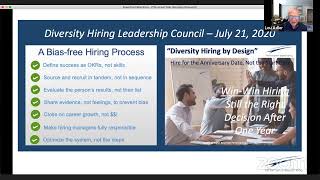
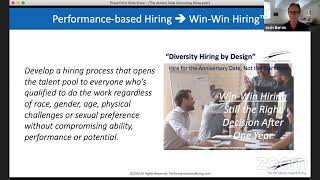
Lou Adler (June 19, 2020) presents an episode of "The Almost Daily Recruiting Show" focused on improving hiring outcomes by hiring for the one-year anniversary ("Win Win hiring") rather than the start date. He argues traditional apply-button/job-board workflows are impersonal and ineffective (he cites data that only ~4–5% of applicants are interviewed and ~1% are hired), and advocates performance-based hiring: define the work as measurable performance objectives first, then find and validate candidates who can do that work. He also promotes outbound sourcing, bypassing HR when appropriate, and techniques job seekers can use to get into the "top half" of the talent market (e.g., targeted outreach, short project summaries or video samples, and forced-choice/clarifying interview questions). He positions this approach as a way to achieve diversity hiring without compromise ("colorblind hiring") by focusing on objective demonstration of work.
Chapters
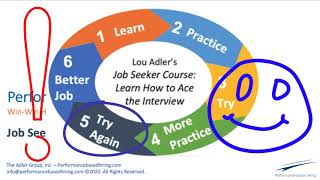
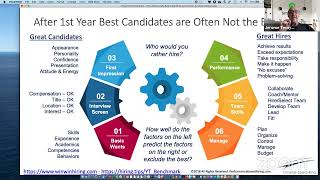
That part up. So gotta get restream. Okay, here's Restream. It says we're live. I see that already. Okay, we're definitely live. So I see that. I can see we're live on LinkedIn streaming monitors. Going there. I see myself on me. I see myself on LinkedIn. Hey. Hi, everybody. We're just setting up here, so hang on there. We're going live in a minute or two. Don't say anything yet. Please don't say, hi, I'm from wherever you're from, because I got some specific instructions I have for you, and part of it is I've got to put it in my restream chat before I can see what you say. I screwed this up, guys. I should have had this set up ahead of time and I pushed a button too prematurely. But I got it now, so. Hey. Hi, everyone. This is Lou Adler. Delighted to be with you here in my almost daily recruiting show. What I'd like you to do is to make sure that we're actually live and you can see me. We do something very, very strange because we kind of do the strange stuff here in the daily recruiting show. Anyway, I'd like you to say, if you're. Wherever you're from, certainly say, hi, I'm so and so from so and so or from somewhere. But also put in whether you're a job seeker and if you're a job seeker, what your hiring challenges is, if you're a hiring manager, what challenges you might face if you're stuck at doing remote work. I just like to hear your hiring challenges. Whatever side of the desk you're on, hiring manager, recruiter, or a job seeker. I don't see anybody coming through yet. So I don't know if we're live. Let me go on LinkedIn here to see if we're there without getting a message. I can't tell. I cannot tell yet. So let's go LinkedIn, see if we're live. Getting some notifications. Is that it? That we're live? Not telling it. Can't see it yet. I think we are live because I saw the LinkedIn come through. Hey. But I'm not seeing any messages. That's unusual. So I don't know if I'm live. Hey, Brian, are you still there? I'm still here and I'm trying to find it on LinkedIn too, but I'm not seeing it live. I'm not seeing a link to you that lets me. Here I am. I'm seeing the messages come through. Ethan Cohen from New York City. Thanks guys. There's about a 30 second delay. Okay guys, we're definitely live right now. What I'd like you to do is info private. If I say I don't want my employer to see, I don't know about that. Sorry, Robert, I can't tell. That's over my pay grade. I'm lucky we're live and I'm talking to you and I'm seeing your messages. Okay, now what I want you to do is put your hiring challenge in. If you're a job seeker, just say your hiring challenge is if you're a hiring manager and trying to interview people. Your challenge if you're trying to find people. I just like to get this state. You're from New York? I grew up in Long island, went to school upstate New York, so. But I'm in Southern California right now. Of course it doesn't matter where I'm from, I can't go outside, my wife refuses to let me and my job, my daughter in law says I can't see my kids if I go, my grandkids if I go outside. So. Okay, so I'm gonna. Hey Brian, do you get anything yet? No, no, I'm not. Interesting. Well, obviously some people can see on their feed. Maybe if you go to my name, look for my name, it might say I'm LinkedIn Live. I got a co host with me here, Brian Johansen's VP marketing coo, CEO of our company. So here's what we're gonna do. I tend I'll help people look for a job, but my role is I help companies find people whether they're looking or not. So that's my big thing here. But I want to put something up here that I'd been doing this for a lot of years. You can kind of tell from my image here that I'm not this young spring chicken. Been on a number of rodeos. 22 years ago I had this cartoon drawn that defined the state of the market in 1997, 98 job boards were just coming on and being a big part of the way people found jobs. Applicant tracking systems and HR technology was coming on board. Companies were just building in house recruiting teams. And at that time I drew a cartoon. I didn't draw it, I had a cartoon drawn that said this was the state of the hiring marketplace. And I felt it was inefficient, ineffective, costly and a lot of time wasted doing wrong things. From whatever your perspective is, what I'd like you to do is look at that cartoon from 22 years ago. And tell me what's changed. It's changed. I did this last week and there were some interesting things from recruiters, hiring managers, company leaders and job seekers. They all have a different perspective on it, but I'd like to get your perspective. I see mostly we have job seekers, but irrespective, I'll just cover every issues. But my, my focus, so I have to tell you is I'm going to describe what companies should do and then at the end I'll say, and it's only about 30, 40 minutes at the end I'll answer your questions and say what job seekers can do to get everything right. So LinkedIn user says nothing has changed. Yeah, well, keep on going. So what's changed with this cartoon? And I'll tell you, I see nothing. Sharp in a big company. Said just the buckets, bigger and bigger holes and we're pouring more stuff into the top of the funnel but not getting results. Why is that not streaming? Probably. There it is. Okay, interesting. It took a minute and a half for that to come through. I'm going to put in my goal and I have a couple of goals right now. First goal is, and I've always had this goal is, I call it Win Win hiring. I guess I should have a hyphen there. Okay, I have to correct that typo. Win Win hiring says you hire for the anniversary date, not the start date. And this is true for candidates, for hiring managers, for recruiters. Too much focus is on filling a person in a job within a certain salary with certain skills on the day the person starts. And then they think success has happened. I don't believe that to be true. I believe success is measured a year after the person starts a one year anniversary date where the hiring manager says, I'm glad I hired that person. That person's achieving what we hoped the person would achieve. And the candidate says, I'm glad I took this job. It's perfect career move for me. That is a hard outcome to get, but it's the responsibility of companies, business leaders, talent leaders, recruiters, hiring managers and job seekers themselves. You've got to force that issue. And I know a lot of people cross out 1998. That's the sad part. I agree. I mean, I've been trying to do this for 22 years, pushing the envelope and I haven't succeeded. And I tell everyone, I don't have 22 years left. Guys, I am 74 years old. If I have 22 years left, I don't have 22. Let's just make that clear. I don't have 22 years left, but the idea is I think it can be done. And I think given what we're now today, with the economy in the toilet, with COVID with Black Lives Matter, and I'm going to make something that's probably not politically correct, but I'm going to say the statement should be Black Lives Matter comma 2t o o. Every life matters, but people of color have had the shaft delivered to them for many, many years. So the right wing, and I'm more probably on the right wing, but I hate the bot the right 25% and I hate the left 40%. They're both screwed up every. But it's not. It's only purpose of the individual, but it's also the society and the systemic and it boils down to hiring. So I'm creating an initiative called. What am I calling it, Brian? A hiring initiative. Hiring diversity without compromise. Thank you, Brian. I appreciate that. I forgot what I called it, but I get so excited here. I can't say hiring without compromise. Naturally it is diversity hiring without compromise. You don't have to make a compromise, but you have to do certain things to get diversity hiring without compromise and achieve a win win hiring. First off, you have to understand the total talent market. First off, you have and total talent market. Here's where I look at the total talent market and you guys can look at yourself in this market. If you're a job seeker or if you're a hiring manager or a recruiter, there's two halves of the hiring market. The top half and the other half. The top half and the top third of the top quartile. The top half has the most qualified people in it. Everybody wants to hire these people. And you are probably. If you're a job seeker, you are probably for certain jobs, you are very, very qualified for that job. Unfortunately, you're applying for jobs in the other half. And that's the problem. Everybody has a role. Diverse candidates, regular candidates, entry level candidates, people who want a job. You have to say how can I? For what purposes am I the most qualified person? Then we got the bottom third of the unqualified people. And let me be real frank here because I've been working on the hiring side of the desk, not the job seeker side of the desk. But I do have a free class I'm going to give to everybody at the end of this call. Well, if you go to win win this website here in the lower right. Lower. Yeah, lower left of this slide, there's A website there. And if you go to that website, you will find a free course for job seekers on how to get ready for the interview. But I also want to say you got to only apply to jobs where you're the most qualified and you're not going to push the apply button. So there's some tricks here, but think about it. When you push the apply button, it's a very impersonal, transactional process. And I'm going to go back to the cartoon. I'm going to make the contention that that cartoon I drew was based on technology doing all the heavy lifting. Well, that's a pretty impersonal process. And the heavy lifting they're doing is getting people hired for the start date, not for the anniversary date one year. When you go to the anniversary date, it talks about performance satisfaction, team collaborative skills, all that other stuff you do for the start date. They want to hire somebody who's reasonably competent, who can probably do the work. They don't even tell you what the work is before you start. So that's kind of a problem here. But that's. So I make the statement is if you want to get in the top half, you as a candidate have to think, is this a real career move for me or is it just a money move? And I recognize when you're not getting paid and you got mortgages to pay and bills to pay, you got to get a job that pays the bills. Yeah, that's important, and I recognize that. But at some point in time, you also have to think, is this the right career move for me? And maybe that's not now. Maybe it's six months from now. So I'm going to talk six months from now. But I think you'll still see these ideas are valuable even for today. The problem we have here that when you push the apply button on LinkedIn, Glassdoor, indeed, ZipRecruiter Company's website, the probability that you will be interviewed is 4 to 5% for every. When I looked at the data for 300 million people who pushed the apply button amongst a bunch of different sites, only 4 to 5% got interviewed and only 1% got a job. That's a pretty silly process. So companies spend most of their money figuring out how not to hire the 95% of the people. But there are companies like job boards who get money for managing those 95% of the people who will never get hired. That's the job market. That's what happens in the bottom half. You have to avoid entering that sewer at all costs. And don't feel badly if you push the apply button 500 times and don't hear back or you get this form letter. How hard did it was to apply? It was simple. If you had to work at it, they would actually spend time responding to you. So our whole focus is on how do you get a career and how can you identify yourself in the top half. It is, I don't know, it's sad. That's the way it is. So you got to, if you're savvy, you say, okay, I'm not going to fall for that silly game. Why should I go play Las Vegas? Odds to that, my career and my life is affected by it. So here's the results again. Remember, my focus is not on job seekers. My focus is on helping companies hire people. But my perspective, if you looked at my bio, my perspective is I've been a recruiter for 42 years, so I would reach out to qualified people, present them a job opportunity, convince them it was the right career move and I gave a one year guarantee that the candidate would be happy and the company would be happy. That takes a lot of work, but I felt that I was affecting a person's life and that's what I was going to do. So I always would coach my candidates if I thought they were good. And that's what the free course is about. At www.WinWinHiring.com, you got to put the WWW in front of it or it won't go there. But here's the win win hiring concept. We're going to reach out and attract the best people. It's outbound. I got to find the best people. I got to converse with these people multiple times to convince them this job's a career move. It's not a transaction. I've got to make sure the job makes sense for the candidate, make sure the company, the candidate makes sense for the company. That's a lot of work on both sides of the table. But by doing that, when a person starts, they'll be highly satisfied with the job. There'll be less turnover. Our focus is on improving quality of hire and improving the quality of the candidate's job. So it's really two focus, quality of hire and quality of job for the candidate. The focus is on the ROI of a great decision on the candidate's part and the hiring manager's part. That's a pretty tough thing to happen. I'm just a recruiter, I'm the middleman. I've got to convince companies to do it. Recruiters to do it, hiring manager to do it. And, and you guys, you have to convince yourself to do it. Pushing the apply button is unlikely. You're going to get that situation. One percent chance. I don't know if it's sad, it's reality. So you say, I'm not going to fall for that trap. But here's the hiring it's if you apply for a job and get the job, you probably don't even know what the job is when you start the goal of the hire from a hiring company, it's weeding out people who are totally unqualified From a company standpoint, we hire the best people who apply as possible using technology. Very transactional. Hey, what's your salary? Sorry, you're too high, too low. Let me box check your skills. Okay, you're a good candidate. What's your first impression like? All this kind of silly stuff that doesn't predict performance. So you take the job and you're shocked it's the wrong job and you start, okay, now I'm back on a payroll. Not a great job. I'll put my 40 hours in or whatever it is. But I'm going to start looking for a better job once the economy returns. I mean, that's the reality of it. But companies say I don't care. We're just trying to fill jobs. Job boards don't care because they get more money by every job posting. So you look up, follow the money. Everybody's going after the money. Job seekers want to get paid, companies want to pay the less. Job boards want to make money by selling more job postings. It's a silly marketplace, so you can't get into that. Okay, so given all of that, what's kind of topic? Ken Russell Great comment. It is hard work, I tell you. It is hard work. I screwed somebody's life up in 1984 and realized I was affecting someone's life. So I took it real seriously. I didn't never want to do that again. Actually became my friend afterwards. But five years later. So any thoughts, comments on this whole idea? Does it make sense or is it. I know it's sad and I've been pushing on this envelope, pushing on this cloud for a lot of periods of time. So if you have any questions, kind of mention it. I want to give you a pot. I want to give it. Now go a little deeper. This is kind of the 20,000 foot level. Let me go down to the job, the one on one level of how hiring managers make decisions, how companies make decisions. Wrong, wrongly. That's not good English. So even if English isn't your first language, don't use my. That was not correct grammar. Nonetheless, what companies believe is a great candidate meets three conditions. Number one, they have all the skills listed. They agree to the compensation. They agree to the title, location, and are interested in the job before they know much about it. And when you interview them, they make a great first impression. This is what companies really, when you look at their screening process, it's staged. 1, 2, 3. You apply, you have to get past 1. They call you up on the phone, you have to agree to all this stuff. You have to actually agree to the compensation before you know what the job is, what an idiotic thing that is. It's like saying, hey, you can't come into our store unless you know we can. You can afford it. And you have to make a great first impression. None of those things predict performance. I think we've all met good people who have a different mix of skills. We meet great people who will negotiate the job, take a little bit less if it's a great career move. And sometimes people get nervous in the interview. Sometimes people with a great first impression are incompetent. And people who are nervous or quiet who don't have, which is an average first impression are remarkable people. So none of that stuff predicts performance. And yet that's the first filter. That's the job filter, the bottom half. I presented this slide or version of this slide to 23 to 25,000 managers. 25,000 over the last 20 plus years, 30 years. And I say, tell me what a great. You've hired a great person. Forget everything else, tell me about great people whom you've hired. And this is what they say. They all achieve results, they make things happen, they take responsibility, they don't make excuses, they solve problems, they're great, they collaborate with other people, they select and build teams. They fit with the culture and they're good managers. They manage themselves and manage their teams. They get stuff done on time. They don't make excuses, they plan organized control. I said, that's a great person. Then I asked this question and I'll ask you the same question because this is the critical piece. If you get this part right, your life will change, I guarantee it. It's hard to get this part right, but I want to set the stage here. I've asked 25,000 managers, probably more now, and I put the chart like this up on the board and I train hiring managers. I said, given the choice, who would you rather hire? Someone who can deliver the results on the right and has all of these capabilities on the right or someone has all the skills and attributes on the left who you're at a higher the left or the right, A great candidate or a great person. What do you think? They say I'm going to stop now. And it's a 30 second delay because I got to wait for the answers. Kim, I'll tell you how to measure quality of fire in a moment. We've been doing it for 30 years. It's actually in that if you go to winwinhiring.com there's a class intro to performance based hiring. It shows you how to do it right there. It's free class. Well, let me say what 22,000 managers. 25. I don't know the number. It is over 25,000, but I haven't keep track of it. 99.9% of all managers would rather hire people on the right. There was one guy, one person in New Jersey, I can't believe I remember this person was like 1994, one person in Jersey said, I want both. I said, you can't have both. He said, well, I'm not going to do it then. I mean literally that was he, was he. I'm not going to do it. Not going to participate in this dilly game. Everyone else over 30, everybody wants to hire a great person. Now the real issue is this one. This is the real question. How well do the factors on the left predict the factors on the right? Let me give you a hint and I tell this to hiring managers. If you ever met someone who can do the work, who's a top performer, who's a great hire after a year, who has a different mix of skills, is willing to negotiate the comp and maybe makes a less than great first impression. There's not a lot of correlation between the left and the right. On the other hand, if you met someone who's got all the skills and makes a great first impression, who's not a top performer, you know, there's no correlation between the left and the right. So how do you find people on the right? That's really the key to this whole process. So now let me quickly kind of make the statement is that if you want to go after the top half, you can't use a process designed to focus on people in the bottom half, which is the stuff on the left. You got to rethink the entire process. And the way I start rethinking the entire process is, is when I go and I think this is the next slide. So let me. Yeah, so here's my big thing when I. So I. We train hiring managers around the world. Every country. I mean, I know it's South America, I know obviously Australia, I know Japan, Far East, China, Singapore, Vietnam, India, Russia, Europe. We've trained everybody in every, every country in the world. Just about now. There's obviously cultural differences in those countries, but fundamentally I make this statement when a manager gives me a job description, it has a list of all that stuff we said on the right or the left. Skills, experience, competency. That was that step one. And I say to them, managers, you know, this is not a job description. This is a person description. A job doesn't have skills and experience and competencies in a degree. And a person has that. Let's put the person description in the parking lot for a minute and tell me what the person needs to do to be successful. Manager, whoo. Never heard that before. Kind of common sense. What does the person need to do to be successful? And I don't care what the job is. From chairman to entry level job or entry level to chairman. We've helped, remember, restaurant chains hire people in restaurants. We've helped people in hospitality hire people working in hotels, cleaning rooms. We've helped people hiring engineers, people in manufacturing, marketing, sales, everything. I just asked the person, what does the person need to do to be successful? And I can always come up with five or six performance objectives that define the task. Build, do, create, upgrade. I should say define the task is. And actually I'm going to restate that because I had my verbs and action items incorrect here. They define the task, define the action, and define some measurable result. Build a team of accountants to launch a new international reporting system on an SAP platform. That's a great performance objective. Conduct an analysis of the scrap in our manufacturing process to see what's wrong and implement a corrective solution. Man the inbound customer service desk and be handling six to eight calls per hour and be able to resolve seven or eight of those calls by getting people Solving people's solution. Every job can be done defined by five or six performance objectives that list the task, the action result. And when you. And this is what I tell hiring managers, if you can prove the person can do that work, he or she has all the skills needed. The variable is the skills, the work is the fixed item. They got to do this work. I don't compromise on the work. I'm totally positive about that. But because I have the skills doesn't mean they can do the work. Or motivated to do the work. But if you can find people who can do the work, I guarantee you got to prove they can do the work. And this is where now I'm going to switch it to candidates. You have to prove you can do the work, but first you got to find out what the work is. And that's what you have to do in the interview. And I'm going to show you that in a minute. But this is the key issue is the work determines the skills. The skills doesn't determine competency and motivation to do the work. That's why you have to define the work first. Don't define the people doing the work. Define the work that people need to do. That's how you create a diversity hiring program without compromise. I don't care if you know, I had the number one lawyer in the United States, number one labor attorney in the United States, handled major corporations, Fortune 100 companies. He said if you can do the work that's more objective than skills. It opens a talent pool to people of diverse, all diverse candidates, age or young, black or white, green or yellow, physically challenged or not. Doesn't matter if you can prove they can do the work, they deserve the job. That's our process. Colorblind hiring. Been doing it for 30, 40 years. Eight years ago I had the number one lawyer in the country validated. 20 years ago I had just a regular labor lawyer validated. But then I said I'm going with major leagues to make sure we do it. Now this is really the issue. It's the difference maker. It's what you do with what you have that makes a person successful, not what you have that counts. So now I'm going to kind of turn it over to job seekers. What job seekers can do to ensure that they're interviewed properly and they're going after jobs that they really are in the top half or top quartile. But let me just say any questions there, Brian? You can't see the question. Have you even found the thing? Have you, Brian? Yeah, I'm monitoring the questions. We don't have any recent ones that I think you want to answer right now. It's been a few minutes. Okay, so we got Ken Russell. So yeah, if you got any questions, we. Well, as a startup, how do I meet hiring managers? Well, who's the startup, the company or the candidate? So let me kind of just describe it and we'll. If you have any questions, Brian will be monitoring them and doing so. Here's what I tell this is how I prep my Candidates and I prep thousands. Literally, I've been doing it. I was full time recruiter for 25, 30 years in the last 10 years, 15 years, really been doing training, but I still do a little bit of recruiting, but I've always prepped my candidates. My goal was firstly could the candidate do the work and then I would make sure that the candidate was interviewed accurately. And I tried to train my clients and sometimes I was successful, but more times I wasn't. They just wanted to see my candidates. So I made sure my candidates were interviewed accurately. And the key was for candidates, job seekers, to ask forced choice questions. You force the question. And here's the basic forced choice question. If you feel you're being interviewed improperly, asking you what your compensation is, or ask about your years of experience, you very quickly intervene, excuse me, very quickly intervene at the beginning of the interview and ask something like this. You know, I read your job description. It wasn't clear exactly what the role was from a performance perspective. Can you give me some of the performance objectives of the job or some of the challenges a person is going to work on, or some of the projects you need done? Because I'd like, if so, I'd like to give you some examples of work that I've done that are most comparable. So you force the question. It's pretty much what I do when I go to the hiring managers and take the requisition. I say, can you define success? What does the person need to do to be successful? And I guarantee that 90% of the people you meet, or maybe 95% of the recruiters you meet and 80% of the hiring managers you meet, if you get that far, will not know the answer to that question, won't even think about it. But they will say, well, that's a great question. And they might say, well, we've got to launch a new product line, we've got to design this, we got to accomplish this project, we got to set up a new warehousing system, we got to put a new report together for an account, whatever it is, that stuff that people need to do. And then you have to give an answer that says, okay, here's the work that I've done that's most related. As part of this whole question, you have to ask clarifying information. So first is I need to do an accounting report that accomplishes this and this. You say, oh, that's it. So it's a job. So you say, well, that's interesting. Do you mind if I ask you a few questions about it before I dig deep into giving you some examples of work that I've done that's most related. And you just start saying, what is the report trying to solve? Who is going to be using the report? What's the status of the report today? What kind of technology platform are you using on? How are the feeds coming in? What are you uncomfortable with in terms of the data you're seeing? Is the data really accurate or does the data accuracy compromise to some degree? Now, I've never done this report that I'm just describing to you, but imagine I was a candidate asking those kinds of questions. A good candidate would ask those kinds of questions. The hiring managers just the quality of those questions. The hiring manager say, wow, you really know the job, don't you? That's why you have to ask the question. Ask for clarifying information, and then say something like this. Well, at my last job, I was at AYZ Machining, and we had a series of variance reports we had to put together, but I was realizing that it was never correct. So I had to go out in the factory and actually look at the machines producing the scrap to see what they were actually calculating. And I realized they were not taking the scrap. They were just taking first article inspection, but not taking all of the stuff. So once we made that change, and you go on and on and on, oh, you really know this stuff, don't you? That's the kinds of stuff that will get you in the game right away. Now, being bold enough to ask that question says you're assertive enough, even if you're kind of quiet asking the questions. The first question is, ooh, that's a great question. Putting yourself on the line to demonstrate that you can do the work. That's pretty cool. And asking the clarifying questions is also pretty good. So all of a sudden, you've just changed the dynamics of the interview. It's not just looking you as a vendor or an incompetent person, but you're basically saying, I'm a consultant for this job. I know how to do this job, and I'm going to prove it to you by asking questions. It's a game changer. And you have to do this whenever you're asked misleading questions. Well, it depends, Richard, you do ask. It depends on their question. So here's a way. So let's assume that Richard asked me a question. So Richard asked. The question is so you don't answer their question. So let's assume they say, richard, how many years of sales do you have selling industrial Products and you might say, well I've certainly sold a lot of products related to industrial items. Can you give me an example of some of the quota and the distribution channels you have? I'd like to really understand how people get leads, how they make contact, how they make calls. So once I understand that, I'll make sure my answers are much more relevant and targeted to what you need done. So you kind of answer the question but you actually turn it back to try to get clarification about what they're actually asking. And I remember doing this many, many years ago. The guy that I probably placed three or four times, this happened in the early 80s. I just talked to him last week or a couple weeks ago. And the company it was for a high tech technology company, they wanted an assistant controller who was real good with SEC reporting. SEC reporting is if you're a publicly traded company you have to do the SEC reporting. Well, the candidate I had didn't have that much experience. He was working with a big company and he just submitted reports. So when the VP finance said well how much background do you have in SEC reporting? He just asked how much do you really need and what's the role that you want this person to play? And it was not a big role. But the guy said I need three years of working in public accounting. When he said, he said no, I do that all the time. I'm working at a division of this company and I do all the sec. And he just answered, he said oh you're perfect. You're perfectly qualified for that. If you don't convert the requirement into a performance objective, you're going to be judged based on years of experience and stuff that doesn't predict performance. So you have to pull that off. Okay, I'm going to end this in a minute here with more questions but I want to just kind of describe. If you go to this website winwinhiring.com you got to put the www.winwinhiring.com I don't know why but you have to do it. You will see a bunch of free classes. You'll also see some you have to pay for. But I'm just take the free class on Win Win hiring for job seekers getting ready to be interviewed. So leave that there. I we are live now. It's probably 2:30 Eastern Standard Time. It's got to be five hours of bed. So it's got to be what 2:30 is 17:30. That's 14 and 5. 14 and 5, 19:30 General. It is very hard mathematics. You got to convert twelves, you know, it's a. And then add five. Pretty tough. So let me kind of just say I'll be happy to, to give some tips on how to find a job and I'll end it with that and then I'll open it with this. So here's what I'm going to say. If you see a job posting that you like that you think you're in the top half for, so you, you look for jobs in a company, oh, I could do this work. Do not push the apply button, particularly if you don't have a mix on skills. Instead, look for other postings that the company has for similar jobs or in other departments. Like if it's a reporting job, you might look at the IT to see if they're looking for people or people in warehousing, whatever it may be. You just look for that company. Other jobs related to that company still don't apply. Then you go on LinkedIn and you find somebody in that company who runs one of those departments. Just find a name and separately what you're going to do. Before you even contact this person, using a LinkedIn message or trying to connect with a person, you're going to prepare a one or two minute or let's say a half page or one page summary of a major project you've done related to what it seems to say in that job posting. If you'd also like, you might want to create a one minute video interview or video summary of something you've done related to describe the project. It's kind of like a sample of your work and basically send it to the department head, not the hr, bypass the HR department. You have to do that at all cost. HR is more interested in filling jobs based on skills. Hiring managers are looking for good people. So if you feel that you've got it, this is. And there's another. I should have put it on here. There's an article I wrote on LinkedIn called How to Hack a Job. 15 Ways to Hack a job. So basically if you're looking at Blue Adler and the word hack, H A C K, you'll find that posting, it says how to get a job in the back door through the back door. But basically you're going to find the name of that person. And we found somebody in California, somebody. On one of these early calls he said, I'm looking for a warehouse distribution manager's job. How would I do it? So real time I just went on and found some warehouse leaders. I think it was Amazon, a medical device company. Said, but these people run the warehouse there. Contact them, he said. And he had an interview. He got a couple of interviews that way. I don't know what happened subsequent to that, but this is how you can do things. If you spend more time with five or six jobs where you really think you're in the top half and work hard at it, you will get a response. It's not going to be 100%, but it's probably going to be 20 to 30 to 40%. Certainly better than pushing the apply button and feeling that nobody's responding to you. It wasn't that hard to push the apply button, so give it a break. But if you work hard to get a job, people will take you seriously. So this person is a serious person. They're not normal. They're in the top half just by doing what I'm suggesting. Put you in the top half, even if you're not qualified. Because that's what the top half does. That's what they do. They don't follow the rules of the bottom half. So if you want to be in the top half, start acting like you're in the top half. More importantly, if you're really good at something, prove that you're really good at something and don't say, please give me a job. Anybody says, please give me a job. I don't want that. Hey, here's the work I've done, and I'm really good at this kind of work. And I really like this kind of work. With these kinds of teams, do you know anybody who needs someone who can accomplish these kinds of tasks? That's a lot better than saying, let me send you a resume. No, let me tell you what I've done and I'd like to give a chance to chat with you about it to see if I can solve some of your problems. Those are the people people want to hire. That's what I want to talk about. That win win. Hiring for job seekers will get you in the game. If you get the interview, the other tips hack a job will get to the interview. Okay. Anything else? It is good advice. Yeah. It's supposed to be live afterwards. Marianne. It is somewhere, but it's. I don't. I find it. No. I think if you look at Lou Adler and follow me on LinkedIn, you'll see it there. I've seen it, so I know it comes right now. It shows live, but it will definitely be. Once it's posted, it automatically goes live. You know, it takes five minutes or so. Any questions that you saw, Brian? Or any comments that you saw that you thought were. That you thought were truly relevant. I'm still having a hard time seeing them, Lou. So you're seeing them? Yeah, I see him. So I'm seeing him right there. And messaging. Okay. I'm surprised you're not seeing them, but we'll figure that out, too. Okay. Any last questions? Take the listen to this again. But I would urge everybody to take this class. It's free. They charged me a lot of money to put you on. Now, that's. That's not really true. Doesn't charge. Cost me a lot of money. But you do. You will have. You only have it for 10 days. I can't keep it up because I do start to cost me a lot after 10 days. But you got it for 10 days. How do you buy. I just told you how to bypass hr. You talk. You send an email to the hiring manager or an inmail to the hiring manager message to the hiring manager. And with a link to your little video, a little YouTube video, or a link to a PDF that you put together, one page summary, your project. You look on LinkedIn meznaz for the hiring manager, just like I did this one. It was in Ventura County, California, which is about 100 miles north of Los Angeles. I just went to that area. Guy wanted to be in warehousing. So I looked up the companies. I just said, warehousing jobs. Ventura. We found a couple people. Then I went to the names of the company. One was Amgen, a medical device company. Another was Amazon, had a facility there. There was another trucking distribution facility there. And I said, here's the names of the people. Show them on the screen. We say no such thing on LinkedIn, Paul. I don't know what that means. The problem is I'm reading your messages 30 seconds after I've said something. So that's. So what I say here in reading your messages is that's not true. But I can't do it. I guarantee that CV is not sufficient anymore. In fact, That's a. Resumes, CVs and job postings prevent people from getting hired. It's just not a marketplace for the right thing to do. Okay, sell yourself, but sell yourself on how you work hard. And I think that's the key. So I'm going to Fernando. I totally agree. It Fernando said, sell yourself. Prove that you're competent. Prove you're in the top half. Prove you're the most qualified by describing an accomplishment that you feel is representative of your best work. And then find people who want to hire people who could see that best work as something worth for them. Good luck, everybody. I'll be back next week on the almost daily recruiting show, hiring great people and helping people get great jobs. Thank you very much, everybody.