Win-Win Hiring for Hiring Managers
Lou Adler says hiring managers must own recruitment as their top job. Define roles by 5-6 performance objectives instead of skill lists, interview candidates multiple times, and treat recruiters as sales partners. Judge managers on hire quality, new-hire satisfaction, and how many people get promoted from within.
Chapters
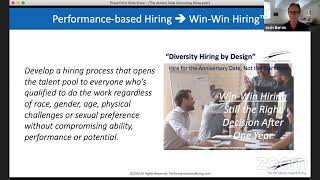
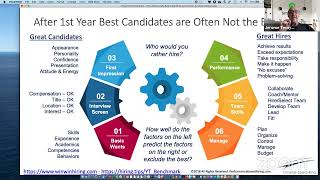
If you have any hiring managers who haven't mastered the art and science of hiring top talent, this session is for them. I remember my first management job. I was 26 at the time. The manager of capital budgeting at a multi billion dollar automotive manufacturing company. My boss, the controller, needed me at the University of Michigan to help interview MBA students. I told him I had too much to do and a report to the VP Finance the next morning. His words still ring in my ears. Hiring the best talent is the most important thing you'll ever do. Everything else can wait. While I hustled over there, interviewed and ultimately we hired five outstanding people who all ultimately became CEOs, CFOs or VPs with significant companies. My boss and I worked throughout that night to finish the project. And I still haven't forgotten the lesson. Every hiring manager should own it. When I was recruiting managers for any role, I'd find out about the quality of the people they've hired. And I only place those who were successful. Remember, hiring the best talent is the most important thing you'll ever do. Everything else can wait. It's important to recognize that hiring managers have a huge responsibility for hiring great people. Unfortunately, most don't take it seriously enough. Instead, they delegate it to a recruiter or to the HR department. Maybe it's because they don't know how to attract and hire great talent. This course will solve that part of the problem. However, there's more to it than that. As far as I'm concerned, if hiring is really number one at your company, hiring managers need to be judged on the quality of the people they hire, the job satisfaction of each person they hire, the the overall turnover of the department, and how many of these people get promoted into bigger roles. And if they don't do this well, they shouldn't be hiring managers. Or as a minimum, they shouldn't be given the responsibility for hiring people. Now, if your company doesn't already measure hiring managers like this, hiring managers should take on the responsibility for themselves to be judged this way. Throughout this course, I make the case that some big things need to happen in order for a company to improve the quality of the people they're now hiring. This is how you raise the talent bar. Pulling this off requires a hiring manager to be fully engaged in the process. Now here's how I define fully engaged. The first step. Hiring managers must define the job as a series of performance objectives, not a laundry list of skills and experiences. And this needs to be customized for each job. This is how you clarify job expectations up front. Since they need to do this work anyway, when the person starts, they should do it long before they hire the person. This is the only way they'll be able to attract and hire people who are both motivated and competent to do the actual work. As critical hiring managers can't let the recruiters talk to candidates unless they know the performance objectives of that job and make the legitimate case that the job represents a true career move. When you're trying to hire top tier talent, this is essential. Now imagine how many great people you didn't see because your recruiter couldn't convince the person the job was a career move. As part of hiring top tier talent, especially those who are passive and need to be recruited, hiring managers must be willing to talk with top tier people on an exploratory basis who need more information before they'll become serious candidates. Of course, hiring managers must be actively involved in their interviewing and recruiting process. This starts with the first exploratory call, multiple interviews before finalizing the offer, and at least once or twice after the person accepts the offer. But before the person starts. Let me explain the reasoning behind this heavy level of activity. The biggest point if you want to hire a great person, you need to offer a great job. This requires the elimination of skills and experience based job descriptions for attracting and assessing people. Of course, people must have some level of skills and experience to do the work, but by putting some arbitrary number around it, you put a lid on quality of hire. One problem is that this artificial lid eliminates all high potential candidates who learn more quickly than their peers and accomplish more with less experience. It also eliminates all diverse candidates who have different mix of skills and experience and backgrounds from consideration. This is actually the very definition of diversity. Even worse, it eliminates all people, just like every top performer in your company who has ever been promoted into this same role you're hiring for. These are what top people look like, so why would anybody want to eliminate them from consideration? This makes no sense. But not only is it important for you as a hiring manager to define the job as a series of five to six performance objectives capped by a compelling and customized employee value proposition. It just as important that your recruiter understands the job exactly the same way. Recognize that recruiters are your sales reps selling you and your product. This is the open job you want filled. Recruiters represent your future. So treat them as critical assets, but don't let them go into the field unarmed. Tell them roughly what the person in the role needs to do and why the job could represent a Great career opportunity for the right person. To make sure your recruiter is on the right path, review some of their target prospects. A few days after you've created the performance based job description and the employee value proposition, tell them to find the best pass of candidates possible who they think could do the work, who have the least amount of experience. If these people then look pretty good to you, tell the recruiter you're more than open to talk with these people on an exploratory basis after the recruiter has screened the candidate. Now, if you need to screen or talk with more than two or three prospects who aren't strong enough, don't keep on seeing more candidates. Instead, start over. Recognize that something's wrong. Either the job isn't too compelling, the recruiter isn't too convincing, or you're still screening out people for the wrong reasons. This won't happen. Once you and your recruiter successfully complete this course, you will be seeing more top performers and you'll only need to see three or four people to make one grade hire. And it will be within budget. The key though, is that the hiring manager and recruiter must be true partners at every step in the process, both coaching each other to get better. When I'm doing the recruiting, here's the commitment I make to hiring managers. I will find you top tier people who are both competent and motivated to do the work you need done. And if we can prove they can do the work, it's obvious they have the depth of skills and experiences necessary. But assessing these people is not the same as hiring them. These people also need to see the job as a true career move. And while I, as the recruiter, can make the case that the job seems to be a true career move, I can't totally prove it. That's where you, the hiring manager, come into play. You must know the job. You must be willing to invest your time in the process. You must be willing to meet these people multiple times, conducting a complete and in depth interview. And you must be involved in the closing process. And if you do these things, you will hire better people. You will have less turnover, and the people you hire will get promoted more rapidly. That's what great managers do, and that's what you learn how to do in this program. And remember these words that I heard so many years ago. Hiring the best talent is the most important thing you'll ever do. Everything else can wait. And that's just as true today as it was those many years ago.