Lou Adler - The Almost Daily RECRUITING Show
Lou Adler argues hiring is broken and proposes Win-Win Hiring: define jobs by performance objectives instead of resumes, hire for the anniversary date not the start date, and use the formula ability times fit times motivation squared equals results.
Questions this video answers
May 20, about 10:00am in Southern California.
74 years old.
Chapters
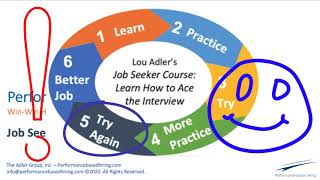
Hey. Hi everyone, this is Lou Adler. We're going to be going live in about a minute. I want to make sure we're live. I've got to get a cup of coffee, so hold on one second. If you could please say hi. I'm going to check to make sure where we are live and we're ready to rock and roll. But give me two minutes, okay? Two minutes. We'll go live. And what I'd like you to do is put your biggest hiring challenge into the chat area. It'll take me about 30 seconds to sync all these things up. Then we're going to go live. I'm going to show you what the future of hiring is really going to look like. And it's going to be different than what you ever imagined. So that's where we're going here and we'll be. I'll see you in a few minutes. It. Hey. Hi everyone. We got a few people here. Actually, I probably am in the wrong meeting room, but I'll go here anyway because I don't see the people. We invited about 30 people directly to the Zoom meeting. I do not see them here. So obviously I am meeting with some different group of people. Irrespective of that, we will have a conversation here about rebooting hiring. What I'd like you to do though is put in, if you could, in the chat area, your biggest hiring challenge. You might want to say I'm a job seeker. I'm trying to find a job. You could say I'm a hiring manager. I'm trying to find people. You could say I'm a recruiter who's not working. Whatever it is, I like you to say my biggest hiring challenge at this moment is. Just tell me a little bit about it. I hear my coffee being made in the coffee machine right behind me. I've got to get that coffee. I cannot make it for 45 minutes without it. But if you could put me one of your hiring challenges in the chat area, that would be great. I will be right back. It. Okay. Where I am is in Southern California. I see Muhammad from Egypt. So it's got to be afternoon in Egypt. I haven't seen a single person. Tell me some of your hiring challenges though. So I'm trying to find a job, Mark. Well, that's good. At least I've got one. I know there's about a 30 second delay from when I ask a question and I hear the response. The reason is is that there's a 30 second delay before you even hear me say the question. So I'm looking at these in real time. So I'm kind of figuring that part out. So it is now, just to give you a sense, it is now May 20, about 10:00am in Southern California. We're seeing some opening due to Covid, but we do need people to tell me what they see as a hiring challenge. So we got a lot of job seekers here. Well, this was not really designed for job seekers, but I'll tailor it to that to make sure that we do get everybody involved here. So let me kind of go through a couple of things that I make the statement this would only be. Well, here's the part. So here's the big tip for job seekers. You know, I've written a couple books. If you go to winwinhiring.com I think there's 20 seats left. There's not much more than that. We have a new course that I created for job seekers getting ready to be interviewed. It's a free course. You don't pay a dime. You don't even have to pay a dime. I pay a dime to get you in there, but you get the course for free. And it shows you exactly what you have to do to get a job or it shows you what you have to do once you're interviewed. Okay, so still got a job. But I'm a step up and want to get strategy advice. Well, we'll try to do whatever we can. We'll try to give everybody advice they can. The truth is, I think I'm in the wrong class here, guys. So there's a bunch of 30 or 40 or 50 people waiting for me somewhere else. But hopefully they find me. And I'm going to apologize for that. But hey, it is what it is. Nonetheless, that's a good course for job seekers if you're a hiring manager. There's also a course on how to implement performance based hiring that's also free. And then if you want to conduct the interview, you got to pay for that one. But it's if you're hiring someone, it's worth the money to pay for it because it's going to be pretty remarkable. This is something as a story that I tell from many years ago. So recognize that what I'm saying today was really, in my mind was designed for hiring managers and recruiters, but mostly for hiring managers. And you know that I'm pretty old, 74. I'm actually 74 years old. I started work, I went to my 50th college reunion two years ago. I started out as an engineer. I then got into finance, accounting and manufacturing. But my first management job was 26 or so in a big automotive manufacturing company, was handling all the capital, budgeting. And my boss, who is brilliant guy, best boss I ever had, he said something when I started hiring people. This is what he said when I started hiring people. I'm going to move this camera a little bit because it's hurting my neck here a little bit. So here's what he said. I did not want to go on some interviews up at University of Michigan. He said to this and we had a big project we had to do. I was late and I had a first presentation with the VP Finance. The next morning was a real important thing. My boss Chuck, he said, get over here to University of Michigan. Hiring the best talent is the most important thing you'll ever do. Everything else can wait. Everything else can wait. Well, I went over to University of Michigan that afternoon, interviewed eight candidates. We stayed late at night, took six of them out to dinner, hired four of them. All those four, this is 50 years ago, all became CFOs, VP finances or CEOs of companies, big companies. And it was the most important lesson I ever heard as a hiring manager. As a recruiter, I still believe this to be true. I think hiring managers have to own that concept. I will tell you. We got back about 10 o' clock at night, finished a report which was handwritten because it was due for the VP Finance and the president of the group. The next morning Chuck and I stayed up three or four o' clock in the morning, got three or four hours sleep, took a shower, went there, made the presentation. The next morning the group president said, why is this handwritten? And Chuck told him we were out at University of Michigan hiring MBAs. We found three good ones. And Chuck said, I told Lou, hiring was the most important thing we ever had to do. Group president looked at both of us and said, I agree with you, this is a great report. Thank you for doing it. Hiring is the most important thing you ever can do. Everything else can wait if you're a manager again. This course was this webcast I'm doing this LinkedIn Live was designed for hiring managers. But I'll put the job seeker twist to it to make sure that you implement it. We have a course, a very unusual course for job seekers. That's true. Our job seeker course is free. We have a course for hiring managers and recruiters that they take the course together. They take a series of self paced training courses. We go through some live Coaching and they complete a case study project to hire someone together. They then become bar raisers at their companies because they understand how to implement performance based hiring. I'm going to give it to you as a job seeker because at some time you might be interviewing candidates, but even though you're seeing the perspective of the company hiring a job seeker, I think you'll still get great value from this content even though it's not necessarily designed specifically for job seekers. But I'll give you a couple of twists on how to pull it off. So I want to go back. I already went back 50 years. I'm going to go fast forward to 1998. So when I that story I told you was in 1972. I'm going to go to 1998 where I wrote a book on hiring and my background was not always in recruiting. I just decided I don't want to get into that story of why I left manufacturing. I just hated my group president, became a recruiter and decided, hey, this was pretty cool. But in 1998 we were told that new HR technology, job boards, applicant tracking systems, rudimentary screening techniques, which is now advanced artificial intelligence. We were told that we would win the war for talent. Easy for people to get jobs, companies to hire people, everything was going to be great. At that time I had this cartoon drawn. I didn't draw it, I had it drawn. It was a leaky bucket. And I said, you know, there's so many things wrong. Spend all this money for advertising candidates. It's difficult to find a job. 1 in 100 gets hired. If you apply for a job, 1 in 100, 3 in 100 actually get interviewed. This is based on 300 million applications. Only 3 million got hired. 1% got hired. 1%. 3% get interviewed. So basically you got a boring job. It's hard to find these jobs. People apply to them nilly willy, whether they're qualified or not. And they complain. I applied to 50 jobs or 100 jobs or a thousand jobs and, and nobody called me. It's because that system is a bad system. And then if you do get interviewed, it's poor interviewers. We got recruiters who can't explain stuff. You got bad systems, it's cumbersome, it's costly to me. I just throw the whole thing away. So my process, which I always believe since I became a recruiter in 1978 was win win hiring, hire for the anniversary date, not the start date. Anniversary date says hey, you define the work the person needs to do ahead of time and you find people are competent and motivated to do that work. And a year later they say, hey, I'm glad I took this job. And the manager says, I'm glad I hired that person. And you look at that's pretty common sense idea. But I'm going to tell you the old ways is you hire for the start date. Hey, the person have the skills, will he take the money? Does he interview, is he hungry enough? And you'd make these judgments about I got to fill the job on the start date. And. And candidates say, I got to get a job, I got to get back in the job. When you think about the anniversary date, it's a totally different process, totally different decision making on the manager's side and the candidate side. I believe in Win Win hiring. That's the process that I want to talk about today and how to pull it off. I'm just reading some of these and it's hard to if I look like I'm distracted. Ernst, thank you. If you have more than a question or a statement that's more than a sentence, I start reading it. And I can't do that. So I apologize. But this is the mission I have and I've been having it for 1978. I knew that everyone was saying no. The Internet and job boards and artificial will solve the problem. I've been to 10 HR tech conferences. I get kicked out of all of them because I say it's a waste of time, we're doing the wrong stuff. So I want to say to me, you got to reboot hiring. And I think you as a job seeker can do it. I'll show you how one on one. When you get your next interview, I'll show you how to pull it off. But let me give the big picture first. You need a strategy that says we want to attract people for Win Win, not weed out for day one. So that's number one. It's a system from how you define the job, how you interview candidates, how you close candidates, and how you manage candidates once they're hired. It's more high touch. I don't need a thousand people to apply to a job and weed out 997. Because that's where I spend most of my time. No, I'm going to make it harder for job seekers to get a job. And the big thing I say for job seekers don't apply. It's a waste of time. It's a waste of time. I now have J.J. here. Hi, J.J. boy, fine. What happened to you? Do I have to bring you into my meeting. Let me see if I do have to invite you in or not. Well, I'm gonna hide your camera. Jj, hold on. I gotta see if we can put you both in there. Okay, Sorry, everybody, but my producer is a famous actress and she doesn't want to show a picture, so I can't. I just have to let her in though, else I'll take a lot of heat the afternoon, so it's much more high touch fewer people. And I would say if you're a job seeker, you've got to convert. Hey, I'm not going to apply to that black hole of a job posting. And I'll give you some ideas. We got another online class yesterday where we gave you some ideas on how to get a job. It's through the back door. We'll get into that. But you cannot apply. It is a waste of time. So let me count. And resumes are a waste of resumes. And. And job descriptions are wasted. Job descriptions. Anything related to how hiring is done is waste. So if you can figure out how to avoid all of that stuff, you at least have a chance. Let me keep on going here. I want to also, this is what I really do want to spend some time on, is redefining an ideal candidate. And we'll talk about how do you present yourself as a great person one year after the hire, and that's what we're going to go for. Part of it is I want to remove the apply button. I guess you probably got that idea. As I said, I think it's a waste of time. And I literally got kicked out of a meeting. A major, major job board asked me to help them involved in their product development. And they had this beautiful apply button. Beautiful. And asked me what I thought. I said, put duct tape over it. It's a waste of time. I got kicked out of that meeting, never invited back. What I do is I fish as a recruiter and a hiring manager. And a hiring manager. Whatever I say, a hiring manager can find candidates themselves. They don't need recruiters anymore. A good hiring manager can go out on LinkedIn, get LinkedIn Recruiter, find 10 people, send 10 emails, call 5 people, will call them up, and I'll get it in the game. I mean, literally, I'm almost thinking that a transactional recruiter is history. You don't need someone who goes on LinkedIn and post jobs and looks through resumes. The system can do it and you shouldn't do it anyway. So I'm really talking about, hey, let's dump Everything and start over even for job seekers or anybody else. So we got a lot of job degree. Start networking. Yeah, it's a good one, Russell. That's the one I would do. And I'll tell Russell. I'm going to take Russell's point and make it a little bit more defined. Russell said start networking on LinkedIn. So Russell, hold that thought. I want to kind of define what, how you, what networking really is. And actually I've written, I want you to do this. Maybe Russell, you can find it and put the, put the link in chat. I wrote a post on LinkedIn and I think it was called finding it. Well, one was about networking and it was for job seekers and one was about how to find a job in the hidden job market. So look up networking and Lou Adler and see if you can find it. And if you can, I'll be in chat. So if you can find it, Russell, you'll be great. No, JJ's camera is blocked. Not my mind, not mine. You can see me, right jj, you can't see, I think. Or maybe mine is block. Is mine blocked too? You can't see it. Oh no. I'm up there a little, up in that little tiny corner. I can see your screen. Sorry. You there, jj? You're trying to be. Huh?
I am here, yes. Hi, Lou.
Hi, jj. How are you doing?
I'm doing very well. How are you doing?
Good. Am I in the wrong meeting?
There's a couple meetings but I think you're fine. We can talk about this later.
I wasn't sure that I was went to the right meeting. So we're going forward regardless.
Yep, we're good.
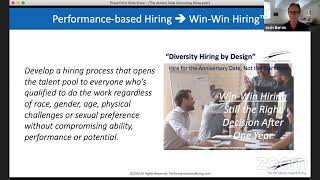
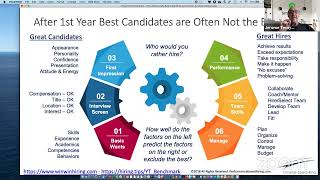
And you might want to check you can see the chat. No, you probably can't. And only if you're watching this on LinkedIn. If you're watching it on LinkedIn, you'd see it. So you could probably go to LinkedIn Live and you see all the chat there. Russell, you can monitor it. Okay, so here, let me talk about what I said. First off, it's got to be a different strategy and a different system. So let me kind of just give you a sense of what I mean and I'm going to go through this quickly. I could spend three hours on just this and we have a lot of training around it. I basically make the statement to hiring managers and I'm deal. I'm talking to hiring managers. Hey, hi jj. I'm talking to hiring managers as opposed to job seekers or recruiters. I tell hiring managers you want to hire a great person you got to start with a great job and a laundry list. The skills and experience is at best a ill defined lateral transfer. So throw those away. I always ask a hiring manager hey, what does a person need to do to be successful? That's what I ask what does a person need to do to be successful? And it's always some three or four performance objectives. Build the team, grow sales, upgrade the accounting department. It's stuff that people do. I then we train recruiters or hiring managers can do it. You can go on LinkedIn and find people who can do that work. I'm not going to get into all the details of it. We call them semifinalists. 10 or 15 people who can do the work, been recognized for doing the work and would see the jobs or career move. That's because I'm trying to get to win win. Remember I'm trying to hire for a year from now. So if it's just a lateral transfer and ill defined unlikely, just too many problems that could come up. We then interview the candidate to make sure the candidate can do that work, motivated do the work and would see the jobs are career move. We don't sell the comp. We obviously want to give a fair comp but what we really want to sell is the career growth opportunity. And then we clarify those expectations during the onboarding process and we deliver on the promise. That's how we raise the talent bar. It's a system, not a individual steps. And I'm going to contend job posting and resume matching and boring jobs. There's no chance you're going to get the end result you want. At best you're going to hire someone who is willing to take your money, is willing to take a job without understanding what it is because they're needy and the company's needy. So I don't believe need on either side is the way you should hire people. Maybe that's where you fill jobs. I'm creating careers. It's a totally different thing. If you're a job seeker, I'll give you some tips on how to do a better job of interviewing. But if you're a career seeker, that's what I'm talking about. I'm not interested in job seekers and I think you as candidates if you're a job seeker you should say no, I want to take this job. I want this job to be the right win win. Now you might obviously got to get paid and you got to get back into payroll and you got to do all this stuff. And I recognize that times are tough right now, but I still think you got to think long term. It will put you at the top of the heap. If you're thinking of, I want to look at this as a real move where I can make an impact on the company and I have an opportunity to grow my skill set and move my career forward. I just think you have to take that attitude. So let me. This is the most important thing I'm going to talk about and we can talk about a lot of stuff. Then I'm going to give some tips to hiring to everybody. This is, to me, the root cause of the problem. If you're looking for a candidate, it's unlikely that candidate will wind up being a great hire. So here's what I want you to do. First in the chat area, I want you to say if you've ever met someone who's a real top performer after they've been on the job for six months or a year, and you guys might have been a top performer. Everybody listen to this. I ask hiring managers, after you've hired someone and they've been on the job for three to six months or a year, really found a person who is a great hire, put some traits down and I ask you, why is that person a great hire? What do you think people say about someone who's a great person after they've worked with them for six months or a year? Just put some of those traits in chat. Okay? So while you're putting the traits in chat, I am going to define what a great candidate is before I define what a great candidate, what a great hire is. And I think they're totally different. Most companies won't even see somebody for a job unless they meet all the skills. Experience is on the job description and the system prevent you from getting in. So if you don't meet all their criteria, you're over. You're not going to get interviewed. I mean, 3% chance you'll get interviewed. 1% chance you'll get the job. Equal chance is somebody else they already know is going to get the job. So it's unlikely. So not even. That's a pretty long shot. Worse is if you can do the job but don't have the exact skill set, you can't apply. That's where you have to kind of figure out, hey, how do I get in this job? I think I can do that work. You got to prove they can do the work, but you don't have the skills. So don't push the apply button. Number two, if you do push the apply button and you're one of the 3% who get the job. Well, now actually hiring recruiters will probably talk to 5 or 6%, but they screen you on, hey, are you okay with this compensation? If not, sorry, you're okay with this title. If not, sorry, are you okay with this location? Sorry. If you're interested in this job and what it is, and if you're not, you get screened out. None of that stuff predicts performance. Even the skills and experience doesn't predict performance. But you're screened out. But this is what the system is trying to manage. And then if you actually met, if you're one of the three or four people who's actually met in person, they're going to judge you largely on your first impression. So if you're a little bit nervous or don't make the greatest first impression, aren't friendly enough, it's history. I mean, these are all stupid. None of those things predict on the job performance. So now I'm just going to read some stuff here. Good. Thank you, guys. Reliable, curious. Growth. Ambitious. Adaptable. Super underrated. Trade. Have to be able to get along. Credible, allowable. Give stuff. Done. Problem solver. I've been asking this question for 40 years. Tell me. And I've been talking to hiring managers for 30 of those 40 years because that's how I did my search practice. Tell me about the best people you got. This is what they say, pretty much what everybody's been saying for 40 years. They get the results, they make it happen. They work well with others. They can, they can manage themselves, manage their teams, they meet budgets, they meet commitments, they develop people. They collaborate with people. They don't make excuses, they make it happen. Every single manager in the world says that. You guys say it whether you're a manager or not. The question I asked hiring managers, who would you rather hire, someone who's got all the stuff on the left or someone who can achieve the stuff on the right? And 99% say, well, some say they want both. I say, you can't have both, you can just have one. I said, of course, I'll take the ones on the right. Then I asked this question, how old are the factors on the left? Predict the factors on the right. And first they think about it. You guys can think about it, but they start thinking. I said, have you ever met someone who's a great candidate, meets all that criteria, who's not a top performer? And they'll say, of course. I said, have you ever met a top performer who meets all the criteria on the Right. But has a different mix of skills, might be a little bit nervous in the interview, willing to negotiate the salary. They said oh yeah, of course. And I said by focusing on the left, you put a lid on quality. You can't hire diverse candidates and you can't find people who are non traditional my folk. In fact, 100% of the people you've promoted in your company don't meet the criteria on the left. The reason you promote them is because they meet the criteria on the right. So let's throw away the stuff on the left. It is useless. So if you build systems to hire people, find screen people on the left who are candidates, you, you're losing the opportunity to hire great people. This to me is foundational in combination with that system. Define great performance and then find people who are great performers doing that work. That's the process we talk about. And this is the key that I tell people A job description listing skills, experience and competencies and some academic background is not a job description. That is a person description. A job doesn't have skills, a job doesn't have experience, a job doesn't have competencies or academic background. A job is stuff that people need to do. So I always ask them, what does a person need to do? It's always five or six performance objectives. Build a team, grow sales, upgrade the analysis, put together some business intelligence reporting system using tableau and SQL. Take over that factory line and reduce cost, improve the warehousing system, turn around this manufacturing facility or whatever it may be. They do stuff. And if you can prove they can do stuff, I guarantee they have all the skills you need. I'll say that again, if you can prove they can do that stuff, they got all the skills. But it will be different than what you put on your job description. And just because someone has all this stuff on a job description and makes a good first impression, zen willing to negotiate the salary before they even know what the job is, it's unlikely that they'll be able to do the work. The work defines the skills. The skills don't define the work. I'll say that again, the work defines the skills. And some people need more, some people need less. Some people have a different mix. By defining the work, you open up the talent pool to everybody who can do the work. I had the number one lawyer in the US assess this concept. He said, Absolutely true, 100%. By putting a lid by defining skills, experience and competition, you put a lid on quality, you put a lid on diversity, you put a lid on performance, you Put a lid on potential, you prevent the likelihood of achieving win win hiring. Now this next statement I put together, it took me 10 years to figure this little simple statement out. It's what people do with what they have that makes them successful, not what they have. Ten years. I must be an idiot. Ten years to figure that out. It's what people do with what they have. So when I interview a candidate, I quickly go through their resumes and then figure out, hey, what'd you accomplish with that? And I'd rather have someone that's got two years the three years experience and accomplish 10 years worth of work, as opposed to 10 years or 15 years worth of work to accomplish five years worth of work. It's what people do. And now as a job seeker, you got to prove you can do the work. You will not see that on your resume. Dude, are you even looking at the comments? Actually, Dude, I can't. Because if I looked at the comments, I wouldn't be able to do the talking. So silly comment. Yeah, I'm no dude. You get 70, you're no longer a dude. Who is that dude? J.J. the Great Lebowski. Who is Lebowski?
Big Lebowski.
Yep. What was his name? Who's the actor?
I'll have to look that up. My mind just went blank. Jeff Bridges.
You sure?
I don't know.
That's the Dude. That's the Dude. I'm no Dude. Okay, let me kind of. I'm going to take this. I'm going to go one step here. Now, I want to. Hold on here. I want to add. Now, excuse me, guys. I'm going to have to do something I don't normally like to do, but I do want to bring in a show. This. Okay, so if you're a job seeker and you're being interviewed improperly and in this free class, we give you techniques on how to ensure you're interviewed accurately. And I'm going to go through that and then I'm going to end this with some ideas on how you can find jobs in the hidden job market. But the idea that I make the statement is. And I wrote a book, I'm not going to show you to you, but it's called the Essential Guide for Hiring and Getting Hired. It's one of four books that I've written and a bunch of online training programs that we've been offered for the last 20 plus years. In the book the Essential Guide for Hiring and Getting Hired, it was initially written for hiring managers and recruiters, but I put a segment in for job seekers, if you were not being interviewed accurately, the most important one was if you feel you're being interviewed inaccurately, you have to take control of the interview. And you do this by asking this question as soon as the interview starts. If you feel you're not getting clarification, you're being judged indirectly or inappropriately based on someone box checking your skills. Just ask the hiring manager or the interviewer, hey, can you tell me some of the performance objectives of the job or some of the projects the person will be working on? Because I'd like to give you some examples of work that I've done that are most related. Now, if you're a interviewer, hiring manager or recruiter, I ask basically that's one of the first questions I ask. I quickly go through the work history on the resume, but during that I say, hey, tell me about some of the big accomplishments you've had. That's what you should do if you're an interviewer. But if you're a job seeker and they don't do that, they say, how many years experience? What skills do you have? And they're just box checking. You've got to take control and say, time out. What are some of the performance objectives for this job? I'd like to give you some examples of work that I've done that are most related. As part of that, ask some clarifying questions. What are the resources? Who's on the team? What happened to the last person in this role? Is it a new role? What's the organization like? What's the timeline for this? What's the actual measures of success by you just asking that question. Even if you don't have a good answer, you're going to be in the top half. Just say, oh, that's a good question. I'm glad you Nobody's ever, no candidates ever asked me that question. That's a good question. So that gets you in the top half. If you can answer the question properly, then you're going to get the job. Or you'll be in the top 5 or 10% of the finalists. But asking the question shows you're assertive, shows that you understand. The clarifying questions you ask to understand that indicates that you're smart, you've got good communication skills, you're assertive enough, and if you're quiet or introverted, you could still ask those same questions. So it's pretty cool technique to get in the game, and you have to do this whenever you're asked misleading questions. JJ I don't know if you're watching this on LinkedIn, you'll see the questions come through. Is there, have you had a chance to see, follow the question or the comments on LinkedIn?
I'm just looking through them now, Lou. So I will be back with you in just a moment.
Yeah. Okay, so I'm gonna, so let me ask, how do you measure true performance? Yeah, let me. I'm gonna go back. So let me kind of. So now I'm gonna kind of go back if I can. Here, let me just do this. I want to kind of take this step. So I want to kind of. Because I'm trying to combine this with different audiences here. Okay, so I want to show this one, this is now kind of show you how I get to the answer now. So this is going to be to everybody, whether you're a candidate, hiring manager, recruiter, executive. It's the hiring formula for success. It's how do you take that information and make a judgment. And remember, we're looking for great hires, not great candidates. As far as I'm concerned, if you can do the work and are motivated to do the work, you should get the job. I don't care if you're black or white, green or yellow. I don't care what your sexual preference is. I don't care what your religion is. I don't care how old you are. I don't care anything. If you're competent and motivated to do the work, you deserve the job. That's what the lawyer said. But you got to define the work to pull that off. Here's the hiring formula for success that you can tie in everything to make that assessment. Ability to do the work in relationship to fit drives motivation. And motivation is so important. It's a force multiplier. We square it, that equals results. And I'm going to kind of go through this with you. But if you're a job seeker, you can reverse engineer this. If you're a hiring manager, you're going to or interviewer, you're going to use the same methodology. Ability to do the work is a combination of soft skill. I mean, I'm going to say non technical skills and technical skills. Excuse me, soft and hard skills. You have to have enough of the technical ability to do the work. I don't know if it's two or three years or 20 years. It's whatever it is, you got to be able to do the work. And I can certainly understand that. And if the work allows you time to learn, fine. If it doesn't, you've got to deliver right away, fine, you have to need more experience. But I don't know, it's five years or 10 years. It's enough to do the work. It's a variable, not an absolute. The work is the independent fixed number. The variable is how many years you have. I don't know. Smart people need less years and less smart people need more years. But you have to be able to do the work. You have to work with others. That's one of you call it a soft skill, I call it a non technical skill. It's too important to be called soft. Collaborating, working with people, managing people, developing people, project management in a matrix organization. No one can tell me that's a soft skill. Collaborating, influence, persuading, negotiating, getting your boss to approve, more money to get something done. That's not a soft skill, that's a critical skill. So maybe I call them critical and technical skills. That might be good critical and technical skills. To me those organizational management team skills are much more important than, I don't want to say much more important than hard skills because you have to get in the game. So let me kind of make a, a statement here. The thing that I've discovered and I've been doing this for a lot of years, I'm attracting people forever. People I've known 30, 40 years ago, now retired, who started as analysts, accountants, engineers, became company presidents. And I could interview someone in an hour. I know if they were going to make it and what they were going to become pretty quickly it was this combination. But what I've discovered is the technical skills get you in the game. Your progress depends on your non critical, the non technical skills, the critical management, organizational and team skills, they get you progressed. You're going to be the brilliant person. And I remember places someone who got 1600 on both boards, brilliant guy. How brilliant? Smart as a whip. But he never got past being a supervisor. And it was a big.