Lou Adler - The Almost Daily RECRUITING Show
LinkedIn Live session (May 15, 2020) by Lou Adler presenting a hiring methodology called “Win‑Win Hiring.” Adler criticizes common job-posting practices, outlines a hiring formula (ability ⇄ fit → motivation² = results), and teaches a single, performance‑based interview question—“Tell me about the best thing you’ve ever done in your career”—to surface accomplishments, competencies, fit and motivation. He explains how to structure the 15‑minute accomplishment interview, how to probe for facts/behaviors over time, and advice for job seekers about asking forced‑choice questions of interviewers.
Chapters
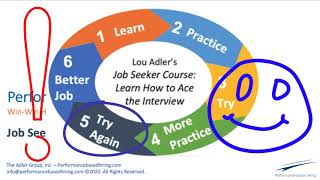
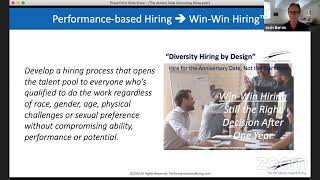
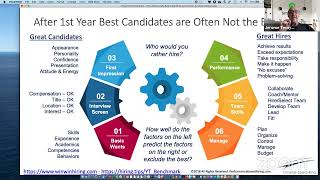
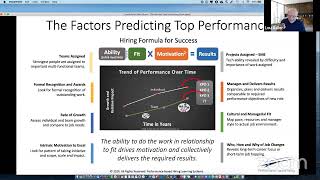
You. Hey. Hi, everyone. If you can hear me yet, I am starting. Probably not. I am starting. Hey. Hi, everyone. This is Lou Adler. I am going to go LinkedIn live in a second here. What I want to do today is control my desktop first before we do this remarkable magic show that I have never done before, at least on LinkedIn Live. I want to make sure that we're connected before I start. I just want everyone to know that we're going to officially start in two minutes at 11am Pacific time. I believe that to be 1700 GMT. It is now May 15th. So if you're seeing this at any other date, it might appear to be live, but the reality is it is not live. So I'm going to go check on LinkedIn to see if we're live. I don't know, I can't get there. This always seems to be the biggest challenge. When I start, see if we're getting notified that we're live. If you could. If you could just tell me in the chat area if we're live, I will see your messages. So we'll see if we are live. Good. So we're live. I think we're starting to see some messages here. Oops. So I'm going to go check on LinkedIn to see. Okay, we're going to do something very unusual today. I'm going to interview every single person who is on this call. Real time virtual interview. You'll be able to use this methodology to interview any candidate. You'll be able to use the same methodology to interview other people. And if you're a job seeker, I would urge you to practice the answer to the question I'm going to ask. From a practical standpoint, I have a free class and it's totally free. You might have to fill in a form, But I'm not 100% positive about that, is how to get ready to be interviewed properly. If you go to Hiring Tips JobSeeker, it's a URL down here in the lower middle of the desk, the deck, you'll find it. We have some other classes for interviewers and hiring managers, but if you go to Hiring Tips Jobseeker, you'll see where you can log in and take the free class. Let me kind of give you a little bit of background. And as you answer questions, I tend to use the chat area for multiple purposes. Let me just get it so I can see it. And sometimes it works and sometimes it doesn't work, but it's working. Now what I'd like you to do is I'm going to ask questions and this will help you engage. I tend to like to do this as a Talk radio show. LinkedIn Live and nobody talking. 20 plus years. This was the dawn of HR technology. To hire great people at low cost, instantaneous results. At that time, when I wrote a book, it's called hire with your head, I had this cartoon drawn and I made the contention that five or ten years later this would be a false promise. If companies continue to post boring jobs, if it is still difficult to find a job of interest and it is impossible to find a job. I mean it's based on who promotes their job first and nothing to do with whether it's a good job or not. It's all about advertising and marketing and hey, get my sponsor job to the top of the list. That to me does not is not a great way of matching a person to a job. It is a very contrived way of doing it. And then when you look at the job itself, it lists a bunch of skills and experiences and competencies which have nothing to do with predicting on the job performance. And then the person has to negotiate their compensation before they can even talk about the job. And literally in the last five years, based on 300 million job postings, 300 million. Only 3 million people got a job through applying on that job posting, which is 1%. Only 3% of that 300 million actually got interviewed for that job. That 1% person got. If that is not an inefficient system that were promised 22 years ago, it would be a great system. It's a dumb system. And all we're doing is trying to make a dumb system more efficient. So that's the problem. And I think you can look at that bucket and you can agree or not agree. Does that bucket look similar to today? I don't care what side of the desk you're on, whether you're in a company or you're looking for a job. Inefficient process. This was drawn 22 years ago. So it was not. It is not real time. But that is real time. So I make the statement is that we have to totally reboot the hiring process and look at it differently. And I have a methodology or theme behind it. It's called Win Win hiring hiring for the anniversary date, not the start date. When you hire for the start date, you focus on compensation skill set and is a candidate ready to take the job right away. When you focus on win win hiring, you understand what drives this candidate to excel and you provide a job that allows that person to excel. And the candidate says a year after the person was hired, hey, I'm glad I took this job. And the hiring manager says, I'm glad I hired that person. That's win win hiring. Totally different process than hiring for the start date. Hiring for the anniversary date is a different system. And that's what I want to talk about today. And I want to introduce you to the one question you need to ask to determine if this candidate is at least in the game. So that's where we're going. Does that sound. Now I hear people say good evening. It's good morning to me. But I'm in Southern California. I assume some of you around the world elsewhere. Again, let me make the statement that this is now approximately. I think I'm going to say this. It's got to be 1700 hours GMT a little bit after 11am California time. Let me introduce you to hiring formula for success. I've been interviewing candidates since I became a recruiter in 1978, and actually I worked 10 years prior to that. So I was recruiting, wasn't my game. I just had a real conflict with the group president who was my boss, and I was running a small manufacturing company. And we argued every time I saw him, which was every other week. And that was a miserable every other week. So we didn't get along. I quit and came back four times and said, now I'll become a recruiter and look for another job. But over the years I realized hiring is a business process, just like making parts. And I've been in the aerospace industry, the automotive industry, and the electronics industry and the semiconductor industry. It's a business process. And the end result is this is the formula for hiring success. You might want to take a screenshot of this, but let me read the formula to you and then I'm going to show you how you ask one question to get all of these variables. One question can assess this hiring formula for success. The formula says ability to do the work in relationship to fit drives motivation. And because motivation is so important, we square it, that equals results. So let me give you the formula and then I'll kind of quickly go through each of the components. The ability to do the work in relationship to fit drives motivation, ultimately success. So looking at motivation by itself doesn't make sense. I'm sure every single person on this call is motivated to do some work. I was motivated to run this manufacturing company of 300 people when I was 31 years old, totally motivated. I worked 24 hours if I had to. When the boss came, my boss, I hated the guy. I left early, I just couldn't. Every time I knew I was going to talk to him, I got demotivated. So motivation is a variable based on circumstances. Now obviously you have to have the ability to do the work. And I say that's a combination of soft and hard skills. Hard skills are technically competent to do it. Obviously you need to be technically competent to do the work. I don't know if it's five years or 10 years, but you have to have enough technical competency to do the work. But I tell hiring managers and they all agree with this, you have to define the work to determine technical competency. I, I don't know if it's 10 years or five years. Some people are smarter, they can do it in three years. Some people are slower, they need 10 years. That's not important. It's can they do the work. And if you don't define the work, you'll never be able to figure if they're competent or not. So years of experience doesn't predict competency. Soft skills have to do with organizational skills, organizing people, managing matrix projects, getting stuff done on time, work ethic, general work ethic, problem solving ability, whatever that may be. So ability is a combination of soft and hard skills, the fit factors. So it's ability in relationship to the fit factors fit with the job. Does this person really want to do that work? Now if the person really wants to do that work and the pace of the organization is consistent with his or her pace, which has a lot to do with culture, if you're an intense environment, you might be love the job, but if you can't, if you got to get the, you'd rather get the job. The job done in two months and you only have a month to do it, well, that changes everything. The culture of the organization, if the company's decision making process and a lot of the value systems of a company is how they make decisions. So I look at pace and decision making as proxies for culture and also the managerial fit. If you don't get along with your manager, it's over. On the other hand, if your manager is a great manager and you get along with that person, he or she is able to overcome block blockages and challenges you're facing. So the manager is key to a lot of this stuff. So it's again the ability to do the work, soft and hard skills in relationship that drives motivation. And I'm going to contend. So this is the big contention And I'll open it up for questions. I contend when you ask candidates about their skill sets, you have to assess soft and hard skills in combination with the fit factors. You can't look at them sequentially. You have to look at them together. Someone can be perfectly technically qualified but have a weak. And I call the soft skills non technical skills. I couldn't fit in that little box there as I made a little bit challenging. But nonetheless, you have to look at all of those factors together. And we've created one question, one question that gets at all of that information. So that's where I'm going to go here. And I'm going to interview everybody on the call. So if you don't want to be interviewed, you better hang up now because you're going to learn a lot about yourself in the next few minutes. Does that sound, what are your thoughts? Comments? Does that sound interesting at least? I'm actually practicing to speak to a big group of executives. I'm going to do the same, talk to them. So I figured I'd try it out with LinkedIn Live. What's your take on this? Does it sound interesting? Sound worthy? Feel free to ask questions, too. I like to ask questions. I don't. That's not true. I do like to ask questions. I also like to answer them. So if you have any questions, feel free. That's a good statement, Tevra. Awesome. It is. It's going to be awesome. I have to admit, I did this just to give you a sense. I did this. This was the real risk, the first talk I ever, ever did to recruiters. First talk ever. Because now they have recruiter conferences all around the world. But the first real recruiter conference was, and I'm going to say it was probably 1998, maybe 1999. It was at the Javits center in New York City, which is where the hospital is now. They put the COVID Hospital there. There was 2,000 people in the room. I think it was the recruiter red book. I don't remember the group that put it on. And I was very, very nervous. I cannot say I never spoke to more than 50 people at the time. So I was pretty nervous. My son walked me through the nerves. But I asked, but I said, what I'm going to do is interview everybody in the room at the same time. That was 2,000 people at the same time. That was pretty scary. So let me kind of go through. I think this is the next slide. So let me show you how I interview people to get all the factors in the hiring formula for success. Now, I wrote an article on LinkedIn when they first. When I actually wrote an article on era. When that first came out, which I'm going to think is 2001, I wrote my first post there. If you notice, it still might be the biggest number one post on LinkedIn. John Sullivan thinks he has the number one. I think that's still the number one. But I got kicked out of LinkedIn. I got kicked out of ere. Literally, you will not see me at ERE anymore. Because I told them 10 years ago there was a bunch of BS and nothing. Everything people were saying was gonna be exactly the same ten years from now. And it's. Nothing's changed. You just put a new name on it. You do the wrong thing faster, you're not gonna get better. So I'm pretty frank. I grew up in New York, I worked in manufacturing. That's not the issue. The issue is that sometimes you gotta push people to do the right thing, not just try to be nice because it seems to be the right way to go. If people are doing things wrong, you have to be forceful enough to say, no, this is wrong. And to me that's part of a soft skill. And you can say it now. I'm not very diplomatic, but I have some very quiet, introverted people who can impact change by being more diplomatic, but they're willing to push the status quo. So here's the best interview question of all time. I'm going to set it up and then I'm going to ask you. This is the best. And I wrote a post on LinkedIn. If you look at the most significant accomplishment question 1.4 million people read the post. And here's the question. Tell me about the best thing you've ever done in your whole life. Tell me about the best thing you've ever done in your whole career. Now let me set the stage here. It takes about 15 minutes to actually get you to answer the question. I normally set it up as they say, hey, I'm going to interview you tomorrow or next week for 15 minutes and all we're going to talk about is the best thing you've ever done in your whole career. Think about that. An accomplishment that you feel is a career defining moment. We're going to have 15 minutes to talk about it. I don't care if you're prepared, I want you to be prepared. I want you to come up with details, facts, figures. I am not. And I tell people this, I'm not interviewing you. I'm not interviewing the quality of your interviewing skills. I really want to know what you've accomplished. And I tell candidates that. I said as an interviewer, I first have to, as a recruiter, I want to know if you can do the work. And then I'd like you to be able to present yourself properly. But this is a good way to prep for it. So now typically, I got to find this. I have a magic card in my desk. This is what I do. And I now talk to groups of people. I say, I'm going to give, I'm going to do a magic trick here. The magic trick is you're going to be able to assess candidate competency, potential motivation and ability to work in your organization and achieve a win, win hiring situation with just the information on this little card. This little card, I can open it. I'm looking at it backwards. This little card summarizes the whole performance based hiring process. It took me 25 years to figure out how to put all that stuff I knew on this little cart, which when you think about it, is kind of depressing. Whole life's work on this little card. And I got the idea from El Pollo Loco, it's a fast food chain in the United States. I was waiting in line, I had a little trifold menu and I said, you know, I think you can put it here. But the first trifold is tell me about your most significant accomplishment. Now let me kind of go through it. So I want you to now in your mind and do not write the answer down. Now you can write, do whatever you want. It's actually better if you think about it. Then look up the article, the most significant accomplishment question, and you'll have all the questions I'm going to ask. The idea though is I ask you to, hey, tell me about a major accomplishment that you think is the best thing you've ever done in your whole career. Some of you talk 30 seconds sentences, and I got to kind of work now kind of give me a paragraph or two. Some of you talk too long and I got to say, no, no, shorten it to I don't need a book, I just need a paragraph or two. So at the beginning, I'm kind of training you to communicate in one to two minute sentences in that free job seeker class I gave you, which I'll give you the link again at the end of this session, tells you how to do that, how to answer questions in two minutes. So let me kind of go through it. So I'm now going through it. Tell me about your biggest accomplishment I'm going to ask you a few questions and you're giving me a minute or two minute answer. Let's get to the beginning. Before we get to that. How did you get assigned this project? Did you volunteer for it? And if you volunteered for it, why did you volunteer for it? And if someone assigned you to the project, why did they assign you to the project? Give me, you know, let's go through it. Give me a snapshot of the circumstances at the beginning. Snapshot of the circumstances at the beginning of the project. Just a snapshot. I want to know the title, the situation, some of the big headline challenges. Let's go fast forward to the end, in fact, when did this actually take place? And how long do you think it took roughly to get most of it done this project? And think about a one time project. I'd rather do a project. And what were the big changes? Highlight the two or three big changes you made as a result of this project. Most impactful ones. What was the environment like? And when, I mean the environment, I mean the pace, the resources you had, the organization that reported to you, in fact, who, who did you report to and who reported to you? Was there? Were you on a project team? Walk me through the people on the project team and how they got on the project team and what was your role on the project team? I assume you brought some skills to the table. What were those skills and how did you apply them on the job? Did you learn any skills in that job and how did you apply them on the job? What was the single biggest change you made? And walk me through how you made it. Give me some examples of where you went the extra mile and where you took the initiative. Tell me about where you went the extra mile. Took the on stuff you liked. Walk me through where you took the initiative or took the extra on stuff you didn't like. You just knew you had to get it done. What was the biggest single success you had here? Why? What did I. What was the biggest failure? If you had to say what was the biggest failure, you learned something from it. Tell me about that one too. Now we're about halfway through 2/3 through. I assume you put a plan together for this. Walk me through the plan. How did you manage the plan? Did you achieve the plan? Did you ever go off plan? How did you recover from that? What was the single biggest problem you faced? Walk me through how you resolved it. Walk me through the single biggest decision you made. Walk me through how you got it approved and resolved that one. And in your mind Was that decision the right decision? And how did that tie to the company culture you were facing? If you could do this, we're getting close to the end now. If we could do this over again, if you could do this over again, what would you do differently? How would you now, based on what you now know today, May 15, 2020, this happened X number of years ago. What would you do differently? If you could take that project again, how did you grow and develop as a person as a result of this? Would you like most? What'd you like least? Hey, time 15 minutes is up, guys. I'm sorry, we got to go. Next one, but one last question, one last question. What kind of recognition did you get for this formal recognition, bonus, pat in the back, promotion sign, a bigger project? This is the most important thing you've done. Assume you got some formal recognition in your mind. Was that recognition justified given all the work you did? Hey, thank you very much. I appreciate that. That's the most significant accomplishment question. Now I'm going to ask you something to put in the chat. If I actually asked you that question and we actually had a good 15 minute answer and you were prepared, you knew what was going to happen, what would I have learned about you with that accomplishment? You can put that in the chat. And I think Stefan has one giving instead of hoping. Here's severa. Structure, empathy, communication. I mean, I've done this live 25,000 times and I have. When you do an actual live class, not online, I actually had the hiring manager and recruiters go on a whiteboard in the room and say, what would I have learned about you? Put your name or initials down. And what I've learned about you, they come out with tenacity, team skills, collaboration, technical competence and decision making, resilience, flexibility, team organization, building teams, matrix management, a bunch of behaviors and competencies. And I did not ask a behavioral or competency question. I asked, tell me about the best work you've ever done. And I did ask behavioral or competency based fact finding. And that's the reason I don't like behavioral interviewing. Behavioral interviewing without context to an accomplishment makes no sense. But now I've tied all of your behaviors to an accomplishment. Now imagine that I ask you another question at a different period of time. Same exact question. Oh, great. Tell me about another accomplishment, a different period of time. Tell me about an accomplishment. And this is one I typically do. Well, I always ask about the biggest thing you've ever done. I always ask about, hey, one of our big projects is launching a new Accounting system to consolidate our new international distribution partners, whatever it may be. Tell me about the biggest one, that biggest accomplishment related to that. So the idea that I try to do though is I ask that same exact question over a series of a period of time. Individual accomplishments. Some of you had individual accomplishments, some of you had team accomplishments. When your team accomplishments, I always ask about who was on the team. How did you get on the team? How did you select the team? When it's individual accomplishments, I focus on the work itself. What drove you to what was the technical competency? But I'm always looking for this balance of team and individual skills. And I compare that to the job. I call them KPOs, Key Performance Objectives. You can call them OKRs Objectives and Key results. But when I do that, this interview doesn't work unless I know the job that's real critical. I have to know the work. So when I take a search project or open up a requisition, I always ask the hiring manager, what does this person need to do to be successful? Tell me about the environment, tell me about the resources, tell me about of some of the things a person needs to do in the first 30, 60, 90 days to achieve the major project. So I know the work. So when I'm digging into the person's background, I'm focusing on is this person motivated to do the work? Remember, I have the hiring formula for success. Let me kind of go to this. The hiring formula for success is ability to do the work and relationship to fit drives motivation and that equals results. And again, I have to measure all of these things, soft and hard skills in parallel with fit, which I've just done. I've taken all your competencies, all your behaviors, all the fit factors and ask you, hey, tell me about your work, different accomplishments over different periods of time, and I understand who you are as a person. Now I'm going to kind of dig one more level down, but I want to get your thoughts on that. Do you think that is a reasonable question now? I just, I mean, it was a virtual interview, so you obviously are hearing this for the first time or maybe read the article. But just what's your reaction to that? And Steven, I like your question. Here's what Stephen said. This is important. I think I have the ability to share this. But let me try that. I don't know that it's true. Now Stephen, I think that was a great point. Let me just read what Stephen said. I thought there was a way I could share this, but apparently that's not the Case Steven said, now you just moved me. I'm sorry, Stephen. It says when they're moving. It's very hard to read a thing that's moving up like that. The truth is, most fail before they succeed. And the ones who completely fail give up. And that's actually a good point. I like people who struggle. And if you volunteer for something that was over your head, it's over your head. Let's be real frank, guys. I. I became a vice president of a manufacturing company for a stupid reason. I had a bunch of friends who went to the big Ivy League MBA programs. I went to ucla. At the time, it wasn't very prestigious, or not as prestigious as Harvard and Yale and Stanford. But I said, we made a commitment. I said, let's see who's the first vice president. That was the whole reason. Pretty stupid reason. But I then volunteered for bigger projects over my head, knowing that if I failed, nobody expected me to succeed. So it was easy. It was. There was no risk associated. I volunteer for that. I'll try it. But it turned out to be the now. I didn't succeed in all of them, but people helped me through it because I decided to go the extra mile. So it was just interesting. But. So, Stephen, that was a great point. Connecting, Bringing the world together to wound clinic. Okay, a lot of different issues here. So let me show you how this works. And this is the reason I don't like behavioral interviewing. I do like behavioral fact finding. What I do is I put all of the behaviors under an umbrella of an accomplishment that relates to the job, and then I watch those accomplishments over time. That's the trend line over time. So let me kind of just get you at some things I've got that you'll just see that I picked up in here. I did ask about how you planned an organized project. So that was one thing I picked up from this question, particularly when I asked it multiple times. I also picked up team skills. I'm looking at, why did you volunteer for a team? And it doesn't matter whether I like you or not. I don't care if you're introverted or outroverted, attractive or less professional. I don't care if other people have assigned you to critical, important teams. You're good. I have to take my bias and feelings out of it. Interviewers have to. If other people have consistently recognized you for good team skills, even though it might be a little different than what I would perceive you, you've got good team skills. That's why I dig into that and I watch to see if a person is growing in cross functional teams. It's not my judgment, it's evidence I'm collecting. And I make this statement during the interview. Do not use the interview to make a hiring decision. Use the interview to collect the evidence to make a hiring decision. Asking the most significant accomplishment question with that behavioral fact finding. The other ones are projects. I know your technical skills by the kinds of technical projects you've assigned. I don't need to know if you're technically brilliant. I have an engineering background, but I place a lot of people in stuff that I have no idea of. But if other people have recognized you as a great person in a technical foundational skill, you've got to be a great person. Your boss wouldn't have assigned you to a tough project over your head and that boss's boss wouldn't have then assigned you to another one. And that team that you're on wouldn't have asked you to be on another team. So you can learn everything about a person without assessing the person directly. Use the Sherlock Holmes technique. Hey, just see what other people have thought about you. Now, if that line is parallel and those teams are going down, you always get junky projects. I'm sorry guys, that's your level of competence. And I don't want to use the interview to judge that. I want to collect the evidence to judge that. And I just asked you, hey, I remember at the end I said, what kind of recognition did you get for that? If that was a really good project, somebody patted you in the back, somebody gave you an award. I also asked questions about rate of growth because I asked the question multiple times. So I can see that trend line over time. Now if that trend line is flat, I have no problem. If you do exceptional work and recognize for doing exceptional work, probably not going to grow to another position. But nonetheless, I'd hire you in a New York second. You're a great person. So the rate of growth. I also looked at cultural fit. Remember I asked about the pace, what the resources were, what motivated you? I also, I didn't ask question. I also. Tell me about your boss in each of those. Tell me, did you like your boss? Not like your boss? What did you like about your boss? So I'm starting to get those factors in the in hiring formula for success. I also asked, hey, tell me about where you went the extra mile. Would you take the initiative? What work did you like the most? Would you like the least? Where'd you gut it out and do work that you didn't have to do, but you just went the extra mile because you told them, told somebody you would. That's character and responsibility. So I'm getting at that same question. I've asked all about these things in 15 minutes now. I asked the question multiple times. We assign other interviewers the similar questions, but the focus on different areas, different of the different factors here. Then I also, this is one that's not related to that, but this is an important one for job seekers. I always ask, always ask a candidate, why did you go from job A to job B? Now this is now in the health care crisis, changing jobs, it's not your fault. So this does not work exactly in the current timeframe, but in before the current time frame where people were getting laid off. Nilly willy. But normally I would ask, hey, why'd you go from job A to job B in 2017? You went to another job in 2018 and then you left again in 219. Why did you go from job A to job B and did you get what you wanted? And why'd you go from job B to job C and did you get what you wanted? And generally speaking, candidates always say, I went for a better opportunity, but they misled me. They misled me. So they always make excuses that to me means you're not focusing enough on the work you need to get done. You got seduced by some promises and a bigger financial package. So while you say that you took it for career reasons, the reality of it is you took it because there's a better pay, more convenient. You took it for short term reasons. So let me stop now, open it up for questions. And this is what I tell candidates. Don't make long term career decision short term tactical reasons. Don't make strategic decisions using short term information. That's probably a better way to say it. Now let me say this. In today's times, I take that off the table irrespective of that you're going to. A lot of you are looking for work, changing jobs. I know everybody can. Payroll has to make their mortgage payments to car payments, the basic payments of life. But if you have an opportunity to balance the long term versus the short term, I would do that. And in our job seeker course, this course right here, Hiring Tips Jobseeker, there's one question I suggest that all job seekers should ask when being interviewed. And the question is to the interviewer, recruiter or hiring manager. Can you please tell me about some of the major challenges or projects this person will work on? Because I'd like To give you some examples of work that I've done that are most related, that's called a forced choice question. But you're forcing the person to ask you the most significant accomplishment question. But before that they're telling you what the accomplishment is. And then you're going to give them hope. You're not a 15 minute. You'll probably give them a two minute summary and that's what the course says. How to engage in a. Give a two minute answer and then put hooks at the end of that so you can engage in a real conversation. You do that, you'll find some great jobs. Hopefully you'll find a job that's more than just a lateral transfer or more than just something to pay the rent and pay for the car payments, but something that will put you on a better career path. I'm going to open it up for two or three minutes of questions and we'll see where we go. I didn't see that question, Lydia. So that's the problem. I see these questions kind of going in sequence. So I can't. I don't. You have to. So you have to give me a better. You have to. You have to put the question in the context of your question. So I can see them coming down here. How do you, as an interviewer, candidate. So I see your question. I think I might have just stated indirectly, Linda, but I don't know your perspective of being a candidate or the interviewer if you're the interviewer. I as a recruiter never interview a candidate until I've asked the hiring manager, hey, tell me what success looks like. So I always understand the job as a series of performance objectives. So I dig into that. I think that's what you're probably trying to say, but I'm not positive. Oops. I'm going to answer a few more questions. Hey, I am. How you doing? I haven't talked to you 10 years. Right. Old friend of mine from the olden days. Many people do the project just to do it because this was time as they. I don't understand that, Tevra. I'm sorry. Okay. I don't see any questions here that I can answer, but I know that I'm 30 seconds behind you, so I'm saying this and I don't see your answer for 30 to 40 seconds. So I'm going to hold off a little bit anyway. Okay. It seems like we have exhausted people's response to questions. Hopefully this was valuable. It was practice. I interviewed every Adler, interviewed everybody at once. You didn't even meet them. But I think if you ask that question, able to answer it and prepare yourself whether you're on either side of the desk. If you're an interviewer, ask that person a question. If you're the candidate, say, hey, what are some challenges? Let me tell you about some of the work I've done. You're in the game. Good luck, everybody, getting great jobs and hiring great people. Thanks.