Lou Adler - The Almost Daily RECRUITING Show
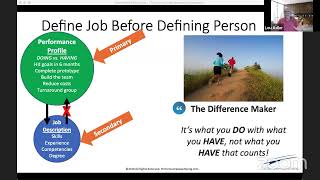
Lou Adler (May 11, 2020 live session) presents his "Win‑Win Hiring" approach: hire for the anniversary date — people must still be happy and effective a year after hire. He strongly criticizes traditional job descriptions, job-board mass-apply workflows, and personality/behavioral assessments (DISC, Predictive Index, Myers‑Briggs for hiring) as ineffective for predicting on‑the‑job success. Instead he urges defining jobs as performance objectives (KPOs/OKRs), assessing candidates by the work they’ve done (not years or checklist skills), and screening motivation and fit via his core interview technique: asking candidates to describe their “most significant accomplishment / the best thing they’ve ever done” in ~15 minutes and probing team role, outcomes, initiative and recognition. He frames hiring as: (ability ÷ fit) drives motivation (squared) = results, emphasizes managerial fit and organizational pace as culture proxies, recommends A/B testing reluctant managers, and offers a free job‑seeker course and a “magic card” hiring system for practitioners.
Chapters
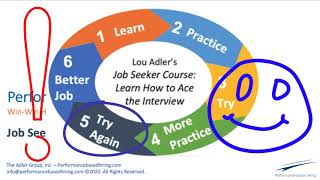
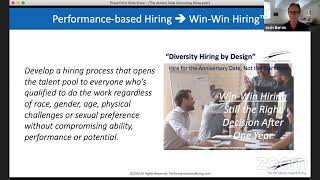
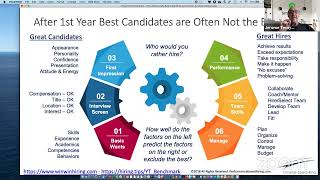
Hey. Hi everyone, this is Lou Adler. I'd like to welcome you to my almost daily recruiting show, which never starts exactly on time, although now I can clearly see that I am live, which is a great indication. Before I actually, I've already done this already three times today. Nobody was there, but I didn't know that. So if you're here, I would like to welcome you to my almost daily recruiting show. This is Lou Adler. I want to make a couple points. It is now approximately 19:15 GMT on May 11, 2020. If you're getting this message, I'd love to you to send me a quick URL or send me a message within LinkedIn. I should be starting to see your comments pretty soon. Let me double check that, see if I'm getting them connected. Connected. Connected. Okay, close that part. I want to see your messages. So I need to see your message. My sense is I am definitely live. We're going to talk about a bunch of things today. Win hiring is the big one and how do we implement it? And win, Win hiring is the idea that you have to hire for the anniversary date, not to start date. That means that you do everything you can to make sure the job is successful throughout the year. And at the end of that year, the hiring manager says, I'm great glad I hired that person. And the candidate says, I'm glad I took that job. But to pull that off, you have to be totally different. You got to just think differently about how you hire, how you interview, what you look for as a candidate, what recruiters need to do to assess the candidate's performance. So if you're a job seeker, the first thing I would like you to do is go to this URL. I'm not going to repeat it out loud. You can see it there. You might want to take a screenshot of it. We have a free job seeker course that will allow you to ace the interview. But I want to kind of go through today. If I was interviewing you as a job seeker and working with a hiring manager and understanding the job, this is the kinds of things I would do. What I'd also like you to do in the chat area, if there are any, as I talk about some of these issues, if there are any specific issues, tell me what your perspective is. Say as a job seeker, I'm trying to do this as a recruiter, I'm trying to do this to get a hiring manager to understand. As a hiring manager, it could be. I'm trying to figure out a question I can ask candidates to assess Soft skills. We're going to do that today, but I want to kind of to make that statement again. I'm live about 11 or 1915 GMT on May 11, 2020. Let me kind of go through a couple of points. And this is just going to be a half hour. So half hour is what I like to do. But I want to kind of give you a little bit of background. I've been around a long time. Probably the oldest person on this, listening to this class. I don't know how many people are on, but there's a lot of people on this program. 100, 200 somewhat. What? Doesn't matter. It could be five. It doesn't matter. I am the oldest person here. I've been in the hiring industry for 50 years. I'm not retired yet, but I started hiring people when I was 23 or 24. I became a recruiter when I was 32. I had run a manufacturing company prior to that, but my background is in systems manufacturing process, cost accounting, financial planning, budgeting. And I have an engineering degree and I worked in guidance and control systems. And the only reason I say that is when I got into hiring, my manufacturing background clearly indicated that hiring was screwed up. And when I wrote my first book, hire with your head in 1997, I had this picture drawn that's on the left of this on your screen. And I said, technology is going in the wrong direction. A job board posting boring jobs is a waste of time for everybody because you'll open the pool to people who are unqualified. Then you'll spend more time trying to clean up the people who shouldn't have applied to begin with. And the best people will go through the back door because they don't want to apply to a boring job. And that kept on getting bigger and bigger. This was just like a little bucket 20 years ago. Now this bucket is the size of Montana. And people put more technology on trying to put holes in the bucket when I'm going to say you should design a different bucket. So my different bucket is starting completely over. Reboot the whole hiring process. Throw away boring job descriptions. Throw away job boards, particularly if you're a good person. Do not apply to a job because there's a 1% chance you'll get the job. I've talked to bunch of ATS. 300 million applications processed by ATS. In the last five years, only 3 million people got a job who applied. 3 million. That's 1%. 6 million got interviewed. That's 2%, maybe 2 1/2%. It's a waste of time unless you're perfectly qualified. And if you're perfectly qualified, you wouldn't. You're good enough to know you're not going to need to apply. You'll talk to a friend of yours to get the job. So it's kind of a waste of effort and money. So I'm going to say, hey, let's use this pause and do be totally different. Win win. Hiring is hiring for the anniversary date. Hiring for the anniversary date means a year after the candidate accepted the job. They're still happy, they're still glad they took it. The job is exactly what they were told it was when they day they started or modified to be even better. Hiring manager says, I'm glad I hired that person. Well, how do you pull that concept off? So that's kind of what I want to talk about trying to transfer from product management. That's a good one. So I'm just going to try to take this one question I see here. You guys probably don't see it. I don't. Well, now I got. It's moving. It's. You can. Okay, so I think the question relates to transferring from a job into another job. I'm going to contend if your raw technical skills are based on designing something, whoever it may be, it's hard to get into another job or at least 60 to 70% of the work you've done isn't comparable. I'll say that again, unless two thirds of your work is comparable to another job or another industry, you're not going to get another job. It ain't going to happen. But what you could do. But on the other hand, if someone knows you and thinks you're great at something and you can learn quickly, well, that person might give you a shot where it's 50, 50. So I know that's hard to buy into. But if your skill sets aren't at least 50 to 60% of what the core criteria of the job are, you're not going to get another job. Now, going to a different industry is fine. Doing that core set, you just got to convince people that that's the case. I'm going to kind of move forward a little bit because I want to show you how and why I make that contention. And you can feel free to argue the contention. Another point, totally unrelated. LinkedIn has just come up with a new concept called newsletters for people who write posts. A lot of what I want to talk about today is based on the post I just put up this morning. It's called the Lack of Soft Skills Puts a Lid on Career Growth. You can find that article at this URL, so you might want to just take it. I know I've only had it up 15 minutes and we already have 230 subscribers. Now I will say something. My style is very New York. I'm very direct in your face. But I don't like BS and I'll tell people I'm perfectly fine telling people they don't know what they're talking about. And I'm perfectly fine saying you're wrong. And if they can prove me wrong, I'm perfectly fine. Say, yeah, I made a mistake. I'm happy to do that. I make a lot of mistakes. But I do believe that job postings that are boring and people applying to jobs is the biggest mistake of all. And nobody has ever convinced me that's not a mistake. I've talked to at least 20 to 30 people developing artificial intelligence for hiring and it's a waste of money being more efficient. Doing the wrong things is not a good thing. So why do people continue to do it? It makes no sense to me. But they did do it and companies buy into the malarkey. I'm going to put my comments here so I can see things. If I'm not looking exactly at the camera, I apologize, But I got 14 screens open here. Let me see what anybody else got. So yes, Danielle, it's a pretty. Let me say Danielle just said she loved the idea of hiring for the anniversary date. It makes good common sense. It is hard to do. It's hard for the hiring manager, hard for the recruiter, hard for the candidate. And I want to kind of give everybody advice on how everybody can pull that off. But also make sure you get the newsletter. Sign up for the newsletter if you haven't got it. Let me keep on going and I will answer your question on the idea. So here's really the big thing. So I'm going to kind of go through the scenario I do as a recruiter. But you got to remember is. And you don't have to remember, but I'll make this statement. When I became a recruiter, it was really kind of a dumb idea for me to become a recruiter. I was really running a manufacturer, really was running a manufacturing company on a good corporate track. I hated the group president, literally hated the guy. I just leave me alone. And I quit four times in one year because I thought he and I didn't get. We were like oil and water. And I was probably. I was young for the job had a manufacturing company. I was 32 years old and I knew what I was doing and I was probably right two thirds at the time. But the other third of the time he complained about. So I just quit. Said, I'm going to become a recruiter and I'm going to use being a recruiter to find another job. But it turned out as I became a recruiter, I realized the whole process was screwed up. So I said, why don't we just treat it like a manufacturing process? We defined the spec before we start building the product. And when I looked at a job description that lists skills, experience and competencies and degrees and all this other stuff, I realized that was a terrible specification. And the reason I said it is, number one, it's not a job description, it's a person description. A job description doesn't have skills and experiences. A person has skills and experiences. So when I first became a recruiter, I was all in manufacturing. I could walk through manufacturing plant whether I'd been there before or not. And I knew that. I just said, hey, that's not a job description, that's a person description. What does the person need to do to be successful? That's what I did as a recruiter. First time I've done 5 or 600 actual searches asking that question, what does the person need to do to be successful? Build a team, grow sales. When I did that, it changed the whole dynamics. It's what people do with what they have that makes them successful, not what they have. And that's a critical thing that you have to understand. So I'm going to start with this and I'm going to make the statement that this is a profound, simple little chart. It's what people do with what they have that makes them successful. And if you want to achieve a win win hiring outcome, meaning after a year the candidate says, I'm glad I took this job. And the hiring managers are glad I hired that person. You have to know what the work is before you have to know what the skills are. The point being is if you can do the work, if you can do the work, I don't care if you have 5 years experience or 50 years. If you can do the work and are motivated to still do that work in that environment, you deserve the job. I don't care if you're old or young, black or white, green or yellow, gay or not, what religion doesn't matter, if you can do that work, you deserve the job. And I had the number one labor attorney in the world, number one in the world say that's the way you should write job descriptions. And writing job descriptions listing skills and experience is a stupid idea. He didn't say it in those words, but he says it. And predictive index is useless and absolutely useless. It doesn't predict anything. It just predicts competencies or preferences. So I'm glad you asked the question. I hate predictive index. It's snake oil. Totally snake oil. It doesn't say if you're good at it, it just says you prefer to do it. So that's why. And disc is exactly the same. Myers Briggs is the same. The enneagram is actually pretty good because it shows changes in style over time. Now why I do not like predictive index for hiring. It's fine for collaborating and doing work together. So I'm only thinking of it from hiring. It doesn't predict the thing in terms of predicting index. However, if the person can do that. Let me go back to this part. I just saw that predictive index and I get floored by anybody who sells snake oil. I've actually talked to the senior scientist who developed predictive index and he agreed with me. He said, well, we're in a business of selling tests so we're not going to change. But neither here nor there. So here's what I want to do. If you can prove the person can do the work, he or she will have all the skills needed. It's the work that determines the skills. You can have all the skills and experience listed on the job description and not be motivated to do the work and not be able to do the work in that environment. So I say define the work and make sure that improve the person can do the work because it's what people do with what they have. Now let me kind of define this from a few different perspectives. Perspective one is a candidate. So if you're a job seeker and in our free job seeker course, I'll say it's free again. You have to go to that website I gave earlier. I'll probably show it again if somebody reminds me to show it again. Basically what it says. And I'm going to get to that tracing in a minute about cultural fit. I wish. I can't look at these questions because I get changed in mind. So hold on, I'm going to just move the comments to another screen so I'm not dissuade from looking at them. So let me. If you're a job seeker and you feel you're being misjudged during the interview or the phone screen Ask this question to the interviewer. Would you mind giving me a, before we get too deep into the skills, would you mind giving me a quick overview of some of the performance objectives or the challenges in this job? And then I'd like to do is give you some examples of work that I've done that are most comparable. So what you're basically doing is saying, hey, please tell me about the work. And then I'll give you examples of the work that I've done. Now somebody also might say is how many years of experience do you have in xyz? Rather than giving an answer, you're going to ask this question. I mean, I've got, I certainly have a lot of experience in that field. Would you mind telling me how that skill is used on the job? Because I'd rather give you an example of how I've used that skills to solve some complex problems. That's called a forced choice question. It forces the hiring manager, rather than box checking your level of skills, it's how those skills are applied on the job. This will be a game changer for you if you're a job seeker because all of a sudden you understand, hey, you're measured on your performance, not on how many years of experience you have. It's what people do with what they have that makes them successful. So I'm going to, that is important. If you're a recruiter working with a hiring manager and manager says, I need someone with an MBA and five years of experience. And in this industry, the question you as a recruiter talking to the hiring manager is how is all of that stuff used on the job? I actually did this about 25 years ago with the CEO, became a good friend of mine. He wanted an MBA out of Stanford, MSE at a top engineering school in the country, 10 years of industry experience. And then he was aggravated. You don't have any background in this. Why are you doing this work? You're not a recruiter, you don't know how to do that. And I just said, Lee, how is that MBA, that double E and 10 years experience used on the job? How is it used on the job? And he said, well, that's a good question. Finally asked a good question. He said, I want someone to put a five year detailed, complex product roadmap that trends the industry, that walks step by step to what's happening in the evolution of technology and put a product roadmap so we can maximize our investment in technology and engineering. I said, then I said to him, if I can find you someone who can do that work? Would you at least see them even if they don't have the MBA at a Stanford, even if they don't have the mse? I said, obviously I have to have enough background to do that work, but I'm not sure it's 10 years of that. He said, no, I'm happy to see somebody. He saw three people, hired one of them almost in three weeks. The idea is focus on what people need to do, not what they need to have. So I don't care if you're a job seeker. I don't care if you're a recruiter, if you're a hiring manager, I ask the same question. What does this person need to do to be successful on the job? As a series of performance objectives. And you can call them okrs objectives and key results. Kpos key performance objectives. But they define the work, the task itself, some measure of success and the action that person needs to take. Build, do, create, upgrade, change, maintain. You do those things, you're in the game. Now. I'll take some questions based on that if I can. Cultural fit is a great question. So I'm going to get to that in a minute. Okay, so here's my hiring formula for success. So here's. And we can talk about that too, because I think I want to tie it all together with the interview questions. Here's my favorite assessment. So let me kind of. I'm going to say throw away everything you know, throw away predictive index, throw away disc, throw away applications, throw away any kind of assessments, throw away knockout, throw it over. Forget it, it doesn't work. So start over from scratch. Nothing that has been built or presented has had any impact in 22 years in improving hiring results. There's not one person that can show me a disc test that has improved hiring. It definitely has improved after hiring collaboration. I'm totally supportive of that. It is a useless test for hiring. Assessments are useless for hiring. Now you got to understand my background is engineering. So you got to either works or doesn't work. And if something is only correct 60, 70% of the time, that's useless because you're missing 30%. And it's got a lot of false negatives or false positives too. So let me kind of give you my hiring formula for success and then show you how to measure it with just one, one interview question. And this is the question that you're a job seeker. You're going to get the hiring manager to ask it. And I get hiring managers to ask it all the Time. Just so you know, my business is we train hiring managers around the world. Those who buy into our question hire win, win all the time. People who fight it wind up with no change whatsoever. So I'm going to go with this. Here's my hiring formula for success. The ability to do the work in relationship to fit drives motivation. And because motivation is so important, we square it, that equals results. Ability in relationship to fit drives motivation and it's so important to square it. Now ability is soft and hard skills, technical skills in combination of organizational skills, leadership skills, management skills, getting projects done on time. That's ability. Got to be able to do the work. The fit factors are fit with the company culture, fit with the. Which is the cultural part. Fit with the pace of the organization, fit with the hiring manager style and fit with the intrinsic motivation. So people who aren't motivated to do that work, and I'm sure everyone on this call is competent to do certain levels of work, but aren't necessarily motivated to do it. Yeah, you've already done it. I want to do it again. So it's just kind of boring work. So being motivated to do it is as important as having the ability to do it. And what drives motivation is, hey, do I really want to do this work? This, this is work I really get in this state of flow. I love it. Fit has to do with the company culture. And I'm going to contend that a great proxy for company culture is how decisions are made. Is it a bureaucratic culture? Is it a slow pace? Is it quick pace? It also has to do with the pace of the organization as a proxy for culture. If you're a fast paced, growing, fast limited resources, that's totally different than if you're a midlife, a mid cycle company or bureau past your prime company. So culture is. There are the proxies for these words that you can look at. And I'm going to say pace of the organization is a good one for culture as well as the decision making process. So during the interview that's what I ask people. So I just, I get at that. But I'm just going to say so here's my most important interview question of all time. I do not know that it's here. It was on my learning platform. It might be though. I've created this little card. I call it the magic card. The magic card has got a complete hiring system in it. I don't know how you can actually get this because I have to mail it. If you want this magic card when I do training I say, I'm going to give you a magic card. And the magic behind it is if you follow the rules in this card, you'll never make another hiring mistake. So that's the idea of the magic card. Kind of corny, but it works. But here's the big question I ask. It's on the magic card. Think about the best thing you've ever done in your whole life. The best thing you've ever done in your whole Life. You got 15 minutes to tell me all about it. Go for it. 15 minutes to tell me about the best. That's the only interview. 15 minute interview. The only thing I'm going to ask you is tell me about the best thing you've ever done. Now, I'm going to do a lot of fact finding around that and some of the. And here's what I'm going to discover when I ask that question. First one, hey, walk me through how you organize that project. I'm going to do a little fact finding, understand? If you organize the project properly and delivered on time, I'm also in that little question. I'm going to say, hey, what kind of team were you on? How did you get assigned to that team? Did you volunteer for that team or did someone assign you to the team? What happened as a result of being on that team? Did you get assigned to a bigger team or you get assigned to a worser team? So that's the same question I've got. These are questions. I'm digging in with that one question. I'm digging into that. Another part of that question I'm going to ask you, hey, how'd you get assigned to that project? Hey, how long did it take? Why were you assigned to that project? Because of your technical skills? Why? What role did you play in that project? I'm also going to say, hey, did you get any recognition for this project? For being on this most significant project? This is the most significant work you've ever done in whole life. I assume somebody gave you a pat on the back, gave you award, gave you a bonus, promoted you or something. I'm also going to understand, hey, I'm also going to ask this question, same question for different projects over different periods of time. So I can see this trend line of performance over time. So I'm going to not only ask you question one, it's going to say, what about the biggest thing you did at your last company? What about the current company? Tell me about the biggest team project you had. Tell me about the biggest individual project you have. I call that the most significant accomplishment question. And it's a game changer. But if you don't know the work up front, you can't relate it to anything. That's why I create five or six KPOs, key performance objectives that define the work. That's what I'm comparing your performance to. That's why ability in relationship to fit drives motivation and that equals results. But the comparison is I'm relating you to the actual job I need done. And if your accomplishments are great accomplishments but not related to the job, that's a bit of a stretch. This is where I'm asking for managerial fit, cultural fit, pace, resources. Now let me just say the person who asked about cultural fit, excellent question, but I'm going to contend 50 to 60% of the cultural fit is the manager's style. If you don't get along with your manager, it doesn't matter what your company culture is, you're going to have a problem. That was my personal situation. On the other hand, if you and your manager get along, then the manager is going to be able to break through some of the cultural barriers that you might not get. So I'm going to contend the managerial fit is a critical component. Certainly the pace of the organization is a critical component about culture, certainly the depth of resources you have. Because I've seen a lot of people who have been in companies where they've had a lot of resources and slow decision making, very competent, capable people, but they all of a sudden didn't have as big enough team, there weren't enough resources, they had to do most of the work themselves. And the decision making was instantaneous. A person's going to fail even though they're great person in company A and a terrible person in company B. And this is all I'm getting all this stuff with one question and now the most important one is the motivation to excel. Do you really want to do this work? Do you really want to do the work that needs to get done? And the way I get that through that most significant accomplishment question is I just ask, hey, let me just pick somebody. Hey, Abdul, tell me about in that project, where did you really go the extra mile? What kind of work did you really enjoy the most? And I'm going to ask that a number of these most significant accomplishment questions. So I start seeing a pattern of where you naturally take the initiative. And now that's the fit factor. It's the motivation. Because if you're not motivated to do this work, I don't care how good you are, I will have to push you to become average. And that's why I tell hiring managers if it's candidates not motivated to do the work, you're going to spend most of your time pushing that person to become average. Get someone who's self motivated to do the work you want done. But if you don't define the work ahead of time, it'll be a luck of the draw problematic if the person will be successful or not. Who? Boy, I'm going to start asking questions. You got enough stuff here guys. What are your thoughts and comments? Okay, Damon. Excuse me, Damon. That's how I screen for motivation. Damon, great question is I start in that most significant accomplishment question. I asked the person, hey, where'd you naturally go the extra mile? What kind of work did you enjoy the most? How did you apply that on the job? But then I do this a couple of times over time and I see, wow, Damon took, I hope I'm pronouncing your name properly. Damon took the initiative on the technical side early on, but then he started coaching and took the initiative of helping others and then he actually started taking the initiative on training other people. So while your initial motivation might have been technical learning, I could clearly see it switched to managing and developing people. So that's why a typical competency or behavioral question isn't effective. You got to look at those change in behaviors over time, particularly motivation to do the work. So I don't know. I know a lot of people are asking about motivation. To me that's as critical. I mean, let's say this ability to do the work in relationship to fit drives motivation and they're all related. I mean that's kind of a simple formula. It took me 10 years to figure it out though. And ability is comprised of both soft skills, organizing, managing, collaborating, leadership, vision and hard skills. And here's the point that I saw earlier. Let me kind of. I'm going to put this up again because you might, I want you to join but you're not going. I mean I can't obviously cover though my whole Life here. That's 10 minutes at least another 25 minute class. I want to. I'm sorry, I'm going to go backwards here. This is the article on soft skills and I want to read this and you might not be able to read it. So I'll just read it right here. Yeah, I can't expand it. I probably can, but this is what I've discovered over time. In the early phases of a person's career, their technical skills dominate. But after A year or two, maybe even less, their soft skills overtake their importance in terms of that person's upward success. So when I ask the person's question, hey, tell me about your major accomplishment, I'm starting to see is the person's soft skills becoming more important than their technical skills? And way I look at that is I see the types of teams the person's been assigned. I call that the Sherlock Holmes technique. I'm not making a direct measure of your soft skills, I'm measuring of assessing how other people thought of your soft skills. So if you've been assigned to more important teams, if you've been assigned, have been recognized for leading and solving problems and volunteering through different work, and that's another way I get at motivation is what did you volunteer for to do that you didn't have to do? Would you go the extra mile? So I'm constantly asking those questions. But the idea is I can quickly see a technical person if his or her soft skills or, excuse me, if a technical person's technical skills became less important than their soft skills, if the technical skills are always more important than their soft skills, I just, it raises a concern to me because that person's probably only dealing with other technical people. LinkedIn's just come up with this new idea about newsletter. I'm on a pilot program for it. So this is my first newsletter, which means you can subscribe to my newsletter and you'll force them. I'm sure you can unsubscribe if they get boring, but I do. I'm pretty frank. Guys, I don't have 22 years. I haven't seen any change. With all the technology I know I don't have 22 years left. I would like to see this change in the next year or two. And the biggest one to me is, is this. Throw away all your job descriptions, start a total new program and from this moment forward, define work as a series of performance objectives. This is the way you should manage people anyway and that's the way you should hire people. So that's how you embed post hire performance, meaning doing the work, into the pre hire process. I want people who are competent and motivated to do that work. And if you are, you deserve the job. I don't care if you're black or white again, old or young, physically challenged or not, it doesn't matter your sexual preference at all. If you can do that, you deserve it. And that's what I got the lawyer to prove. And in 100% of the cases we have There haven't been a lot of lawsuits about it because it's so logical. But 100% of the cases, you will never get sued if you follow that rule. Following the skills experience rule means, hey, if you have people who've been promoted who don't have that mix of skills, then focusing on skills and experience, while it's objective, it's not predictive. That's so talking about predictive index, having a list of skills and experience and being preferred to be outgoing doesn't mean you're good at being outgoing. That's why I don't like predictive index or disc. So let me open it up to questions. I'm done, I'm tired. This is good. Hopefully this is valuable for you guys. I don't know how many people we still have on, but I assume we have a few. Okay, so what is your definition of candidate experience? So this is a good question. Water. Many, many years ago I was giving a presentation to a group of hiring managers and they asked me this question. How much experience does this person need to have to do this job? I said, just enough. That's all I just enough. And he said what? I said, yeah, if they have too much, they want to do it and if they don't have enough, they can't do it. So just enough. I don't know what it is. Some people need five years, some need 10 years, some need 15 years, some need three weeks. It depends on the person. Obviously for an engineering job, they need enough to do that work. But if you're doing architectural level, high level system design, you need different than if you're doing maintenance design. So I always say it's enough to do the work. So rather than saying, hey, they need seven years of experience in this area, I say, what does that seven years of experience look like on the job? If you're a job seeker, you should ask that too. What does X years of experience look like on the job? How are they going to use that on the job? Then I say, would you see somebody from me who's motivated and competent to do that work, whether they have seven years, five years or 20 years. And that's the idea. I just tend to, you know, thank you, Barry, for being practical. There's so much BS going on in hr and I think it's because they don't know the job. If you know the job, you're in the game, you don't know the job is problematic if you'll be successful. The reason to use disc is because they don't know the job and it doesn't work. And here's why. I don't like disc or predictive index. Many years ago, I took a disc test. Before all of you were born, I took a disc test and the person says, wow, it sounds like you're really extroverted and be a great salesperson, but you're not very analytical. I said, this is 30 years ago. I said. I said, that test is flawed. Yes, I prefer to go out, drink beer and play sports when I could, but I'm actually a better analyst. I was a really good engineer. I was doing PhD level math when I was 19. I just prefer to drink beer. But if you ask me what I'm better at, I'm much better at doing the analytical part than drinking beer. Can't even. Never mind. Don't even get into stories about drinking too much beer. You have to give me a question about governance in particular. Tracy asked me a question around governance. How is. So this is where I can't ask you a simple answer. A simple question. But so I always get. Figure it out. How is governance used on the job? So tell me if you can tell me, Tracy, and I'm happy to answer it. How is governance used on the job? Because I don't know what governance means. I know what it means in certain areas. I don't know what it means in every areas. Now you talk. Anna, are you trying to talk about working with employees? I don't know. It's a great question about COVID and working with employees. Yeah. This is not. Denise, that's a great question because I have a couple of problems with hiring managers. Legacy leaders. Yeah. So this is. And I do have a course on how to overcome reluctant hiring managers. So first off, I try to use logic. What does a person need to do to be successful with those skills? Would you see a person who, who could do that work? That does that work? Well, some managers just buy into it immediately. Some managers have to be persuaded. Some managers. I'm going to stick. I am going to only hire people at this. This is what I believe to be true. And I just say, okay, what if we conduct an A versus B test? The A versus B test means I'll find people have all the skills and experience listed in the blue circle. And it's not a blue circle, but that's what I say. And I'll find two or three people who I think can do the work who might have a little different mix of experience. And then you decide whom you want to hire. And that tends to work But I also then say this to the hiring manager. Who do you spend more time with? A person who is self motivated and can get the job done or a person who needs to you be pushed? And I think they then say, well obviously I like people who are highly motivated to do the work I want done. I said, well just tell me what that work is and I'll find people motivated and competent to do it. Hey guys, one last question. I'd like to go a half hour and we're a little bit over time. Any last questions? Oh, candidate help, please let me give you the candidate help. I have the job seeker class. Let me get back to that page. It's right here. If you're a job seeker, this is the candidate help. Go to that URL. It's a free course but the big one for job seekers. And the last thing I'm going to say is if you're in an interview now you got. I'm going to have another part of the course is how do you get a job? But that's how do you get the interview? But if you're in the interview and you feel you're not being judged properly, ask the hiring manager, can you please, the interviewer please tell me a little bit about what the requirements of the job are. I'd like to give you some examples of work that I've done that are most related. If some recruiter is box checking you, how many years of experience do you have in UX design or in Ruby or in Python? Rather than answering the question, say can, can you tell me how Python is used in this product or in this, in this job? And I'll give you some examples of work that I've done using Python. The personal say. Oh, that's great. Thank you very much for helping me. Most interviewers don't know how to interview. It's hard work to interview. So if you, the hiring candidate can make it easy, hey, tell me what you need done. I'll give you some examples of work that I've done. The course shows you how to ask that question and how to answer it properly. Good luck everybody. Hopefully this is helpful. I'll be on Thursday again in my daily recruiting show almost daily and not very timely but that's the way it is. Thanks everybody.