Lou Adler - The Almost Daily RECRUITING Show
Lou Adler argues that credentials don't predict job performance and that hiring should focus on year-one accomplishments, not day-one qualifications. He recommends job seekers skip the apply button and contact hiring managers directly with a short description of their biggest win instead.
Chapters
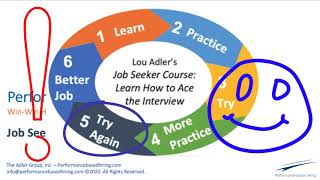
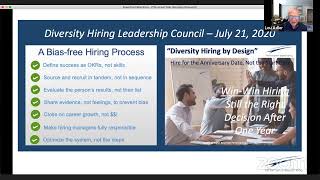
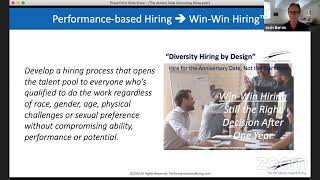
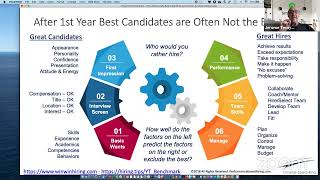
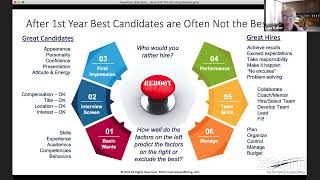
Hey. Hi everyone, this is Lou Adler. As I prepare to go live, I would like anybody. First you have to tell me that you're here and I know you're going to say hi and I'm happy to have you say hi, but also copy the URL of this meeting. Sometimes I get notified that I'm live and I have to watch the comments on my cell phone. Sometimes I don't get notified that I'm live and that makes it somewhat difficult. So if you could say you're here, send me a notification on LinkedIn, a message on LinkedIn, but also include the URL. So, hi, here's the URL. I'm going to say that a few times. I know it's repetitive, but there's a delay. Hi, here's the URL. Hi, here's the URL. I need the URL because I don't get notified all the time that I'm live and I haven't got notified yet that I'm live, which is somewhat disappointing because I've spent hours trying to make sure I get the key. So I've got to use the old fashioned technique of send me a message with the URL. What I want to do is talk about hiring in a pretty unusual way. But again, I don't see any notifications yet. I don't know that I'm live. I suspect I am, but this is actually very frustrating on my part, but probably frustrating on your part too. So I apologize for that. Sometimes I do get notified. Nobody's sending me a notification yet that I'm live. I'm going to assume I'm live and I'm going to make the statement that as far as I'm concerned, I think people are starting to think about hiring and getting back to hiring. Probably going to be two to three months away, but I already can tell that people going to go back to the same old, same old techniques and post boring jobs. Candidates are going to apply. They're going to get aggravated because they're not getting any information. So again, if I'm live, please send me a notification. If I'm live. I don't see any coming in yet or a message. See notifications I missed. I don't see any yet, so I must not have any. I don't think I'm live. This is kind of frustrating, but I must be live. Yesterday I was live and had all people saying hi, but nobody's even saying hi today. Maybe it's Thursday afternoon somewhere and nobody wants to talk about this. Well, I'll practice Anyway, but if you do get. If you see me, please, if you could send me a message that says I'm live and include the URL. There's a reason for this is I am probably the oldest person who's still in recruiting industry who's been there through three or four or five recessions as a recruiter, actually working with hiring managers, working with candidates, working with companies. They're going through recession, don't have any money. And I just believe that we have to figure a better way to do this. So I still not getting a single notification. I'm live. Well, that's great. Very strange. Very, very strange. Let me try one other thing here, see if it helps. Certainly disappointing, but so be it. Let's see if I can get one thing here. I'm starting to get some messaging now. I think I'm starting to get some messaging. Oh, that's what I wanted, messaging. I'm sorry. I think you guys are helping me out. I appreciate it. That's not what I wanted. I think we got some live link. Thank you very much, Bridget. You have got me there. Thank you very much, Bridget. You got it. Okay. Hi, Lou. That's what I needed was the link. Sheila gave me a link and Bridget gave me a link. So we're good. Now I can talk about what I want to talk about. Knowing that I'm actually talking to people as opposed to myself. When I just talk to myself, it's kind of actually, it's interesting because nobody talks back. So I'd rather you talk back. So here's what I want to do. I want to talk about hiring. I'd like you to put some challenges that you're having in hiring. And if you're a job seeker, it's not getting a response or nobody's paying attention to you. If it's a. If you're not hiring at all, they put a freeze. Whatever it is, tell me what you're. What you're kind of doing and it'll really be helpful for me. I want to show something here as I look at back and forth at this. So I apologize for not making full camera eye contact. But some of you know, I've written a lot of books about hiring. Create a training course on hiring. Have a LinkedIn course on hiring. I just got some email this morning. I want to create a whole series of audio tapes on hiring for podcasting. And my audience is kind of different, is I work with hiring managers, I work with recruiters, I work with company executives, and I work with job seekers. The Stuff I do with job seekers. We give away free courses. And I'll give you a link to a free course in a minute for job seekers. But this is the slide I want to show. I actually had this cartoon drawn in 1998 because at that time they said technology is going to be the big win. Technology is going to do everything. New job boards, new recruiters, new technology, new ats. AI was not involved. Machine learning was not involved. But people thought it was going to be easier to hire great people. I look at this thing 20 years later, 22 years later, I don't think anything's changed. And I think the real reason, sad to say, is we let unqualified candidates apply for jobs that they're not qualified to handle. And then these people get aggravated that they're not getting called back. And then we have to add candidate experience to make all the people who are aggravated that didn't get called back who should have applied to begin with. And we try to make them happy. And we spend a lot of time dealing with candidates who should not have got hired. What I believe we should is, hey, I think you should restrict people who are qualified. They should apply, and everyone should be treated with a call back. But that means that you have to kind of only apply for jobs that you're qualified to handle. So given that, it's probably not going to happen. But I have this kind of funny idea, and this is. I'm going to stop and take some questions in a minute. I call it win, Win higher. It's hiring for the anniversary date, not the start date. That means you're not focusing on just a paycheck, which is a pretty low social need. Maslovian need. I got to get paid. I got to pay the rent. I know those are important, but there's two kinds of things. Hey, you're getting. You're hiring for the job or you're hiring for a career. My focus is if you really want to have a career move, you got to be a little bit more selective about whom you see if you're a hiring manager or recruiter and what, what you apply to if you're a candidate. I know that's difficult, but that's my objective of, hey, can we possibly get there? So I'm going to say we have to reboot hiring, start over. If you're a candidate, you can't look for jobs. You cannot apply for a job. If you're a recruiter, don't post jobs anymore. If you're a hiring manager, only see people who are Semi qualified. So I'm going to kind of say this. This is my idea for rebooting hiring and I'm going to talk about anything anybody raises on how to do it. First, a new strategy. The strategy is we don't want to weed out the week. We want to attract the best. Totally different strategy. We hire for year one, not day one. We use a system to do it, not a series of steps. If you're a good person, you're not even going to apply to a boring job. So we already know boring jobs don't work. And I think one thing is a great candidate is not necessarily a great hire. Totally different criteria. And that's the one I do want to prove that today. It's a high touch process, not a high tech process. Nobody who's really serious about a job wants to talk to a machine and a machine can't figure out if you're good or not. You're dealing with people. This is serious stuff here. So I say how can you make this mechanical? It's not transaction. It's a serious thing. We got to talk to people. But we let people apply for jobs and are qualified and we spend more time figuring out who's qualified or not. So we forced it to be mechanical and it's the systems at fault. It's not the people. Why not just push on apply button, hope for the best. So we got a part of it is redefine ideal candidates. No more apply button and we're going to fish with a big fish. But I want to Talk about items 4 or 5 so I'm going to stop there and get anybody's reaction. Well, Grace, you say I don't know if that's a comment. This is a zoom meeting. Is this helpful? I mean this. I'm using zoom to do it and I'm restreaming. We actually hope. Hold on, I'm going to try one other thing here. I'm supposed to be able to. I got a restreaming service so I'm going to try something real fancy. Hey, this is cool now this is amazing. So I am almost ready to stop. My week is made. I've got this restreaming service where I could not see the comments. Now I can actually see the comments on my other screen here. Brad Abbott. I just see this hiring freeze and not hearing back from company recruiter and that is a real problem. So let me kind of go to the source of that problem. I know Brad, it is frustrating. People apply to a thousand jobs and don't hear back and here's what I tell candidates. First off, don't apply to any jobs whatsoever unless you're 100% fully qualified for that job. Because some machine is box checking your skills, years of experience and title. And then they get you on the phone, they're going to talk about compensation and none of that has anything to do with if you're good or not. So what I tell job seekers is use that job that you think you're qualified for as a lead and then look for the hiring manager who might do that. And don't even send a resume. Forget resumes, throw resumes away. Throw job descriptions away. I know this is pretty radical. They're useless. Your resume is a useless tool and the job descriptions as useless. And if you think you can match a useless tool with another useless tool and then figure out if anybody's good or not, if it's a match made in heaven, it's not. It's a match made in the other place. So what I would suggest you do is you write an example of a major accomplishment if you're a job seeker. Biggest thing you've ever done your whole life. Okay, I get, I don't know why people send me full stack engineer resumes. I know I don't hire those people, but if I did, I'd say tell me the best thing you ever did as a software developer. The best thing you've ever done. Get. Give me two paragraphs of the best thing you've ever done and then I'll figure out if that's the best thing you've done. And I need something like that done. I'll call you in. So Brad, that's what I would suggest you do. Brad's of the world. If you think you're good at something, summarize it in one or two paragraphs, make a little video of it and send it off to some hiring managers and bypass the apply button. Bypass the HR team, bypass the recruiting team. They don't know what they're looking for. I'm sad to say that I trained recruiters and hiring managers and some of them get it. But the probability that you'll find somebody who gets it is remote. Love the new show title. Is that my show title? I don't know, Jennifer. Now here's the other thing is I am 30 seconds behind what you're hearing. No, that's not true. I'm 30 seconds ahead of what you're hearing. There's a 30 second delay here. I think there's somebody there making sure that I don't Use any profanity and I think when I get go live they have a propensity to think that I might actually use some profanity. I don't believe I've ever done this live. I am from New York and I talk fast so maybe they want to slow me down. See now Chaudhry, you've on all my calls. Chaudhry, stop saying you're an accountant looking for an opportunity. Who cares? I've seen you Chaudhry, you're probably a real good accountant. Write down one or two paragraphs of something you've done in accounting. That's great. I've set up an international reporting system that looked at, I don't know any more accounting but looked at international transfer pricing and came up with a special program that we can put on an SAP platform that's in the cloud that can instantly transfer and figure out the tax rates for international transfer pricing for distribution worldwide. Okay, you're good at that stuff Chaudhry, let's talk. But to say I'm an accountant looking for an opportunity, who cares? I'm not looking for an account looking for an opportunity. I'm looking for somebody who can help me set up an international transfer system. Ah, now you've got something. That was a great question though, maybe using. Okay, let me see if anybody else got here. I am accountant. Oh, that's the same accountant. Yes. Jason, why do you think I'm promoting my books rather than being interactive? Now it's a fair, it's a fair statement but Jason Whitson says he seems to be promoting his book rather than being interactive. The truth is I haven't even said anything about my books for 30 seconds. That was 30 seconds at the beginning. Now I will say I'm promoting my methodology and understanding that existing hiring techniques are fundamentally flawed and my books actually do address that issue. But I am not promoting my books. I'm trying to understand issues here. So maybe Jason said that at 11:44. That was four minutes ago. Let me see what Anybody else have anything. Okay now Chaudhry, four times you've said I'm an accountant. Do you think anybody is reading that? I'm an accountant looking for 4 times you've posted that. I have no way of canceling that. Oh God, Chaudhry, come on, let's be serious. You think everybody cares that you're an accountant. You're going to do it five times, you're going to get a job that way. So Jason, I believe that's somewhat interactive oh, another chaudhry. I'm interactive chaudhry. I might, I don't know if I can block you from these. I probably can't. It's too hard to do it. Go to the hiring manager, not hr. Yes, I agree with that. Okay, let's take a look. Anybody else have any good questions here? Okay, let me do this one thing. Jason says I'm not interactive enough. So ask me an interactive question. Jason was. Jason, this call isn't for me. You don't have to defend yourself that you jump on here to give us your perspective. Thank you Linda, I appreciate that. But you know, I'm from New York, but here's, here's my perspective on the big issue here. And I think that fundamentally this is to me is one, a root cause issue. This, I don't know if you take a picture when I finish this slide, take a picture of this and show it to somebody and talk it over at dinner. I make the contention that great candidates are not great hires. But here's the way the system works and why it's fundamentally flawed. Job descriptions with skills, experience, academics, competencies and behaviors. You have to have these must haves. And I tell people, I tell hiring managers, hey, if someone's got all of those must haves, are you guaranteed they'll be a good person? The answer is of course not. And I just say that just because they have these skills doesn't mean they're any good. On the other hand, have you ever met someone who's really good who has a different mix of skills? And some of them say yes. I said, Well, I guarantee 100% of the people who get promoted or get assigned a bigger job whom you know, don't have a different mix of experience. What's interesting, when we know people, we focus on our ability to learn and grow and handle a situation. When we don't know people, we look at their skills and experience, which is that poorest predictor of all. But this is where people get screened initially. So if somebody sent in a thousand applications and didn't get called because somebody's, some machine is looking at those skills and I must have this. But now that get matters worse. Now they take that subset of people have all those skills and somebody talks to you and you have to agree to the compensation before you even learn about the job, which is fundamentally stupid, great people will modify their criteria once they know the job or there might be another job that's equally as important. So the idea of looking for one job for one person with One compensation that at the core level is a stupid system. That's why I hate job descriptions. I'm looking for some marketing analysts from one year to 10 years experience. Fine, let's just have a conversation to see which of those jobs fit. But we do screen people on stuff that doesn't predict performance, skills that don't predict performance. And then we make a judgment about the person's first impression. If I like the person, I get asked easier questions. If I don't like the person, I ask hard questions. They're too old, I tune them out. If they're too young, I tune them out. If they're wrong school, wrong language, wrong race, all this stuff and it's all a bunch of bs. None of that stuff predicts your ability. So what I do is I talk to managers and I say, hey, take time out. Let's forget this candidate stuff. What does the person need to do to be successful? And I asked managers, tell me about the greatest people you've ever hired. And I've been doing this for 40 years. I ask anybody in any field, the best people work hard. They make it happen. They don't make excuses. They achieve expectations or exceed expectations. They just work hard. They collaborate well with people. They collaborate, they mentor, they coach, they develop, they lead people and they manage. People call these soft skills. These aren't soft skills. Plan managing, controlling, budgeting, working, coordinating, having good team skills. Soft skills is a stupid name for something as important as being able to collaborate and communicate and get stuff done with people. So it's nothing to do with soft skills. It's organizational management, team development, organizational skills. And I asked managers who'd rather hire 99.9 9.9% of 23,487 managers said, someone on the right, great hires. Then I asked this question, how old are the factors on the left predict the factors on the right? How well do the factors on the left predict the factors on the right? And I tell managers, and some of them said, they kind of do, they kind of don't. I said, well, think about it. Have you ever met someone who can do the work, who doesn't, who's a different mix of experiences and will negotiate the comp and might be a little bit nervous in the interview, might be a little bit introverted, but gets the job done? And they say 100% of the time. I said, you ever met someone who's got all that stuff, who's in failure? And they say that's how we make mistakes most of the time. So I said a great candidate is not the same as a great hire. And have your initial screening process. Looking for a great candidate and hope the person's a great hire means you put a lid on hiring. As far as I'm concerned, if someone can do the work, I don't care if they're black or white, green or yellow of older, young. I don't care what race, religion, what sexual preference preferences they have. If they can do the work, they deserve the job. And I had the number one lawyer in the country say, that's exactly right. The stuff on the left is actually biased and limits people, and yet companies still believe that's the right way to do it. To me, fundamentally, this is why the whole hiring process is screwed up and that's why we've got to reboot it entirely. So given that, what are your thoughts? Does that make sense or not? Now, Eric asked me a good question. I will ask this. Are soft skills more important than the other skills? I got to say, yeah, I think they are. Eric, I wrote an article, I'm going to rewrite an article because LinkedIn came up with this new tool, I guess, this morning, on how to assess soft skills. I mean, I get a lot of business through LinkedIn, so I don't want to mess that up. And they let me talk. On these platforms, it's not going to work. Soft skills, leading a team, that's not a soft skill. It's too important to be called soft. Soft skills. Committing yourself to get the job done, even when there's some hurdles overcome, that's not a soft skill. Persuading a hiring manager to rethink that they should go to plan A versus plan B. That's not a soft skill. That's so to me, organizational skills, team skills, budgeting skills, committing yourself to get things done on time and on budget. Note, making excuses, overcoming obstacles, those aren't soft skills. Those are critical. So as far as I'm concerned, they're more important. Now, here's the issue that I get and I'm going to give you a super, super, super, super tool for how to interview. I call it the Sherlock Holmes interviewing technique. And if you Google me on LinkedIn, Sherlock Holmes interviewing, I think you'll find it. And I remember there was a young guy who had a company in the UK and he had a couple of companies here, and he said, lou, and I'm pretty old, and this guy was like 25 or 26, and he was interviewing someone who's 35 or 40. And he said, how do I Tell if someone's a jerk or not. I said, callum, that's actually a good question. But I don't make judgments about people based on how I feel about people. I'm a good interviewer, but I'm a good interviewer because it's nothing to do with me. I understand what the job is. And then I ask candidates, hey, tell me what kind of teams you've been on. How did you get on that team? What happened as a result of being on that team? Did you volunteer for that team or did you ask to be on the team? And as a result of being on that team, did something happen? Did you get part of the same team and who was on that team? So what I do is I look for how people get assigned to different projects. If it's big technical projects, even if they only got three years experience, but they're doing work of a six or seven year person, that's got to be a pretty good technical person. I'm not making that judgment. I'm just asking candidates, hey, tell me what kind of technical projects you've been on. Hey, what kind of teams you've been on? How did you get on that team? Oh, the head of marketing asked me to be on that team. Oh, you're an engineer and the head of marketing asked you to be on that team? Yeah, and then they asked me to be on this customer facing team. Well, this could be a quiet, introverted person, but they've been asked to kind of work with customers and other kind of people and other functions. That's a remarkable team person. And whether I like that person or not is totally immaterial. Two or three different companies said, this person is a great team person and has been exposed to senior level people and have been exposed to senior level projects. That's how you make a judgment about a person, using the Sherlock Holmes deductive interviewing technique. And if you're a job seeker and people are judging you based on something that does anything on the left that doesn't predict your performance, you, you have to intervene. You have to proactively ask the hiring manager, hey, timeout, hiring manager, can you please give me a few examples of some of the challenges this person will face on this job? Because I'd like to give you some examples of work that I've done that are most related to that. Now all of a sudden you've controlled. It's called a forced choice question. And you might just. Lou Adler, forced choice F O R C E D choice question. I think I have them on Arianna Huffington's global Thrive site, but you'll find it anywhere. But to me, that's how a candidate can ensure that he or she is being interviewed accurately. Because I'm going to contend too many people interview you, select you, hire you based on the stuff on the left and has nothing to do with your ability. And I tell candidates this, I don't care if you screw up the interview. That does not mean you're a bad person. You might be need some interviewing skills, but that doesn't mean they've judged you properly. I mean, on the other hand, if you do well in the interview, doesn't mean you're a great person. It just means you're kind of affable and friendly and you got some skills. But to me it's your past performance and your major accomplishments indicate whether you're good or bad. And you as a candidate have to assess that. You as a hiring manager have to assess that. You as a recruiter should assess the person's accomplishments and relate it to what you need done. Okay, so now given that, Eric, thanks. In France, the recruiters are asking for video to the future. It's new for me, I think. So Eric, there's no question that video interviewing is in. So here's what again, what I do and I say this to Chaudhry who sent me. I see he hasn't sent anything but I, and I, this is interesting. Somebody else last week I made the statement is do not send a resume. Nobody wants to see your resume. Send a one or two. Now two or three paragraph at most half a page summary, maybe two paragraphs of a major accomplishment with some detail, major accomplishment you've done. So Eric, that's what I would say to you. Biggest thing you've ever done and write it up and then do a video of it and then send the video and say, hey, you look for a company that you think needs that kind of work because you're looking at other jobs that are opening. Hey, this company might need me. Go, go on LinkedIn I'm actually putting another course together which we're giving away free. It's how to get a job using how to x ray LinkedIn recruiter x raying means you gotta. I can't, I can't explain it. It's a little complicated, but it's how you can. LinkedIn has a public site. So for this fellow, I said use an X ray term to search on LinkedIn's public site, look for hire directors or vice presidents in your field of interest and in your City of interest. And I just did that very quickly. We found about 20 hiring managers. I sent it off. I said, send that summary and if you want with your video interview to those hiring managers and say I'd like to chat with you. It looks like you have challenges like this. And this had to do with logistics. Supply chain, cross chain, cross docking, taking in more supplies that because of some Covid and whatever it was, it was some complicated thing and this fellow looked like he could do it. I was kind of impressed by what he could do, but didn't have 10 years experience at 3 years of doing that. And it was more than enough to solve some major logistics problems. I'd see him in a New York second if I was a recruiter. But the system won't let him see him because he doesn't meet the criteria on the left. So you gotta bypass the system to ensure your stuff is on the right. So I think that was a fair question. Okay, right on our how to video. Check it out on my profile. Okay, Nikki, you have to send me that. Lou, what is your opinion about the hiring team interviewing a candidate? Now this is a good panel interviews, let's say this LinkedIn user. I can't see your name here. Interesting. I don't have that LinkedIn. It means you're going anonymous. We train. The only way I make money is training hiring managers and recruiters stuff we give the candidates. You get that? We give it away because I believe that we have to do that. I like people performance, qualified and good enough interviewers to get the job. But panel interviews are remarkable tools if used properly. The used properly part is the challenge. So last summer I was on an interviewing team for a charity, big charity in Southern California. And I said, we're going to conduct a panel interview, but it has to be organized. Basically what I do is I ask my big question is, hey, to candidates and. And I use it probably 60% of an interview. Hey, tell me about your biggest accomplishment. Hey, one of the things we need done is to raise more money. One of the things we need to do is set up an international accounting system. And one of the things we have to do is launch a new product, whatever that is. And I say, tell me about the biggest thing you've ever done that takes about 15 minutes to get the answer to that. And in a panel interview, what's good is you have one leader asking the question, hey, tell me about the biggest thing you've ever done. There's a bunch of fact finding questions of hey, when did you do it who was on the team? Can you explain that? Can you give me some more details? When did it happen? One person should ask the major question and everybody else should ask fact finding questions. A panel interview, once people ask their own favorite questions, it's lost. It's a useless tool. So that's, I mean, in a nutshell, that's how to conduct a good panel interview. One leader, a bunch of fact finders. And you should tell the candidate, this is what we're going to do. So I want the candidate prepared. So if Pauline was the candidate, just because I see your name there, Pauline, I would say, Pauline, here's what we're going to talk about. Write it down because we want to get into details. And I tell this to hiring managers and to candidates. I don't care if you're a terrible interviewer. I care if you've actually accomplished the work that needs to be done. I will tell you what that work is and I'll ask you to give me details of your accomplishments related to that. If your accomplishments aren't comparable, you're not going to get the job. But if your accomplishments are comparable and you do a decent job of telling me about them, fine. It's my responsibility as the interviewer to get the information from you. It's not your responsibility to be a great interviewer. Very few people think that way, but that's the way it should be. You're not being hired to be a good interviewer. You're being hired to do the work that needs to be done. That means you got to define the work and, and I have to take responsibility to get that information from you. That's what I call win, win hiring, hiring for the year. One day, the anniversary date where you, the candidate says great job and hiring manager says, great hire. I'm glad I hired that person. The system doesn't work that way, sadly. And I'm a doing this. As you can tell, I'm an old guy. I made that cartoon that I showed 22 years ago. I don't have 22 years left doing this. I wish I could say I do. I'd like to get this done sometime. But it's not going to happen unless recruiters, hiring managers, company executives and job seekers take matters in their own hands and say, I'm not going to take it anymore. I'm going to hire based on performance and ability. And this is what I find out. If I know you as a person, I'm going to judge you on your performance. And I kind of know if you'll deal with the people. I know how quick you can learn, but if you're a stranger, I judge you on stuff that doesn't predict performance. So my rule with hiring managers and recruiters is convert strangers into acquaintances before they become job candidates. And that's why I say job candidates don't look for day one, look for year one. Convert yourself into an acquaintance, meet people, talk to people, let them get to know you. Take the pressure off. It's not about being a full time employee, it's about getting to know each other. And then when an opportunity comes up, you'll be called. So I'm going to, I'm done with talking. I'm answering questions now. Okay, what if a candidate interview job is not project based? But that's a great question. Yousef. I didn't get into that part. Yousef asked a very good question. Most of the times the jobs that I deal with are project based jobs. So I say, what does this person need to do? Tell me some of the projects this person needs to get into. However, there are some jobs that are process jobs where they do the same work over and over again. And I did some work with a big insurance company, 5,000 people in a call center all doing the same thing, taking inbound calls for insurance claims. And I know the hiring manager teams, six teams, didn't want me in there to do this because I focus on the work. But they said, oh, we don't make hiring mistakes. I said, so. They said less than 10% of the people get fired in the first year. But I then said, are the other 90% exactly the same? They all do exactly the same work? They said, no. I said, so is there a difference between the top third and the bottom third? And they said, yes. They said, well, tell me what the top third does differently. And that was our job profile. We benchmark the best. So I tell hiring managers, hey, if you do the same thing over and over again, what are the best people do differently? And generally speaking, it's about reliability, showing up, being structured, being strong at the process, enjoying the process, being committed to get it done. So it's a short answer, but a great question to a very important question. Okay, well, I actually have to say this was my favorite LinkedIn Live session. I do not know how many people were here. I am disappointed in LinkedIn that I did not get notified, however, that I was live. But if I could just ask you guys as a final comment of the things that I said, because this helps me. I didn't, I just said, I ended it. And I didn't end it. Nuts. I think I just ended this inadvertently. I don't know how that happened, but I didn't. But I was going to say this. If I didn't. If I didn't end it, I am going to end it in a second. If you're still hearing me, can you just tell me what's the most important thing I said that you thought was relevant in terms of your needs? I'm not sure if I'm live anymore. I don't think I am. 1207. Let me see. That was the last one I got. Okay. It looks like I have inadvertently ended it. I don't know. I didn't end it. Doesn't say I'm ended, so I must be. It's just on tier. It says it was ended, but maybe they cut me off. I guess LinkedIn. When I said the bad thing. Who's about LinkedIn? They cut me off. I guess you're watching it again. Edwin, I think we're gone. We are gone, Edwin. Let me see. Yep, I'm gone. Thanks, everybody.