Lou Adler defines win-win hiring as both candidate and manager agreeing the hire was right three to twelve months in. He replaces skills-based job descriptions with 5-6 key performance objectives, sources for motivated semifinalists, and uses performance-based interviews to find accomplishments and career gaps before closing and onboarding.
Chapters
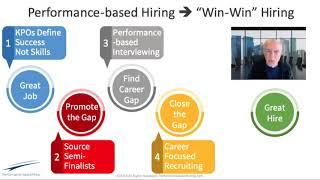
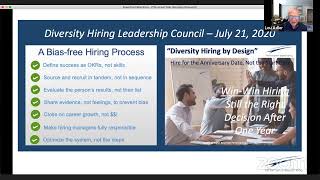
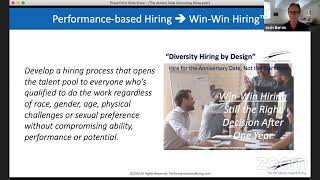
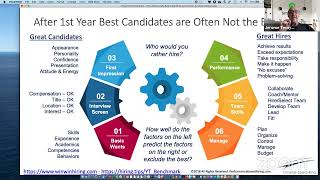
Hey. Hi everyone, this is Lou Adler. In this brief session, I want to give you an introduction to what I call win win hiring. A win win hiring outcome means both the candidate and hiring manager agree the right decision three to six months, even a year after the person was hired. I'm also going to make the contention that implementing performance based hiring is designed to achieve these types of win win hiring outcomes. I think we all agree everybody wants to hire a great person, but I'm going to make the contention that most hiring processes companies use are not designed to achieve that objective. And I'm going to particularly say if you continue to use skills based job descriptions, actually put a lid on quality of hire, because people with a different mix of skills who can do that work aren't even permitted to engage in a conversation. So to change that, I like to write job descriptions that define success. That's typically five or six key performance objectives that define the task, the action, the result achieved, wrapped around an employee value proposition that says, here's why this could be a career move. In our sourcing process, what we look for is semifinalists. A semifinalist is a person who's qualified to do that work, motivated to do that work, and would see their job as a career move. You have those three conditions. You have a semifinalist, and during that process, we're going to promote that gap as here's the reason why you should be interested in our job. During the interviewing process, we call it performance based interviewing. We're going to dig deep into that candidate's accomplishments to see if they have done comparable work. The difference between what they've done and what we need done is the career gap. If we can demonstrate that our job offers more stretch, more growth, more impact, and more satisfaction, we have a high chance of achieving a great hire and a win win hiring outcome. During the closing process, we want to validate that. We ask candidates, why do you want this job? We want a clear understanding that the job is a career move with a fair compensation package. Too often candidates accept a compensation package with only a vague idea of the job, and that's why the result after they're hiring, it's problematic if they're going to be successful or not. During the onboarding process, we want to clarify those expectations in detail, want to make sure the candidate understands the job, which had been discussed throughout the interviewing process, but also have the hiring manager understand what it takes to ensure this candidate achieves that. We believe hiring managers should be responsible for win win hiring. If they're hiring great people, they should go out of their way to ensure that this person is satisfied. Three months, six months, a year after the hire. That's what I mean. You got to deliver on the promise. That takes a lot of work. It takes a lot of work up front to define the job. Takes a lot of work in the interviewing process, a lot of work in finding candidates to do that, a lot of work in the closing process, but more importantly, more work ensuring it happens. But the result of a win win hiring situation is you hire great people and you raise the talent bar. That's the promise of performance based hiring. Win win hiring. Start with a great job, end with a great hire, deliver on the prom.