$50M Founder: “The Next Level Requires a Different Me” (Beau Turner - Money Stories Ep 9)
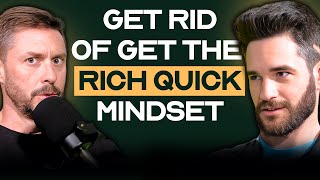
Beau Turner built Abundant Mines, a $50M Bitcoin mining company offering managed server rentals that generate daily Bitcoin with typical 30-50% yields over 3-4 years. He describes wealth as daily gratitude rather than a number, and says scaling his team forced him to shift from accumulator to defender of capital.
Chapters
The company's about 3, 4 years old, bootstrapped. We're currently raising on a $50 million valuation. We were living out of my fraternity brother's garage. She definitely didn't marry me for the money. I've had days where I feel like the least abundant person in the world with 7 figures sitting liquid and available to do anything with. If you can wake up feeling grateful for what you have, excited to do what you do, and in love with the place that you live and the people you get to spend your time with, that's wealth.
Hey, welcome to another episode of Money Stories. Today I am joined by my dear friend Beau Turner, founder of Abundant Mines, a sustainable Bitcoin mining company. Tell me what exactly you say you do here.
Well, in a word, essentially we just make Bitcoin mining accessible to investors. So we're building data centers, selling servers to someone like you who wants to make Bitcoin in a passive, hands-off way at a discount with tax advantages. And essentially it's a fully managed hands-off service where you're just getting Bitcoin coming in daily and we're taking care of the rest.
I mean, that sounds pretty amazing. I imagine it's going pretty well based on the, the general markets right now, though maybe not in the last couple weeks. But give me a sense of the ride over the last few years. When did you start and where are you now?
I started first in Bitcoin in 2015, but didn't really find mining until 2021. So at this point, the company is about 3 or 4 years old. It was bootstrapped, you know, next to nothing to start out with. And we're currently raising on a $50 million valuation. So that's been a pretty fun ride. And yes, definitely the tailwinds have started to kick in since the new administration came in.
Yeah. Yeah. Good for you. I mean, it's, uh, building a multi-figure company in 3 years is an incredible accomplishment. And, you know, for me, there's, there's a sense of, you know, putting ourself in a position to get lucky, right? There's, there's no such thing as an overnight success. Every, every overnight success has a story behind it. So I want to back all the way up and give me a sense of how you grew up with money in relation to money.
So money was— I know there's people out there who are not money motivated, and I don't understand that point of view. I was never like that. I always had some sort of money motivation as far back as I can remember. And maybe it's because I knew that in some sense money was tied to getting significance. And whether that was healthy or unhealthy, the way that that was expressed. I saw money as the greatest tool to essentially be likable, even from a young age. And we can go into how damaging of a worldview that is. But essentially, you know, I grew up with parents who were, were gold bugs, grandparents who were gold bugs. So from the time that I was 10, 12 years old, I knew what the word specie meant, not in terms of animal species, but like gold and silver. And so my concept of what money was was kind of malleable and a little bit more— had a little bit more depth than probably your average 5th grader.
So if I can extrapolate a little bit, you're learning about sound money before that became a popular thing. Yes. And, and this is, this is like a generational story that's being told in your household. And did you grow up middle class, wealthy? Like, what did that look like?
I would have said upper middle class. So I was always comfortable. I had no sense of lack growing up. The first time that I experienced not having money was when the cord was cut, so to speak, after college was over. But all the way up until then, I really did not lack for anything. And that was both a blessing and, you know, a very distorted view of how the world actually works.
Yeah, totally. And so, you know, this gold thread in your family, was it more conceptual to you or was it like a hot topic of conversation? Like, how did that play into your money story?
I think, you know, at least from one side of the family, there was always this sense of whatever you're in, nothing is safe unless it's a hard asset. So gold, real estate, some kind of commodity that you could touch and actually interact with, that was the only thing that was perceived as safe. And there was a through line of always waiting for the boogeyman around the corner in a financial sense, even though you know, we were very comfortable and there was no, no issue like that showing up in reality. And so that had me thinking from a very young age of, well, you know, even subconsciously, where is this mindset coming from and how can I guard against it in my own life? So from a very young age, I was studying finance, I was studying stocks. I was interested in removing that feeling of possible lack, even if there was no actual lack. I wanted to get ahead of that. And from the time that I could, you know, ride around on a bike was figuring out how I could get my 100x and some kind of exit.
So, so what does that journey in entrepreneurship look like for you?
It started out in real estate because that was what I was familiar with. That was what I saw as the most reliable wealth vehicle that most people had created or retained most of their wealth with in the world. And that worked for years in a financial sense. I know you have your own misadventures in real estate that worked in a financial sense, but were just a, a really bad fit long-term for your personality, which you're passionate about. Same thing is true for me. I did well in it, spent 10 years or so with that as my essentially only investment vehicle, kind of similar to how Bitcoin is right now. My, my really only serious investment vehicle. And at a certain point, I just lost the passion to keep going and finding deals and structuring deals and dealing with tenants and toilets and trash and all of that. And even if I could see success on a balance sheet, I did not feel successful in terms of doing what I'm here on earth to do.
And what kind of success are we talking about? Would you— were you a successful real estate investor or what's— and did that come right away? Like, Give us a sense of that journey.
Yeah, I mean, I would say I was successful in the sense that I could make something of deals that most people couldn't. And I had a great way of approaching deals to structure them with creative financing, with seller financing, anything that I could do to acquire a good asset in a creative way that somebody else couldn't, I was able to do very well. So I was a 7-figure real estate entrepreneur in my early 20s.
And when did you start getting the sense that this is not what you wanted to be doing?
I would say 2020 changed a lot about the world, about the way that I perceive safety, and honestly just made me reevaluate what I wanted to do with my, my time. It was a very confusing time in the sense that if you were holding real estate, you were very successful. You made a lot of, of very quick returns on an asset that really should not appreciate as quickly as it did in 2020. So from that standpoint, it was a very cushy time, but we were moving. We moved from Texas to Oregon, which was its own adventure that I'm super happy about. And it just opened my mind up to a different way of perceiving value and where value's stored. So I had this sense of real estate being bedrock, essentially like the most solid asset class you could imagine. And 2020, the expansion of the money supply helped me realize how much of real estate's value is backed by debt. And that scared me because I realized it doesn't matter if you don't have any debt on your property. If everybody else has debt on their property and the system blows up, the value of your Property degrades very quickly. So even if you're responsible, the irresponsibility of everybody else is a systemic risk to your own portfolio. So to me, I was looking for something uncorrelated, even if Bitcoin is very correlated with monetary supply, uncorrelated in the sense that it was outside of the system. And that was, that was the first opening into that journey.
So you, you say you got into Bitcoin in 2015. What does that journey look like?
That was just curiosity in college. I mean, I, I mentioned that I had been studying stocks and investments since, you know, essentially a 5th grade reading level. And Bitcoin came along enough years into that journey that I could recognize that it was very different than anything el— else on the landscape. I didn't see how big it could be though. So I saw it as this very interesting curiosity. Maybe it could get as big as a Facebook or a Google. It could be a really big company. I didn't think of it as being something that could take over the $900 trillion of global assets and be a meaningful, meaningful chunk of that. So when it was at a $10 billion market cap, I thought, okay, this could be 10 or 100x, not thinking that that was really the start to it being a global asset. So I got a couple thousand worth and that was a, a great move. I also spent some of it on things like VPNs and probably that was a $300,000 VPN subscription now. But I didn't understand where it sat in the context of global assets until 6 or 7 years later when I was reintroduced to it in 2020, 2021.
And how were you reintroduced?
Michael Saylor started coming on the podcast scene, and he was the first really intellectually serious billionaire that I heard describe how he was thinking about it in a way that made sense to me, not just as a great personal investment, but something that could kind of rewrite how we look at the system.
And what I'm hearing in this story is you grew up with not necessarily a felt sense of scarcity, but a very talked about and, and passed down sense of the rug could be pulled, the proverbial rug could be pulled at any given time. Monetary— the system could collapse at any given time. So I'm seeing how all of a sudden hearing someone like Michael Saylor talk about this, there's, there's a natural predilection, there's a fit here that I'm seeing come together. Can you kind of give me, give me a sense of how that felt?
It was to me the positive way of looking at the crash that every gold bug is secretly hoping happens. So it's a defensive asset with an extremely offensive core where it's small, it's barely penetrated the market in what we would expect it to do if it is what Bitcoiners say that it is. And so in that sense, it's providing safety from a systemic collapse. And also just unbelievable amount of upside in terms of how much it's actually penetrated the market.
Yeah. And I guess I'm really interested in kind of, did this seem like a solution to this internal safety that you maybe felt you were lacking?
100%. This was, this was to me the vehicle that aligned not just with a good investment thesis, but was, was very personally aligned in the sense that it made me feel both safe and like it was exactly the vehicle that I could rely on if I approached it in an intelligent way to provide that sense of not just safety, but expansion.
And, uh, from a, from a personal wealth perspective, give, give me a sense of, of what your ride has looked like because it always hasn't been sunshine and rainbows.
Well, my wife and I, my now wife, when we first started dating, we were living out of my fraternity brother's garage. So that was— she definitely didn't marry me for the money. I will tell you that much.
What year is this?
This is 2017, 2018.
Okay.
The ride in the Bitcoin space has been extremely volatile, but it's also come with a lot of learning. So we've gone from living in a garage to having an amazing home in the location of our dreams in Oregon, to then after 2021, when the market started to turn again, realizing, oh, we, we could have afforded our dream home a few months ago, but now we're, we're unable to make that choice. And back again within the last, you know, 12 months or so. So it's been a wild ride. There's been a lot of learning along that in terms of how to both bet on yourself and bet on the upside, but also protect yourself from getting into a situation where you can't make a solid financial move. And that's a huge part of the reason that I originally got introduced to you was, you know, it's one thing to create opportunity. It's a whole other thing to not mess it up once you've got it.
Yeah, the way, the way I tend to put that is that, you know, we go from being an accumulator of wealth to a defender of wealth. And if we don't make that— and it's a spectrum, it's not a 1 or a 0. You don't wake up one day and go, okay, I defend my wealth now. It's a, it's a journey across that spectrum. So what does that journey look like for you going from pure accumulator back against the wall, betting on yourself to starting to step into this idea that, hey, maybe I need to start protecting some of what I've built?
So a lot of it, I would actually— I'm grateful at this point that I serve people who are in the investment space because I am still personally very much in the creation stage, not the defense stage. So a lot of my attitude toward defense comes from needing to think about the people who I'm serving. So personally, you know, I'm getting all of these defensive strategies so that this never happens to me again personally. But I also recognize that the people that are coming to work with me often have not been through a full Bitcoin market cycle, and they're relying on me to give them the roadmap for how they can navigate this and not just get upside, but protect the downside. So a, a lot of this journey is, you know, the, the saying is, is you've gotta give to others what you're hoping to get for yourself. So I'm, I'm really serving as that kind of lighthouse for people who are trying to navigate a space and not get screwed and not lose everything. And in return, I get that same experience for myself. So again, still very much in a creation mode for myself, but accumulating those strategies, accumulating that mindset of always covering your downside as you grow.
Yeah, I mean, there's a sense, the word that's coming up for me is stewardship. Right? And, and when you take on investment, when you take other people's money, you're essentially saying, hey, I'm going to be a steward of this on your behalf. And it strikes me that a lot of times, even if we're not great at protecting ourselves, we, we may be better at protecting other people. And so it's actually that sense of service that allows you to start taking care of yourself.
Even in the the more personal sense, you know, it's a very different mindset when you're just going out on your own to, to create something for yourself, or you're doing it for a spouse or someone who depends on you. It's a very different mindset when someone's relying on you versus when you feel like you can swing for the fences and you've got nothing to lose.
Yeah. And, and, you know, something that we, we've talked about is that you are still relatively young, and yet you just talked about having lived through some Bitcoin cycles. This is still a nascent industry as, as we've kind of indicated. And so, you know, what kind of clients are coming to you and, and how do you explain that, that life cycle and the volatility? Like how do you think about that? How do you frame that to people?
You're right. I'm still in my late 20s, but have been in the Bitcoin space for more than 10 years now, which I realize is quite a long time. In a space that's only about 15 years old. So more than two-thirds of the history of the industry, I've, I've at least had a, a viewer's standpoint on. The most common thing that I've gotta tell people is one, Bitcoin, not crypto. That's kind of like rule number one. I spent plenty of time in the crypto space, made and lost tons of money. And as you've mentioned to me before, it's, anything that you're not willing to gamble should not be in crypto. That should be in Bitcoin. So that's the first thing that I'm telling people is many are, are coming seeing much higher yields in crypto mining broadly, at least in the short term. And so we're, we're coaching them back to, hey, I know that a penny stock can go up way more than, say, a blue chip, but that doesn't mean that you allocate a significant part of your portfolio to it, or really any, unless you've got some really good reason to. So that's the first thing. And the second thing is time horizon. It's an industry that's known for being extremely fast-paced and very fast money, and that can be a really damaging mindset, especially when you want to see it through at least one 4-year cycle before you start making any kind of change in your allocation. Like when I see people coming into the space and they're looking for a 12-month return, I say you should, you should find something else. This is not the kind of thing where you want to get in and get out. This is a long-term bet. This is an early-stage industry. You wouldn't look for an exit from an Apple or a Facebook a couple of years into the company's trajectory if you believe that it's going after this huge market space. So time horizon, get rid of the get-rich-quick mindset. And make sure that you focus on really the, the asset that's proved to be dominant and at least relatively stable compared to everything else in the space over a long time horizon.
And so what's a long time horizon mean to you, and how do you think about that?
In Bitcoin, I would say a long time horizon is 10 years or more. A reasonable time horizon is 4 years or more. And I would say it's the same for, for mining. So in the mining space, totally different dynamics, a different reason that you would get into mining, but same theory. It's not— you don't buy a machine and then hope to resell it within a year. This is a minimum 2 to 3 year thesis and ideally more like 4 to 10 years to see the life of an investment. It's kind of like I, I try to draw an analogy to things that people are more familiar with. You don't typically buy a property and then resell it within the next year or two. You hold it at least 5 years is typical, but in many cases a lifetime if it's the right investment for you. So I'm coaching people usually toward this is a forever hold because any smart investor in real estate knows the best part of it is that it can appreciate and you can collateralize against it and go live your life and have all these amazing tax advantages where you, you never have a tax liability. Same thing with Bitcoin. If you're holding it on for 10 years or more, you get to ride the wave of appreciation. But it's also highly collateralizable asset, so you may never have a taxable event and get to live off that appreciation for years to come.
Okay, so from a first principles perspective, why would I invest in mining versus just accumulation of Bitcoin itself?
There's two main reasons. The first is tax advantages. So assuming that you can make the same amount of Bitcoin, if you just buy Bitcoin, the asset, you've got an intangible asset with no depreciation characteristics, no write-off characteristics. If you get a miner, you've got a physical computer, the you can depreciate over a 5-year life with bonus depreciation in year 1. And then you've also got operating expenses to write off against any income you create. So assuming you make the same amount of Bitcoin as if you had just purchased Bitcoin on the market, you've got essentially 100% write-off over the course of a couple years. The second is that if you work with a good operator— and I say if because there's plenty of people, including myself, who have worked with terrible operators and lost everything— If you work with a good operator, you've got great uptime, good energy costs, your machines last more than a couple of years, then you can outperform Bitcoin. You can get more Bitcoin than you would have if you had spent the same amount upfront on Bitcoin as if you bought a machine and paid for the electricity upfront.
All right. So, and I don't want to make you do public math, but let's just say I have 1 Bitcoin worth, I have $100K-ish. To, to invest, what, what does that difference look like?
The difference over 3 to 4 years is usually 30% more Bitcoin, 30 to 50%.
Yeah. So I mean, that's significant. And for, let's just say someone who— and again, we talked about paper bag money. One of my favorite analogies, right, is you don't want to invest anything that you can't possibly lose. Right? So if this is someone, if they're viewing this as their safety net, mining probably isn't the place for them. Is that— am I off base on that?
Yeah. And that goes into something that I have to coach people on quite often, which is, yes, it's an income stream. And that's part of why I traded real estate for mining was I didn't want to just get Bitcoin and have no income. That didn't feel safe to me. I wanted an income stream. So mining provided that for me. The Flip side of that is ideally you don't sell your Bitcoin. So you really, if you're in the best position possible, you are paying for your electric bill with cash and stacking Bitcoin and never selling any of it to pay for electricity. That said, you can totally do it. I've done it. Other people have done it. You may regret it in 10 years when that $200 electric bill turns out to be a million dollar electric bill. One of our technicians, for example, was mining in 2013 and he was paying for electricity in 2013 with his Bitcoin. And that at this point has become a $10 million opportunity cost. So if you can, it's good to hold onto it. But that said, it is an income stream. It's not as stable of an income stream because Bitcoin's price is moving around constantly. It's not like a fixed rent check that you would get from a piece of property. And to your point, I wouldn't let it be your only income stream, especially if you're depending on it to live. Because naturally that's just going to put you— if you're in a situation where the price is dipping, that should be a huge opportunity for you to allocate more if you've got a good long-term thesis. But if you're overextended into it and the price dips and your income dips, then you're going to be more likely to make a really dumb decision and regret it 2 to 4 years later.
Yeah, totally. Totally makes sense. And You know, what I'm struck by is essentially that, you know, there are a lot of people who, and this is where we maybe we get into a difference of opinion, right? There are a lot of people who view Bitcoin in general as the great hope and they're putting all of their portfolio, right? And this, we see this probably in like, you know, lower middle class type people that, that have kind of believed in this dream. How do you think about diversification or stability when it comes to investing in Bitcoin?
So we had a great conversation about this a few weeks ago, and I, I asked you this because I've been on the unfortunate end of that overallocation, removing some options from my life. And what you told me was, this is your primary business. You have an edge that most people in the market do not have. I would say that you're not dumb for having a really high allocation to Bitcoin because that is, as most entrepreneurs who own their business, likely to be a huge part of your net worth if it's your primary business occupation. And so that was comforting to me because I believe in that. I'm still 100% allocated to Bitcoin in the Bitcoin space. But to your point, there's a lot of people who don't have an edge. And it's in those cases that I think you should take a more measured stance. The case in point being, if you don't understand something, if you don't understand something at a very deep level, you're likely to get shaken out at the worst time when the fear is running hot, when everybody's running out of it. That should be— if you are well studied and well equipped mentally, to allocate properly to something, you're going to take that opportunity. But if you are not either full-time in the industry or have some unique edge, likely going to get screwed and shaken out and you're going to be mad that you got taken out of your position where if you had had a little bit less, say not 100% of your net worth, but like 20 or 30% even, which would be high for most folks, that's going to be a much more comfortable place for you if you still have all the optionality in terms of providing a good life for yourself and your family.
Yeah. I mean, if, if, if I think back to, I guess 2017 was the, the original Bitcoin run-up, right? Where it went from like $3K to $20K, uh, in a, in a few months, you know, that was really like, like to me, Bitcoin almost looks like, you know, stock or public equity euphoria, but maybe even magnified because there was a lot of people that got in near the top of that. And then, you know, how long was it before they ever even sniffed a recovery that got them whole again? And about 4 years. Yeah, 4 years.
I see.
Yeah. Right. And so, you know, like with everything going on right now in the markets, stocks, you know, there's a lot of fear. People tend to sell when there's fear. And even though, you know, we all know the strategy is buy low, sell high, that's, actually not most people's experience. Most people get in when it's, when it's a frenzy, and then, you know, Bitcoin is even more volatile than the, the broad public markets. And so, you know, how do you think about coaching people to weather that volatility?
So this goes back into why I love mining, because if you are mining through your electricity bill, that means you're essentially spending a fixed amount every day or every month to acquire Bitcoin. And regardless of what the price of the underlying commodity does, you're producing at a discount. So even if say we were at $100K a few weeks ago and now we're down to, I don't know, I didn't check this morning, but $70K or $80K, the difference for a miner is I didn't lose 20% or 30% of my assets. I'm just still making because I'm producing a Bitcoin for $50K instead of making 50% margin and making $25K. Boo hoo. I'm still making net income. That's not a bad place to be in. So psychologically, I'm not feeling that loss nearly as much as someone who smash bought 10 Bitcoin at $100K and just watched $200,000 or $300,000 evaporate over a very short period of time because I just see my Bitcoin balance going up. So it's a very different place to occupy psychologically.
Yeah, that, that, that makes total sense. You're, you're really, it's, it's a, I mean, it, it's a real mindset shift from an income stream versus an accumulation asset. Cool. Well, well, shifting gears a little bit, I, I want to dive into, you know, what it's been like on this ride. So, you know, you mentioned from a young age that there was this allure of money as a driver for you. How's that changed over time? You know, and you mentioned maybe not necessarily a healthy worldview. Give me a frame of your original worldview on money and kind of what that journey's been like.
So I would call myself a recovering people pleaser in some sense. So I always wanted to create peace around me, create people around me having a good experience. That was what made me feel good, was to, to make sure that other people were having a good time. And the easiest vehicle for me often was paying for a movie, paying for dinner, whatever it may be. And that gave me a sense of significance that, that I was looking for on some level. And I guess the way that that shifted is I still love giving money to create a good experience for someone, but instead of buying friends, so to speak, even if I didn't realize that was what I was doing, I would rather buy prosperity for somebody else, you know, whether it's giving food to somebody on the street or even just gifting to someone who, who inspires me. I'm much less looking for the emotional hit of getting a sense of significance from it and much more interested in knowing that I impacted another person's life. So same, same thing in the sense that I'm still looking to give out a resource, money, to cause an effect in another person, but instead of it being self-serving I'd say the, the healthy evolution of that has been that it serves the other person and is much more serving to me in that sense because I wasn't doing it to try to fill a void.
I mean, I don't want to keep harping on your age, but that is, that is a profound realization for someone in their 20s. How did you know you were doing this from a sense of people pleasing? Like, when did that first come into your awareness?
I'd have to give credit to my wife, honestly. Any, any sense of, of personal growth— I've always been on the personal growth journey, so I wouldn't have been a fit for her if I wasn't already kind of seeking that out for myself. But she really was the accelerant for me, and in that sense has been the best mirror I ever could have asked for, for why I do certain things that I do. There's certain things that we're often not willing to look at about ourselves unless we've got someone holding us accountable over a long period of time. And that's been her. I have to say, I'm more grateful for her being in my life than anything that's ever happened to me.
I mean, I definitely think that marrying the right partner is an absolute superpower, and marrying someone who is willing to hold us accountable, right? Because there's short-term pain associated with that. Like when we hear something that we don't necessarily want to hear about ourselves, that makes it tough in the short term. But the growth and the gratitude that you gain over the long term, I mean, it totally is a superpower, right? So if you would, like, how did that actually manifest? Like, well, like how did she call you out? Like when did this start happening?
Oh man, it was from the first moment that we met, she could see a lot of the stuff that I couldn't see about myself. And we didn't immediately start dating, it wasn't immediately romantic, it was much more friendly at first. And she's told me a few times, you know, the first time that I I saw you and saw you interacting with people, I thought, "Man, this guy needs a lot of attention." And I didn't realize that about myself until it was told to me a few times. And, you know, like anything that you don't want to hear, you're not willing to necessarily acknowledge the truth in it the first time you hear it until something comes into your life and it confirms it, and then it confirms it again. And then you see it, you know, like 5 to 10 times happen. Like, why did I do that? I did it 'cause I just wanted attention from somebody, or I wanted to feel significant, or I wanted to feel like, you know, I was at the center of the room for some reason or another. And sometimes it's healthy and sometimes it's unhealthy. So I'm still very much like, attention is a positive thing for me in the right doses, in the right context. But without her pointing it out, I never would have recognized that there were aspects of me seeking that for, you know, essentially a self-serving purpose that would— like with anybody who gets any sort of fame or resources, at a certain point, the need for attention becomes a very damaging slippery slope that leads to really bad long-term decisions.
And where do you think that need for attention started for you?
If I had to make an educated guess, I would say very busy working parents who very much loved me and did everything to the best of their ability to show up in the right way, but who were extremely busy people. And, you know, anytime we tell stories like this, it's, it's easy to form an opinion of somebody. And I will say, they spent a ton of time with me. If anything, they wanted to spend more time with me than I wanted to spend with them. So let's get that very clear. But I experienced them as having a lot to do all the time, and that I should go entertain myself. And that, that led to a lot of attention-seeking behavior, I believe.
Well, I love what you touched on here because, you know, this is— we talk about childhood trauma, right? There's big T trauma and little t trauma. The reality is all we have is our own lived experience. And, and this happens, you know, with, with me, and I can see it happening in my kids. You know, my daughter the other day came to me and was like, Oh my gosh, Dad, you have to work all the time. Like, I wish you would play with me more. And I was like pulling out my hair. I'm like, I'm one of the most present dads that I know, but my daughter only has her own experience, right? Like, she doesn't know that, that most dads don't get to quit work at 2 in the afternoon when they get home from school and play with them. Right. And then if I do work until 5 one day, she's like, oh, why the hell aren't you playing with me? Right. And that— but that is imprinting on her that I'm a busy dad. In the same. So I can, I mean, I totally have an understanding of how this situation happens, right? It's not objective. You had busy parents that didn't pay attention to you. It's your own lived experience, right? And so, and this is, I think, one of the things that keeps people from getting into examining their, their, you know, childhood patterns or subconscious beliefs is we're afraid that we're gonna have to blame our parents or say that, oh, my parents were bad people. And it's actually quite the opposite. They were doing the best they could with the information they had. And whether they paid attention to you or not is not an objective experience. It's completely subjective from yourself. And so, you know, I think that we can understand where our patterns came from without necessarily having to place a value judgment on what happened there, right? So regardless of whether they paid a lot of attention to you or not, you had this attention-seeking pattern that started to manifest. I mean, is that, is that fair? Does that track?
100%. And you already said it, it's not even necessarily that they did anything wrong. It was 100% how I perceived the environment around me and the way that I responded to it. And that's just how it is for everybody, right? You can have a picture-perfect childhood and get traumatized by it. It seems is the norm.
Well, yeah, I mean, look, our brains are pattern matching machines. That's, that's, that's what happens. And so again, we only have our lived experience and in some cases it's not even— look, I mean, there are definitely people with objectively bad things that happened to them as kids. That's a completely different subject. But because we all only have our own lived experience, our brain creates these subconscious patterns and they're going to show up later in life. And it doesn't really matter. You know, somebody, the worst thing that ever happened to them might be that their dog died, and that still created a deep subconscious pattern, the same as it did for someone who had big T trauma. And it's all about recognizing those patterns and, and starting to heal those things. And so the other piece I love here is moving from this idea that you don't— you didn't make this attention-seeking behavior go away. You've— it seems like you've harnessed it in a more healthy way. So what does, what does that journey look like and how do you think about that?
Well, very recently, mutual friend of ours, Dan Martell, came into my world and shouted from the rooftops, you should be making content. And I had no interest in being on camera or broadcasting my life or really sharing in that way. And same with my wife. Not, not something that either of us really wanted, but it was— I'm going to botch the quote, but basically, if you don't do this, you're selfish as shit. If you have something—
You're being selfish. Told me the same thing.
Yeah. If you have something to share that's valuable to people and you don't share it, that's horrible and you're not fulfilling your purpose. And that was a very different way for me to look at the whole idea of sharing myself with the world in that way. Before that, I wasn't spending any time on social media. I didn't, I didn't have an Instagram account until like a few months ago. And it was almost like you need people at certain points in your life who you respect to give you permission to do something that if not approached in the right way, could be very damaging. You know, there's a, there's an aspect to sharing yourself on social media that can be exactly that slippery slope that I was mentioning earlier. And it was probably part of the reason that I resisted it. I was like, this, this can only spell bad. But because it was at the right time and the right person gave the advice and I had the vehicle through, you know, an investment and, and a unique skill and value proposition. To actually share something that I felt was worth sharing and not just like documenting your breakfast every morning. It, it made sense at the time. I thought, okay, here's a great way to fill that need of significance and need for attention in a way that aligns with what I think is actually valuable that I do in the world and can not only help me satisfy that need, but help other people on a journey where I've got unique experience. That frankly I undervalued and undershared for years.
Such a— it's such a great journey. And my content journey has been very much the same thing. You know, if I think about— I said I didn't want to talk about my 8-figure exit because I was being humble, right? Reality was I was scared. Yes, I was scared of putting myself out there. I was scared of judgment. And the online world is a scary place. Like, people are really mean. and there's no reason to do that or subject yourself to that. Right.
Why do that unless you have a really compelling reason? And I didn't think I had one. I imagine you didn't feel like you had one either.
Totally. Until we get that mirror up and go, actually, you know what? I have been through the shit. I have some things that I've learned through blood, sweat, tears, and, and, you know, I love learning the hard way, but I'm trying to quit. And maybe, just maybe, if I start sharing that message, I can shortcut other people's pain. Right. And I don't want to rob them of their pain. Everyone's going to go through their own journey. But, you know, hopefully I can kind of share some of the mistakes. And, you know, someone like you comes along into my life and I go, hey, man, I've made this and lost it a bunch of times. I really hope you don't have to do that.
I can only imagine what I would feel right now if you hadn't started sharing yourself at the time that you did. Because I didn't have anybody who was in my social feed who was sharing a journey of making a lot and losing a lot. And even just what I was really interested in was the, the psychological and emotional approach to these things. I mean, what I really appreciate about you is like, yeah, we can talk about portfolio allocation. I'll give you your 15 minutes of what you need on the basics, but really we get to unpack the emotional aspects of not just what it takes to create wealth, but what it takes to deal with having wealth, which is something that people rarely ever talk about that I've heard at least. And is such an unsolved need that frankly is traumatizing in its own right. If you don't know how to deal with that, it's kind of like having a huge amount of electricity that's got nowhere to go. It just, it just implodes on itself at some point.
Yeah. So, so what does wealth mean to you now and how has that definition evolved over time?
I knew you were going to ask me this. I think the best answer is waking up really happy with what I have. Is true wealth, and it has nothing to do with a number on a screen for how much is sitting in your bank account or your Bitcoin wallet. I've had days where I feel like the least abundant person in the world with 7 figures sitting liquid and available to do anything with, which is, uh, hilariously sad place to be. So to me, it's all about the feeling. And if you can wake up feeling grateful for what you have, excited to do what you do, and in love with the place that you live and the people you get to spend your time with, that's wealth. Has nothing to do with a number. It's all experiential.
So how do you think about cultivating that wealth?
Have to be intentional about it, have to know that it matters and spend time cultivating the, the state for that to be how you show up and, and how life shows up for you. So for me, meditating is a non-negotiable. Recently, fitness has become a non-negotiable because a great mind without the vessel of a fit body is kind of mismatched and you're missing out on potential.
Oh, and but you're in build mode.
I am in build mode.
So how do you integrate build mode with cultivating that wealth? Right. I mean, we're talking about being intentional, fitness, meditation, spending time doing things that light you up with people. What does that balance look like for you? Or how do you think about integrating that with what you're building?
So in a sense, I'm looking to just translate that feeling to the rest of the organization. One of the greatest gifts that I've ever received was from you, and it's this bracelet with the word magnetic on it, and I wear it every day as a reminder of how I show up best. And that word magnetic to me means not just am I showing up and doing the things to build the thing, am I being the person who enables the people around me to build the thing and who attracts the right opportunities into his world? And that has nothing to do with getting up and grinding. It has everything to do with getting up and being in the state of someone who's worthy to receive.
It's profound wisdom. And I love your word magnetic because there's so much depth there. So what do most people get wrong about the process of building and how do you think about changing that for yourself and getting it right?
I won't pretend like I've got it all figured out because I'm still mid-journey.
Today years old, here we are.
Today years old. And this is really, this is for me the vehicle, like this is the, this is the thing to get right. There's no like 3, 5-year exit plan for this. This is, this is my vehicle for as far out into the future as I can see until something shows me different. So for me, the most important thing to keep top of mind is, am I showing up as the person who is ready to create the next stage. Because the person who did everything when you're going from 0 to 7 figures is not going to be even close to what's needed to get you from $1 million to $10 million and is, is a horrible, horrible match for the journey from $10 to $100 million and so on. So constantly reevaluating, am I spending my time Am I, am I embodying the perspective of the person who can get from here to here, or am I still stuck in the behaviors that made me successful from here to here? So that's, that's the main thing, is as often as possible, ideally daily, sometimes it's weekly or monthly or quarterly even. Sometimes I'm, I'm not reevaluating the the right thing for, for years on end. But as often as possible, coming back to, am I being the right person for the next stage? And if not, and if I can't be, who do I need to bring in?
So who's the right person for the next stage of what you're building?
That's a multifaceted answer, but me for the foreseeable future.
Yeah, and I guess, I guess what skills or mindset are you thinking about cultivating for yourself as you move forward and step into this level of scale?
It's one thing to be a leader, it's another thing to lead leaders. And that is the next rung up for me, is not just showing up as a leader for people on my team, but showing up as a leader for people who already have great leadership skills and can lead other people on my behalf. And that requires just a different level. It's almost like instead of caring for a little brother, caring for yourself, like really inhabiting what would, what would make me the most effective at what I do and how can I give that to somebody else? Not just how can I support someone who's a subordinate.
And how big is your team currently?
We're 15 people.
Cool. And what are some of the challenges that you've, that you've learned about yourself that like as you're, as you're leading a team of 15, right? Because again, and I imagine There's been many, but like, what are some of the most profound leadership lessons that you've learned over the last 3 years in growing your team?
I'd say the biggest one, and I already kind of knew this about myself, was that at a certain point I just get detail overwhelmed and there's things that are important that I should have no opinion on at all. And up until probably about 10 people, I had the bandwidth to have an opinion on most everything if it was asked of me. And I'm at the point now where too many things are happening on a daily basis, whether from site operations to customer service to marketing to event planning, that I cannot be even aware of most of the decisions that are being made. And that, that's a good thing as long as you've got the right people making the decisions. And thankfully I do. I feel like I do. But letting go was the skill to learn, and still is the skill to learn, to make sure that everything gets done and it doesn't need me to get done, and I can withdraw that energy to then focus on higher order— call it strategic partnerships, alignment with, with really key players. If I'm bogged down in the details of the banner at a conference, can't do that. It's, it's just one thing or the other.
So how, how have you learned to let go and how are you still learning to let go?
Having really good people around me who help me audit whether or not I'm too involved. Recent, recent hires who did full stack, not just audits of me, but audits of the whole team, how everybody does everything, having a sounding board. Who's not been sort of swimming in the water with you for the last 12 to 36 months, who can be objective and show you where, where you should actually be and where you should actually show up has been invaluable. And for a period it was my wife and she was the one who was not involved at all with the company and just kind of from afar being like, hey, you should stop going to that meeting. That's not a good use of your time. And even you at one point, I mentioned our daily water cooler where, where people, because we're mostly remote team, get together and just usually shoot the shit for 30 minutes because it's good to build camaraderie. And you challenged me and you're like, do you actually need to be there? Is that actually a good use of your time? And as much as I wanted to say yes, it was an obvious no. So just having people who, who check you, who you trust, that's invaluable.
Well, it's not an easy skill to cultivate. And something that I've known about you, but I'm learning again in this conversation, is it seems like there is a deep openness to, to learning seeking out people who have gone before you, seeking out people on your team. You're learning from your wife all the time, and that seems like a real superpower. How do you think about openness and where do you think that comes from?
I don't know if I could point to where it comes from, but I do think it's maybe the most important quality that I'm glad you brought up because I, I haven't thought about how important it is consciously in a little while. It's one of those unconscious competencies that, that you develop. I think that trying to reinvent the wheel is the worst use of energy possible, and I don't like repeating myself, and I don't like struggling when I know that somebody's already figured something out. So I'm very likely to just find the person and ask for advice if I have access to them. We also have amazing tools at this point through GPT and other language models that, as long as you're open to it, I mean, I think you've found it's actually been a pretty good, not just advisor, but therapist. I mean, sounding board for, for working through personal things. Like, if you're not open to getting information from many different sources, human and non-human, I think you're going to get very quickly left behind in the next decade.
I couldn't agree more. And we, we do have so many tools, and, and LLMs are, are a great example here, right? Is that sure, they're useful as a task completer, and that just scratches the surface of, of where the value is. And you can, you can ask it to point out blind spots. And I mean, I, I really use it as a, as a true thought partner and, and involve my thinking through recursive challenge loops using, using AI and coaching. And, you know, because the reality is, right, like there's, there's two ways to do anything. The, the figure it out yourself, which tends to be the long and painful way, or find somebody who's done it, or, you know, fi— you know, seek out that knowledge, whether it be through books, LLMs, like whatever that outlet is for you. And there's usually a shortcut. And by the way, it doesn't mean that experience 100% overlaps, right? Like I've never built a Bitcoin mining company, but there are things that I don't know and there—
You should try it. It's great.
Yeah. Yeah. Maybe, maybe next I'm going to, I'm going to, I'm going to quit everything and, and, uh, I don't know if you're hiring. You know, and it's that, it's the dedication to the path. Like you always can find a shorter path, but you have to be open. You have to be, you know, open to the fact that you don't have to learn everything the hard way. And I think that's such an important skillset for, you know, going zero to one, you can learn the hard way, right? You kind of almost have to in some ways because you're doing a new thing. Like there's not a lot of roadmaps out there, but.
And there's so much value to that too. Like I wouldn't trade to struggle for anything at this point because there's a confidence that you cannot replace from struggling really hard and figuring something out yourself that in some sense other people have not figured out before.
Totally. You've got, you've gotta have that piece of it, right? To, to get that sense of who you are. But once you've started building that, like you can shortcut a lot of pain by learning from other people and, and being open-minded. So. I just wanna, you know, honor that, that quality. I see it so strong in you and I'm just super impressed because so many people take, and, you know, me being one of them, it took a lot longer before I was open to learning the fast way instead of the hard way.
There's another aspect to this where You, you have to be open in anything that's pushing the envelope because anytime something is really new, nobody has the answers. And so even if all you're doing is getting sounding boards that maybe haven't done it before, but they've been spending brain calories on thinking about it, like there's no amount of time or depth of individual thinking that you can do, in my opinion, to circumvent having a crowd of people who are essentially a hive mind around a topic, whether it's Bitcoin or it's AI or it's any kind of forward-facing trend. The internet in the early days, nobody had the view of 100% of reality. I love Joe Dispenza's quote that the only thing that you can be certain of is that you are missing 99.9% of reality. And if you think that you're perceiving the truth of reality in its entirety, like, go home. You're absolutely wrong.
That's a butchered quote, but yeah, Alan Watts before him, our, our consciousness leaves out more than it takes in. Mm-hmm.
So to the degree that you can bring in other people's perspectives who are thinking about similar problems or similar opportunities, I think you're accelerating your understanding of reality, which is so important in a space where there is a little bit of not maybe winner-take-all, but the fastest gets the greatest reward, who builds it the right way. And I think openness is all that you can be to make sure that you make the most of that opportunity and that the people who miss out are the ones who are fearful or resistant. I mean, I was listening just yesterday when electricity was first on the scene, you know, people talked about it as if there were demons in the wires. And how far back were you if you didn't adopt electricity for 20 years while it was out on the scene and you could have been studying it, you could have been integrating it. Same with the internet, same with any disruptive technology. If you're not open to things being different in the future than they are now, then you're likely to get left behind.
Well, that's a mic drop moment if I've ever heard one. So I think we'll wrap there. Where can we find you? Where can we learn more? Where can we learn more about Abundant Minds? How can people connect with you?
Thanks for having me, Mike. This was super fun. And, uh, appreciate just having you in my life, by the way. You're such a great influence, and I honestly think of you a little bit as like the older brother that I never had. So appreciate you being in my life.
Thanks for not saying dad. I'll, I'll take older brother.
People can find us on our website, abundantminds.com. We've got socials on pretty much every social network @AbundantMinds. We have a YouTube channel with a ton of education. A long-form podcast, lots of Bitcoin and Bitcoin mining educational videos. If you want to find me personally, my Twitter is @bo_turner21, and then Instagram is bo.turner21.
Cool. Well, we'll make sure to drop links to everything in the show notes so that people can go find you, learn more. You're, you're sharing so much great information, but also, you know, if this conversation is a, is a good indicator, really thinking about things in a way that a lot of people could learn from. So I appreciate you. Thanks for showing up. Thanks for doing the work, and thanks for coming on.
Appreciate you, Mike. It was a pleasure. Cheers.










