$60M Founder: Winning's More Disorienting Than Failing (Artur Meyster)
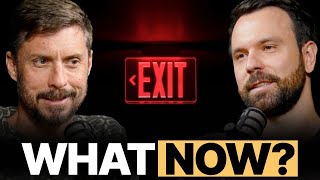
In this Money Stories interview, host Mike Brown talks with Artur Meyster, co‑founder and former CTO of Career Karma, about his journey from a low‑income immigrant childhood in Ukraine and New York to building a $60 million‑valued education marketplace, scaling it through YC, SEO, and income‑share agreements, and eventually exiting in 2025. Meyster recounts early money memories, the influence of his grandfather and Jewish schooling, his brief stint in investment banking, the pivot to coding bootcamps, and the creation of a community that became Career Karma. He describes the intense workload, hiring challenges, and the strategic use of SEO and content to reach 1‑2 million monthly visitors. The conversation moves to the emergence of LLM‑powered career‑coach chatbots, the spin‑out of Outrival (AI voice agents for sales), and the decision to sell Career Karma. Post‑exit, Meyster reflects on stress, identity loss, meditation, plant‑medicine retreats, and redefining wealth as the ability to care for family and parents. He shares his recent focus on acquiring small, cash‑flow‑positive businesses (e.g., a laundromat), the operational headaches encountered, and the lessons about delegation, hiring, and the “who‑not‑how” mindset. Throughout, he offers advice on building from abundance, compassionate leadership, and the importance of surrounding oneself with the right people.
Chapters
When was the moment that you felt like you made it?
I kind of like stopped experiencing those like highs, high highs and low lows. And my biggest excitement was like going to the gym and just like maybe small talking with someone in the sauna.
What was it like being so young, growing a company that fast?
From the moment I wake up, I go to the gym probably at 6 a.m. and then when I come back, I get behind my desk and work until, you know, sleep, 5, 6 days a week, 10, 12-hour days.
Arthur Meister is a serial entrepreneur and investor. He co-founded and scaled Career Karma, an online education marketplace that raised over $60 million in venture capital before being acquired in 2025. He later co-founded Outrevel, an AI voice agent company modernizing customer support operations. Today, Arter acquires, invests in, and advises profitable businesses using technology and AI to streamline operations and drive long-term growth.
How are you doing personally at this time?
I think there was definitely a lot of stress I was holding on to.
What were your first memories of money?
My family was on food stamps growing up, and then all of a sudden I realized that, oh my God, like, we're actually very poor. I saw how hard my parents worked. Minimum wage jobs. And that definitely gave me a big, big motivation to figure out how to make sure that money was never an issue for me and my family.
How did that impact you?
Yeah, we built our iOS Android app. By 2022, we bring in about 1 to 2 million visitors a month.
Did the money make you happy? Welcome to Money Stories, where we have conversations with founders about money, meaning, and what makes a truly rich life. Today I am joined by Artur Meister. Co-founder and CTO of Career Karma, which he exited just over a year ago and now focused on raising a family, investing in small businesses. Arthur, welcome to the show.
Yeah, thanks, Mike. Thanks for having me.
So I just love to start from the beginning here. What were your first memories of money? How did you grow up with money and how did that impact you?
Yeah, so my kind of backstory is I was born in Ukraine. Had a beautiful childhood. I felt like I was— even back in Ukraine, I felt like I had everything I needed as a kid. And we didn't have a lot, but when you grow up with nothing, in some ways, you don't fully realize what you're missing. And then when I was 11 years old, my family moved to New York City. And then all of a sudden, I realized that, oh my God, we're actually very poor. My family was on food stamps growing up. And I saw how hard my parents worked minimum wage jobs. And that definitely gave me a big, big motivation to figure out how to make sure that money was never an issue for me and my family.
So growing up with very little, how did that affect you as a kid?
Yeah, it was— I think it built a lot of self-reliance. And I was lucky to have a twin brother. Who him and I were doing a lot of side hustles. I remember my earliest memory of trying to make money was just recycling bottles. And whether it was like beer bottles from our house or even just seeing like going down, taking the elevator down to the basement in our building and seeing there's a whole recycling bin with like 20, 30 plastic bottles. And then I think we must have been like 11. So we were like, well, that's $1 or $2 that we can make just by bringing it to the supermarket. That was probably my earliest memory, just realizing, look, there's money. We could make money in a lot of ways, even if it takes to recycle bottles.
Even though you didn't have much, was your childhood comfortable? What was that like growing up in New York City without—
Yeah, so I think one of the cool, almost miracles that happened to me is that my grandpa, who is— who grew up Jewish, speaking Yiddish actually back. He was, his family was very religious. He grew up in the '30s. So Yiddish was his first language. And when we moved to Queens, his dream for us was to go to a Jewish school. And private Jewish schools are notoriously very expensive, especially in Manhattan. And that never stopped him. So I remember one day he took my brother and I and my mom on the 7 train to New York City. None of us spoke any English. And he was just like, I'm going to figure out how to send my kids to a private Jewish school in the middle of the year. And that just shows you the guts that he had. And I think he's always been kind of an entrepreneur himself, even though in Soviet Union, he never had those opportunities to start a business. But he was always hustling for his family. And what happened with that story is we show up to the Jewish school. The year already started. All the financial aid money was allocated. And so we couldn't even really like explain our situation. So the security guard told us, there's a math teacher that speaks Russian on the second floor. Why don't you guys go up to the second floor and talk to her? And she basically explained to us that, look, you guys should try to apply next year when there's going to be a new financial aid fund. And maybe you guys will get lucky and get accepted. And that moment, the head rabbi of the school, Rabbi Arthur Schneier, he was passing by with like a delegation. He was just touring the school. And the math teacher was like, hey, this is actually the head rabbi. And his story is that he escaped the Holocaust in the '30s. And he was very big into bringing like Jewish people from Eastern Europe to the States. And my grandpa spoke to him in Yiddish, 'cause that's the only language he knew to communicate in. And the rabbi also spoke Yiddish from his Eastern European roots. And as soon as my grandpa explained that, "Hey, we just fresh off the boat, we just came from Ukraine," the rabbi was like, "They're in, like, take them to the classroom and we'll take care of everything." So that was a huge start for my brother and I, even though we didn't have a lot growing up, being able to get good education be surrounded by other kids from good families helped us really orient towards making something of ourselves.
And I imagine moving from Ukraine to New York City is quite a culture shock. Did you fit in with the other kids? Did you make friends? Or what was that like?
Yeah, no, that was definitely tough. Even though I'm speaking English now, my first language is Russian. And it took a while, a couple of years to learn English. I remember being called the foreign kid, being told— being bullied for not speaking perfect English. But I think that also built some perseverance as well, and just overcoming challenges, and recognizing that you don't always have to fit in. And I think part of being entrepreneur is figuring out how are you going to march to your own song. And I think for me, that was the same thing, where I didn't fit. I didn't feel like I fit in with my classmates, but I kept telling myself, like, just keep, uh, you know, just listen to your heart, listen to your intuition, and work hard. And I saw my parents working hard, so it just gave me, um, a playbook for, you know, just get good grades, work hard, and you'll figure it out.
Yeah, I mean, it sounds like even at a young age you were very aware of the opportunity that you got being able to be in this Jewish school.
Yeah. No, that was definitely a miracle and a huge gift that being able to see classmates who had very comfortable lives, drove nice cars, you know, looking back now, I feel like I definitely, that created an imposter syndrome, 'cause every day I went to school, I felt like, oh, people are gonna find out that, you know, we live in Queens with very little. And I remember just like figuring out how to balance that because I was seeing my, classmates getting dropped off in nice cars. And my brother and I were taking the train and the bus to school every day. But that also kind of gave me that exposure at a very young age to realize, like, look, my parents are doing the best they can. And I got to be grateful for what I have. And being able to have access to good education was the most important thing at that point.
And so how did you use that as a launching point?
And what's the story of founding Career Karma? So for me, for me initially, since a lot of my classmates, their parents were in finance and I went to a library one day and I picked up a book about value investing and it made a lot of sense to me. There's this like just finding the intrinsic value of businesses and paying a margin of safety, like paying a discount. For me, like I've always been looking for deals and it was just like obvious. And I was like, I can't believe you can actually buy publicly traded securities and buy these companies at a discount. And I became a big Warren Buffett fan when I was probably 15, 16 years old. And I, like, from then on, I wanted to work on Wall Street. So I picked the best business school I could get into for undergrad. So eventually, you know, get a job as an iBanker. Even from a very young age, I was like, that's my path out. So I worked my ass off to get internships, to get good grades to get the job on Wall Street. But then very quickly, I realized this is not what I was expecting. All the stories I was reading about Warren Buffett when he was buying companies— in investment banking, you're creating Excel models and PowerPoint slides and working 120 hours a week. And I very quickly realized this is not going to get me closer to starting a company, and I need to do something drastically different. And that's what kind of led me to my path to Silicon Valley.
And how long did you work as an investment banker before you realized this was not it?
I think 6 months into the job, I realized I've kind of learned everything I needed to learn. But I stayed for 3 more years because, one, I was making good money, and two, I still didn't have a plan at that point. So something I started doing is learning how to code on the side. And I was already making websites in college, and I had a lot of fun building websites, optimizing them for SEO. So once I learned about coding boot camps, I was like, that's how I'm going to break in. And so my brother and I, we quit our jobs and we moved to Silicon Valley to attend two different coding boot camps and break into tech, become software engineers that way. And then once we successfully broke in, we realized, wow, there's so many adults that probably feel stuck in their careers. You know, they get a good degree, they think they're going to follow that career path, and then once they're on the inside, they want to quit and do— go do something else. But now they have student debt, now there's, uh, other, um, expenses they have to keep track of, and it could feel very isolating and lonely. So we started a podcast and a community to help other adults feel accepted and get matched with other folks who were facing the same challenges. And then eventually, that community grew from a couple hundred people that we were personally mentoring to a couple thousand people. And once we started seeing that, hey, there's an actual movement here, we were getting folks from corporate jobs joining us. There were veterans, single parents. There were a lot of very diverse, group of folks that were looking to get jobs in tech. And that was a light bulb moment that led us to starting Career Karma and going all in on that idea.
Yeah, so, so really you were solving your own problem. You, you were the guy, yeah, that went and got the dream job and realized this isn't it.
Yeah.
And you just turned that problem into helping others.
Yeah, I had to explain to my mom that I'm quitting, uh, my successful finance job, walking away from 100-something thousand a year to start from scratch in a new industry. And so that was a lot of risk. But one of the insights we had was the squad, like my brother and another friend of ours that did it with us, the three of us were like inseparable. We were studying together. We were working out together, living together. So having that squad, like, you know, your co-founders backing you even before you have the idea, that helped take these risks. And eventually, a big part of Career Karma became creating small peer circles of other people at the same stage as them, holding each other accountable, and just supporting each other as you encounter all sorts of challenges on the way to your goal.
So take me on the rocket ship ride. Of Career Karma. What was that like?
No, it was pretty insane because in 2018, we applied to Y Combinator. The first time we applied, we got rejected. And we were initially pretty shaken. We were like, well, YC is like the holy grail of incubators. But then we decided, look, we're going to continue building. We're going to try to raise a pre-seed round and just build without YC. And then in that 6 months, we built our iOS, Android app. We started building— growing our community, earning revenue through referring students to boot camps. And then 6 months later, when we reapplied to YC, we got accepted immediately. And it was just a completely different product and community that we already validated and proved. So YC was a huge acceleration to the growth we were already seeing. And after that, especially back in 2018 era, there were a lot of bootcamps starting focusing on cybersecurity, on digital marketing, sales, all sorts of niches. So we actually saw a big opportunity that is going to go beyond just coding. It's going to help other verticals within tech and eventually outside of tech adopt the same model. And then there was one other thing that really accelerated— was a huge tailwind— was income share agreements, where essentially students don't have to pay anything upfront until they get a job. So that was another big financial breakthrough that enabled a lot of people to take that financial risk with their jobs and only pay back their school once they got a job.
Wow, I mean, this is fascinating. It sounds like it really started to move quickly from there. What was it like being so young, growing a company that fast?
I think there was a lot of naivete because we didn't really know what we didn't know. And hiring was one of the biggest challenges with any startup, but especially in our case. We were trying to scale our engineering team, sales team, marketing team. And my background was mostly in engineering. But then once we built our apps, we're like, well, now we need to grow our users. So how do we get more signups? And then I started learning more about SEO, paid marketing, started initially running ads myself. And then as those began to work, we started hiring more and more people. So after about 3 years of running Career Karma, I was overseeing all of our marketing efforts, our data efforts. So we were able to track and— understand when people sign up, what channels they come from, how do we provide those signals back to Facebook and Google to give us more people similar to those. So there was a lot of interesting things I learned about marketing as I was scaling the company. And at the height of Career Karma, I think we had about 200 employees. And I probably had 20 marketing staff reporting into me, even though I had no business on paper managing a marketing team. But when you look at it from first principles, I really understood the essence of organic and paid acquisition just by working with very smart people.
And what were some of the tough times scaling a company that fast?
I think as part of the growth, I think just figuring out marketing channels to— tap into, because in our case, we wanted to become the number one destination for career advice on the internet. And so we needed to think big, like if we want to be at 1 million, 2 million visitors a month, what are the channels we can get folks from? So SEO was a huge component of that, search engine optimization. And in order for us to build our publication, I started doing back of the envelope math. And I was like, look, if there is a, you know, how can we attract, like, what are the different verticals that we can publish articles in? And we're like, well, there's degrees, there's courses, there's skills, there's how to become. And then I backed into a number. I was like, oh, we probably need to publish 3,000 to 4,000 articles in the next 24 months in order to become number 1. And then once I determined made that goal very concrete, then we started backing into how do we build a publication team of writers, editors, content marketing people that can actually help us accomplish that goal. And by 2022, we actually were bringing in about 1 to 2 million visitors a month searching for various career advice, skills. And so It wasn't easy, but it also— it wasn't easy, but we learned how to translate these kind of opaque ambition into actual concrete goals that my team and I could hit.
How are you doing personally at this time? How hard are you working? What's the stress like of scaling a company like this?
Yeah, so I think there was definitely a lot of stress I was holding on to. But as a founder, you almost— like, there's a lot of hustle porn out there. So for me, like, I was working from the moment I woke up. My co-founders and I lived in a work-live loft. So pretty much from the moment I wake up, I go to the gym, probably at 6:00 AM. And then when I come back, I get behind my desk and work until sleep. So we were working 5, 6 days a week, 10, 12-hour days. In the beginning, it was fun because we were just— we had such a strong mission and such a strong purpose that we literally didn't have anything else to do. We were just in a room together cranking away. I think as we got older, I think my day transformed from being kind of writing code or doing things that are more creative to managing people. And I think at that point, I started facing a lot of just Zoom calls, interviews, onboarding new employees, offboarding employees. And at that point, I think my day just completely transformed from doing the fun stuff, like building product, to managing and running the company. So that brought a lot of stress. But as a founder, you just suck it up and you pull through. But looking back now, I definitely should have asked for help. And I should have potentially not held on to a lot of the responsibilities and delegated it. But that That's something else. As a first-time founder, you don't really learn how to delegate, and you think you need to be running everything from engineering, marketing, finance, HR. But looking back, I should have definitely delegated much earlier.
And when and how did you make the decision to sell the company?
Yeah. So for us, we actually had an interesting discovery when LLMs first came out. We had a very large coaching team inside Career Karma. And we were like, well, why don't we create a little chatbot coach that it can help people navigate and be available 24/7 and be more personalized? Because with career coaches, usually they'll be available only in certain times of the day. And a lot of our users were already working their 9 to 5. Had a lot of evenings and nights available, but those were the times when our staff wasn't, you know, wasn't online. So we thought, hey, why don't we build this career coach chatbot using one of the LLMs? And that became very popular like within our users. And then from there, we were like, why don't we introduce voice as well and see if we can actually offer people to call a phone number or do like an online web session where they can actually talk to the coach like humans and have the coach probe different questions to help them create their career roadmap and help them translate their goals into an actual tactical step-by-step roadmap. And that's something that we launched probably in 2023. We were one of the first services to do low latency voice conversations. So the career coaching was kind of an aha moment for us, where the voice technology is going to be groundbreaking. It's going to transform pretty much all sales support jobs. And as we built out that career coach, we also saw that, hey, there's so many use cases beyond just career coaching that can benefit companies. And that's when we incubated— a new company called— that eventually became Outrival in order to help companies, especially with sales-heavy organizations that have to call 50,000, 100,000 leads per month, helping them figure out how to create these AI agents that can help replace some of their offshore call centers and make that experience more personalized. So once we incubated that company, we were essentially running two companies in parallel, the Career Karma bootcamp kind of focused business. And then we were very excited about the new Outrival potential. So we had a very hard decision to make. Like, what do we do? What are we as like the three founders most excited about? And we decided that my two co-founders were a lot more excited about the Outrival business and kind of figuring out how to— enable businesses to use our AI agent to automate their sales, call centers, so on. And for me, I was like, at that point, I got married, I had 2 kids. And for me, the priorities kind of changed as well, where I wasn't as excited about another 10-year— signing up for another 10-year journey. And so we decided to find Career Karma a good home, and we ended up selling and running an M&A process. And my co-founders are now running Outrival, and I'm still advising them. But I took a break from being a startup founder, and now I'm in my next chapter as a dad and doing more small business investing.
Were you ever able to take much money off the table prior to your exit, or was that your first big hit?
So we've done a few kind of secondaries as well. So that helped kind of ease things as we were kind of growing the company. And I think for me, as I started having kids, my priorities totally changed, where spending time, like quality time with my kids and with my wife, that became my number one goal. And since I already had some financial means, I wanted to really take a step back and evaluate what I wanted to do to live a fulfilling life. And, and yeah, and for me, like, the answer for me was, look, take a step back, spend it, give yourself a year, maybe a year and a half to figure things out. And that's what I did.
When was the moment that you felt like you made it? Like, when— can you take me back to the first time you were like, wow, like the immigrant kid from Ukraine really did it?
Yeah, I think for me, I would say at the end of last year, I definitely— when I looked into my bank account and I looked at how lucky and grateful I am for what I've been able to accomplish, for me, that was like a lightbulb moment. Look, I don't think just chasing money is enough. You got to figure out something that you're passionate about or something that you feel fulfilled by. And that's what kind of forced me to start exploring, doing a pretty deep internal exploration. Like, what are— like, what do I want to prioritize and also dedicate for the next 5 to 10 years? And I'm still on that journey, so I haven't fully figured it out. But one thing that I did became excited about is helping small businesses grow. And that kind of launched a whole new chapter in my life of— buying businesses.
So before we get to that, what was the moment? Was it becoming a dad? Or what was it that really started to shift your priorities from the all-in hustle VC-backed lifestyle to making things shift?
I think being able to control my time and be fully— kind of be able to determine what my day looks like, I felt like that was the most important thing for me in terms of what my rich life looked like. And back when I was in the startup founder seat, I couldn't just cancel my meetings for the day, or I couldn't just say, oh, yeah, we're not going to interview— this afternoon, I'm going to take a break. We're not going to interview this candidate that we need to hire ASAP. So I felt like there were always priorities that were taking— precedence over my needs and over my family needs. And I wanted to find a new balance where I could prioritize my health, I could prioritize my kids before prioritizing other people's problems.
One of the things so many post-exit founders talk about is the identity loss after selling a company. Did you experience— what kind of emotions did you experience post-exit?
Yeah, I think there's a definitely— it definitely hit me pretty hard. I think one thing that really hit me was once I stopped working with Timur and Ruben, my two co-founders, even though we're still close and we have our monthly calls, but I kind of started missing that partnership of day to day of being able to spend an hour or two being on Zoom calls or in Slack, just being very engaged. And then when you're post-exit, at least in my case, I was going to the gym. I was spending time with kids, my wife. But I wasn't getting that kind of business partnership support or engagement. And I started missing that because being on the other side in the founder's seat, you get to work with very smart people. You get to learn about new— industries or new opportunities. You get to be in kind of this collaborative, like, let's go get— like, let's go win mindset. And I was getting a lot of dopamine from having those daily and weekly accomplishments. And then once I became— like, once I left, a lot of my— I kind of stopped experiencing those high highs and low lows. And my biggest excitement was going to the gym and just maybe small talking with someone in the sauna. So I definitely started missing the business side of things. And that's what pushed me to find new avenues to connect with other entrepreneurs. And so I actually joined the Post-Exit Founder Group here in Miami. And I became a chapter lead. And through that, I was able to fulfill my needs of being able to— stay in touch with smart people, and learn about new industries, and collaborate. So that's been a great opportunity for me just to continue that fulfillment.
I also know that you went down a healing and spiritual path with that time in space. What did that look like for you?
I think there's a lot of— I guess, like, a lot of trauma that I used in my early days to motivate me. The financial insecurity that I experienced when I was younger, that helped me work hard and really prioritize making more money. But then as I started reflecting, that type of drive was no longer serving me. And I was trying to figure out, how do I reframe? How do I create more from abundance, like a place of abundance and a place of creativity, versus a place of fear and scarcity. And that kind of forced me on a path of meditation. And I started reading various books and doing a few retreats that helped me kind of get closer to my essence. And I don't think I'm fully quite there yet, but it also helped me just see myself from a third perspective of, yeah, you've been able to accomplish a lot, but it was also at the expense of your— mental health being and, you know, your physical well-being. And so now I'm trying to find a more balanced approach where I could be more vulnerable. I could be more myself and more authentic with, you know, when it comes to connecting with others and just in general be involved in projects where I feel like it's an extension of my essence versus doing things that are just for the money.
Yeah. And what were some of the most effective modalities as you went on that path?
So I think for me, experimenting with plant medicine helped. I was able to try a few different retreats that really opened my eyes to the community that's out there and just feeling compassion for myself and for others. I grew up with a twin brother, and my dad was also very tough on us growing up. So I've always kind of grown up with this masculine energy where it's all about getting things done, competition, and not really creating the space to sit with people, to hear them, to receive compassion and show compassion. And so as I've been going on this personal journey, I've also realized just my capacity to feel love and feel compassion for others. And that's one of my gifts that I can offer to people around me that I've been holding back on. And so that's one of my goals now and going to next year, just to be more present and just hold space for people that are going through their challenges.
And how does that show up in your parenting?
Yeah, I think it's maybe a little bit more patient. And just seeing my kids with how much joy, and they can be laughing one moment, kind of, and crying the next, it kind of, it made me realize just the spectrum of feelings that we all have from birth. And then as we get older, we start suppressing certain feelings depending on what we think is acceptable. And for me, I think I was definitely holding back on a lot of my emotional, like, my emotional range. And so now one of the things I'm doing is, like, if my kids are playing, I'll try to get on their level and joke around, or I'll try to play along with my kids as if I was 3 years old or as if I was 1 year old, because it also helps me to reconnect with my inner child that in some ways I had to put aside as I went on this entrepreneurial journey.
How hard is it to shift? Not just from a familial level but a cultural level, the, the very masculine, you know, tough Eastern European culture. What was it like to start to unravel that for you?
Yeah, it's definitely been challenging because, um, even in my— like, with my parents and in my, in my household, talking about your feelings is not something that is like I've seen my dad model at all. And so even being able— even bringing that conversation up sometimes felt like I was making my parents uncomfortable. But it also— it took a few experiment— like a few tries before I figured out the right tone and the right way to create the space for sharing our emotional feelings, things like that. It's still a work in progress, but I definitely feel like since— Since beginning of last year, I've been a lot closer with my parents, which has been very important for me, especially as a parent myself, seeing how much like a hug from my son means to me. I want to make sure that I also show up as a son to my parents in the best way that I can.
Oh, that's so beautiful. You know, I wonder if you could go back, you know, to that version of yourself that's hustling, running this, this rocket ship of a company, what advice would you give that version of yourself now?
Yeah, that's a really good question. Um, I think there's a— I, I don't remember the book anymore, but, um, there's the concept of like building from above the line or below the line, and above the line, you're building from a place of abundance and creativity. And below the line, you're building from a place of scarcity or fear. And I think in my entrepreneurial journey, I've primarily— my leadership style and the way that I led the company was from a place of fear or from a place of, hey, we don't do this, the world is going to end. Or if someone missed a deadline, it would be very hard for me to understand why. Things were— why things weren't done. And I think in some ways that impacted the way I showed up for my team. And just I was very tough on folks that worked for me. And looking back now, I wish I was a little bit more compassionate and more understanding. And I think there is definitely a way to run a successful company in a more compassionate manner. And so I wish I did. And spend a little bit more time doing that.
Yeah. And so, you know, if there's somewhere out— someone out listening right now that, uh, maybe this is landing with and is feeling like maybe they're being pretty hard on their team members, what would you tell them?
Yeah, um, I would say— I would almost, um, or at least what I started telling myself is, um, like, if, if you're the critical piece that's required for the company to work, then you're not building a scalable organization, and you're not building an organization that's able to hold themselves accountable. Because I had to— back then, I had to jump in and be the superhero that saves the day. And once people got used to that, then all the problems that they couldn't solve were— float up to me. And then I had to be pulled in for pretty much every crisis that was going on versus if you change that mindset and if you give your team the room to make mistakes, to own challenges, and to help each other, I think it also creates a more scalable organization. So for entrepreneurs listening there, I would actually examine whether— if you're being called for every crisis and you're the integral part of every decision, then you're probably not doing your company a service. And you're also not doing yourself a service because now you can't really step away to go on vacation. You can't really step away and create balance in your personal life because now you're consumed by all the problems that are being generated by your employees.
Changing gears a little bit, you had a significant financial windfall.
Mm-hmm.
Did the money make you happy?
I think it gave me a sense of security of being able to buy my own home, be able not to be overly— like going to restaurants and being able to order things that I was interested in. But it's interesting, even after realizing that I have enough money to support my family for a long time, I still had that voice in my head that like, oh, do I need this bigger steak? Or do I need this extra drink? So it's hard to turn off that voice in your head that you've pretty much lived with from the time you were a child to now. But I think part of it is just realizing what are the categories, like what are the things I'm willing to spend on and not feel guilty about? And what are the things that maybe don't have as big of an impact on my life that I probably do need to have a budget or have some boundaries around that I'm not going to spend lavishly if I don't think that long term this is going to benefit my life. And so in my case, I think spending on childcare and getting help, getting support with my kids, that's been actually the biggest area of ROI that my wife and I found out that as young parents, having two kids under 3 years old, it's a lot of work. And if you don't ask for help, sometimes it could impact your relationship or you might be just too tired to really show up for your kids. And so for us, like having, you know, getting, getting support from nannies has been a huge game changer.
What does wealth mean to you now?
Yeah, I think for at least in my current, in my current iteration, It's being able to take care of my family and my parents and being able to provide like a safe, secure place for folks, for my close ones to be able to get all their basic needs met. And I would say like beyond just like food, like being able to get together for holidays or being able to do interesting experiences or If my parents want to come visit us, being able to offer to pay for their flights and things like that. Those are the little things that feel like wealth to me, even though financially, paying for a flight, it's only a few hundred bucks. But being able to take care of people that I love has been what wealth means to me.
Yeah, it sounds like you've done a really good job of trying to take care of your parents. What do they think about all your success?
Yeah, um, so it's been interesting because they've always been kind of amazed just by all the crazy ideas that my brother and I come up with and then how we end up executing on them. Because even leaving New York to go to Emory for undergrad, like, no one in our family even like left New York to go to college. And I remember when we were convincing them to let us go to Atlanta, they thought we were crazy because no one in our neighborhood, no one in our family even considered leaving the state. So I think they've always kind of were a little bit like they had a— I guess they were always cautiously optimistic about our choices. But over the last 10 years, I think we've proven to them that we have a pretty good head on our shoulders. And overall, I know my mom is super proud of what we've been able to accomplish. Now when they come to visit, I feel like there's a sense of accomplishment that they have because they gave up everything in Ukraine to move to the States for a better life for their kids. And seeing our lifestyle now, I think, has validated that all that sacrifice has been worth it.
Now that you've had some time post-exit, you've started diving into acquisition. Entrepreneurship. Take me down that journey. What's that like?
Yeah, so that's been a very interesting, like, eye-opening experience since my— the first part of my entrepreneurial journey has been trying to build venture-backed companies. And a lot of the time you're searching for product-market fit, or you feel like there's a big opportunity and you're going to come up with a solution and then validate it and prove it that there is a market need for what you're building. What I found with small businesses— and this is the space I've been spending the last year or so— there's already clear product market fit. And these are essential services, whether it's laundromats or home services like pool cleaning or fixing a roof. There's no question whether these services are needed. It's more about, can you create good systems? Can you run successful digital marketing campaigns? Create an organization that delivers services and is able to create profits. So for me, that's been an interesting way of applying what I learned from my tech days of being the CTO, running our marketing team, overseeing our data team, and then being able to bring a simpler version of that to the small businesses that I've been investing in. And I've been blown away by how much, small things like setting up just Google Analytics on your website, or running a digital marketing, like Google Maps campaign, how much of an impact it can have on small businesses that have never even considered doing that.
Yeah, and I know the acquisition route hasn't always been easy. So can you kind of share the behind the scenes of what it's like to buy a boring business after you've already scaled a YC-backed business? Venture-backed company?
Definitely. And a good friend of mine, Jeremy, and I, at the beginning of last year, he found— he was initially looking to make a real estate investment. And he found this small strip mall. He was looking to buy it, but something didn't work out. But there was a laundromat in that strip mall. And he asked the broker if it was for sale. And they were like, yeah, it is. And so there's been a lot of ETA advice, entrepreneurship through acquisition, of buying boring businesses. Especially Cody Sanchez is a big known figure that promotes buying laundromats since they're self-serve and they're kind of turnkey. And so I remember my buddy Jeremy calling me, and this was kind of right before I stepped down. And he was like, look, Archer, this is going to be a passive investment. We put in a few hundred thousand. With your digital marketing and tech skills and my M&A finance skills, we could really blow this up. Like we don't have to do much, you know, we don't have to do too much work. And initially, I was skeptical. But I remember visiting it and seeing this laundromat wasn't even on Google Maps. It didn't have a website. And so in my mind, I was like, there's probably low-hanging fruit that I can do to make it better. And the nice part about buying small businesses is you're usually paying multiple on EBITDA, and so there's already a track history, there's already a track record and a history of cash flow. So what's the worst that can happen? And I think in general, since it was our first acquisition, we underestimated the time and mindshare investment that's required to buy a small business, because we just assumed that we'll be able to get a manager, and they'll just run it, and we'll come and collect our coins once a week. But we very quickly realized that no, we just bought ourselves a job. And so that was interesting, first of— first figuring out how to create a more scalable team that can actually run the laundromat on its own. And then just, I think that experience made me realize the value of my time and my having like a peace— the value of peace of mind, not being interrupted on the weekends or late at night. When a machine breaks or a water heater goes under or some other crisis of the day. And as an owner of a small business, you're the one that gets the call no matter what time of the day it is. And so even though this was a really good financial investment, and I get going deeper in terms of how we turn around the business, I also realized, look, there are certain things that I'm good at, which is like technology, digital marketing, but I'm also not willing to sacrifice my time with my family and kids and being pulled in into all these different crises. And so what we ended up doing is actually we grew the business. We launched a very successful pickup and delivery business in Miami Beach out of our facility. And by optimizing our SEO and digital marketing, we became the highest rated laundry service in Miami Beach. So we ended up merging with a larger family-owned chain. And they actually now run the day-to-day operations of our store. And we help advise them on the marketing, operations, M&A side. And so that's been kind of a win-win because we were able to still get exposure and still kind of follow down our thesis of buying small businesses without having to be involved operationally. Which would be my biggest advice to other entrepreneurs looking to buy businesses. Really think through what it's going to take to either hire a general manager or somebody that's going to be on call 24/7. So it doesn't have to be—
Yeah, I mean, I thought you were supposed to be able to buy a laundromat and then sip margaritas on the beach.
Yeah.
Sounds like that's not the case. What was so hard about it?
Yeah, I think— so we tried to introduce the wash and fold side of the business. And you can imagine everything that could go wrong went. So from bags getting mixed up, where customers are calling you that they got someone else's clothes, or worse, they got part of their order— they got someone else's— like a part of their order is someone else's clothes. So now you have another customer that also has their clothes, and I have to trace down— so all these little challenges where any one individually isn't isn't too bad. But when you look at it in aggregate, where every other day there is something wrong with the orders, or maybe your staff— one of the staff members didn't show up on time, and now the store is closed, but you have a delivery driver waiting outside. So things like that that eventually started getting to us. And I think it made me start appreciating software businesses more. And looking back now, even though there are a lot of small businesses that need help, there's also other— thinking about the operational support that's required is definitely a big consideration for me going forward. And part of my thesis too has been starting to look for more SaaS or companies that I could still buy based on cash flow, but don't have that physical in-person component where something— if someone gets in a fight, now you have to talk to the cops, all of that. I think with software, the nice part is that as long as you're paying for your servers and you're not going to be like— there's a limited number of things that can disrupt your day versus a storefront where it could be 20 or 30 different things of why you will get woken up at night.
Yeah, it sounds like your boring business acquisition wasn't so boring.
Yeah, it wasn't. It was exciting. I will say that both of our wives were like, after about a month of our ownership, they were like, we don't want to hear anything about the laundromat. Like, we told you not to buy it. And yeah, I think it was— what was interesting is I saw a lot of opportunity on the business side of being able to offer laundry services to Miami Beach visitors, all the condo buildings here. So from a business standpoint, it made a lot of sense, and it made us money. But on the lifestyle side, it definitely occupied a big chunk of our mindshare. And so, and yeah, I think we were able to find a good balance and outcome by partnering with a larger chain that has that expertise. They have a full-time mechanic. A general manager, and now we get to have our peace of mind and still have monthly calls to talk about strategy, but not have to be woken up in the middle of the night. Yeah.
So what did you learn from that experience? And what would you tell someone who's maybe buying into the Instagram story of Buy a Laundromat?
Yeah. So I think the overall— the ETA space is very— is super promising, like the great tsunami of retirees selling their businesses. I think the thesis is there, but you have to realize if you're buying a small business, businesses are typically a reflection of their owner. And every person out there has their own dysfunctions. They have their own downfalls. And you have to assume that any small business you're buying, you're inheriting their dysfunction. And so if you don't know, if you're in your underwriting, in your diligence, if you're not able to pinpoint what is that dysfunction, then I would do like a double take to understand, like, is this really the business for me? Because at least if you go in knowing that, hey, maybe the owner was very involved, they didn't have a lot of middle management, but your plan is to address for that by hiring a general manager, and you're willing to set aside like $100K to pay that salary, then I think that makes sense. But if you're going in thinking that the owner is going to— transition out, and they're going to give you the playbook, and then you're going to be able to inherit the business and promote the junior person to run the business. I've seen too many people get burned by that, and we got burned by that concept as well. So definitely need to really understand what's dysfunctional about the business, and then how are you going to compensate for that, whether through hiring or some other plan.
Yeah, so you got rid of your headache.
Yeah.
What does your rich life look like now?
Yeah, so I've been— for me, when I look at my day-to-day, what I enjoy doing is connecting with other founders and ideating, whiteboarding, kind of being in the builder's seat. So something I'm doing now with a few of PF post-exit founders that I met here in Miami is prototyping different app ideas. And it's been kind of fun because I get to use my technical skills and tap into that creative side, but also collaborate with other founders in a— not in a, hey, we're going to raise capital and take on all this kind of responsibility, and more in a low-key way of testing things, prototyping things. And if it works, great. If not, we're just going to continue building and doing these small apps or small projects.
You think you'll ever build a big company again?
I think deep inside of me, I definitely feel like it's in the cards. I definitely feel like I probably have at least one more big company to build. I'm a huge fan of the Acquired podcast, and I was just listening to the— Trader Joe's episode. And even though it's a completely different field of supermarkets, just seeing, just hearing about how the Trader Joe's founder went through all sorts of iterations and inventions within the supermarket discounted retail space, it kind of just gave me another reminder that I feel like I'm capable of so many— I'm capable of— so many different things when it comes to building businesses and just being able to identify opportunities and seize them that I do think eventually when the kids are older, probably find like some opportunity that's going to pull me in. So I'm definitely not ruling that out. But for now, I'm also trying to give myself time and not put any pressure to start a new company and sign up for something that I may regret 6 months later. So for me, it would have to be something that really pulls me in and where the opportunity is so large and vast that I'm willing to take another plunge.
Yeah, and if you could share one piece of advice from your journey with our listeners, what would that be?
I think something I recently read, a really great book called Who Not How. Maybe the listeners have heard of it, but the premise is you don't need to solve every problem yourself. We sometimes get conditioned to ask ourselves, how do I figure this out, or how do I do this? And what the book talks about is the most successful companies, it's usually a team, or it's usually multiple players that figure it out. And so the right question to ask is, who can help me figure it out, not how do I figure it out? And so if you can just change that one thing, I think that can open up so many opportunities, because— Building any company comes down to a team and who you surround yourself with and who can expand your vision. So whether it's you need to hire someone for your team, or whether it's there's an area in your company that's lacking and you need to beef it up, instead of doing it yourself, take a step back and ask yourself, who can help me solve it? And it could be going out and hiring. It could be asking for help. It could be finding a mentor. But in my experience, that's been a game changer. As I started applying that more, I was able to free myself of signing up to do roles and tasks that I didn't inherently enjoy doing, and instead partnering with other people that love that side of the business. So my advice would be ask for help. And when you meet people, be clear with your intentions. If your marketing sucks— let's say your company and your marketing sucks, Be clear with, hey, I'm looking for someone to help me with my marketing. And then you'll start seeing people offer their solutions. It could be that person has a solution, or it could be they know another great marketer that they can introduce you to to help you. So that would be my advice is just get very clear on what you need help with and go out there and just put it in the universe.
Yeah, Artur, this has been such a pleasure. Thank you so much for sharing your wisdom and your journey. If people want to connect with you or learn more, where can they do that?
Yeah, you can find me on X, @archermeister, or LinkedIn. So yeah, either of those work. Cool, man.
Well, thanks so much for being here. I appreciate you sharing with us.
Yeah, thanks, Mike.
All right. Cheers, man.










