A Heart Attack at 40 Was His Wake Up Call (Nick Eubanks)
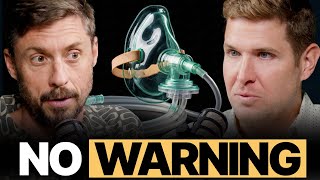
Nick Eubanks had a heart attack at 40 that forced him to rethink everything. He built and sold multiple businesses, struggled with substance use, and nearly died before deciding to fix his health, relationships, and finances.
Chapters
Right after I turned 40, I had a heart attack.
What was that like?
I mean, I thought my life was over. I was so convinced I was gonna die. Um, take me to that exact moment.
What does it feel like to have a heart attack at 40 years old?
Couldn't believe this, the idea that like I was having a heart attack, especially as like a reasonably healthy person. I mean, I run 30 miles a week, you know, I, I eat healthy. I— how did I get here? Like, how the fuck does this even happen?
Was that the moment you decided to change, Nick?
Eubanks is an entrepreneur, digital strategist, and vice president at Semrush, a leader in online visibility. He's the founder of From the Future and co-founder of Traffic Think Tank, both of which were acquired in 2023. Before that, he helped grow Traffic Safety Store from 7 to 8 figures in revenue. Throughout his career, Nick has built and sold dozens of digital ventures across search engine optimization, lead generation, affiliate marketing, and e-commerce.
When was the first time you made a significant amount of money?
I was making significant money illegally in college, selling a tremendous amount of marijuana and making cash that I couldn't do anything with. 21 years old, making $30,000 a week in cash. Like, what do you do?
You didn't have the easiest road in childhood.
Oh yeah, my childhood was, was horrendous. So my parents had been divorced. From each other 3 times. So I went to 9 schools in 12 years and, uh, including military academy twice.
When did you go clean? Like, when did you make the switch from illegal entrepreneurship to legal entrepreneurship?
3 of us started my first agency when I was 23 years old. It was called Atomni. We later went on to sell, to sell that off. It was kind of like a golden parachute. We got real lucky. That got sold to a company that eventually would get bought by Ziff Davis. That sold for 18-some million dollars. That was the first time I had like actual money. I got to a very comfortable place financially in life and realized once I was there and once I had a lot of time to spend with my partner and look at my life, that I wasn't happy at all.
Welcome to Money Stories, where we have conversations with founders about money, meaning, and what makes a truly rich life. Today I am joined by my dear friend Nick Eubanks, multi-time exited founder, most notably built From the Future, an agency which he exited a few years ago, and then Traffic Think Tank, which he sold to SEMrush. Internet whiz, knows how to break the internet via marketing, but genuinely one of the most kind, caring humans I know. Nick, welcome to the show. I'm so glad to have you.
Thanks so much for having me. I can't believe I'm actually sitting here.
Well, I really can't wait to dive in because your story is just so fascinating. So why don't we start from the beginning? What were some of your earliest memories of money and how did those shape you and drive you?
Probably my earliest memory was actually selling my mother's mint iced tea at the corner of where we lived in this little town called Wyomissing in Pennsylvania. It's actually where Taylor Swift is originally from before her family and manager decided that it would be better for her brand to move to Tennessee. But when other kids were selling lemonade, I was selling mint iced tea and they were charging a dollar. I charged $2, you know, at one point, 7, 8 years old, I remember making like $100 in a day. And that was the first time I was really like, oh, like I can, I can buy whatever I want. So there's like a little corner store that me and all my friends would like ride our BMX bikes to called Banco's. And I remember being like, I can buy like whatever I want. That was like my first real memory of like, of like money providing access. The next time I think about money actually is the kind of the opposite end, which is I remember my parents getting into a fight. Not a fight. Like it was just, it was just like a, it was, it was, it was a very awkward, uncomfortable situation as a young child. But my, my dad at the time was driving a Hyundai Elantra, like a 1992 red shitbox Hyundai Elantra, and it broke down like 100 feet away from a gas station and the tow truck driver charged $500 to tow it. This is in like the '80s, like late '80s, right? So like, or maybe it was like, no, I guess it was never— it couldn't be late. So like, this is like 1993, we'll call it. $500 is a lot of money, a lot more money back then, especially to like a young family. And my mom was so upset. You know, that he paid this money. What are you going to do? How are you going to get your car? You know, how do you get your car to this? You can't leave it in the middle of the road. And I just remember seeing the, the, the anxiety and frustration that like not having enough money would cause. It was like a— it's a very distinctive root memory for me.
And so what did that imprint you with? What did that leave you with? And how did that drive you to become successful?
I think about like the next like milestone, like money milestone in my life was when my dad went on from that, you know, at the time I think he had just started at PricewaterhouseCoopers and he went on to be, to become like the youngest partner in history at PricewaterhouseCoopers and used that as a stepping stone to get to SAP. And at one point he was SAP's top global salesman. And I remember, you know, the night that he closed this deal he worked on for like a month. And my mom and me and my little sister were waiting up way past our bedtime. We moved to Maryland at this point. And, you know, my mom's got a bottle of Dom. I don't know what that was at the time, waiting up. And he got home, you know, from the airport and it was probably like 1 in the morning or something. And, and she pops the champagne and it's a really big deal because he's a millionaire. Like he, he, that was his first million dollars. He closed a deal where he had a commission for SAP as their top global salesman and had a, you know, a commission over a million dollars. So much so that they gave him a car, which is the coolest part for me. It was a 1997 BMW Z3, and we were the first people to have that car in the country. It was the first one in the United States.
Wow.
And just like watching that change and being like, that was like that was like one of the first real moments where I was like, I want to be like, I want that. Like, I want to be successful like my dad. Yeah.
And I, and I know you didn't have the easiest road in childhood, so, so kind of give me some of the journey that led you into—
Oh yeah, my childhood was, was horrendous. Yeah. So I, it's tough because I don't want to like I don't want to like throw my parents under the bus so much because I'm very, I'm close with them now. We have a, we have a great relationship. But it wasn't that way for a long time. You know, my, my mother made a mistake, pretty big mistake at one point. And that was the first of, of what would become many divorces. So my parents had been divorced from each other 3 times, same people. Every time that they would divorce, we would move. They'd get back together and we'd move again. So I went to 9 schools in 12 years and, uh, including military academy twice, like went and left and went back. So it's a kind of a whirlwind of a childhood, just all over the place.
Yeah, it sounds like it was marked by instability. Would that be fair? Yeah, that would be an understatement. And how did that affect you?
I think it's, um, it forced me to get good at making friends. And I think it gave me a really twisted sense of vanity, almost, of like needing to appear like I have it all together. Yeah.
And it's such an interesting way that manifests, right, of this deep instability that you're feeling. And so let's present to the outside world that we do have it all together. And how does that start to show up later as you become more successful?
I think it was really hard. I think it made it extra hard when I, when I had, when I actually had it all together and then, and then blew it all up and then really didn't have it together at all and just had a really hard time accepting that, you know, I had, I had grenaded my life and was not a lot of the things that I attached my identity to were gone pretty quickly. And that was— it was hard to come to terms with finding out that I was not my success.
Yeah. What a powerful lesson. And we'll definitely double-click there later. But what was your first taste of success as an entrepreneur? Like, when did you feel like you really made it?
Oh, I mean, I never felt like I made it. That's, that's It's a really funny question for me because I just— I got that on another podcast not too long ago, and it's the same question essentially. I was like, I had to think about it, and I was like, I don't think I ever— I never had that feeling. I was never like, this is it, like, I've made it, I'm good, I'm successful. I've never had that moment of contentment, even though I was retired for a couple years there.
Well, then let me ask it a different way. When was the first time you made a significant amount of money and went, oh wow, this is, this is life-changing?
Well, significant money is, is, uh, there's, there's a lot of layers to that because I, I was making significant money illegally in college, um, selling a tremendous amount of marijuana, um, and making cash that I couldn't do anything with, uh, you know, so, uh, learning how to clean money and, and, but still spending it. Which, you know, in retrospect probably wasn't the best idea. But, you know, you're 21 years old making $30,000 a week in cash. Like, what do you do?
What do you do?
You clean it in casinos and you make a lot of bad decisions.
Like what?
I mean, back then it was, it was vacations, jewelry, strip clubs and, and cars, but not like not grown-up cars, like spending money, like, like turning like Japanese cars into faster, louder versions of Japanese cars.
So diving into excess from a, from a pretty young age. And when did you go clean? Like, when did you make the switch from illegal entrepreneurship to legal entrepreneurship?
So I had, I had a job right out of college working for like a real estate firm, and I thought that was going to be my path. I was like, I was like enamored with real estate. I was like, this is how the, this is how folks make the big money. You know, a lot of the internships, both internships I worked in college were for real estate companies. One was a developer, one was a commercial rep. And these are extremely successful private owners, you know, billionaires. And so like that was, that was what I thought, like that was the route that was going to be for me. And I did it for a little while and I didn't like it. Um, and I had an opportunity to go join a startup in a marketing role for like a software company. And while I was there, I was still like sort of like unintentionally kind of side hustling. I was having people ask me for help with websites and email newsletters and just like email in general. This is like 2004. And so, uh, at one point I was making more consulting than I was from the job. And, and there's not a lot of money. I mean, we're talking like 70 grand a year or something. And so I was like, I'm just going to do this. I'm going to try this, this, this thing of like working for myself. And I didn't think of myself as an entrepreneur back then. I was just like, I'm a freelancer. That worked for about a year. And then, you know, I had the idea to like make it, make it real, like start a company. I recruited two of my friends to like quit their jobs. One had like a really good job as a developer at Motorola and one was working at some other company. And the three of us started my first agency when I was 23 years old. It was called Atomony. We later went on to sell, to sell that off. It was kind of like a golden parachute. We got real lucky. One of our clients wanted to like buy, buy this like slop tech that we made. We'd like cobbled together like WordPress and CodeIgniter. We gave it a name and called it a content management system, but it was just like reskinned WordPress. It was not, it was not anything actually of value. And that was the first time I had like a taste of a little bit of money.
And what did you do with it?
I paid off my student loans and I bought a Lincoln Aviator. Nice. That was all of it.
That was it.
Gone.
So money comes in, money goes out just as fast.
Yeah. Couldn't hold on to it. Yeah. Very similar scenario. Like, I, I fast forward a couple of years later and, and I had, I built this company in Japan that was funded by an angel investor. It was his idea that got sold to a company that eventually would get bought by Ziff Davis. It was a big, it was a big number that sold for 18-some million dollars. I didn't see that money. I saw a fraction of that, but that's the first time I had like actual money. And immediately again, like found a way to deploy that capital I bought into another company, you know, bought a minority percentage of another company and immediately had no more money. I mean, I was making money working at the company, but again, I couldn't, I couldn't sit with the money. I couldn't hold on to it. Something that you, you had said once to me that was, that really stood out was like making money, like making, making having wealth is not enough. You have to learn how to, how to keep it. You have to learn how to hold on to the money. You have to learn how to be rich.
Yeah. So as you become more and more successful, right, this, this pattern, I assume, continues. What does that, what does that look like?
Totally. You know, sold some websites, a couple hundred grand here, a couple hundred grand there, info product for a couple hundred grand, like, but was always always spending the money. At one point I thought it'd be smart to start diversifying. So like I had some property, like some single-family homes. I started getting into other alternative investments. I was like, oh, I can, I can, you know, I can start a wine collection. And I got into art at one point, but it was always like just putting the money elsewhere. I was never holding on to it and having it do what it should be doing, which is like working in like an index fund or something like something, something smart and safe. It was, it was always like I'll make more. So like, it's okay to be extremely risky. Yeah.
And this is, you know, a pattern that I see so often in entrepreneurs, right, is the thing that makes us successful, this high tolerance for risk ends up not serving us, right, once we actually become successful. Let's dive into the traffic cone business because I think this is super fascinating. Yeah. So tell me what happened there.
Yeah. So it was a, it was a family-run business, had been operating for, for 10 years. It was like low 7 figures and it had been low 7 figures, like all, like 8 of those 10 years. And so they were just stuck. And my favorite part about that story was, um, you know, as I got to know the founder and eventually was eventually became my business partner, uh, there was like a couple unlocks that were really obvious for me. So the one, one was that, um, like he just had no, no sense for like what, what like good design looks like. So like he found some like random developer and he gave him his catalog, like paper catalog and was like, make a website. And so that's what they did. They made a website that literally was just like a catalog in a digital form. So imagine like catalog's got all of these rows, think of like a spreadsheet. So like you'd go on a page and it would have like 100 products on it at like 8-point font and there's 100 add to cart buttons with a quantity button next to each one of them, right? So it's like, it's horrendous UX. And the other thing that stood out besides the fact that I was like, this is incredible, it's incredible that anybody can use this. Other thing that stood out to me was he I watched him, I don't remember how it came about, but like I watched him use Google one time and he immediately clicked on an ad and I was like, oh, why did you pick that one? And he said, oh, I only ever click on the ads. Like I don't trust any of these other scammers. He's like, I only want, I only want to buy from businesses that, that advertise because I know they're legitimate. I was like, wow. He's like, yeah, that's how everybody uses it. No, no. Like, you may not know this, but that's like 2.5% of the clicks go to the ads. All of the rest go to those organic results. That was another like, oh my God, like this guy like doesn't understand because he was just dumping money on ads at that time. He's spending probably $40,000 a month, you know, to make, to run a business that was making $3 million a year in revenue. And so like just fixing these very simple things, things that, you know, like just fixing the website and fixing their marketing strategy. And we grew that company to, you know, over $30 million a year in sales in about 5 years selling the least sexy products on the planet. Traffic cones, safety vests, parking blocks, things that you never give a second thought to until like you hear somebody talk about them and then you notice all of a sudden you're like, oh my God, they're everywhere. You know, there was months where we sold a million traffic cones. Like it was a really kind of crazy cool business with actually like the unsexy business. Like unsexy is becoming sexy now, but like, you know, go back 10 years, like unsexy was very unsexy.
Yeah. Running, running traffic to traffic cones.
Yes. Yeah.
And give me a peek behind the curtain at this point in your life. So you're, you're just getting a piece of all of these wildly successful businesses. The money's coming in. What's going on behind the scenes for you?
I, I was doing what I thought was right. I met a girl that, you know, was, was a, was a good, a good person and got married at a reasonable age. I think I got married at 32. And, um, you know, I was, I was doing the things that I thought you did. Like, you know, you find, you find a partner, you, you get married, start a family. Um, and I tried to do those things, uh, and through, through doing those things, I actually became, you know, in retrospect, I can say now, like, I actually became successful. I got to a very comfortable place financially in life and realized once I was there and once I had a lot of time to spend with my partner and look at my life, that I wasn't happy at all.
Yeah. Was there a moment when you realized that?
I mean, we— I— it wasn't— it wasn't like an individual moment because I went through IVF for like 2 years, and that was really— anybody who tells you— anybody who's been through IVF will tell you it's a completely shit period in their life, and it's absolutely horrible. And they probably would say they wouldn't wish it on their worst enemy. And why it doesn't, I think, end a lot of marriages is because at the end of this horrible thing, you have this beautiful baby. But when you go through all that and you don't get the baby, you just have this horrible traumatic experience and this, like, in my, in my scenario, irreparable damage to your relationship. And I think that played a really big part of it and caused me to start looking at the relationship itself. And I got introduced to a community which is how we met, and met people in that community that had a very different version of a relationship with their partners and realized that I didn't have what I wanted.
Yeah. And I think we, we met in probably 2020.
It was 2020. August 2020.
Yeah. And not long afterward, I came to an event. You invited me graciously to an event. In Philly. And I mean, it looked like you had it all. You had this amazing office with like a, with like a whole and an atrium and art everywhere and an amazing car collection, multiple companies that were— yeah, 8 figures.
Everything is going well.
Yeah. And what happens from there?
I realized I wasn't— I didn't like my life. And all the energy and money and time that went into building all of these things that made for what looked like a really nice life, it wasn't enough.
So what do you do?
Blew it up. Yeah, I just kind of decided at one point that I wasn't going to waste any more time and it didn't matter how much of myself I poured into building all of these things and getting to this point. And I mean, I showed you the graph today. I should— like, you can look at my consulting business and it's like, it's not even a bell curve. It's like, it's like a triangle, you know. It's, it's this, this rise over 2 or 3 years to the top, and then just, you know, uh, leaving my marriage and it all— everything just comes apart and crashes down. Yeah.
And You know, witnessing you through that period, your divorce was tough.
It was messy.
And you lost a lot financially.
Most, I would say.
Yeah. Take me to some of the dark times. What was that like to experience going from the top, essentially back to the bottom after building everything?
It's, um, at first I think I really tried to hold on to it. You know, I tried to, I tried to keep it together and I tried to sustain the lifestyle and, uh, and it was very clear, I think, not just to me but to like the clients I had, the team members, business partners. I think it became kind of became clear to everybody that I didn't have it together anymore. Um, and you know, what do people, what do you do when you're on a sinking ship? You get the fuck off.
So people are bailing the sinking ship. What's happening to you personally?
Mostly, I mean, just doubting myself. And I take a job for the first time in my life, and that, that I really had a hard time with. I think it was, it was not, I think it was Cabo 2024, I think it was last year, where I had this like identity crisis. And I think it really manifested at that event where I was like, fuck, like I'm, like I'm not an entrepreneur anymore. Like I'm, I'm going to be an employee. And I had a really hard time with that idea, that idea that like I was no longer an entrepreneur. It was a really tough moment for me. And, uh, eventually led to a short period of time, very short concentrated period of time of like, uh, falling into drug use and doing so many drugs over like a 4-week period that right after I turned 40, like 2 weeks after I turned 40, I had a heart attack. What was that like? I mean, I thought my life was over. I was so convinced I was going to die. Like after that, like, I like the anxiety that that gave me. You know, I went back to the hospital. I had a second heart surgery because I thought I was— I thought it was happening again. It wasn't. But like, I was, I was just convinced that my life was over at that point.
Take me to that exact moment. What does it feel like to have a heart attack at 40 years old?
Well, I mean, I mean, you know, I didn't admit it at first. The weird part about it was, you know, I was out to dinner here with a bunch of friends and I had been, I had been feeling this discomfort for a couple of days and it just got to a point where, you know, we left dinner, me and my friends, because I just, I felt real. I felt this like elephant sitting on my chest. Went back to my house and it just wasn't going away. And so after like 3 or 4 hours, my, you know, very close friend was like, like, do what? Like, let me fucking take you to the hospital. Like, what are you doing? Cause I was like, I was like, no, it'll be fine. It's like heartburn. Like, couldn't believe this, the idea that like I was having a heart attack, especially as like a reasonably healthy person. I mean, I run 30 miles a week. You know, I eat healthy.
I—
besides that period of life, I don't— I don't go to, you know, really— I mean, I definitely partied a little bit when I first moved here. I think it's part of like an exhaust valve from the divorce. But generally speaking, I take pretty good care of myself. And so it was like unbelievable that like this was like actually a medical problem that was happening.
So you go to the hospital and then what?
The EKG comes back weird. They say, we're going to run some tests. The, there's a, there's a protein that your heart gives off when you're having a heart attack. And like, uh, this protein usually is like 8 to 10 for most people. And they're like, oh yeah, yours is at 7,000. Uh, they're like, we need to do heart surgery. What? What are you talking about? Uh, and you're awake the whole time. That's the other thing they don't, you're not, not ready for. Right. So like they, you know, they put this freezing cold piece of metal on your back. They, you know, you're naked. They, throw you on a slab, like, uh, almost feels like, you know, an autopsy is about to happen. And punch a hole in your arm, they run a catheter up into your heart, fill your, your blood vessels with, uh, dye so they can see what's going on. Find a huge blood clot, go in, take it out. It's so big that they, you know, put it in a vial and come show it to me. They're like, oh, this was your blood clot.
What was it like to see that?
It's unbelievable in like, like the worst way. It's like, how, like, how did I get here? Like, how the fuck does this even happen?
Was that the moment you decided to change?
Yeah. I mean, after, after that, it was just like, man, I, I've got to make a drastic change here. Like, I can't, like, I'm like, I can't, the idea of that, like, oh man, like I may not have much, I may not have a whole lot of time left. On this, on this planet. So I, um, I need to make some pretty drastic changes if I'm going to stick around.
How do you do that?
I mean, for me, it was the same way. I, you know, I, I had a, a similar, like, pivotal moment when I was on Zoloft. Like, so I had finally, as an adult, was having, like, I felt like I was having a lot of trouble trying to focus because of my ADHD, and I always resisted taking drugs for ADHD, like prescribed prescription drugs. And finally I was like, I'm gonna do something about this. And so I was on Zoloft for a couple years and it was, it was genuinely better. I felt, I felt fine with it. I mean, I didn't love being on an SSRI, but I was, I was okay with it. And I got caught in Nassau on a work trip and ran out, like only brought a couple days supply and Uh, it was hard getting flights out. It was like hurricane season. And at one point it was like the third day, I think, of not having it after like being on this daily, like a relatively high dose, like a, but like daily Zoloft for a couple years. And I just had this like compulsion to commit suicide. I was like, I like the only thought I had when I woke up that morning was like, I can't do this anymore. Like I've never felt that feel. I've never felt anything close to that feeling before. And I was able to— I got through it. I called my dad, like, was just like, navigated. It's like, oh, this is just like a chemical thing. It's like they're— the doctors are very clear about like, if you're going to go off of SSRIs, you have to wean off of them because if you stop cold turkey, like really bad things can happen. But at that point, like by the time I got home, it was like 4 days, right? You know, without it. And I was like, fuck it. Like, I don't— I can never feel that way again. I'm not doing, I'm not gonna take it ever. I'm, I'm done. I'm done with it. And I just replaced Zoloft with running. That's like where my, where like, you know, I found running again after, you know, I ran in high school, but like a long time, decade of like not really taking cardio seriously. Um, and so, you know, the, I got to this place where running was no longer an option, at least for me, for like a mental health perspective. I was like, oh, like I, I run for my life. Like, I don't— it's not, it's not a choice thing. I have to do this.
So you stood at the top of the mountain, you had the money, the success, all the things that would make you happy. Essentially, you lost everything. What did you learn from that experience?
That's— I mean, wealth is, wealth is not a number, right? I think, I think there's a— I think I'd always, I mean, I'd heard that happiness was a choice, but I don't think I've really believed it. And then after the fact, being very intentional in trying to see all of the things that are worth being grateful for and be grateful for my friends and my family and my, you know, I have an amazing partner now. Just realizing that while money can provide access and comfort and support and it can enable you to do things that are really important for you. And, you know, and they can be selfless things, right? That, that nothing was going to be more important, at least for me, like nothing could be more important than my health because all the money in the world is not going to save me from a heart attack.
Yeah. So, so health is at the base of the foundation.
That was like the real— like I'd always been reasonably healthy, but it was like I never took it seriously, I think, until I was forced to when, when the universe was like, like, time to pay attention.
Yeah. So if you could go back now, let's say 10 years, and speak to that younger version of yourself on the come up, what would you say?
Don't get married, or at least not to this person, because yeah, that was about 10 years ago now, almost exactly.
I think this is a, this is a really interesting thing to double-click on, especially as someone who also had a previous failed relationship. What would you tell others out there, uh, in your position who are going through the motions, doing the things society tells them to do? Like, how, what would you tell them about choosing a partner?
I always thought the, the, like, I married my best friend, I always thought was so corny, and I never believed it because in my last serious relationship, like, you know, at one point I obviously loved this person and, and, you know, found them to be a very fitting partner, but I was always excited to go hang out with my friends and, you know, spend some time away from them. Um, it wasn't until I, I found my current relationship that I really understood that level of friendship, like, really can and does exist. And, and now it doesn't matter what I'm doing, it doesn't matter who I'm with or what, what it is. I always want, I always want my partner to be there. I'm always like, oh, I wish, I wish you could be here with me because it genuinely enhances whatever the experience is. And I didn't believe that was real. And so I think, I think seeing and experiencing that for the first time is something that I, I wish I would have believed. I wish somebody would have been like, no, this is a real thing. Like, if you don't have that kind of relationship And every relationship is different, obviously. Like, that's not— I'm not— I'm definitely not somebody who should be giving relationship advice. But I think if that was something I took more seriously, I probably would have been able to avoid a bunch of catastrophe.
You know, I think it's a beautiful point because I definitely find the same thing. My wife and I have a rule, like, we always sit by each other because I always want to sit by my wife more than anybody else at the party. Right. And I think that's a really good indicator that seems obvious in retrospect.
Hindsight's 20/20, right? So yeah, of course. And now I'm like, oh, well, duh. But it was not something I prioritized. Yeah.
And outside of your relationship, you know, this, this kid who grew up with all the instability, right, that was trying to hold it together for the outside world. And it all falls apart. What advice would you give that version of yourself?
Probably to be a little bit gentler, maybe, um, maybe try to have slightly lower expectations of what you think your life needs to be. I mean, that, that advice kind of goes— can go in a lot of different directions. Like, probably could have been a lot gentler on my parents too. Like, now, you know, when you're a kid, you think your parents have it all together and they know what they're doing. And, you know, my parents had me when they were 26. And I'm like, I think back now to like being 26, it's like, oh my God, I didn't know anything. Like, it's amazing I could tie my shoes. Like, how the hell do you raise children? Um, and so, you know, probably not putting so much, not being so harsh, I think, on, on the mistakes, on them for the mistakes they made.
Yeah. And I think there's something really beautiful in that. Uh, you know, I love Brené Brown's idea, right? They're doing the best they could with the information they had. And it doesn't make what happened to you okay.
Right.
But I think that there's an element there where you can acknowledge and heal and, you know, really have to feel the weight of, of the things that happened to you early without the blame. Right, that blame can be so toxic.
Yeah, and it's easy to blame. It's much harder to, to, uh, take responsibility or, or to, to, you know, understand, like, have compassion and, and look through a lens of forgiveness. Is a lot fucking harder than pointing the finger.
Yeah, so, so well said. And so Now you've started focusing on your health.
Yeah.
Focusing on your mental health and focusing on the rebuild.
Yeah. Building, you know, the building better, building back better is, is definitely sort of the mantra for the new journey. And, you know, it really is like a brick by brick thing to get back. But I feel like I'm doing it. I feel like I can, I can see the progress now and Yeah, my relationship with my family is great. I've got an amazing circle of friends. Very fortunate to call you one of them. And yeah, great relationship. And it feels like the more I recognize how many things I have to be grateful for that make my life wealthy, the money just kind of comes along on its own. It's, it's, it's, it's not, it's not that hard to find. Like, I feel like I have a path to being financially successful again, but outside of financial wealth, I feel, I feel very wealthy already.
Are you happy now?
Yeah, definitely.
You have a lot less money than you used to. Yes. So What would be— I mean, you're absolutely one of the most brilliant entrepreneurs I've ever met. You know, what would you say to the people listening? Maybe that younger version of yourself that's on the come up, making a lot of money, thinking it's going to fill that hole inside of them.
Put it in the S&P 500 and don't do anything else. Like, just do it. Or like, put it in Vanguard. But like, just, just don't spend, don't spend the money Uh, yeah, just like stack the money. You're not going to outperform the market. Just, just squirrel.
I love it. You obviously have, uh, have and have had, uh, you have exquisite taste. You like, you like buying stuff. How do you think about balancing that now?
I mean, I definitely don't have the same tolerance for risk as, as I did before. Uh, it's very easy to take risk and, you know, I mean, this is, you know, your money story, like it's very easy to take the risks when the money's coming in and it's just continuously coming in and coming in. It's very, you know, you don't worry about where it's going. You can roll the dice, you can chase that dopamine hit from that, that big win or that exit. You know, it's only, it's only, you know, it doesn't matter if they're small checks, you write enough of them, it's still all gone. So yeah, I think the best advice is, you know, the smartest young entrepreneurs that I talk to now are are continuously reinvesting in their business and in their health. You know, the internet was around when we were young, but the level of information was not the same, right? The access to information and how to make money and how to invest money in is incredible today. And, you know, we're seeing it. Like, I feel like every week I read a new story about a 22 or 23-year-old kid that's, you know, making 6 figures a month and is just reinvesting in their business and diversifying and doing the things that I really wish I would have done.
Yeah. So it sounds like focus on your health, number one, first and foremost.
But I feel like that's— I mean, that's like old news. I'm sure anybody listening has heard that a dozen times. And everybody, you know, I think almost everybody wants to be healthier than they are. I think that's a pretty common I think it's why the weight loss industry makes so much money. But actually taking it seriously, right, is, is I think takes real conviction.
And then it seems like next on your list would be relationships. Yeah.
Especially with your family. One of the best pieces of advice I've ever gotten, and I say this a lot now, was we were at a retreat together and Garrett Akerson had just had his exit and I asked him, sort of a similar question. It was like, what's the, what's the best piece of advice you could give to somebody like me? And I was much more successful then. And he was like, spoil your parents. You'll never regret it. And I took that really seriously.
What did you do?
I bought my dad his dream car for his birthday last year. And that was a really cool moment. Yeah.
How did that unfold? Tell me about it.
It was after the second heart surgery. I was like, fuck, I'm like, I think I might like, I might actually die. And like, I've got all these things I want to do still. You know, I'd love to, I never retired my parents, but like I wanted to be able to give, I wanted to do something very nice for both of them. And I took my mom on a trip, like a very nice trip. And I wanted to buy my dad a car. And I didn't plan on doing that at this point in my life, but I was like, fuck, if I don't do this now, like I might not get to do this. And so it was like, you know, that idea just sort of popped into my head one day and I went shopping and I found serendipitously, I found the spec when with, you know, extremely low mileage and it was up in Massachusetts and I couldn't go get it. So I was able to convince my brother-in-law to go pick it up and drive it down. And it's still one of my favorite, favorite moments, uh, you know, being able to do that. And, you know, I hope I get to do a lot more things like that for my parents. Yeah.
And outside of, um, financially, you know, taking care of him, buying him stuff, how did you heal that relationship? What did that look like for you?
It took me— I mean, I didn't talk to my mom for a long time, uh, once I moved out. I moved out of my house at like not like completely moved out, but like really didn't spend much time there. Like, so I went to military school at 12, and then I would spend the summers usually with my roommates from military school. And then like the summer of '16, I spent it in Honduras, like digging bath— like digging toilets and teaching English. Uh, and then graduated at 17, moved into college. So like, I'm just I was out of the house pretty young, and there was a long period of time there, probably from like 13 to like mid-20s, where I really didn't have a relationship with my mother at all. Blamed her for everything. It just— it took a— it took a while to, to come back to the idea that, you know, she was doing the best she could at the time, and, and she knows she made a mistake, and I think she's really sorry for it, and The idea of wasting any more time, losing more time without having a relationship with my parents was something that sort of dawned on me, and I just wasn't okay with it anymore.
How do you take that first step? How do you reach out?
I mean, that's pretty easy. I'm very close to my siblings. I lost touch with my sisters for a while as part of my last relationship. My ex and my sisters didn't get along. I think they they saw things before I did in a lot of ways. And so, you know, my sisters have always remained very close to my mother. And so it was never that far away. It was like, you know, it's like, you really should, you know, Mom would really like to see you. You should really give her a call. So it was not hard once I made the decision.
Yeah. Was it hard to forgive?
It just took a long time. So yeah, I think so. I think that's, I think that's probably fair to say. Um, I wish I hadn't waited so long.
Nick, this has been an incredible conversation. Thank you so much for sharing so openly. For all the people listening, right, who are resonating with parts of your story, seeing behind the curtain here, What advice or what else would you like to leave them with that you've learned in this wild ride that you've been on?
If you've ever thought about starting a business, you should probably just do it. Even if you fail, at least you took your shot. Not everybody's cut out to be an entrepreneur, but I think anybody who has that desire, has that curiosity, should at least give it a try. 'Cause I think there's a lot of luck that comes down to it and you might get lucky. Who knows?
Yeah, I love that. Just put yourself in a position to get lucky.
That's another, I don't know who said it. I should probably really find out. But I heard once and really loved the notion that the harder I work, the luckier I get.
I love that. And you know, so much of what you do now is focused on mentoring and teaching and helping people on the come up. What resources do you have or, you know, how can people find you and learn more about the brilliance of your marketing genius?
It's not— there's definitely not anything smart that I say, but I'm definitely very annoying on Twitter. I refuse to call it X. Very active on there. It's probably the best place for frequent unhinged takes and probably way too many posts about cars.
I love it, man. Well, thank you so much for joining me and sharing so openly. I think it's so important for people to see behind the veneer of success. And you're a true inspiration. Your heart inspires me, and it's an honor to call you a friend.
This has been wonderful. So I appreciate the opportunity to, you know, talk about some of the uglier parts of, you know, parts of my life and the things I think that have helped make me who I am.
Well, having a front row seat to both the peaks and the valleys, I appreciate you.
Same. Thank you. Yeah.
Cheers, man.
Cheers.










