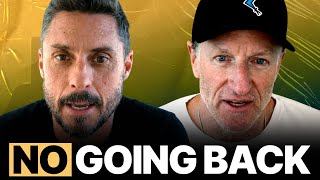
Kevin Dahlstrom and Mike Brown discuss painful truths they've had to accept. Mike, a former fighter pilot, describes years of arrogance and bullying at the Naval Academy and his apology tour to former squadron mates starting in 2017. Kevin confronts mortality at 55 and identity loss as a rock climber facing physical decline.
Chapters
Hey everybody, welcome to the Inner Circle. It is my brother from another mother, Mike Brown, and myself, Kevin Dahlstrom, just having the unfiltered conversations that we have anyway. And what's funny is every time we record an episode of this, we dive in before we hit the record button and have this great conversation. We're like, wait, the whole point of this was to record first. So, uh, I think we're recording now, right, Mike? We're up.
Let's go.
All right, we're live. So the topic today is going to be a question that I randomly stumbled across when I was reading a couple of days ago that just stopped me in my tracks because it's, it's a question worth contemplating and one that we're like actually exploring. It was a bit painful for me. Um, so I'm going to prompt you, Mike, with the question. I'd like for you to answer it. And then we'll discuss, and then maybe I'll give my take on it. But the question is, what's the most painful truth that you've had to accept about yourself?
Yeah, this is, this is a good one, uh, because it, it really cuts right to the bone. Uh, and, uh, I, I'm gonna give a little bit of the, the job interview answer, you know, where you say my biggest weakness is that I work too hard. Uh, But this was a very painful truth that I had to do a lot of healing work to integrate. Um, and that is there was a time in my life in, in particular, particularly when I was at the Naval Academy and when I was in a fighter squadron where I was very arrogant and I treated a lot of people poorly. I, I, in some ways was a bully to people that, uh, I didn't agree with. I didn't agree with their outlook on life or how they approach things. And, uh, you know, I can, I will say that I like can be a very charismatic person. And so I would, I would rally other people against the people that I didn't like and I caused them a lot of pain for sure. Um, and I, I made, I definitely made life harder for those folks and It's easy for us, I think, you know, and especially in like the arrogant fighter pilot world, like we're all arrogant. So I was kind of playing into the culture. That was a really easy way to justify that type of behavior. But as I started to go down this path of personal development, starting in 2017, um, I saw a lot of the places where, um, I was, I was not being kind, bottom line. right? And those are hard truths to accept about yourself. And it took a lot of— and this is, I think, people get self-love wrong. Self-love does not mean that I am justifying or dismissing why I was doing that. It means going, "Oh, man, I see the pain you were in, right? Why did I do those things? Because I didn't feel enough myself, right? I was trying to cut them down to make myself feel better." And I can have compassion for the guy that was hurting bad enough inside that he needed to make other people feel bad about themselves to build himself up. But that doesn't make it less tragic. And I had to grieve how I made those people feel and how I acted. And I actually was able to go back and do sort of an apology tour a while back. And man, did that feel good.
Tough to do, but you know, the I'm reminded of the saying, hurt people hurt people. And I try to remind myself that, like, even in the day-to-day, like using, you know, X, for example, you get these comments of people who are just angry at the world. And I always try to maintain that mindset of like, you know, they're suffering, right? They, they are hurt. And so they're lashing out because that's almost always where it comes from. And. I occasionally will think of a situation like where I did something really mean to a friend or to my parents, like from 30 years ago. And that feeling is awful.
Yeah. I mean, like I said, integrating that part of myself, healing doesn't make that feeling less. In fact, sometimes it makes it worse to fully honor it and go, man, that, that was just downright mean. I'm going to get a little nosy if you don't mind. Yeah.
Can, can, Did you, you know, once you kind of processed that, did you reach out to people that you hadn't talked to in years? And, you know, what did you say? How did that go? Because that would be super awkward, right?
Yeah, no, I did. I, um, one of my buddies from the squadron got married and two of the guys that I had, uh, been unkind to were there and I pulled them aside one by one and just said, hey, You know what? Um, I didn't, I didn't treat you fairly and I didn't treat you kindly back then. And I really want to apologize for the way I acted. Um, there's, this is no excuse for why I did it, but it was cause I wasn't feeling like enough in those times. And, and, you know, the military culture is ultra high performer, ultra cutthroat. Uh, so in some ways the culture encouraged it, but again, there's no excuse. And, uh, and so I just let them know and. Man, they were both so relieved and almost like taken aback because I don't think anybody else from that, because by the way, I wasn't the only one, right?
Right.
No one else does that. So that actually felt pretty amazing to just, to just call that out.
It's rare. You know what I'm reminded of, and this is from years ago, but a lot of people will remember it, is when Lance Armstrong came clean about all the things he had done and the doping was the least of it. He had just been awful to a lot of people. Interview with Oprah. And, but what was clear from the interview and the reason it didn't go well for him is he was defiant. He was like, I did all this stuff. It was who I am. I'm not apologizing for it. In fact, he sort of doubled down on, you know, trash talking some of the people he had been really unkind to. And that never goes well. But again, it's an example of hurt people hurt people. Like there's, that's coming from a place of deep hurt inside of Lance.
Yeah. And, and, you know, like I said, it's, I think I, again, another place I can be gentle on myself, like for a 26-year-old kid, uh, I mean, this is, this is fairly typical, you know, arrogant, high-performer stuff. So, uh, you know, I'm certainly not the only one that was participating in that, but now at 45, I can look back on those days and just go, man, that, like, that guy was in so much pain and it doesn't excuse the way I treated those guys.
Yeah. Well, what I'll say as the last comment on, on this is like, I was, um, I perked up when you started this by saying, by talking about, you know, your fighter pilot days, because I've told you before, you never really talk about your fighter pilot days. And I don't really, I've never really pushed you on it. I don't really ask why. I'm sure there's good reason for it. Um, but, um, you know, you knowing you after that era, you know, you don't resemble the person that you're just described. So I'm, I'm saying that as a compliment.
Uh, yeah, I deeply appreciate that. And, and, um, I've had a complicated relationship with my military service and, uh, you know, I'm, I'm not shy about saying that. And the military taught me a lot of amazing things. Um, but it also took a lot. It also, there are sacrifices that people don't see from just the culture to being overseas and being in combat is a both sacred human experience, but it's also very humbling and really was the start of my awakening journey is this warrior's path. And there are a lot of complicated feelings there, and this is part of it. Right. Is, uh, you know, at the same time, I do think there is a, like a little arrogance that needs to be instilled in our warfighters. And I certainly bought into that culture. And I guess this conversation is, is sort of a look under the hood of the cost of that.
Yeah, for sure. Powerful stuff, man. Thanks for sharing.
Yeah. Okay. So let's, let's get the, it's starting to get a little hot in here. So let's get the spotlight, uh, back over to you. How do you answer this question?
Yeah. So, you know, like I said, when I stumbled upon the question, you know, what's the most painful truth you've had to accept about yourself? Um, I, I've actually been thinking about it for days. And so I made a few notes, um, just to kind of cue myself, uh, because, um, and maybe this is like, you are, you're 47 years old, Mike?
Uh, 45.
Oh, 45.
Gosh. But I don't look a day over 47.
Okay. Yeah. Well, I'm, uh, 55. We won't talk about how old I actually look, but a decade ahead. And I will tell you right up front, Mike, that like that decade, um, it's 55 is very different from 45. And I think the thing that's hit me the hardest is the combination of facing limitations in life and, and related to that, just the, the idea of mortality. I mean, so. I would say, you know, at 55, I have stretched the window of youth as far as is humanly possible, right? I mean, I'm, I'm, I'm high energy. I'm, I stay fit. Uh, my zest for life is high, but the, and, you know, 40 years old was, is not even a thing anymore. 50 surprisingly wasn't even a big deal. Something about 55 is when you really can't claim to be young in any way, anymore. Like, you're closer to 60 than you are 50. And dude, it's been, it's been tough. And, you know, like, I've lived, um, a charmed life. Like, I, you know, my life has had its ups and downs, but on the whole, like, I mean, to kind of make light of it, like, I'm 6'3", I, I'm a decent looking guy, I'm like probably above average intelligence, I've had career success, I've got a beautiful family. Like, check, check, check. And I've been able to live under this illusion for a long time that I have no limitations. Like, I've been really lucky in that regard, and maybe some of it's hard work also. And then all of a sudden you turn 55, and like, the idea of mortality goes from being this distant, abstract concept to something you're thinking about. And I, I, this, just this morning I was like doing a little research for this podcast because I knew we were going to talk about this, and I ran across this quote, um, that hit me hard. It said, the only fools are those who think they aren't. And, you know, I went a long time not thinking I was a fool, like the sky's the limit, unlimited upside. And the reality is, you know, there are limitations in life. And, you know, um, I'm at an age, 55, you know, on one hand, I still feel like in some ways my best work and best life is ahead of me. But you also can't deny the harsh reality that like, I'm probably more than halfway done with life. My, you know, prime years are behind me, something I have a lot of nostalgia for. And so you start reflecting and taking a hard look at the evidence, like what's it all add up to? And I'll say that in some areas of life, I'm really happy with the evidence. In other areas, um, I'm not so happy. I mean, one that comes to mind is parenting, you know, I, I, um, I think I've done it. Uh, you know, I always say my wife gets an A+, I get like a B-, and not because I was a bad dad, just because, um, I wasn't as present as I could have been. And I, it's something I still struggle with. And, you know, some of it probably has to do with the way I was raised. And so anyway, long-winded answer to say that this idea of like facing limitations maybe for the first time in my life just feels very very uncomfortable.
What I think is really important about what you just said is what I see you choosing to do with it. And this is one of the, one of the reasons I think that I am so impressed by you, and that is you use that pain to teach others. And I have to say, like, my favorite ex posts that you write are the ones about missing the little footsteps of your kids running around. And there's a reason those resonate with so many people is because I think we all feel some version of that, right? Like I was a great, I've always been a great dad. I feel like I'm going to be a great, great dad today. And yet I know that I'm not always present as I could be, right? This is an ongoing struggle. I think for all of us, just the other night, like I found myself scrolling the phone and when my kids were wanting to play with me and I was like, what am I doing? What am I doing here? Right. Um, and, and nobody's perfect, but. Seeing you 10 years ahead, you know, posting vulnerably about those, uh, regrets or those memories actually really inspires me to be better.
Yeah, I think a lot of it, something I say a lot is the golden years don't feel like it at the time. Um, it feels like a lot of hard work and struggle, but man, I take it from me, like we just became empty nesters. I look back on those, what felt like really hard years at the time, you know, the marriage is strained and. You're just trying to keep your head above water. You're trying to get ahead in your career. And I would, you know, I would gladly go back there. I don't have any regrets about where I am. Like, I, I'm in a great spot, but it's also true that I would go back there because it's so magical. And I, I think I would savor every moment, uh, more deliberately now. And I think that's the message to maybe that comes out of my answer is to you guys who are in the thick of it right now, recognize that you're living the golden years right now and really savor every moment.
I think it's such a valuable message. And I think the irony is that that's always true about whatever time that we're living, right? This, not to go too deep here, but like, I mean, that really is the meaning of life. Show up and be present and savor every moment. And the more you do that, Right. Do the best you can to stop living in the future and worrying about shit that's on the horizon. Do your best to stop ruminating on the stuff in the past and just be fully alive in that present moment. I mean, that's the definition of a life well lived.
Yeah. One final story and then we'll wrap this one up. Yeah. You just triggered this. So, um, during the pandemic, I did a job, uh, a stint as the chief marketing officer for this. Public bank in Hawaii, and it was an awesome gig. I had just turned 50, and I remember, um, the, the CEO of the bank who hired me was in his mid-60s, a Japanese guy, and I was actually the youngest person on the executive team. And he used to always refer to me as the young guy, and I was 50 years old. I liked— I loved that because it really did give perspective that to him, I actually genuinely was like the young guy. He He saw nothing but opportunity and youth. And, you know, it's easy when you're like 50, 55 to look and say, well, I'm old. And like, you know, this is more than halfway through my life and the opportunities aren't as great, but actually it's a mindset, right?
Yeah. Kevin, I have a question. So as you start to bump up against these limitations and face your own mortality, you've objectively I think by many measures crafted a great life, but what's something that you are starting to contemplate as maybe a change or a place where you might make a course correction moving into the back half of your life? Yeah.
Well, the one that comes to mind is the physical aspects, right? Because that's the most obvious sign of aging. I feel mentally sharper than ever. I think I've accumulated some wisdom that also compounds. But, you know, as you know, I'm a very passionate rock climber. It's, you know, probably the biggest part of my identity now. I spend a lot of hours out on the rock. I'm looking out at my window right now at it. And, you know, there's no denying that I've, I've been able to tighten the screws year after year and still eke out little improvements, or at least maintain the same level. But that's not gonna be true in 5 years. Like, you know, realistically at 60, That's not gonna be the case. So, um, I am thinking about your exact question, like, how do I adapt? How do I prepare? And honestly, I, I'm not, I don't think it will be devastating to me because, um, you know, as much as I love rock climbing, I'm also a believer that there's seasons of life. And, you know, when seasons become inevitable, when winter is coming, you can complain about it or you can like grab your skis and drive up the hill and go to Breckenridge, right? You can go skiing. So yeah, I don't know what that next phase looks like. And to, um, I'll give you like the, the positive spin on that is, you know, we just became empty nesters. We're in our mid-50s. Um, you know, physically we probably won't be able to do the thing. And I would say we, I'm talking about my wife and I, we're actually kind of having a lot of fun talking about what that next phase looks like. Uh, and, and there's no sacred cows, like everything's on the table. And I think that's actually maybe one takeaway that I'd recommend for those in similar situations is like, you know, um, it's fun. A pivot can be really fun if you like go all in, like, what does the radical version look like? And then maybe you do it, maybe you don't. But I think that's actually kind of exciting to me is to think about like, it's not like my current life minus rock climbing. It's like a completely different life. What does that look like?
Well, I love the idea of a reboot, and I think this is a critical distinction. You don't only have to reboot in times of crisis. Yeah, like you can reboot in a really good season and still burn it all down and choose what remains.
And I think it's a fun and healthy exercise to constantly be questioning, you know, whether you should reboot, right? Because, um, I did a major reboot in 2018, but that's like now, you know, 8 years ago. That's a long time. Like, and I think I read somewhere, who was it? Some, one of the big influencers says you should reboot every 10 years. And so that feels about right.
Yeah. The biological clock is ticking. I love it, man. Well, uh, what a great conversation. Thanks for bringing this question. This one, this one, uh, was a good one.
Yeah. Book it.
All right. See you next time, guys.










