Dan Martell: The $100M Mindset - Money Stories Ep 1
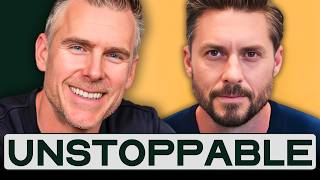
Serial entrepreneur Dan Martell describes money as a battery storing energy from value creation, not time. He spent $16k recklessly after his first consulting paycheck, then built discipline shaped by his frugal father and spender mother. He bought a McLaren to break his fear of judgment and inspire at-risk youth.
Chapters
You don't get paid for your time. You get paid for the value you create. And it's just whatever amount of time it takes to create that value is what you get paid. But it's not necessarily the hours.
There are so many places where you are holding yourself back because you're afraid of other people's judgment, because you're afraid of the stories that you were told when you were growing up. And you have no idea what could be on the other side. The joy on the other side.
And if you learn how to set your sail, that value you're creating is what charges the battery, which is money. So indirectly, the more you work on yourself, the more money you'll have as a byproduct of working on yourself. And you just have to have some faith sometimes. It literally will require you to trust in that process. The bigger the problems you deal with, the bigger your life is, the bigger you get to become.
A problem is not a problem if it can be solved by money. No, you may not have the money to solve it, then it's still a problem.
Yeah, but if it can be solved by money, it's not really a problem. Yeah, money will buy you a sense of safety a little bit up to a certain point. Like, the world will not get easier. The problems will not go away. People think like, once I have money, my problems go away. I'm sorry to tell you, don't want to scare you, problems get bigger.
All right, welcome to the Money Stories Podcast. I'm Mike Brown, and I'm sitting here with one of my best friends on the planet, Dan Martell, multiple successful exits, number one SaaS coach on the planet, bestselling author of Buy Back Your Time. But to me, that's not what's special about Dan Martell. This man— I thought I was committed to living my values, and then I met Dan Martell. Absolutely a shining example of practicing what you preach. Welcome, Dan.
Thank you, brother. Wow, that's an honor. That's, that's That's kind.
It's—
did you know me, man? I love you. I love hanging out with you. We were working out this morning. I went over your house yesterday. So if anybody's listening and wondering, like, you know, how much do I like Mike and how important is he to me? He's like, he's my homie. So it's cool that you have me on here.
It's been just an honor to have a front row seat to the Dan Martell Show for the last few years. And, you know, I know because I've had that front row seat, you're a 10-year overnight success, but It seems like you're everywhere now. What's that like?
It's interesting. I mean, I was sharing with you yesterday, you know, we were just shooting content in Denver and some guy like, is like, hey, are you that Canadian? I'm on your email list. Or like, I go to the gym, you know, my hometown, there's like 7 or 8 people that stop me now. And it's different, right? I don't mind it 'cause I think it's a huge honor. I could see for certain types of personality, it'd probably be super annoying. But there is a component of, especially when your whole life is essentially up for content or being recorded. Like, I travel around with Sam, who's right there, and everything we do, we record because there's the Four Agreements, right? Is it Manuel something's book?
Yeah, Ruiz.
Yeah, Ruiz. And he, you know, so it's like, be impeccable with your word. When everything you say, you know, is recorded, everything you say about other people, and it could be like just little things in passing, it really makes you You know, choose your words carefully. So because of the even just being noticed in public, now that we've built almost a 2 million person audience, and I think we had 36 million views on our content last month, I'm more intentional about how I interact with people. 'Cause it could be the only moment they have to interact with me and I'm not, and I just don't want them to have a bad experience. Like, I'm not, like, I know people have bad days, I don't wanna have bad days. I might have a bad microsecond and I gotta turn around. If somebody is nice enough to stop me and thank me or say something, I wanna thank them for it, always. I actually made a list of the celebrities, and not that I'm a celebrity, but I needed a pattern to match 'cause I was worried that, you know, I just didn't wanna fall down the wrong path. And when I look at people like Lady Gaga, Gelly Roll, Gary Vee, The Rock, like these people are very gracious and they inspire me and I hope I always, so if you ever meet me and I have a bad day, I'm not mean into it, I'm trying my best, but.
Maybe you're just on the cutting phase.
Yeah, yeah, I am human.
Yeah, yeah.
Might be in a caloric deficit and not be in the best of moods.
Well, I mean, it's been really inspiring. You know, you inspired me to build a personal brand and I've gotta say, One of my favorite quotes is, it's the gift of building a personal brand is the person you get to become along the way. And sharing yourself with the world actually creates, it's a self-reinforcing pattern, it creates self-accountability. And if I'm gonna post my workouts every day, if I'm gonna be telling people how to live, I better be following those things to a 10x, right? And so it just accelerates your personal growth by putting yourself out there. So I thank you for inspiring me to follow that path.
I love it, man. I just, unless you're a sociopath, like how do you give other people advice you don't follow yourself? And I think it's just a beautiful way to live where most people are already sharing their kind of life decisions and best practices. Typically, it stops at their kids. I would invite them to go broader, you know, maybe just by shining your light, by being the example. You probably have people at your work that might ask you for advice. But think about every time you've given somebody advice that could have changed their life. It could have took nothing more to just record it and post that out there even after the fact, right after the conversation, just say, hey, I just had a conversation with a coworker and they asked me about this and, you know, made me realize that, you know, in my life I've made these types of decisions to really help me get ahead. Man, I just think it's so cool because we finally live in a world that your audience size is not correlated to how much views your content could get. That is, people don't realize this. You could post one video and if the algorithm decides the audience wants to see it, you can get 6.5 million views and it could be the only video you ever post. And that's different today than it used to be. So it really, the opportunity for you to impact people, if you truly believe this, I mean, think about, Mike, how many people run workshops and they don't have a camera? And I'm talking like it's in your pocket, pull it out, put it on a stand, hit record. Like you don't need a mic. The cameras are that good that, that even livestream, you see me do, I livestream almost everything I can. 'Cause I just, I don't, my whole philosophy is personally, I wanna die empty. I wanna take my last breath and know I did as much as I possibly could to share everything I've ever learned from anybody, every book I've read, every philosophy, every belief I've had, the stuff you teach me. I just, I'm an amplifier. Like I try to give people credit, but man, I'm pretty much a, I'm a speaker, I'm a broadcast system for all the greats. And if I had to stop every sentence to tell you where I learned that from, It would take me 5 times longer to talk.
It's so good. Well, on that subject, you know, my job here is to bring conversations about money to the light that people are either afraid to have or they think it's rude to have in public. You know, we're not supposed to talk about money. And so, you know, shining a light on it is the only way to change it. Truly help people heal their relationship to money, to feel into their worth, to really grow as a human, to become worthy of wealth. So you made a lot of money as a young man. What do you know now about money that you wish you could tell that guy?
A lot of it's going to sound trite, so I want to say it in a way— and I love that question. It's actually my prompt on my phone for content is, what would I— what did I need to hear? And I would say a lot of stuff. Money is a battery. So just think about that concept. Dollar bills, capital, bank accounts, wherever you store money, it's just a battery of energy. And then we get to use that energy to enhance our life through experiences or solve problems. And if I could go back, I would just— teach that to myself and then say, look at your life and go, where do you want to enhance an experience or where do you want to solve a problem? And don't hold on to the energy as if it's a non-renewable source of energy, because it is. That's the crazy part is money abhors a vacuum. So like you literally want to be in transactions all the time. So like as a funny aside, Last year, I told Anne, who's sitting behind me, my executive assistant and world-class awesome person, that all these points— dude, I was hoarding points. Like, if you asked her, she— we had millions of points across all these different systems. And the reason why is I just got obsessed about points. And it's so stupid, but that mentality stopped me from participating in the economy. And as soon as I started using points, to fly my in-laws to visit us, to fly my brothers and sisters to do this, to bless a friend, to my cousin that's like a car enthusiast, like fly him into my hometown. And he's like, why would you do this? Again, I was on points. It just unlocked this sense of abundance and that shift. So like, I just think if I could go back and just teach little Dan something around money, I would say, stop calling it money. The collection of it doesn't change who you are and your self-worth. Look at it as an energy source. And there's two lenses of where do you want to enhance your life experience and where do you want to solve problems and deploy that energy to do those two things. Because as you do that, and this is the big idea kind of to the content, is the more you do that, you become more, which allows you to create more value in the world, which gets you more energy, aka money. So if anything, money is a tool to become better if you use it as that lens. Just most people think money is to provide a sense of security, right? There was no security. Like, it didn't matter. I used to think because I had no money that I wasn't secure, and then I had money and I was just as insecure than when I had no money. Isn't that fascinating? So the feeling was who I was. It wasn't because of the circumstances. So even when the circumstances changed, I still felt like that. I didn't feel like I had enough. I didn't feel like, I didn't feel protected. I felt, if anything, once I had more money, then I was worried about losing it, right? And it is funny, a quick story on that. My dad, one time I was talking to him and, you know, I had a relationship with my dad for a long, long time where it annoyed the heck out of me that every time I talked to him, no matter what I said, he would ask me, but did you think of this? Did you think of that? Which I interpreted as, "You're an idiot." You know what I mean? So like every time I tell him some good news, he's like, "Oh, that's amazing, but did this happen? Did you make sure you said this? Did you sign this contract?" And eventually I got frustrated. I called my brother and he goes, "I think Dad's just like that because, you know, he kind of looks at you like still like a 14, 15-year-old young punk. I mean, how do you blame him?" And I was like, "Oh, that's fair." You know, and it wasn't him that said it, but somebody said once, they said, sometimes the people closest to you are too close to see your greatness.
Mm.
Many times it's because they've seen you in your worst moments. So, so my brother gives me this advice. He says, I don't think Dad knows how rich you are. And I said, how does he not know? He goes, I know he reads stuff. I just think he probably doesn't even, I don't know. He goes, Dan, you should just show him. And I was like, what do you mean? He goes, I would just screenshot all your accounts, all your investments, like screenshot your personal net worth, I'm gonna send it to him. Okay. I hung up the call. I logged into all my banking systems, screenshotted it, spreadsheet screenshotted, and texted him the photos, 5 or 6 photos, and said, hey, Dad, I feel like sometimes when we talk, you're worried about me. I just want you to know I'm good. My dad's reply, oh my gosh, who helps you manage all that? So here I was trying to solve a problem that I could never solve because it had nothing to do with me. My dad had an insecurity around money and he projected it on me. Wow. Once I realized that there was no amount of money I could ever have because that would actually make him even more nervous because now I had a lot to lose, then I realized it was a game not worth playing. And actually I got really at peace with it. It was awesome. Then whenever my dad asked me those questions, I would just be totally cool with it and answer to him. I've invited him. I was like, do you want to come on a board meeting? Because he would ask me weird questions about companies. I'm like, do you just want to come to a board meeting? He's like, oh, well, no, I don't want to impose. I'm like, I think the team would be okay with it. And I don't mind. It sounds like you're really curious about this from a genuine place. And it's just, it's fascinating.
Totally, man. Well, you know, one of the themes that I touch on is how our parents and what we witness from our parents shapes our relationship to money. And we inherit these beliefs and then they run in the background and we're not even aware of it, right? Until they become a limitation. So let's back up. Speaking of your dad, let's back up to childhood. How did you grow up in relation to money?
So I grew up, I don't know, like blue-collar, white-collar. My dad was an electrical engineer, so he fixed electrical mortars. So he worked in the shop floor for a long time. You know, he had a big family. I mean, we have, I have two brothers and a sister. So we had a big family and he was trying to provide and he was a sole provider. So, you know, we didn't, I never felt like we lived without, but did we live in a double-wide trailer home as kids? Yep, until I was about 6, I think. So like we lived in a house because I think it was paid for by the company. Then we moved and then it was a trailer. So we lived in an environment that had scarcity. So I didn't realize that living in that trailer park for 3 years, how much scarcity adoption I had picked up. And like bad habits like stealing. Like the other kids in the neighborhood all stole, stole from each other, stole from their parents. And then, you know, we'd find out when they go to the store and they buy $7 worth of stuff, where'd you get that? You know, I got it all. You know, it's just like, I was shown this take it from other people kind of mentality and scarcity mentality. And it just showed up in my life as a teenager, 'cause then I got in trouble. I started stealing, I started getting in trouble with the law. You know, I ended up getting introduced to drugs. But as it pertains to money, I think that was the big thing is that my dad and my mom, it was kind of funny, 'cause I always say that my conservative kind of like, you know, structure and systems and like fortifying comes from my dad. And then the YOLO life of having like a supercar collection comes from my mom. So it's kind of cool. My, but my mom's kind of person that never saved, like zero. My mom would walk around, I think when my dad's paycheck came in, I think maybe she manages money, but I think my dad was also smart enough to take 20% and hide it. But she would take the whole check. And I remember we'd go to the bank and she would pull out all the money in cash and she walked around with, wads of cash, okay? Coco's her name. My mom, Claudette, we call her Coco. And every once in a while, maybe once every 4 or 5 months, she would lose the whole thing. Like, she'd have it in her pocket and get out of her car and she'd lose it. And then we're all, oh no, like, it was the money for groceries. It was the freaking money. Like, it was like my mom would walk around with $1,700 in cash. And that was absolutely normal. I never met another parent amongst my friend group that did that. So again, I just learned this other end of it, which is if you got it, spend it. And so that was kind of this psychology. So when I first made my first real money, I was 20 years old. I get my, I was consulting, just ended up, you know, turned my life around, got into software, and this random chance I got hired to do consulting. The first paycheck I ever got as a consultant, I had to incorporate, start this business, was like $18,000 or $16,000. Okay? But, okay, direct, $16,000. Dude, kid. I'm 20 years old.
Yeah.
How? It was about a month's worth of work. I was getting paid like $75 an hour, expenses covered.
Killing it.
Get the money. I spent 3 weeks on a tear, okay? So this is 24 years ago. So a dollar had a lot more purchasing power. I flew my little brother to the West Coast into the mountains, and we went on a ski trip tour. As soon as he landed, you know, $2,200 at the— I bought him a new snowboard, full gear, boom. Then we went to my friend's Fernie. We went to this ski area, and I went to the liquor store, bought the booze, enough to like kill about 100 people. But I was like, hey, we're having a party tonight, it's on me. Uh, we stayed in the nicest hotels, we ate at the nicest restaurants. Like, we went to Whistler, we stayed at the nicest hotel in Whistler. We, you know, over Christmas— this is over a 3-week Christmas break— and I get back after it's all done. My little brother flies back home on the East Coast, and my dad calls me He goes, I just talked to Mo. I said, did he tell you about the trip? He goes, yeah. I was all proud, like, hey, you had a good time? He said he had a good time. Yeah. Oh yeah, yeah, yeah. He said he had a good time. He calls me Daniel. He goes, Daniel, did you save any money for taxes? Why would I need to do that? Because you got paid gross. Like, that's— and I was like, oh shit. So like, right off the bat, had this bad habit of spending it. YOLO. Got that from my mom. So if anything, over the years, I've just been really quick about learning those money lessons. So right after that experience, okay, so I got the job, worked a month, got paid, YOLO life, Christmas, came back, realization. I went, I put myself on salary with my accountant. I got an accountant. His name was Norm. Said I only need $60 grand to live. Everything else, save it in the company. I don't want to see it. I don't trust myself. Don't see it, don't spend it, save it. And through that decision, I started to beginning the— some of these best practices around like set it and forget it. Yeah, right. And that what's cool about that is that activity of doing it not on purpose, but kind of in response to became the seed capital to kind of start my first company. And that's where I started to make money and But like, man, I just, I had a lot of weird money beliefs. You know, I didn't understand my dad. I never saw my dad read a book. Never saw my dad go to a conference. Never saw him hire a coach. Never saw, never talked about the concept of anything you would hear in normal personal development. Like, you know, work harder on yourself than you do on your job. Like none of that. So if anything, my money stories got put through the wash to get cleaned up as a byproduct of being an entrepreneur. And it is a beautiful thing as a business owner, I think we go to work to do the work, all caps, the work, you know?
Love that.
Yeah, like our business is literally a dojo of personal development. And a part of that was the money stories because I was still very primitive in how I manage my money. And it wasn't, when I looked at it, I just was like, I need to learn this. So that's where I started reading books like "The Millionaire Mindset" by T. Harv Eker. We actually went to his event. Me and my brother, I was 26, my brother was 24 maybe. We joined his Quantum Program. We did 3 years of personal development boot camps, like full-on immersive, 4 or 5 days. Like some of it was money related. A lot of it was just, leadership-related, business-related, marketing.
So how did you know to do that at 26?
I had been reading books since I was 23. So I taught myself how to code at 17, self-taught, went to bookstore, devoured the whole, if you go into a bookstore, it says technology section, everything I've read, everything. Like I just became obsessed with it. So I knew the power of, you know, self-learning, right? What I call just in time versus just in case. Learning to solve a problem. So if I was building something software-related, I'd be like, ooh, the database is not running right, I need to go learn that. Or, oh, I need to connect this to the internet, I gotta go learn about the internet or whatever. This is back in '97, '98. So then I just applied it to business. It took me a while though, 'cause I started being an entrepreneur when I was 17. It wasn't until I was 23 that I read my first business book. And so once I got hooked on that, dude, I was reading a lot. I just decided, 10 pages minimum every day. And so what happened was, is somebody had given me a copy of that book and I was, I was with my brother. We were doing strategy. He just started his homebuilding company. And what's cool about that book back in the day is when you bought it, you got 2 tickets to the Millionaire Mind Intensive. Talk about brilliant. Imagine if we put copies of tickets to an event in our books. So every person that bought the book, would get 2 tickets. And then, so the event was in Toronto. Me and my brother went, and you know, I gotta be honest, I'm glad that the guys who ran the event, T. Harv wasn't even there, but he had trainers, that they knew how to sell. So how did I know to do it? It felt right. But in looking back, I also realized they were really good at what they were doing. And one of the things they were, communicating was you have to invest in yourself. You have to invest in your money blueprint. You have to invest in, in learning what the rich do. Right? And it's true. Like, the difference between people that are broke and people that are rich is the rich have a different set of actions they do based on the information they have, and broke people don't. And if you don't have it, you got to get it. So you can either try to go through life and learn through trial and error, or pay somebody that's done it before.
And this was—
this is the person. This is how they got us though. It was $36,000 Canadian. Okay, so let's call it $30 grand.
Monopoly money.
No, monopoly money in Canada. But like, you know, $28K, $30K US at the time. We probably wouldn't have done it if the bonus— this is so good. He's doing the offer stack. Boom, boom, boom. You know, how much is university? You know, most people spend $75,000 on university tuition to learn this and da, da, da, da, da. He's like just value stacking it up. And it was like, you know, let's call it $150,000 worth of value, foosh, for only, you know, $36,000. And there's payment plans. But if you enroll at this event, we'll allow you to, and it's a 3-year program, it's called Quantum, we'll allow you to invite, or we'll allow you to add a family member at no additional cost.
Boom, whole room.
Ran to the back. And I don't even think we had the money. I gave my brother my credit card. He was the primary. He wanted it for him. I was his guest, but I lent him the money to do it. And eventually I was just like, I'll pay half, obviously. But he ran to the back of the room, signed us up, and it was one of the best decisions we ever made. For a lot of reasons. One of them was, is we got to spend 3 years together going to personal development events. Dude, how cool is that? What a gift. Yeah, I look back on some of the best, those are some of my favorite times, going to hotels in new cities. And you know, it's so cool. Like just, you know, meeting the people, the people we met, some of those people are still friends of mine today. And it's, my brother will tell you, if it wasn't for that, he wouldn't have built his real estate empire that he built. Like Pierre has built an incredible portfolio. I learned a lot. I was, I moved shortly after that, moved to San Francisco and kind of continued on my tech journey. But a lot of the leadership, train the trainer, that taught me how to speak on stages and teach people stuff. Like, people see me today and they're like, how did you learn all this? Well, at 26, I did 3 years of immersive personal development seminars.
It's such an amazing story. And drawing a thread from there to today, You are that person for so many and inspiring so many.
That's pretty cool because I didn't even find personal development until I was 36.
So I— so you have a decade on me. Mm-hmm. And what an absolute incredible experience in your 20s. You've already made all this money, you've blown it in some ways, right? You're learning hard lessons to get those upgraded belief systems at that young of an age. Is just so cool. And, and, you know, you— one point that I want to pull out, you say, you know, the difference in broke people and rich people is they understand how to invest in themselves, right? And, and something we talked about yesterday is that you have to become a person who is worthy of being wealthy. And if you become wealthy before you're worthy, you won't be wealthy for very long.
Such a good one.
So good. So you've inherited all these beliefs. You know, you've got your YOLO mom, you've got your— super—
dude, my dad is so conservative. My dad said, I'm making this investment, I'll give him whatever he wants because he would never do something like— my dad is the most risk-averse person. Not the most, but pretty risk-averse, like in the world. And my mom's the opposite, right?
And so, you know, when we witness these behaviors from our parents, we either follow right in their footsteps and mirror them, or we go full-on opposite.
Yeah.
So we have the ski trip story. You go YOLO mom at first. Did you ever swing to the super conservative side of your dad?
I think I did for a while in regards to just— not really, because it's funny. I start— I read Rich Dad Poor Dad and that the quadrant taught me to be an investor. And I would say a lot of my YOLO mom caused me to invest. So I was pretty fearless considering now I got lucky. One of the first investments I ever made was in my brother's home building company where I wrote him a check for $170,000, all the money I had in my bank at the time. And, you know, got me half the company. Turned out to be pretty awesome situation. I would say the next 8 investments went to zero, right?
Yeah.
But I was at least willing to be in the game. So I've always, I've always indexed towards learning over most things. So in many ways, even the goals that I choose are based on what will grow me the most. So I always say that you should choose goals to grow you. And that 100%, even today, when I'm thinking about like, how do I expand the empire? Like yesterday, I'm having this conversation like, okay, I could do this, this, or this. Which one's going to push me into some uncharted territories to really develop and round me out, the full spectrum person we were talking about this morning. So I would say that was still one part my mom in the sense that I was making irrational investments. But the part that would be more conservative is more how I ran my companies, and that was my dad. So, you know, my dad, oh my gosh, he— it's not what you make, it's what you spend. So like, I was always very profitable to a fault. This is where I— the reason I wrote the book Buy Back Your Time is because I almost killed myself over a 4-year period working 100 hours a week. Because every dollar I spent in things that didn't make money was a dollar I spent that I didn't get to keep. So like that mindset was a horrible, painful, like literally, and I talk to founders all the time, they're like, that sounds great, but if I spend that, then I don't have it. Yeah, but again, it's energy. What do you get as an enhanced experience and/or a problem that you're having, which is, your wife or your husband's pissed off at you that you're not home on time for dinner or whatever it is, or you're traveling too much, right? Like you might want to hire somebody to do all the, like hire Biz Dev person to go do all the traveling. So I just didn't do that. And the blessing in that is that I made a lot of profit. And then, but the problem is, is that I didn't understand how to really scale. So like that was the problem with, you know, and I told this to my buddy once where, that belief of you only, you only, it's not what you make, it's what you spend. And then being so frugal can really hurt you. So I made a lot of money, but then I went and I did YOLO with my mom on the investing side. So I lost a lot of money too. I got lucky the first one made me money. And then eventually I met some mentors that taught me a better way to do it. But Yeah, I would just say that my dad stuff showed up on the, on my active companies. And even to this day, which I love him for it, some of his questions are actually really great questions, you know.
Of course. Well, and that's one of the concepts here when we examine these money stories that we inherit from our parents. Yeah, we won't— we— there's still gold there, right? So, you know, here's one, for example, that we hear a lot when it comes to money is that abundance is good and scarcity is bad. That's actually not true. Scarcity, like in your case, scarcity actually can be really useful until it becomes a limitation, right? It created discipline in you to be able to run those companies profitably. At some point you bumped up against that limitation and now you needed to learn how to reinvest to grow to the next level. But that scarcity actually kept you safe.
Yeah.
Right, so there's always something that we can learn from, transcend and include in the next version of ourselves.
Yeah. Right.
But scarcity is not inherently— it just means you're a good steward of your money.
Yeah. But my dad's money mindset caused me to also sit on a lot of money that didn't do anything.
Yeah.
Because I was just— if I didn't understand it, I didn't do it. And I just— I mean, it was just dumb sometimes, the amount of capital I would just sit on. But again, in hindsight, not a bad—
dumber than reinvesting it all and losing it.
Yeah, exactly. So it's kind of funny, but I just— It's fascinating how much I optimized for my dad's approval. That's the part that I have always found fascinating, that I would make decisions with the excitement of knowing he was gonna ask me about it and I could tell him how I made the decision. So a large part of the decision was based on his approval or his perceived approval. Instead of just like, what do I want? What do I believe? What, what do— what would make me happy?
Do you remember the, the first time that you really got his approval on something like that, or did you ever?
You know what's funny is I only feel like recently. Yeah. And not even from the business stuff, from the content.
Wow.
Yeah. I think it's because he has so many people going up to him saying, I watched Dan's stuff, you should be so proud. And then he watches it now, and I think he gets it. That whole, like, sometimes people closest to you are too close to your greatness. I think he might start, you know, at 44 years old, I think he's actually starting to see, like, oh, Dan actually really knows it. Didn't get lucky. Because this is probably a part of it where he just felt like the early stuff was just luck. 97, technology, everything was winning. So, yeah, yeah, I would say like, I wouldn't say I felt any approval till probably in the last year and a half, 2 years.
Wow. What was that like after, after 43, 44 years to finally go, he starts to get me?
So, so funny because like I've done so much work on it is actually was not needed. Like it was nice, but it was almost more I felt relieved for my dad.
Mm.
That was the part, I think. And that's many, many reasons why I sent him, you know, that was, oh geez, 10 years ago where I screenshot everything. I just sent it to him. My brother still laughs that I did that because, you know, he just said it as almost like a joke. He's like, I didn't actually do it.
Dan, jump off this cliff.
Yeah, yeah.
Like, you know what you should do?
Just tell Dad how much money you have. That'll really be a good thing for him. 'Cause that's always a fascinating thing as a parent. Like, imagine, I can imagine one day my kids make more money than me by a lot. Like, that would be crazy and exciting. Like, I don't care. But yeah, it was more a relief that I knew finally he didn't have to worry about me.
I love that.
Yeah, yeah.
So here we are, things look a little different than, than 23. Yeah, you've made it, we could say.
Oh dude, I mean, let's just paint a picture, everybody. Uh, when we get back, you're flying in on Wednesday—
Tuesday.
Tuesday. And my dad will be there. So I got— my dad's gonna be driving the GT3, I'm giving you the Pista, I'm gonna be doing the McLaren. I know I have another car, I can't remember. So my brother will have a car, and we're all gonna go cruise around the wine country. And that's like an experience that I get to create for my dad and my brother. And just like, just this like kind of this full circle moment of us just being able to appreciate the wealth. 'Cause that's the other thing is like, I don't think I allowed myself to actually enjoy my wealth for a long time.
We've got evidence of that. We had a conversation, I'm gonna call it 2017.
Yeah.
That you've talked about recently. You wouldn't, you said you saw my McLaren, you said, man, that's so cool that you have that. I could never buy that.
Never.
Why not?
I was so scared. I didn't want people to know I had money. There was a fear. I never, I didn't, 'cause after I sold my first company and it was like put in the newspaper, I had a lot of people reach out on Facebook and asking for money. And I just love people and I hate when people are mad at me. So it was really hard for me to say no. That after that, in many ways, I kind of tried to downplay it.
Mm-hmm.
And, and I didn't— and a lot of my friends in my hometown, like, I moved back a long time ago, I moved back there, and I didn't want them to feel less. So like, even when I built my home, it was kind of like 4 times bigger than my friends' homes. And it was kind of like, I felt weird the first time they came because it felt a little obnoxious to them. I think over time they appreciated that I had the place for us to hang and stuff. So like, it was less, um, I think, you know, you get used to it, right? But before that, it was the, the, it wasn't as evident to them because I lived in another city, and we, when we'd meet up, we'd travel and go somewhere, and we'd all kind of stay in the same place and all that. So the McLaren was like just such a statement of that. But the funny part is, is like, I'd always been in the cars. I even had BMWs that I would I owned and I would race. And I could afford the McLaren when I was 28 and I sold my first company. But just, you know, grew up in a small town of 100,000 people. There wasn't even supercars around. Like if I saw a Lamborghini, it was when I went to Toronto or in New York. There was no, I didn't know anybody with a supercar in my hometown. So when I saw your McLaren, I was just like blown away. 'Cause I mean, that was kind of early to their, like, I don't know, McLaren's probably started building them 5, 6 years prior to that.
2017. I mean, that was actually the 570 was new.
Yeah. At that time it was brand new before there was the MP12C or whatever. Yeah.
12C came out.
And those were like 3 years. Yeah, exactly. So, so I didn't even really like, I knew they made them, but I'd never seen one, let alone knew somebody that had one. And you show me this with the bike rack on the roof, which I'm just laughing at because I just got into triathlons and I was thinking to myself like, man, I want to do that. So you kind of pushed me. And man, the head, the mind space that I went through was fascinating to me. 'Cause at that point, like, I went through a lot of stuff, built a thick skin, don't care what people think of me, pretty opinionated, build companies, you know, like I felt confident. And yet here I was scared to buy this car. I still have the email thread. I had this guy, Tim, who's my car guy on the East Coast. And we put the order in for the car and we were deciding on colors. And the decision was either dark gray. So the decision, I knew what I wanted. I wanted the orange McLaren. I wanted the McLaren orange. And I remember the email, I put the spec in, it was, is for a dark gray. And he goes, all right, are you sure? And I slept on it and I woke up the next day and out of almost like a, I gotta say something or I'm not gonna say something. I replied to the email, said, fuck that, orange, don't let me change my mind, buy it. Like, just do it. Before. And I got it. And dude, I still have the video of when it showed up. Like, Renee, when it came, I knew it was coming like within a day or two, but I got a text, or I got a call, a text, 'cause I didn't answer the call. Hey, we're around the corner. Car, get the car, okay? My guy Tim, it was the first McLaren in the, in our, in our whole state, okay? On the East Coast. The dealership was 1,200 miles away. So there's a lot of reasons that people thought it was a dumb purchase, right? Let alone the fact they had to go 1,200 miles to get an oil change or servicing or whatever. But anyways, it shows up and man, I hadn't felt like that in a long time. Side door opens, I look in, I see the front of it, the back drops down. Oh my God, it was so cool. There was these two guys mowing the lawn across the street at my neighbor's house, and they just saw the transport truck come in, closed transport truck. And you know, they're like, you know, mowing the lawn, they're looking at it, and I'm looking at them and I go, oh, they have no idea. Like when this thing backs up, there's no more mowing lawns. Like they're, and I didn't want anybody to know, I didn't tell anybody. Dude, I didn't tell anybody. Oh yeah? Like, I don't even think I told Renee, my wife, maybe till a week before it was coming. I didn't want to have the conversation with anybody. Don't want to talk about, like, I talked to you about it, talked to other people, but nobody, not even my buddy Nick, nobody. And I don't even know if you know this. What happened was, is the sales guy in Montreal where I bought it from, was friends on Facebook. He went and looked at my profile, and he went to university with Nick's wife, Jess, my best friend's wife, and messaged her and said, your friend Dan's getting a beautiful car. And she messaged me and goes, you bought a McLaren? And I hadn't told anybody. And dude, it was— it bugged me so much that Tim called the manager at the McLaren, and they did the whole PPF for free as an apology. That he told anybody, 'cause if I was trying to surprise somebody, like, it's a big no-no.
Oh yeah.
Well, it turned out the guy who delivered it posted a photo on it on a Facebook group, and everybody already knew that there was like— So it was just crazy. I mean, it took me a while to even feel comfortable driving it. I just felt awkward. My wife refused to drive in it with me for almost a month. We'd go to CrossFit at lunch, and she'd drive her own car. I'm not getting in there, I feel weird. There was a lot of stuff that came up. And then eventually, thanks to you, you'd be like, look, it's for the kids. And it actually was, like, that was my favorite part about the car is, you know, depending on the excitement level and how much they knew about the car, I would like let them sit in it, I would let them start it, you know? And like, being that there wasn't even one around, let alone people that didn't even know they existed, it was pretty special. But yeah, man, there was a lot of like, head junk around fear of being judged, fear of being flashy. Like, dude, I don't even wear a watch. I don't wear a name. I'm not a luxury guy. So like, that was, that was pretty, that was a big decision. I called the McLaren mindset. Even to today, it's the mindset that I remind myself that, um, there, there's, there's always another level of expression because that's really what it was for me is expression. That I need to strive for even in the face of fear. 'Cause like even just creating content, like people see me and they're like, oh, it must be easy for you. No, it's not. I still have days where I don't want to do it. I feel judged. I'm worried that I get the stories wrong, the details wrong. People in 10 years, I'm gonna say something that's gonna get me canceled. Like I, these are real thoughts I have all the time. And yet I think McLaren mindset, we do hard things, we express ourselves. We have to be willing to be criticized by the few to support the many. Like, those are kind of the essence of what I believe that decision unlocked for me.
Well, what I love that you touched on in McLaren mindset is it's for the kids, right? Because sure, there are going to be some haters that pull up next to you in your Honda Civic and shake their head and they're mad about it. But what I've found driving a supercar is you pull into a gas station and it brings joy to everybody's life. Kids run over, they want pictures with it, right? And we get to share that with the world. We get to show them Hey, supercar owners don't have to be dicks, right? Not only that, what do they ask you?
What do you do? What do you do? I love it.
Why?
Because now I get to teach them the difference between what they probably thought the world was about and what people did versus like, and that was the money mindset I grew up. Anytime we saw a Ferrari, like we were in Montreal or Toronto, you know, my dad would say, oh, he's in the mafia. That was that, my belief was people that drove those kind of cars were criminals.
So no wonder 40 years later, when you go to, you've got a, you have a subconscious program running in the background that people who drive these cars are in the mafia. They're bad people.
Literally, they steal from people.
Right. And this is what happens, right? This is not in the forefront of your awareness, but we will do anything to make sure that we avoid those stories. Right. And one of my favorite Dan Martell quotes, "The world will show you where you're not free." Right. What a special moment to, even after all the success, even after successful companies, exits, the money to go, I'm scared to show up in a McLaren. Yeah. And you're actually robbing all those kids of the joy of being able to go to at-risk youth, show them your car and go, you want to know how I got this?
That was— that I will tell you, because I, I've been— since I got out of rehab at 17, a couple times a year, 3 or 4 times a year, I would go visit these kids at this place called Portage. Saved my life. And I would show up in nice cars, BMWs, X6Ms, like all that stuff.
Sure.
The first time I drove up in the McLaren, the friggin— the, the difference in their attentiveness It's like, I didn't have to say anything. There was no preamble. Like I literally, it was immediately like, teach us, talk to us. We don't even care who you are. Like I'd have to sell them on like, I used to be like you and I came here and I did a program and here's some of the things that I get to do now and life's great afterwards. I could quit all of that conversation and just 'cause I showed up in a McLaren, they would rush and immediately ask questions. Who are you? What do you do? And as soon as I started talking and teaching, they were like listening and taking notes. That was pretty special. That's a big reason why even the fleet that you helped me put together recently, like we show up and do like full-on Instinct car shows at a group home, at a foster home, at Freedom's Door, which is a therapeutic community for people that have, they're alcoholics. Like it's just the coolest thing ever. Like, I got all my whole team insured on all my cars so that we can drive all of them up to a high school at an assembly, have a conversation, and then when they lean in and say, "What do you do?" We talk about how we do it. 'Cause it's not even what do I do, it's how I do it. Let me talk to you about this.
It's amazing, right? All of that was behind this door that was closed off based on programming.
Dude, I could be a 44-year-old man that have never driven in a supercar or owned a supercar. If you didn't push me. That's fascinating. That's now—
it's a huge part of your life.
I couldn't even imagine. Yeah, I just got the peace that I mean that.
And, and to tie this together for everybody listening right there, there are so many places where you are holding yourself back because you're afraid of other people's judgment, because you're afraid of the stories that you were told when you were growing up. And you have no idea what could be on the other side. The joy on the other side.
You know what's funny is I think, you know, I think like everything we go through life to learn a lesson to then hopefully teach other people. You taught me that lesson with the supercars and that, and that's a big reason why I've propagated. I'm still friends with people that I know are really wealthy that don't allow themselves to have fun. Like, they know who they are. They're my friends. They see me and they just won't. The purse strings are tight. And I'm talking people that are worth $30, $40 million. Yeah, purse strings are tight. They don't even fly business, dude. They still fly coach because of money story about don't waste your money on things that don't matter. Totally fascinating.
It's because back to the beginning of the conversation, right? Money is a battery. Money is stored energy. Money is fuel to create freedom in the rest of your life.
Yeah.
And all the money in the world doesn't matter if you're waking up afraid of others' judgment, afraid of failure, worried about losing your money. It doesn't matter. And that's, that's why there are so many unhappy rich people.
Yeah. And that's where I have a problem with broke people because they see unhappy rich people and they think the money made them unhappy. Yeah.
So does money buy happiness?
No, money never bought happiness. Money will buy you a sense of safety a little bit up to a certain point. Obviously, the ability to have shelter and food. But after that, you're on your own.
I mean, lack of money causes a lot of unhappiness.
Yeah.
And, you know, I will say like the greatest night of sleep in my life was when I sold my company and I knew that no matter what happened, I could take care of hospital bills. Like there was, that part of the worry that we all have to live with is gone. That's a great start.
But from there, it's still on you.
It's still on you.
Yeah. And even that worry is really just a story you tell yourself. Like, there's no amount of money you could possibly have to deal with a cancer you can't cure. I mean, look at Steve Jobs.
So, so, yeah, a good, a good friend of mine used to say a problem is not a problem if it can be solved by money. No, you may not have the money to solve it, then it's still a problem.
Yeah, but if it can be solved by money, it's not really a problem.
Yeah. Yeah. There's only a few of those.
Yeah, it's interesting.
So as we've kind of gone through this journey of how you've been able to turn around some of these money stories, if you could leave the listeners with a mindset shift or something that you know that you think differently about money that would be able to impact them, what would it be?
I'm going to, I'm going to go back and pull from some Jim Rohn. So if people don't know the name Jim Rohn, he's the OG of personal development. He taught Tony Robbins. Okay. And his philosophy that our value, our battery is charged by the value you bring to the marketplace is a very powerful concept. Because people think they get paid by the hour and they don't. Because if you were at home and you weren't working, you wouldn't get paid. So you don't get paid for your time, you get paid for the value you create. And it's just whatever amount of time it takes to create that value is what you get paid, but it's not necessarily the hours, right? Now, people are like, well, I put on roofs on houses and it takes me time to put the shingles. Yeah, I get it. But if you had a machine that could let you shingle 10 times faster. You could sell the roof, get paid for the solution, and then still get— so it's not the time. And that idea that you should work harder on yourself than you do on your job is so beautiful because people like— I remember the first time I heard, I still didn't understand it. Okay, so here's an example. Just having a positive attitude. If you're a person that has a positive attitude versus a negative attitude, somebody that's pessimistic and complaining versus optimistic and is expansive in their conversations, people that are wealthier will want to help you, will want to give you business. People will want to work for you. The world will magically collude in your favor to unlock cool opportunities and dreams for you. So when I say that's what Jim Rohn was trying to say to people is work harder on yourself than you do on your job because it'll make you better at your job. It'll make you more valuable. For example, if you're not somebody who knows how to manage their time, learn how to manage your time. If you're not somebody who knows how to deal with stressful situations, like that's the personal development. Like some people hear personal development, but they really, I don't think they know what it means.
Mm-hmm.
And for me, that's what it means. It means work on your ability to create value to the marketplace. 'Cause whether you like it or not, that's the equation we live in in a capitalist society. And he would say all the time, the winds are blowing. We live in a country, it's called America. It's got wind and it's blowing, and you're not gonna be able to control it. It's the economy. The only thing you control is how you set your sail. And how you set your sail is how you see the world. And that's the personal development part. That's the work more on yourself. And if you learn how to set your sail, that value you're creating is what charges the battery, which is money. So indirectly, the more you work on yourself, the more money you'll have as a byproduct of working on yourself. And you just have to have some faith sometimes. It literally will require you to trust in that process. But it's as simple as just deciding to smile. Tomorrow, smile to every person you see, and you will see opportunities come to you. You'll feel better, you'll think better. Personal development, like, that's how we charge a battery. That would be the, the most important. If I could go back and talk to 7-year-old Dan, that would be the thing I would try to convince him to adopt.
Invest in yourself.
Just just decide to make you the product. That's, it's like the business is you. Everything else is practice, but the byproduct of you becoming better is the thing you'll take with you for the rest of your life. So the more you can front load that, and I'm glad I figured out 27, 26, or whatever, read my first business book at 23, but you know, whatever age you're at, if you've never done that, just start. But that's how the world rewards people, is by you getting better. Because the cool part is it doesn't get easier.
You just get better.
You just get better. Like, the world will not get easier. The problems will not go away. People think like, once I have money, my problems go away. I'm sorry to tell you, don't want to scare you, problems get bigger. But the bigger the problems you deal with, the bigger your life is, the bigger you get to become. And that's actually the gift. You know, when, when Jim Rohn would say, You know, you should wish to become a millionaire, not for the money, but for the person you get to become. And if you say it's not about the money, he'd say, okay, well, go become a millionaire, give it all away, and then you get to keep the person you become. I think that's the coolest idea of all.
Absolutely.
Yeah.
Dan, what an amazing conversation. Thank you so much for sharing with us and Thank you so much for showing up how you do.
Thanks, man.
It's, it's so inspiring. You've taught me so much. I am so grateful for the example that you've been in my life, and it's just such an honor to get to sit with you and create with you. And I can't wait to see what's next.
To many years, man. Got big stuff to do. Cheers.










