Elliot Roe: The Hypnotherapist Who Helped Create Poker’s #1 Player in the World
This content was created by Mike Brown. This content was uploaded by Mike Brown. This is a YouTube interview titled "Elliot Roe: The Hypnotherapist Who Helped Create Poker’s #1 Player in the World" (published/created 2025-09-12). The excerpt is a conversational, long-form interview on the Money Stories show in which host Mike Brown interviews Elliot Roe (mindset coach and hypnotherapist). They discuss Roe’s upbringing and career shift from property/investments to hypnotherapy, his work with elite performers (notably poker pro Fedor Holz), topics of self-sabotage and “hiding your shine,” fear of success/rejection, transitioning to high-ticket coaching, flow vs. “dirty fuel,” and perspectives on wealth, service, and post-success identity. The conversation is English-language, interview-style, and focused on performance psychology, coaching, and the meaning of financial success.
Chapters
If you're willing to give any career genuinely 100%, you have a chance of being very successful in it. There's a very big difference between giving 90% to something and giving 100% to something in terms of the money you can make and the success you can have.
You help high performers find that last 10%.
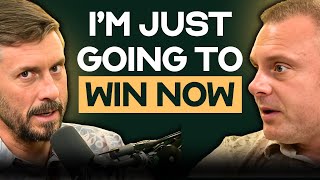
I worked with a poker client called Fedor Holz. So he was hiding his full potential and we had to work through those issues in his past. And as we worked them through in one of the sessions, he was like, I'm just going to win now. And from that point, I think he's now cashed over $50 million. Since that point, he became the number one player in the world. Elliot Roe, the ex-finance pro who walked away after 2008 to become the go-to hypnotherapist for champions, delivering one-session breakthroughs for pro poker players and elite athletes, co-founder of Primed Mind and author of A-Game Poker, now leading a high-ticket coaching practice.
What are some of the biggest reasons people engage in self-sabotage?
They're holding themselves back. They're giving this 80% because the ego can tell them them, hey, we would have been successful if we'd given 100%. So that, that 20% keeps them safe, but also means they never really reach truly elite.
We have this deep fear of standing out and being rejected.
Oh, completely. Extreme performance and extreme success typically comes with fewer friends and a level of isolation. It's very difficult to keep your old friend group when you're dramatically outperforming them in many areas of life.
Do you think that we can ever fully get rid of these patterns? Welcome to Money Stories, where we have real conversations about money, meaning, and what truly makes a rich life. Today I am on the road in Salt Lake City, joined by my dear friend Elliot Roe, uh, the world's leading hypnotherapist, if I may, uh, go that far.
One of them.
At least one of, at least in that conversation. Yeah. Works with many of the top poker players, Wall Street traders, entrepreneurs. Has had a massive impact on my life and the way I think about coaching. Elliot, I'm so excited to have you here. Can't wait to dive in. Welcome.
Thanks so much for having me on the show.
So let's just start at the beginning. How did you grow up with money and how did that drive you to become successful?
So it's interesting. I come from a part of England where there's a lot of wealth. So, but we weren't wealthy. So my dad was a greenkeeper on a golf course and we lived buy one of the wealthiest housing estates in the country. So we are in a small house and then backing onto possibly the most expensive road in England outside of London. So professional footballers, you know, Arab oil wealth, like that sort of wealth. So tens of millions of dollars. So I was brought up in this area of like quite a strong disparity. So it was an interesting upbringing from that point of view.
Yeah. What, what did that leave you with? What, what impression did that leave you with of wealth?
I think it helped normalize it. So it was quite interesting for me. It didn't create this, oh my goodness, this is so unfair. I think it created more of a normal, like, hey, these guys are in the same supermarket as us. These are humans. We're in the same coffee shop. And I think that was where I was quite fortunate that although I wasn't brought up with a lot of money, because it was so around us, it was much more normalized. And I don't think I picked up the same fears that a lot of people who are brought up in, you know, lower socioeconomic situations do.
That's interesting. And when did you become aware of not having as much as the other people in your neighborhood? How did that start to unfold for you as a child?
I mean, the sort of the very local neighborhood, we had some neighbors where we were the same as them. And then we would sort of walk through, if we're going to walk on the golf course, be walking past these 10, 20-bedroom houses. So, you know, it was quite good. And Ferraris driving down the road. So literally within 100 meters of the house, there was this next road where reality was entirely different. So I think I knew from a pretty early stage that clearly there's a wealth separation there. My granddad was relatively wealthy, so I was also seeing that somewhat within the family where he had a boat, he had a swimming pool. In England, they were a big deal. So there was still this sort of, I guess, disparity there that I would see as well. And obviously be aware that we didn't have a swimming pool, we didn't have a boat. We are living in a much smaller of sort of, you know, greenkeeper's cottage.
And how did that drive you to want to change your circumstances or start to become successful?
I think a big part of it was understanding that it was possible. So from seeing that this is available, wealth is optional to some extent. I was around it enough to know that there was nothing special about the people who were wealthy. So it wasn't something where I ever thought, oh, that's out of my reach, or that's not possible. It felt more Oh, this is an option in life and you can push towards that option if you want to. And that was something that I decided that I wanted to be successful and I'd try different things because this option looks more fun from the outside than the option that we're in. So that, I think that was, that was a part of it.
And so how did, how did your journey toward, um, where you are now, how did that start?
So I'm, I'm, as you, as you mentioned, I'm a mindset coach and hypnotherapist. The story of that, I guess, is slightly separate to the wealth story. So I'll start with the wealth story. So after university, I went into real estate. So, you know, hey, I want to make money selling houses. Seems like a good way of making money. They're the most expensive thing. There's money there. And then moved into investment properties. So working for a company selling investments and then using my savings to buy into investments as well. And then 2008 happened. So I was on this route where I thought I was going to be successful in property, and then 2008 took all of that away. Um, from that point, I then moved into renewable energy investments. So still in investments, still really focusing on money. And there was some success in that. The company that I was a part of sort of built out some solar energy farms and a wind turbine. But in the background of this, I was doing hypnotherapy because I had a fear of flying that a hypnotherapist cured, and I was really enjoying it. And I was getting a satisfaction from my life that I'd never felt when I was working in property or working in the renewable energy investments. And I felt like I was having an impact. And I sort of came to this moment of I'm going to accept that it's likely I'm not going to make very much money from this career. However, I'm going to be satisfied with my life. So I took this big shift from, hey, everything's money focused, money focused, money focused, to actually, this feels right and connected to me. And, um, then I moved into hypnotherapy and ironically of all of the things I've done, it's been financially the most successful by many multiples. But it actually came from a starting point of, you know, I'm giving up on money and I'm going to follow my passion. And following the passion actually led to the success, which I know everyone always says, you know, follow your passion. And a lot of the time it doesn't work. In my particular situation, that worked very well.
Before we get there, take me back to 2008. Had you started building some amount of money? Had you tasted success?
Yeah. So I felt I felt successful as 25-year-olds do. So I wasn't super successful, but I felt like I'd moved out of where I was in terms of social class. I felt that I had this new opportunity in front of me and that property was the obvious direction to go and that this was just going to build and I'd worked out the system and this was going to work and hey, I'm going to be rich and successful now over the next 15, 20 years. So it was just sort of, it felt guaranteed at that point. And then Bear Stearns went down and I was on vacation in Egypt and I got a phone call that, hey, the company's going to close down that I worked for. I was an employee. I wasn't an owner of the company. And then I had the reality check that investing in property prior to a crash isn't the best time to invest in property. So I had the reality check of, okay, my financial situation is very different. And effectively I'm selling investments and suddenly no one in the world has any money. So selling investments isn't going to be a very easy job over the next few years. Surprisingly, the renewable energy opportunity came up and that was again possible to make money in investments because the government were backing solar energy farms at the time in the UK. So it was a very good opportunity and that meant that there was money available and there was a chance to be successful. But I think 2008 had left a bitter taste in my mouth regarding the, hey, financial success just works like this. And then, as I say, in the background, my life feeling so much more fulfilling when I'm helping people and having that sort of that question mark point of, okay, there's this thing that feels really good. And I'm helping change people's lives. And there's this other thing that, hey, might make me some money, but isn't particularly fun. And although, yeah, renewable energy is great, in honesty, I didn't have a passion for it. I was selling it because it was an investment, not because I had a particular affinity to renewable energy.
So was there a single moment or tipping point when you were like, I can't sell my soul for money anymore, that this isn't going to work for me, I'm going to go all in on this passion, or was it kind of a gradual process?
Um, it was a gradual getting busier in the background with the hypnotherapy, and then we decided to move to the States. So we decided to move to America. My wife had been offered a job here, and, um, so I arranged the, um, the moving to the States and, and working out all of the visas and things. And then once I got here and I had an opportunity to make a decision as to how I was going to work, it was either go back into real estate and focus on money, apply for jobs in the renewable energy sector and focus on money, or, hey, I'm going to give this hypnotherapy thing a shot. And it just felt very clean to say, hey, it's a new start, it's a new country, and I think there's something here. It really felt like there was something where I could impact people's lives and help them have more success, and I was willing to take the gamble. So that move allowed me to sort of take a step outside of my comfort zone and say, right, I'm going to give something 100% effort and see what happens. And again, expecting it to be relatively financially unsuccessful, but very fulfilling as a career path.
Yeah. I wonder, I mean, that's, uh, how old were you at this time?
Around 31, 30, around 30, 31, something like that.
Yeah. I mean, it, it strikes me that that's actually pretty early. To wake up from the illusion of working solely for money and going all in on something that's ultimately fulfilling. If there's someone out there listening that, you know, is locked in a career that's not lighting them up and they're looking at an opportunity like that, what would you tell that person? Or what would you tell yourself, you know, 15 years ago when you're making that leap?
I have a belief that if you are willing to give any career genuinely 100%, you have a chance of being very successful in it. And that was something I wasn't aware of at the time, and it's something that I've seen with client after client. There's a very big difference between giving 90% to something and giving 100% to something in terms of the money you can make and the success you can have. And that was something I wasn't fully aware of prior to that shift that I made. So that would be the first thing I would say is if you do have a passion and you do decide to make the shift, Don't make it a part-time shift. Literally give it 100% and try everything you possibly can to make that work. And if you do, most people won't, and your competition won't be doing all of the things that you do, and it allows you to get to take market share. Um, especially I'm in a very niche industry, so giving 100% and taking market share allowed me to grow very quickly within that niche industry. And I think following your passion allows people to give 100%. And it's very hard to give 100% to something you have zero interest in or a low interest in, or you're just looking to make money. And I think that's where the difference in success can happen. When you're focused only on the money, it's very difficult to outperform the people who actually love the topic.
Definitely. And we're, we're skipping ahead a little bit, but what is it Because essentially I know that you help high performers find that last 10%. Yeah. Because it's, it's not always just lack of passion that keeps us stuck at 90%. There's a lot of reasons that we, we stick ourselves at 90%. How do you think about that?
Um, so I usually see self-sabotage. So the majority of my work through, through hypnotherapy, working with high performers in different industries is helping people understand self-sabotage, fear of failure, fear of success. So ways that individuals will cap themselves so that they feel safe in their environment. There isn't going to be change. They're not going to feel this risk and perhaps be isolated from others by having too much success. So it's an exploration of the patterns and the programs that they're running that are holding them from being, in my case, usually top 10 in the world instead of number 1. So I'm not working with people who are struggling. I'm working with people who are already, perhaps they're giving 95% and we get them to 98, but then extra 3% is extraordinarily valuable in competition. If you think of Olympic athletes, it's, you know, 0.1 of a second is the difference. But the financial success between being a medalist or not a medalist at the Olympics, or having a belt in the UFC versus not having a belt in the UFC, it's dramatically different financially if you make that little bit of extra effort and have that full success.
And did you find yourself, even though you were following your passion, did you find yourself bumping up against those limitations? Did, did you have to overcome fear of success or fear of failure as you were going all in on this hypnotherapy career?
I definitely had initially, um, fear of being public-facing. So things like a podcast like this, as I was very early in the career and I was working in industries where, you know, hypnotherapy's, you know, very left field anyway, let's say that. And then I'm working with analytical people. Who are trading on the stock market and playing high-stakes professional poker, um, a lot of the time it was viewed with quite substantial skepticism. So going out there and speaking the truth about what I'm doing and how I'm helping people in those first few years before I had all of the crazy results that I've seen over the years, it was much more difficult in those first couple of years. And I think I probably held myself back from a little bit of publicity as I was building that credibility and those results. And then once the results were there at the level that I wanted them to be, these sorts of things became much easier.
Yeah, so sort of the opposite of fake it till you make it. You were quietly building results. Yeah, behind the scenes a little bit, if you will, until you had now what I call evidence-based confidence. You can, you can look at the body of work and go, this is undeniable.
Exactly.
Now I feel confident to step in and maybe give 100%.
And I think I was probably holding myself back a little bit there and may have slowed my sent, but I was much more comfortable doing it that way. So that, so that was some of the work that I was doing with my coach over those years, was, um, understanding that I was trying to keep myself safe and then working through those issues. Because as you know, coaches have coaches, and this is how the process works. We're all refining and trying to bring ourselves to that sort of level of competence and, and being able to give off our full self in these situations.
And was there a particular time or, or breakthrough that sort of catapulted you to that, that level of success? Was, was there, was there a moment that was defining in your career?
Um, I've had a few. So I, I worked with a, a poker client called Fedor Holz who's been kind enough to share the stories of what happened. And, um, this was now just over 10 years ago, and we started working together. He hadn't had any major success in, on, in live poker. And we were doing these hypnotherapy sessions and helped him overcome some issues in his past that was stopping him playing to his full potential at the table. So we call it hiding your shine. So he was hiding his full potential and we had to work through those issues in his past. And as we worked them through in one of the sessions, he was like, I'm just gonna win now. And from that point, I think he's now cashed over $50 million. Since that point, he became the number one player in the world. and I've had a number of players have, have these sort of crazy levels of success in the poker industry. And then in the UFC side, um, I worked with Carla Esparza towards her first title. I worked with TJ Dillashaw. So having those as testimonials was pretty substantial over the years. You know, when people saw those testimonials, it had an impact. And since then, um, Helping people in companies during their exit year has been a major part of my business and sort of certainly in the background and the way that my name gets shared, I would say that's probably where a lot of the referrals come now is, hey, I'm struggling emotionally, I'm exiting this year, and someone will say, you should talk to Elliot. And I think that background marketing has been very powerful for my career.
Let's dive in a little bit to hiding your shine as an example. You do a really great job, I feel like, of kind of giving these patterns patterns that many of us have names and, and explaining what that is. So what is hiding your shine and how does that manifest?
So in this particular instance, we were seeing that his play at the table didn't match his full potential. So there was something going on where in live, very high-stakes tournaments, there was, there was some, some difference in the way he was playing than if he was playing that same tournament online. As we explored that in a hypnotherapy session— so hypnotherapy is like guided meditation, there's no magic to it, it's not like the stage shows, but it brings up memories from your past that you then work through. So we went through to these memories in his past, and it showed memories of being bullied in school for being highly intelligent, for answering the questions in class. So the lesson learned by the child was showing your level of intelligence is dangerous and you'll be rejected. This isn't something you should do. So the child learned this program, held himself back at school, and then found subconsciously, and not something he was aware of, holding himself back at the poker table from reaching his full potential. As we got rid of that program and changed and released it, um, he was then able to play to his full potential. And then we saw these results. And obviously, you know, this study, there's the technical game as well. There are all of the other pieces, but he was certainly kind enough to share this story in my book, and, and he feels that it made a big impact. Impacts on the success he had.
Yeah, I think it's important to unpack because, you know, someone listening may not understand or relate to being the smartest kid in class and starting this program of hiding your shine. But I mean, this is, this is really common, right? We have this deep fear of standing out and being rejected.
Oh, completely.
Yeah, right. And I think that we see people with maybe unfortunate, you know, disabilities, or like, we, we know to have sympathy for those people. But I think societally we have a lack of sympathy for someone with gifts and talents. Yeah. Right. And, and so I think it exacerbates the rejection and the loneliness when you stand out from a, from a good perspective.
It definitely does. And this is actually part of the work that when I'm working with high performers, we have to really dig into. Uh, and that's the reality that with extreme performance and extreme success typically comes a fewer friends and a level of isolation. It's very difficult to keep your old friend group when you're dramatically outperforming them in many areas of life because you're going to trigger them. So if you've all come from the same neighborhood and you've had extreme success, every time they see you, they recognize they can no longer blame their neighborhood. And that's extremely uncomfortable for a lot of people. You know, your, your brother, your sister can't blame your parents. If you've been successful, so it starts to create isolation in different parts of your life. And this is something that a lot of high performers really struggle with and they have to be aware of as, as they're sort of making these changes and they're having the success in their life that your friend group's gonna change. Your family may treat, treat you slightly differently and you're gonna learn to have a new type of relationship with a lot of people. And that can be very confronting and very scary. And I think that puts sort of a wealth cap. On a lot of individuals where they don't allow themselves to get past a certain level because of the societal response that they'll have to face.
Yeah, this is something that, that shows up a lot in my work, is this fundamentally unresolvable tension between the societal fairy tale of work hard and be successful, but not too successful where you outpace everybody else and make us uncomfortable, right? There's this underlying tension. We want you to do really well, 'But please don't buy a Ferrari.' 'Don't show us up.' Right. And, and how do you see that resolving in the, in the clients that you work with?
Or, um, first it's sort of them overcoming their emotional grip on the situation. So if they're highly triggered by their parents' response, your parents' response is just your parents being triggered. Your brother's response, your friend's response is just them being triggered. And once you can separate that this isn't about me, this is about their self-worth. Then that becomes a situation that's less uncomfortable for the high performer. They have— the high performer also typically has to find new friends who understand their life and that they can communicate with. And as they start to build out a new social network of people who understand them, who want to have these sort of peak experiences and they want to become number one in the world, they find solace in that. So I would say loneliness is a major issue for many high performers and looking for a network and a community where you feel supported and you feel understood and you can talk about your expensive vacation without being judged because that's something that happens in a lot of situations and it will hold you back if you can't speak your truth.
Definitely. And, and, you know, almost for being the best in the world, it seems like loneliness might be the price of admission.
I think it is certainly the initial price of admission. I think it is something that can be adjusted and those networks are available and obviously you have to be cautious because some people might be looking to take advantage of you. But if you put in the effort and you're selective and you have some nous about you, you can meet some incredibly interesting people, especially once you reach the level of, you know, one of the top in the world in whatever industry it is, you're accepted in every room. And I would say imposter syndrome, even for those people, is something that comes up. And you really have to understand that almost everyone feels some level of imposter syndrome when they enter a room of high performers. And if you're genuinely one of the top in the world in your industry, other high performers will just accept you because they'll find it interesting. And everyone believes that what they're doing is boring and what everyone else is doing is interesting. And that's the nature of those sorts of situations.
Got it. So, so switching gears back to your own story a bit here, when did you start to feel wealthy or successful from a financial standpoint? And, and how did you come to grips with that?
I, I reached a stage where I, I couldn't cope with the incoming traffic in terms of the number of people who wanted to work with me. So is that a, um, a normal price point for a coach? And I think at the time I could have realistically booked, let's say, 60, 70 clients a week in terms of if, if I'd allowed them to book in. And it was getting to the stage where clients were complaining, hey, like, it's 2 months before I can get a call in with you, which when you're working in high performance just doesn't work. In with my poker clients at the time. My poker clients had won something like $100 million, and I was still charging a relatively low ticket rate. So I was having guys playing these ultra high-stakes tournaments, and then I would also be working with people, you know, in a normal day job as well. And it, it didn't make any sense. And I made the decision at that point that, okay, I need to switch to being a high-ticket coach because I, I cannot I can't make this business work this way. I'm burning out and I'm not able to offer the service. And I shifted to a high-ticket coaching model, reduced my number of clients. And that's when I realized, and the majority of my clients were more than happy to pay the increased price because they could then book in. So it was like, they were like, oh, awesome. I'll pay more to be able to get in when I want to. And that's when I realized that, okay. Everyone does see the value. It was me who was not charging the value. And now I have the space to do my job properly. And that's when things really felt like a substantial shift because I was making good money, but by grinding out huge numbers of hours per week. So it created a big lifestyle shift for me when I made that shift and change.
Yeah, it strikes me as really interesting that, you know, As you start charging more, you actually start getting better clients, start seeing more results. I mean, this is kind of a, uh, an age-old understanding that, that a lot of coaches reach is that actually the more the client has on the line in working with you, the, the better the results tend to be.
Definitely. And also as you are working with people who there is more on the line for them, not just in what they're paying me, but just the reality of their situation. Generally they're high performers who will put in the effort to do the deep work, and they will go to the memories and the places that they don't— no one wants to face their worst memories. They just don't. The high performers are willing to do it because there's enough on the line for them if they do. And I found that, you know, perhaps people who were in normal jobs day to day, they didn't really want to face it. They wanted someone to talk to. And there's a big difference between the sort of the effort of the high performer who is an Olympian or is a UFC fighter or ultra-high-stakes poker or running a company or whatever it might be, those people will really, really push to get that tiny bit of edge because they know how valuable it will be if their mindset's in place in those clutch moments that, you know, some, I mean, I've had traders swing $100 million in a day. Like they want to get the decision right. You know, it's a, it's a very big deal.
And as you started making more money, sort of as a byproduct, right, of your value creation, right? You would, You had made a fundamental shift early on. It's not about the money. I'm not gonna do a job I, that I don't like, that doesn't serve me to, to make money. Now, all of a sudden you've created a tremendous value in the marketplace for, for your clients, and they've seen a, a massive amount of success. What, what does wealth mean to you now? And, and how do you think about money?
So I, I see money as a, a tool to buy freedom. And choice. And I don't believe that there's a need for it to be a score on the board. So I have a very high quality of living that I really enjoy, and I love having the freedom to enjoy that high quality of living in different areas. We're lucky our children go to private school, things like that. So these purchases that we feel improve the quality of our life, I've worked with a large number of extremely wealthy people. So 100, a large number of people at $100 million plus, some billionaires. I don't believe that over around $50 million, there is much of a quality of life change of any kind. And for most people, there isn't much of a quality life change over like $10 to $20 million. Realistically, in terms of the life they live, the restaurants they go to, the vacations they go on, they just aren't the things to buy. You can buy a more sparkly watch, you can buy a private jet, but these things, they start to own you rather than you owning them. So I would say my focus in my life is having safety and security through the money I make, but certainly focusing on my quality of life, my family life, my health and fitness way before trying to get to some number that I know doesn't fix things because I've seen exit after exit not fix things for clients. And you know, we get them to the large exit. That there is no happy ever after for it. So then we have to do the real work of filling the gaps that they were trying to fill with money because money used to solve the problem. And at a certain stage, it just doesn't solve the problem any further. It's a bit like, you know, the bodybuilder who was super overweight. There was one stage where it was important to be in much better shape than being really overweight and really unhealthy. But there's also a time when adding a little bit more muscle to your bicep doesn't actually help you in any way at all. And I see money in the same way.
Yeah, this is, this is a very interesting conversation because so many people on this show have stood at the top of the mountain thinking that the money or the success or the external validation would make that— would make them happy or fill that hole, including myself, right? And then you're standing there and you go, oh no, it didn't. It didn't.
Yeah.
Now what?
And I, I think it's an extremely difficult, scary year. You know, we've discussed it at length. Um, it, it's something where when someone believes all of their problems are going to be solved, be it with an exit or with a medal or with a title or whatever it might be, you know, the end of the journey is when everything's good. It never solves the problems and it doesn't solve the darkness inside that you were trying to prove you're valuable enough. It's just, oh, now I don't have a mission and I'm still feeling this way and the money didn't solve it. And again, that's when a lot of the work is this sort of the deep self-work. Am I loved? Am I lovable? Am I enough? Am I offering valuable value to the world? That's the work that comes after that. But a lot of the time people need to see it to believe it. So we have to get them to the success first so they then believe me that it didn't fix everything. It's like, okay, we got the money. Didn't solve the problem. Now let's do the real work.
Yeah. And, and there's a sense, right? We don't wanna rob anybody of their journey, right? Like some of these things we do have to discover.
And it's fun stories and there's amazing journeys.
Yeah. Yeah. But how do you, you know, how do you help an Olympian who just won a medal or a poker player who just won a bracelet or, or a, you know, entrepreneur who just had the exit and they are facing this identity crisis of, oh no. What kind of work do you start to dig in with them?
So I always want to start from the feeling. So is this an anxiety that's coming up? Is this an anger or frustration that you feel you've been lied to by the world, by society, whatever it might be? And start with that sensation and start to explore through typically, you know, hypnotherapy, sometimes other modalities, where this is coming from. So what in your past taught you that you needed that success to be enough, to be valuable? and it will usually come up with issues from childhood. You know, I felt my mom loved my sister more than me. My teacher said I'd never amount to anything. I was, I mean, the number of guys where it's like their first rejection by a girl is like their core memory. Like, I realized I didn't have value when Sarah Jane in 7th grade said she didn't want to go on a date with me. Those sorts of things. And as we start to unpack the emotions around those and sort of recreate a more rational program, they can allow themselves then to have more grace for themselves, a better understanding that this is just a journey that we're all on. We're all on a journey in life. We're all here to learn. It's a good thing that it's not game over when you sell your company, because if it was, it would be game over. You don't— sort of high-performing, highly intelligent people don't really want to sit on a beach with a cocktail for 30 years. It's not interesting. It's not a good use of their potential. And it's sort of understanding that, yeah, you, you did something great. You now have the money to do the real work and work on yourself without thinking about it. You know, the expense of working on yourself, do the traveling you want to do, get yourself in the shape you want to get yourself in. You have the space to go meditate if you want to, and, you know, do these type, this type of deep inner self-work. And then usually find a way to help other people because that's what we always end up at is it's when you're in service to others, you feel at your best. And that's what I would say nearly everyone I see who reaches satisfaction after one of these huge life moments finds that helping others is the journey that makes them feel best, most fulfilled, that they're reaching their potential. And yeah, I think I was lucky that I found that by mistake along the way. And I don't need an exit. Yeah.
To be— You didn't have to experience the fall.
Exactly. Because I just got lucky in that way in my story and my journey.
Yeah. I say often that you can't have true wealth without some element of service. It just seems to be, and that may be a small concentric circle that could be just your family.
Yeah.
Right. But really to make this transition from, I did the thing, I still don't feel enough. I mean, in my experience, the only way to start to re-pattern and find that self-worth actually starts when you make it not about you.
And I think that's really the key. It is not about you and it never was. And I think even if, you know, the people listening to this, watching this, no matter where you are, generally treating someone else is dramatically more fun than treating yourself. You know, there's nothing more fun to me than taking friends to a restaurant that they haven't been before and them having an amazing meal, or taking a family member on vacation that they— a vacation they wouldn't be able to go on. That's much more exciting for me and fulfilling than just going myself on those trips or eating those meals. And I think there's sort of a That's the first step, you know, try giving back, try seeing how it feels and start to focus back on actually an extra digit on my bank account probably doesn't create as good of a feeling as treating someone to a surprise that's very deep and meaningful for them.
So we start to unwind the identity of not being enough. We start tapping into service. What are some of the other things that you see help people rebuild that edge from an external validation-based paradigm to a more fulfilling, happy paradigm? What do you see as other keys to that?
I think working through the trauma is key, and I actually believe the highest performance— I know you talk about dirty fuel and clean fuel. I believe the highest performance in individuals comes once you make that switch to clean fuel. So someone will say, I am driven by my anger towards my parents. Okay, great. That is going to get you some escape velocity, but you're not going to be able to compete with the best in the world because you're not going to be in a true state of flow because you're always fighting against yourself. And what I'm helping high performers in different industries do is trying to reach a state of presence and flow where I'm doing this because it's my passion and I love it and it takes me into that flow-like state, which allows me to perform at whatever it is at their highest potential. I think the, as I say, the escape velocity of you're struggling in life and you hate and you need to prove, it does get you to a certain level, but it can never be the absolute elite world-class, or it's very rare that I see that. So that's really the work from the high-performance side of clearing that negative dirty fuel and saying, actually, there's a clean fuel option. That allows a state of flow and presence, and that's where true high performance lives.
Yeah, I really love this explanation because a question that I get a lot from potential clients is, yeah, I mean, I hear what you're saying, but what if I lean into this work and I lose my edge?
Yeah. And that's a concern many of my clients have.
What do you tell them?
This hate has driven me. Well, I think this is where it's lucky, where with the level of testimonials I have, I'd say, yeah, I've— all of these people said the same thing as well. And that's where the credibility does help after 15 years of doing this, 15,000 sessions. A lot of the time, if someone's coming to me, they trust that I have seen this before, and generally I've seen it before. So I think that level of credibility is a very strong tool to use in those moments. And then It's connecting it to the concept of the state of flow. Almost everyone has some instances in life where they know they've performed much better than they normally do because they were in a state of flow. A state of hatred is not a state of flow, and people can usually viscerally feel that. You know, if your body's under tension, you're not flowing, your mind's not working in quite the same way. So if you can have that negotiation with them of, okay, I want you to imagine you're trading now, but not from a place of scarcity. But you're trading because you love this process and you want to show your edge in the market and enjoy being a true professional in this, what would that feel like? What would it feel like if it was light and you could just focus on the decision-making process? Would that be better than filled with hate or scarcity? And as they start to visualize that, they start to accept that yes, perhaps it is worthwhile doing this work.
And, and here's a question that, that may be uncomfortable, but does anyone, does anyone ever actually decide that they don't want it and, and give up?
Yeah, I mean, I think there's certainly— there, there are places we have to go in this work where I've had clients where we've had sessions and they're like, I don't want to dig into my past again, I'm not ready, because it's just too uncomfortable and it's too confronting to them, or they have to face their own shadows where they're the baddie. And it's really uncomfortable if you thought you were the goodie for your life and everything is balanced. None of us are the goodie and none of us are the baddie. We're all somewhere in between. And that can be very confronting. And most of the time, the vast majority, people want to do the work. But there's certainly moments where I've had clients say, hey, you know, I still want to work with you, but I'm not willing to dig into my past. I'm not willing to go into this direction. Certainly for a period of time. Sometimes we end up putting it on pause for a year or two. Generally, they end up coming back, but it can be quite confronting for, for a number of people.
And, and what about maybe even letting go of the goal that they thought they had? If they say, I want to be the best in the world, certainly as I've gone through my own healing process, I'm, you know, bottom line, just not as— I mean, I used to be really intense in Ironman. I used to be, you know, I really care about building a big business, and I find the more healing I do I actually just don't care about some of those things to the level that I used to. Like, I don't have the same fuel. So in, in, in some ways I did lose my edge, but now in hindsight, I'm, I'm great with it.
I mean, I would, I would say you switched to service, which is actually what brings you joy. So was your goal actually to build a company or was your goal actually to feel good and feel enough? Probably your goal was to feel enough. Enough. And you've now found a new route to feeling enough and you've realized that more money wasn't that thing. So I would say your goal hasn't actually changed. What you believe would help you reach the real goal has changed because you've educated yourself.
Yeah, I think that's fundamentally interesting. It's still the end result, just the means has dramatically changed.
And there's actually a pathway this way. Like there is actually a path rather than bigger number. It's not a true path. As I said, it just buys you the financial space to do the work, to think about the next steps, to see what is actually your full potential in life.
So diving in a little bit further, you know, you, a lot of your clients are either traders or professional gamblers.
Yeah.
You have to have seen a lot of wild relationships to money and beliefs about money. What are some of the commonalities or what, what are some of the fundamental beliefs that you see, or self-sabotaging beliefs when it comes to money that you see in clients?
The, the first that shows itself, not just with the gamblers and the traders, but with everyone in business as well. Many people have a set number that they're comfortable with and they bring themselves to that number over and over again. For some people it's $100,000, for some it's a million, for some it's $5 million, but they find themselves floating around this notional number. And if they go above it, they start making crazy investments or gambling incorrectly, and they just hemorrhage the money, but also if they go below it, they find a way of getting it back. So we know that there's this like fixed point that their subconscious is comfortable with, that it's fighting against. And, um, I call that sort of the wealth thermostat. And what I've seen there is it's usually linked to something from childhood where the rich people in the street, that was the number. Or The most money their dad ever made is the number that they can't get past. And that's because they're scared about, at a subconscious level, of changing the power dynamic of the family. If I start making more money than my dad ever made, what does that now mean about our relationship? And these are the sorts of things that come up in the hypnotherapy. So I'd say anyone out there who, if your company has hit a million dollars 8 years in a row, probably, yes, probably there's something going on in your mind that's keeping it at a million dollars. Unless that's a conscious choice. You know, if you, if you believe it should be growing, it should be growing. Other situations I've seen, obviously with the gambling and the trading, is erratic behavior when they're having a down day. So effectively they're looking to turn off the feeling with a win and then not following the process. So with gambling and trading, the vast majority of people lose, the professionals win, and they win by following a process that's repeatable. That allows them to have an edge over the market. In down days, which all of them will have a decent percentage of the time, maybe 40, maybe 45% of the time they might be losing. That's when I see traders increase their clip size, um, or place more trades than they want to place, make erratic non-process-based trades because they want to finish the day in the green so that they can turn off the feeling of failure. And a lot of people in those industries, it's all about, I want to go home and feel like I didn't waste my day, that I'm still enough. I'm a profitable trader and they'll make negative EV decisions to try and make that feeling go away.
You know, I imagine there's a tie-in to loss aversion, right? Is that, you know, we feel the pain of losing 5 times more intensely than we feel the joy of winning.
Yeah. And I think it's also a, their expectation is I'm a professional, I should be winning. Even if you have a rational conversation with them, you know, outside of the battle that they know they have to be losing 45% of the time, but there's still a part of them on the day that, wait a minute, I'm a winning trader, I'm a winning gambler. This shouldn't happen to me. And they try and fix it. And the fixing it is what creates the big downswings in both of those industries.
And what are some of the other self-sabotaging behaviors that you see show up routinely around money?
Around money, especially, obviously there are some spending issues. I would actually say one of the most interesting self-sabotages around spending is actually not spending enough. So there are a lot of very wealthy people who still live in scarcity, and I believe it damages the quality of life that they can have pretty substantially. And that's, you know, Again, comes back to what would my dad say if he knew I flew first class? And I'll be like, well, you're running a $20 million company. It's not really relevant what your dad would say. If you spend an extra $200 on a first class flight, if you manage to get sleep on that flight, how valuable is that to your team? And it's this sort of saving pennies and costing themselves pounds in those different situations. So we have the scarcity side. And then obviously the other side of spending is the new toy will make it better and it makes it better for a week. So, you know, the new—
I have no idea what you're talking about.
The new sports car, Mike, we'll drop it in. But it, you know, it's one of those things where it feels good in that moment. Generally, you know, the wait for it is the most fun. If they don't let you take delivery on the day that, you know, that 2-month wait, that's the exciting part of buying a luxury item. But in the same way that selling the company doesn't fix the problem, the car delivery or the new sofa or whatever it is that you felt might change things also doesn't solve the problem. So we have those sorts of issues there with money. Another one is investing out of guilt, and I've seen that. So Exit Year, again, we've had this discussion. One of my pet peeves is when clients exit, really trying to get them to not make any investments for 6 months, especially in friends' companies, out of guilt. So when you have a large exit, especially if it's public, a lot of people are going to have a lot of good ideas and they're all going to reach out to you, especially over that initial period. And a lot of the time the guys are feeling this guilt of, I've just made all this money. I want to bring my friends along for the ride. This is my opportunity to pay it back and bring them along for the ride. But I don't think I've seen anyone have any success in any of those investments over the years. So I really recommend to clients like 6 months, tell everyone no, really dig into what you want your investments to be. If you do want to invest, have a thesis that you're going to follow and you can say yes to things that follow that thesis. Um, but I think it is, it is a guilt moment and a, a real want to bring up those who are around you so that you can keep that same community. And in most cases, it's just not available. It's not reality.
These are all, I mean, these all map to, to my work 100%. And you know, back to, you know, even your, some, some of the fundamental beliefs we get in childhood, like rich people are evil. If, if we fundamentally believe rich people are evil, We'll hit that wealth thermostat and then we'll do anything that we can to get rid of that money.
To make sure that we are not the evil one, because that's our belief.
Yeah. And as you start to help people rewire these, do you think that we can ever fully get rid of these patterns or how does that start to unfold?
In my mind, I like, I've got a screen in the talk I give that shows this. But we're trying to get like, there's a cube turning into a sphere and there's the different stages of that. And you never become the smooth sphere with nothing having any resistance, but we are gradually shaving down the edges of the cube further and further to try and get as smooth as we can. So I don't believe any of it's completely binary. I don't think there's an on-off switch where you used to feel this way and then tomorrow you don't feel this way. But hey, it was a 9 out of 10. It's now a 7 out of 10. It's now a 3 out of 10. It's now a 1 out of 10, but it's still there and I can still bring up that feeling. A good example of it is for anyone who's suffered with grief. The initial stages of grief are a 10 out of 10, and then over time that grief reduces and reduces in general, especially if you're working on it and processing it. But the truth is it never completely goes. There'll be a time 5 years after the parent's death or partner's death. When you get reminded and it, and you get a spike and it comes back, but we are looking for those spikes to be as infrequent as possible and the emotional level of them to be as reduced as possible. So as I say, I see it as like sharpening a blade and it can never be infinitely sharp, but we can sharpen it substantially from blunt.
And outside of money, what are some of the biggest reasons people engage in self-sabotage? And I'll start you with one. That was wildly impactful for me, which is the program you call Too Smart to Try. Can you dive in on that one a little bit?
So Too Smart to Try, again, I've had a large, large number of clients with, with this specific issue that we've seen through their childhood. And that's at school. They were a high achiever, especially if it's early on. So they find out that they can go into the tests and they can pass all of the tests because they're relatively easy. And they get a lot of attention from friends and family that they're the clever kid. So everyone points out, you're really clever. That becomes their identity. As they go through school, typically what happens is they stop studying because if they study and they fail, then they're no longer the clever kid. But if they refuse to study and they fail, they're the clever kid who chose not to study, right? And this is what we see. Usually you get caught up around university age where you actually have to study. To be able to pass, even if you are really clever. And this is where usually you find, hey, yeah, I dropped out of college, or I didn't get the grades I should have got, but I chose not to study. And that's the story that gets told. Then in adulthood and in business, they find the same pattern running again, where they're holding themselves back. They're giving this 80% because the ego can tell them, hey, we would have been successful if we'd given 100%. So that, that 20% keeps them safe. but also means they never really reach truly elite because they're holding themselves back. Um, so that's why we called it Too Smart to Try. It's because you are risking your identity and, and that's something that we have to work through. So we see that actually, you know, we need a growth mindset. It's okay to fail. When you fail, we get feedback and then we implement that feedback and become better and better and better. Um, but those stories, they just, you see them over and over again with You know, high-performing clients, because obviously typically high performers are intelligent and these are the sorts of roadblocks that they've built for themselves.
I feel so seen right now. I'm going to pull the dagger out of my gut. Yeah. But you know, when I went through my own very public failure with the failed turnaround, I mean, I can really look back and say that was the first time I'd ever truly failed.
Because you tried.
Because I tried at anything in my entire life. And I mean, I was 39 years old at that point. And it, I think it was extra devastating because in that moment I realized how often I was hedging in every other area, in every other area of my life. And, and, you know, even though, you know, you can, you can look at my resume and go, this guy was wildly successful. There was a part of me that knew I actually never went all in and you kept some in the tank.
And as I say, so many high performers, and this is why they come to me, because they're like, hey, you're the guy who helps people go from 95 to 98 or 99 or wherever it is. I can feel innately I'm doing that. I'm holding myself at 95 to stay safe so that I don't have to find out. And I think any, you know, anyone who can feel that inside them, this is the type of work you should be looking at.
And I mean, just from, I mean, my own experience, it's terrifying to start going all in and risking that failure. What do you tell to those clients who have built such an identity around never losing and never risking a loss?
We have to start off working in the memories and the child version of them who created the program. So we have to adjust the feelings through childhood of, hey, your parents were just excited that you were doing well. They didn't only love you, because you were doing well. So we have to change the program from the root cause so that they can then start to be more rational as an adult. So, so we're hitting that side of things first and then following that logic through. And then these people are smart people, you know, they're too smart to try. As you talk through the logic of it, once they've released the emotion that's holding them back, they understand that they're holding themselves back. They understand that, hey, the best way to reach success is being rejected over and over and over again, because it means you're putting yourself out there and you have a shot to actually succeed. And it's sort of switching that rejection, you know, the, the letter, you know, please publish my book. It's a success if you send the letter, and the process means eventually, if you send 10,000 letters, you're more likely someone publishes your book than if you send one and you stop because they said no. And it's sort of changing the logic and the way hard work works for them.
Yeah. So, so essentially what you're talking about is becoming process-oriented versus outcome-oriented. Yep.
Every, everything that I'm looking at really is that it's, hey, we're a success if we follow the process. The outcome's irrelevant because the process, so long as it's logical and successful over time, will lead to the result that you say that you want. And if we follow the emotional swings, And we don't follow that process. We can't expect success because success comes from efficient processes.
I mean, I think that's so well said and definitely been true in my own life is the more you can truly be processed. And the irony is that, you know, when you relinquish attachment to that outcome, you actually increase the likelihood of it dramatically, dramatically more likely to get the success that you want if you can let go of that. So which do you think is more prevalent, fear of failure or fear of success, or do they work hand in hand?
They work hand in hand and I think they're intertwined. So I see it as all of it is just self-worth. So when I say, hey, I work on self-sabotage, I work on fear of failure, I work on fear of success, I work on imposter syndrome, all of this is, am I enough? Am I lovable? And that is the root cause of virtually any symptom that we see in life when it comes to irrational behaviors. Is you're trying to defend yourself from being judged and you're trying to prove that you're enough and you're trying to fit it into some kind of social construct. And that is all of the work. It's, am I enough? Am I lovable? Do I deserve to be here? And I think, you know, a lot of people, as you hear those words, you might feel a feeling because we all know that's the truth and that's where the brakes are.
And, and so for someone that just had heard what you said, I went, oof.
Yeah.
What would you tell that, that person about stepping into this work?
I mean, the first is like, that's a sign that the work's there to be done. So, you know, as you've heard these things, if you're triggered and you're feeling, hey, that's me, that's me, that's me. And you know, it doesn't have to be work with me or my team. It has to be work. So you need to start looking at, okay, Why am I feeling this way? How long have I been feeling this way? How am I programmed? And then typically, if it's a sort of a deep core wound like that, I generally recommend try and look at some kind of subconscious modality rather than just a traditional talk therapy at your local therapist, because you're going to have to get to the dark roots of things. And it should be a, a process of exploring the shadow rather than a process of sort of reporting your week, which I think some, some of those processes can become.
Amazing. Elliot, if, if someone wants to get started, learn more about what you're doing, where can they find you? What are you up to?
Go to elliotrowe.com, is my personal website. Uh, we've got a mindset app, a hypnotherapy app called Primed Mind that you can download for free, and that, you know, you can pay money and get access to more audios, but you can try it for free. On the App Store, Google Play. So Primed Mind or just ElliotRoe.com would be the best places to find me.
Yeah. And I'm gonna push you one further and make you plug your book. All right. Which, which, yeah, even though I am not a poker player, oh, it discusses a lot of these programs, you know, like the Outshining and Too Smart to Try. And I found it wildly helpful in my own life.
Thank you. Um, yeah, so the book is called A Game Poker, and it does go into a lot, a lot of these mindset programs through, through the lens of poker. But as with any of these things, you know, poker is life, tennis is life, chess is life. It's just an avenue for us to explore self-development. So even if you're not a poker player, these, these concepts are still going to hit for you. And you know, there is the sort of the book copy of that, but there's also an audiobook that I spent hours and hours recording. So check that out on Audible.
Yeah. Make Elliot's effort worthwhile.
Yeah.
Yeah.
For sitting in the studio for that one.
Cool, man. Well, this, this was wildly insightful. You, you've had such an influence and impact on me personally and professionally. I, I just deeply appreciate your friendship. Thanks for being here and yeah, man, onward, man.
Thanks so much for having me on the show.
Cheers.










