Escaping the Hustle Trap (Seth Conger - Money Stories Ep 11)
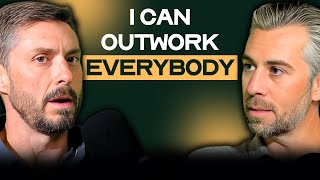
Seth Conger talks about moving past the hustle mentality that shaped his early sales career. He shares how a youth soccer fundraiser taught him to work smarter, not harder, and how his accountability group, Sauna Squad, helped him build personal worth beyond external validation.
Chapters
And it wasn't until the very tail end of college, I had this constraint on me via hours. I can't work as many hours as the other guys. And it was a sales job selling season tickets and group passes. I ended up going to a youth soccer league and was like, "Hey, do you guys wanna make some money and do a fundraiser?" And they're like, "Sure, how?" I was like, "Well, you sell tickets for $10 apiece and I'll only charge you $6 and you can earn the $4." And then I went to 30 other youth soccer programs and did that and they just sold all the tickets for me. When I went to my boss, 'cause they were like, "How did you do this? You literally sold out the first 8 games of the season, like single-handedly. You have sold more tickets than the other 6 sales guys combined." And they all just stopped working. And then we split commissions across the board. My boss at the time was just like, "Yeah, this is unfair to the other guys if you're making all this money and they're not, and they're working harder than you are." I was like, "Oh, interesting." And so I quit.
Welcome to another episode of the Money Stories podcast. Today, I could not be more excited about our guest, my dear friend, one of my, one of my favorite humans on the planet, Seth Conger. Seth is the CEO of 3 companies in the functional health space. He is world-class at helping 7-figure companies move to 8 figures through scaling their operations. But that's not what I love about Seth. He's a member of my sauna squad. He's been a, incredible force for good and positive influence in my life. And I'm really excited about this conversation. Welcome, Seth.
Thanks, Mike Brown. I've got to say the same, same for you. On all of those notes, it's really fun to be here.
I mean, I think one of the coolest things about having a podcast is I just get to have my friends on and jam about the things that I know they're great at. So I'm really excited for you to be able to share that expertise and a bit about your story with us today. And in thinking about where I wanted to start, you've got a really amazing story arc that I want to, I want to pull on a little bit. So take me back to your first job and we'll go from there.
Yeah, my first, my first money story, so to speak. So when I was 14, I was hired at a golf course to be the range ball picker-upper guy. And, you know, 15 years old, that was my official title at the time. Yeah. And 3 days, you know, you show up at 5:30 in the morning, you've got to clean up the range, drive this, this golf cart around. It's super bumpy out there. You're like jostling around. I mean, it's, it's awful. My, my chiropractic bills, like, all go back to those days. But day 3, I'm driving around at like 6 AM, and the golf pro comes driving out onto the range, he said, hey, stop the cart, get in my cart and let's go. His name was Fran, and he was— Fran was always smoking a cigarette, like inside, outside, it didn't matter. And we're driving up. He goes, listen, the cart boys haven't shown up and it's Saturday morning. So we have cars pulling in. You're going to take over today. And so we pull up to the first car that was in the lot and their trunk was open and he grabs a golf bag and he puts it on the back of a golf cart. Straps it in, shows me how to do that. I grab one, strap it in, and he goes, "Sprint up." There's 4 guys. "Sprint up and grab another golf cart." So I do. I run as fast as I can. I get a golf cart and drive it down, slam on the brakes. There's dust everywhere. We put the golf bags on, and this guy, the customer, turns and hands Fran a $5 bill. Fran turns around and hands that to me, and he says, "See what happens when you hustle?" And I was blown away. I was like, oh my God, $5. Like I was making, I think I was making $4.50 an hour. So an extra $5 was double my current hourly rate. And as we're driving back, he goes, you're going to do this for the morning session. And I want you to work as hard as you possibly can. And then he casually turned away and he looks back and he goes, if I don't see you sprinting, I'm going to assume you're not working. Now fast forward to 11 a.m. I had made $225 in cash, my cargo shorts of my 14-year-old, like little— like I have cash literally falling out. Like I'm like Pigpen with a dust fall behind me, but it's like cash and dollar bills. And I go in and we count this together and Frank goes, dude, the record is $150 for a 12-hour shift. And in 5 hours you just made $225. So he immediately fired the cart boy that didn't show up for work that day. And I had a new job. And I didn't realize it until years and years and years later. But that, that slight comment. And it's so funny because if I had asked Fran, like, what did you mean by that comment? Did you mean to, like, incite something in my head that would drive me for the rest of my, you know, first part of my career? But I assumed that if I wasn't sprinting, even behind closed doors, that everybody would assume that I just wasn't working. And it all came from that moment until I unpacked that years and years later. So it's kind of funny how these stories can drive you subconsciously for your entire life.
Yeah, I think we tend to imagine that it's always gonna be this big cataclysmic event that shapes us and drives us, but something as benign as an offhanded comment by our first boss can actually really shape us for years to come. And so, you know, it doesn't have to be a giant traumatic thing that actually shapes our mindset. So how did that comment shape your mindset? How did you start to unpack that?
Yeah, I mean, I think it started immediately where I believed if I outworked everybody and worked harder than everyone, that that's how I would get success. And that was proven over and over again. I mean, I was making cash hand over fist at a very, very young age and also learned how to spend that cash hand over fist at a very young age. Young age because I realized if I just work harder, more money will come, right? And, you know, by age 16, I was managing the entire outside. I had a title of outside operations manager at age 16. By age 18, I was managing the entire pro shop and the outside. We were the number 3 golf course in the state of Maine. We were ranked top 15 in New England. So at age 18, I had like, I don't know, 35 people underneath me and was— I would work a half a day shift outside and then another half a day shift inside and pull these like 18-hour days, 4 of them in a row, and just had this mentality that I can always outwork everybody else and that is where my value will come from.
Right.
And that was proven to me over and over and over again. And all of a sudden, you know, I think every, every job I had early on in my career, the harder I worked, there was a direct allocation to the amount of money that I pulled in. And it wasn't until during college, like the very tail end of college, I got a job with a professional sports group. And I had a constraint all of a sudden, which was I was a full-time college student. I was the president of my fraternity. I was, you know, trying my best to do well in school. And now all of a sudden I have a full-time job that's an hour away that is in person. So I have this constraint on me where I can't work as many hours as the other guys. And it was a sales job selling season tickets and group passes. For the minor league soccer teams in Rochester, New York.
Very big deal.
Huge deal. Right. And we were, we were really focused on actually for that season, we were focused on the Rochester Rhinos, which was the minor league soccer team because they were opening a new stadium and all of a sudden they were going from playing on the Rochester, the Red Wings baseball field to actually having their own soccer stadium. It was a really big deal. And we had to sell like, you know, we had to sell a bunch of tickets. And I realized that I just didn't—
I, I had this constraint on me via hours, not enough hours in the day.
So I couldn't do this anymore. Like, I couldn't do this thing that made me successful up to that point, which was just outwork everybody. So I had to change to working smarter. So I ended up— I think that was a big moment and shift for me where I ended up going to a youth program, a youth soccer league, and was like, hey, I was like, do you guys, do you guys wanna make some money and do a fundraiser? And they're like, sure, how? I was like, well, you sell tickets for $10 a piece and I'll only charge you $6 and you can earn the $4 in that. And why don't you do that? And then I went to 30 other youth soccer programs and did that and they just sold all the tickets for me. And I went to college and did my thing and they helped like sell out the entire season. Of that. The interesting lesson that was learned there was I was so excited that I had switched this, like, switched this game, right? It was no longer about working harder, it was about working smarter. When I went to my boss and basically, because they were like, how did you do this? You literally sold out the first 8 games of the season, like, single-handedly. You have, you have sold more tickets than the other 6 sales guys combined. Who were literally opening, you know, Yellow Pages and they each had a section from A to G and, you know, from, from G to S. And, and I was like, yeah, I did it. And he's like, great. And they all just stopped working and let me do all the work. And then we split commissions across the board. And my boss at the time promised me that we were going to switch that. Right. But it never happened. And he didn't have, you know, who knows what was going through his mind at that time, but he was just like, "Yeah, this is unfair to the other guys if you're making all this money and they're not, and they're working harder than you are." I was like, "Oh, interesting." And so I quit that job. And I think that was a huge shift for me of understanding that hard work doesn't actually have this direct allocation to making more dollars at a certain point, right? In a certain industry, in a different type of job, it's not just about number of hours. It's not just about hard work. And sometimes that's also not going to be fair.
Yeah, I think that's the, the real lesson here that I'm hearing is that you built a system to set you up for success and knocked it out of the park. And yet you weren't rewarded in the way that you should have been for, for creating that system. And that's a theme that permeates, right, is that we, we really as a society, we really want hard work to be the thing. And so we want to reward people for hard work. And it's actually not how wealth is created, right? I mean, What wealth is created with leverage, period. And this is a perfect example of you created a system where you can leverage your time, and yet it was sort of rejected by the, by the establishment that was, that was paying your paycheck.
Well, I learned, I think, a very interesting lesson that I learned at that point. I didn't realize it then, but it's kind of carried through this, this next chapter of my career is if you're trying to align incentive incentives, they actually have to be aligned for everybody. Right, for it to work out for everyone, incentives have to be aligned across the board. They can't just be aligned with you and one other group, right? And in this case, the incentives were clearly aligned for me. They were aligned for the youth soccer programs. And, you know, the soccer team got their seats sold, but all of the other salespeople and the sales boss who had to answer to all these other people and answer Wait a second, I never thought about the fact that the dollar per ticket average is significantly lower because of what he's doing versus like what the dollar per ticket average should be, right? So all of a sudden the incentives weren't in line for him. They weren't aligned for the other people I was working with. And because of that, they tried to sabotage my plan. And I've learned that if you're, if you're going to build a system and I'm sure we'll get to get to this and when we're talking about what I currently do today and how I think about developing, developing companies and growing organizations. I believe that if you can create a, you know, multi-aligned system where everybody wins, that it can actually create a significant leverage above and beyond anything you could do if you're just at it yourself.
Yeah, we definitely will get there. But, you know, we— the universe will keep giving us lessons until we learn the lesson. So it would be wonderful to say this was the end of your, of your relationship with hard work.
Yeah, figured it out.
You figured it out at 22 selling soccer tickets. Yeah, but I happen to know that's not necessarily the case. So, so how does this hard work thread start to show up later and, and how did you really start to break that pattern? Yeah.
So I had after the Rochester Rhinos, I had this extremely cool opportunity where I got into the event marketing space and what my first job after that, which was really because I was working for the Rhinos during college. So my first job after college was ESPN Monday Night Football. I was hired by a marketing agency to support ESPN and to go around and literally just set up this extravagant display outside of the stadium and basically throw a party for all of the attendees prior to when the gates opened. After the gates opened, we would shut down the display. We would go in. I would sit in the press box and like eat chocolate strawberries with Stuart Scott and Tony Kornheiser. This is like back in, you know, 2006 and watched the game from there. And so I went from this, you know, working, working smarter, like, you know, working my ass off, basically full-time, full-time student, president of fraternity, 40-hour, you know, 40-hour workweek job or equivalent to all of a sudden working 2 days a week and being on the road and literally being flown from city to city to just like party and making far more money than I ever had before. And it was really interesting. I did this not specifically with ESPN, but with multiple different companies for almost a decade. And through that time I started a number of companies, had an entrepreneur journey, got this itch of, you know, starting, starting product companies and all of these different things. And I realized at one point, I guess I, I guess I didn't realize till later, but I was very attractive to people who had ideas because I had a great track record of being an amazing operator and taking action. And the moment I had enough clarity to take action, I would take action and get shit done. And I was just kind of the guy who did that, right? And at this, you know, at the time when I started my first or partnered in my first entrepreneurial venture, I was managing 40 people on a tour that had a $20 million budget. And we were hiring like 90 temporary staff a weekend. And so my, my iteration on managing people, managing really, really complex multistate tours at once. And all of the logistics that went around with it was like world-class at that point. And so coming into a small entrepreneurial venture, a startup was just like, okay, like, this is easy. I know exactly the next steps that we need to take and I can do this with my eyes closed. And what I realized was that was super attractive to visionaries. So visionaries who have ideas and maybe the start of a product or a service. And I was a sucker for let's do good in this world. And so, you know, we don't have to jump into all those stories, but I had a, I had a number of failed attempts that are all very funny looking back and all have an amazing story like me walking out on the Indy 500 Grand Prix when I found out that we had a product that had not been released on shelves yet. Yet we had spent all of our seed investment on stickers that went on the back of the fins on cars that go 200 miles an hour where you can't see that sticker. All sorts of fun, fun stuff. But I realized that I could kind of see the next steps on an operational side. Where a lot of people had vision for where a company could go and where a product could go and how many people it could reach and how to sell that. I had vision of what are the steps that need to be taken to actually meet those needs, right? What are the milestones that we have to hit to actually keep up with the vision that the CEO or founder has? And This all led through a number of different entrepreneurial efforts, jobs, working with my father-in-law at a medical clinic that we had a phenomenal ride with, kind of lassoing in the ideas there while also keeping the pace of what the true dream was, bringing that company to exit, having my own startup where I, you know, I had my hand at being the visionary founder, but also kind of at the same time having to be having to be the operator and eventually running into where I am today, which is this trio of companies. It was one company at the time, Freedom Practice Coaching, and we've now built an ecosystem out of that that I'm sure we'll, we'll go through. But realizing at your Unbreakable Wealth retreat that I have been understanding my value based on other people's reactions, right? Up until that point at the retreat, I was garnering all of it from how I thought other people were thinking about me rather than do I actually know my own value. And it was a really interesting thing to understand, right? Because that served me for a very long time. And if we look back to the original story that we talked about of, you know, age 14, getting this $5 bill, looking up and seeing my boss, my new boss look at me with admiration and be like, you did a good job, right? And then dozens of these, you've done a great job stories. I mean, one of my clients when I was in event marketing was US Army. And I had 4-star generals coming up to me and saying, you're doing an incredible thing. You guys are recruiting more people for the US Army than any of my recruiters. Like, you're doing an amazing job, right? And so my value became tied to what other people thought of me. And that gets really scary when you put a dollar amount on that. Yeah. Because that is what they're willing to pay for your work is all of a sudden now tied to that intrinsic, like, emotional value piece as well. And that was the trap that I got caught in. Yeah.
So let's unpack that a little bit more. What is that trap and how did it manifest?
Yeah. So I think that that trap was I became stuck in these relationships where I And, you know, this is, this is a more recent realization and story thanks to another retreat of yours that we just had, you know, literally a month ago. But I was in a relationship with every person I was working with in this protégé mentorship style of a relationship. And what I didn't realize it at the time, right? And so when you're the protégé, you A, wanna do good for your mentor, right? B, you wanna learn from them, but C, you also don't wanna outshine that person, right? And so I had this series of, if I ever asked for more money and was told no, I couldn't go back to that, right? Because you can't go to your mentor and say, well, yeah, but I know you don't feel like I'm worth this. And I know that I apply my value intrinsically based on what you're telling me it is. So you're basically saying this is what you're valued at, and I'm just gonna have to take that. And my choices are, am I good with that or do I need to leave, right? And so I had a series of situations where I would get to the point and, you know, the Rochester Riots is one of them where they said, oh no, we're going to split this commission across the board. And I was like, well, I have no choice then but leaving because my mentor is telling me that this is the cap of my value. And it wasn't until very recently— I mean, it was, you know, a few years ago at the Unbreakable Wealth Retreat where I realized, wait a second, I actually understand my own value and I don't need somebody else to tell me what that is. And I don't need to stay with, you know, whoever my current mentor is, that they set the price of what my value is. I can have a different allocation of that based on my own needs and wants and my own understanding of my value. And if that's not met in a monetary way, cool, we can have a conversation about that, right? But it doesn't have to end in this situation of, well, You know, I mean, they're going to have to take my value from what they say or run away. Yeah.
And this is, this is such an interesting arc because I think it really is so common and fundamental to entrepreneurs and high performers is how do we calibrate our value? How do we determine our value? And whether it's from a boss or from, you know, the marketplace, whatever it is, most of us, at least when we're young, look externally. Yeah, right. We take in the data and we find our value in external validation, whether that be achievements, whether that be how much money we're making, you know, whether that be accolades, like whatever that looks like, right? We tend to look outwardly. And once we can start to make that shift of, oh, wait a minute, I actually know, you know, and we can start by, and this is kind of where you started is, hey, objectively, I've brought this organization from here, you know, from X to Y to Z, right? And I deserve to be compensated with aligned incentives, right? Going back to the original thing. But even so, yeah, there's compensation that's really important. But cultivating and building that sense of worth and that sense of value internally is something even bigger. So, so how has that, how has that shift impacted you and how you show up?
Yeah, you know, I have always been thirsty for knowledge and education. When I had that, that cool event marketing job, I, you know, I think I read 180 books in 8 years and just crushed, you know, crushed through things from many different, many different topics and different industries. And I had gotten into personal development a little bit, but it was, it was not really deeply looking inward, right? It wasn't, it wasn't until I started asking the questions of how did I get here and what's really inside and who am I at the core that I actually started to understand and unfold those pieces. And so I've done a tremendous amount of work over the past, you know, really 4 or 5 years asking those very tough questions. Obviously, we've cultivated a, you know, a great area where we can do that. Sana Squad allows us to really take a a nice objective approach with others who we can be extremely vulnerable with, right? And so it speeds that, speeds that up because you're not just inwardly thinking about this, but you actually can take action from it. So I think for me, doing the work, and it's, and it's no one specific thing, right? But, but doing the work and watching the unfoldment over time of seeing, okay, I've had this realization or this new insight. How do I take action on that without thinking this is it, right? This is the big thing. This is the big breakthrough. Oh my God, I finally figured it out. But knowing this is just part of the path, an ongoing, forever-present journey that is going to help me get more aligned to who my true self is and understand that at my true self there is a true core value there. And so I've had some great external validation continued, right? Because that is helpful. And I think, you know, in the entrepreneurial journey, we talk a lot about product-market fit. It's really hard to find your pricing structure for your product or service if you don't have external validation from the market. Of what people are willing to pay for that. And, you know, all day, every day, you can think that your service is worth $1 million, but if no one's going to buy it, then, you know, the market is just not going to— not going to handle that. I think the interesting thing for that, for yourself, is there's not a product-market fit for you, right? Necessarily, unless you are the service, unless you are the goods. But you can figure that out through the inner work and you can figure that out through a combination of that and the external validation. And for me, the big shift was the inner work and my own sense of value was now a piece of this equation, not just the external validation.
I think that's, that's really well said because it's not on-off switch. It's not a binary decision to go from external validation to finding value internally, right? It's actually somewhere along the spectrum, and external data is actually really useful to calibrate. We still want to calibrate off the real world, yeah, right? You can't just go, I'm worth $1 million, and then magically charge $1 million. That's not how things work. You do have to validate the ideas in the marketplace, but it's no longer the primary or only consideration or factor. Yeah, right. You can, you can actually start to go, okay, wait a minute, does this line up with my view of what I know I'm bringing to the table? And then if not, you can start making decisions, right? But you can at least articulate that value and start to have those conversations. What I would love to dive into, I would like to double-click on Sauna Squad because in my view, we've stumbled on something kind of unique. We set out with an intention. We did. But has really been one of the most important factors in my growth, in your growth, and our third member, Carm. So let's go back to the beginning of Sauna Squad, how it's evolved, and kind of, kind of deep dive this thing, because I think it's really unique what we've created. And I think there's a model here for other people to be able to do the same thing.
Yeah. Well, it started with you getting a sauna. So step one, step one, buy a sauna. You know, I think, I think there's an interesting— we laugh about that, but there's an interesting piece for there because we were never the guys who went out to the bar with each other to catch a game, right? We weren't going out and getting drinks outside and like meeting up on a Tuesday night and doing that. We were, we were gathering together in a home with our spouses and lots of other people and having great conversation. And it was deep, but it wasn't this, we're going to meet up every week with the intention of actually bettering ourselves within this group. Right. And so that first intention was really important. And we had something other than let's go to a bar to do that. And it was early morning, we actually started with exercise. We don't do that anymore because we're all exercising the other 6 days of the week. But, you know, we, we had this, this thing that was really exciting, like let's sauna and cold plunge together. And there was an element of heart with that, right? And then there's also the cadence of we have to rotate out of the sauna and into the cold plunge that keeps this succinct. So it's not just this, like, this overarching drawl of we're just going to bullshit for the next 90 minutes to 120 minutes. There's some structure around it. That structure is changing, shift over time. But I think if I look back, like set and setting, right, there is an importance to creating this around something. And I think there's a lot of successful, like athletic groups. There's a lot of successful, like morning meetups and walks. It's important to be able to, like, breathe than talk and go deep. So you don't want to, you know, groups that meet up and work out in the morning and then maybe like go get coffee afterwards. I don't think that meets the needs of what we were trying to create. Yeah, we were giving ourselves an opportunity of long-form conversation with people that we believed were out on the path and at the same level of us. And over time, you know, I think we had an inkling because of friendship in the beginning. Now we have this level of deep trust, deep trust, deep respect, and an ability to take action from the things that we learn in Sana Squad that is unlike any other group I've ever participated with in my entire life. And I think it's the combination of those pieces, the people, the setting, the intention that goes into it, the time domain, the fact that we show up every week for years is what's turned it into what it is today.
Yeah. I mean, I think you've hit on some really important points. Number one is go find a couple of folks that are on the path, that are peers that you would seek their counsel and implement it because they're doing the work. Number 2, gather around some sort of activity. So it could be a, you know, Tuesday morning founders hike or, or whatever it is, but, but create the container for conversation. But then the other piece that I think has been so critical is vulnerability and accountability. Yeah, right. There is a— when we set standards around this, He said, hey, like, you've got to show up and share the parts of yourself that are uncomfortable or that you may not necessarily want to look at. Yeah. And we're going to hold that with honor and respect, but we're going to push and really go into the places that are uncomfortable. But then as a result, we're going to create some actions on the backside and then hold you accountable. Yep. And accountability doesn't look like shame. What it looks like is, hey, you said you were gonna do this thing, you haven't done it yet. Let's dive in. Why is that? Let's find out why. Let's find out why, right? It's not this false external motivation of, you know, I'm gonna get fit, I'm gonna do, you know, whatever regimen. And then, you know, you said beating each other up in some militaristic kind of way. It's like, hey, wait a minute, you didn't honor your word there. Why is that? Yeah. Yeah.
And I think there's, you know, once you figure out that the people around you are going to take action and some people don't, right? It's clear that some people say things and never end up taking action on those. It's probably who— not who you want in your sauna squad. But if you know that somebody's an action taker and you see them not doing that, there's usually something deeper in there that we have to poke on. And that has happened, right? There have been conversations that extend out to 1 or 2 months until we actually find what the core is. And it is usually something from the past or it's usually something that hasn't been said yet. And I think the safety of that space allows for us to— we've, you know, we've closed that loop to a pretty short amount of time because we know it's a judgment-free zone. We know the others are going to take action. And we also know, and, and this has come out over time, this was not the intention, but we love each other more and more the more open and vulnerable we are with each other. Like, the more we continue to share, the closer we become, and the faster the spiral happens. And we didn't know that going in. And that's a really hard thing to set out to attain, I think, especially if, if you're just doing this with random people.
Right.
And yeah, it's important though.
Well, I mean, we again unknowingly created this sort of men's group, this space that— and I think that, you know, I don't love to be gender normative, but I don't think most men have a place where they can go and share openly about what's going on for them, right? I think that most men are stuck in a paradigm where the safe things you're allowed to talk about are football and golf and, you know, maybe work a little bit. But, you know, we really created something different where we're sharing about what's going on with us at a deep level. And that trust does start to compound over time. And the other piece is then the weekly consistency.
Yeah.
Is the acceleration that's occurred for meeting up weekly. And if I say I'm going to take an action knowing that I'm going to have to face you two guys on Thursday morning and either say, hey, I took the action, I accomplished this, or I didn't, and you're going to go, well, tell me about that. Yeah, right. Like there's going to be some built-in accountability. The compounding and the acceleration that occurs by having that shared safe space, that activity that we can all gather around. And then that compound consistency has really yielded something for all of us. And the growth that's occurred personally, professionally, like across the board has really been staggering.
Oh, it's undeniable for all three of us.
Yeah.
Yeah. You know, I think it's really funny, there was, there's a member of Unbreakable Wealth who was really, really curious about this and like asking, like, how do I, how do I start my own thing? I'm in a new place. I don't know many people. And my advice was, you know, do it around something that's mildly challenging, like sauna and cold plunge, right? Make sure alcohol is removed, right? That is an absolute non-negotiable that can't be involved in this. So you can't just meet up after work with people. And have a few drinks, right? There can't be any situation where that's, that's even distracting or numbing. Exactly. And the other, if you want to figure this out, like, send out a Shackleton-like ad, right? I mean, this is, you know, I'm looking for, for men who are willing to share deep parts of themselves and take aggressive action together. And there's a, there's a low chance of success and But for those who succeed, like the outcome and the return is absolutely insane. And we fell into that. And, but I think it was, you know, looking back, we can joke and say that we fell into it, but there was deep intention behind this from the beginning, from the three of us. I just don't think we had the words for it at that point, which we clearly do now.
Yeah, 100%. You know, and it's been a journey over, the last decade, but really 5 years of curating not only the kind of people that I want in my life, but the kind of relationships. And, you know, the older, wiser, and more intentional I become about lifestyle design. Number 1, I want less friends, not more. And I want to go deeper. And I want friends that, number 1, cheer me on, truly, that are truly happy for my success. Yeah. No matter what they're going through, no matter, no matter if it benefits them or not. But then number 2 is I want people that I know I can hold to a standard for what I expect from a friendship, and they're going to hold me to a standard. Yeah, right. And, and that is something that I think a lot of people lack, that a lot of people are secretly craving whether they know it or not, is actually want to be held accountable, being able to say, hey, you blew me off on this thing, that's actually hurtful. And that's actually not a standard I'm willing to tolerate in a friendship. You know, it's not easy to say, it's certainly not easy the first time. But once you get comfortable flexing that muscle, yeah, the depth and the relational wealth that you actually create in that situation is staggering. It's life-changing.
Yeah, I think it's, I think it's really what most people want and they're scared to, scared to approach or scared to say, right? But, you know, where you live and who you spend most of your time with is of critical importance. My ability to grow to the level of where I have would not have happened in a different circle. It wouldn't. It would have done something, right? I would have been somewhere and it would have been probably great and I would have been you know, fairly happy, if not very happy in that, in that space.
Right.
But it wouldn't have achieved this, this level of, I think, expertise across multiple, multiple domains without the intentionality that we had set around who we were going to be spending the most of our time with and how we're going to be treating that relationship.
Well, we've touched on relational wealth.
Yeah.
Here, but we've kind of heard this journey from, you know, work hard and you'll be successful. If you're not sprinting, you're not working. Yeah. And how you've shifted that over time. How do you think about wealth now and what does that mean to you?
Yeah. So to me, true wealth means freedom of choice. And I've really been thinking about this recently of when have I felt the most wealthy in my entire life? And it's with this balance between I have the freedom of choice in this situation or in this period of my life, and I also have awareness or maybe even expertise, right? So when I think about choice, I also have to think about my awareness. And then there's self-awareness, there's relational awareness, right? There's business awareness, right? And then on the other side of awareness is expertise. If you don't have the awareness and the expertise, more choice is just more noise. But if you have the awareness and the expertise, having the abundance of choice to me really truly feels like wealth. Now money can extend your menu, right? You have more choices when you have more money, but that doesn't— that's not a great thing if you have a lack of awareness. So I watch a lot of people who have a lot of money and a lot of choices and no self-awareness become not happy and drive themselves completely in the wrong direction because they're lacking that piece. And so for me, money is a way to gain more awareness and more expertise, right? I'm reinvesting that money in myself or in the things that I have said. You know what, I am aware that this is where I want to live. This is the type of house that I want to have. This is the type of life that I, that I want to live. And I want to invest into that because I'm aware in that area. And to me, really, that's what it comes down to. Wealth is about the ability to have choice.
Well, and that's a very interesting segue into what you actually do professionally.
Yeah.
Because so many of us start businesses to create freedom for ourselves. I mean, ultimately, right? Like, I think entrepreneurs are the ultimate rebels is we know that, you know, most of us are unemployable. We don't fit in the system. So we start businesses out of necessity because we need we crave that freedom.
Right.
And then the very mechanism becomes our trap.
Yeah.
How do you help people get out of that? And how do you think about, you know, scaling freedom rather than just scaling companies?
Yeah, so when we work with companies, I look at it on a multidimensional wealth scale, right? Because it's not just money. And a lot of people started out to have more money and have more profit and have a better life. But very quickly, if you're not careful of those levers, you pull the lever of I want more money at the risk of time going down. Right. And if you're not careful with those, those important different levers, you lose track of all of it. And so with most of our clients, we think about money, we think about time, we think about impact, and we think about relationships.
Right.
And those are the levers that we're trying to pull. At very balanced ways. The only way to do that is through awareness and expertise, right? And unfortunately, most founders are starting out in a very visionary role. They land on something that people want, whether it's a service or a product, and they're able to quickly make some money with that and they get product-market fit very quickly. They move through that startup phase, which is very chaotic and very just kind of like all over the place because you're still trying to figure things out and you move into this growth phase of the business. And what I see in most cases is those founders just continue to act and behave the same way they did when they were in a startup. And that's actually my sweet spot, right? That is the area of you have product market fit. You've been able to prove that people want to buy your thing. And now you have to figure out how to act differently, how to act like an actual leader, how to act like an actual CEO. And that's, that's very different than that founder visionary mentality. Now we're talking about things, and I mentioned earlier about this expertise or awareness. Business awareness is understanding your numbers, right? And understanding like, how do I read a P&L? How do I understand the most important KPIs or key performance indicators in my business? How do I know which levers I need to pull? And what the associated action is going to be when I do pull those? How do I create a plan going forward and actually have the discipline to follow that plan unless something from left field comes out that I didn't, I didn't expect? And I think with that, again, that, that awareness is so critical because visionary founders are masters of choice. But without awareness, they end up just chasing shiny objects instead of really diving in and focusing on how do I get better about this business? And then how do I start separating my identity from it and letting this business support the life that I want to create rather than me being attached to this and it being one and same going forward? Right.
So, so what are the biggest pitfalls or blind spots that you see founders moving from startup to scale up.
Yeah.
What keeps them stuck for the most part?
I think so much of it is actually around people, right? So founders are used to doing it all themselves. Then they get people around them that they can delegate to.
Right.
And that's a natural first step. I can't do this all by myself. I've run out of hours. I need to delegate to people. I'm going to get an executive assistant. I'm going to start getting these independent contributors and I'm going to delegate to them and they will do the work. You get to this certain stage where you cannot just hire generalists anymore. And this is where I see the biggest mistake is made, is that shift from I can hire generalists at a fairly cheap rate, I can tell them what to do and they will go do the thing. When you're in a growth stage or even moving towards scaling in your business, you have to hire specialists who have expertise and experience in doing the role that you want. Them to do, and they better be better than you are at that role. And that's a very scary thing because usually those people cost more, right? You know that they have optionality, so if you don't get your shit together, they will up and leave. And so now all of a sudden you have people not just to support with a paycheck but also with all of these other sides of the business, and you better start stacking other positions in, or those specialists get mad that Joe over there is not carrying his weight. And why not, right? So it's no longer people are scared of you as the boss. It's, oh, now I have people who are smarter than me working for me and they are demanding quite a bit. So I would say that's the biggest piece between that, the shift between hiring generalists to hire— hiring specialists and then managing those people. And then the other is understanding your data and your metrics. And we go from running a business based on revenue. And I hope that there's profit, you know, at the end of the day, totally, to all of a sudden saying, wait a second, I have to look at both P&L and cash flow and they may not actually match up because of the way my business functions. And I have to think about keeping enough cash in the bank while also growing this on a, on a revenue and profit side and like the difference between that, your KPIs, even thinking about structuring projects, all of those pieces kind of come into this, but it's not natural for a founder who's just like, man, I just had a really good idea and people wanted to buy it. Now I have to run a company. I created this thing so I wouldn't have to do this. And that's a really hard shift for a lot of founders to make.
Well, what's coming to mind for me is one of my favorite quotes from Jim Rohn, which is, "Work harder on yourself than you do on your job." And, you know, the kind of trite, oft-repeated, rarely executed Twitter advice is just hire A-players. But if you hire A-players and you're not working on yourself to be an A-player leader, those people are never gonna perform or they're gonna leave. That's right. And I also think it's a bit of a misnomer, the fact that you can just hire A players. That's just, that's just not reality.
Yeah.
How do you, how do you think about managing teams?
Well, first of all, I think there's stages and spectrums of A players. So what's an A player for you when you're in a startup is going to be very different than when you're in a scaling business. I, you know, I remember this when I first came into Freedom Practice Coaching. I was, I was told Honestly, by, by the founder, we have an entire team of A-players. And I think we, I think we cut half of them in the first 3 months and, and, and then moved on from that. And now we have, you know, there were 16 people back then. We have 50 now. And the spectrum is they were the best people that he had ever worked with. So in his mind, they were A-players. I had a different perspective coming from working for Fortune 500 companies, Fortune 50 companies, right? And I had a very different perspective on what A-players were. I was the most expensive person by a long shot that they had ever hired, and I was hired at my absolute lowest, lowest amount of money that I would possibly take to take that job.
Right.
Which was really interesting. They were just like, I hope this guy can perform, right? Like, we're spending a lot of money on him. And I'm like, man, I'm not getting as much as I think I'm, I'm worth in this situation. So again, there's a spectrum of this, but a couple of years before that, they would never have been able to hire me and I wouldn't have looked at that business. I saw the potential of where we could grow this to and had an agreement around that that made me want to dig in and invest in that company and and help grow it to where it is today and much further from where we are from now. But I think with, with an A-player, it's not just about having the money, right? You also— your organization needs to match what you are saying it is going to do, right? So if your product or service is fantastic, you better also have a great hiring process, a great onboarding process, a good technology backbone that is going to support the people so that they're not wasting their time just dealing with, you know, a bunch of minutiae and things that can be taken care of by, by others or by tech. All of those pieces have to match up and you need to be at the right place at the right time in your business with the right trajectory. And you've got to have a plan for that that makes it worth it to invest in those A-players, whatever that means to you at whatever stage you, you are at.
Totally. And, and How do you think about the skill set required for being a great leader or managing people? Because I have one of my favorite sayings is everybody wants to be a visionary. Yeah, it sounds really great. And I, and you know, there are, I have my thoughts on some of these systems for operations that basically sell the dream. They infantilize the CEO. They say you just get to go be a nutty professor. You stay in your office with your whiteboard art. All day, and if you just hire an integrator, we'll take care of it, right? So, so how do you think about as a founder what's required to actually step into scale-up mode? Yeah.
So if we, if we get back to that leadership and management part, hiring a manager or hiring a leader for your business, if you have a small business or medium-sized business, that person has better done it before, right? You cannot afford as a small business at the pace that you're moving to train up somebody as a manager. And I see this as being one of the biggest mistakes ever. I have a really, really amazing person. They're showing a lot of potential. I'm going to put them in a manager role and see how they do. And sometimes it works. Most times it doesn't. The prerequisite for me to hire a manager is they've been a manager and they can show me that they have expertise in that. And I can speak with the people that they used to manage and they can confirm that because I just don't have time at the pace we're moving, at the pace you are moving, at the pace probably most of this audience who's listening to this is moving. You don't have a 20% of your budget for team development. And management development to work people up like Coca-Cola has or Nestlé or any, you know, huge business. They have these massive budgets to help people grow up in the organization. I was lucky to have that, right? I had that in a previous career. I wasn't— they didn't need to teach me how to manage when I, when I got in. Obviously you learn more with more expertise, but it's really— I think that's the big part of it, right? Yeah, you just can't. And it's really hard— that's a hard line to hold as a founder because you don't have that expertise, right? You started this company because you didn't want to work for somebody else. You had a great idea and a great product, and, and likely you may not be a wonderful manager yourself, and that's okay. Because, you know, just like hiring somebody for, you know, code development, or hiring somebody for being a coach or any other position that you're hiring for, you can hire somebody to be a manager and you can absolutely support them that appropriate way. But hiring A-players at that level, you shouldn't need to micromanage that person. You do if they don't have the expertise and they're just learning for the first time and they're figuring it out just like you are. But if you hire right, and this is why I put, I put so much time and attention on hiring, If you hire right and onboard correctly, you should be able to support that individual, not micromanage that individual going forward.
I love it. And I, you know, it's so critical, I think, to start making those distinctions and understand where to spend your time as a founder to create the most leverage.
Yeah.
Right. So that you're not scaling chaos.
Right.
Which is where, I mean, honestly, most people are stuck.
Yeah.
Right? Is trying to continue to grow without actually putting the foundational systems in place. And you've taught me so much about the systems that are required for scale. If people wanna learn more about that, follow your journey, and hopefully get a piece of that expertise, where can they find you?
Yeah, so I'm highly active on Instagram, as you know. With a, you know, hopefully it'll change after this podcast, but I think I have a whopping 117 followers.
Dozens of followers.
Dozens, dozens of followers. But you can— I'm committing, Sauna Squad commit to get more active on Instagram after this. So @sethconger is probably the best, the best place to find me. Direct message me on that. DM, is that the appropriate Instagram lingo?
That's what the kids call it.
I am the CEO of Freedom Practice Coaching, Viability, and Aptigenics. We have another another one in pilot right now waiting in the wings. So that's going to be really exciting, filling out our Aligned ecosystem. But, you know, I'm— I have a deep, deep passion for helping, helping entrepreneurs identify and not miss the inflection point in their business, because the hardest thing is when you miss that inflection point and your business is functioning like a growth stage or a scale stage business, but you forgot to do like 19 things that are just holding you back in reactive mode. And that's just really painful to see, right? And so I love jumping on calls and helping people identify where they're at with that and kind of charting a path forward. So I think that can be really, really helpful.
Yeah. And for everyone listening, Seth is really one of the best in the world at identifying the roadblocks to scale. And so, you know, if you're stuck, if you're in that space, reach out. He's incredibly generous with his time. If you're a functional medicine doctor that is looking to scale your practice, Freedom Practice Coaching is the best place on the planet for you to go and scale your business. And you get to learn from Seth directly.
That's right. We've done it with over 1,000 at this point. We've got that down to pretty, pretty good functional science.
And just to toot your own horn a little bit, you just launched your podcast for that space. Tell me about that. Yeah.
So the FreedomRx podcast is a combination of us being able to put out information and education that's normally behind the paywall out into the world so that people can learn from that. It is part me being a guest, but also as the primary host and showing off our incredible team. We have 8 incredible coaches. We have a, you know, leadership team of 10, 10 people who are just what I consider like the best in the world at what they do. And I want to share them with the, with the space and with the world. And then also we are highlighting some of our practitioners who have built a sustainable business so that they can share their talents and their abilities in the functional space with, with the rest of the community and with many more patients. And we want to highlight them as well. So we, we just, we actually just launched yesterday was, was the big launch day for us. And I'm really excited about that, that effort.
Yeah, very cool. You guys go, go give Seth a follow, check out what he's doing, listen to his podcast. And if you're, if you're curious about the roadblocks to your own scale and how to create that freedom for yourself, hit him up. It's world-class. Love to hear from you guys how you like this episode. Seth, I can guarantee will be a repeat guest here. There's plenty more for us to dive into, but Seth, thanks so much for being here. I really appreciate it.
Thanks, Mike. And, you know, both literally and figuratively, I wouldn't be here if it wasn't for you. Just our relationship has been so cool, how it's expanded over the years. Maybe someday on a part 2, we'll tell the, the origin story. But, you know, you've given me and my family so much over the years. I'm really, really proud to be a going on 3-year Unbreakable Wealth member because it's just been the most valuable program I've ever participated in. And so just a big debt of gratitude for, for you on the professional side and the personal side.
Seth, that's— it feels great to hear. Thanks for being here, man.
Thanks, Mike.










