Failure Is the Best Teacher - The Inner Circle Ep. 1
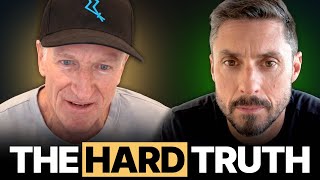
Mike Brown lost $1.5 million buying a failing e-commerce company and learned to value freedom over money. He and Kevin Dahlstrom discuss David Brooks's idea that people climb the wrong mountain first, then pivot to purpose-driven work, and how to teach kids resilience without creating unnecessary hardship.
Chapters
Welcome to The Inner Circle with Kevin Dahlstrom, and I'm Mike Brown. The idea behind this show is that Kevin and I have a lot of deep discussions that we shape each other's thinking. The whole concept is that iron sharpens iron. And so many men especially don't have a place to go for deep, emotionally vulnerable, and high-level philosophical discussions. So, Our idea was we would just start to share some of these inner circle discussions with you guys on Twitter and on the podcast and sort of just dive into topics that we think are interesting and go from there.
Kevin, you up for it? Yeah, I'm excited about this. Mike, you and I have become very close friends over the past year or so. I consider you part of my inner circle. We have these conversations anyway. They always go deep, and they always benefit me hugely. So, we thought, why not just take a topic and share it with the world? We'll keep these pretty short and see where it goes. I'm excited to test this out. And I've got an idea for our first topic.
Send it.
A while back, you posted an X post that I think about a lot. And I'm just going to read the first couple of lines for you as a prompt, but your Your post said, "I wish upon everyone a failure that brings you to your knees. Sounds harsh, but I mean it from a place of love." So, tell me a little bit about what you mean by that. You wish upon everyone a failure that brings you to your knees.
Yeah. I mean, this is really born of my own experience and I think, especially with social media, We have sort of shaped our culture to only show the shiny veneer, only show the success, the Instagram-perfect life, the house and the cars. And in many ways, I have all of those things, but the single most important lesson that I have learned in my adult life didn't come from any of my wins. It came from my most dramatic failure. So, I love to say from stage, the day I sold my company, I thought I would never be unhappy again. And 2 years later, I was so full of anxiety, so stressed out that there was days I didn't even want to get out of bed in the morning. And it's because I had bought a failing company, hopes of turning it around, and I was losing $100,000 a month. It was an unmitigated disaster. I was hemorrhaging money, watching my bank account dwindle quickly towards zero. And it was in this dramatic failure, finally in my life, I had gotten myself into a situation that I couldn't pull a rabbit out of a hat. Like this was a a total and complete disaster. And I sold that company 3 years ago and I lost about $1.5 million inside of 18 months. The beauty, the wisdom that I gained on the backside of that was so much more valuable, I think, than all of the wisdom combined that I gained from my wins. So that's what I say. So many of us, especially in entrepreneurship, high performers, We're so used to winning that the psychological cost of failure increases with every win that we have. So I'll stop there. I want to hear how you respond to that.
[Speaker:MARK_WILLIS] Yeah, I think that— I mean, a lot of people who have been through a soul-crushing hardship would agree with you because I mean, that tracks for me. In my case, it wasn't so much of like a huge financial loss, but rather, I built a life that on paper looked great but inside made me feel miserable. And so, I rebooted. And I guess one question that that begs because I get this question a lot from younger guys is, do you have to go through the hardship or is there a way to get the same insights without going through the hardship or at least can you mitigate it a little bit? So, how would you answer that question?
Yeah. I mean, unfortunately, pain is a great teacher. And on the flip side, a question that I get a lot is, "Okay, Mike, you say that when you stand on the top of the mountain, the view is empty, but do I have to learn that for myself?" And I think in some ways, you do have to, right? Like me, as someone who's found financial success, telling other people like, "This isn't going to light you up," they're like, "I don't know, man. It seems pretty great." And so, I think in some ways, yeah, like there's no way to shortcut the pain in life. Right? Like pain is a universal human experience. But suffering is optional.
You introduced me to the concept of the second mountain, which I guess you adapted from someone else who told you the concept. David Brooks.
Yeah.
By David Brooks. And just so people know, the idea is like we work our whole lives to climb this mountain that we think represents success. You get to the top only to realize that you climbed the wrong mountain. And you look across the horizon and there's the second mountain, the one that you actually need to the climb. And I think the question remains, like, do you have to go all the way to the top and kind of have a dramatic event happen to get that epiphany? Or, I mean, I guess I do believe a little bit that if you're super deliberate, you can maybe lessen the pain a little bit. So, you still have to experience the feeling, but maybe it doesn't have to be a dramatic, soul-crushing failure.
Yeah. I mean, I think, look, that's I think why you and I both chose to create content, right? It's like hopefully we can lessen that impact for other people either in the midst when they're already going through it or maybe so they don't have to go through all of that pain. Right? But I mean, how strong does the wake-up call need to be? If you're as stubborn as maybe you and I are, then sometimes you need that big wake-up call.
I think that's a great point. In my case, I have to be hit upside the head. Before I realize things. I mean, I think back to— this came— comes to mind, like when I was dating in my 20s, I was the most clueless single man you've ever met where I literally wouldn't know that a woman was interested in me until she came up to me and like grabbed me by the shoulders and said, "I'm attracted to you." So, I don't pick up on subtlety maybe. And so, for you and I, maybe it has to be a dramatic reset. But also, a second question then is like understanding that you have to go through hardship, that's part of the process. I'm guessing, I think having— there's a mindset shift that I think can at least make that hardship more productive.
Yeah. So, you know, when I say I wish upon everyone a failure, here's what I gained out of my particular, you know, knee-crushing or soul-crushing moment. And that is, number one, I lost the arrogance of someone who had never lost. And what I mean is is like in my life, anything that I set out to do up until that point, I found a way to do. I didn't always get it right the first time, but I sort of always nailed the goal, stuck the landing. And this taught me so much. Number one, because I realized even if you put in all the right inputs, right? Like I was working my ass off. I was shoveling money into this company. I had a world-class team. I was an experienced entrepreneur. And through a combination of things, number one, the fundamentals of the business were not great. Number two, there was massive headwinds in the e-commerce space in general. Like there was a lot of things outside of my control that I couldn't fix. And we sort of had this idea that like I'm the captain of my own destiny and if I just put my mind to it, I can do anything. And I learned that like sometimes that's not the case. And what a valuable lesson to force me to give up this illusion of control, this illusion that if I just put my mind to it, I can make it right. It might sound sort of victimy, but it's actually totally freeing to realize that I can just stack reps, I can do all the right things, and sometimes it doesn't work out the way you think.
Yeah. It's humbling that happens. And, how do you get there? I mean, I often say the older I get, the less I know. When I was young, and in fact, I, in some ways, envy in a way, like my younger self who was so sure about everything, often wrong, never in doubt, because that has a lot of advantages. You don't question things and you're bold. Back to your point about like the more success you accumulate, the more risk-averse you become. But at the same time, I think that confidence can lead you way astray. And that's exactly what happened to me. I mean, I put my head down and ground my way to the top of the corporate world only to realize that was the wrong mountain. And rebooting was a very humbling experience. But it's the only way to find true contentment is tempering. I guess it's a tempering that happens.
Brock Fortner: Yeah. I mean, failure forces you to get really clear on what's important. For me, the big lesson was I thought I needed more money to be wealthy. It turns out I had plenty of money. What I really needed was the freedom that that money could buy. I was focusing on the wrong things. I was trading my time. I was trading my peace. I was trading my health trying to accumulate more. And instead, I should have been focusing on what actually matters and getting clear on those things. And they didn't cost more money.
How do you think about that when it comes to parenting? This is something I was actually just thinking about the other day is this idea that you have to watch your kids fail. And the only thing more painful than failing personally is watching your kids go through that struggle. But you have to, right?
It's, you know, yeah, I think, I think this is a, this is a great question because, um, number one, right? Like you can't avoid failure or pain in life. Like it, like at some point your card's going to get pulled.
Right.
And so, you know, teaching kids that, that resilience I think is really important, but at the same time, I think there are a lot of parents out there who generate or manufacture hardship for their kids to like teach them a lesson. And for me, like, life is painful enough. Like, they're gonna get their lessons regardless. And so I just try to find the balance between, like, I don't need to make my kids' life unnecessarily hard to teach them lessons. Like, life's coming anyway. Yeah, I just try to teach them how to, how to have resilience in order to, to bounce back. So, so we have a family motto, which is Browns can do hard things.
Yep. Yep. Yeah, I mean, we can't control what happens to us. We have some control, not complete control. Bad things will still happen to people who do all the right things. All we can control is how we react to it. An example that comes to mind, this popped into my head from 20+ years ago. During the original dot-com boom, I started a company with one of my best friends. We raised $12 million, rode the wave all the way to the top. And then the bubble burst, and we rode it all the way back down. What was really interesting as a case study is how the two of us reacted to the exact same situation. We were literally co-founders of the company, had the identical experience, and mostly, I'd say mostly this was, in my case, out of naivety. I literally referred to it as my MBA on steroids. I thought it was an incredible learning experience. It gave us the opportunity to do some amazing things. It blew up in our face. And I sort of moved on pretty immediately, whereas my partner, to him, it was just this deep sense of personal failure that stayed with him for— I mean, he didn't move on to his next kind of job career thing for a year. And it impacted him for years. So, it was the only difference was mindset. And I think it goes back to that idea of resilience that you talked about. It's like that's foundational to everything. You can't avoid heartache. You can become resilient to it.
Yeah. I mean, I think what you're really touching on is even below mindset is identity, right? If my identity is tied to my results, I am setting myself up for a really tough time. If my identity is tied to my effort, right? Now, I can let failures roll off without becoming a threat to my ego, like my threat to my very existence. If I've built my entire worldview of how I view myself on what I can achieve, then when that failure comes calling, it's going to be a really painful awakening.
Jon Acuff: Yeah. And the identity one is a tough one because the default state, especially for men, is that your identity is your career, career status, and money. And as much as you try to get away from that, I mean, that's something I think about quite a bit is like, well, we just became empty nesters. I'm going to get really raw. And we just became empty nesters. And my wife and I don't need a huge house anymore. There are some reasons maybe we keep it, but we don't need it. And we've thought about like, do we downsize to a condo and then like give ourselves the freedom to travel a little bit. And the thought has crossed my mind that like, what are people going to think? Like my house now, when people visit, they're impressed, right? And they see the things. And as much as you try, it's hard to let go of that identity that's tied to like very specifically financial success. Yeah.
I mean, for me, like when I hear somebody say like, I don't give a fuck what other people think, What I hear is I'm lying to myself, right? Like, we all give a fuck what other people think. The trick is what people, right? Like, I actually care a whole lot about what you think about me. Yeah, right. Because you are someone that I look up to, that I want to emulate, that I think thinks about the world in a very similar way. And so if you call me up and be like, hey, Mike, like, I think you're fucking this up, like, That's advice that I want to take. Right? But some random internet troll commenting on my Twitter post, like if they don't have a life that I want to emulate, then that's an opinion I'm going to immediately discard. So, who do I care about their opinion, I think is the real operative question.
Well, what's interesting is right after we met, I think I did kind of challenge you on some of the material stuff.
Totally.
You know, let's be clear. Mike Brown likes his toys. And in a way, that's part of what I love about you is like you like to live life to the fullest. But you made some changes. I doubt it was related directly to what I said, but there was something going on inside of you that my words clicked with you and you made some changes.
[Speaker:MARK_WATERS] Yeah, look, I pride myself on being open-minded and constantly updating my worldview when I'm presented with better information. For me, what I think you're directly referring to is I sold off some of my supercars. And the thing is, those supercars played a really important role in my life. I grew up with the red Lamborghini on my wall. That represented ultimate success. And a part of me needed that. A 12-year-old kid who wanted to feel successful needed to go through that chapter. But then at some point, it fulfilled its role and it was no longer serving me in the same way. So, there's no regrets. I'm glad I bought the ticket. I'm glad I took the ride. And I'm glad I was able to update my opinion when that chapter had run its course.
Yeah. The thing that you've said in the past year that I say, I repeat the most is this idea like, I can hold two opposing thoughts in my head at the same time. The supercars were absolutely— played a role in my life, and I treasure that phase. I absolutely don't need as many supercars anymore. It's related to this idea that I reserve the right to reinvent myself 5 minutes from now. I think maybe that's the core message here that we're talking about is failure and change are inevitable, whether that change comes because you've made the decision to pull the plug on something like I did or whether it's forced upon you, as was kind of the case with you. And maybe the mindset to have is, or the way to be resilient is like, that's an opportunity for reinvention.
[Speaker:JEFF_LERNER] Totally. That's it, right? Like the way I put it is fixed versus fluid identity, right? If I have a fixed identity, if my identity is built on always winning, external validation, material things showing the world who I am versus this fluid identity of I'm under no obligation to be the same person I was 5 minutes ago. I was the guy who loves supercars and now I'm the guy who has different priorities. And that's totally okay, right? It doesn't threaten who I am because I'm not really attached to being seen as the supercar guy.
Ben Greenwald: Yeah. I think some of it comes back to to what end and for whom? Like, you know, I say like minimalism is a— which, you know, I'm a big believer in the practice of minimalism, but it's not what most people think. Most people think of minimalism as like this monk-like existence where you deny yourself of anything that brings you joy. And it's literally the opposite. Minimalism is about asking of everything in your life, does this bring me joy? And if it doesn't bring you joy, eliminate it to make room to gorge on the things that do bring you joy. And the things that do bring you joy can change over time.
Yeah. This is the beauty. I mean, I call it the Marie Kondo budget, right? Like, does this spark joy? If not, thank you for your service. And that's exactly what I do with my supercars. I used to be deeply involved in car culture and go to the track and go on weekend drives every weekend. And then, Another one of my favorite quotes is, "Show me your calendar, show me your bank account, and I'll show you what you value." And my bank account was saying that I valued these cars, but my calendar wasn't. I wasn't driving them. Now, they were just collecting dust in the garage. What a cool opportunity to update and release and repurpose those things to things that do actually bring me joy.
Justin Donald: Well, that's awesome. I mean, maybe that's a good place to wrap this first quick episode is with the idea, going back to the tweet that we started with, I wish upon everyone a failure that brings you to your knees. The reason is because that failure is an opportunity for reinvention to be introspective about what is my identity? Has my identity changed?
Hal Elrod: Yeah. And really always evaluating, I think, what's important to me now, right? Not what's important to me yesterday. And we can't predict what may be important in the future. But at this current point in my life, like what's important and am I living in alignment with those values? I think that's the question to constantly return to. Yeah.
Alignment. Awesome, brother.
Yeah. Just smashing 100 Years of Life philosophy, a combined 100 Years of Life philosophy into 18 minutes.
But there you go.
That's a great jam. I look forward to more, my friend.
Awesome. Thanks, Mike.
This is Inner Circle, two friends thinking out loud about the things that matter. If you want to continue the conversation, both Kevin and I write on X, so follow along there. And if this conversation sparked something in you, please share it with a friend. We'll see you next time. Thanks.










