He Lost Everything and Found His Gift (Philip McKernan)
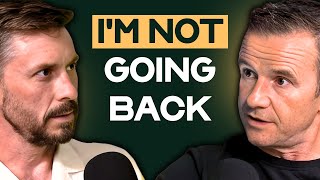
In this in‑depth interview, host Mike Brown talks with former real‑estate investor Philip McKernan about his dramatic financial collapse, the personal fallout with his wife Pauline, and the painful journey that forced him to confront his relationship with money and identity. McKernan describes how, after losing his assets, he discovered a talent for seeing people’s untapped potential and shifted into a coaching practice focused on purpose‑driven work, which he calls the “third mountain.” He explains the importance of vulnerability, shedding strategic masks, and committing to deep, immersive experiences—most notably a six‑day retreat on the west coast of Ireland—to help clients move beyond surface‑level goals toward authentic, service‑oriented lives. Throughout the conversation, McKernan emphasizes the need for intuitive readiness, the willingness to ask hard questions, and the courage to stop playing games, offering listeners a roadmap from loss to a meaningful, purpose‑filled vocation.
Chapters
We were out of money. We owed hundreds of thousands. And I think we had $200 in the bank account. And I said, "What day will we fly back?" And my wife— we had a return ticket we'd bought months and months before. And my wife said, "I'm not going back." And when I saw the way she said it, I'll never forget. Yeah, it was just the sense of pure failure. Letting her down, letting me down, letting everyone else down. And, and then the most courageous thing I think I've ever said came out of my mouth.
Philip McKernan.
He coaches entrepreneurs, leaders, and athletes around the world to uncover their unique gifts and live more courageous lives.
Authoring 5 books and traveling to 85 countries, he now hosts retreats at a restored 500-year-old castle in the Irish rainforest. What is wealth? Or what does success mean to you now?
Success for me, I've never shared this before. The truth that I've been carrying in some ways my whole life is—
Okay, welcome to another episode of Money Stories. Today we are joined by my dear friend and one of the people that's had the most impact on me in my life, Philip McKernan. Coach, mentor, guide, and just a true inspiration. It's an honor to have you here.
It's surreal. Surreal, but brilliant to be here. Absolutely brilliant.
Yeah. All the way from Ireland. We're very fortunate to have you in person. I'd love to just start at the beginning. And if you could just tell us, how did you grow up with money and how did that drive you to start to want to become successful? What does that journey look like for you?
Wow. We obviously didn't rehearse this beforehand. Money in our house was tight. And earliest memories of money were two things. One is I didn't know about this until my dad reminded me of this, but apparently myself and my two brothers set up a grass cutting business and we fell out over money because they wouldn't pay me or I wanted too much. I genuinely don't remember which. And the other thing I remember is my dad writing a check for my mom every week. So I appreciate that was what was done in the day back then, but in hindsight it felt very controlled. And then the other thing I remember is my mother being unable to stay within the budget she was given and spending, going on credit, not credit cards 'cause she didn't have a credit card, but going on credit with a particular store in Ireland actually called Arnotts. And getting into a little bit of trouble with my dad around that. So they're the earliest memories of money in my home. And that's the only other thing is I remember as I went through life, my dad would associate any type of success that I had with money. And I can give you examples of that for, if required or if it's useful. And I resented that.
Hmm. Yeah. So it was the measuring stick.
That was absolutely the measuring stick because I mean, I'll give you one great example. I was, I was many, many years later, I was, I was in, I was invited to speak on a, on a stage. It was the biggest break I'd ever got. And I think there was F.W. de Klerk, the South African president or past president, the Dalai Lama, Richard Branson. There was like all these dignitaries and little old me from a little village in Ireland. And I remember ringing my dad and I can blame my dad for what he said, but I was so insecure. I needed my dad's validation so badly. And I rang like a little child saying, Dad, did you see me score? Did you see me score? And I rang to tell him I was gonna be on this stage. And I said, "Dad, I'm gonna be on this stage. I'm gonna be on this stage." And I didn't say it as enthusiastic. I played it down as playing cool, but the little child in me was desperate for him to see me. And when I finished with the list of dignitaries that were gonna speak, the first thing out of his mouth was, "Are you getting paid?" Wow. And it just like, you could have got it, it was like a chainsaw going through my gut. I just want them to say, oh my God, I'm so proud of you. Leave the money aside. I'm just so proud of who you've become and who you're being in the world.
Yeah. And I wonder how does that start to show up as your career progresses?
I think I moved away from money. I rejected money. I did probably a lot of stuff for free, partially because I'm a good person and partially because I want to be the hero. And partly because I didn't want money to be the exchange. And you know, there's also somebody else, you know, close to me who was, who put a high value on money. And I just think I moved away from money. I was kind of like, it's like, you know, if you don't wanna be like your dad and he wears white, you wear black. And by wearing black, you think you're not like your dad, but in actual fact, you're more like your dad than you realize. So I think I pushed money away and I would tell myself a story that it's not about the money. And the reality is, at the core, it's not. But it's also about the money because I, like everyone else, want to live. I want to excel. I want to be able to go on holidays. I want to be able to travel. I want freedom. I want whatever. So I think I pushed money away as a result of that.
Yeah, I think it's one of the hardest things we have to reconcile in the West is, you know, if there's money attached, then it can't be noble. But at the same time, we need this to survive and it's in its it is in many ways a reward for value creation.
Yeah.
And so we constantly battle against, you know, the altruism versus a financial reward. And it's, it's, it's not easy to reconcile.
No, it's not. And I'm not even sure I've reconciled it. I'm not sure I will reconcile it to some extent, but I'm certainly a lot more at ease with it and I have a greater value in myself and then I can pick my battles and I can charge a lot of money for something and I can choose to charge or not charge for something else.
Well, I have the privilege of knowing a bit of your story, but you started in real estate. Why don't we start there? What was that career like for you? And was that the beginning of starting to be driven by money or what was the draw for the real estate career?
Yeah, I think before real estate there was coffee and there was wine. Well, wine first and then coffee and then real estate. And I think what I did pretty well is I found myself choosing really good areas to focus on. That's one thing I chose pretty well. So to me, it was about the fulfillment, about the people. I always followed people. And if I associated myself and was around good people, I have a rule that follow good people and great things happen. I don't try to follow great people because we often have very limited information on who these people are. We make lots of assumptions. We see them online. But follow good people and great things always happen. But I ultimately, I pretended that money wasn't important to me, but the real estate thing came into my life and ultimately the real estate was driven by one thing and one thing only. If I make enough money, then I'll be able to go and do what I want. And that was the fundamental narrative that I had that was lying just below the story that I was telling myself. And that's essentially why real estate came into my life.
And the irony isn't lost here is that it's actually true in certain ways. That's the way my career unfolded. I went into the oil and gas business to make money so that then I could do what I really— and sure enough, it's actually enabled me to do that thing. So how did the real estate business work out for you?
It didn't. So we identified a market. All the fundamentals were good, as in we identified a market. Known as Canada. It had a common law, it had incredible economic fundamentals, it was a safe place to invest. Now bear in mind, I was in Ireland at the time and people, what people were doing in Ireland where they were investing into Bulgaria that had no common law, there was no exit strategy, there was barely any rental income. But because we could get access to so much money, people were like, I remember jumping into a taxi a driver one day and into the back of the car. And no disrespect to taxi drivers, and it's not a judgmental thing at all, but the taxi driver talking about the third apartment he just bought in the Black Sea and with no money down. I was thinking, this is insane. And what happened was we had everything in place, but we were, we were like attracting big money. The first fund that was coming to us was €25 million. We had Irish Life, a big life, kind of life insurance company looking to invest many millions with us potentially. We had a single investor just throw $750 grand at us to buy a quarter section of land in Edmonton, outside of Edmonton in Alberta. So it was coming really hard and fast and we spent 2 years, we put everything on pause and we built the infrastructure, we built the brand, we built the company and we built the the tax mechanism for the money to flow back to Ireland in a really legitimate way, but it cost us a shit ton of money. So we spent everything we had and we were literally about 4 weeks away from opening the doors to this new business, Maple Leaf Properties. And we were gonna go big. And the Irish economy went off a cliff. And I remember there was an announcement from the government about some big tax thing that was gonna happen. And the tap, the real estate tap turned off. And it didn't just slow down at this, it went off the edge of a cliff. And of course the big recessions, 2007, 2008, and before you know it, it was over, it was gone, it was done. And everything we had was poured into that. We owned real estate ourselves in Ireland. So not just do we lose our business, the real estate that we owned was underwater to a significant amount of money. And we had $200 in the bank account and we were living in Canada at the time and it was just, light session.
So it's not about the money. That's the, that's the, the story playing out. And then all of a sudden there's this hope, there's this dream, this money flowing in, big checks and rug pull.
Yep.
Did that reinforce the story of it's not about the money? How does it play out for you from there?
I will let— I know exactly how it played out. Bewilderment. Shock, huge self-disdain, blame of myself, embarrassment, banks phoning our home, my wife feeling those calls. And because my wife's an accountant by trade, even though she gave up accountancy, I did something that actually was really not just unhelpful, but I don't even know how to find the right word for it. I've never shared this before, but I actually, something that was so unfair is I dumped the whole money conversation on her. You are the accountant. I let the banks deal with you. And I have a lot of shame around that. And I actually addressed this with Pauline, actually literally about a month ago, less actually. For the first time in all of these years, I hadn't thought about it. I didn't wanna think about it 'cause we don't wanna think about shit that's painful, particularly when we've created it. And I'll never forget, we were in my mom's kitchen in just outside of Dublin in Ireland. We were back for the Christmas, and I'm not joking when I say we had $200 in the bank account and we had hundreds and hundreds of thousands of dollars in debt, hundreds. And the business was gone. So we had put all of our eggs in one basket. We had gone all in. So not just did I not know who I was, what I was doing, we were out of money, we owed hundreds of thousands, and I think we had $200 in the bank account. And I said, "What day will we fly back?" And my wife, we had a return ticket we'd bought months and months before, and my wife said, "I'm not going back." And Pauline is very easygoing, my wife. She's got to be living with me. And very, very seldom will she just just draw a line in the sand and say no. And I said to her, why not? She says, because it's simply not working. And I didn't want to hear that. I couldn't hear that. And when I saw the way she said it, I'll never forget. Yeah, I was just the sense of pure failure. Just letting her down, letting me down, letting everyone else down. And, um, and then the most courageous thing I think I've ever said came out of my mouth. I just paused. I looked at her. I knew she wasn't messing. I knew there's no going back. There was no point in me trying to convince her. And a truth that I've been carrying in some ways my whole life is I said, I'm gonna fucking do this coaching thing. And that's exactly the words I used. And I've always known what I wanted to do. I always knew that's what I was meant to do. I didn't have the word coach, and I still have an interesting relationship with the word coach, but we won't get into that now. But, and that's what I did. I sent out an email that night to my massive database of 25 or 30 people. I didn't, don't think I was even on social, probably base, maybe Facebook. And I had one man reach out to me. His name is Patrick. I won't use his full name, but Patrick F. And if he ever listens to this, you know who you are. And he lived in a place called Canmore in Canada. And he reached out and he says, I'll be your first client. And I went back and I said, you don't know how much it is. And he says, I don't care. From the day I met you, I knew I wanted you to coach me. And it didn't take off like a rocket ship. That'd be kind of cool for this podcast to say it did.
It was a great arc.
It didn't, but it certainly moved in the right direction. And that's ultimately kind of the direction it went.
And how long was that between the abject failure and him coming on as a client?
I believe, and my memory is sometimes not great on the actual details, but I believe I sent that email out that night. And I think it was the following morning he replied. How did that feel? Didn't own it. Didn't own it. I probably had— I discounted it. I felt like an imposter. I kind of felt maybe he doesn't know what he's getting into. Maybe he needs to really know. Then I felt, because I had all this failure in my life, in this moment, I felt unworthy of that, of that relationship. And then the moment of Oh shit, then what does this look like? I didn't actually expect anybody to sign up. And they didn't have to sign up. There was just an email back if they were interested. And I genuinely, there was a part of me that wanted somebody to email back, but there was a real bigger part of me that wanted silence because then I could validate how much of a piece of shit I was because of the failure.
In some ways I'm hearing almost to spite yourself, to just prove that there's no way out of this.
There was a part of me that wanted that. And then the other little part of me, and if I had to physically describe it, my head wanted the silence, my soul wanted somebody to give me a shot and give me a chance. And my gut has always served me. It has never let me down. And when I think about it, I look back and I think about the properties we bought. There's properties we bought, decisions we made that I just knew intuitively didn't make sense, but I followed my head and follow the narratives and the stories that were concocted in my head. And that's where I think it went wrong.
And so you started working together.
Yep.
What did that unlock in you?
So we did, I think it was a weekly call for 6 months. And then a second person came on, his name was Ian and he was from Toronto. As mad, saying we have in Ireland, as mad as a brush. My mother's as mad as a brush, but it's a very endearing term. It's like a bit crazy, but beautiful. Like, you're crazy, but you're beautiful. So it's actually an endearing thing. And Ian came on, and these men had very different styles, and I was oscillating between both of them. And I had nothing else going on in my life other than these two calls every week. And I remember sitting in the apartment looking out. My wife would go down the stairs, she'd go back out the back of the building, and she'd walk down the alleyway to work to do a job she didn't want to do. So I could pursue coaching. And I'll never— one thing I will say unwaveringly, and a lot of people, a lot of— I know a lot of men who say, oh, my wife has never— she never doubts me, and then whatever. And, and doubt comes in funny ways where, oh, you can do whatever you want, honey, just as long as the mortgage is paid. And, and that's not doubt, that's conditional support. That's all that is. Pauline never once by what she said and what she did not say ever put me under pressure to amount to anything, to do anything, to create money. She just said, this is what you're meant to do. It's gonna work, it's gonna come. I'm gonna go to work and I'll make it, I'll support us. And I realized that if I had to distill the coaching calls, I think in the early days I was looking to add value. I was desperate to add value to these men that trusted me. And I was looking for sophisticated ways to make value creation, but ultimately, and it took me a long time to realize that what I did naturally to be able to see their situation, to be able to ask the right questions, to be able to call bullshit, to be able to support them and see the beauty inside of them, the brilliance and where they're not showing up in the world that came so naturally to me. I didn't trust that.
Mm-hmm.
Because it's hard to put a value on something that we do so goddamn naturally. So I think I made it— I confused it.
And I just like to dig in and anchor it. Like, how did it feel to receive that support from your partner? Because I also had the gift from my partner of saying, hey, I got us. Not just I support you. That's different. No, I got us. I'll go out and earn so you can pursue this thing that I see as a true gift. And, you know, every day I'm so grateful for that opportunity. And, you know, did you recognize it at the time or did that come later?
I think I'd like to say it did, but I think that would be unfair and untrue. I think I was still reeling from the failure to some extent. And as I walk, I'll never, it just, it was, it's a physical memory. I should walk out the back of this building and we were in North Vancouver. And she'd walk down this, this laneway. And I'll never forget, it was just a vivid memory, but she was going to do something that I knew deep down she didn't want to do. So therefore I didn't allow the essence of what she was creating for us as a family and for me as a person to really land as much as it does now. I wasn't ungrateful. I just think I was too caught up in the guilt that I had towards the environment and the situation that we're in.
And caught in your own story.
Totally. Yeah, totally.
Which is fair given the dramatic circumstances leading up to this thing, I think. Yes. What a gift to have a partner that 100% steps up like that. So you early on, you recognized you had this gift for seeing something in people they can't see themselves. How does that start to play out? For you in your coaching career?
Slowly, very slowly.
Yeah.
I've always felt it. I've always felt this absolute ability to see things in people they cannot see in themselves or don't want to see in themselves. And the latter is trickier to get to sometimes. So very reluctantly, I mean, I'm 52 years old. I just came off 4 days of really intense work with the group, and I'm still seeing it. I'm still seeing it unfold. In fact, I saw it unfold the other day in a way that I haven't recognized it before. And I phoned my wife and explained that they brought me into this situation, and she says, "Why do you sound surprised?" You know, she says, "You're incredible at what you do." So I think it's still unfolding. There's a reluctance in me to accept the giftedness I have because I'm afraid if I do, I'll become arrogant. Because I've seen that happen with other people. So I'd love to say that I've— but there are, there's a, there's no doubt that I've been given a gift. I don't believe it belongs to me. I think it's in me, it's coming through me, it's on loan from the universe until I abuse it or don't use it, and then it's taken away and given to somebody else. Um, but I, I think it's I know it's there and I know it's a force for good.
And how long until the financial piece started to fall in place and maybe start to intersect with this gift for you?
So it was funny, in the same apartment, and it wasn't that long, it was like, you know, 3 or 4, maybe 5 months. And I remember my wife, that's probably a little bit longer, but I remember my wife calling me over to a laptop and said, can I just show you something? And it was a bank statement or, you know, online or whatever. And I looked at it and it was a chunk of money. It was like more money than cash than we'd had maybe ever in our lives. And it was 4 or 5 people signing up for a coaching program at one time. So let's just say it was 50 grand, whatever. And that was a shit ton of money for us considering we're underwater, there was no money coming in, et cetera. And I just looked at it and went, yeah, cool. Anyway, did you send that email? And I'd love to sit here and say that was just me focused on the coaching work, but I think it was still some sort of gamesmanship and denial or reluctance around money, distancing myself from the money. And I still have that. I still have that going on.
That was gonna be my next question is how do you start to reconcile that? Because, you know, I'm hearing this thread of it's not about the money. I'm going to go in the opposite direction of my dad, who views the only metric of success as money. It's certainly playing out in this situation you've just described. How do you begin to reconcile that? And acknowledging that maybe it's not even fully reconciled, but where do you start?
I actually think very simply was the recurring theme of my dad and with respect to my brothers as well, it'd be a similar thing. And there's an interesting dynamic in conversation around money in our home. And I think for me, recognizing the dysfunction in those conversations was huge. I didn't wanna see the dysfunction. I just assumed it was normal. I had normalized in my own life and recognizing how angry I was at that, like just recognizing how deeply angry. And I'll give you an example. It's slightly obscure example, but something I just got in touch with in the last couple of years is, you know, I can— I don't want to sit here and justify because a lot of us then around our parents go, but they did the best they could and they're amazing people and that's what their dad did to them. And they justify and rationalize all these dysfunctions and behaviors. But I remember when I thought back to my time with my dad, there's only one time I had with my dad that was religiously like in terms of consistency, it was a routine and we would get in the car and he would drive me to school pretty much every morning. And I hadn't thought about that. And now I know why I didn't think about it, 'cause there was a lot of discomfort and pain for me in hindsight. And the reason for that is he had the radio on and he listened to the news. So that 30 minutes, that's all I pretty had with my dad every single day, 5 days a week. And in that 30 minutes, he just listened to the news. And as a grown-ass adult, I'm sitting here going, what the fuck? Could you not have just turned off the radio and just asked me how my day was? Could you not have just turned off the radio and tell me how your day was? And yes, I know what he did because that's what he knew and that's the conditioning. I get all that. But so it's, I think the power of stopping and recognizing that when you ring your dad, owning your insecure part of it, I'm ringing looking for recognition. And hearing the response and realizing that you're so disgusted by the response and you're so angry. When I started to do that, interest me up, then I start to reconcile my relationship to money. And what happened was I started to go from here back to this. The pendulum swung back into, well, what is my relationship to money? What do I want it to begin to feel and look like? And then interestingly, I started to charge real money for the work I do unapologetically. I remember the first time I got paid $25,000 to do a keynote speech, it was just like, holy shit. And not just doing it and getting paid, but doing it and feeling absolutely this is worth the money, 100% this is worth the money and owning that. And that's a little insight into how it's reconciling rather than reconciled. Is how I would probably position it.
What is wealth or what does success mean to you now?
Success for me, peace of mind is the first thing that comes up. Just feeling a sense of peace in myself because if I'm at peace in myself, I know things are going really, really well, both relationships in my life, financially, and alignment in terms of the work I'm doing. There's still a part of me that needs and wants to hear feedback from people. I think there's nothing wrong with being validated. And I think we, in society, we think that's not the case and shouldn't be the case. But to hear from a client, I heard from somebody, we had a little dinner last night in town. It was just so cool. There's whatever, 12 or 14 of us. And this guy I hadn't seen in ages, brought his wife and he really wants her to meet me. And he flew to Ireland a couple years ago to do private work one-on-one with me in the castle. And, and, uh, he was— I just asked him to introduce himself. I didn't ask him to say anything about our work. And he just goes, my name is such and such, and, um, I went to the castle 2 years ago and spent some time with Philip, and, uh, I've radically changed my life as a result of this. And his wife looks at me and looks at me and does this, just give me a look. And then afterwards she said, thank you for what you do with my— what you've done with my husband. And I said, he's one of the good guys, which is a saying my dad would've said. Like, he's a real sweetheart. And she goes, he is. And I said, but he doesn't want the world to see that. He doesn't want the world to see how good he is. And she says, thank you so much for saying that. So when I heard that, I just floated home to my Airbnb last night. That was a success. That was a success. And I'm wealthier now than I've ever been. And we own a castle that we spent 5 years restoring, which is free and clear, which is kind of bizarre. We don't own any money on it. And I think the universe has supported us to make sure that's the case. So the work that's done there is the purest it can be. And if you told me 5 years ago you're going to own the castle, and I don't believe we're owners or investors, we're stewards of this magical place. If you told me that you would not have a loan on that property after 5 years, I would've said, Mike, that's just, no, that's just not gonna be possible because I knew what we needed to do to bring it back to life and I knew how much it was gonna cost. Well, actually I didn't, I knew it was gonna be a lot and it was a lot more than a lot. And, but I think if you're doing something really good, the world is gonna conspire to support you. It's gonna give you the crumbs to see your resilience, to see, your determination to see the purity of what you're trying to create. And then one day it's going to give you the whole fucking cake. That is my belief.
Maybe not on your timeline.
No, no, no, no, no, no, no, no. I checked my calendar and it still hasn't happened. Yeah.
But yeah, it's that, it's that trust piece that sounds like it was so pivotal.
Oh yeah. Yeah.
Rather than is money good or bad of just just kind of detaching a little bit from it and saying, I'm okay with this coming in as a result of how I'm showing up in the world.
Yeah, I think that's very fair. I think it was more of a trusting and allowing the money to flow or not to flow. It wasn't about the money. But yeah, when you said trust, that really lands for me 100%.
And your story is, is so similar to so many people's stories. It's either You know, we're told as kids that money is the, is the bar. So we go chase after it or we reject it completely. Now you've worked with hundreds or even thousands of entrepreneurs. How do you see that story playing out in clients and overall?
Yeah, I see a lot of people who are more artistically driven and I think, well, I think we're all artists and we're all leaders. We just don't necessarily recognize it. So people who are more artistically driven, reject money, to kind of draw a line in the sand. And how they reject it is they just simply can't and don't want to put a value or don't know how to put a value on something they do so naturally. It's as simple as that. And on the other side of it, you've got people who are just so insatiably chased by money that it's a trauma response and they are absolutely determined to make more money. And how you know that that's driven by a dysfunction inside of them is that it's generally always a round number. It's 1 million, 10 million, 100 million, 1 billion. And therefore it tends not to have a lot of substance behind it. And there's nothing wrong with making money. I never judged clients for making money, but I will question why it's about the money to the extent that it is. And I also meet a lot of people who have made money and been very successful and they reluctantly or begrudgingly come to me and go, I hear you're the guy who's gonna help me with meaning and purpose. And I go, God, that's very enthusiastic. And, but they've just, they've ticked all the boxes and they're just, there's a lack of fulfillment. So they're the kind of the two ways I see it playing out in the world.
Yeah, and that very much aligns with my own experience. It's, they sound like total opposites, but in some ways they're inextricably linked and just two sides of the same coin.
Yeah.
So we've heard how you start to shift. By uncovering your own gifts. How do you translate that now into maybe someone who's made a lot of money but has that lack of fulfillment and goes, oh, I know you're the guy. What does that look like for you?
It's a slightly slower process. If somebody comes to me and they've made a lot of money, they've had some success, there's a reluctance in them to admit that actually what they've been doing hasn't really worked. Okay. There's a big attachment to, well, it's really worked. On one side. And I go, so then I literally had this the other day, and everything's good, but it's— but there's definitely room over here. So they have a big attack, there's still a big attachment to it. They haven't really reconciled or got in touch with the disconnectiveness in themselves, and therefore the pain, the cost. They haven't really stopped to reconcile— not— sorry, forget about reconcile, recognize the cost of chasing money to a point where they abandoned themselves. And I use that word abandoned— they abandoned themselves earlier on in the process. The longer we abandon ourselves, the harder it is to come back to some semblance of self and who we are in this world, what we're destined to do, what alignment looks like, and how we can bring our gifts out into the world. So my job is to get people earlier on, the same way in sport. It's very difficult to help an athlete who has not shone a light into the future at all, like completely shut down, Mike. They don't want to look in the future because they're afraid it'll take their eye off the ball. They get injured or they hang up their cleats and they finish their career. And then it's like, well, who am I now? Because I was the guy walking out in front of 50,000 or 60,000 or 20,000 people. Who am I now and how do I? So it's, My job is to try to get people a little bit earlier in the process. So people over, entrepreneurs overstay their welcome in their businesses and they justify it by going, but I love my business. You don't really love your business, you like your business. But I love my people. I say, well, if you love your people so much, sell the business and just give them all the money. Well, I don't love them that much. I know you don't. And then they ultimately, you know, you're starting to get close to somebody as an entrepreneur when they know they've overstayed their welcome in their business. This is really cool. They know they've overstayed their welcome and you're questioning them. They come to me and I often say people will come to me and they'll travel thousands of miles in some cases, pay me thousands of dollars for the clarity that they simply do not want. And as you get close to the core, they'll finally pull out the one card of desperation that is, "Yeah, but you don't understand my industry." or there's not a buyer at the moment or whatever. And then the last form of defense is, well, even if I was to sell my business or leave my business, I wouldn't know what I would want to do, which is horseshit every single time. And that essentially is the sequencing for somebody who is a reluctant person looking for their third mountain. There's a reluctance in them. So I see that as a common, a common reoccurring theme with a lot of people I work with.
Well, this third mountain concept has been incredibly impactful for me. And so, and since you just referenced it, why don't we unpack what that means?
If I can do it through the lens of my own story, which you've asked me about today, if I could oversimplify it, mountain one was all about me. It's about trying to figure out my shit, trying to make money, trying to get by. Mountain two was about us. It was about building something with a group. Building something and creating a culture and building a business or trying to create multiple businesses and doing different things. And mountain 3 essentially is about them. Meaning when I truly decided the rest of my life is about other people, when I made that decision, things just had an ease. People just showed up, things emerged. And when I was on the second mountain, I was trying to buy a cottage in this little village which you now know, and this little tiny little valley, 2 miles by 5 kilometers or 2 kilometers by 5 kilometers, trying to buy. And it was, "Aye, aye, aye." I was trying to buy, "Aye, aye, aye," the whole "aye" conversation. And then this castle emerged and I remember going online, looking at it, and then the conversation became, "Wow, could that be a home for the work? Could it be?" And that was all about the work and how this place was brought to us to impact the world. So the third mountain for me is about when we wake up one day and say, "I want to spend the rest of my life helping people with the struggles I myself have gone through and to help them fast-track or eliminate those in their lives." I think that is the ultimate goal and the ultimate sense of happiness and fulfillment and purpose for every single human being.
And if I may, I think it's the ultimate form of wealth.
Could not agree more.
I don't think you can have wealth, true wealth beyond money without an element of service. At least I've found that to be true in my life and the clients that I've worked with. We have to at some point make it not about us, about— and we're included in the greater good. Yeah, by the way. And I think this is what keeps people from service is that the martyr narrative woven so deeply into our society is You have to sacrifice yourself if you're going to do it for the good of others. Yeah, it's in our religious texts. It's in our societal traditions, deeply woven in. You're included in the greater good. You're living a better life than you've ever lived.
100%. 100%.
But it's not about you. For someone who is listening to this and saying, okay, shit, It's been about me. I know that I'm clearly in this, but I can see what it might look like on the other side. What would you tell that person?
Most people don't realize it's about them. Just if I can just go back just a little bit. Because what they'll say on the second mountain is they'll say, but I've got this amazing team. So let's just say they have a company with 20 people, but I'm employing all these people. We have a great culture. We do barbecue every month and the kids come in and we have this thing and they do 4-day weeks and whatever. I'm making a big impact with all these people and you are making an impact. I'm employing them. I'm doing this, I'm doing this, I'm creating all of this. And we make it sound like these 20 people could not get a job anywhere else. And we're building this hero story around us like, oh my God, aren't you so good to be looking after these 20 people? But you're doing something that you don't want to do. Somebody asked me last night over dinner, they said, what do you say to entrepreneurs that you meet who are deeply threatened by AI and their business? And I said, Most of the people, sorry, excuse me, all of the people I've met to date that are threatened by AI don't even wanna be in the businesses that they're in, that AI are coming after. And we had somebody there last night who said, you know, this AI thing has accelerated. I've gone from, I think he said 20 calls, 30 calls, 40 calls, sales calls a month to 2. But I know this person well and this person doesn't even wanna be in the industry they're in. So I think the getting in touch with the AI, so when I'm doing a discovery call or I'm even at a conference friends and I go one-to-one with somebody, people say, I know I need to leave my job. I know I need to leave my business. I've looked at different things. I need to uncover my purpose. Notice there's one word in every one of these statements. I'm not sure what I want to do. How do I uncover this, Philip? How do I, I, I, and I go, can I just feed something back to you? There's one word in every, it's all about you. And you don't even know. You've— you've— don't— you don't know that it's all about you. And so I think we, we go from, well, what if I'm beginning to wake up that it's about me? Most people find it really difficult to see that it's about them. They can identify that they want to make a change, but they find it really difficult because there's a— there's an implied sense of deep selfishness in that admission. I wouldn't have admitted. I'm a smart guy, not academically, but I'm a really smart guy in some ways. There is no way on earth, Mike, when I was on my second mountain, I would've woken up. And if you, if I, even if I heard it on a podcast, I would've said, yeah, the eye, Jesus. You know, my friend Mike, he actually, he, I should send this to him. He's all about himself. There's no way I would've woken up and wanted to see that because it's a deep recognition of a vulnerability in ourselves and a deep misalignment in ourselves that we just simply don't want to see. But if you do see it and you begin to see it, and I do believe we need help and support to see it, then I think the conversation of what might be next is riveting, it's exciting, and it's Absolutely. It is not this— people say, I want to find my passion, I want to find my purpose. It's not behind some fucking rock in, in, in the desert. It's inside of you. It's been inside of you your whole life. It has been influenced by some of the darkest moments you've gone through. It's been influenced by earlier phases in your life. Life leaves clues. You've been lit up by certain things your whole life. It's very easy to get to it. If people are willing to take on that journey.
It sounds like what you're saying is the price of admission is vulnerability.
100%.
And that's a value that I can say I've inherited from my work with you and knowing you for all of these years. What does that mean to you and how can people start to access vulnerability?
It means everything to me. It means the world to me. You know, I had the privilege to work with a sports team over the last number of days And there's only so much I can say about this, or even want to say. I haven't signed any non-disclosures. It's just my own personal levels of respect or boundaries around respect. But I walked into the dressing room. They gave me the dressing room, which is the most sacred place in sport. And I walked in and I said, I want you to finish this statement, or I want you to fill in the gap. A blank team goes further. A blank team goes further. And I said, what do you think that word is? What do you think the word is in the blank? And somebody said united team and this and all these really powerful words. And I said, for me, it's a connected team. And then I showed them on a board just very quickly, I said how connection happens between human beings is that you're here at a flat line in your relationship. And ultimately somebody goes first, somebody shares a vulnerability. And it could be something as simple as, "How are you doing?" I said, "You know, I'm not good." "Why not?" "My cat died this week." "Fuck, I love that cat. I just love that cat and I'm missing him so much." And then the person next to you, they go next and they go, "You know, I had a dog when I was 6 and I still have never bought a dog ever since because I just never wanna re, you know, I never wanna revisit that discomfort and pain." And before you know it, you don't even know what's happened, but it's happened. The relationship has dropped a level and you've connected over a shared vulnerability. And then the opportunity is to go again. And you don't have to keep sharing deep dark secrets. That's not what it's about. But these mini vulnerabilities and you go and you go and then one decides, ooh, this is getting a bit, oh, hang on, I'm out. And they stop and you go again and you're not met in that vulnerability. Then you come back up to that place again and the relationship either flatlines at that point or regresses back to where it was before. So I said, "That's how relationships work." And I looked around the dressing room. I said, "If you think about any relationship in your life that's deepened, it has only deepened through the lens of some type of vulnerability, forced, invited, or projected in some capacity." I said, "Then how do you do that in a room like this? Because you guys don't want to be vulnerable because there's somebody sitting next to you that wants your job." And we hear all this sentiment about, you know, let's, let the betterment of the team. Fuck that shit. If I'm a sales rep for a pharmaceutical company and there's two other people on the books that are paid, but they're not working, they're just sitting at home, they're doing a bit of sales training, but the minute my sales drop, I'm out and they're in, do you think I'm really about team? And I screw team. I've got to look after myself. And then I created an environment, which you won't get into the details of, where we actually created vulnerability. I asked them about a really tough day and they're the toughest day of their life and the most beautiful day of their life. And I broke them up into pods and they cried and they laughed and they hugged. And there was a connection that happened in that room that many of the players said they'd, they'd never had anything like that with any team, never mind this team, because those environments are not created. I call it team deepening, not team building. We coined the phrase team deepening, this idea of bringing your team deeper. And every organization in the world, I think it's the future. I think it is absolutely the future. It's not your responsibility to do it. But it's the greatest opportunity because when you have a team that is connected, they will walk through fire for each other. Your sense of loyalty goes up. Attrition in an organization reduces. People feel a sense of belonging. And they went out that night and they won 3-nil. But it wasn't the fact that they won 3-nil, it was the way in which they won. They played probably some of the best football they played all season. Because there was a connection and a connective tissue that hadn't had before. It's all about vulnerability. The challenge with vulnerability is it's, it's used as a tool by certain people, speakers and stuff, and you see it, I see it, but it's all about vulnerability. And so many of us spend so much time trying not to be vulnerable in front of our children. We were chatting about this earlier on with this gentleman over here who's off camera, and you know Vulnerability is inevitable. You can't actually hide from vulnerability. It's going to come after you no matter what. You're going to have your arse wiped when you're 90 sitting in a thing, and you're going to be feeding through a fucking straw like you were when you were brought into this world. Why not just be vulnerable sooner and allow other people to see the humanity in you? People say to me, and I'll finish here, I know I'm rambling, but somebody said to me once, the one thing you never, ever, ever do as a speaker is stand on stage and say, I'm nervous. That's the golden rule. And I just hope if I'm nervous and I feel that it's important for me to honor the room and be honest, and I feel compelled to stand on stage, which I've often done, and said, just to clear, I feel really nervous, but please don't mistake that for me not caring. It's because I care so much. I'm nervous that I won't make an impact here today. If people don't like you for that, fuck them. Because that is my truth. That is who I am and what I'm feeling in that moment. So vulnerability is everything. It's everything.
That's an amazing answer. And now I'm really nervous because I just want to play a game, uh, because you had such a great— you had such a great answer to that question. There are two more words. We'll do one at a time that, that you use often. The first one's loneliness. What does that mean? And maybe how does that tie to vulnerability?
I think loneliness is the greatest pandemic the world has ever seen without a shadow of a doubt. And most of the loneliness that is prevalent in the world is self-created. I'm sitting in the dressing room the other day and there's a young man sitting behind me just to the angle. And I said, Is that your station, your locker area, whatever? And he goes, "No, no, no." And I said, "Well, why are you sitting over there?" And he said, "Oh, it's just a better view." I said, "Really?" It's just 5 yards. Those 5 yards make all the difference. So loneliness is something that I've personally struggled with. I think ultimately my underlying biggest and most painful part of my life is a sense of loneliness. And the people who are not vulnerable are the loneliest people in the world. And when you're vulnerable, truly vulnerable, the world embraces you. And I've seen this through probably the greatest example of this I can ever even muster is One Last Talk. And I won't get into all the details of it, but I wrote a book called One Last Talk. And essentially it's like a TED Talk, except you're invited to stand on stage and share the one last talk you'd ever give before you die. And here's what typically happens. When you ask somebody to give a one last talk, they go, "Me? Oh no, geez, no, no, no, no. Now, our friend Claire, now she's got an incredible story. She's a brilliant speaker." I said, "I didn't ask Claire, I asked you." And the invitation through one last talk is not to share what you think about global warming, Donald Trump, the education system, it's to share a part of your personal narrative that perhaps the world has never heard. The thing that you're most embarrassed by, the thing that you're most ashamed by, And here's what happens when that happens. When people stand on that stage and they share that, they feel seen, not even heard. There's a seenness that they experience that they've never experienced in the past before. They get off that stage and they feel like they matter more than they've ever done in their life before. I've done this in a maximum security prison. You were there. And I've never felt someone going, that fucking asshole, can you believe what they did? It's the opposite. I had a woman walk up to a man in a prison who was a sexual offender. She'd been sexually abused, and her husband looked at me with tears pouring down his face because his wife was distraught because she was— she wanted to save him. She wanted to protect him from going back into the main population because he might be hurt. And he just looked at me and said, I've never— I can't imagine ever imagined seeing this in my wife. When we're vulnerable and we allow people to see all of us, they fall in love with us. And I often say, when it comes to being a star or public figure, I think we have a moral obligation to show, particularly young people, both sides of the coin. My son had an image on his wall once of this footballer called, um, Wayne Rooney, who's an ex-Man United player. And I said, would you like to be a footballer? He goes, yeah, Dad, I'd love to be like Wayne Rooney. And because he just sees the cars and he sees the girls and he sees the money and he sees the fame and he sees there's 70,000 people adoring him. And Wayne is deeply dysfunctional. Do you know why? Not because he's Wayne Rooney, but because he's human. And Wayne's job is not to have to share this, but if Wayne said, hey guys, I struggle with 'With addictions, I get depressed.' Yeah, there's some assholes online will just go, 'You're a worthless piece of shit.' But most people go, 'Oh my God, wait, I didn't realize.' And the last thing I'll say this, Mike, is I've seen the simplest way I could describe this is I've seen, I've done one last talk in organizations all around team deepening. And I've seen situations where say, Johnny in accounts reluctantly does a one last talk, but does it. And Sarah or Jeff in sales goes, Johnny, you know what? If you don't mind me saying, I always thought you were a bit of an asshole, but after hearing your story today, is there any way you and I could go for a cup of coffee next week? Because I'd love to get to know you a bit more.
All right, last word. Permission.
Brings up so much emotion for me, actually. There's a part of me, the logical part of me thinks that none of us need permission to anything, and yet I believe we need permission every fucking day. I have a thing in my pocket here, which I just thought about. It's a little stone, and it's a physical representation of somebody who passed away a week or so ago. His name was Steve Sims. I don't know if you ever met Steve. And, um, I walked into the dressing room the other day and I was, I was really scared. I knew what I needed to do and I knew what this team needed. Like, I just knew it. I knew it intuitively. And that's not a sense of arrogance, it's a sense of knowing. There's a big difference. And I knew I'd get scared because the old insecure child in myself still desperately wants to be liked. And I put my hand into my pocket and I just touched the stone and I used Steve's energy and I said, just keep doing it. And this was my, I'm gonna call it a permission stone. I just relabeled it, I just named it. And I actually harnessed, 'cause he sent me this most amazing video a couple of months ago from the hospital and I harnessed his energy and I just said, keep going, trust yourself, just keep going. And the two of us, as weird as this might sound, We were in that dressing room together the other day, and essentially, if I had to distill that, it was permission. I needed Steve's permission to do it. I knew what I needed to do. I just couldn't quite get there on my own. And I think we need permission from people. I think we need permission from ourselves. Yeah, that's all I have right now. That's all that's coming up for me right now.
Well, I mean, this is, is such an impactful concept. And, and I think of, of everything that I've learned from you, that word stands out for me because so often, maybe always, the, the thing that we need to step into that best version of ourselves, to step into that next level, to step into wealth, to step into happiness, whatever it is, is permission. And it's so often only us that can give it to ourselves.
Yeah. Yeah. And in the absence of giving it to ourselves, I think it's nice when you can get it from somebody else temporarily. There's a quick story and it's, there's a slight reluctance because my son may see this and some of his friends may see it, but we have a kind of an unspoken rule, like no matter what, whatever I share, it's always from a place of love. So if it embarrasses you, so be it. But there was a player on my son's team And I remember standing on the sideline about a year ago with his dad, and his dad shared with me that his son, every day outside the, outside the back garden or in the front garden, would take these free kicks, boom, boom, boom, boom, boom, and he would hit the bar, hit the top corner, whatever. But he would never volunteer to take a free kick in an actual game, ever. In fact, when he told me that and I watched his son, when there was a free kick on the edge of the box, his son would move pretty much the furthest away from the free kick. And I took it upon myself to mention it to my son. And I said, "You know this," I won't use his name, but I said, "You know this guy, he takes a lot of free kicks and apparently he's pretty good. So if there's ever a chance," I said, "you know, if there's ever a way of getting him to take a free kick, it'd be cool." So fast forward, I thought my son had forgot, I'd forgotten, standing next to this young man's dad and we're on the sideline and there's this free kick right on the edge of the box. And one kid goes up and grabs the ball and he wants it. The other kid comes up and tries to wrestle it off him because he feels more competent to doing this. And my son Charlie walks up and he's a little older and he's, you know, maybe, I'm not sure he's a leader in the team or authority figure, but I think he's got respect. And he grabbed the ball and he said, "Guys." And they just assumed, and I assumed he was going to take it. And the next minute he looked straight across and he said, let's just call him, I use the word Johnny today, says, "Hey." Johnny. And the crowd kind of parts, the team parts, and the opposition part. And Johnny's like, 'Sit, you're up.' And it was one of the most beautiful moments. I was so proud as a father to see that. But more importantly, here's what happened. Johnny comes up, places the ball. His dad goes, 'Is that Johnny taking a free kick? How's that happening?' And suddenly, like, he was getting kind of nervous. And I said, 'Yeah, he is taking a free kick.' And the next minute, he hits this sweet, beautiful shot. Doesn't score, but just glimpses that, like, just raises the top of the bar, but hits it so beautifully. The way that kid played football for the next 20 minutes, the way he held himself, the way he put himself about, the way his confidence shot through the roof. So in the absence of giving ourselves permission to go and do the things that we want to do in the world, say the things that we desperately need to say, to have the conversations we know we need to have, but we're afraid to have, and we don't want to have, and we avoid. I think it's okay to seek temporary permission from other people in the absence of that. It's certainly been the case for me.
Absolutely. Well, we wouldn't be having this conversation today if at some point you hadn't given me permission to, to step into my power and start as a coach. And so I'm, I'm deeply grateful for you giving me that permission until I could give it to myself.
You're welcome.
Philip, this is— we could go hours and we'll certainly leave a pin in it for you to come back. But if this has stirred something in people listening today, how can they find you? How can they get involved with your work? What does that look like?
Yeah, I think the simplest thing is to go to philipmcurnan.com and, you know, just have a look at some of the things we do. We just, we do one 6-day immersive experience on the west coast of Ireland. And you've got to be genuinely, you've got to be intuitively drawn to my work. It's not one of those things that it's just strategic tick in the box, because I think then you'll come with a strategic tick in the box mentality. You've got to be ready to a point. And when I say ready, not fully ready yourself, but in a sense of knowing that you're ready to stop playing a game and wearing a particular mask and you're ready to go deep and ask yourself the real questions and get to know who you really are. And if that appeals to you, then yeah, have a look at the website and go from there.
Well, I can say from almost 10 years of experience now, 10 out of 10 recommend. Definitely check out Philip's work if this resonated. Such an honor to have you here. I deeply appreciate it. And thanks for sharing your story with us.
Yeah. Thank you for having me. Thank you. Appreciate it.










