Health is the First Wealth (Kelly and Juliet Starrett - Money Stories Ep 12)
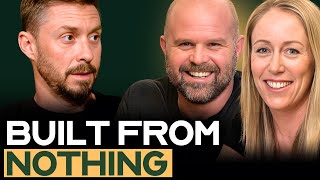
In this episode of Money Stories, host Mike Brown interviews fitness entrepreneurs Kelly and Juliet Starrett about their relationship with money, health, and family. They recount growing up in financially insecure households—Juliet’s mother married for security and Kelly’s single‑mom upbringing—leading both to a deep drive for financial independence. Their early adult lives as river guides and elite athletes left them with a "dirt‑bag" lifestyle, high work‑pain tolerance, and a comfort with risk. They launched their first CrossFit‑style gym in 2005 while in grad school, built a profitable weekend mobility course, and later authored the bestselling "Becoming a Supple Leopard," which generated a six‑figure check that they used to pay off student loans, buy a house, and invest in assets. The conversation shifts to how wealth is defined beyond money—freedom of health, relationships, time, and mind—and the pitfalls of conflating appearance with health. They critique the modern "majoring in the minors" health trend, emphasizing simple, evidence‑based basics (sleep, movement, nutrition, outdoor time) and their Start System that integrates these into a 24‑hour duty cycle. They also discuss the strain their relentless work ethic placed on their marriage and children, the lack of mentorship, the need for emotional processing, and the importance of building resilience in both finances and health. Throughout, they stress pattern recognition, risk management, and the concept of "unbreakable wealth"—multidimensional financial and physical security that allows choice and agency.
Chapters
We definitely were broke when we first met. Like, in the prior 2 years, he'd made like a total of $1,500. That was his total income. Nobody in my family has any money, and what I witnessed was my mom make a choice to marry for financial security. She just was tired of always feeling financially stressed, and I think that that is actually the reason why I ended up going to law school. My motivation was I, as a woman, need to make my own money. If I end up by myself, either through divorce, or if I end up needing to raise my kids alone, that I can make a lot of money.
2010, we started running a course, and basically we would sell out one day every weekend. It was amazing, and that meant $10,000 in profit for us. And then we realized we could do two of those days back to back, and I would sell 50/50, and we would make $20K on a weekend. How many entrepreneurs have you met? You floor it because that's what's required. And what you think is, well, this is what's got me here, and if I ever pull back on the throttle, I'm going to fall out of the sky.
Welcome to another episode of Money Stories. Today I have two of my favorite humans on the planet, multi-time New York Times bestselling authors, fitness legends. But that is not the most interesting thing about these guys. They're some of the funniest people I know. Whenever we get together, all we do is laugh. It's a mile a minute. And Kelly is a world-class dancer. So, so welcome to the show, Kelly and Juliette Staret.
Mike Brown, we're so excited to be here. Thank you so much.
Yeah. And we're going to set a timer. So when I start crying, let's go.
Yeah. And also one of the things that we are excited about is that you share our love of extremely fast talking. So. Let's see. Let's see how we can go.
Let's see. Let's see how many words we can put in. Yeah, let's go. Well, the idea behind the show is that founders are sharing stories about money and their relationship to money that maybe a lot of people wouldn't know. And I'd love to just kind of start there. How did you guys grow up with money and what, what has that journey been like for you?
You wanna start?
Well, as an overview, I'll say that Juliet and I are, I'm an only child, but Juliet has a sibling, but we are children of single working mothers. So start there, right? My mom moved me out of the United States early. We were just, she was a struggling grad student. My father has passed, so I can crap talk him now. He was basically like the Great Santini, right? He was an F, F-4 pilot. A little bit, had some problems with his father, alcohol forever and ever. So was not in my life.
Can I just add that, you know, we're adults, we know a lot of people have had difficult relationships with their fathers and difficult fathers. And to date, I have yet to meet anyone whose dad is maybe as bad as Kelly's dad, if I'm being honest.
So the reason I think that's relevant is the burden of taking care of me was on my mom financially, right? No child support. And that meant that, you know, we always were on the verge of running out of gas. You know, we had $5 to get a Christmas tree, no lights, but made our own ornaments, that sort of thing. I was never hungry and always protected, but it was always this stress. Like, we'd go out to dinner, mom would say, we have enough money to pay for dinner. I'd be like, what? You know? So, yeah, I think that set me up with the idea that I don't really need a lot of money. And then Juliette and I were, I will say, is dirtbag river guides. Like we were professional river guides. We know how to sleep in a parking lot and eat cheese burritos. Like we can do this, right? And simultaneously, I feel safe when we make a lot of money, right? So that's, that's what I'll say. And I don't even need, I don't even think we need to spend it necessarily, but, You know, if we just had money stuffed into our mattress, I think that would feel good.
Yeah, I think, I think that's, that's a really great point is a lot of people who grew up in lack end up with this deep attachment to the money as safety and achievement.
Like, definitely could put the door— like, I will say, and we'll get to Juliette's story too, but, you know, we have very high work pain tolerance. Like, we can outwork anyone, put in more time. And take big risks. Risk because we needed to, and then risk because we were river guides and, you know, raced in all this Class V whitewater stuff. So we got real comfortable with big risk and being, being the boss and being in charge and being responsible. So that set us up for, hey, we definitely need to go to grad school, we need to make sure that we have some agency and control over our finances so that we don't end up like our mothers.
So for my part, I grew up in Boulder, Colorado, and my parents got divorced when I was 7. And I come from a family of like extreme educational privilege. Everybody in my family dating back to my grandmother who went to UCLA in the '30s, and my great-grandmother went to Oberlin College. So everybody, including the women in my family, have been going to college since like way before people went to college. And then most people in my family have some kind of advanced degree. Like everybody's got like a PhD, some kind of advanced degree. But what's interesting is nobody in my family has any money. Everybody chose to go, my grandfather was, got his PhD in psychology from Stanford. He ended up actually working as a military psychologist. And my dad went into civil service and was an atmospheric physicist for NASA for most of his life. So he was working for the federal government. And my mom was a journalist of some note. She worked at the Boulder Daily Camera and the Denver Post and some magazines in California. But, you know, her— I want to say her, like, max salary ever was like $45,000 a year. And when I was in— I'd already— I was already in college. And what I witnessed was my mom make a choice to marry for financial security. And so, like Kelly, We were never— my brother and I, you know, we were fine. We always had clothes and food and our home was safe and secure. Being raised by a single mother, my dad definitely contributed but probably could have done more. He also lived on the East Coast, so we were really disconnected, like, you know, geographically. But I watched my mom marry someone who she's actually still married to, but it was very apparent to both my brother and I that she just was tired of always feeling financially stressed. And so of course there were some other things she liked about this person, but that at the root of it was she felt like she needed financial security and was going to enter into a relationship for that reason. And I think that that really like struck me to my core and is actually the reason why I ended up going to law school. I mean, there's a lot of reasons to go to law school, and often kids who are good at school and like school go to law school for no other reason. So there's a lot of You were good at hustling. But for me, and I was good at it, but for me, as I unpacked it in my later life, like it was totally obvious to me that my motivation was, I as a woman need to make my own money and I need to be able to make enough money that if I end up by myself, either through divorce or sickness or accident or whatever, if I end up needing to raise my kids alone, that I can make a lot of money. And that is certainly a reason to do something. But it wasn't until later on, like in my 40s, where I was really able to look back at that and be like, oh, that is clearly a thing. And actually, I still really value that. I hope that for my own daughters, actually. I really hope that they can have and keep financial independence because even now I have many friends in my own age demographic who I have witnessed stick around in relationships because of money. And I was like, I am never doing that. That's not going to be me.
You can leave me any time you want. You have plenty of money. Exactly. Perfect.
But, you know, we certainly know you didn't marry Kelly for his money. Yeah.
Or his hair.
Yeah. Can I tell one quick story about that? That when I first met Kelly—
Absolutely.
He was working as a kayak rep in Colorado. We met at the Whitewater World Championships in Chile in the year 2000. He was working as a kayak rep in Durango. He lived in Durango. He was mostly living out of his truck, traveling all up and, you know, up and down the West from like Montana to Texas.
And I had a dog.
And in the, in that, at that time, I don't know if you guys remember this, but once a year or once every couple years, you'd get this like statement from your Social Security. We don't get 'em anymore. It was like, you know, come in the mail and it would basically show your earning history. And by this point, Kelly and I are like 25. And Kelly's came when we had first started dating. And, and in the prior 2 years, he'd made like a total of $1,500. That was his total income. And I think he had some other income, but it was just like, we definitely were broke when we first met, like zero negative dollars.
But you guys were world-class athletes. And, and this is a thread that I want to pull on because Sounds like you were driven towards high performance, you know, wanting to create a better life for yourself based on what you, what you saw growing up. But there's so often a disconnect between world-class performance from an athletic level and the ability to earn. What does that, what does that journey look like for you? And why do you think that that exists?
Well, you know, our friend Gabby Reece says two things. One is she's like, You are gonna have two jobs, your sport you're gonna retire from, and then you're gonna retire from your, your second job. And I don't think we talk about early enough this personal branding, use your sport to start a business. Like no one had that at the time. And you have to imagine that in 2000 where we met, there's no social media. We each, I had a brick Nokia phone, right? And I had to wait until a certain amount of time so I could use my special minutes to call Juliette, that, that peace didn't exist about the next step. We are so all in it. I think people can relate to this, that you're so all in your thing that you don't have sort of an escape hatch. You don't have a plan until that you're confronted with that. And now that Juliette and I work with countless Olympians, countless professional athletes who do, who do not have a plan, who ended up in their 40s and 50s sort of starting from scratch again. Oh, I guess I'm going to go to grad school now, you know, and it's, it's terrifying. And what we have to do is, number one, help those athletes start to say, hey, we've got to think about the future. What does that look like now? And we— people like Ted Ligety was one of the skier first people to start Shred, right, which was a goggle company. I remember being like, wow, that's so smart. Like, just started this little apparel couture thing. You know, Lindsey Vonn, these, these, these titans didn't exist yet in the sort of sphere. And so one, there wasn't a model for this. And number two, I don't think we were prepared. You know, what we were prepared for was, you know, I didn't have any fear about money because I learned that there'll be enough money. Like, and I don't have— I didn't have savings. I didn't have health insurance. I mean, I didn't have any of the security things. I was probably just one car accident away from, you know, trashing my whole life. But I think, you know, the idea when Juliet said, hey, I didn't make any money, I was rich. I lived in my truck, I traveled, I boated, I had my dog. Like, I was like, I was as happy as I could be. Yet I did not know or to think about that next phase because that wasn't something that I had even learned in my family. I didn't have a father talk. I didn't have an uncle to sit me down. No one kind of talked about Hey, how are we— what do you— what is the rest of your life going to look like?
And we had like zero financial education. I mean, we had no, you know, no one in our family, in either our respective families, that ever made any money. It was not discussed. It was not— there was no conversation ever about how you make money, how you save money, how you should think about money. Like it just was a topic that was never talked about. And I don't think I really even started to understand money until we opened our first business. And I was like, wow, I have to actually understand what a P&L is. And, you know, and understand the impacts here. And then I think that made me step back and think, okay, what do I want my financial future to look like? What does this actually look like? Where do we put our money if we make it? I mean, we had zero education in this. All I knew is that I was like, scarcity mindset. I need to be able to make money. Even if I'm not making money now, I need to have this capacity to make money and a lot of money. So for me it was though in some ways very limiting. Like sometimes I think I would've chosen a totally different career path if that wasn't my mindset. Because to me it's like if your whole objective is you need to make money and a lot of money and you're, you come from a family where there's not entrepreneurs or not examples of that, like your options are become a doctor, become a lawyer, become an engineer. I mean, you really, it was very limiting. So I, I always wonder like if that hadn't been my framework, What would I have done?
We, we started our first business. We started the gym in 2005.
And, and nothing says a lot of money like being a gym owner.
Oh, for sure. Tens of dollars coming in.
Getting rich. Getting so rich.
All the, all the protein you can think of. And, and let me tell you, like, I used to have like 3 huge financial goals. One is like, I want Juliet to have a nice car, not a 1986 Subaru, right? Right, which was fine. Like, we, we had that. I wanted to have a hot tub. That was my goal. And I wanted to be able to have a basket full of protein bars that I could just—
that's not even it. He wanted to be able to like go to the Sports Basement and buy a whole case of bars, not just like one. He wanted to be able to buy the whole box of bars without having to think about it.
I mean, I'm like 25.
I mean, you achieved all your financial goals by like 30.
Knocked it out of the park.
Knocked it out of the park.
So we, we start the gym. I'm in grad school. And again, I want everyone to understand that we are maniacs. Like, we're like, oh, we should just do it. People are like, it's never been done before. Like, no problem. Well, that, that's fine. Like, you know, we're used to being paddling first ascents and going in and putting ourselves into situations where we're relying on ourselves. Like, so some of this training that we were getting, we hadn't yet transferred into the world of our careers, our business. We just, I would say, slower cakes to set maybe, but also simultaneously when the time came to work, we weren't burned out. We'd had a life, we'd had travel. There was— there, all roads lead to Rome, hopefully. In the classic book by Hermann Hesse, Narcissus and Goldman, two friends enter the cloister, right? And they're like on a mission. And, you know, Narcissus goes all the way through and becomes the, the abbot.
You're just saying that because you're trying to make yourself feel better about going to CU.
It's okay, Cal. So, uh, and then Goldman freaks out, jumps out the window, and has a whole nother life. And basically gets married, and they end up in the same place. Two friends at the end of their life, they look back and they're like, I should have done what you did. I should have done what you did. None of us is narcissists, and none of us is Goldman, but our path certainly was Goldman to a, to a fault, where we just were slower to recognize that we could build financial independence and that financial independence could help us take more risk, build a life we wanted, build security for our families, etc. So I would say that, you know, Juliet was definitely more on the narcissist path and I was definitely more on the Goldman path. But we started this gym when we were in grad school. You know, Juliet was an attorney and I was like a first-year doc student, and we didn't even start the gym to make money. We started the gym because it might be— it was fun for us and it might help my career in the future. So we weren't even thinking about, hey, can this help us pay our bills?
We didn't have like a business plan or anything. And I mean, just so people understand what a dark age it was in the gym business too. I mean, everybody takes for granted now that you can open up a studio and that there's, you know, ways to collect money and you can have a thing like Mindbody where you can digitally sign up for classes.
Yahoo Business wasn't good enough.
Gmail didn't exist. So like when we opened our gym, like there was nowhere to buy equipment. Rogue Fitness didn't— didn't exist. Like you— it was really difficult to find things like kettlebells. We had to Jerry-rig re-rig a lot of our equipment.
We couldn't buy kettlebells.
People had to pay with checks or cash because there wasn't a good, like, POS system back then. And, you know, it was just literally like— it's not that long ago because it was 2005, but in terms of, like, you know, the leaps and bounds we've had in terms of technology and venture— I mean, now kids can go out and, like, raise venture capital and open a gym, which to me is crazy, but they can do it. It's possible.
I took an additional student loan to help us finance, right?
And I had a fancy offer a job at the time. But, but, and then just to give you an idea though, this is kind of back to our money relationship. When we wrote our first book, Becoming a Supple Leopard, which we did not expect— I mean, it's a 450-page textbook. It's really great for like using as a standing desk, you know, to turn your desk into a standing desk. Very dense book. And I think it's what, $65 or $49? It's expensive. and a textbook. It's never been published in paperback. And our first check, 6 months after it came out, was big. It was like a few hundred thousand dollars by far. And it came in a check format too. That was how old it was. Like, it actually came in like a paper check. And when we got the check, I want to say it was in October, I put the check in my purse and I carried it around in my purse for like 2 months. I didn't deposit it. And finally Kelly was like, bro, You're gonna deposit that check? Well, I, I think it was some weird— I mean, you can unpack this for me, but for me, something about putting it into the bank account meant that it was like in play and could be used for spending, versus if it was in my purse, it was like, well, we still had them. I mean, it's not safety, it was just that safety. I was like, once it went into the bank account, it was like fair game, it was like free play. And if it was in my purse, it was like, dude, we have this money here. And you know, that's some deep stuff right there. Right? Just having it sit there in my purse for 2 months.
Absolutely. But, but I mean, it makes sense, right? When, when you view money as safety, now all of a sudden you've got this thing, you did it, right? You put yourself through all of this hardship, blood, sweat, and tears. And I want to go back to that a bit. But then there's this, this kind of arrival moment. You get this check. I assume that's more money than you'd ever made in your life.
Yeah, definitely. In like one. Oh yeah. I mean, hands down.
Hands down.
Hands down.
Right. How does that feel? Getting, getting that check? Like, let's go back there. You know, you, you did it.
This is what it felt like. We pay off our student loans. You know, we can, like, it didn't make us feel wealthy. It made us feel like, let's build, let's, let's reinforce the foundation. You know, I think that was one of the things that was happening the time, you know, we were suddenly like, oh, we can get out of debt. We have no credit cards. Like, we just felt like we can stuff this away. I think we ended up investing it in a house.
Yeah, right. And protein bars.
And protein bars.
Well, and more importantly, not expired protein bars, because I was buying expired Balance Bars from the weird Chinese grocery store.
Yeah, we really were.
And they weren't that rancid, so it was totally fine.
Yeah, yeah, yeah. We were like, they're only like 6 months expired, it's fine.
You know, and even then, like, we— before we wrote that book, we were able to scrap enough between 3 jobs, we were able to scrape together a down payment for a house. The market corrected 2009. We move outta San Francisco and we buy a little 1,850 square foot Eichler, mid-century modern Eichler in San Rafael. And we zeroed out every bank account we had. Yeah.
Like in the gym, every bank account we had was zero for 2 weeks.
For 2 weeks. I needed a car. We spent $2,900 on this. I bought a, like an old Mercedes, 1991 Mercedes. From a Persian grandfather. You know, I called it the Persian Dream.
We actually regret that we got rid of that car.
But needless to say, so the thinking of the framework is we've just got a handhold into the house and we didn't have any help from family to do that. And, you know, there was no help from family to do that. And we just get in, we zero. And so the first thing we're doing is we're catching our breath and feeling like, okay, we have these student loan debts, we have like, where are we going to start to you know, create a safety network. It's not like we've arrived at all. In fact, I think a lot of people that when you— when money has been a struggle, the first time you come into it, you don't feel successful. You just feel like, okay, I can breathe. I can breathe for a second. And now let's go get some more of this and let's create more safety.
And just to backtrack a little bit too, I mean, I actually am— feel very proud of this, but when I got my first law firm job, I think I was making like $150,000. Right away, and then, you know, up to whatever I was after I was there for 7 years. But it was a lot. And, but for the first 3 years of working at the law firm, Kelly and I changed our standard of living not one bit. And I was paying off my student loan debt at $4,500 a month because I knew that I was like, I, I super value education. I, I felt that it was worth it to go into a significant amount of debt for that education. But I also was like, I am not going to have that hanging over my— I'm not paying this off over 30 years. Under like no circumstances am I doing that. And so I was— it was kind of a joke, but Kelly's parents had given us this little car. It was a Suzuki Sidekick.
Yes. And 4-door, underrated.
Kelly and I could probably deadlift that thing.
Never broke down.
And it— the engine was fine, but the car itself was very janky. And on the passenger side, it had the handle to get out of the car had broken off. So we just had this piece of string. So we called it a pull string door handle. And we just lived like that because I was, and so, you know, I'll say not to get political, but I'm always a little stank about like paying off people's student loan debt for them as a, as a, like a matter of public policy because I'm, because, you know, I'm like—
I didn't say that, you're not saying that people, so every car—
No, I'm saying it's—
People need to be destitute from usury level rates of interest.
No, but sometimes I think I think that's not a for-profit business. People get a job out of college and then they want to live up to that standard of living, and you may not be able to. I mean, I was making a— by the time I left my law firm job, I was making $275,000 without bonus, not including bonuses. But I was like, I am going to be paying 50% of my take-home pay towards my student loan debt. And I had my student loan debt from law school paid off in like 3 years. And just the weight of that going, you know, just leaving and being able to be like, like, I don't know if I had hadn't done that, if we hadn't done that and made that choice, if we would've been able to have Kelly leave his traditional PT job, me leave my law firm job to run the business full-time. Like getting rid of that debt was so essential.
And we started, you know, in 2009, 2010, we started running a, a course. Remember CrossFit is starting to just—
April, you were there, you were there.
I was there.
We're running, we're running movement and mobility course, and basically we would sell out one day every weekend, and it was amazing. And that meant $10,000 in profit for us. CrossFit got 5, we got 10. And then we realized we could do 2 of those days back to back, and I would sell 50/50, and we would make $20K on a weekend. I wasn't with my family, I I'd love to fly home, leave, you know, coach all day Friday, go right to the airport from the gym, right? Land wherever I do 2 days of teaching, get back. And some days I would sleep in the office on my treatment table because I coached 6:30, the 6:00 AM class on Monday. And then like we were like, okay, like we can see now that we can get ahead and pay off my student loans and we start to save for college and we would put up the calendar. And Jill would be like, here are the 2 weekends you're doing this every month. And it was fucking—
yeah. I mean, I look back on it and I'm not sure that we would do that again. You know, it was hard.
This is exactly where I want to go.
It was hard on our kids. It was hard on our marriage. Like, it was not great.
Yeah.
Well, and here's the thing, right? Number 1, what I'm hearing is you guys are world-class athletes, so you can put in the work. Right. Two, you're comfortable living like a dirtbag because you're, because you're, you have your river guide.
Chicken and rice, baby.
Yeah. Living out of the car style life underneath you, which what I'm hearing though is a superpower. You start coming into money, you set yourself up for long-term success. But when does that become a limitation? That ability to work hard, that ability to live, you know, how many entrepreneurs have you met where everyone you floor it because that's what's required. Yeah.
And what you think is, if I— well, this is what's got me here. And if I ever pull back on the throttle, I'm going to fall out of the sky. And I would say that 100% of the people I know have all augured in, almost augured in, developed a drug problem, developed an alcohol problem, developed a sleep problem, developed a relationship problem because that safety or that success is somehow conjoined with I have to work at unsustainable pace and sacrifice everything to that thing.
Yeah, I mean, I think it became a limitation pretty quickly because we both were working so hard, both of us working full-time, but then I'm home managing two little kids, often alone. Like, I was alone with two little kids a lot because Kelly was traveling so much. And, you know, for 5 or 6 years after Caroline was born, like, we did not pay any attention to our relationship. Like, we definitely sort of had this moment where we were like, okay, we need to double down on like reconnecting and, you know, making sure that our values are aligned and that we want to make this marriage work. Because it— that was the thing that went to the wayside in those early years was we were a business, business, grow our business, make money, take care of our kids, you know, and we just got stuck in that. And we just— we didn't have anyone out there saying, hey, you guys might want to go on a date every so often, or Maybe Kelly doesn't need to travel, you know, 10 days every single month. Or, you know, we just were in it and didn't have any, anyone sort of looking in from the outside.
No mentorship.
Yeah. No mentorship.
And certainly no model.
Yeah.
And, and, and again, it was a nascent emergent phenomenon of this, this fitnessing bubble that we're on and riding and very lucky to capture that thing. It changed our lives.
Yeah. I mean, what was, what was the sense then? Because, You know, we all know how the CrossFit story plays out over a long time, but, but in 2009, you're at the center of a new universe, and you guys kind of— and I want to say overnight success because we know, we know that, but right, like, you were kind of at the center of this.
Yeah, we were on a rocket.
Yeah. And you were on a rocket, right? Like, what is that like for you?
Well, I think we knew it. I mean, I actually think we knew it in 2005, and that's why we started our gym. We had this, like, I look back and we— I remember we were sitting in our flat in San Francisco and, you know, I was working full-time as a lawyer. Kelly's a doc student. We have a baby. And we were like, there's no other CrossFit in San Francisco. And we can tell this thing is a thing.
First one in the Bay Area.
And we were like, we know that this— we had this sixth sense that it was a thing that— and we wanted to be involved in it. And we were like, if we don't do it, someone else is going to beat us to it.
We are very good at spotting patterns. Yeah, that's my number one skill set is pattern recognition. Number two, We're real comfortable with risk. Number 3, we know how to outwork everyone else.
Yeah, but we knew then that we were on to something, that this was an emergent phenomenon, and we wanted to be on that rocket ship. And so, you know, even though our marriage definitely took a hit, there's a lot I don't regret about it though, because we, we knew we were like on this rocket ship. And we— and especially when this course thing came up and Kelly could go out on weekends and we could make $20,000 and we get a book offer. And then we get a book offer out of that. I mean, we knew that we were on to something. And I really do think, especially early on in entrepreneurial journeys, like you have to say yes to everything. I actually believe in that. I don't believe in early entrepreneurship that you can find this like balance thing. I think if you really want to knock it out of the park, like you may not have balance. Something's got to give.
In professional moto, either on the gas or you're on the brake.
Yeah.
And I feel like once we understood that we actually needed to be on the brake, that was useful. But, you know, it wasn't some like, hey, we'll just find some middle ground where like the pendulum swing, you're like, touch balance, and then you're, whoa, you know, we didn't have a lot of friends and we had lots of friends, but we just like, there was no time. But now I think we recognize it's still full gas. But then you're either the back, back brake is locked up and you're trying to slow down and then open back up.
But we're still not good at it. I mean, it's still, right, you know, because you know us, we still struggle to always feel like we have to be on and always producing, always generating, always making sure, you know, we've got, you know, right now we're, I would say, at a real high expense phase of our life. Like, we've got kids in college and, you know, we're just at a real high expense phase of our life. And so I think that also is like you know, gas on a lot. So when you say, you know, when's it a limitation, like, it definitely was a big limitation at that early phase, but it's like something I think we're always gonna have to be working on because it's not natural for us to be honest.
And there is something I want to just tell everyone— very complex family dynamics, we'll just leave it at that, right? Like, in my family, and in about 2013, Julia was like, I think you should get into therapy and talk about your family. My mom's a psychologist, right? Like, it was time. And I'm so grateful that Jason—
I think it says a lot that his mom's a psychologist because, because like, you'd think because his mom was a psychologist that anybody talks about anything. But I mean, she became a psychologist like many do. Many people who go into those fields because she had her own massive family issues.
Yeah.
And she raised Kelly in a household where you either are happy or you're nothing, but there's no talking about your feelings and there's definitely no talking about complex feelings. And it's like, you know, you just— there was no— so it's crazy to think, like, even though his mom's a psychologist, you'd think it would be a household where feelings were discussed.
We like to say the college kid has no shoes.
No, there was no feelings discussed ever.
I work with the Navy. I work with all these tier 1 groups, all these, like, I get to see Green Squadron is the Navy SEALs are trying out to become varsity Navy SEALs. They're trying out for SEAL Team 6.
Right.
And they enter this thing called the Green Squadron, which is like a 10-month process. At the end of that process, these are like superstars in their units trying out to become varsity. Like, you're JV, you're a SEAL, you're JV. JV, you know, and full respect, JV is awesome. Yeah, but varsity is varsity, right? And so what ends up happening is these kids go through this, these men go through this incredible selection, and then they get ranked, and then there's a draft. And someone asked, well, do we have to— is there a tool or some kind of psychological instrument where we could give this instrument to these— this questionnaire to these soldiers, and can we get a ranking? And it turns out these psychologists developed this ranking that was very much on par, almost matched up perfectly with what the other guys did after 10 months of training, which is pretty amazing. And it turned out it was your ability to dissociate. Could you just go, shh, okay, now I know what needs to be done. And I was like, wow, that really sounds very familiar to Juliette and especially to me. Can I dissociate? Yes, I can dissociate. My superpower is like, oh, I'm super stressed. I'm just gonna go to bed now. Like, just turn off all my feelings.
That's one of those strategies. I mean, even now today, I look at my own kids, You can go on Instagram and follow like 5,000 psychologists and marriage advisors who even just give you these basic tools of like, marriage is hard, you're gonna have to learn how to have conflict and repair. I mean, that's all over Instagram.
Totally.
We didn't have like it. Nobody ever told us that marriage is hard. I mean, we knew it because everybody in our families had gotten divorced, but we had no model of being successfully married, and that model didn't include having a lot of difficult conversations and getting into fights and then figuring out how to repair.
Right.
And definitely, I mean, my family maybe talked about their feelings a little bit more than Kelly's, but I mean, no feeling discussion in Kelly's marriage, like in his family. Like there was never an opening where he could— I mean, you could talk about your positive feelings or your successes, but there was no space growing up for him to talk about challenges and letdowns and failures and difficult feelings.
Well, and which makes you a great Navy SEAL or a great athlete or a great early entrepreneur. Right. Right.
So, so these things dissociate.
Yeah.
And, and, and you, and you really gotta bring up a good point. One, one of our good friends, Erica Farr, two-time Olympic gold medalist, says, you know, is now a, a, a psychologist. And says things like, hey, these defense mechanisms actually got you here. So let's give them honor. But now they don't have to control you because they are your superpower. Our ability is still like, dissociate, go do what we need to do, be in these crazy rooms, turn it off. Turn it off. That's right. Oh, turn it off. No problem. We're just going to double-click on that and we'll just move on. And simultaneously, the greater conversation here there has to— for everyone, there has to be a time where you slow down, hit the brakes, have a model to talk about money, have a model to talk about, you know, the future. How does that work? And, you know, I think, Juliette, if you ask either one of us— aliens come down, you know, look at our brains, and then someone says, you know, is this your— is this Juliette or Kelly? If you ask us what's the most important thing or what's the most thing you're most proud of, we'll say, oh, we're still married.
Hands down. Like, hand—
like, we haven't— we have— we have ended the, the, the trauma of our kids. And look, divorce is not necessarily bad, we get it. But for us, like, what we saw was, man, people who did not have the skills around money, around feelings, around repair, of, of creating community. And if there's anything we've learned from sports, like, you just— you have to have an after-action report. You have to talk about it.
Well, you guys are, for me, a model relationship, and it's really inspiring to see. You didn't just make it. You guys are thriving. You guys love each other. You guys have a legitimate great time.
J-Star. J-Star's my— she is the greatest wingwoman ever.
We laugh together, like, by ourselves. And yeah, and people are always like, don't you guys get tired of each other? Like, you work together? And I was like, no. I don't know if that means— I'm sure you could unpack that.
Every couple works together.
Yeah, right.
Yeah, right.
I'm like, don't—
you're running a household in a marriage.
Totally.
Who's doing laundry? Who's buying groceries? Who's doing dishes?
You're—
you know, we just are able to take those things into another, you know, just one valence bigger.
Yeah, but we love to bro out. Like, we don't get tired of each other. We kind of like to do the same stuff. And I don't know, I'm sure somebody can unpack that and say it's like weird and codependent or something. Like, there's probably some negative, but Oh, thanks, man. He really just like to hang out.
But, you know, one of the things is we're fortunate, I think, that we, we have some friends who are very successful but do not have relationships.
Yeah.
So I'm like, you don't get something for nothing.
Well, here's a great segue into one of my favorite questions I ask on this show. I know what wealth used to mean to you, unlimited protein bars, but what does wealth mean to you now?
For me, it's a couple things. I mean, part of it is time, is just having the time to do not just the things I want to do personally or with my kids, but professionally as well. Just feeling like I have the mental time and space to do those things. And then it is, for me, partly about actual money. Part of it is about feeling like I don't, there's some amount of money where I don't have to worry about always being able to having to go, go, go, go. And so yeah, it's those two things. It's time and just having a base level of money that I don't have to worry about. Like, can I pay my mortgage? Can I put my kids through college? There's a few things I really value. Like I don't actually care if I have a lot of money. I don't care if I live like a billionaire that I don't have I don't really— I'm not that into like fancy stuff, but it's really important to me to want to be able to pay for my kids to go to college like outright and maybe even graduate school and like be able to pay for them to have a wedding so they don't have student loan debt.
Yeah, right.
So that's really what that's—
you're healing your own loop, right?
Yeah, healing the loop. And, and, and really that's kind of it for me. Like, for me, Kelly, it's protein bars. For me, it's like I want to be able to pay for my kids to go to college so they can do whatever they want professionally and not have it be about scarcity, having to choose based on scarcity mindset.
And let me add one more thing. For me, it's never feeling like I don't have choice, like feeling at the beck and call. So, you know, I don't think we've talked about this much, but there was a time where things are rolling at CrossFit, but CrossFit is a very complex set of people. very corrupt organization that really engaged in a lot of psychology and psychology of abuse and control.
Right.
And they— the golden handcuffs are there. And I think anytime Juliette and I feel like we don't have agency for some financial reason or some relationship, we get real uncomfortable and real squirmy. And I think that comes back to we didn't have a lot of choice that we wish we had early on. Right. And that money is insulation from— I don't have to work with you. I don't have to engage in that. I don't need that. That'd be nice, but I don't like you.
Yeah.
And I don't ever have to compromise myself to try to make the business work. And I think that freedom is— ooh, that's a big deal. I hate feeling like I don't have options and choice.
I mean, that's so— so I define wealth as freedom in 4 areas. And we're going to get to the first one in a minute. Freedom of health. Yeah, right. Because a well man wishes for many things, but a sick man only wishes for one. Number 2, freedom of relationships. And that's exactly what you're talking about right now. You might be making bank, but with— if it's, if it's in a way where you feel beholden to a relationship that isn't within integrity or serving your values, that puts you in a really tough spot. Yeah, right. And then it's freedom of time. And freedom of mind. And those things are ascending order. So, so you guys have kind of nailed these, these pillars of freedom as I look at it. But let's dive into health because obviously you guys are world-class experts in this area. But the first question I want to ask is, what is— what does freedom of health mean to you and what are we getting wrong right now as a society when it comes to health?
Oh, I mean, I'll start. Yeah, there's a lot. I mean, for me, freedom of health is being able to do the things I want with my body and mind when I want and have that be an evolving process.
So, and let me, let me, let me color that a little bit for people.
Yeah.
When you're young and your body is indestructible, and it is indestructible, I mean, I cut off your hand the next day, it grows back, we go ski again, right? I mean, that's really what goes on when you're in your early 20s. There's a movement hallway where you have so much tolerance in the system and so much choice, and you can move and play and take the hit and bounce back and pick up new sports. And then that hallway starts to get narrower and narrower, and suddenly you're like, ooh, I watched that kid jump off the wall and my knees hurt, you know what I mean? You're like, ooh, that hit. And you're like, I don't know if I want to do that. I don't know if I want to do the backflip in the trampoline. I don't think I should send it. I don't. And what ends up—
I'm afraid to do that hike because my knees hurt.
Yeah.
And what ends up happening is that hallway gets real narrow and you end up timorous, you end up not taking the risks. And now you've gotten to this place where you've worked your ass off and you suddenly have one more degree of freedom, but your hallway has gotten real small. And that is the problem with sort of playing this catch-up game or playing with the same set of rules you did when you were 19 and 20. And I think that's what people do with their bodies. They don't have a plan. And isn't it just like we're starting to see a pattern here? Like, you didn't grow up with this. No one laid it out for you. You didn't know that you needed this compounding interest from early on. And now you have these things that served you well enough, but they don't serve you anymore and you don't know what to do. Suddenly you freak out. And I think that's what we're starting to see amongst our demographic for sure.
And then in terms of what we're getting wrong, it's a lot of things, but I think I could summarize it by saying too many people are majoring in the minors. And I think that that has been a tale as old as time. I mean, you know, you know, human beings have been looking for a quick fix when it comes to health since like literally there have been human beings. But it's amplified now because of social media and access to information. And that has amplified this majoring in the minors idea. And so what we see so many people doing, and we get it because some of this stuff is fun, is, you know, I mean, my favorite example is we know a lot of people who listen to podcasts and that's what they do to take care of their health because somehow they're hoping that like listening to, you know, 18 hours a week of Huberman Lab episodes is going to osmote into their body and mean that they're healthy or You know, look, I love sunning and cold plunging. We share that in common. I think it's a really wonderful and amazing tool for a thousand reasons, which we can discuss, but it should not replace taking care of the basic health habits. And there's a thousand other things, you know, it's like, let's all throw away our black spatulas and, you know, let's get our red bed. And I mean, there's a thousand things that we can all think of that I would describe as majoring in the minors. And I don't have a problem with those things. I mean, those things can be fun and a fun distraction. And if you have the money and time to be able to engage in those kind of practices, Fine. But what we don't see are people, you know, actually doing the basic things that are actually going to work for our health. And those things are pretty simple.
And let me, let me double down on this for a second. So we run something called the Start System, which is all strength and conditioning, like what we think every adult needs to be doing for GPP fitness, general physical preparedness. We're going to touch all your shapes, we're going to look at your energy systems, we're going to ask you to play. We need you to go outside. We put a lot of walking in there. We actually have sport. You actually have to go play a sport on the weekend. That's part of it. And that sport could be hiking with your family, spikeball. We don't really care. But like what's happened is fitness has become super recursive. I do pull-ups and I take this vitamin on the tonal and I do this thing and I have this perfect like set of vitamins I take and I don't actually get to use my body or be rad in my body, right? And simultaneously, when we ask people in this system to do, engage with evidence-based practice fundamentals, it's really hard to eat enough protein. Oh, I'm so full from all this fruit and vegetables. Oh, I really can't lay in my bed for 8 hours and sleep. And like, I'm like, oh, you're too full and you're, you're too rested and you couldn't walk in the sunshine. You didn't go outside today. And so what we see is that people are like, yes, I'm in, I want to live forever. And I'm like, great, let's talk about your bone health and your muscle mass. And you don't do any of the things required to do that. And it's complicated. Look, it's no one's fault. I want to be clear. But when you suddenly are in time and we're like, here's the truth, and it's difficult to engage, no wonder it's easier to listen to a podcast or get in your cold plunge.
Yeah.
Because the other stuff takes—
the basics are pretty simple. I'm just going to list what the basics are. Yes. It's not complicated.
And let me just say one more thing. What Julia is about to say is not about defense. It's about offense. Yeah, I want to be super clear about that. We're not doing this so maybe you don't get sick or maybe like we're doing this because this is the base, because our roots are in high performance. And if we can't talk about going up Everest if we're not at base camp, and let's talk about what it means to get to base camp first.
Yeah. And by playing offense, that means You are going to show up as a better partner for your spouse. You're going to be a better parent. You're going to have more creative and intellectual capacity for your job. You're going to be able to pick up new sports and you're going to be less gross for your wife. Gross for your wife. Like, you're going to look good in clothes. I mean, that's playing offense, right? But in order to do that, you need to try to sleep 7, 8 hours a night. You need to walk a lot, minimum 8,000 steps. You need to eat fruits and vegetables. You need to eat enough protein. You've got to have a strength and conditioning practice. You You need to go outside and have friendships and relationships. You do actually have to pay attention to your mobility a little bit. You know, one of the things in the Staret system is you gotta sit on the floor for 30 minutes a day. That's a pretty simple practice to add to your life, doing something you're already doing, watching Netflix. But what we know is 85% of Americans don't eat enough fruits and vegetables or any fiber. And so one of the things our friends—
What the hell?
Our nutritionist friend, E.C. Sienkowski, Mike Brown likes to point out is like, there's nothing wrong with, you know, spending all our money on organic fruits and vegetables. But in, in many ways, that's a classic example of majoring in the minors. People are going out and spending tons of money on organic fruits and vegetables that they're not eating and throwing into the trash at the end of the week. So, you know, let's make sure we focus on the important thing. The important thing is eating fruits and vegetables, getting enough fiber in our diets. There's 1,000 reasons from a health and longevity perspective why Having fiber in your diet is critically important. But let's not get lost in the weeds going to Whole Foods and spending half our paycheck on organic fruits and vegetables that we're then not even eating. So, you know, these basic things are—
no one should argue about which protein powder is best.
Nobody disagrees. No expert across any field disagrees that these are the basic things humans need to do to be healthy now and live long. This is not a debate.
Yeah.
And listening to 500 more hours of podcasts isn't going to change those basic principles. So, so spend your time instead doing those things. And then if you have extra time and extra money, add on those fun things like those Peloton weights.
Yeah.
What the hell? You're doing busywork. Like, we just can't. So one of the things that we're huge fans of is objective measures.
Yeah.
Like observable, measurable, repeatable phenomenon. Like better, same, worse. I just can't be more clear about that. Your number you have in your bank is pretty right. Your bank account is pretty objective. But one of the things that happens, people are like, I'm killing it. And we're like, oh, what's your DEXA scan say? Oh, you totally have no bone mass.
Right, right.
And you're, you know, sarcopenic. You don't have enough muscle mass. But you look good in clothes and you don't eat. And I'll tell you what, I, we are playing this game like there is no second half, and you have to start playing the second half game much earlier than you think.
Well, I think people think, one last thing, they think health is a box to be checked off, that you reach a point, it's a destination where you reach it and check. I won.
I won. I have abs on Instagram.
No, no, no.
Yeah.
Health is an It's an infinite game that you have to wake up and play anew every single day. And, you know, there's always people talk about the 80/20 rule. And in our program, the Starette System, we're really more fans of the 70/30 rule. We find that most people with a little bit of intention can do most of these things 70% of the time. And then 30% of the time, you know, we all fall off the wagon. You know, we have parties, we eat birthday cake, We travel, we don't get enough sleep. I mean, there's room in the system. The human body is pretty freaking resilient. So there is room in the system to like have fun and like, you know, eat a Cheez-It or something.
Yes, this is, this is exactly where I was going. So I'm going to interrupt you now because a lot of, I got a lot of friends in the, in the health and fitness industry and usually going to dinner with them gives me anxiety because I know we're, we're going to get to the restaurant and they're going to do a laundry list of food restrictions and be like, well, you can't cook my chicken and butter and you got to like all this crazy shit. We literally broke bread last night and had a glass of wine.
Candy bread.
Yeah. And then we got M&M's at the play that we went to and I'm like, thank you. Like, like you guys are the pinnacle, in my opinion, of people that understand health, longevity, and human performance in a meaningful way. But we're still going to bro down and eat some M&M's.
We can't do it every day. There's no M&M's early in the day, right? And before I went to bed, what'd I do? I was like, what do I need?
Crush some protein.
I, I'm like, I'm thinking behind on my grams, my minimum. So I, I just went into your, you know, your closet and I was like, oh, look at this. All my friends have bags of protein lying around. So I think what people don't recognize is they're one financial, poor financial decision away from real destitution. Cash poor, One bad investment, one, someone gets sick, right? And you, you, you like, it's easy. And you know, I have this amazing financial coach who's really working, helping me get to financial independence and escape velocity.
Must be brilliant.
But you know, what we see there is, hey, we've got to plan in some tolerance into the system so that if everything goes haywire, you could pay all your bills for a few months. You could pay all your bills for a year, right? Without having to— while you build your next spaceship, because you're going to have to build another spaceship. The same thing is true with your health. Yeah, people are maxed out and doing okay. But the second there's— you're, you're doing a little bit more with your business, you suddenly are in a little bit more hardship. You— someone in your family gets sick, your tolerance—
or you get sick. Like, your muscle mass is like— if you don't have— like, having muscle mass increases your survivability against disease. So again, Kelly never likes to kind of point negative like that because that's not that motivating to most people, is like, oh, but I mean, that's a real thing. If you get a disease, which you need an insurance policy, you need an insurance policy, you need capacity in the system, you need capacity in the system.
You don't have any.
Yeah.
In your physical practice.
Yeah.
And I think that's— so look, look, you can, you know, eat a chocolate donut, smoke a little cigarette once in a while. That's not what we're talking about here. We're talking about the fact that if you don't build this tolerance in, you're gonna get sick. You're gonna go through periods where you cannot work out and you cannot sleep. That is a feature. I mean, God forbid you ever have a baby. Like, let me see what happens to your beautiful sleep and your meal prep. Like, you are screwed. Go ahead and start a business. Go ahead and end a business. Let me know how that goes for you.
Well, what we're talking about really is how do we build some resilience into the system, right? And, and You know, it's no coincidence that my program is called Unbreakable Wealth. I saw, you know, in you guys' copy, you use the word unbreakable as well. What does that really mean? It means that we have a multidimensional— we don't have concentration risk in one super area. And the same thing with finances, right? Like, I want to echo, like, people are, people are like, hey, like, what should I be investing in this complicated real estate deal? I'm like, hey, let's talk about your spending. Let's just start. And first principles again, should I invest in this or this? Wait a minute. Well, what's the goal here? What is the actual— what are we trying to do here? Right? Am I trying to be really good at CrossFit or am I trying to live a healthy life? And we kind of miss the forest through the trees. And, you know, even— and this doesn't have to be also from a lack of health perspective, because let's talk about, you know, my journey and maybe And I don't know how you guys resonate with this, but there was a time in my life when I was really fit, but I was not healthy. Yeah.
Yep.
I was working out 25 hours a week. I was doing all the things I could push myself, you know, on the bike running, you know, trying to get my pro card as a professional triathlete. But I was sick a lot. I was injured a lot. I was like, I was not. And I was putting a ridiculous amount of adrenal stress on myself, potentially.
Running from something, self-soothing.
I don't know. I don't know what you're talking about. I would never. Right. And but, but the reality is, as I healed my brain, as I started going to therapy, as I leaned into coaching, I wasn't able to push my body that way anymore. I just— I don't have the capacity. I can't line up a bunch of, you know, against a bunch of dudes in spandex and be like, I'm going to smash myself until I beat you. I don't— I don't care anymore. No, it turns out. But B, my goal has shifted and I've talked like, I want to snowboard when I'm 80. So how do I do that? Walk backwards.
Yeah. And I mean, we share that goal. We still want to be able to ski when we're 80 and we want to be able to mountain bike. We don't care if that's on an e-bike, by the way. We're not like special about that. Like, we just want to be able to go out on the trails and enjoy being out there.
Yeah.
And, you know, that's, that's what we're working on now.
And your point is it's not probably sauna, cold plunge, and red light therapy.
No, those things are nice to have. They're nice to have.
And, but I mean, and fun, like, and fun, that's novelty, community building.
There's so many things about them that we love. But like, let me just double down on this sort of like appearance of health. I mean, the amount of people we know in Marin County where we live, which tends to be an affluent, you know, very upper-class group of people who still to this day like lionize this idea of physical appearance over all things, and that physical appearance, especially for women, is thinness. It's still a thing. And the amount of women I know now in their 50s who are going through menopause or perimenopause, who are— who have just restricted their diet their whole life because in order to be thin, and ran, that's all they do, or do like hardcore, you know, like high-intensity cardio all the time, um, who are showing up now that are osteoporosis, osteoporosis, pre-diabetic, you know, when you look— so they look good in clothes, when you go out to lunch with them. But when you look under the hood, they are extremely unhealthy.
Yeah.
And so we're— part of this is about retraining this years of conditioning we've all had to say, okay, this is what health looks like on the outside, to being like, what health has to be from the inside out. And we really have to revisit what it means because it's, it's very true that we're still in some really unhealthy patterns.
Juliette and I just got DEXA scans. We don't, we don't like, it's, it's good to have a baseline. Yeah, right. Do an audit once in a while. So J-Star, who is— lifts weights, very like a huge rower, right? A cow, like decent engine. We'll just put it that way. I'm always trying to keep up with Juliette. And 5 years, she gets her next DEXA scan. 3 years, she lost 10% of her bone mass because she went through menopause.
So, and so I still am.
By the way, you're at the point at the bleeding edge.
I'm at the bleeding edge and I, and I still am off the charts in bone density. Like I'm still in like the 99th percentile or even off the charts altogether in bone density. But you think about that, like you look at other people who aren't. I mean, I've been heavy lifting weights this entire time and I still lost 10% of my bone density in like 3 and a half years because I went through this crazy thing that is menopause. Which all women are going through. So imagine all these women who are on the precipice of, you know, osteoporosis and by age 52 are already in osteoporosis. Like, it's crazy. And, you know, they're probably sitting in their red bed and going to yoga, but under the hood, things are not going well.
So let's talk about the Stargate system and, and why it's different and like how this plays into everything that, that you guys are clearly a little fired up about here?
Number one, people are drowning in information and they need implementation. So remember that where Julian and I come from is elite performance. Choose a sport, choose an Olympic sport, choose a professional sport, choose a military group, choose a Fortune 500 company. We're there and we're seeing everyone's dirty laundry. And one of the things that we started to come up with— this is over 10 years ago. I was at the Marine Aviation Weapons Tactical School.
And—
mouthful. Great. MOTS.
Been there.
And one of the things that I asked, I was like, all right, everyone, who slept more than 8 hours? Not a hand goes up. I'm like, 7 hours? Not a hand goes up. 6 hours? Not a hand goes up. 5 hours? Some hands go up. Less than 4 to 5 hours? 90% of hands go up.
Right.
So what we say to people is you can't just You know, like, here's your life. Like, sick more guys, good talk. I'll be outta here. I'll just, I'll be taking questions in the lobby, right? Like, it's impossible. So one of the things that Juliet and I realized is that we needed, where do people have agency? And we created this thing at that moment called the 24-hour duty cycle. You have 24 hours and where are you gonna stack these behaviors where you have agency and control? Turns out you have a little bit more control in the morning. You definitely have some control in the evening. So let's make sure we're looking at when and where we can engage with health behavior so that it's not all or nothing.
Right?
We understand that you, you have to do some strength and conditioning, but when and how often, up to you. So we, we try to structure this thing in a way that works for busy working people. That is about principles and sustained systems approaches that all integrate. For example, if you walk a lot, right? 8,000 steps a day gets you a 51% decrease in all-cause mortality and morbidity. Also, you should probably go outside 158 minutes a week. That most people are going outside 20 minutes a week. That's how much they're outside. House to car, car to Costco, like 20 minutes.
That's staggering.
That's, that's hard data. So one of the things then is that if you are going outside, you're walking, you're going to actually fatigue, create enough non-exercise activity that you're actually going to fall asleep. If you don't move your body enough during the day, you're not very tired. And guess what? It's hard to fall asleep. And you can really worry about when you were in the like flight school or like, you know, OCS, did you ever have a hard time falling asleep? You were exhausted.
Nah, bro.
The minute my head hits the pillow, you're like, yeah, you're like, bro, I gotta go to bed.
Pow. Out. Like, and let me tell the backstory of this a little bit. Like rewind a little bit about why we created this program, which you were an intimate part of, but who, who, who's inspiring in this journey? I don't know. Yeah. I mean, we, I don't think we really wanted necessarily to go back into this coaching world. You know, we'd owned a gym for 17 and a half years. We'd done so much coaching. We were still doing kind of some online—
I can't wait to write programming again.
Yeah, we were like, we've spent years writing programming. Like, is that really something we want to be doing? But what we— we went— we kept going from event to event to event and seeing—
YPO.
Yeah, we went to this YPO Health Longevity Stanford Longevity Summit where we've gotten looped into this longevity space. We're speaking at these conferences and we're out there talking to the people who are coming, who are super curious. They want to learn more. They want to figure out what to do in their lives. And all they're doing is absorbing information, information, information, and they don't know what to actually do.
Which mitochondrial supplement do I take?
Yeah. And in many cases they're doing one of the things. So maybe they have a strength and conditioning practice, or, you know, maybe they have a pretty good diet, or maybe they have picked up on walking or whatever. But in most cases, we saw nobody had a system. And that's why we love the word system, is that people need a system because you, unfortunately, you can't just do one of the things. You need to follow a system and it is a multi-step thing you need to do on 70% of the time. And then the other thing that has been so cool about it, and I think maybe transformational for the people in the program, is that we do these weekly coaching calls and we bring in tons of experts like you and many— we sleep experts, nutrition experts, alcohol experts, supplement experts. And so they're really learning about the why, like why should they be doing this? And not— so it's the why and the how. And they're really learning how to be flexible. One of the things that we had Laird Hamilton coming, talking—
what do we talk about? Why he stopped drinking.
Yeah, right.
Because, you know, just like, I think people were like, oh, like, that's crazy. I didn't— like, I thought I was going to talk about Laird Hamilton, surfer guy. Laird Hamilton, like, hey, I was drinking to solve this problem and really wasn't working for my life. Not that we think you should stop drinking. The point is, it's like, that's the kind of—
you should at least visit your relationship with alcohol, right? Yeah, you probably should. And then the other thing I think that's been so amazing about the program that I didn't really even expect is, you know, twofold. We obviously have this built-in mobility component, which I think is missing from like all programs. Everyone. But everyone over 40 is in pain or going to be in pain who's using their body, right? Like even just in the last 6 months, I've had like a weird rotator cuff problem and I felt like I was getting plantar fasciitis. This is what everybody is going through. If you're actually using your body, and not sitting in a chair, you're going to have little aches, pains, tweaks, injuries. And we're actually able to teach people how to manage those things in their own lives and not catastrophize, not catastrophize, not have to get 17 MRIs. We're teaching people how to manage these sort of natural aches, pains, little tweaks, injuries that come from using our bodies. And then we're teaching them how to modify and be realistic. Like we're, we're in it doing it with them. You know, we're— I, you know, I had to log in and say, hey guys, I just got sick. I couldn't work out for 2 weeks. I basically feel like I'm starting from zero. You know, we're in there doing it with them and it's just, it's real.
It's a real thing. Yeah. Look, I'm thicker than the average bear, right? I'm kind of thick.
You don't say.
With two C's though.
Thick boy. And you know, one, we were in the sauna with a friend once, you know, in the last year and he brought another friend with him. He's like, hey man, can I ask you a question? You don't have like a V-taper. And I was like, yeah, yeah, I'm an athlete. Have you ever seen a rugby player? Like I actually, like lift heavy things and carry heavy things so that my spine can never get destroyed. Yeah, that's the intention, is like, how do I build this body that I'm not gonna pull my Achilles? I'm not gonna play pickleball and rip my biceps tendon. Like, are you serious? Like, your Peloton sucks, your nutrition sucks. If you got injured swinging a plastic rat, you know, you know, you know, Paddle or something, right?
Yeah.
And what we see is the internet has told people what fitness is, and it does not match with what physical performance looks like. As long as I look shredded and I'm skinny, right, I must be killing it. And then we go out and apply those principles. We have a good friend who was skiing. He played soccer in college. Very, very fancy investment banker guy, works for, you know, mergers and acquisitions for a big company. And he does a lot of Peloton-ing and he tore his ACL and fractured his tibial plateau. 'Cause it turns out Peloton-ing is a terrible way to get ready for skiing. Newsflash.
You don't say.
Yeah.
And so, you know, what we see all the time is that the internet has pushed people into that aesthetics is health.
Yeah.
And aesthetics is winning. And yet New York Times writes an article like 3 months ago about why does Patrick Mahomes have a dad body? And you're like, oh, have, have you seen Patrick Mahomes get hit and throw and run and twist? If you had that body, you would be a billion years old and savage and not some skinny, you know, super shredded influencer.
There's this image that went around after the 2024 Olympics and it was just basically like a poster, but it had an athlete from almost every sport. And it was amazing to see the diversity of bodies. I mean, you even have bodies of Olympians who like sort of on the outside look kind of fat.
Yeah.
And then you have these like extremely super lean cyclists who's like, humerus is going to break. Like, these are really specialized bodies. But for some reason, we've like lionized this one skinny— it's just skinny for women. That's it. It's just like bone thin, skinny, skinny. And then for men, it's this shredded sort of V-shred kind of body ideal. And that those two things still equal health for people. So we're trying to like disabuse people of that idea. Like, hey, let's expand the idea of what bodies can look like, what healthy bodies can look like.
And we're going to let your blood panel tell the story.
Yeah.
And your DEXA tells a story and your output tells a story. And by the way, if you can't get up and down off the ground and you're stiff and your shoulders hurt and your— and your knees ache and you can't— like you don't have movement.
Like, what are we even talking about?
I mean, come on.
I mean, what I'm hearing is that this— that the Starette system really is A, thought through from first principles, and then B, what is the minimum viable product?
There's been nothing like this in the world. We have had just the pain piece. I also want everyone, because everyone that listens is like, you know, my back does hurt and I'm afraid of tearing my Achilles and that friend just ripped that thing off. And, you know, we have been asked to bring our mobility pain programming, which is where we specialize for 20 years. Remember, it's our side hustle. That thing is not who we are. It's just something we're real good at. And people have asked us, can you bring that thing over? Because we're having all of these problems in strength and conditioning. And people doing fitness, their knees hurt, their backs hurt, and their IT bands hurt, their neck hurts, and we don't know what to do about it because we're not experts here. And finally we're like, okay. And we really been able to wrap our arms around, hey, part of a good physical practice is that you actually feel better and that you're so not so wrecked that you can be like, yeah, let's go throw the ball, or let's go skateboard, or let's go let's go play with my kids, or let's pick up. You know, we went— I went skiing with you this year, and I hadn't skied in over 3 weeks, like 3 and a half weeks. I went from— maybe it's 4 weeks— I hadn't skied in 4 weeks because we had bad snow, to let me smash myself on the hill. And I was able to do that because I had a body that was ready for that.
Yeah. Yeah. You guys, I love it. What— where can people find you? Where can they learn more about the Starhead System? This is, this is so much fun. We're gonna have to do it again. Cause you guys have so much to jam on.
This was only part of it.
And I haven't even talked about my emotional support burrito, which I always buy.
Oh, okay. We have, well, we can't, I mean, I, I would be remiss.
Yeah.
We keep the people from the emotional support.
You have to tell that story, Kelly, because I know Mike loves it so much.
It is, it's my favorite.
This, this says it all. Like theoretically, Julian and I have enough money for gas now.
That's where we are.
Yeah.
Right. You guys are doing it.
We're doing it. But, um, I still have this old thing where if I come at the airport, I'll buy a second burrito and just put it in my backpack because I know I'm safe. Like, I've got this burrito. Just what happens if there's no— I get someplace and there's no food in, like, you know, Montana? What if there's no food in D.C.? And, you know, I arrive there and I, you know, this, this— I call it my— it's actually—
serious, you guys, if you, like, run into Kelly at an airport anywhere in the world and he's there, just, like, ask him if he's got his— he has a burrito in his backpack.
It could be a backup bun me too.
99% of the time.
Which I love, which actually, it's, it's a, it is a very funny concept and I love the emotional support burrito, but, but one of the, one of the, the fundamental things is like, you get to decide what wealth looks like for you and it, it means never running out of food, right? Like, so, so somebody go, well, you're wasting all this money on burritos that you eventually throw away. No, you're not. You're actually creating safety for yourself and creating a life that you wanna live. And I think it's rad.
And I hope someone in my hotel room opens the door and they're like, Hell yeah, burrito. Kelly Starrett's been here.
That's different.
I leave it behind. No, that's what I imagine is happening.
Oh yeah, exactly. Exactly. Anyway, to your question, uh, on Instagram, we're @thereadystate and @julietstarrett, and you can find out about our program at starrettssystem.com.
Yeah, you guys go check it out. If you haven't read their books, Supple Effort is dense, but it is a wealth of information. Built to Move is the prequel. Yeah, the prequel, right? Built to Move is where I learned about these things. I mean, I recognize if my goal is to snowboard when I'm 80, Kelly busted me hard. He was like, it's not gonna be your engine. It's not gonna be your strength. You can't slow up, sit on the floor, bro. Like, and that's where you can kind of get the foundations to some of these principles. Absolutely.
And bring everyone else along.
You know what?
One of the things we have is, if you're listening to this podcast, you already have a consciousness and awareness that's different. Like, really honestly, you're having real conversations about money and all the tar things. And then we expect you to become the agent of change in your household. And that is our functional unit of change. It's not the street, it's not the state, it's not— it is the household. And if we have one person start to engage with, hey, let's sit on the floor while we watch TV night, or You know, let's answer emails. We're sitting on the floor. Hey, let's—
let's go for a walk after dinner tonight.
Yeah. Do we eat any fruits and vegetables today? Or like, you'll see suddenly that that starts to propagate through the family. And if you run that experiment for decades, it's profound. I mean, last night our daughters are home, kids, you know, and, and Caroline was like, wait till you hear how many fruits and vegetables I crushed today.
Like, she literally went through her whole day yesterday on the phone last night.
And you know, and if you can get a 16-year-old, you know, high school athlete to brag about, you know, crushing the green beans, then you know something, she's been brainwashed appropriately. And you know, I, I really want, just want to remind everyone that it's not just about you forestalling disease that's coming. Accidents are coming, the hits are coming. We have to build tolerance. And then you need to bring everyone with you on this journey because that's how this changes fundamentally the health outcome of your family for generations. If you want generational wealth, we want generational health. I just call them that. Boom. Boom.
I mean, mic drop. Thank you guys so much for being here. Thanks for being such rad friends. I, I appreciate you guys so much and, uh, we've got a lot to do together.
So much to do. Thank you so much for having us.
Oh yeah.
This is so fun. And we do have to do a part 2.
Yeah, it's coming.
Cool.
All right. Thanks guys.
Thanks, Mike.










