How America’s Top Black Realtor Delroy Gill Thinks About Wealth Differently
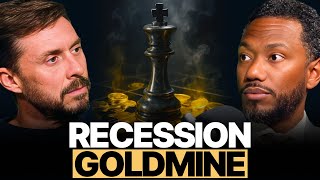
Delroy Gill, a top Black realtor, defines wealth as multi-generational opportunities and relationships, not just money. He credits therapy for breaking harmful habits like excessive drinking, and says a rich life means choosing who and what surrounds you. He built his success through regular self-imposed challenges and deep empathy with clients.
Chapters
I had terrible grades, but I loved going to school 'cause I would go there to make money.
That's it.
I would start with 20 pence and I would flip it and go around and make it up to like £5. And as soon as I got £5, then I would spend it on the candy. Then I'll take the candy to school and I would sell it for 5 pence. So instead I'm buying it for 1p and I'm selling it for 5p. I would just flip my money in that way until I got enough. And then I started buying like t-shirt, designer t-shirts. I would like actually pay attention to like conversations in the playground of like kids' needs. Whatever it was, I heard people say that they wanted, I used to find a way to buy it and bring to school and sell it for more. All the, that's all I did. Delroy Gill is America's top Black real estate agent and top 20 at Live Sotheby's International Realty statewide in Colorado. With $400 million plus in sales, he advises CEOs, athletes, and entrepreneurs nationwide. Featured in Robb Report, the Denver Post, and Business Den, Delroy is a number one Trendsetter Entrepreneurs Organization member and nationally ranked by the National Association of Real Estate Brokers. So I'm 19 years old, I've moved back to America, and like this guy is training me to work from home in '05 to sell websites where I get paid a commission. I ended up working with him for like 6, 7 years, and he would just train me and train me, and I just like started going to trade shows, selling in person, and I was like, this is like easier than being in the shop. Streets, no one's trying to kill you. But then as, you know, we were getting on a real trajectory, then the '08 recession kicked in and all of the real estate companies— Coldwell Banker, RE/MAX— I was selling to all the big names. They all started canceling their marketing budgets, turning their websites off. And I just thought to myself, wow, all of these people know that if they kept doing this or did it in the right way, like, they could suck up market share. I could take this software, become a real estate agent while all these agents are out of the business and they're leaving all the market share open. Like, why don't I get in the game now? And I just did free loan modifications. So anyone that was in a hardship scenario, they could sign up on this website and I would help them do a loan modification for free. And if they couldn't pay for their bills anymore, then I would sell their house for them.
It's a pretty high demand market in 2008.
It's the same thing that happened to me in the playground, right?
Were you making a lot of money at this time? That year I'm making Welcome to Money Stories, where we have conversations with founders about money, meaning, and what makes a truly rich life. Today I'm joined by Delroy Gill, the number one Black real estate agent in America. What, what an incredible accomplishment. And you focus on high-end luxury real estate. I, I can't wait to dive into your story. Delroy, thanks for being on the show.
Thank you for having me. I'm excited to share. And you know, our mutual friend Rhett has introduced me, so I feel at home and like family already, so I'm good.
I love it, man. Well, let's, let's start from the beginning and tell me how you grew up with money and how did that drive you to become successful?
How I grew up with money, or without it, I should say. But, um, you know, when you're, when you're in it, when I was a kid, um, I didn't really have a direct connection or non-connected to it, meaning I did— you don't know if you're rich or poor when you're a kid, right? You're just growing up. I'm from London. Originally, I grew up in a neighborhood called Croydon. It's in South London, and it was a nice-ish neighborhood. It became worse as I grew up and kind of went downhill, and I bounced around from multiple houses when I was growing up. I've probably been to, I would say, at least 8 to 10 different, like, middle and secondary— well, high schools, as they would call them in America. So I bounced around quite a bit. Growing up, and that was both, I would say, a pro and a con, just bouncing around that much. But I always had fun. I have a big family of cousins, and my grandma had 11 kids, and then all my aunts and uncles probably had at least 2 to 5 children each. So birthdays were, you can invite your cousins, and that's about as far as the guest list went. I didn't really have friends attending, uh, birthday parties. But I had a big friend group when I was growing up as a teenager in London. It was a very communal place back then. So we would just go to the park, you know, live our life and not really think about money. But then I think when I started to get to, I would say, 12, 13, I started like noticing little— I would, you know, start making requests and start getting a lot of nos and you know, all of that side things happening and the cool shoes that you needed and all of those factors were coming in. And I think I would say my tipping point of money, and I've told this story a few times, but my true— when I was like, this is not okay— was I was kind of like running around with the wrong crowd. And I've got a lot of family that were into a lot of bad stuff as well. So I didn't have that many good role models and examples of like entrepreneurship or business mindset people, um, and I wanted some money and I wasn't doing good in school, but I just thought it was easy and I would just like talk to girls and hang out with my friends, um, and my stepdad at the time said to me like, hey, if you do good in school, I'll give you £100. And back then that was like a lot of money, so I was like, oh, I want my £100. So I started doing schoolwork like for that month. He said if at the end of the month you, you could get an A I'll give you this £100. So I got all the grades, took the test, did it all, came home like with the report card thing and, and showed it to him. This is like the very last year in America, it would be in middle school. And so I showed him the grade card and I got the A, and then he went to pull the money out of his pocket and handed it to me, and it was £100 of Monopoly money. And he said to me, yeah, so you can get the A, you shouldn't need money to incentivize you to get the A. And that put a battery in my back like you wouldn't believe. I didn't even know how much it impacted me even at the time. I remember being a kid and I was real pissed off, but like looking back after those like 10 years of time, like I just always won. I never wanted to ask for anything and I never trusted anyone to give me anything after that.
What a powerful experience, not necessarily from the positive side, but sounds like it motivated you.
Definitely, it definitely motivated me, um, and it, and it gave me, you know, like we say on these journeys when you're, when you're an entrepreneur, like sometimes the things that will get you from A to B won't get you from B to C, you know, and that, that motivated me as like, don't trust anyone if your own stepdad can do this, like, and you can't rely on people. So I just had a self-internal thing where I had to get it. Don't ask anyone for anything and just do it all yourself. You can't even get your parents to help you, no one. So I just started thinking of anything, like CDs, clothes, candy. I just started making my own money from that, from that day forth. Never asked for a penny again.
How did you start making money?
Uh, I would literally, I would go to the store before school and I would buy like from— we have these like things in like the corner stores and you get like penny, it was like 1 cent, like individual pieces of candy, right? So I would just spend like £5 and get a big bag. This is $5 equates to like $8 today, but lots of money back in the day. But Um, so, and how I would get that £5, because my parents stopped giving me lunch money at that time, they were— I was getting free lunch, so I didn't actually have any cash. I would start with 20 pence, and we would have this game that I created, and it was called Flip. And you would just flip a coin, heads or tails, and whoever's won, you would get the other person's coin. So you would just start off with 20p in the day, and I would flip it and go around and make it up to like £5. And as soon as I got £5, and I would spend it on the candy then I'll take the candy to school and I would sell it for 5 pence. So instead, I'm buying it for 1p and I'm selling it for 5p. So I would just flip my money in that way until I got enough. And then I started buying like t-shirt designer t-shirts, and then, you know, so on and so forth. And I just started buying a bunch of stuff and just flipping it and just keep on reselling it over and over. Just anything I would find, anything that I would, you know, Now I'm saying it out loud, now I'm thinking I would, I would like actually pay attention to like conversations in the playground of like kids' needs, like what they would be talking. Oh, you know, I lost my pencil today, I really wanted this pen, or you know, I, I want to buy this t-shirt. Whatever it was I heard people say that they wanted, I used to find a way to buy it and bring school and sell it for more. All the— that's all I did the whole time I was in— when I was in high school in London, that's All I was focused on— I had terrible grades, but I loved going to school because I would go there to make money.
That's it. So there's a singular focus from a very young age.
Yeah.
And how does that start to unfold? When did you come to America? Is that later? How does, how does your—
yeah, so then, so going through school, because I literally was just going there and making money, truly was getting terrible grades. And then by the end of it, we, we— because I would go sometimes and then I would leave at lunchtime, never go back because I'd made the money, and we would just hang out at my friend's house and then like go back at the end of school, meet my friends, and then go on the bus going home. Um, so by the end of it, we— me and like 5 other friends— we got expelled from school like right before we're supposed to take— like in England it's called GCSEs, that's like your finals to take your tests. Uh, like 6 months before the end of school, we all of us got expelled from school, so we weren't able to like study and learn for our GCSEs. And then my mom said to them like, no, he needs to— where, you know, he needs to get something done in his life. So they were like— they actually petitioned for me, and I ended up being able to just go back and take the test, which I completely just failed at because I didn't study. I was kicked out of school before, and I didn't take the time for the 6 months to actually study and do that because I was focused on making money. But I did take them. I don't even remember what I got, but I got kicked out of that school. Um, the school prior that I left from to go there, I was getting into trouble and I got kicked out of that school. And then my parents moved the last time, like, far, far away from my school, and I was traveling like 2 hours to school every single day to go to a nice school in a better neighborhood, which I still found the bad kids to get involved with. Um, but then, um, once I had finished and took those GCSEs from that school I was just kind of floating around, just hanging out, not doing anything with my life. So my stepdad got a job opportunity to move to America, um, and he said, you know, what do you want to do? And I was like, I don't want to go. Like, I'm staying right here. I'm good to go. I'm making money. I'm, I'm fine. Then they kind of gave me this dream of America, like, we're gonna get jet skis, we're gonna live in Florida, there's gonna be a beach. And in my mind I'm like, yeah, it's actually— that could be good. But then like, I was like, do I trust this? And then we moved out and then we came— like, while we were going through immigration, the problem was I thought I was like coming to check it out, and then when I got here they said like, we're going through immigration so you're not allowed to leave. So I was essentially stuck from the age— not stuck, but I'm 17. And so at 17 we moved to Colorado. And at that time they were like, you can go to school, you can figure out your life, you know, because now I've finished school. I've gone— in England we finish when we're 16, so I've come to America and I'm 17, and they don't finish for another year. So I was like, you can go to high school, or you can try and apply for college, or you can get a job. So I was like, well, I'm just gonna go back to school to meet people my age. And then got here, and when I went to high school, I was just like, man, the— like Everything felt like it was like 2 or 3 years behind. Um, everyone, like, just the, the, the level of maturity from a city kid who had been traveling to school on public transportation since he was 8 years old through the city of London, growing up, making money since I was 12 years old, to come into an American high school where their parents were dropping them off in the carpool lane at 17, 18 was just like unfathomable to me. I just was like, you have to ask your parents like to pick you up and drive you places, and this guy has a car and he's only 16. Like, everything was just off for me. And then people wanted to get drunk and get wasted, and like in London at 16, people were going to rave and taking like hard drugs. Like, I had just seen so much in life that like these guys getting drunk were just like This is— you guys are— you're getting wasted. Like, you— I'm from a city, like, you can't even get that drunk and live in London. Like, you, you would— at your age, like, something could happen to you. You could get into— you could get robbed, you could get kidnapped. Like, things could happen to you if you were 16 years old, 17 years old, and drunk walking in the city of London. So I just was like, this is way too like, we're off-kilter on, like, maturity. Um, so we— I went through that year, met some friends, you know, had some relationships. But, uh, the day the green card came back in the mail, I booked a ticket and went back to London. Uh, went back to London, uh, was back and forth, back and forth. Met my wife, had two kids, and then, you know, I was kind of I had my friend group still that was kind of halfway doing like street activities, and I was like trying to get into a corporate lane and get out of any of that lifestyle that I was living before. There was a guy in America who was from England, and he was a VP of marketing, and I got introduced to him. And he was like, I think, I think you could, you could sell like my, my, my software. And I'm like, sell software? Soft— what is software? Like, I had no idea what software was. I I was super rough around the edges. But he just saw something in me and he was like, no, I think you can do it. And he was like a, you know, now I know way more terminology, but this is like a full-fledged startup company. This guy is in his basement with, you know, 3 different desktops, 7 screens, like trying to build this company. And then he's got me there on the phone, just dialing, doing sales. And he just started like really believing in me when I came back. So I just took that and I was like, I'm going to, I'm going to really dive into this because, you know, even when I was 12, the people around me that I saw outside of like doing any street activity, the only other people that I saw that were making real money were people that were like either like building houses, doing work on houses, Like, I would always see something to do with housing that was like a good lane. Um, and then my real dad, he could— he did like fixed up homes and sold them as well. So I was like, I didn't have a big relationship with him, but whenever I saw him, he was doing some work on some houses as well. So I was like, yeah, that house stuff, I don't want to have like a boss and like someone telling me what to do because I had been making money as well. So once I, uh I ended up like him telling me the software had to do with real estate. He was like, it's real estate software. I said, oh, real estate, hmm, this is, this is interesting. Is that just— yeah. So I go, I sit with him, and I'm making these sales calls. So it was, it was basically a lead generation tool for real estate agents, and it was, it was before social media. This is probably in like 2000 This is in 2005, probably.
And how old are you at this point?
Um, I am 19.
Okay.
I'm 19 years old. Like, even saying it out loud is crazy. So I'm 19 years old. I've moved back to America and like, this guy is training me to work from home in '05 to sell websites where I get paid a commission, not knowing I'm an independent contractor, have to pay taxes. Do everything myself and I'm running a business. I had not— like, I didn't fathom. I thought, this is my boss, this is a job. Like, no, I was an independent contractor. He contracted me to sell this software and I didn't know about equity or anything. So I started selling this software like crazy. And true, like, that was, that was the first time I, I had a mentor. Like, when I was sitting with him in the basement He would like analyze my phone calls, right? And he would say, like, I would finish the phone, I would, I would get on the sales call and I'd say, okay, yeah, yeah, yeah. Like, great. Good to meet you. You know, let me know if you have any questions. If you're interested, like, just give me a buzz back. And then, you know, hang up. And he'd be like, no, you don't finish a call that way. You make sure there's a follow-up to it. You say to them, hey, thanks. Did you get all the information? Do you have any questions? No. 'Did you need some time to think about it?' They would say yes. They would say, 'Okay, no problem. I'm going to call you back next Tuesday at 3 o'clock. Does that work for you?' And then you would get that. So little, you know, those little fine-tuning things that now I know in business are just so impactful, that fine-tuning. So he— I ended up working with him for like 6, 7 years, and he would just train me and train me. And I just like started going to trade shows, selling in person. And I was like, this is like easier than being in the streets. No one's trying to kill you. Like nothing is going to happen to you. And you're just selling to corporate people. They buy it. I couldn't fathom that over the phone I was charging someone $2,000 to $3,000 for software and they were giving me their credit card information and I was just closing deals and like processing credit cards over the phone in 2005. It was like absolutely mind-blowing to me.
How much money were you making, or what was your first taste of success?
Yeah, so at that time, like, again, because I didn't fathom like how this worked, so I was just like, my rent, it was like, I think my rent was like $1,000 a month. So I was like, if I'm— my rent's $1,000, I just need to make like $1,500 a month and I'll be good. So like, at first I was like, I need to make that. and then like all my bills were paid, and then I thought like I had made it, right? I was like, my— all my bills are paid, I'm making money, and I'm working from home. Like, that to me was just a win. I was, I was like, I'm good. But then my wife got pregnant, and I was like, oh, I'm having a baby, I might need more money than this. So after that, like, I was making probably like $19,000 a year, $30,000 a year back then. It was like above minimum wage. But I just always equate to like, I didn't want to have a job and have a boss, so I just thought it's better than that anyway. I'm killing it. Yeah, I'm killing it. But then in year 3, like, the market in real estate started picking up and I was really selling, so I started making like real money at that point. Um, and then I, you know, I started thinking, all right, I want to buy my first house and do different things. So I started like really like analyzing and doing my taxes a little bit different and learning about things like that and trying to like go down the road of how much money do I need to buy a house and not live in an apartment. And that was probably the first time the switch went on to like really now to start budgeting. How much money do you really need to survive in the world? And I was like, I need $5,000, not $1,500, you know, I need a lot of money. Um, so I just started saving and started selling even more. We started upping the prices. But then, as you know, we were getting on a real trajectory. Then the, the '08 recession kicked in, and all of the real estate companies— Coldwell Banker, RE/MAX— I was selling to all the big names. They all started canceling their marketing budgets, turning their websites off. All the individual agents were canceling their websites. And I just thought to myself, wow, all of these people do not know that if they kept doing this or did it in the right way, like, they could suck up market share. Because I— because the— my mentor, the guy who told me how to do this, like, the selling formula, it just works for anyone, like a sales funnel. So he's like, whether it's cornflakes, cars, or houses, like, how you're having these conversations is how you would sell. Anything. So I was like, well, if that is true what he told me and it worked this time, then I could take this software, become a real estate agent while all these agents are getting out of the business and not— and they're leaving all the market share open. Like, why don't I get in the game now? And I just told him, I told him, I said, hey, I want to transition. He's like, you're going to the dark side.
Don't—
what are you doing? He's like, do you not see what's happening in the economy in real estate? And like, this is the first time I've ever seen a recession. I don't even know what he's saying to me when he says recession. I'm like, what do you mean? They can't— like, they don't know what they're doing. I just thought they don't know what they're doing. I don't— I didn't think about market, recession, all of that was gibberish to me. So I just said, all you need to do— I said, Paul, I'm sure you've made a lot of money off me, all these— because I was selling them and getting all the upfront fees, and he was collecting all the monthly, so he had residuals coming in. And I said, look, just give me the software for free for 2 years. When I leave, you don't need to pay me out. I don't want any equity. Just give me software for free for 2 years. I branded it and I did, uh, Your Hope Team. And it was a time when Obama was coming into it and he had his whole brand around hope. And I just did free loan modifications. So anyone that was in a hardship scenario, they could sign up on this website and I would help them do a loan modification for free. And if they couldn't pay for their bills anymore, then I would sell their house for them. And the reason I thought of that idea is because I couldn't pay my bills and I did a loan modification on my own house. After I started making money, we bought the house and I thought, man, there's got to be other people going through this too if I'm going through it. And when I bought my house a couple years before that, the market was really good and I didn't get enough education. I was like, I'm gonna educate people about these loans and why they're in this situation and how it happened. And I just was like, I'm an immigrant, like there's other immigrants that came to America and they don't know like mortgages and how they work. Because prior to that, I had never even had a car loan in my life. I hadn't— everything I knew about when I came to America, I bought my car cash. Everything I did was cash. I was like, you know, I didn't know about leverage and, you know, all of those types of things that, you know, when you can play with money in a different way. So I was just getting flooded with leads, low modifications, cranking them out, doing short sales and pre-foreclosures. It's probably running 15 to 20 transactions per month. Files are probably as thick as a dictionary, uh, and everyone— and I joined RE/MAX at the time, and everyone there was just like, how are you doing that? Why would you do that? And, and again, like, I'm just coming in so naive, not knowing like that my files are 10 times more complex than a regular real estate transaction. Because I, for 2 years straight, I'd never done a regular real estate transaction. But I was just like, if this is how they are, like, they're difficult, but I can do them. And I just did. Like, I even helped title companies and Countrywide Mortgage. I helped them set up their short sale department. Like, I literally trained some of those individuals because they had never— short sales weren't ever a thing before that. And I had done so many that they called me to speak to their department. So I had a leg in. So any— and that was the biggest bank at the time, is Countrywide. So I knew all the sales reps at the bankers, and I was talking to them on the back end. One time I sent a pizza lunch to every single person at Countrywide. I found the address because in those scenarios, sometimes there were like people go— they were— I would get a phone call and someone would be getting kicked out of their house the next day. And to, to get that to stop from happening, to stay on hold, like, to get through was near impossible. So I had direct relationships with the people that could turn those things off. And so I was just like cranking on it hardcore. Did that for 2 years, and then in year 3 was the first time I ever did a regular transaction.
I mean, there's so much to unpack here. As you— what strikes me are a couple of threads I want to pull. Number one, you solved your own problem, right? Which is one of the classic entrepreneur ways to go make money. You were struggling to pay your bills and you just thought somebody else out there must be doing this. It's a pretty high demand market in 2008.
Yeah. You know what? It's just like, listen, it's the same thing that happened to me in the playground, right? I, and I, and that, that, that one thing, I don't know where the level of like foresight or vision— and I've taken like, you know, when you do your profiles, I'm a visionary. I, I see what is coming, and I think a lot of it just has to do with like really knowing like the direction that things you think are gonna go in. And sometimes you see them from yourself, or sometimes you hear it from the people you're surrounded by, but anytime like entrepreneurs are doing stuff, it's like if you listen to what the murmurs are for people, what their gripes are, or what your gripes are, there's a problem to be solved. There is something to fix this. And can you do it? Do you have the skill set to do it? And I just thought, with this I do, because I did it myself. So that, that's how I thought about it. But always just listening out for where you think your personal skill set— some people wouldn't have the patience for it. I just have a knack for patience. I have something in me, um, well, I think it can't— I, I think it actually got drilled into me from my, from my real dad, my biological dad. He used to always say to me, like, you know, you don't need to rush it, like, things will come when they're supposed to come. Like, when he used to make money, he's like, he could buy a car and he's like, no, I'm not gonna buy right now, I'm gonna wait. And he always used to just wait and, and build up. So I've always just been patient and, and knowing that things take time and don't rush ahead. And, and I also had experiences from a young age of seeing what the fast road could end like. I've seen people die, I've seen people go to jail, I've seen like all the scenarios people could think of, I've seen it happen in real life. So It's like, do you want to go down that road, or do you just want to take your time and get there slowly? Like, I'd rather just take my time. Because the other thing I used to think about was like, wow, when I'm 20, like, after 20, you're gonna be like— the second— the back half of your life is way longer than the front. Like, normally kids, like, when I have conversation with kids, they like think they, they're like they know everything now when they're like from 0 to 20. But then I used to think about like, I always used to think like when I'm 50 or when I'm 40 and it's like from then I thought, wow, someone lives till 80, that's 40 more years, that's a long time. So I thought, I'm good if I can just like make it through and get to like 20 or 30, like I've got a long way to go. I could, I can still live for a long time and figure some stuff out. If I can make it to that point there. And that was all my goal was, is like, make it to 21, 25, and then get through whatever madness this is. And then I can figure out life after that.
So you're, you're helping people refinance their short sales. And, and were you making a lot of money at this time?
I, I, that was, I was probably, I was making decent money, but I was so far behind from the prior years of starting that real estate business because those transactions, they, they took 12 to 18 months. So I was behind a year on bills and all my mortgages. And like, I was cutting hair. I just remember many days, like, I would open the refrigerator and it was just like bright lights. It's like, there's nothing here. In there, but we were going to the food bank, like me and my wife with one baby. And I just remember, like, I had a— my son was probably like 2 or 3 years old. Yeah, maybe 4. And I just thought, man, I can't let him have any memory of this. Like, I do not want my son to remember going to the food bank. Like, no way. So it's like, it's even emotional thinking about it. It's crazy. Um, but yeah, we would go and I just thought, no. So, so yes, I was making money, but I was catching up. I was just getting back to zero. Um, I would say in year 3 of real estate, I began to stabilize and like began to be able to pay the bills and like, you know, go out to dinner. Like, that was a highlight of the amount of money I was making.
What's it, what's it like to go from having to go to the food bank to starting to taste that first success?
You're nervous. The food bank is so close to your memory that you're like, should we, should we spend this $100 on dinner? Like, what if the— what if this doesn't continue? You were— I was living in fear all the time, all the time. I was just like, will this continue? No, I don't know if it will, so let me not enjoy it and just keep working. Keep working, keep working, keep working, just grind so hard. Like, I would work 12, 16-hour days nonstop, like, every single day. I just wanted to make sure I was so far away from that that I wouldn't be fearful anymore. And it's like, that carried me for such a long time. Like, I remember, and then, because even when I started becoming successful in real estate, I would get around people And it started to change after I made my first six-figure— had a six-figure year. And my mentor had this like mini group of agents that we were around and a mortgage guy. And he was doing big business at the time. And he would say to me, they're all right, like, what's your goal for the year? And I'd be like, 60 grand, 80 grand. Like I would do these real small steps. And he's like, just say 100 grand, man. What are you doing? And I was like, 100? And then, and he's like, why won't you do 100? And then I just remember, like, my— another, another thing, when I was leaving to go back to London, my stepdad said to me, like, because he wanted me to go to university, graduate high school, all that stuff, he's like, with your life, you'll never make more than 100,000. You're never gonna do that. Wow. You're probably gonna end up at some crap job. And then, and I just thought Oh man, it's amazing what those imprints—
just one comment, you put a thermostat.
Oh boy, yeah, a well-sealed ceiling right there. And I was just working towards to get to that ceiling. I thought breaking through it, nah, he told me, no, I'm gonna try and get there, but I need to get close to it before I even say I'm gonna get there. And then When I, when I did the— when I was trying to go in from $60,000 to, um, to $80,000, my mentor was like, nope, I'm not taking it. You're doing $100,000. You're doing $100,000. You're doing $100,000. And I was like, all right, I'll do $100,000. Okay, let's see what happens. And then that year I made $95,000, and I was like, oh my gosh, I can make whatever. At that point I knew I can make whatever I say I can make. That was it. It just changed me. It was just mindset shift in that moment. And I was just like, now it's go time.
And I just wonder, you know, we talked about the lack of trust that was built into your childhood. How did you trust these mentors that they had your best interests at heart?
Yeah, um, that's a good question. I think so. The first guy, Paul, he, he was introduced through a family friend, but I definitely kept him at arm's length. For sure didn't let him in too much. The second group— and it's always— and at first it was, it was from a relatability. So the second— so the first guy, he was from England. The second group, there was a lady from England in that group as well, and then two, the two other, um, individuals were from America. Um, so I could relate to people. Like, I knew that those people from England they would know, like, in London is— it's a different, like, how race and rich and poor and everything and the structure of America is, it's different in London. In London, it's very a class-based system. I— when I meet someone from London, they can tell you that this guy's— he's from a rough part, so he's from a rough part of England. They will know 100%. Like, they, they know how I speak, how my tone is, how my mannerisms, where I'm from. And in London, it's very difficult to break that mold through career. And like, maybe in entrepreneurship you can, but in just a corporate setting, near, near impossible to make it all the way through. Nowadays it's changed a bit, but growing up, definitely not. It was like, that kid's—
it is it different in America? How would you experience that?
Yeah, it's different in America. You could have like, this would equate to imagine like, and I don't know the specific things here and peoples and their types, but like, I'm gonna stereotype for this point. But imagine like a country bumpkin from like Texas. He could, you could meet him and he could present in that manner. And be— but he could be a billionaire, he could be an oil baron that has made millions, and he could also have started from ground zero and made his way up. Like, that cannot happen in London. No, in America it can. You can be from anywhere, you can have any type of mannerisms, and you can figure out entrepreneurship in some way, shape, or form and make it. Many will say it's changed today and it's not as American dream is alive or is it not alive, that's a whole different discussion. But definitely from a base level of opportunity, you can work hard, make the right connections, become trustworthy and have a skill set and become successful in America. That is different.
And did you ever feel like race played a factor in your success in America? How did— how does that work for you?
Yeah, I mean, it's got pros and cons. So it's funny because there is— I'll tell you a story. When I was starting out and I was at RE/MAX and I was doing a lot of business here, this is the English part of it, which is— so I was at the office working late one night, as I was. No one else is there. I'm just hustling. Then I leave to go out to get something from my car. Forget my key card to let me in the building, so I get locked out. On the ground level of that RE/MAX building was a Wells Fargo Bank. So I'm going inside, I see these people. I've been working at this office probably 5 years. Hi. See them every day, chit-chat in the lobby, whatever. So I go back, I'm knocking on the window, and they're like looking through the glass. They're like, what? There's a guy like knocking on the glass here, what's going on? So they like hide, they literally hide. And I'm like, what? So they start leaving, but like, I know the building, I know where they— I'm just trying to get inside. I'm like, open the door, it's me from upstairs. So they run and start heading out the back. And I'm like, oh, let me run around to the back then. Cause I know what door they're coming out of so I can get back in and tell 'em it's me. So I run around to the back, they literally slam the door closed. And I'm like, they're gonna call the cops. They don't, they don't know who I am. They just think it's a black guy. They're fearing for their lives, probably thinking I'm robbing the bank. And I was like, whatever. So I just end up just leaving. I just went home. I come back the next day. And then there's the bank. You go into lobby, turn right, the bank's there. You walk straight ahead is the lobby of the RE/MAX office. So I go up to the front desk. And then the front desk lady says to me, hey, were you working? Late yesterday? And I was like, yeah, I was here. And then, and she was like, yeah, the bank said like someone was trying to break in. Like, did you see anything? Did you like hear anything? They said like there was, there was a black guy like knocking on the, knocking on the glass. He was going to break the glass or something. It's like, I don't like, I didn't, I was like, yeah, really? Her name was Cindy. I said, really, Cindy? Did they say it was a black guy in the building? She said, yeah. I said, I said, that was me, Cindy. She said, what? No, but you're from England. And I was like, yeah, but do you not see, like, I am black? Like, she did not equate— I was the only black person in the entire building. She didn't equate me to being black because I was from England. She just thought I was the English guy. So that's like, I don't know if that's a pro or a con. It's like, but there's all different ways in which being from England and being Black, but then there's the opposite side where it's like people would just see me, assume that I'm American or that I've like had to make my way through it. And because I'm English, it's just been a benefit or because I'm Black, you can't do it. So I've had like business partners and associates that are white. And they're like, and I was like, yeah, I think I'm going to go my separate way. And they're like, oh, I don't know. Like, you need the white guy. You need the white face. Like, you need that to like—
They said that explicitly?
To my face. To my face.
How does it feel hearing that?
Yeah. And there was another time when, because I knew there weren't, there were zero Black luxury agents in Denver at the time. And so I wanted to expose more people to it. That were minorities. So I brought like 10 Black highly productive agents to Sotheby's to have like just a meeting and discuss. And we had a top producer dinner, a lunch that same day. And I met them in like at 10 AM, toured them through the office and, you know, said, hey, ask me any questions, I'm here. If anyone is interested, like, let me know, like you can get into luxury too. Then I went to dinner and she was like, oh, what was happening with that meeting you had? Like, you should, you know, you probably like, for appearances, like, probably not bring all those people here. I was like, what realtors? I was like, they're really like, what people? But tell me who I shouldn't bring here. Wow. And she was like, you know, I was like, no, I don't know. I don't, I don't know what you mean. Like, so, you know, there's all different angles. How does it make me feel? It just, it's a real thing. Racism is, is a real thing. Um, you know, and, and, or ignorance too, is, is, is. So sometimes it's like a serious matter, like that lady telling me like, you shouldn't bring them here. I know what the underlying of that meant. Cindy at the front desk was just naive, you know. So it's all different ways that it can play a factor. Um, but I, I just always just try and be a pathway, like a— I want to blaze a trail I don't care if anyone's been here or done this before. Anyone that has, I, you know, I'm always open to learn and get information from, but I just want to kick the doors down and leave them open. It's like, I'm— I've come here and I don't— like, sometimes definitely there is, you know, privilege blocks that exist in America that I may not be a part of. Um, but I'm also have privileged blocks where I come from, so I see the opportunities that are here and how they can be navigated in the right way. Um, so sometimes it's just the same thing for me, like, if everyone met me when I was from 19 to 25 and before Paul like molded me and, and gave me the right vernacular to use and how to handle this, they would have probably been like, this guy is— there's no way he's making it in life. But it could just be a conversation with somebody and you can help them and learn and educate and do different things. But, you know, the more I got into real estate as a Black person being in luxury was the more I realized how non-existent my position was. Like, there was nobody— like, coming from London and then the first year when I applied for the Association Award of Black Real Estate Agents and I became number one. I was like, that was unfathomable to me. Like, I didn't think it would be me. Like, this is America. There's so many Black agents here. There's LA, there's New York, there's Miami. There's like top brokers in these places. Um, so for it to be Delroy in Denver, I was just like, this is crazy. And then I started even digging into it and it's like, okay, if we, if we took out race and we just said, well, you know, that year I think I did like $38 million in business. And then I thought, and then I looked at just the national rankings and like the top white guy did probably like $1.5 billion, you know? So, but that's the gap. I'm number one. At $35 million. And then the top guy just overall is at $1.5 billion. That's the gap in America. Wow. Right. So it's like, now I'm like, I look at both of those things of like, well, that's an opportunity because the gap is so large that there's way more business to acquire. But then also, wow, that's how far behind and positioned Black agents are in America in comparison to their white counterparts.
I mean, that, that is such a staggering gap.
Massive.
So, so where do you go from here? How do you close that gap?
Yeah, I just, well, one, you know, I, for me, it's just small steps. As I said, I'm patient. So. Got that award, realized where the gap is. So now I just try— let me get number one in Denver. Let me become the top agent here, um, and, and try to close that gap and see if that's doable. Start there. And then, you know, if I wanted to expand and go into different markets, you know, you need to get those types of numbers. You do need to be in an LA or a Miami where there's 30 million, or Aspen, or, you know, there are places in Colorado where it can exist. But even just as an individual, like, there are big leaps that can still be taken. And it has grown. I'm thankful and blessed that I've been in the position to even pull that benchmark higher and higher. And other agents have followed, like, bringing awareness around of it too, of like, hey, you know, even because within Sotheby's, there is now like a Black agent collective. Of like luxury brokers, and now they're all applying for the award, and everyone is like seeing it as like something to aspire to now.
Amazing.
More people are joining. So again, it's all about awareness and exposure. I think that, that was the one thing in my life where, like, when I was growing up, like, I kind of had the Rich Dad Poor Dad thing, um, whereas my real dad was like a menace to society, and my stepdad was like a corporate 9-to-5 guy. And I would be around both of them and see different sides of the world, um, seeing different sides of like, from a luxury standpoint too, of like, okay, he goes to a corporation and like that corporate— ACI was the name of the company, it's like IBM, similar kind of caliber— but like that company could rent out Disneyland. And like it would just be the company event and I would go to that. But then I would go back to the hood, you know, where we lived, and then like go with my dad and then see all these weirdos and drug addicts and stuff. And I'd be like, wow, there's like so many different sides to life. But then, but then both of these individuals were dealing with every facet of life. Like my stepdad was dealing with people in the hood and corporate, and my real dad is dealing with corporate and people in the hood. So I would always see all these weird dynamics of people. And growing up, and I would— I would— both of them would take me along to different things. So I was just conversating with so, like, judges and any type of person. So my whole life growing up, I just felt very comfortable speaking to anyone. I could just— or I could— you could drop me, and I moved school like 10 times, right? So I've had to rapidly build relationships and meet people and get to know people and see who I can trust and not trust. And that's how, even when you were asking me before about like, what, how did I, you know, become vulnerable around that, that mentorship group and things like that, it's like I, through going through all those experiences, I keep a little distance, but I can, I can sense an intuition. I have a very, very high level of intuition and sense because when you grow up around danger, you have to read a room, like, a lot. Like, I didn't know if I was sitting in this seat today, but I wouldn't sit in that chair and look at the board because I need to see the door right here and if somebody's coming in it. Like, if I go to a restaurant, I can't sit with my back to the door. There's just certain things that are just baked into who I am at this point, where I can walk in a room and read a room and, and know who people are and, and sense you know, what, what is happening. So that's how I'm able to be vulnerable with more people. And then as time's gone on, and, you know, you learn, you grow, you get therapy, and you go to retreats, and you join entrepreneurial groups, like, you start shedding those walls even more and letting more people in, and, and your experiences, and, and it helps you grow. Whereas, like, when, when I was saying you get from A to B, not B to C, which is like when I got from A to B, I did hit a wall. I wasn't growing anymore. And it was because like I was still in that fear state and I wasn't letting people in. But I had, I had surpassed and superseded the mindset of the people that were around me, and I needed to share. I knew, but I didn't trust to share with those people. I had to find new people that I was— that I felt comfortable sharing with.
So when was the first time you felt financially successful? Like, when did you feel like you had made it?
Uh, I'd probably say 2020. COVID. Money was just being printed. I just, I couldn't, I couldn't fathom like that. Like, I remember 2020. This is, this is what, this is why I thought I made it in 2020. In 2020, I looked back at the vision board I had made in, in, in 2017. I'd made it, I had made, no, 2015, sorry. I made a vision board in 2015. And, and we were moving house at the time. and, and I pulled, I pulled out the, the vision board. We were moving, and me and my wife looked at it and we said, holy shit, the board is— we're it. We're moving into the board. We are at the— every single thing that was on that board was like a dream. Like, I'm saying it was a dream. Like, at the time when we did that board, it was literally like, there's— this would be amazing. Like, this would— this is a dream. And then we poured it out and like the house was there, the vacations were there, the organic food was in our fridge, that yeah, everything that was on the board, it was happening right at that moment. And I was like, damn, we're living in our dream, babe. Like we're actually in our dream. And I was like, I've made it. Like we made it, we did it. And that was the first time when I felt like damn, we're successful. Um, because like, I, I remember prior to that, my wife pushed me along to do a lot of that vision board. Like, I'm a manifester for sure, but I'm saying the things that were on that board, like the organic eating and, you know, the— some of that type of stuff was like, why would we do that? Like, we need to save money and shop at Walmart. No, we don't need organic, it's all the same. Like, you, you know, I was just trying to make up excuses to we don't need those things. Like, we don't have the money for that, and we don't need to go there. We just need to get our bills paid and have, you know, Sunday dinner, and we would be happy. And she's like, no, we need to eat organic, this, this, and there's all these different things were on the board. And then we, you know, go into that place, and I was like, yeah, I'm glad you told me that, because yeah, we do need all this stuff on the board to live a life.
That's amazing. And What does wealth mean to you now?
Uh, wealth means like that there is opportunities that have been created by myself for at least two generations, my kids and their kids. That would be, that would be wealth to me. Um, like, well, well, like, I I don't need wealth personally, but I, I do all of the things that I have struggled through or have had to learn the very hard way. Not that I want my kids to have it easy, absolutely not. They need to— my kids are stubborn and as rough as me in terms of like they're gonna make it by themselves and not want any help. I just offered my son to help him buy a car the other day. He's like, no, I don't, I don't want your money. Um, but like, I want infrastructure set. I want education passed down. I want things that are set up so that whatever they choose to do, there is an opportunity for them. Sometimes it's just relationships. Do I know the right people? That if today, God forbid, something happens to me, not just that we're rich financially, but I've got people that will reach out to my kids and make sure that they have good guidance, they have good mentors around. Like, that's wealth to me. Like, who can, who can help outside of me? And what, what kind of, um, I call it the empire. That's actually a thing that, that we use. Like, we're Building wealth? No, we're building an empire. And what is this empire? Who's in the empire? What structures are in it? So we're just building this community where, like, now, forevermore, it's okay. There will be people that put up guardrails for this and can give you information. Even if you blew all of anything that's passed down, there'll be people hold you accountable. I love that.
And, and Outside of money, what makes a rich life for you?
Um, a rich life for me includes, um, just, I want to say balance, but kind of cliché, um, because everyone's balance looks different. But I think it's, it's the, it's the, um, it's the ability and freedom to control who you're surrounded with. That's, that's rich life for me. Anywhere you go, whether it be on vacation or at work or deal finding or podcasting, wherever I'm at, I want to be able to say no to anything. And that is a rich life to me. I, I want to be able to say no to that client or no to that podcast and know that it is not— I'm all about like energy and vibrations. So like if the vibration wasn't good, I could just leave, you know. And, and, and that is in any setting. And I don't have to— like, I remember again, like in the beginning of my career, the fear would just have me in low vibration, bad energy. And it's like, but you need that check to get that done, so you gotta close this deal even though this client is terrible. Or you go to this event and it's not really you know, these people aren't aligned with you, um, so you're like there, but it's not really uplifting your spirit and your energy, and, and you had to stay there because you want the information or you want to get the deal done. Like, I don't want to be around any of that. Anything that is not uplifting, that is going to lead to a positive outcome for everyone, that, that's a rich life to me.
And you, you touched on therapy and community for starting to heal some of the fear that was so deeply ingrained. Can you walk me through that journey a little bit? How do you start to heal some of that deep ingrained fear from your upbringing?
Um, I think you, you definitely— and I, and I encourage therapy for everyone, especially if you've come from like the hood in any way, shape, or form. You need therapy. Like, all my friends back home, I'm always telling them, you need to go to therapy, you need to go to therapy. We all do. We got PTSD, we got all types of stuff. We got parents that didn't know what they were doing. We got immigrants that came from third world countries. We got parents that were in, you know, foster care and jail. And, you know, and these are our parents. Like, do you think they had the skill set to like raise us in a healthy manner? No. But like, I didn't know that. I thought like when I was growing up, like the amount of alcohol that my family drank, I just thought it was normal. I grew up in like a Caribbean— Jamaican is all my family background. So I would go to like, you know, any, any event, and there would be like people were drunk all the time. Everyone was just drinking, drink, drink, drink, drink, drink, drink, 24/7. So when I met my wife and I was like just drinking, like I would have a drink all the time, and I'd be like, I drink— in my mind, I drank way less than what my family did. So I was like It's nothing. She's like, you drink all the time. And she's come from a household where her mom never touched a drink in her life. So it was like she started pointing out things where I was like, oh, maybe that is a problem. I didn't even know it was a problem, you know. And vice versa, I was like, hey, that's not— you know, what's going on here? So we started like— we had both come from like traumatic backgrounds. And then, you know, so that started festering in our own relationship. And then we were like, we need counseling to figure this through and to get through this. We, we've got to get some counseling. And I think the— when you say, how do you begin that journey? You have to be able to do the work and trust the process. Those two things, like, will save you. But if you're, if you're in there like combatting the counselor or saying, I don't need counseling, or that's for losers, whatever it is. I don't know all the different roadblocks people put up. These are the things about like, I don't— why do I need counseling? I talk to my friends. And you know, it's like, no, there are, there are real like terminologies and things that happen to us that when you grow up, you don't know that's a reference to X, like whatever it may be. Um, personally. So it's like, once you start understanding those things, you can start to evaluate them in a different way. Oh, my family doesn't drink a lot, they're alcoholics, you know? Like, but I didn't, I didn't even know. To me, an alcoholic was like homeless on the street, like holding booze and like dirty clothes. Like, I, you don't, you, I don't register those two things as the same, right? So it's like when you start to unpack and then you start to overlay your life and your role and your behaviors within that, like, the discipline— then it comes down to discipline. Because then he would, like, my counselor would, like, push me and test me. But luckily for him and for me, I'm a, I'm a driven person. So he would say, well, like, you drink a lot too. And I'd be like, well, I can stop drinking. And he'd be like, okay, don't drink for 90 days right now. And I'd be like, okay. And I'll go and not drink for 90 days. And so all of the time, I would just always make sure whatever he told me, I would just take it on as a challenge and just do. Oh, you don't— you're not good at communicating with your wife. And I'll just try and make like— so all of these things I would have to do. I didn't— I wasn't like, yeah, because at First, like, when my wife would say it to me, I'd be like, I do, you know, I do, I do. And then I'm like, all right, the professional's saying it, I better like— I need to change it. All right, I got it. So I was just willing to learn. Like, I think that's, that's a, that's another running theme for me is like, I— some people, they get like, you're, you're a wealth— like, you're a wealth mentor basically to people, right? So it's like you probably have found, you know, maybe earlier on in your career where it's like you're giving this person like these gems. There is like this, this piece of information is about to change this person's life. And then early on it's like this guy's like, yeah, I'll think about it. And you're like, what? No, like this is going to change your life. Like if you do this and then people like fluff around and like, I'm not, if you tell me something where I'm like, wow, this is, this is about to change my life, level me up. I'm gonna try it. I'm going to do it, like, whatever it is. When I go to seminars and I went to conferences, and I think it's because I started doing it at such an early age, when I was going to those trade shows, I was taking notes. So I go to a trade show and then they have a speaker. I'm not like— I didn't book it, but I'm just in that environment because I'm attending as like a selling person. I was like, oh, these trade show things, they're kind of cool. Conferences, like You learn. I'm coming there, I'm getting fired up now, I'm taking notes. So like, that was my first entry into counseling. To me, it's like, oh, your mindset. They used to talk about mindset a lot at those conferences. So I'm 20 years old, getting learning about mindset. Like, my friends, I'm going back to them telling them, no, it's your mindset. And they're like, bro, I'm broke, man. Like, no, we can't do that. Like, and I'm like, I'm going to the dealership tomorrow to sit in an Aston Martin, touch the steering wheel, smell the leather, and visualize myself driving down the street. And they're like, they're not gonna even let you sit in the car. And I said, okay, that's what you think. And I'll go to the dealer and I'll take pictures, and I'll go back and I would hold on to those things. And they'd be like, wow. And then I would drive around neighborhoods and I'll visualize myself in the houses. And like, all of that came from those conferences and me hearing what those people are saying. So I became open to listening to professionals at that time. So that just translated all the way through to go into counseling. It's like, I'm just going to listen to this professional because I just always think, what's the worst that can happen? What, what, like, if I do what this guy says and I win, that's amazing. If I do what this guy says and nothing happens, that's okay. Nothing happened. Like, that's the worst. Low downside, right? Low downside. So just go along with it and, and have the discipline to do it. But I, I get that it is It is— some of it is hard. It's hard. But like, I've— I sometimes just give myself challenges, or every quarter I'll just do something crazy, like 90 days no coffee, 90 days no music, 90 days journal every day. I just always am just trying to do something to better myself.
I love it. And what would you go back and tell the guy having to go to the food bank, what would you go back and tell that version of yourself?
I tell him to just go straight into luxury real estate first. No, but I'd say I tell him you're winning. You're winning. You don't know it, but you're winning. Like, you've just got to stay the course. You're doing everything right, you're doing it all right. Um, because you know what, what I could have done at that point when I was going to the food bank was what I joked about with people. Like, I could have gone and got a job at IKEA and, and the Home Depot and just said, you know what, this entrepreneurship is just— it's not for me, I'm not cut out for this, I'm failing. But you know, those, those failures Uh, and that, that struggle gave me such a deep connection with my clients at that time that 17 years later, those clients are still my clients. And I shared with them my story because I related to them so much, and I felt, I felt their pain, and they knew I, I was empathetic to their pain that they were going through because I told them, I've been, I've done this, I, I had to do a loan modification myself. I will help you not get kicked out on the street. So me going through that was like the biggest helping hand to those people, seeing me help them and someone that was willing to listen and help them for free, for absolutely free, because I knew how much that that meant to me not being in that situation anymore. And I didn't want them to be in the same situation I went through. So I would just tell him, you're doing everything right and you're going through this so you can know exactly how those people feel.
What an amazing way to end this amazing conversation. Delroy, thank you so much for being here. Thanks for sharing your story. And, uh, I can't wait to have a front row seat to your continued success.
Thank you, man. Thank you for having me. Absolute pleasure. Cheers.










