How Losing $3M Leaves You More Wealthy (Marshall Hayes)
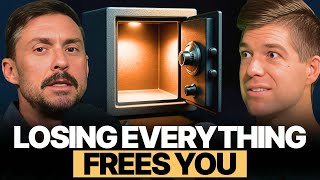
In this candid interview, host Mike Brown talks with entrepreneur‑turned‑executive coach Marshall Hayes about his unconventional path from a modest childhood to building a $3 million digital‑marketing agency, the personal costs of that success, and the insights that reshaped his view of wealth. Hayes recounts early money lessons—working for $4 an hour on his family ranch, experimenting with compounding pay, and witnessing his father’s fluctuating earnings—then describes how he leveraged Google Ads, Amazon, and a nonprofit grant to launch Amplio Digital. The rapid growth (up to $2.9 M in revenue) was accompanied by a collapsing romantic relationship, a partnership that fell apart, and a prolonged period of panic attacks and depression. Hayes explains how he eventually bought out his co‑founder, navigated a low‑ball acquisition offer, and finally sold the company in 2020 for a modest cash payout, which he invested wisely during the COVID‑19 market crash, growing his net worth to about $2 M. The conversation shifts to his redefinition of wealth as the freedom to direct one’s energy, the four pillars of financial health (income, assets, expenses, future earning potential), and the practices—mood tracking, somatic awareness, psychedelics, conscious leadership, authentic relating—that helped him heal. Hayes now coaches founders, emphasizing evidence‑based confidence, aligning personal life with business, and the importance of relational support. The interview weaves together themes of confidence, mental health, partnership dynamics, entrepreneurial strategy, and a holistic view of wealth.
Chapters
I break down as a human for, call it, 5 months, 8 years of panic attacks. I don't know how to be a human right now. And I think my, my brother was pretty consistently chipping away at my confidence and like who I was as a human. What he said to me was like, all of our success was in spite of you, not because of you. Wow.
Marshall Hayes is a seasoned entrepreneur turned executive coach with a passion for the founder journey. He empowers founders and CEOs those who have their footing in business to structure their business in a way that allows them to live the life that they really want to live. Drawing from a blend of frameworks around personal growth and business, including conscious leadership, authentic relating, and traction, Marshall helps founders and CEOs access deeper relationships with themselves, their spouses, and the people that matter to them.
I want to double-click on this, this confidence piece.
If somebody could have told me that my romantic relationship collapsing was going to lead to my, my personal life, like my internal story collapsing was going to lead to my business partnership really collapsing. And I could have heard them. That would have been really freaking helpful to me.
Sounds like you were being driven by sort of some darkness there. What were the lessons?
I think I have a great answer for you. I finally, like, maybe named the 4 pieces for myself.
Your greatest gift lies next to your deepest wound.
Yeah. I built a company from nothing to $3 million. I feel pretty successful now, and I'm not sacrificing the rest of my life. I'm really living into the rest of my life.
What does wealth mean to you now?
Yeah, I have two answers for you. One, I want to address the financial side of wealth. And two, this piece is like how I really feel.
Wealth is Welcome to Money Stories, where we have conversations with founders about money, meaning, and what makes a truly rich life. Today, I am joined by Marshall Hayes, who founded, sold a digital marketing agency, Amplio Digital, now is a coach and happens to be my Hampton Core Group facilitator. So that's, that's how, that's how we know each other. And, and, uh, It's been a fun ride getting to know you. I'm excited to have you on the show. Thanks for being here.
Yeah, thanks, Mike. I noticed when you said Marshall Hayes, I got all nervous. I was like, whoa, I was like, oh, I'm here.
Here we are. Live podcast. It's different, right?
Yeah.
So let's start from the beginning. How did you grow up with money and how did that drive you to become successful?
I think the first piece of that for me is just like there's a couple of fun stories in my childhood about money. Uh, and then the overarching in general is like, where do we sit in, in financial wealth? It's like, yeah, it really varied. Like I grew up in the ghetto very much. And then I grew up in rural Oregon. It's like, we did not have a ton of wealth. And then, uh, I got a chance to look at my dad's like Social Security tax returns at some point. And I was like, whoa, he had 2 years of multiple 6 figures of earnings. And every other year it was like less than that. And I was like, okay, so that's like where we sat actually. It was like sometimes middle class, sometimes upper middle class. And then there's like, there's like some fun stories. One thing that seems really impactful, my dad, um, we, we, so we lived on 300 acres in Oregon for a while. And, uh, I was 9 when we moved there, call it 15 when I moved out of that place. And he paid us $4 an hour or whatever to fall trees on the ranch and like all kinds of things, use chainsaws and stuff. And, uh, and he kept our, uh, a record, like a ledger on a yellow pad. And I just, like, money wasn't just the dollar bills for me. It was like, oh, money is a ledger. And I was like, I didn't realize how much that would impact me later. Just that simple thing. Didn't really matter what we did with it. So that was cool. And then I got one other story that I've like, I'm like super proud of as a little kid, you know, I'm like 11 years old or something. Making $4 an hour cutting down some trees. And I was like, Dad, okay, for the next 3 days, like the weekend, like I'm going to work and I don't want your $4 an hour. First hour, I want to get paid a penny. And then the second hour, I want to get paid 2 pennies. And then the third hour, I want to get paid 4 pennies, 8, 16, so on. And of course, I've like done this math of like what doubling and compounding actually does. And I was like, okay, so it like 15 hours, I'm solid. At 16 hours, I'm in the money. At 17 hours, I'm rich. And so I went out and worked the next 3 days and, you know, made something like $30 an hour. I don't remember exactly what it was, but I remember, I remember the number $655. I don't know if that was actually involved or not, maybe making that up, but I was like, whoa, there are totally different ways to negotiate and to like be there and like have fun with all these things, this ledger and these numbers that are going up and down and whatever. So those are two things that were interesting to me. There's many more in investing or other stories, but yeah.
I mean, you had an interest in personal finance from a young age, it sounds like. How does that carry through for you?
Yeah. Yeah. Really, really on the investing front, I, I don't know when I thought of this, but it really felt like making money, like income-wise, just was not going to be nearly the dollar impact that investing money, investing capital, and having capital grow over time would be. I was like, oh, I can have tens of millions of dollars if I invest capital wisely, or I can have like hundreds of thousands of dollars. I mean, my goal was like $40,000 a year was like, you know, incredible life at the time. And so I really honed in early on like investing. And then in 2011, what was 9/11? You know, World Trade Centers like get hit. I'm on a 300-acre ranch with my dad with this ledger of like, I don't know, maybe I've got $1,000 or something now. And I was asking my dad some questions and he was like, yeah, investing in the stock market, whatever. And these planes, they hit like the World Trade Centers. And I was like, what does that mean? Like, like, does like our financial system go away? He's like, well, probably not. Like it was like a building, you know, it's not like the financial system. There's still computers and other stuff. And I was like, well, but the whole world is like crazy right now. And everybody's like, the world's going to end. And the stock market is like collapsed. And he's like, yeah, yeah. And I was like, but like a week from now it'll be back to normal, right? He was like, well, yeah, maybe, probably, you know. And I was like, will you just put all of my money in the stock market? And he was like, Yeah, I mean, he loved to play these games, I guess, with us. And so he's like, yeah. And so I like put, I don't know what it was, $500,000. And then in 2 weeks it was like double because, you know, like the world wasn't ending. And so I was like, I was thinking I was 14 at the time. And I was like, oh, this, this is my through line. I'm going to earn money, but I'm also going to save and I'm going to be reasonable, reasoned and invest and like capital will be getting more capital is like the thing that's going to impact my financial life for a long time. There's a bunch more than that.
There's not a lot of 14-year-olds that are thinking about investing in the stock market at 9/11. I mean, where does that come from?
I think it was The Ledger. I really— and my brother's like, well, yeah, we grew up together. Lots of stories there. But like, yeah, he definitely— we went back and forth on things like that that were just like interesting to us. Also, my dad played blackjack. He likes stopping off in Reno or Vegas if we're ever driving through and like he put $100 down and like play blackjack till it was gone or whatever, which is not a good investment to just lose it every time, turns out. But if it's just $100, it was like his plaything. And so it was like, okay, yeah, he can go do that. He's not like blowing $10 grand, you know? And I think there's a lot of things. So he brought blackjack into the house in forms of macaroni. And so we played poker and, you you know, games like that as a family and like betting macaroni and stuff like that. So there was always kind of this, like a lot of simple math happening for me. And I really like, my nervous system was at ease with that simple math.
After you grow up, how do you get started in your entrepreneurial career?
Yeah, that's probably more like, I mean, I told you what I first did for work when I was, you know, 9, 10, 11, 12, 13, stuff like that is like, I just kind of kept doing that. My dad had an insurance brokerage and he tried to sell that and retire and then moved us to the middle of nowhere, Oregon. And that insurance brokerage was in the Bay Area. And he always had like a few people on a team, like somewhere between, you know, 3 people and 15 people that over time, over the years, I would come to understand that it was between a few hundred thousand and a million dollar business, like somewhere in there. And like some years were good and most years were not great. And I went to work with him. Oh, I was listening, Derek, on your previous episodes. Was like, yeah, cold calling. Like, and then I heard you say like, oh yeah, I've been there too. Fuck that. That is not for me, man. My dad was like, this is how you sell insurance, is you just cold call people. And I was like, no. So for like 4 months I made No money. I sold one insurance policy, $237 in commission. And I was like, I'm, I'm 17 or 19, something like that. And, uh, I was like, no, no, no, no, no, there's gotta be another way. And then I found this niche and I was like, there's this email thing. And so I'm just going to write an email. And I wrote an email to 65 people and I wrote 11 insurance policies and I made like $10,000 that month. And I was like, cold calling is dumb. That's like old technology, which it's not. I mean, people still do it and it works, but like for me it was just I could— my nervous system could not deal. And so I just kind of found another way. So that carried forward. And then I've started at least a dozen things, you know, and most of them, you know, turn into nothing or transformed. So the first one is like I went back to college after that experience for my sophomore year. I'm standing in line at U.S. Bank. Where I was— it was one of my only jobs. I was a teller at US Bank for like when I was 17, 18 or something like that for a few months. God, I could tell you about why I left. Jobs are not for me. Was the real estate agent who rented me my home. And for whatever reason, she just loved me. Maybe I like had a credit score and she was like, I've never seen an 18-year-old with like a— I don't know. She was like, what are you doing now that you're back in town? This is a town of 10,000 people. It's pretty small in Oregon. And, uh, I was like, I don't know. On the way here, this guy like told me about this janitorial business he started. Uh, so like maybe I'm going to start a janitorial business. And I think what she heard was like, I've got a janitorial business. So she's like, why don't you drop off some business cards in my office? And I was like, cool, like 5 or 10. She's like, how about 50 or 100? And so I was like, great. I went next door. I got business cards made. I dropped them off at her office. And for 2 years, I started cleaning toilets and washing windows at Safeway and cleaning my insurance broker's office and all those things. And that was like my first, first thing I did that. And then you fast forward through a whole bunch of stuff, ended up starting in 2010, trying to start a competitor to Airbnb, which doesn't work very well if you don't know how to build a website. And that, that turned when there were fires in Boulder and then the Fourmile Canyon fire with to a bunch of people were evacuated from their homes, like thousands for a week or more. And then I think over 100 homes burned down or something. And I used to be a firefighter in high school. Also was like a common thing for rural kids to do. Uh, sounds really impressive. I probably should not put it down. It's very impressive. I was a firefighter.
Sounds very impressive.
Yeah. Very impressive. Uh, but, but I was like, well, this is messed up. This fire has had people evacuate from their home in Boulder. So like, I now live in Boulder, Colorado, and I was like, we have like kind of a website that hooks people up for homes. I was like, we can't really do anything. We talked to our neighbor, he built us another website that hooked people up for homes and natural disasters, and that became a nonprofit that we got 501(c)(3) status. Um, my brother, I think, ran that for about 10 years. I was involved for the first year and a half getting it off the ground. It was really cool. We were on like the BBC and NHK and, uh, public radio and like cool things. Um, and lots of people got help in natural disasters. Um, but the partnership between my brother and I didn't really work out that well. And so I ended up, uh, leaving that. But one of the things we had was a grant from Google. We like give $10,000, I think still today, $10,000 a month in Google ad credits to any nonprofit in the US.
That's incredible.
Yeah. So you could like, if you have a nonprofit, Or if you know of a nonprofit you want to support, you could basically just go to them and be like, can I run Google Ads for you? It doesn't cost you anything. And then you could learn the skillset that people pay hundreds of dollars an hour for. And so that got me started with Google Ads. From there, a year or something later, uh, I was like selling product online. I used Google Ads. That business was starting to work. And then somebody was helping me with Google Ads and he's like, you should just do Google Ads. And I was like, I don't know. I don't really know anything about that. And we sat down for an hour and a half and he taught me Google Ads and I taught him how to use Excel. And he was like, that's super helpful. Concatenating in Excel. And I was like, yeah, totally. So this thing was born. I did, I worked at a pay-on-performance, um, Google Ads agency as like an optimizer at Trotta. Um, and, uh, I'm trying not to get lost in that story, which is a whole story and great. Um, and then I did, I kind of freelanced for a year and then the real impactful piece for me here was like, I went to Peru for 5 weeks. I'd hired a contractor to do all my work. So I'm making 5, 6, 7 grand a month. The contractor's making 2 or 3,000. I'm like, I'm rich. I'm not working at all. I'm 24, 25 years old. I'm like, I got it made, man. Like, this is great. So I come back from 5 weeks in Peru with my girlfriend. And I just didn't tell the contractor I was home and he kept working and I kept making money and he kept making money. And I just played Skyrim, which is the most epic video game of all time for 2 weeks. I just like woke up and did that. Didn't do anything else. My girlfriend looks at me at some point and she's like, okay, you haven't showered in days. Like I'm going to my minimum wage job here and it feels like you're fucking up. And I was like, oh yeah. So we went to dinner and I was like, yeah, okay. It feels like I'm really not living up to my potential. I'm really not like doing a lot in the world right now. I was like, what do I really want? And my brother had said something. I feel my hand shaking right now. My brother had said something to me that was really impactful post doing the nonprofit with him, which we'll get at why the partnership didn't work out. What he said to me was like, all of our success was in spite of you, not because of you. Wow, that hurt. And yeah, I realized that I had internalized that. And at dinner with my girlfriend at this moment, I've like got this thing, I'm making money, whatever, like life's good. And I'm like, what I really want is just confidence. I want confidence in myself. I want to know I can fucking do something in the world. And so I was like, you know what I want to do? I want to go out and create a company bigger than me. And she was like, okay, she's a total supporter, like on board. We're still friends today. And, and then I started Amplio, which grew. I ran it for about 6 years. There was a real big event about 2.5, 3 years in, grew it to about $3 million in revenue and then sold it February 29th, 2020 for effectively no money. There's a whole thing.
Yeah, let's, let's, let's back up a little bit before we get to the sale.
Yeah.
Sounds like you've been entrepreneurial your whole life.
Yeah.
And sort of fell into this, this arbitrage opportunity, right? I can pay somebody else and upcharge on their work.
Yeah.
And that sort of became the basis for the agency. But I want to double-click on this, this confidence piece, right? Sounds like you were being driven by sort of some darkness there. Can you, can you kind of dive into what that—
Yeah, yeah, sure. I don't know how deep this rabbit hole is going to go, but yeah, I would say growing up how I grew up, which I thought it was like generally good, but what I really recall of the household was like lots of yelling and screaming. And, um, and then really antagonistic behavior between my brother and the rest of the family, and then my brother and myself. And that, I think, wore on me as a human. I didn't really feel a sense of belonging. We didn't, like, have a childhood home. We moved homes quite a bit. And so I didn't have, like, a grounded sense of safety and home and stuff. And I don't think I realized any of that for decades. And I think my brother was pretty consistently chipping away at my confidence and like who I was as a human. And that ended up like hurting me just really kind of beyond my own belief for a really long time. I was able to shift that story when I realized it in that moment. Thank God for my girlfriend at the time. Asking like, you know, what are you actually going to do with your life? And when I started the company and the agency and then it built bigger than me, I was like, oh, not all of our success was in spite of me. Like some of it was because of me and my business partner and I worked really well together. And there's more to that story. For 2 and a half years, we just absolutely fucking crushed. He did things, I did things. He was really, really, really good at the things he did. I was I was— I like to think I was also really good at things I did. Building a multimillion-dollar company that's bootstrapped from scratch, you know, like that's, that's pretty— this can be challenging. So yeah, I don't know.
I could tell you, I could tell you more about the confidence piece and whatever, but what were the lessons that you gained as you started to build this confidence?
Right.
And I, and I think that fake it till you make it is sort of a damaging idea. I prefer evidence-based confidence, right? Like, hey, you went out, you got results. For people. In turn, you get more customers and you start to build that confidence over time. What was that time like for you?
Building the business? Yeah, the first 6 months or a year, it was like— so our revenue was basically— it was like $100,000 kind of as freelance. And then we joined up and then it was $550,000 our first year, $1.9 million our second year. And then we were run rate $4 million or so, but we ended at about $2.8, $2.9 million. So that was like the first 3 years my business partner and I were in business together. That was like rocket ship. That was Inc. 500. I think we were like number 182 on the Inc. 500 because we started with such low revenue, you know, but it was, it was cool, like building multimillion dollar business. And so, um, one thing really actually helped, uh, got to credit my dad here. Um, my business partner and I were sitting down in my living room and we're like, okay, When are you going to quit it, quit your job? And when are we going to start this agency? Like, what do we need? We had about $9,000 a month in revenue and we were like, okay, well, he's like, I need $4,000 a month, like stable. And I was like, okay, cool. Like I could, that's fine for me. Um, so what we probably need is a little bit of buffer. So how about we probably need like $11,000 a month. We got $9,000 right now. And I was like, so on that day, you're ready to like quit and we're ready to fucking do this. And he's like, yeah. So I was like, all right, I'm gonna make a phone call. So I call my dad and I was like, Dad, you're paying us like $2,000 a month right now to like do some SEO and stuff like that for you. For the next 3 months, you're going to pay us $4,000 a month and we're going to rebuild your website and like you'll get more customers, you'll get more SEO. You also don't know if that's going to happen or be true, but I'll tell you what, if you say yes to this, you are not only helping your own business, but you're helping your son. Get this business started and all it's going to take is $2,000 a month for 3 months that benefits you. And he was like, all right. And that's the day we like started Amplio in my, in my mind. And then it was just like, are we getting more traffic to his site? The people we were doing ads for, like, are they making money on their ads? Are we growing their business? Do we have unique insights? And then we found Amazon. And this is 2014. And it was like, it was, it was insane. We listed, we listed like a security camera thing on Amazon, uh, iCloud Cam. I can't remember. I don't even know. I have no idea if it's still around. And I think in the first month we did something like $50,000 in revenue for them. And it was like, it was like a couple million dollar business overall with a bunch of different products. And so we listed one of their products and it like crushed. And so when we started seeing that, it was like, yeah, okay, I actually know what I'm talking about. I know what I'm doing. I can help people. We do this marketing thing. Um, we didn't crush for everyone all of the time, of course, but we really got to work with some cool brands. Liquid Death, Mountain Water, um, PopSockets. David, the founder's in Boulder. That was a fun initial journey, just like launching them on Amazon to seeing them 4 years later. They were doing $35 million on Amazon for 4 months in a row. They were the top search term on Amazon, period.
Wow.
Like more than Instapot or whatever. And so like you start seeing some things like that around in the market and you're like, okay, like maybe we didn't do all— we certainly didn't do all of that for PopSockets. It was like he had a good idea and that's— that was the fundamental thing that worked and protecting his IP. But yeah, got a lot of successes, and then I got a lot of external validation, and then I got people like writing checks, paying real money. And then we landed, um, we landed a $100,000 a month account when the business was like $140,000 a month. And I was like, holy shit, I think we can really do this thing. And then there's like epic pause here for a different part of the story. Yeah, uh, just before that, uh, getting that contract, um, I had realized that we can really do things in business. So my business partner and I have figured some stuff out. We're starting to build an executive team. Um, we're growing 15% month over month. We're 15% margin, which means we have no cash because we're bootstrapped. And we've really got something. We've got this Amazon agency now that helps brands sell on Amazon. We do some Google Ads. And I flew to Vegas for a buddy's 30th birthday. And on Friday, a friend had said like, oh, my friend's in Vegas. He's got like a $20 million Amazon company. Why don't you meet with him? And I was like, yeah, of course. I was like, definitely. So I go meet with him on Friday and he just kind of gets into a little bit of philosophical business conversation. He's running Traction, the EOS. And I was like, whoa, this is kind of interesting. And took me around the warehouse and then he was like, what do you think your business could really be? What do you think this is? And I was like, honestly, like at its best, it's probably like a half a billion dollar company. And he just kind of was like, okay, idiot. That's what I think he's thinking in his mind. And he's like, all right, paint that picture for me. And I was like, well, it's probably $100 to $200 million agency. I think you could build that. That's about 5 to 10 years to build. And then as far as Amazon seller, I think, I think we're talking like $100 to $300 million in Amazon sales. Those are two very different cash requirements and everything in two very different businesses. So there's like divisions. And then you've actually got this Amazon training program, which is probably a $10 to $50 million business that like train people on Amazon. And then there's like a fourth component I can't think of right now. So after I kind of laid it out, he was like, can I meet with you Monday? And I was like, no. He's like, well, how about Saturday? And I was like, no, it's my buddy's 30th. I'm like, my plan to get totally tanked, like, you know, and he was like, meet with me Monday morning. I'm bringing my business partners. And I was like, okay, 8 AM Monday morning at the Aria. So we party, have a good time. And then 8 AM Monday morning, I show up at the Aria for breakfast and he's with his business partners. He asked me a couple of questions, says a couple of things, says, I want to buy your company. And I was like, what? And he's like, yeah, I'll fly out to Colorado in a week or two and, you know, we can talk about it. But And I was like, whoa. And so I just sat with that on the plane ride home. And then, then I, then, then I, I get home and my girlfriend picks me up from the bus stop and same girlfriend that I started the company with. I had told her, give me 2 years, we'll never have to work again. It was about 2 and a half years from that point. So she was losing a little bit of confidence in me because I was obsessed with work. The only thing you could talk to me about is entrepreneurship, Amazon, Google Ads. She's like, how'd it go? I was like, someone offered to buy the company. And she's like, wow, amazing. And I was like, yeah, but I think I want it to be a $100 million company. And she takes a breath and she goes, I want to break up with you. And it's because like day to day I wasn't paying attention to my relational life, my relationship with her. And like, I was just asking her to wait for me for years, which is fucking unreasonable, man. We still had fun, but like, I really wasn't like paying attention to her as a partner or doing her any justice. And she wasn't seen. And, and then begin the cratering and crumbling of my business partnership, then leading to another bigger story and then another, you know, another segment of life.
So take me back to that moment. You're sitting there across the table and you've got this offer to buy your company, which is sort of the pinnacle of any entrepreneur's journey.
Yeah.
And all of a sudden she says, I want to break up with you.
Yeah.
What goes through your mind at that point?
Up until you asked about the confidence piece. Up until that point when people were like, oh my God, you're doing such an amazing job with your company and whatever. I'm just like, yeah, thanks, man. Like, we're on this ride. I had these mentors. Mentors were huge for me, uh, and then this business partner who fucking kicked ass. And I'm sorry, I don't know what I can say here, but you can say fuck. Okay, great. So I'm like, everything's great, everything's great, everything's great. And then the moment she's like, I want to break up with you, Every time after that, somebody was like, dude, such a great job on the company. It just felt like somebody twisting a knife in the wound that said like, you crush at business as long as you're willing to sacrifice the rest of your life. So like, you can do well in business, but you're not going to have a good relationship. You're not going to be having fun outside of business. And that just started to eat my soul, that internal story that I had. Ultimately, that's what led to, let's call it, the disillusion of my partnership with my business partner, where I ended up buying him out later. But the reason that happened is for the 9 months in between from I want to break up with you to buying him out, I just crumbled as a human. I just couldn't really function. And I had to go to him and we were spending weekends like working all fucking weekend together and having a great time building a website or doing a thing, whatever. And then it just, I just, I was a mess. I just cried and crumbled and, and, um, and now he's got this like floppy crying Marshall on his hands that he's like trying to work with his business and I can't do anything. I ended up stepping down as CEO. Like that's how far it went. And, and, and subsequently leaving, leaving the company to go on a trip around the world to try and save my relationship that was now on and off again with this woman. I had all these stories. Like, the biggest piece was just like, you can only be successful in business if you sacrifice the rest of your life. How do you reconcile that? I don't think I have a great answer for you, but you know, for me, uh, I feel pretty successful now, and I'm not sacrificing the rest of my life. I'm really living into the rest of my life. Honestly, it took me many years, 8 years of panic attacks that started in that timeframe. Yeah, I don't know what else to say about that.
So you reach this pinnacle and then lights off a pretty dark time. How does the agency unwind and What does the eventual sale look like?
Yeah, yeah. So I break down as a human for, call it, 5 months. In that time, I'm CEO. I step down as CEO. Then we land Toyota. We land a million-dollar-a-year account. It starts off less. We scaled them from, I think, $362,000 a month. Yeah, I think to $1.2 million a month in ad spend. We're collecting effectively 8.5% of that. We are absolutely crushing. My business partner is like incredible at that. Like, he really honestly, like, if he listens to this fucking podcast, I hope he gets out of this. Like, he was really good at what he did and I really appreciate partnering with him for those moments. And so the agency is just scaling and growing. I leave, it keeps growing because he's doing well and we've been able to hire 2 people to help him on the account and he's figured out a lot of things. Like we 6— I think we 16x'd the efficacy of their advertising, of their digital advertising. 16x. That's so insane. And, you know, due to him and then the people we brought on the team, but really his vision. And then I'm still collapsing as a human. He— when he started to take over the Toyota account, I came back in as CEO for 2 months and then we had a conversation on the beach with friends. And oh man, I don't know, it's maybe like the first time this is like recorded that I'm saying something about this, but we had this conversation and I was like, dude, I think I need to like go on this trip and not have an end date. Like, I got a flight to South Africa and like, I just, I, I don't know how to be a human right now. And he was like, whatever you need. And I think what he meant was like, go fuck yourself. Um, which honestly, I don't really blame him because this like wet, crying, floppy Marshall, like, who's just kind of weighing him down in many ways, who started as a 2 and a half years of like incredible business partner, you know, now just broke down as a human. He doesn't know what to do with it. So we had these other, this other, a 5-person executive team with myself. And then, and so I stepped out of the company. I left and went on a trip around the world for 4 months. And then someone offered to buy the company. I don't actually know what happened, but I was told that someone offered to buy the company. The number that was floated was around $6 million. I thought that was pretty reasonable because we were like pacing at $1.5 to $2 million in EBITDA even, and but like super fast growth. And so I was like, wow, okay, what do you want to do? And he's like, I want to sell the company. I was in Bali at the time and let's see, let's see the real essence of this story. I was like, okay, I don't really care. We could sell, we could keep going, whatever you want. He's like, I want to support you. You're running the company. Like, that's important. And I called two friends after that and they were like, what are you doing in Bali? Get home. You have no idea what's happening, man. And I was like, what are you talking about? Somebody offered to buy the company. My business partner is running it. Everything's great. And they're like, No, it isn't. And I was like, oh, of course it's great. So I fly home the next day. Over the course of several months, I'm like, what, what documents did I sign? I don't know. It was a decade ago. Fuck it. So over the course of the next several months, what I figure out is that they eventually— Toyota fires us or quits, you know, for some reason. And somehow there was a software company started that where one of the executives and my business partner were founding of the stock for our company. And then, and then we get an offer from that company that floated $6 million, which if you're out there like, fuck you, dude. Also, you probably didn't know all of the things that were going on, but like, that was really fucked what you did. And what, what I see is I get an offer for $928,000 and I'm talking about it with my business partner and he's like, I want to take it. And I was like, are you insane? Like, that is— that is laughable. It's literally like less than we'll do in profit in the next 12 months. Like, it's not even close. And he's like, I just don't want to work with you anymore. Oh, I was really angry. I had a big ego. And honestly, like I said, I don't fucking blame him. And so I laughed off the offer. They came back with like $1.28 million, and of which we had almost $1 million in the bank also, which 70% of was mine. Or whatever. And I was like, these guys are like a bunch of idiots. Like, why don't we just like run this company? And so I was like, no, I don't want to take the offer. On the other side of the offer was something that looked like multiple millions of dollars for everyone who is running the company except Marshall. So I like saw this deal because what happens when you buy your business partner out and you fire a couple of executives is you get all access to their Slack accounts and emails. And that shit hurts to see the things people have been saying about you, um, to see how they've been plotting and planning effectively like a mutiny to take the company. And, um, I end up buying my business partner out. I wrote him a check for $400 grand and he was out of business. Then I took the business back over. Honestly, probably would have been great, better for me to sell. I didn't realize how burnt out I was and how just hard life was about to get. And, um, for everything that he did, I really thank him for it. For all the other stuff, like, there's a lot of messed up stuff that I, in my view, happened. And like, I see the incentives that people had and it sucks for my role in those things, which was collapse, just collapsing as a human. Was how I see my, my biggest piece of that role. Another 30 seconds on it is basically that happens. I buy them out. I think something like 13 of 16 people leave the company in 6 months. Revenue goes from $328,000 to $150,000 a month or something like that. I'm like, oh, what am I going to do? I work 100-hour weeks for 6 months, including finding out like what lawsuits I should, you know, bring, which I ultimately decided not to do. Um, and then restabilized the company to some extent. It was super burnt out. And then basically tried to install a CEO and had this, um, head of sales person who was really good at his job. So I was like hoping they would run the company and I was just living in collapse every day of my life, having panic attacks. And like, it was just like not a good scene when Marshall was alone. It was not a good scene. And then 3 years later, Come February 29th, 2020, I signed the deal, sell the company. It's like I'm going to get a few hundred thousand dollars cash. I've been a good steward of my money up until then, half a million dollars or so in like net worth. And then I get a few hundred grand and then it's COVID. So the same. So business behind me. Oh my God. Thank God. I'll skip the rest of the dramatic story that it was also really hard. Two hard events selling the company and the thing before. March 17th, I think the market bottomed out. Well, I had my money like a week before that. And so I'm just like waiting for the 17th, basically coming up and I'm like, all right, this is 9/11 all over again. Like, I don't wish this upon anyone. I don't wish a global pandemic. And like financially, what's going to happen in the world? Everybody's going to freak the fuck out. And then everything digital is like going to go crazy. So I just put that money into Shopify and Zoom. And in that year I made over $1 million. And so my net worth ticked up to peak at about $2.2 million. Now I have a little less than $2 million today. And that just, I was like, I did it. I wasn't through the business. It was through my investing and like I made it. And I was, I'm like so grateful.
You've essentially at this point built this business. It costs you your girlfriend. It costs you your business partner. And it costs you your mental health.
Oh yeah. Opportunity to reset. Oh boy, did I ever. Um, February 29th, I was, I was at a friend's wedding in Florida. I met a woman. I'd never really had a one-night stand. I thought I was going to have a one-night stand. Uh, it was great. We ended up dating for 2 and a half years. Uh, also really incredible partner. Um, and, uh, I flew back from Florida to Colorado and then all this pandemic stuff was happening and then My buddy was like, hey, see you in Hawaii tomorrow? And I was like, I hadn't heard from this guy in a while. And I was like, looked at flights, Southwest, $130 going to Hawaii. I was like, yes. And I packed a bag with a month's worth of food and I went to Hawaii. Yeah. Like rice and beans and stuff. And I was like, I don't want to be like a burden on, you know, something if a global pandemic happens, but I think the world's going to shut down. And so I flew there and I started tracking my mood in 2019 every single day. And let's just use a red to green scale that I, you know, I love. My mood went from like orange for 4 months every day, super hard selling a company. And it's just gut-wrenching because there, there's people involved and there's a dude with a good heart. But then yeah, there's so much story that I would tell there and I'm not doing it justice, but, um, You know, for what it's worth, sorry, Kevin. And, and I go to Hawaii and then for 6 months, my life is bright green for 6 months. And I just like the burden of having the company and the like mental health stuff was just gone. I started listening to podcasts on AI and happiness and TED Talks. And I was like kayaking in the ocean with humpback whales during COVID Like how lucky was I? I mean, dude, everybody else's life got worse. My, my life went from the hardest moment of my life to really good. Like, I'm just super grateful. Um, I ended up like renting a mansion in COVID or in, in Hawaii during COVID for like next to nothing for like 90% off because it was, it was, it was just there. And some entrepreneur friends came out and, um, some other friends that I really like. My girlfriend flew out for our first date after the wedding for 5 weeks in Hawaii. That was incredible. Um, And then I got to think about like, what does life mean to me? And many other things. Yeah.
And this is something that I love to dig into with founders who have sold, because I think one of the greatest gifts we can give ourselves is this space to ponder some of these bigger questions. So what were the questions you were sitting with and what starts to unfold in that time for you?
Yeah, there's a huge one that is like, what is happiness? My dad would always ask me, like, are you happy? Like, that's the thing that mattered to him. I was like, okay, what's happiness? Um, is that something you can, like, manufacture? Then, then I'm a very, look, love to get in the gooey philosophical nature of what are we as humans, physical reality, all of this. Is panpsychism the thing? Um, also Lex Fridman's earliest episode with Joscha Bach is absolutely mind-blowing on this. Uh, I think it's called the MindGraph Theory and what physical reality really is. So I really loved all those things. And then I started having panic attacks around 2016, '17 when the business partner stuff was going on. And so a lot of it was just like trying my best to like allow life to be and get out of anxiety. That was a journey, man. I still had panic attacks post-Hawaii for 3 or 4 more years or something. They ended a couple years ago, thank God. Um, but yeah, those were a lot of the questions I was considering.
What did you do or how did you start to shift that anxiety?
That would come many years. I would, I would, I would say, I don't know that I really, uh, oh, I think Derek said like, um, when I was 45 was like the first year that my nervous system finally felt settled as a human. Well, like, maybe I found that in my 30s. I'm grateful to find that a little earlier than he did, but somatically feeling things started to become more important. Psychedelics came into my life in 2020, uh, which is like awesome and helps with the somatics. Um, and one way I like to figure out if I want to hang out with people again or not is how do I leave— how do I feel somatically in my body after I leave conversation or a thing with them. And so I just like started paying attention a lot more to my body. And then one night on psychedelics at a party in San Francisco, deep in conversation with a friend talking about this anxiety, and I was like, I wish I could just set it down. Like, I just— if I could take it and I could set it down outside of me. And she looks me in the eyes and she goes, I think you can. And I may have heard that 100 different ways from different people, But from that moment, I didn't have any more panic attacks because I was just willing to believe that she was right. I was willing to believe that I didn't need to have panic attacks anymore. And that changed a lot of structure in my life.
So you start to shift this mental health, this anxiety loop. You know, you've shared some dark times with us. How does that translate into starting to coach entrepreneurs and doing what you're doing now? Yeah.
Uh, part of me, so anxiety was a huge piece of my life that was challenging. And when I started coaching, I was still having panic attacks. Depression is also a big piece of my life. And I think I revealed some of that recently to you. Um, I'm imposter syndrome. How it comes up for me as a coach is like, oh, if I'm still depressed, should I be coaching people and telling them, you know, like what I think about life and how I view it? Or are they just going to fall into my patterns? And so part of what I see as a coach is like, well, if somebody could have told me that my romantic relationship collapsing was going to lead to my, my personal life, like my internal story collapsing was going to lead to my business, uh, I guess collapsing in some way, but just the business partnership really collapsing. and I could have heard them, that would have been really freaking helpful to me. And so my, my, my goal with my work today is really to help— I love founder CEOs, I love entrepreneurship so much— and it's really to help founder CEOs who have found their footing in business find their footing in their personal life. So maybe they found their footing in business, but they're working 70 hours a week. And they need to reduce that. Or maybe they found their footing in business, but now they're only working 10 or 15 hours a week and they don't know how to access motivation. Or maybe they're mid-divorce and their business is feeling it and they don't know how to delegate or change a thing. So there's some business structural things there. And then there's some questions like, what is fun for you? And a lot of times it's like, well, I don't know what fun is. Business is fun. And I'm like, dude, you need a life. So, so then we work on like, what does a good life look like to you? And so I went through that whole journey and I have my own story and the things that I screwed up. And I think I'm hopefully relatively good at reflecting and seeing like, oh yeah, that's where, that's where you screwed up, Marshall. Like I'm not sitting here telling you, Mike, like, oh yeah, I did everything right. My fucking business partner's an idiot. That's not true at all. Is like, I screwed a lot of stuff up and I want to just be able to help people like get through those things that are super hard. And it is— I mean, you know, it is so rewarding. It is so rewarding to just know that I've had some impact on somebody's life in a positive way that is like a trajectory-changing impact. And I really love that.
Yeah. My mentor Philip McKernan has a saying that I, that I love, which is your, your greatest gift lies next to your deepest wound.
Yeah.
And I think for a lot of coaches, myself included, if I look back on the hardest times in my life, if I can just help somebody else get through that piece, maybe with a little less pain than I did. Yeah, that's what winning looks like for me.
Absolutely. Yeah.
So what does wealth mean to you now?
Yeah, well, now I've listened to a few of your podcasts. I've thought— I told you I wasn't going to prepare for this. Turns out I've thought about it every day since you asked me to be here. Um, I have two answers for you. One, I want to address the financial side of wealth. And two, this piece is like how I really feel. Wealth is— well, it's just not fair to try and sum it up in one little snippet, but to the best of my ability, wealth is the ability to spend my energy in ways that I choose and want. Whether that's relationally with my romantic partner, relationally in community with friends, coaching, mentoring, earning money, uh, building a business, whatever it is. Just me choosing how I spend my energy is like the big thing. I think a lot of people, you know, financial freedom is like a way to look at, you know, wealth or whatever. Or then there's like freedom of time and how you spend your time. I think for me it's really energy. It's like, is my energy up, down? Do I feel expansive? Do the people around me feel more settled and more excited, that more vitality online? Like, are just excited to live a little bit more after our interactions. Like, that's the kind of— that's my wealth answer.
How does financial wealth tie into that?
Yeah, sure. Well, I really want to give my perspective on 4 pieces of financial wealth. One is the income, like what you're earning today, kind of month to month, that kind of thing. One is your net financial assets, what I might refer to as wealth, you know, your house and your cars if you own them outright, the cash in your bank account, your investments, whatever. And then there's two other pieces of wealth that I think people just like leave out. One is your expenses. And if you spent zero money and you have zero income and zero, zero investable assets, you're super rich. But if you're spending like $5,000 a month and you're earning $4,000 a month, you're like super poor. So like your expenses, I think, are part of wealth. And then one that I realize that I rely on deeply is future earning potential. And if I have a skill set that I could earn $100,000 a year in the future, but I'm earning zero today and I don't have a job and my bank account is ticking down over time, as long as I've got future earning potential and I believe that I can turn that back on, that is actually financial wealth to me.
Yeah. So it's not just the physical things you have now, it's the potential earnings in the future that sort of helps you build that mental safety net, if I'm understanding you correctly.
Absolutely. Yeah.
How can people translate that into how they think about their day-to-day finances?
Yeah, well, building financial assets is important, you know, like putting some money away. Whether that's 5% of a paycheck or 1% or 70%, if you're into fat FIRE, financial independence, retire early, whatever, then like, you know, put something and then like understand that your expenses are as important to your wealth as your income and cranking up your income is really awesome and you can get super, super rich that way. That is, that is abundance and unlimited rather than heading towards zero and trying to reduce all your expenses. And at the same time, if your expenses are keeping up with your income, you're not really getting any wealthier. So like changing your lifestyle a little bit, living a little under your means. But really, there's this piece for me that I found that was like finding out where happiness is outside of money. And if you can do a lot of rich experiential things that that don't really cost you money and they make you super happy, you're going to be wanting to orient your time in that direction and you will end up spending less while you're earning or whatever. I could say a ton more, but that's part of my philosophy.
Yeah, no, I think, I think this is really important because one of my foundational philosophies is that money is only useful insofar as it helps you create the life that you actually want to live.
Yeah.
So how do you think about that in regards to this, this concept of, of earning more, spending less, but creating happiness.
Yeah. So I kind of like maybe name the 4 pieces for myself. I don't know. I've never done this before, but income right now is roughly like $8,000 to $12,000 a month. Um, I guess time might be in there. I also only work about 5 to 10 hours a week. That's super important for me. Um, in this, in this season of life. Wealth is about 1.5 to 1.8, depending on what you count in there, something like that. So it feels— there's a lot of comfort, security, safety in there. Expenses, well, I've, I've made a major correction the last 4 years. Expenses are now probably like $6,000 to $10,000 a month, so slightly under my income. And then the future earning potential is like where I get so much juice off my wealth. I built a company from nothing to $3 million with a business partner and other people. I don't think anyone is fully self-made. I built that in, in a couple of years and I'm like, oh, so my future earning potential, like if I got hired as a CEO, for example, might be half a million or $1 million a year. And I'm like, okay, so my lifestyle cost me 100 grand. Any, any year I'm willing to turn it on, I can earn half a million or $1 million. Like, that just makes me really wealthy. I just need to manage the cash flow in the meantime.
I love this concept. This is, this is sort of a unique framework. It goes, okay, you've got everything you need now. It's working. But what actually I'm hearing, what makes you feel safe is you could turn on the spigot if you wanted to. It's just not what you're choosing to do right now.
Yeah, I sit, I sit in like our group and other— I facilitate, I think, 4 CEO groups a month right now. I love them. And I'm like, damn, some of these guys are like making many millions a year and they're like working their tail off. And some of them like it and some of them don't. And either way, like, whatever, you know, live the life that you want to live. There's many ways to be a human. There's not one right way. My way certainly isn't like the right way. But yeah, like for me, It's like I see all this opportunity now. I have hundreds or thousands even of entrepreneurial connections and like the ones that I really resonate with, like the people where I walk away and my nervous system feels really good consistently after conversations with them, I'm like, I could always just go work with them. Like that would, that would be C-level, grow a startup, whatever, whatever stage they're at, whatever company. Like I got 10 of those. And that's super safe for me.
Yeah. So it's not really the dollars and cents of earning. It's just the fact that you can know at any point if things get weird, you can go bet on yourself. Totally. That brings a lot of confidence.
Lots. Yeah. And I've done it before. I've done it multiple times. The companies I mentioned are not the only companies that I started. Right. Yeah.
And If you could go back 5, 10 years ago to those really dark times—
please no—
and give yourself some advice, or, or maybe a message from this version of yourself, what would you say?
One thing I would say is like, it's gonna be okay. Like, it's gonna be okay, man. Um, the depression gets a little scary for me sometimes, or has in the past. Doesn't really anymore. But I think the— for some time, my, my biggest fear of how my life might end is at my own hand. And, uh, yeah, just knowing that things are going to be okay would be like, oh yeah, maybe I don't even have to fear that. Life is rich and abundant even though I can't see it right now. So that's one message. And then I would have said like, personal development seminars are fucking worth it, dude. Like, Conscious Leadership has been really big for me. Uh, Authentic Relating, um, has been really big for me. Uh, just lots of these practices have been really amazing for me. Like life planning. I'm doing a vision and goals thing on Sunday at like the yoga studio I go at, because of course, when I'm in Boulder, you know, And, and like, those things are actually super amazing and helpful. And then another piece would be like, in your partnership, how can you orient toward us rather than you getting what you want and she getting what she wants? But how can you orient toward us? I'm writing a book about that right now, actually.
Amazing. Well, I know you have, uh, so much to share with the world. I can't wait to read your book. For those listening that have maybe struggled with some of the mental health challenges that you're talking about. Yeah. What would you want to say to them?
You're not alone. You're definitely not fucking alone. Definitely not alone. Even though it is so lonely, you're not alone. And finding someone who you can reveal yourself to is super helpful. If you're too scared to do that to your family, you can pay someone, a therapist. That's where I first revealed suicidal thoughts, but also a mentor or someone in your life. And you can set context. You can say something like, hey, I have something I'm really, really scared to tell anyone, and I think it's going to be okay. I just like, I need to tell someone, and you're the person I trust in the world most with this information. Can I share something with you? Like that would help me tremendously. Also, tracking my mood every day for me is like a thing. I've done it for more than 5 years now, every single day. That's been super helpful. That helps me realize there's a light at the end of the tunnel. So there's tools and things I can do on my own, but I believe we are relational beings, and being in a relationship is like part of the spice of life and being revealed. It doesn't have to be your partner. You can start slowly. You can pay your therapist that it all has to be— it's all in confidence. But that's been super important in my journey.
And it sounds like tracking mood has been really important for you. If you start noticing strings of yellow or red days, what do you do?
Oh yeah. Oh, a few years ago I realized in thank, thank God for one of my friends, that I could just call in many different kinds of support. If you're fucking rich, do you know how much support you can pay for? There's all kinds of gurus and shit that will like show up at your beck and call. Um, there's doctors, there's coaches, there's whatever. And if you have no money, what forms of support are around you in your life? So For me, that looked like— well, maybe that's part of why I tanked in the beginning. My romantic relationship right now is extremely supportive, and the relationships I held after that, you know, involved a lot more support, sometimes only on one party's side rather than another, or felt that way or whatever. But, um, what's your support network? Is it your mom and dad? Who do you talk to every day? Is it your best friend? Do you have a sense of belonging? Feel like you really deserve to be here on this planet. Because if you don't, it's going to be super hard to get through anything. And support could look like— for me, you know what, finding out recently, support looks like playing video games, being in my own hole for like 5 hours, maybe an hour or two. Support also looks like going to yoga classes moving my body, being— achieving something. That's what support looks like. So there's all these forms of support and just finding out the thing that is for you.
I forget your question now, but yeah, I mean, it sounds like, you know, having sort of an inventory at your disposal of the things that you know are going to start to turn the days green as you're tracking. Okay, reliably I know I can play video games, I can go to yoga, I can reach out to friends. And if I, and if I just do those things over time, that begins to shift the trajectory.
Over time, I will come back to myself. I will come back home. No, there's one thing that I really enjoyed when I was like super in the depression and panic attacks and everything called a happy dumping. And this is so personal to me and like very Marshall. Every— TMI. I poop every day. Some people don't do that, but it happens to be every day for me. And so I adopted this thing where, like, some people saying it's meditation. I know that's big for you. For me, I was like, when I poop, I just have to smile at least for a split second.
Just smile.
And then I will know every single day that I smiled and I was happy. And sometimes I laughed and it was stupid and ridiculous. Sometimes I smiled and I was like, I really needed that. Like, oh my God, I'm a human. I'm sitting here. I like have food and like, you know, so happy dumping was like my number one thing for a while. Yeah.
Love that. I mean, if that's not a place to end a conversation, smile when you poop. Is the number one piece of advice from Marshall here. Thanks for sharing your story with us. I really appreciate the vulnerability in sharing the darker side of entrepreneurship and what it costs you. And it's so inspiring to see the way you're living now based on where you've come from.
Thanks, Mike. Yeah.
Thanks for being here, my friend.
Yeah, man. Thanks for having me.










