How to Think Like the 1% (Matthew Barnes, Money Stories Ep. 2)
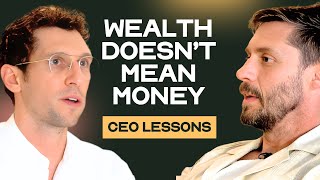
In this Money Stories Podcast episode, host Mike Brown interviews Matthew Barnes, founder of Proteus Digital Labs, to unpack his unconventional views on wealth, money, and high‑performance entrepreneurship. Barnes argues that true wealth is defined by personal sovereignty over time rather than accumulated cash, and that money is merely "liquid utility" enabling influence. He stresses the importance of asking better questions, stripping away jargon, and constantly challenging assumptions. A central theme is aligning incentives: paying exceptional problem‑solvers for judgment (intent) while automating execution (action) through delegation and abstraction. He describes his personal journey of swapping traditional employment for rapid job‑hopping, building a conversion‑rate optimization agency, and then reshaping it into a consulting firm that liberates employees’ time. Barnes introduces concepts such as "escape velocity" (the point where passive income covers lifestyle expenses), treating time as a non‑renewable resource, and using coaching to shortcut painful learning cycles. He also differentiates value from work, advocates for abstracting intent away from execution, and emphasizes that identity should be tied to what one values, not to the job itself. The conversation ends with a concise mantra: "The things you value are your identity, not the work you do."
Chapters
What I'm hearing from you is you've found a vehicle for wealth creation that you're scaling as fast as humanly possible so that then you can focus on the things that actually matter to you.
I think human lifespans are short. If I could have anything, it would be to be able to live multiple lives simultaneously. We are so trained on the fact that money is liquid utility that we imagine that we need infinite utility to be infinitely happy, and it is not so. What is wealth, or what is being wealthy? Unsurprisingly, the things that matter to you are often inversely proportional to the things that have been painful in life.
What's one of your favorite questions to ask yourself or others to help them think outside the box of the problem?
The thing about being good at problem solving is you're also good at creating your own problems. You don't need answers, you just need better questions. And to surround yourself with people who are capable of helping you ask yourself those better questions.
Most people. When they think about wealth, the first thing that comes to mind is money. Oh, sure. And you didn't even mention money. If you had infinite money and zero fear, what would you be doing?
For me, it is primarily about turning my—
Hey, welcome to another episode of the Money Stories Podcast. Today I am joined by one of my favorite humans on the planet, Matthew Barnes, founder of Proteus Digital Labs, which is a conversion rate optimization agency. Also a world-class delegator, but what I love about Matthew, I truly believe he's one of the most brilliant minds of anybody that I've ever spoken to. And you've just shared so much wisdom with me along the way. And I would just, I would be so honored if you would share even a tiny sliver of that wisdom with the people watching today. Matthew, welcome to the show.
Thanks, Mike.
Cool.
We'll give it a shot. The thing about The thing about being good at problem solving is you're also good at creating your own problems. And the, the mental labyrinth that I built for myself that you have helped me walk through is something that still fascinates me. And so to get to riff on it a little bit more, even just as a, a way of trying to find my way out a little bit more. Sounds great.
But I think it's one of the beautiful things about getting around peers that think similarly, but entirely different to you is there's an information exchange and flow where, you know, things I don't know and I know things you don't know and we can actually help each other without trying to extract value intrinsically. It just happens by nature of the flow.
Yeah, I think, I think that's right. And it's, it's, Oftentimes, like with high-performing individuals, it's you don't need answers, you just need better questions. And to surround yourself with people who are capable of helping you ask yourself those better questions is magic.
Well, on that note, speaking of better questions, like what's one of your favorite questions to ask yourself or others to help them think outside the box on a problem?
Yeah. So it's one of the common problems that I see, right, is oftentimes you can get so stuck in like the vernacular of the problem set, right? So something that I'll say to death that my friends get quite tired of, they'll say, language is necessarily figurative, which is a way of saying that The name of the thing is not the thing itself, right? And so necessarily when we use a word for something, we are ascribing like a definition to it. And so one of the fundamental questions I think that can be really, really helpful, right? Is like finding all the areas like in the problem that you're trying to solve where you are unintentionally like ascribing assumptions. And so like I have a big thing where I'm like very anti jargon or acronym. Even though I do like incredibly high fidelity, like analysis, et cetera, you'll never hear me say like ATC, LTV, AOV. It's always, I'm always breaking those things down, right? Because when we say like, oh, how do I improve my conversion rate? Uh, conversion rate has so many things baked into it. You have to decide what is a conversion? Is it a purchase? And then on top of that, it's what is the session, right? So I use things like you want to improve your numerator denominator ratio, right? So you get to decide what that numerator is. Maybe it's a purchase. Then the denominator, it's maybe traffic coming from a channel. How do you define a session? Do you filter out bot traffic? Did you actually just mean people that got to the product page, et cetera? So you can start asking those questions of like, where are those embedded definitions? And I think that that, that type of questioning kind of expands to every domain of life.
Well, one word, and it's the central theme of this podcast that has a lot of charge and a lot of definitions for people is wealth. So how do you define wealth and what does that mean to you?
So I think when we say wealth, right, we are asking what someone's set of values is because something, those values are the areas of life which can, can hold value. And so to ask what is wealth, one must first decide what, what matters to them. And so unsurprisingly, the things that matter to you are often inversely proportional to the things that have been painful in life. And as a person who felt like a non-trivial amount of like feeling like misunderstood, like more of like being like sort of like a misfit, right? The idea of people telling me what to do. Is something that bothered me like always, right? Because I'm trying to like make my way. There are things that I think are important to me and to be told to do something different is like really painful to me. And so for me, wealth works backwards from that. So having complete sovereignty over my like time and how I choose to spend it and the people that I get to spend it with is a thing that is wealth for me. So, you know, very, very, very, very early on in my career, I had a mechanical engineer doing a master's degree and did an internship in an office. And I got into it about a week later and went, oh no, no, no, this is, this is not going to work. I can't, I can't do this. And ended up transitioning out of that, dropped out of graduate school to become the operator for a tiny apparel company. Because I had full creative freedom. I became the operator of that, that company, and I had complete ownership of all of my time again. And so I sacrificed and gambled a lot very early, and it was to spend more time with my wife and to spend more time doing the things that I wanted to do. And so, you know, from that moment on, I think I had created a tremendous amount of wealth in my life.
One thing that strikes me is that for most people, when they think about wealth, the first thing that comes to mind is money.
Oh, sure.
And you didn't even mention money. So what is money and what does that mean to you?
Money is like liquid utility, right? So it is your ability to affect the world. And so I like money. I'm not tired of it yet because I still have things that I want to do and things that I want to change and things that I want to affect. And so money is just the exchangeable vehicle for that. And so, you know, being the type of person that I am, there are lots of things that I care about and want to see be different. And so I would like to have more of the money instead of less of the money so that I can like affect those things. And I mean, that, that's the thing, right? You can affect lots of things. You can affect other people's like ability to leverage you or leverage your time. You can shield other people from that, that very thing. You can purchase experiences and control over assets, et cetera. There's, there's lots of fun things that money can do actually.
Yeah, absolutely. So in relationship between wealth and money, How do you think about using money to create more wealth?
Yes. So the thing is, is that there is some least common multiple of liquid utility that you need in order to be able to meet all of your basic and some not so basic needs in order to have control over your time. And so to achieve that, You know, is, is probably like the, the first goal, right? Is, is how do I have control over my own time? Once that was accomplished for me, there were a lot of people in my life that I cared a lot about that I thought were being underutilized for the greater good of society, essentially being forced to sell their labor against their like will and best interests. And my goal became to liberate as many of those people as possible. And give them a better project to work on and to let them have that agency of their time back as much as possible as well.
And so how do you think about that as it relates to business? Is that why you started your business?
Yes. So I, I sort of bopped around between things to try to like, oh, I figured out that the game was if you switch jobs, then you make more money faster than staying in the same one. So this confuses people who do the thing the normal way, which is you kind of like stay in the same company until they fire you. And so like my friends and relatives thought that I, they're like, oh my gosh, can you just like not hold down a job? I'm not knowing that I'm just switching between the jobs like voluntarily. And then you work remote. And so then everybody thinks you're unemployed and that you don't. And then I work at, I invest the normal day hours in spending time with like friends and family and they don't know that I'm up until 2 'clock in the morning working, so they think I never work. It's great. And so the, you know, the thing is, is that when you're sort of like playing that game of trying to do that exchange and you want it for like other people, like I got into starting my business because I I had an idea that I wanted to affect the world with, uh, which is like, I care a lot about local sustainable agriculture and I care about the people that grow food and feed other people, uh, against their own economic incentives because they love community. And those people don't stand a chance against very large companies with, uh, different goals in mind. And so one of the problems I became obsessed with solving was how you can give a disparate network of individuals the power, the, the same leverage and tools as a large organization while letting them operate independently. And so that turned into a whole project of, of essentially working to create a commodity out of networked individuals and a, a blockchain-based way of accounting for that. And I went out to Switzerland and met with a bunch of investors and I got out of the meetings and I should have been like really stoked because I had like a lot of momentum. And instead I realized like, oh God, I'm just buying people to tell me what to do. So I abandoned that, took all of the people that were on that project and started the consulting company that I have now with the intention of growing that, liberating all of their time, and then being able to reward them with the successful sale of that company to be able to go back and then focus on the bigger problem without misaligned incentives.
On that note, you think about employee incentive structures differently than almost anybody I've met. Can you dive into that a little bit more and explain how you think about aligned incentives and creating those opportunities for your employees?
Yeah, totally. I mean, it's not hard to have a different perspective when you intentionally don't find out what other people's are, which is like a whole other philosophy of how you come up with novel ideas that I have, but that's a different podcast. So the thing is, is that I like finding people that are traditionally unemployable for one reason or another. They're some of the most brilliant people like I've ever worked with that just don't fit into like a standard structure of a company. And the arbitrage in the market is that if you can figure out how to correctly align the incentives for those people, you will crush everyone else. So my company is exceedingly profitable primarily because I found the right people and aligned the right incentives and built like a tremendous amount of loyalty for people who are exceptional problem solvers, right? One of the things I always say is that a procedure, right? Like procedures, they move people to an average, which is great if the people are below the average and objectively terrible if they're above the average. And so trying to set up incentive structures or ways of working that take exceptional individuals and bring them down to an average is like the dumbest thing that you can do. So instead, for people who are good problem solvers and thinkers, uh, I instead try to capture their judgment because it's usually not the— okay, we have to do a definition thing. Okay. So, uh, in any task that you have, there is the intent portion, which is all the judgment. It's the decision-making. That's the stuff that's like crazy valuable, right? Uh, and then there's the action portion, which flows out of the judgment. That's the less valuable part. And so when you have someone who is exceptional, you want to actually pay them to spend all of their working time on the intent portion, that judgment portion. And then you want to surround them with people and tool resources like a mech suit that just take care of all of the action. And so you can align incentives where, so when somebody operates like that, you want to make the direct profitability, success, et cetera, of the, of the company related to their compensation. I'd pay somebody who otherwise in another job could only make $80,000 or $90,000. I will gladly pay them a quarter of a million dollars a year. I don't care what the market does if I can, if I can generate the value out of that. Because the other thing too is that like, you lose a tremendous amount of money in business by paying for the air gap between two brains. So anytime two people have to solve a problem, that's like always less efficient than one person solving it, even if they're not as talented, because there's so much interchange that has to happen again, because language is necessarily figurative. And so there's this translation layer that happens. And so I've built and scaled our company around people who are exceedingly capable at decision-making, and then found other people who are very, very happy at the, the doing and the action portion. And so your more strategic thinking people get paid based on the, like, success of the company, and then your people who take care of the action get paid based on a set of reasonable deliverables. And so as they become more efficient and they become better at doing quality work faster, They actually make more money because they spend less time doing the work for that. So their way of sort of elevating and like liberating their time is to become better at their job, but they still get paid the same amount because it's tied to value.
I love it. I mean, that is, there's nothing new under the sun, but I really think that's a novel idea because fundamentally most of us have misaligned incentives with our team, with our customers. You know, and, and to try to align incentives in a way that creates maximum efficiency, quite obviously when you say it out loud is the fastest way to grow and scale. But there are so many people, I feel like even within the world of entrepreneurship who are stuck in the old way of thinking of like, well, a media buyer makes $100 grand a year. So that's all I can pay a media buyer. And it's like, well, if that media buyer can do the job of 2 people, why not pay them $200?
Completely. Because that, that's the thing is that like, like, and frankly, right, when you see people like that, that have some sort of objection of paying people like that much money, it really does, it comes down to probably like their own money story things, right? Because they say like, that person does that job, they couldn't possibly make more than even me, right? Because their work is this kind of work and I have elevated myself to this type of work, right? So like, that's the thing is like, I have no idea what people traditionally get paid in any of these roles. I really don't. Like, it's irrelevant because again, I'm interested in the value they can create. And so the thing that I became really obsessed with, right, is like I'm observing all of these e-commerce businesses and some of them are 7 figures with a larger team doing more fake work than people that are at 9 figures who have just like absolutely like, like weaponized just creating value. Right. And so it's fun to get to go in and like see the unit economics of their company and help them like I mean, it's turtles all the way down. This is just the same sort of like systems level problem solving where, you know, it's akin to like functional programming versus object oriented where you're trying to engineer out failure as opposed to specify it and monitor it. And I think that's like the big shift or whatever that has to happen.
I love that. And, you know, if you're listening or watching right now, that is such a fundamental shift and Matthew puts so eloquently. But it really is a big idea within entrepreneurship because misaligned incentive structures may be the greatest destroyer of wealth within growing a company.
Completely. And the thing is too, is that like people will come up to me sometimes after like a talk and they'll say like, oh, hey, I'm actually running my business like this or whatever. And I think it's like working pretty good. And then they keep talking and then you find out it's like actually not working so good. And so like, like a funny example, someone, someone came to me today and they were like, hey, all my employees like track their time so that I can see what they're spending time on. And I said like, why don't you just align the incentives so that you never have to know because they're just wasting their own time if they spend it poorly? And he's like, oh, well, like we bill the clients based on the time they spend. And I said, why don't you bill the clients based on the value you're creating instead of the time? And he's like, oh, well, The clients really want to see like the hours. And I was like, and he's like, I also have this weird problem where they keep like replacing us with cheaper labor. And I was like, maybe that's because you're incentivizing them to replace you with cheaper labor instead of charging for the value. And we just go down and down and down and you realize like, oh, you don't actually have like a broken team structure. You have like a broken business model, right? Because it all flows down out of that.
That's, I mean, totally mind-blowing and yet so intuitive at the same time, right? Which is why I find your brain so fascinating because things that are obvious to you are not obvious.
You keep telling me that.
To many people, right? So, what's something else that is obvious to you that people tell you is totally mind-blowing?
So, I mean, this is probably like also like around the idea of delegation. So I, so again, my business is in e-commerce doing analytics, conversion rate optimization, and development. I actually did some consulting and, and wrote some materials around the idea of delegation. 'Cause one of the things again is like this idea of separating intent and action and, and how you do that, like in, in real life. And so something that seems like very obvious to me, right? Is like how to, in my personal life, extend all these same principles that we're doing sort of like in the business life. And so, you know, one of the things is, is I like spotting things that have like the value for like that arbitrage. Like I went to your house, you have a house manager. I'm like, tell me more about this thing. And you explained it to me and I was like, send me the job description that you used for that. And then hired a house manager like 2 weeks later. Right. And then I had like this in-person EA as well. Who is sort of like fantastic, like this, this infinite well of time. And then very, very quickly, like realized and spotted the patterning again, which is like, oh, these people are really good at action. I'm still giving the intent, but actually I don't even want to be responsible for my own intent. So how do I create a gradient in which I can slide my own need to express that intent further away from me? Right? So then hired a chief of staff to manage both of those people. So it's, again, it's like spotting that pattern and then kind of ruthlessly shortening and shortening and shortening and shortening the amount of time to be able to capture intent and then setting up feedback loops so that it's actually abstracted. 'Cause you don't actually want to delegate. What you want is to abstract. So delegation is you still being involved in the process, but somebody else doing the action. Abstraction is where you're no longer involved at all. So the joke I always made after I got the house manager is I would tell people, I say, Do you know what day my trash gets picked up? And someone's like, no. And I was like, I don't either. Yeah.
I love it. And I talk about the house manager as my highest leverage employee. And one of the reasons is going, the things you can start delegating, right? Doing dishes, doing laundry, cooking, shopping for groceries, all of those things. It is really nice to buy back your time and have more time to spend on the things that you care about, either growing your business or spending more time with family, but it's actually the true value for me is in the mental load.
Correct.
Right. It's like I'm constantly running this program of like, got to do the laundry, got to go to the store, got to cook dinner for the kids. And that always lives there taking some amount of my CPU's capacity. Yes. And so it was, it was, it was actually offloading that completely. Now food just magically appears in my fridge because my house manager knows what we like. She knows what to buy. She knows what she's cooking. And it's all completely handled from start to finish. So people are like, well, how do you, you know, do you give her a grocery list every week? I'm like, oh no, that sounds terrible.
Yeah, completely.
That would be the worst way to spend my house manager's time. She knows what we like. So I've now also delegated the intent.
That's right. And the thing is, right, is the talk I gave today, I touched on this very briefly, but the idea of having status pushed to you instead of pulling it, right? Because if you're constantly pulling status, you're checking in on things, trying to find out if the loop got closed on it, is this thing being handled, et cetera. Uh, you've given up none of the mental bandwidth, uh, and instead having it set up where, uh, status is declarative or it's being, it's being pushed to you, right? You have these like sort of checkpoints, et cetera. You can still be involved for a little while, like in some capacity. It's the time in between those cycles that needs to be alleviated again, because it's like we're Flintstones who split the atom. We haven't evolved past our ancestors, right? But we have more complicated problems and we are burdened with the ability of imagining the future. And so to be able to liberate some of those worries, I always say that I'm being chased by the bear all the time, and I'd really like the bear to be an interesting problem and not the dishes.
That's It's so good and go a thousand different directions because it's such, you know, really asking better questions and every time you solve a problem, you create a bigger problem. So rather than constantly putting out fires, I want to elevate my problems. So can you give us an example of what an elevated problem looks like?
Yeah. I mean, this is, I think, in the realm of business, what people would call working on the business instead of in the business, right? Which is if you are constantly, you know, I guess a big, a big thing that I've recently offloaded, right? Was this idea of like, I was running a lot of the, the strategy and analysis for a bunch of these businesses. And the businesses are complex and they make a lot of money and the problems are hard. So there is some amount of my judgment that's going to be necessary. To imagine that that's not the case is foolish. Do I, however, need to be bound up temporally in so much of, of that? Or like, how quickly could I actually speak out loud the answers to every single judgment that was brought up if they could be essentially reduced to flashcards? And so the, the game then that, that we played instead is I had someone watch hours and hours and hours of footage of me working every single week where I would record myself and I would narrate my own work. So all of the things I would say internally in my mind, I was saying out loud instead. And we did that for 3 months. And then very, very slowly, we started first by transitioning the action and then moved closer and closer to the intent to where a task that may have taken up 15 hours of my week historically shrank down to 5, then shrank down to 3, then it shrank down to a 2-hour meeting of me just walking through and talking about the judgment. Now the call is like 45 minutes and 20 minutes of it is me screwing around making coffee in the kitchen and trying to talk about books and stuff. And then the person's like, no, I really just need you to answer these like 5 questions. Today, right? And so again, it's just how can you distill it down? And that transition gradient of moving to just judgment isn't something that you can light switch. You'll fail every time, which is why entrepreneurs can never get out of their damn businesses. But you want to be able to rattle off all of that stuff, right? And then go think strategically about like, oh, actually, what am I missing, right? Like human minds are not so great at nonlinear math. And so one of the things is, you know, we're doing this service-based business, which I, I quite enjoy solving these problems. It's a very linear business model, right? And so it took me abstracting away that task to sort of have the light bulb go off of, wait a second, I'm sitting in like board meetings right now, like using our tool to do like business analysis and help plan like strategy. We should be licensing the software to people that want to do this, right? Like, and, and, and having that light bulb go off because again, like if you freed up the bandwidth for your brain to sort of like abstract the work and then focus on a higher order problem.
Yeah. Well, and humans are not wired to be able to understand exponential or hyperbolic growth.
Certainly not.
Or the nature of compounding, right? Like we're fundamentally impatient and we expect inputs to equal outputs. And so, you know, whether it's growing a company or getting a six-pack, You know, we, we start taking the actions that we think will get us to the outcome. And then 3 weeks later, we look up and be like, why aren't we there yet?
Yes.
Because we don't understand that the value is actually in the long tail of compound interest. So how can we better train ourselves to understand the nature of compounding and hyperbolic growth?
I think that's a fine question. I mean, so the thing is, is that again, similar to asking ourselves, like, what is the definition of the thing that we're actually talking about? It's trying to understand like what is the actual value of the work that we're doing or the output that our business is producing, right? Because again, you ask somebody like, what is the value of like what you do? Oftentimes they'll start describing the work. And so like, you know, talking about money story type, type things, like I, I grew up watching my father run a business where he ran a printing business. And so he would go work like he would come home, have dinner, go back to work, right? And then, and he would go work at that. And so your, you know, your, your subconscious brain is going, ah, yes, grinding away at stuff and putting a lot of time in. That's, that's what creates value. If you're not doing that, it must not be valuable, right? And so being able to like recognize those patterns and sort of like decouple them is the first step to being able to look at your business and say like, Oh, actually the thing that's really, really valuable is that I can help answer business questions that nobody else can answer, right? And actually provide a way to take action on those things after you measured them. That is a more interesting answer to that question than we prefer provide conversion rate optimization services. We run tests and then implement the results like that. That's, that's the work. That's not actually the value.
Love it. And differentiating between value and work, I think, is totally critical because by nature of the human brain, we tend to value the work. We have money stories, you know, ingrained in our society with things like work hard and you'll be successful. Yes.
Right.
But if hard work was all that it took to be successful, there'd be 7 billion rich people on this planet because most people are engaged in backbreaking labor and they're not financially successful. So what is that gap and how do you solve it?
Well, again, I think the thing is, is that like human beings need discomfort in order to thrive. If you engineer it all out, I mean, the most miserable people on the planet that I've ever met are the people that have the most resources at their disposal. And so I think the thing is, is that as an individual, one must determine the things that are valuable that they can provide, and they should also find something that feels challenging to them. And those things don't necessarily have to be the same thing. And I think it, it's incredibly healthy. And if you can, if you can give yourself the, the gift of doing things that are challenging outside of your work, I think it becomes a lot easier to break that cycle and sort of like allow yourself to have the identity of a person who can accomplish hard things and also still be a person who can generate value relatively effortlessly.
So how do you apply that practically?
Yeah, so for me personally, I have been trying to, I've been trying to like engage in things that challenge like my body and my mind more that are not work. And, and, and use those as ways to, to start my day or sort of like ground my week and then surround myself with people that are helpful in pointing out the, the value that I'm creating. So, you know, having, having a, a short Rolodex of people that you run ideas by or curiosities or doubts, et cetera, and, and have them come back and be like, oh no, it's this thing here. Like that part of it, that's the really valuable part. You should totally like focus on that. It's one of the things that I love the most about the baby bathwater community that we're both a part of is it's, it's an entire group of people who are all trying to give to one another and are willing to point out like, oh no, the thing that you have that's really valuable is actually like this. Right. And if you can open yourself up to sort of like accepting that, that's the key to hitting that sort of exponential growth instead of linear.
I love it. And, and, you know, you actually jumped ahead and guessed the answer to one of the questions I was going to ask you, which is how did you grow up with money and how does that show up for you today? So, we've already heard about watching your father work really hard. How did you start to shift that identity or that money story? And then, how do you think about healing that or changing that or writing a new narrative for yourself today?
Yeah, no, totally. I mean, the thing is, is that, but my favorite is when you, you're like, oh yes, I totally know the problem, which is different than I'm actively working against the problem. And so I, I have historically known, right, that I will, that I will actually just like attrit myself to death working on things. That was always the thing is like, eventually became like sort of like a gross like game, right? Where, oh, all the client calls are on Wednesday. So inevitably, right? Like I know that I am addicted to stress from talking to you, Mike. And so I had gotten my business so efficient and so, and so like dialed in that I would just like self-sabotage and do stuff like dumb stuff until like 8 o'clock on Tuesday night. And then I was sufficiently stressed out enough to sit down and like crack out like a whole bunch of like great work until 4 o'clock in the morning and then just wake up and do all the meetings on 4 hours of sleep. And the problem is with high-performing individuals, you never learn the damn lesson because you always pull it off. And so being able to like, thank my wife, like she was like, hey, like what if you just delegated all of this shit earlier in the week and made it impossible for it even to be a thing you're responsible for? Like, would that just be okay? Like what if you just went to bed at 9 o'clock at night on like a Tuesday? Could that just be fine? Right? And I realized like, oh, I'm just screwing around, pretending like nobody could ever do this and not actually actively engaging with the problem because I'm addicted to stress. And if I pull a late night, then I become less uncomfortable with the business because I must be doing a really good job. Can't you see how late I stayed up?
Well, I love it. And you touched on a few things that are kind of fundamental to the Unbreakable Wealth philosophy. One of those One of those things being this idea of when you're a high performer, right? When you're in a situation that would send a normal person into fight or flight, we actually drop into calm in the chaos, right? Sometimes it's when we feel most alive and it's when we elicit our best performance. So then, and that's a very useful evolutionary adaptation, right? It's what makes us great entrepreneurs, greatest entrepreneurs, greatest athletes. Like, Being able to drop into calm in the chaos is a useful skill until you're safe, until there's no chaos.
Yes.
And then we'll manufacture that chaos to put our back against the wall to elicit that high performance acting as a forcing function.
Completely.
And we'll do that over and over. And if you never learn the lesson because you always pull it off, there's actually no feedback loop.
That's right.
That elicits that change, right? Because will never change unless the pain of staying the same is greater than the pain of change.
That's right.
So, if you always pull a rabbit out of a hat at the last minute, you'll continue to reinforce that loop with negative consequences until the problem gets so big that the universe smacks you down in a way that you can't ignore it anymore. So, most of us learn through pain, and that is a very effective teacher. But how can we begin to shift from learning from others' experiences or learning indirectly rather than going through the painful part?
Yeah, I think the thing is that if you stop kidding yourself for a second, right? Like everybody knows the poor behavior, right? Like the patterns of things that don't seem like quite right. And I think the thing is, is like, yes, you can learn the hard way. Or you can go find someone that you trust who has literally been through whatever you're doing, right? And ask them to help you spot the pattern. And then you can do, you know, thankfully what I've done, right? Which is not die of a heart attack yet, which is great. And it's, it's, and you have to call it what it is, right? It's just, it's gambling. And so what I did in my company, right, is like I started talking to you, we worked through things together. I recognized all of the patterns and then I just engineered a process to take the dice out of my hands to where like I couldn't even pull an all-nighter on a Tuesday if I wanted to because everybody got the work done on Monday. And I remember like the first night after I had successfully pulled that off in like a week cycle. And it was like a Tuesday evening and I'm just like wandering around the house and I was just like, listen, I'm just gonna go to bed, right? And I went to bed at like 9 o'clock at night and then woke up in the morning and was like, man, so this is what it feels like to do all of the meetings, like well-rested, man. That's, this is like way better, right? And so again, like when you're a high-performing individual, you always find some contortionist way of putting yourself back into that problem again. And so I think, you know, using the same, trying to use the same tools of like, oh no, I'm just going to do it like differently this time or whatever, right? To overcome that is foolish. Go talk to somebody who can help you spot that pattern and then just take the dice out of your own hand. You're in a much better position to heal when like you just, when the things that you would have ordinarily like gone for are no longer accessible to you.
I mean, I love that. Essentially, you're describing the value of coaching and why it's so important for entrepreneurs because it's— there's two ways. There's the hard way and the painful way, or there's the fast way. And the best entrepreneurs I know find that paying for someone else's experience in order to shortcut the pain is exponentially more valuable and less costly than actually learning it the hard way.
Oh yeah. The opportunity cost just financially, obviously, is huge. But like, what is the actual opportunity cost on like the wasted wasted years of your life dicking around with this company and like, and ruining everything, right? Human lifespans are short. How much is yours worth? Right? Because the thing is, I always say is like, lots of people start companies. Lots of people like kind of scale companies and find product market fit. You can get lots of reps in that domain. What most people do not get a lot of reps in is the endgame. Uh, and so that's what coaches are for. As you are entering into the endgame, you just want a coach because you don't want to scale up and ruin 4 companies, uh, and then get it right on the 5th one because human lifespans aren't that long. You just want to get it up to that point and then pay somebody who like has observed the pattern already to help you work through it so you can just skip over that crap.
Yeah, I mean, absolutely. One of, one of my favorite sayings is I love learning the hard way, but I'm trying to quit. Well, another thing that we've touched on quite a bit, but I'd like to double-click on and go just a little bit deeper on is time is our only non-renewable resource. You can always get more money, but you can never make more time. You have some unique viewpoints on time. And so, I'd love for you just to expand on those and you can take that any direction that you want to.
Yeah. So, I have a close friend of mine and We were talking about something one time and he said, what do you bill your personal time out to? And this is like right after college. And I was like, my what? And he's like, your personal time. What do you bill it out at? And then I was like trying to like back calculate how much I made as like a salary or whatever. And he's like, no, no, you idiot. It has to be worth way more than that. It's like, it's the time you get to be like a person. Right. And that was like the first time I'd ever encountered that idea. And then since then I've taken it many iterations forward to where it's like, oh, hey, guess what? All of your time is actually your personal time. Right. And so this is the thing is that again, human lifespans are necessarily short. If I could have anything, it would be to be able to live multiple lives simultaneously. Right. And so the thing is like when I look at time as a vehicle, I'm looking, I can't be everywhere, but my intent can be. And so I'm constantly trying to find ways to capture my intent and then reward people who can go represent that intent on my behalf. That's the closest that you're ever going to get to duplicating yourself. And so again, it's just like time, time is the equalizer of, of, of all people. And so, boy, don't mess around with it. Yeah.
And, you know, we essentially, if we're stuck in a transactional wealth paradigm, we're trading our time, our life force for money, but then many of us store that money and never actually use it to improve our lives.
Completely.
So when we think about that question, How much is enough, right? It's a fundamental question of money is how much money is enough. How do you think about that?
Yeah. So when we say enough, I'm going back to the language necessarily figurative thing. So when we say enough, right, it's again, it's, it's asking the question of what is wealth or what is being wealthy? And it goes back to our value system. Okay. Right. And so we are so trained on the fact that money is liquid utility that we imagine that we need infinite utility to be infinitely happy and it is not so. So the, the, I think the thing is, right, is, uh, mathematics are great because you can just utilize them to work backwards. And so figuring out what your ideal life looks like, more different versions of what that could look like, right? And then figuring out what is the utility that I would need to essentially defend it in perpetuity. You can do that math. It's actually exceedingly easy. And if you don't know how to do it, Mike can probably show you how to do it. Uh, and from there, now you have, now you have a goal to hit. And so the question now isn't anything other than how quickly can I achieve that number? Now you have an actual endgame in mind. And again, because of the fact that human beings are not so good at the nonlinear math, right? You, if you don't do that exercise at the beginning, you will always just keep moving the goalpost over and over and over again.
Yeah, absolutely. And I described that concept as escape velocity, which is when you have enough assets to generate income sufficient to cover your ideal lifestyle expenses for the rest of your life without ever drawing down on the principal, you've essentially created a fractal money machine. Right. A perpetual money machine that allows you to live your ideal life. And what people get wrong is that doesn't mean you need to retire or stop making money or even change anything that you do. It just means that you've created a fundamental safety net for yourself.
Yes.
Then you can start answering big questions.
Yes.
And one of my favorite questions on that is if you had infinite money and zero fear, what would you be doing? That's a great place to start to think about, okay, if I solve the money issue, Now, what can I be doing? So when you think about for yourself reaching escape velocity and being in a place where you have a perpetual money machine, what would you do then?
Yeah, the thing is, right, is that I imagine that it's sort of like put the oxygen mask over yourself first and then help the person next to you. I'm trying to create a vehicle that brings as many people along for the ride as possible and does as much good in the interim as possible. But my, my primary goal there, right, is once I have achieved escape velocity, there is no longer the opportunity for anyone to misalign the incentives of my time, which means that I can do the most maximum good possible because I, there, there is never the opportunity to, to deviate from that goal. And so for me, it is primarily about turning myself then into an asset for good. That is essentially not corruptible in that way.
I love it. It's building a company. One of the things that I think we do young people a tremendous disservice is telling them, you know, follow your passion and you'll never work a day in your life.
Yeah.
Right? What I'm hearing from you is you found a vehicle for wealth creation that you're scaling as fast as humanly possible. So that then you can focus on the things that actually matter to you. And it doesn't mean that you're ignoring the things that matter to you along the way. You've got to find some kind of balance.
That's right.
But, you know, excuse me for saying this, but I don't think a conversion rate optimization agency is your life's work. No.
The thing is, is that like someone actually, you go to some of these awful groups or conferences and things and you meet people and they're just like, Oh my gosh, like you just love your— I can tell you just love your work so much. And I was like, not really. And they're like, what? And I was like, oh, if you wrote me a sufficiently check right now, like if you want to buy my business, I would never touch conversion optimization again. And they're like, no way, that's astonishing. You're so passionate about it. I was like, no, I'm good at it. Right. So like very early on, I realized that the types of things that interest me are not very good at generating liquid utility. And I, it, the, the, this history is like littered with people smashing their own hand with a hammer to try to, to make money come out of something that isn't about generating liquid utility and value at scale. And so I very quickly abandoned that and said, no, no, no, this is my thing to protect. This is the thing that I don't want to corrupt. So instead, I will find the way that I can generate the maximum amount of value to people that have sufficient liquid utility that want to exchange that value for that utility in my favor. And I'll just do that instead and protect the thing that I actually care about.
I actually can't think of a better way to end this podcast than, than what you just said, because I think it really captures in essence what we're doing here. And, you know, once you, once you hear a wealth paradigm described in the way you just did, it immediately collapses the old paradigm and renders it obsolete. So, you know, if you can leave us with one final thought or takeaway or something that you wish, you know, that you think about in a certain way that you wish everybody else would shift their mindset to be, What would it be? I'll give you the last word.
It's that the things that you value are your identity, not the work that you do.
Perfect. Mic drop moment. Matthew, thank you so much for sharing your wisdom with us. Thank you so much for being here. Thank you so much for being such an amazing force in my life and so many others. Really appreciate your time.
Anytime, Michael.










