I Didn’t Need Another Win I Needed Peace (Hollis Carter, Money Stories Ep 6)
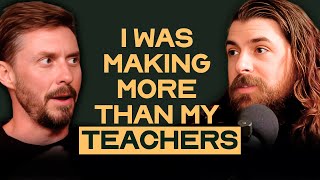
Hollis Carter, founder of Baby Bathwater, talks about building community through thousands of conversations and treating friendships like a business cycle of investment and reciprocal engagement. She's moving from van life to a mountain property designed as a gathering space for creators and farmers, and argues that a rich network of friends matters as much as financial security for a meaningful life.
Chapters
I kind of felt dumb because I was like wildly dyslexic. Outside of the school environment, I was thriving. My dad got me a Jay Abraham direct response book and a lawn mower, and that was my Christmas present. And he's like, you can turn this into a business. It all kind of shifted when I realized I was probably making more than my teachers. And then all of a sudden I was trying to figure out how to get people to mow lawns while I was at school. I got that big crazy Nokia phone before everyone had phones. I was like in the bathroom sending text messages I was all gas, no brakes.
How do you break that cycle?
That is literally the question my dad posed me when I got out of that situation. Networking is the clunkiest, most awkward, weird thing.
You've kicked out the richest guy there for being a jerk. How can someone shift their thinking from transactional relationships to truly give-first relationships? Okay. Welcome to another episode of The Money Stories podcast. Today, our guest is one of my favorite people on the planet, founder of the Baby Bathwater Institute, now becoming a real estate developer, which we'll dive into. Has really changed my life more than almost anybody else. And really, we've, we've lived an incredible story over the last decade. Welcome to the show, Hollis Carter.
Awesome. Thank you for having me. It's been a pleasure and man, we have spent a lot of time through many journeys over the last few years. It's been kind of wild.
It's totally crazy. And one of the realizations we had earlier on this year is that my new friends have now become my old friends, which, you know, we've, we've been friends for really close to a decade now. And it's, it's, it's a really wild path to, you know, for me it feels like yesterday when we met and went to, went to the first Baby Bathwater event and now we have this rich history. It's, it's pretty cool.
Yeah. It's kind of funny to think of that in perspective to time when we think of like our friends from high school and that's 4 years of your life and now we've doubled that easily and the amount of time spent together doing things and just cycles of the journey too has been absolutely amazing. Way more seasons than you experience with your childhood friends.
Yeah, I've certainly reinvented myself multiple times.
I've seen different mayors of different types of towns, if you will. Yeah. Yeah.
Well, diving in, you know, I think you have one of the most unique philosophies of anyone I know about what makes a good life. So let's start with one of my favorite questions, which is, what does wealth mean to you now?
I like that you said now, because it's definitely been an ever-shifting scenario, and I think it'll continue to be as I just learn what matters, you know, as we have different responsibilities and things in our life. But at the end of the day, like, spending time with people who light me up and spending time with myself in environments that light me up is, is it. Like, the wealth piece, money is almost the last part of it at all times. That's just like a freedom unit that allows those things to happen. And I'm constantly— I think I overanalyze it maybe a little, but if you're like, how do I want to spend time? Like, it's all about time, and time is the one thing we're all equal on, and it's always It's always going away in every moment that we're there. So I want to use it in a really good way that means something to me, which isn't the same for everybody, but I'm getting more and more clear on what it means to me. And I mean, saying no to a lot of things often.
Yeah. Saying, saying no becomes a superpower when you start valuing your time over all else. And yeah, it's not an easy road.
Yeah. I mean, I've been through cycles. I remember when I was such a yes man in my early career. And I remember at one of the early Baby Bathwater events, we'd give those bracelets. I saw you gave some out online. It sounds like you need boundaries because I was a yes man to everything. And I remember being in my boundaries phase because I was just half-assing everything because I wasn't fully into the things I needed to be into. And so I think, yeah, to the wealth now, I would say I kind of have like 3 full-time jobs right now. My family, Baby Bathwater, and this hospitality project we're working on. And that's a lot of time. But what I want to do is be in hot springs. I want to go skiing. I want to be outside. I want to be active and I want to feel good and figure out how to do that all in balance is quite an art.
It totally is. And this is, this is something that I've been experiencing recently is if you stack too many peak experiences, you actually miss the con— the contrast of what makes a great life because it's also the space in between.
For sure. I mean, I think that's why we call it Baby Baffler. Like, I believe in the duality of, like, you can't have good without bad. Like, we're in the middle of raising money for this project. I hate the raising process. I just want to get to that part, but it won't feel as good if I didn't have to do these other things. I even noticed on the adventure trips, me and you just had a run of arguably, like, my favorite stuff to do in the world. We went cat skiing, we went heli skiing, we went surfing, we went to Mexico. But all in such a concentrated path that had those been spread out where I was doing the things that allowed me to feel like I needed the break, they would've had more value. And that was like an in— I think you sent a newsletter out about it. I didn't actually read it, but people told me that they saw it because we were on that path together for that period of time. And it's, yeah, it's going back to saying no to things more. That's important. And it is interesting with my main business asking for people's time. So it's very relevant for me because a lot of the entrepreneurs who join the group, the financial commitment is, is, is a real one, but it's not the major obstacle. It's the time. And so when people choose to invest their time with us, I have to make it really good. I don't know if you've ever tried to gather your friends from high school or college to go on a guys trip, it's fucking next to impossible. So to get hundreds of busy entrepreneurs with businesses and families to gather in one place at one time, you got to make it really good and worth that time investment. And so I'm constantly thinking about like, what would I do? What would make it worth it for me?
Well, I can, I can say without a doubt that you are world class at creating experiences. My favorite nickname, the Captain of Good Times. And we've certainly had a lot together. And I can say for anybody listening that The Baby Bathwater Institute events are so unique in a landscape of really half-assed events or things that promise value and maybe underdeliver. Baby Bathwater stands, in my opinion, really alone as the pinnacle of entrepreneur communities because it's so focused on providing that rich, deep experience beyond just Am I, am I learning about entrepreneurship stuff? Like, sure, but that's almost a byproduct, right?
That's like, I think the linear value that people are used to in business events is like the logic brain. It's like people need to see that when they're deciding to come the first time because that's what they're used to doing. They're, they're usually pitching it to a spouse or a business partner of why it's worth having that time and they want to see this and it's like a logical argument, but it's never why they actually get real value or why they come back. And in the formula for us, it's like good people, good intentions, good times. And people usually forget about the other two when they build these things. They're like, oh, let me just get a bunch of smart people together. It'll all work out. Into the through line of your show and like this concept with money and, and all of it. Like I make a bunch of totally unreasonable decisions that make no sense for short term for the events, like what we spend. We've pigeonholed ourselves into a bunch of unscalable stupid things with how much we spend on these events and what we do and the energy and effort on some things that are kind of ridiculous and have nothing to do with business. But I don't think I would enjoy it if we didn't do that, because it wouldn't feel, wouldn't feel real. It wouldn't feel valuable. If I don't get excited, then it's not going to be great. And I had multiple businesses before this. In 3 years, I was ADD, I'm out, uh, onto the next thing. I feel like I just started and I'm 11 years in almost, and I have to get myself excited. We go to team meetings sometimes, they're like, are you really gonna do that? I'm like, I know, but it excites me, so it'll probably excite some other people and fuck it, we're gonna do it.
Uh, I love it. And it, and it comes through in everything you do and, and, um, definitely, definitely worth checking out and, and we'll put the link, uh, to Baby Bathwater in the notes, but backing up to some of those early businesses. I'd love to start with how did you grow up with money and what drove you into entrepreneurship?
Yeah, I'd say it's a pretty interesting journey because I've never really had a job like a lot of people I've met in entrepreneurship, like had a side hustle, they quit, they got burnt out in corporate, something like that. I grew up in Georgia. And we moved from Atlanta to the suburbs. I remember my dad saying, hey, we're now in like, we're, we're the low end of a high class of people that we're moving into. And they're all going to get cars when they're kids. I can let you know now, you will not be receiving a car. So you better figure it out. You know, and that stuck in my mind a little bit, but in the early days of like grade school, I kind of felt dumb and like, unconfident because I was like wildly dyslexic and had a bunch of things that weren't quite identified yet. And, you know, I just couldn't finish the tests on time. You name it, it was just like impossible to do the traditional school environment. Where my brother is in like AP classes, it's easy, it's whatever. But then I noticed outside of the school environment, I was thriving. Like I had street smarts, like we had a whole different set of rules. Like I didn't have curfews and rules cause I had street smarts, I didn't get in trouble. Even though I was probably arguably doing more things that would be getting in trouble, I just didn't get caught. He had a curfew. Like, it was just a totally different upbringing. And I give my parents a lot of credit. They catered the parenting style to meet the individual people that we each were, which was very different. He was a book linear. I was abstract dyslexic creative kind of person. And yeah, there was a point where my dad got me a J. Abraham Direct Response book and a lawnmower, and that was my Christmas present. And he's like, you can turn this into a business. And I got really into it. We wrote these amazing letters. I remember my mom drove around with the minivan with the door open and I put them in all the mailboxes in the neighborhood. And I was during the fall, I was like, I'll blow all your leaves off your driveway for free. And if you like the work, you're signing up for a subscription of Mow Edge and Blow of your lawns. And I got really into it, not only doing the work, but like writing the different versions of the letters and seeing how many calls we got back and things like that. And it all kind of shifted when I realized I was probably making more than my teachers. And I was in an environment in school that made me feel like I just wasn't gonna succeed in life. And like when you're a kid, you think all the adults have it figured out. And then all of a sudden I was trying to figure out how to get people to mow lawns while I was in school. I got that big crazy Nokia phone before everyone had phones. I was like in the bathroom sending text messages and trying to sort out people doing that kind of thing. And I think that was like really the first foray into, you know, business was mowing and edging lawns and then building crews to do that and then figuring out, oh my gosh, if I work one day a weekend loading pine straw at the Pike's Nursery, I can get the employee discount on that. And so that was like the only job I I forgot I was doing that.
So really what I'm hearing is entrepreneurship for you was born out of necessity because you realized early on you weren't going to fit in the box that the traditional path offered.
Yeah, the box has never jived with me. Like policies, like dealing with any corporate America environment, even as a kid, I would question like, why can't you do this thing? And adults would say, because that's the rule. I was like, why? Like, I just never did it. And I had to, had to figure out my own path. I loved creating stuff. I had 1,000 side hustles by the time I had got through high school. And it wasn't, it didn't feel like work. Like jobs would feel like work if I would make an attempt at that. This just felt like what I did with my free time.
Yeah. And that's, that's a through line for a lot of entrepreneurs is We're truly unemployable for the most part.
Yeah. Oh no, I, in my own, I'm owner of my business, but I'm active in many roles in it. But unfortunately they've had to learn that like, I just can't use the tools and the systems and the thing. Like I would be fired from my company if I had to stick to the rules. Like I don't use Asana right and Slack and all the things. And I know that those systems can, can work, but it just doesn't work with the way my brain works.
Well, in entrepreneurship, we both know that everyone has their ups and downs and goes through the school of hard knocks as you're figuring it out. So in those early days, in those early businesses, what are some of the lessons you learned and what would you go back and tell yourself now in those days?
Yeah, I think one of the biggest lessons now is something I've settled into on all things. It's just like it always takes more time. Like, I want it done now. I see my vision is so clear of what needs to happen, but I have to play with the rest of the world to make it happen. And I don't live in a vacuum. I see the vision. This will happen, then this will happen, and this will happen. But along the way, there's people you've got to interact with and fucking banks and insurance and all these like things that drive me crazy. And sometimes those would break me in early days where I wouldn't finish the vision because of the things that you have to do to play with the general public of the world. It can slow an entrepreneur's kind of drive down. And I definitely remember that exhausting me very thoroughly at an early age. And there's probably a few businesses that I was pretty close on and I gave up on because I just didn't get over that hump and just giving it the time and putting in the reps. Like, I didn't understand compounding. And putting in reps day in and day out and knowing that that would stack up because I would sprint, I would just go in a hole, work for a period of time and be like, okay, it's all built now, it should run. I didn't, didn't process that, you know, right away.
Yeah, that's, that's I think a very common through line is, you know, we want things done immediately. And one of the most confounding— and I still deal with this like all the time, which is We, you know, we've been doing this a long time now. We know the proper inputs to put in and it still takes a lot longer than you think it's going to. Even if you know the right things, you're making all the right moves, you're making the smart decisions, it still just takes time to get where you want to go.
Yeah. And then like, I think one of the reasons I'm in the businesses I'm in was in those early days when I didn't quite know how to pick business models right now, just learning. Never was it solved truly by hard work. I think growing up in the South and the landscaping and all those things, it was like hard work, time and energy. Was the thing. It's every hockey stick moment or breakthrough has been from a relationship. Like it's always been from meeting someone who I can get into their slipstream and I'm valuable, or they've already been there and they give me one tip or one connection or whatever. Those are the things that change the game and you don't know when they're going to come. Like I was talking to a partner on a project this morning, like, dude, it's crazy that we're stuck at this little point, but like I have full faith in a relaxed state of mind that the meeting's probably already on the books somewhere in the next few weeks. It's going to solve this. So I'm not going to just stay awake and sit here and type on my laptop trying to figure it out.
Well, that trust in the universe is what I'm, what I'm hearing you say. That takes time to develop.
Yeah.
And you made a lot of money as a young man. And typically when that happens, there's mistakes that come along the way. What are some of the biggest lessons learned or biggest money mistakes that you made and how did you recover?
Yeah. Well, I think thinking about what money is didn't come along at the beginning for a while when I had no obligations. Like, my main goal of wealth in my 20s was to be able to ski as much as possible in the winter, party in the evenings, travel when I wanted to, Like, I really just cared about playing outside with my friends as much as possible. And so I kind of like built those businesses in a way where it was definitely time input to receive just enough financial value to do the things I wanted to do. Then I went heli skiing one time and realized I needed to become quite wealthy on a financial side because it was the coolest thing I had ever done. And I kind of changed my path there to be like, how do I become uber wealthy because that was a fine, that was a freedom unit donation to the system I was willing to do. And I just needed to figure out how to create as much of it as possible. And I wanted to jump ahead of where I was. So I, my joke to myself was like, I think I was an accredited investor a couple of times for a day. I hit these points where if I was smart and I listened to my dad, who was always trying to get me to do these things that I really, really wish I did early, but I didn't. You know, it would have worked out better, but every time I had a big windfall, I bet on something to put me ahead of the race fast. And I think from an education and experience standpoint, I did get the reward. From the financial one, I did not. Like, I made a very large investment of pretty much all I had of liquid and some that I didn't by taking loans and doing it to get involved in a ski resort. You know, there's two ways to look at everything. There's like just the straight linear balance sheet of it. And if you just looked at it from a financial perspective, it was not my most desired move that I've made that you would reflect on. But I learned so much about how to get myself out of that hole. That I don't think I would actually take it back. Like, I had to learn how to build a home so I could get a mortgage, so I could do all these things that I didn't have any intention of doing. I ended up building events at this place to, like, start to bring in cash flow. There's so many things that were done, but it was not worth the cost of the mental state of not being in abundance, of being able to make the moves. Like, I thought I would get so much freedom by playing with these people who were 20 years ahead of me, but I wanted to play with the big boys and I got in the game. I didn't know how much that game cost because of the time. Like there's amount of payments that come every month and I thought it would happen in 3 years, but it took 9. And so like I just couldn't keep up and it hit a point. I literally got stress hives one time because there's a debt payment coming up and I didn't know if I was going to make it. I figured it out like I always do. But there was points where I like, that stress is just not worth it. I could have just gone skiing and not had to be an owner and done all these things. You know, it was, it was a pretty complicated situation, but I didn't give myself that time to build those things up. And I think that goes back to like, you know, just how I was brought up. I made my moves, I made them fast, I made them crazy. And when I had no one relying on me, That was easy to do. I didn't mind if I hit the bottom. It was a cool experience. But then I started to have teams that relied on me and I started to have family and all these other things. And now I like having a backstop and I don't see myself getting in that situation again.
Yeah. So how do you break that cycle? Because the hallmark of high performers is that we perform the best under stressful situations. And what happens is if you always come through at the 9th hour, you start waiting till the last minute, you put yourself in more and more dire situations because, you know, you're always going to pull a rabbit out of the hat. How do you break that cycle?
That is literally the question my dad posed to me when I got out of that situation. He said, all right, you did it. You got out. Me and your mom have been scared for 5 years about— you did such hard work to get to where you were and you almost lost it all. And his request to me is like, next time, how do you do this without a fire-breathing dragon chasing you to get your motivation? And I was legitimately worried about it. I was like, I actually don't know. Because I'm a philosophically more like Alan Watts-y leaning person who doesn't care about all of it. I know it's all just a giant game, but I need to play it because I'm here and nothing really matters. But I found my motivation by putting myself in situations I had to get out of. So I think it's actually like, for me, it's been remembering how it felt when you push that limiter too hard and it started to cost me my health. And so like when I don't feel good and I'm not clear and you're manic and making chaotic decisions because of pressure, that's too much. And you have to remember that because usually you're quick to forget that when you get out of the other side of it. And so I have to like do that. And honestly, it comes back to relationships. It's the people who remind me, like my wife is very good at reading the temperature. She trusts me implicitly to pull off everything at the ninth hour. Sometimes that scares me how much she trusts it, but she asks good questions that if I sit with them for a little bit, I can be like, oh, is that worth that? And a lesson that I've now learned is there is always another deal. There's always another opportunity. If you're going to find yourself in that situation, like just pass. Like going back to say no, like you can just pass something. There is no too good to pass on. Deal, there's always going to be another one. And if you say yes to everything, you're saying no to things in the future. So you kind of have to remember how terrible things can be because I think we block that out.
That is such sage wisdom for any aspiring investor because we do tend to fall in the trap that there will never be another deal this good that comes along. And the reality is there's always one just around the corner. And when you say no, you actually create space for the, that better deal. Right. And, and saying yes to good deals often keeps us out of great deals.
Yeah. And, you know, just like our, our taste buds change over time, I think our identities can. And I think I've had issues of this is how I do it. I go in heavy, I figure it out and I do that. And now You know, actually having my first kid, I spent a lot of time walking around the neighborhood. She wasn't sleeping well. And one of the things I chose to do is listen to different types of content that challenged me that maybe I think I used to just listen to audiobooks and things that I knew I would agree with. And because I'm not religious and Jim Rohn was kind of like a more of a religious type person, I'd never really listened to it. I consumed tons of it. And it actually reshaped a lot of my identity in the last 3 years of how I think about money, time, personal philosophy of how I operate. And I just had to shift it. But shifting it's quite difficult. We get set in our ways.
Yeah, absolutely. And, and the problem is, is that every time you pull the rabbit out of the hat, it actually reinforces the pattern.
Yes.
Right. And so there, there has to be some sort of pattern interrupt. I love that you went to Jim Rohn, also one of my favorite philosophers, I think, for lack of a better word. What has Jim Rohn taught you and how do you apply that now?
The biggest one, which I didn't do through that whole journey of my entrepreneurship, through my teens, 20s, and 30s or mid-30s, there I just was all gas, no brakes. Like, I didn't take care of myself. And honestly, I didn't invest in my own personal well-being at the same level. Like, I had one way that I took care of myself when I hit burnout in the way that I did was like Sundays. I made it— I had to make a rule with my parents when I had hit the bottom, like Sundays, I'm not going to do extreme sports. I'm not going to work. I'm like, that was my recoup. And that was like a Band-Aid to get through that period of time. When I had some highlights with gym and having a kid, I think it was gym and having a kid at the same time, like that content input and having that schedule. It was really like taking care of myself and improving myself and everything else will work out. But like, you can't pour from an empty cup. And a lot of it was like getting smarter with my family finances, which is some super basic shit. I was just ignoring it. Honestly, I was ignoring it because my dad told me to do it. Like he sent me the copy of The Wealthy Barber like 30 times and I never opened it. Still haven't. But I got a gist of what was in there and I think I just had to find it on my own, which was some of the stuff Jim Rohn had talked about, which led me to read that Richest Man in Babylon, which is like little basic things that just I was ignoring. So I was only looking for big swings. So I think I was a big swing home run only person, and now I've kind of retracted to— I can go for a home run a quarter, but day to day, you know, I make sure to take care of myself. I'm also getting older and I want to be physically fit, mentally fit. And I think you were able to make up for that when you were younger. And I, I don't feel old behind my eyes. I feel like I'm like 15 years old still, but I know that I have to do that. And so daily compounding from fitness, finance, all of it like that just didn't exist in my repertoire until like a year ago. I'm already watching it and this is— I'm like, fuck, I should have listened to my dad a long time ago because this all would have been happening in the background had I been listening while I was going for these home runs.
Yeah, I mean, we share so many of the same characteristics. I mean, the reality is if I had sought out or listened to good advice, I could have been financially free at 36 years old. Instead, I set myself back almost a decade because I was swinging for the fences. Yeah, right. And it really is the— what got you here won't get you there, right? You wouldn't be who you are if you didn't take those risks. But at some point they're costing more than they're worth.
Yeah, that's what I was just thinking as you were saying is like, it would have been cool to be all set up because I had invested a percentage of the earnings, this and there, and did all these things, but I wouldn't have the experience to hear. And that experience is just like going down the river or jumping out of a helicopter and doing it. Like, I was living that through my entrepreneurial stuff. And when I had no one other than myself to let down with it, that was fine. It was a really fucking awesome journey and I loved it. I've just shifted gears of how I play the game now.
Yeah. And that, and I think it's, I think it's important to Yes. Hindsight 20/20, like going back and applying what you know now is fundamentally unfair because the point you just brought out is you would have robbed yourself of the journey.
Yeah. It was so much fun and it's a really cool story and I, I enjoyed it. Like, I think the thing of like to be successful as an entrepreneur, you have to be excited when you get out of bed to do the job. It's not going to be every day. There's just dumb shit you got to do sometimes. But the businesses I started before, I had a different lens of it. I started dumb businesses I didn't care about because that was— there are businesses and I was trying to be a businessman. I had a software company, a publishing business and things like that. I didn't care about those things, even though more scale, more profit, more margin, they made more sense from a business model perspective. What I'm doing now makes way less sense on all of those, but I get enjoyment. Excitement and I care about it so that energy is the only thing you have and I can pour that into it. And like I said, almost at 11 years and I feel like I'm just getting started where the other ones I just fizzle out. And so like having that battery of energy to pour into it is like an essential thing that everyone has to find on their own.
Totally. You've unknowingly, you, you've mentioned 3 now of the pillars of wealth that I talk about, which is freedom of health fundamentally, right? You're not taking care of yourself. One of my favorite quotes, right? A healthy man wishes for many things. A sick man only wishes for one. Yeah, right. So the second one is freedom of time, which is ultimately one of the most important things that we can create. And it's the only real point of money is to create that freedom of time. But where I think you're world-class, maybe understanding this better than anybody else on the planet, is relational wealth. Understanding the power of community and relationships, which you've been touching on. I'd love to dive deeper on that point. How do you think about relational wealth and what does it mean to you?
Yeah. It's interesting because I think in the business context, a lot of people view relationships as sales deals and things like that. I am going to backtrack to an epiphany I had in college, and I almost got a tattoo with my roommate and first business partner of like karma, of the circle going around. And we didn't quite understand it. We were just young college kids philosophizing for the first time. He went and got the tattoo. I did not. I pushed out. But, you know, I remember what goes around comes around and like building this personal philosophy, which is a big Jim Rohn thing. I didn't know that then, but having one of like just doing kind of the right thing, which is a little different for everybody what that means based off their upbringing and whatnot. But it started meaning so much to me where I started carrying this person, this fictitious person on my shoulder who was kind of judging me and questioning things all the time. And it was just being helpful to people and not gatekeeping. So like essentially, if you know, listening to someone that there's some way that they could help being connected to someone just doing it and going back to all my huge pivots have been because of like chance encounters in a hallway, at a bar, in an elevator, on an airplane, like dramatic life-changing shit from a 10-minute conversation that led to some unlock. And so when I'm looking at the business I'm building and how I'm putting effort in, it's stacking up the goodwill bank account. With people and making sure they connect and getting true joy, whether you have something in it or not, from connecting those people. And, you know, it's sort of like a counterintuitive thing to say, by actually adding value to other people, by connecting them and doing it with nothing in it for yourself, I actually know you win huge on that. You just don't know how or when. I think it goes back to like the trust in the universe. A little bit. Like, it's going to come back in a weird, understandable way that you don't know. It's something I should probably put some energy into, figure out how to articulate correctly or more succinctly. But yeah, there's just no harm in putting in energy and effort to help other people. And to do that, you need presence. And so you have to be present. You actually have to listen when people are talking. You actually have to get that person present, which means you have to be a force in which they want to be present with, which I think is really important. And I think people do get a little blindsided when they're meeting people in especially business environments of like, oh, that guy with the pedigree or the social media or whatever. Everybody has something to offer. And that's one thing on Bay Balthorr calls I'm always looking for, whether they've got like an early starting business or they've been successful 100 times, it's like, Are you interesting and interested? And it doesn't matter. You don't need to judge people based off of metrics of how big their businesses or their social media and things are, but you truly would help them. I like to watch and see people pass by trash and see if they pick it up or not, because it drives me crazy. I can't— it'll brew in my head forever because I knew I did that, and I feel like I'm probably gonna stub my toe in a minute. That's the karma of the world if I don't pick it up. So just watching how people interact and when you see good people, just propping them up and helping them. And to your credit, especially I feel like in this new chapter, I think one of your best skills I've seen is just supporting people on their journey. Like, real friends are truly happy for their friends when they succeed, even if they're down in the dumps and it's not working and what they receive is not big. Like, it's really cool. And you can tell when people actually want to see people succeed, whether they're winning with that succession or not. And, you know, it's funny going to like a heli-ski thing. I know I have a friend who got a free, like, $30,000 heli trip that's ungettable. And if I wasn't a real friend, I would have been jealous. But so I was like stoked for him. And I see you do this as well. It's one thing Cynthia always comes, she's like, Brown's like the best, like, hype man. Like, he's got your back. He'll support you. And I think we all need that. We need wind in our sails because it actually can be kind of lonely, even though people think, you know, you have a team and you have all this cool business stuff or whatever. But I lay awake. I had a sleepless night this week, you know, because I was worried about a thing. But if you have friends you can talk to about it, it's— that's infinite support.
Yeah, I appreciate the compliment. And, and I feel the same way is that I think one of the, one of the things, like one of the reasons we've been such great friends is that truly get like, it's so trite. People say it all the time, like, oh, give first with no expectation of return. Truly living it is a different story. But when you do that, the return is, is truly infinite. It all, it always comes back. And, you know, how, how can someone shift their thinking from transactional relationships to truly give-first relationships? Like, how does that happen?
Well, I think the shift— I'm kind of doing this thought in real time— but is going back to the saying, no thing and boundaries, is like, you can't give it to everybody. So like, you have to develop a personal philosophy within the amount of energy you have at a given time. So I have periods that I've got lots of time and energy and I'm going to give a lot. But then I have a core group that will always get that no matter what my battery has. And you just need to really be in tune, I think, with yourself and that. But picking people who you're going to support is also something. I was texting with someone today about another individual that I was thinking about investing time in helping, and I was like, my Spidey sense is it's not worth it. And so there was a boundary that we both threw. Jax was like, yeah, actually, I think that's a pass. Like, we're not going to do it. So you can give more when you're also selective about who you're giving to.
And the only way to learn that discernment is making mistakes.
Yeah, lots of them. Yeah. You know, and, and also what is there to lose, I guess, is the other thing. Like, there, by giving unconditionally, which it does sound kind of like trite and preachy, but the way I view it is more in a real life example. Like if someone's like, can you please make a connection for this? Or can you help? Like there's little things you can do and what is the worst that could happen? Like, you know, if you're viewing it that way, just, just do it. It's really not that hard.
Totally. And, and I see you live those values and breathe those values into your community. And I believe that all these different entrepreneurial communities or masterminds or whatever the right buzzword is, take on the personality of their founders. And I think that's something that makes Baby Bathwater so unique is that give-first mentality that you actually live and then people live by example in your community. How do you think about building community, you know, not just within Baby Bathwater, you know, these paid memberships, but how do you think about building community for yourself and like deciding who to invest in?
Yeah, well, that's a very interesting, like, you know, counterbalance to the how do you not be transactional? Because I have a community to pay to be in, and I find myself in a conundrum about that all the time. But there's a bunch of things I could do with my time. And in order to have a system, there's a reason that profitable businesses produce more value. Like, it takes time and money and energy to do it. So I found a balance of those things. And I also found If people don't have a buy-in, it could be time, it could be money, it could be a handful of reasons. Whenever I've comped someone to come, the value wasn't there. Like they didn't sink their teeth in, they didn't do that. So I also think whether the transaction is money or whatever it is, people have to be bought in, in a relationship community kind of standpoint, just to kind of cap that point. But in building them, you know, I really think you have circles. Like, you have your really tight circle. Like, I have 5 to 7 people that I, I never get in a car ride now without making a call. I have a list that I keep with my assistant, making sure it's a few family members and a few close friends. And I just, when I have my 10-minute commute, I make a call and I check in. There is a frequency needed for really tight circles. You have, like, Cynthia makes fun of me all the time. She's like, all you do for work is talk on the fucking phone all day long. And at events, all you do is talk to people. And what do you do to take a I make a phone call because I end up calling you or Zach, or like, I have a handful of people that I like to stay in touch with. And you do have to stay in tune. I was actually talking to an AI guy today of how can I create an AI that keeps me in touch with a few simple check-in questions with the community so that I could take what I do in my very small group to the larger group. So one reason we built our membership model to only make sense if you come to live events from a financial standpoint. Is that's when presence happens. That's when everybody catches up. That's when all this happens. And if you don't keep track of where people are in their journey, especially entrepreneurs are changing very rapidly, usually it's pretty hard to build a real community. If you're just popping it, you're not going to pop in one time and drop in. It takes time. It's just like working out in finance. It takes compounding reps over and over, you know, to be there. And then knowing what you can give and what you can't. And I've made a fuckload of mistakes here of just being an overly empathic person, hearing someone have an issue and just wanting to help them solve it. Like, I've gotten better at like, well, here's what I can do, and this, I'm just going to waste both of our time trying to help. And then on the flip side, asking, what do you need help with? When I was going through a few pretty big business and life things, I remember being— it's kind of like your reference to when you're sick, you only want one thing. When you're in the shit, you just want someone to understand you. The fact that I can open my phone at any given time and I have enough goodwill in those bank accounts and I know that they know where I'm at and we're not going to have to catch up. I can call them with an acute issue or just a vent, and I've got that. And I've probably got 30 people in my phone who know exactly the trajectory I'm on, the things I'm dealing with and what I've had in my past. And there is how much money you have to spend on a really good therapist in years catching up to that if you're trying to pay for that versus actually having it in real relationships.
Yeah. And hands down, you know, the point you touched on earlier, but, but I just want to bring back is like entrepreneurship fundamentally is lonely. Even if you're surrounded by people, you have the weight of the world on your shoulders. You have a massive responsibility and that can be really debilitating sometimes, especially when you're in the shit, when it's not going well. Right. And, and for me, there have been two investments that far, far outpace anything else— coaching and community. And how important is community in the entrepreneurial journey and why do you believe in it so much from, from that perspective?
Yeah. And it's funny, I kind of hate the word just because I feel like it's used, abused. And, and whatever, but it is a word and it applies to what we're talking about. But I think it's so important and I don't know if the one we're building is right for everyone. I know it's not, but everyone needs them and they're all different shapes, sizes, and stages that you're in. But like, I have a coach as well and I've had therapists my whole life. Like I've always invested in that. They hit stages where they're perfect and they, there's time when it's not, when, when you run your, your course with that group. You know, I've had two conversations today about these are the friends I had in my community for this. And then I kind of had to shape-shift and change and had to change. I think you have to be back to the Ron thing, your own personal philosophy, knowing where you're at. But what I get out of community, I've kind of broken it down. It's like support is like the most basic baseline thing you should have. People should support you in what you're doing, but that's like pretty weak by itself. You also need challenge, like people can call you on shit and challenge you and not just say, hey, we're a supportive community. Good job being an alcoholic. Like, you know, you know, hey buddy, you got a problem. We support you in your vision, but you need to stop drinking. Whatever the thing is, like support, challenge, and then inspiration. Like we need to see other people. We're all like these really cool walking, living stories and reading books is okay. But people who you are related with and you know, you're like, can live through their stories and find— I find inspiration at every event and every conversation usually that I have within the community. I'm like, oh my God, you're doing it that way. That's how you view how you're parenting or traveling or wealth or time or all these things that I think to the lonely entrepreneur point, it's also like kind of manic crazy people. Like highs are high, lows are low, and steady is something that doesn't come often. And so having those three pillars of kind of like support, challenge, and inspiration, I think, are really key.
And the inspiration piece is hard to find because it's the same as being really considerate of who you're going to invest in to make sure that it's worth your time and energy, that you're not going to waste each other's time. You know, choosing our heroes, I think, or choosing who inspires us is equally as important because You know, one thing I love about Baby Bathwater, right, is that you've kicked out the richest guy there for being a jerk.
Mm-hmm.
And, you know, that, that inspiration piece, it really has to be centered around people that share your values and that are doing really inspiring things, but also in a way that is worthy of admiration. And I think that's what you've been really great at curating. How do you do that?
I don't necessarily know how, but I would say inspiration is not always lofty and it feels really cool and surprising and like smacks you. Like I was actually thinking back to the conversation we had on the hot bus on the way back from like Columbia, Missouri to the airport where we went to this big event and we went and we like kind of like went with all these really baller private equity people and all this stuff. And everyone's realization was like, I don't think I want to shoot the moon anymore. Like they're— to tie in also to like your message, I think here is like I've had a bunch of inspirations recently from people in the group and from traveling conversations with you guys is just like knowing when enough is enough and that money and chasing the wealth, like it's a journey, it takes time and like problems do get bigger as you get bigger. And that's right for some people like our mutual friend Dan, he has a capacity to handle bigger and bigger and bigger. I've actually gotten some really cool inspiration from some people in the groups who've hit it big and decided to backtrack and know that. And so I think inspiration is also like a loaded word that you think big inspiring things. I think bringing inspiration, I kind of view it like making a good meal. Like we have our proteins at the events and that's like they're steady eddy entrepreneurs who are fighting a good fight, running their business, trying to be good family members, good team leaders, doing all those things. But then we have like, we met Jack Alaka in a parking lot who travels the world trying, you know, random drug trials and living with indigenous tribes and doing this. And I don't want to live his life, but I've grabbed really cool chunks of inspiration from him. I've interviewed like 4 or 5 really interesting people who are coming to the community soon that I know are just going to be a little jarring, but their intentions, which is why I'm always just trying to figure out what the good intention is, because you can be inspired when you know their intentions are true, even though you're not trying to be that person. And running your own race is what inspires me the most. So when people truly run their own race, they're not trying to copy other people. You can build your own version of wealth, time, freedom, all of that. It's different for everybody. Like the idea of just having free time and some people's desired retirement actually scares the living shit out of me. Like, I like being busy and doing things, and a lot of people are chasing the latter to the end result of their whole life. And I've gotten inspiration from finding how people have found a sustained version of busy that's not going to kill them. And yeah, I think inspiration just comes in many different ways, but I get it from people's stories and usually they can save you a handful of years because they tell you how they fucked it up.
Yeah.
Amen.
You know, one of my, one of my favorite sayings is I love learning the hard way, but I'm trying to quit. And if we can take inspiration from other people's stories and go, oh man, thanks for making that mistake so I don't have to. That's one of the biggest and really kind of the foundation of my coaching. My programs is like, look, I don't have it all figured out by any means. I'm still learning every single day. Yeah, but I have a lot of blood, sweat, tears, and market tuition that I can share with other people, and I can't rob them of the process, right? They're still going to make their own mistakes, but hopefully I can shortcut some of that pain. Hopefully we can, we can decrease the time spent in suffering as we learn those lessons.
Yeah. That actually is a really interesting new thing that has come up for me when running Baby Bathwater and just being alive now, you know, has been, I think the very charismatic and very comfortable, like on camera and on stage and those people are the ones who are having the most inputs into people's lives because of how we can absorb things on our phone and in events and things like that. One thing I'm striving for, which is maybe this is how to draw inspiration for people. Is I've been trying to find the more quiet builders who are doing really cool things and force them to share what their value is and bring that to light. And I'm working to make that more of a core value as we build the business. Because I also don't like being in front of the camera and doing things like that as much, but every now and then I realize I've had a lot of experience doing things. And when I have a call and I help someone like, oh my God, I was like, oh, well, that's just what I've learned from living. Or whatever. And now I've really found some rad people over the last few months where I'm like, would you mind sharing that? They're like, will anyone care? I'm like, holy fuck, do you have any idea what you did? Like, well, I just did it in my little way or whatever. And I like bringing that out. I think that inspiration almost lands better than the charismatic guru because you can tell the intention is like not to be the person, but they lived it, they did it, and they have a lesson to share from it.
Yeah, it actually comes back to running your own race, right? Like, yeah, like you're finding people that are running their own race and they maybe unknowingly have a tremendous amount of value and wisdom that they can share with other people because they've just been putting their heads down and doing it.
Yeah, I was just waking up, living their life, and they— that is the world and the echo chamber in which they live in. But we're all doing that in our own unique way. And every now and then someone just, they figured something out and it's really cool when you can share that and get those aha moments and they just come in such interesting ways. Like we actually talk about that in the company a lot is like, it's all about the Easter eggs. Like they come in for the logical, I'm going to learn some business shit that's going to help me make a better ROI, or I'm going to have a good time. I'm going to make some friends, but it's always the really random, like our good friends, Keith and Chris, like the first event he came to, he's like, I'm moving when he left the event. And, you know, they came home and told his wife he's leaving. We've had many people find Spirit and leave Spirit and things like that through conversation, which is like, I like the saying we say often, it's like strong beliefs loosely held, because I like when people are open-minded enough to hear other people's opinions and stories and figure out, you know, what to do with that, but strong enough in their opinions to be like, I like that, but here's how I see it. But then usually a little time goes by, like, oh, I like it a little more. And it's a gradual way that we can kind of find our identities.
Yeah. One of my favorite feelings in the world is having my mind changed. But that doesn't mean that it's easy, right? Like, I came to my beliefs for a certain reason. I've done the research. But if somebody presents me with a new or updated version of an opinion, like I'm going to— I'm willing to drop that old thing and adopt it immediately. And I feel like that is a core value, maybe without being stated, of, of the Baby Bathwater community is there are a lot of different diverse background, you know, diverse geographic industries, all of it. But everyone seems to come with an open mind. We go, hey, I may not have anything in common with your, your business, with your values, with like whatever. But I'm really interested to see why you think that.
Yeah. And I think that is a really good distinction between like friends and community. Like when you go to a sports game or a church or a community like Babybel or whatever, like you step into a current of being like at the beginning, the current wasn't very strong. We had to force it. We had to force a way of being and like the framing on calls of why you're coming and how you're doing it now. We always have this line and something like, the current strong, like there's people who go to those public community type events and that's not how they are except for in those blocks of time. And I have a feeling there's people who aren't exactly on vibe when they're out operating in the world. We find that out over time. But like that, that was something as you were saying, like, oh, that's the difference of being in a standing community that has an energy and values that are implicit in how people act. When they're in presence of each other versus how you act with just your friends where it's a small select group. And that is probably one of the more powerful things about communities. It allows that suppleness to, to be there.
One of the questions I get often from Instagram followers, clients, is how to find friends or people that you want to do life with. You know, people look at what we've built and the first thing I say is like, I've been building this very intentionally over the last decade, right? I mean, it takes a lot of that compound interest thing. Like, I feel like we're starting to hit the steep part of the curve on the compound interest and it's been 10 years. Yeah. And how do you, other than going and joining Baby Bathwater, which if you have the beans, that's a great way to do it. But how do you recommend people get started building an intentional friend group or people to go through life with.
Totally. And we're not by any means the end-all solution. There's like 100 ways to do this and lots of things like us and whatever. But I actually had a very scary thought when I was on a walk the other day and the 3 or 4 local friends that I have were all out of town because I like sharing my experiences together. I'm like, oh my God, It's a beautiful day. I want to go on a hike or do something. And now that me and my wife have to switch off the kids, she's out of the place. She's watched kids. If I want to do something, and I was like, how many people are in their adulthood and don't have like a friend who they can go enjoy some time with outside or catch up or be like, dude, I'm going through this shit. I need to talk about it. And that scares the hell out of me. I don't even know how you can operate in it. It makes me realize like how bad mental health for generations coming up who are less like— we used to know where all the bikes were piled outside of the house and you had those friends. Like, not to go like too esoteric with it, but it's, it's a very, very important part of life. And even feeling little micro moments where the few local friends that I invest in, because I don't have a ton, I keep it pretty small because of how social my, my life is. I was like, oh my God, like that would just be a terrifying way to live.
And yet so many people are living that way right now.
Yeah. And so, I mean, I do think we live in a terrible time for connection because people are disconnected, but also the best because groups like this are there. Like any interest you have, there is a group, whether it's business, whether it's an activity, whatever.
Pokémon.
Yeah. Like it's there, but you can't get stuck just in the virtual piece. Like I actually was talking to a guy who runs a community of over 5,000 people. In the like landscaping space today. And he was talking about how they have a virtual group and it's just like, why is it not growing? I was like, it doesn't work if they don't meet in person. Like, so that's where presence comes in and where this happens and it has to have a cadence. And that's what people just want it virtually. It's just not real. So I'd say like, if someone is feeling lonely and wanting community and to do that, like you can start there. But you have to pull on that thread and do more. But like, you kind of got to get out. Like, it's, you know, when I look at the compounding factor to it now, I feel very privileged that I actually have to build time to be uncommunityed. Like, because I'm at all of our events and I go to a bunch of other things and, you know, it's just very busy. But when I was in my 20s building businesses I hated, I had a flight pass so I could like fly on like the family, whatever thing. And I was living in a ski town where I didn't want to be there on the weekends when the tourists were there. I went to like a conference of some kind. I got out of my comfort zone. I went to ones I hated. I went to ones I like. I went to one like twice a month. And my only goal was to meet one rad person. I usually didn't go to the content. I would sit in the bar or like go to the gym or the spa or whatever at the hotel and just wait and meet people. I had the simple goal of meeting one bad person because I didn't, I didn't do books and courses and stuff like other people, but I could listen to a guy tell me a story of how he did what he did or whatever. And that gave me true value. But it is kind of cool. You can get on the internet and probably search any key term and find a conference or a community or an event or a race or whatever. And you can jump into those and generally you can build your own pocket within it. Like I was really good for 10 years of going to all these conferences where usually I didn't even align with the person putting it on in any way, shape, or form. But I'd find 3 people and we'd be like, you want to go do something? Like, I remember going to a terrible conference in Vancouver, like 1,200 people. And I found 20 super like-minded, great people who all hated it as well. Cause we all kind of left at the same time from the room when it was just going awry. And I had probably one of the best weekends of my life touring around the city, hanging out with these people. And we just talk shop and life and went to restaurants and hung out and they became great friends. But I was out playing the game and, and going where people were intentionally trying to meet other people. It's quite awkward. I would say one thing I'm trying to solve for with our business, and I wish more people did, is in business, and it really applies to life, is like networking is the clunkiest, most awkward, weird thing that everybody in business does. They go to these conferences, they put the lanyard on, they just hope serendipity finds them. And you have to play a huge numbers game. It's like being a door-to-door salesman walking around hoping you, you click on the right door where we're putting like conscious effort into manufacturing serendipity, like by interviewing everyone and making connections and like trying to have just enough structure where it feels organic, but magic happens and things like that. So you kind of have to go manufacture your own serendipity.
I love that. And, and part of what you just said that I want to draw out is the investment required.
Yeah.
So many people say, I want, I want to curate a friends group like yours. Like, how did you find these intentional friends? Reality is it's a, it's thousands and thousands of conversations of people that are close but aren't exactly the right fit. And sometimes bringing people in and then realizing after a while they're not the right fit and having to set those boundaries and go, actually, hey, I thought, you know, I thought this was going to work out. It's not me, it's you. Yeah. And You know, you have to be very intentional. You have to get really clear about what it is that you want, and then you have to be unwavering about holding to those standards. And then you can go start making the investment and having these conversations and you just find little gems along the way.
Yeah, there's an investment. I mean, it's kind of like the cycle of any business. Like right now we're on one project, we're fundraising and I'm out doing all that. And then as soon as that's over, I'm going to be working on executing. I spent a lot of time out in the field putting in that investment to meeting lots of people. Like the first event was 75 people I invited who I met over 10 years who were the best of going to thousands and thousands of humans that I met over the events. Who are the best 50, 75 people? Let's send them a text and see if they want to come join for a weekend. The next investment comes on the execution side. So that's kind of like the fundraising side. Like you're raising like the pool of people and finding out what's interesting to you and what's not. And then the execution side is putting in reps with those people and really getting to know them. And also like you need to be reciprocal. Like everybody has that friend or a community member who just takes and like you're in a conversation, they talk over people, they always have their agenda in mind versus I, uh, there is a natural balance. Like I know you have your sauna squad that you meet with. Like I have a friend in the neighborhood, Kyle, he comes over and there's, times where I'm like, hey man, I feel so bad. Like when I was in the shit on sometimes, like I am imbalancing this sauna right now, dumping my shit on you. What's going on with you? And like, you know, I felt that he's like, nope, it's all good. My time will come. But we had built a base level. Now, you know, he's in some stuff and he, and it's his time to talk. And I do think if you viewed it just like a business in stages, there's the building phase where it's kind of chaos and it's a lot of sales calls and a lot of nos and a lot of feeling it out. You're like, oh, here's my ideal customer. Here's how I interact with them. Here's how I add value to them. And here's how I build my retention model, if you will. You know, I love—
I've never heard it put that way, but it actually makes so much sense because there has to be some intention and structure around it.
Yeah. And you know, I had never really thought of it that way either until I just stream of consciousness dumped it out here. But now that I'm thinking, when you ask the question, what I'd tell myself earlier, now I'm thinking of what I'd tell myself later, because it seems like everyone's biggest dying wish is like, they don't want to die alone. They want to be around people. Like, you kind of have to make that the same way you have to make your investment so you're not worried about how you're going to pay your bills when you're older. To not be rich in relationships and friends is— you have to do that now so you have it later. And that's like probably pretty fucking important to the longevity of your life. If you look at the hierarchy of needs that you have, I actually think community and friendship is the biggest one. Like, I've had the most epic life experiences by myself. They're not the same. I've been with shitty people on epic experiences. It's not the same. But when you have the hat trick of like the best experience with the best people and you're in a good space, you're like health and all those things like that, that's where the magic is.
I can't imagine a better way to end, uh, than, than what you just said. And, uh, where can people go learn more about Baby Bathwater? Where they can, where can they check you out? What are you excited about?
Yeah, Baby Bathwater, just babybathwater.com. If you're an entrepreneur in that weird scaling phase and, you know, like what we talked about, you can apply there. And then Instagram's like the only channel I don't have a blocker person on, and I can get messages there. It's just Hollis C. I'm not quick at responding, but there. And then excited is, you know, there is a hospitality real estate project that I'm working on up in the mountains by our house, like Talk about shifting in identity. Like my whole goal is to run my business, living in my van, skiing as many days as possible, going to concerts, you know, that now I bought a house, I've got 2 kids, 2 dogs, wife. Like, it's so funny that that was not what I actually had no intentions of getting married, having kids ever. Like that didn't even check. But when it came now, it feels so right. And, uh, we've spent a lot of time over 10 years traveling, doing these events and we're building, you know, an event space. Here in town, a place we actually did some events back in the day and we're like, this is magic. And so we've acquired that last year and now we're raising money and developing that and open in a couple of years. And it also— what excites me the most is the business that I've been building does need to run as a profitable business to deliver value. Like businesses that don't work don't deliver value, but I've been able to land on an endpoint so that it can stay special, unique, boutique, and craft. Like, I— back to not fitting into the world out of the box— like, I hate— I don't stay in corporate hotels. I try. One of our core values is never to give money to corporations because I just hate their policies and the things. Sometimes we have to fly on real airlines and stuff. That's like the worst. But like, you know, not that we fly private, but you get it. Like, I just hate that, that thing. But Having the ability to make this thing craft, boutique, and real is important. That's why I like staying in boutique hotels, that the owner is there and you can feel their energy into it. I want to keep Baby Bathwater that way. This project is allowing me to take the clunkiest part of our business model, which is renting venues, working with their staff. They always get paid no matter what. And then sometimes we do and sometimes we don't. Controlling all elements of the atmosphere and the creativity and having it in a beautiful place in our backyard so we can more frequently have compounding practices of gathering people. And I think it's a really cool way to partner with people who I see— back to bringing really coolness— like, I have a friend who is an amazing farmer who's killing it. I can't wait to have a space for him, like, do your magic. I have a friend in the music industry, I'm like, do your magic and just have a space to let people shine and do that and just provide the space. Yeah.
Yeah. I mean, it, it's having a front row seat to this project. I can't tell you how excited I am to see it come to fruition because it seems like the convergence of all the paths and actually creating the highest form of what we've been talking about here.
Yeah. And back to the boundaries and capacity. I can grow Baby Bathwater probably another time over and have the capacity for those relationships. But I love the craft and the work and the events and all that. To have a space where I don't have to intimately know every customer and I can work with the people who are the leaders of those groups and those communities and those events and the cool creatives and stuff like that and have those one points, still take all the knowledge and experience and deliver that space. Is a leverageable way that doesn't dip into my bucket that would cause me to be stretched too thin, but still practice what I enjoy doing.
Well, I can tell you it's going to be a very unique and special property. We have a lot of investor types that listen to this show. If that's something you're interested in, a boutique hotel like nowhere else, definitely hit up Paulus. He's got some really interesting ideas and I can't wait to see what he builds.
Yeah. Thanks for having me on the show. This is great. It's been awesome. Front row seat to the journey you've been on too. And I'm just all about it.
Same, brother. Thanks for coming on.
Yeah.










