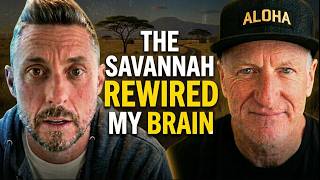
I Lost $1.6M and It Was the Best Thing That Happened to Me

In this episode of The Inner Circle, host Mike Brown and co‑host Kevin Dahlstrom explore the paradox that bold, risky moves often feel disastrous at the moment but can become the catalyst for profound personal growth. The conversation opens with a story about climbing legend Lynn Hill, who claimed she has lived her whole life without a regular job and that "things tend to work out," a mantra that frames the episode’s theme. Mike then shares his own painful experience of buying a distressed e‑commerce company in 2021 and losing $1.6 million in 18 months, describing the emotional fallout, the ego blow, and the days he didn’t want to get out of bed. He reframes that loss as a pivotal gift that forced him to confront his ego, re‑evaluate his purpose, and ultimately led to his current work as a coach and author. Kevin and Mike discuss why fear skews our perception of risk, often inflating danger by 100× while down‑playing potential reward. They argue that the cost of staying in the status quo—missed peace, opportunity, and alignment—is frequently ignored. The duo introduces a practical journaling exercise they use with a community of 25 founders: participants write down a past painful event, list the negative beliefs they held, and then connect the dots to see how that event became the best thing that happened to them. The conversation moves to how wealth can paradoxically increase risk aversion; successful people fear personal failure more than financial loss, protecting their identity. Mike explains his coaching approach: encourage clients to make bold moves for others (children, partners, society) rather than for themselves, thereby shifting motivation away from ego. Kevin adds that true change comes from running toward an irresistible purpose, not away from discomfort, citing Benjamin Franklin’s quote about regret and the common “top‑5 regrets” of dying people. Throughout, the hosts reinforce the central thesis that the universe, when trusted, appears to conspire in one’s favor, and that letting go of the illusion of control can free individuals to act boldly. They close by urging listeners to minimize future regret by taking decisive action now, echoing Lynn Hill’s advice and Mike’s “universe is conspiring in your favor” mantra.
Chapters
Hey everybody, welcome to The Inner Circle. I'm Mike Brown, joined by Kevin Dahlstrom as always. Today's topic has been one that has been coming up in my life a lot. Kevin recently had 65-year-old climbing legend Lynn Hill speak at an event. I was privileged enough to speak there as well. And she shared her life story and she concluded with this pearl of wisdom that, that Kevin tweeted about recently. I've managed to live my whole life without having a regular job. And what I've found is things tend to work out. So what does that mean to you, Kevin?
Yeah. So a quick story just to set context. So I think a lot of our listeners may know that I host these events in Boulder and other locations really to expose people to the outdoor lifestyle. Right? So it's typically Executives, you know, working fathers, usually men only. And, you know, they come to Boulder. We do some rock climbing, hiking. I bring in some speakers. And I've done this for now like 3 or 4 years. And I've been trying to get Lynn Hill to speak for years, literally. And she is the GOAT of rock climbing. And so finally I got her to speak. Wow. And she did an hour presentation and, you know, actually followed you. You were— Mike crushed it with his talk about, you know, what is real wealth. And then Lynn just shared her life story through pictures. And she's been all over the world for 40-plus years. She's been an adventurer, rock climber. And she reached the very end of her— she actually reached the end of her slides and then she kind of just started riffing. Yeah. And she said the most profound thing that really stuck with me which is she said, you know, I've managed to go my whole life without having a real job. What I've found over time is things tend to work out. And I was like, wow, that is so powerful because we tend to assume that things won't work out. Right? That's the thing that keeps us from making bold moves is the fear and the uncertainty and the risk. But the truth is if you do things for the right reasons, if you put in the work, if you're calculated about the bets you take, not only do things tend to work out, they tend to work out even better than you can imagine. And so, you know, having talked to dozens of people who have made bold moves, you're one of them, almost without exception, they say, man, I don't know what I was waiting for. I should have made this move years ago. Because it worked out great. And even if things didn't go exactly as they had planned, it still worked out. And so I think that's just a powerful mantra to live by.
Yeah. I'm going to take your bold move and I'm going to raise the ante. Even the shittiest thing that's ever happened to you, it always tends to work out. And I have lived this personally, you know, with my failed business venture, failed investing spree. But, you know, I bought a distressed e-commerce company in 2021. I lost $1.6 million inside of 18 months. And it was shattering. It was shattering to my ego. It was shattering to my self-confidence. I have never been depressed in my life. I've never struggled with depression. But there were days I did not want to get out of bed in the morning. And when we're in those moments, we feel like the walls are closing in. The negative self-talk starts. The loop starts of like, this is not working out. Yeah. And I look at that as one of the greatest gifts of my life at this point. And it didn't feel that way at the time. Like it sucked and I wouldn't go back there. Like trust me, I'm not signing up to do this on a regular basis. Right. But when I look back at what I learned from that experience, it literally made me the man I am now and enabled me and empowered me to do the work that I'm doing now and put the writing into the world that I'm that I'm putting into the world and do this. Like all of the things that are amazing in my life now, I can look back at this moment as sort of the moment the universe brought me to my knees. And the thing that just keeps striking me is the universe was conspiring in my favor. Like I needed this smiting by, you know, the source that be to send my life on this new trajectory. And it has worked out beyond my wildest dreams. And anything I look at in my life, there was, when there was a time that feels like things were not going my way, they were going my way more than I could have ever imagined if I was present and there to allow that to work out that way.
I want to repeat something you said because I think that's probably the title of this episode is the universe is conspiring in your favor. And we tend to assume that the opposite is happening. Like that that, you know, if we don't control everything, then everything's going to go wrong. And if we take risks, then everything's going to go wrong. And to be clear, whenever you make a bold move, I think it is true that things tend to get worse before they get better. Right? Because you're doing something hard. If it was easy and obvious and guaranteed, everybody would make bold moves. But the reason they're bold is because there is uncertainty, there is risk, and things are going to be hard. And probably get worse before they get better. But again, if you do things with the right intentions, which means probably like striving to live in alignment with who you really are, and if you do your part, then things will work out over time. And that's certainly been, you know, what's awesome about it is it's a muscle that you can kind of develop over time. Right? So it's hard to trust Mike and Kevin when we say, Take the leap. The universe is conspiring in your favor. But you can start today doing it in very small ways. And what I've seen in my life is I've become progressively more bold, almost to the point of being reckless where, because I've seen that yes, I know who I am. I know that I'm striving, you know, my heart's in the right place. I'm doing things for the right reason. I'm going to do the work and things are going to work out.
Yeah. And so I brought this exercise to my community. You know, so I have a group of about 25 founders who are really taking this path of using their money and their wealth and their success to actually create the life they want to create. And this is a topic we bring up constantly. So I had everybody journal on this exact scenario. Like go back to a time in your life where it felt like it wasn't working out. And list all the specific feelings, all the negative beliefs that you were holding. Like list it all out. And now looking backwards, connect the dots to how that was the best thing that's ever happened to you.
Right.
And to a person, everybody was like, man, I like, there was this time that was so hard in the moment was exactly what I needed. And without it, you know, I wouldn't be where I am now. And like one guy got acquired and then got fired by the acquirer. You know, he built a massive company and got fired by the acquirer. I mean there was a lot of stories that felt terrible in the moment. And yet they can all look back and go, this is the best thing that ever happened to me. And it sucked. Right? Like I'm not saying like in the moment you think that, oh, this is, the universe is conspiring. Like it sucks to go through the shit.
Yeah. I think what we're, the point of what we're talking about, and I think what Mike and I are saying is go for it basically. Is, you know, one of my favorite quotes that I actually included in that post that you mentioned is from Benjamin Franklin. He said, most people die at 25 but aren't buried until 75. Right? And, you know, then you look at, there's data on the top 5 regrets of people who are on their deathbed. And it's things like, I wish I'd been, you know, I'd gone for it. I wish I had lived more true to myself. You know, you don't want to reach 80 years old and have those regrets. And what happens is, you know, all roads lead to fear. Fear is the thing that keeps us trapped. And the thing about fear is, you know, when we're contemplating a bold move, we tend to, in our heads, magnify the risk and the danger while simultaneously massively underestimating all the benefits that will come. And so I always say, you know, the result is a 100x miscalculation of the risk and reward. So you actually have to actively correct for fear. I always say if a decision feels 50/50, it's not. Right? Because when you correct for fear, it's probably 70/30 or something.
Yeah. And the other thing we discount is the cost of staying the same. Right? So like we do a great job and we overinflate, you know, the cost of the change. But we have a really hard time accounting for what is the status quo actually costing me? Like what is it costing me in peace? What is it costing me in missed opportunity? What is it costing me to stay in this thing that deep down I know is probably not serving me?
Yeah.
But it's not bad enough that I'm going to change today. Right? And that's the whole thing. It's like, yeah, I don't really like this job, but not today. Today's not the day.
Well, and you can play that game forever. In fact, I'm going to cite another quote that I actually got from you, although I'm not sure if you came up with it or not. But I think you told me one time that, you know, people will make change when the pain of maintaining the status quo exceeds the pain of the change. And I think that's true. The problem is people have a huge pain tolerance for the status quo. And that's really, like that's the thing that holds most people back. Yeah. That's the one thing is they are afraid to make change because they're afraid of, you know, that the universe is conspiring against them and not for them. It's not going to work out. And they have it exactly wrong.
Yeah. And so I write about this in chapter 7 of my book. I call this internal dissonance when we actually won't even admit the thing is wrong. Right? We will do anything to maintain the status quo so far as to pretend like there's not even a thing to look at here.
Right?
And look, sometimes change isn't the answers. But choosing consciously to stay in the thing is. Right? That grants you back your agency. Right? We love to believe that we're stuck. It's so much easier to be like, well, I hate this job, but I can't quit because I need the money.
Yeah.
Well, the reality is you hate this job, but you're choosing to stay because the uncertainty of quitting is scarier than staying in this shitty thing that you hate. Right? But if you say, actually, I don't want to face that scary change, Like that's totally fine. You actually now have reclaimed your agency and it might really suck, but at least you have ownership over it. But you've brought the choice back into the equation.
Yeah. So there's one thing I want to say and then I want to ask you how you handle this in your coaching practice. The thing I wanted to say is there's a huge myth out there also that having a bunch of money makes this stuff easier. And I can tell you it's not true at all. And you can comment on this as well, is across the wealth spectrum, I find that this fear issue is sort of equally prevalent. In fact, in some ways, the wealthier someone is financially, the more resistant they are to change because they perceive at least that they've got more to lose. So how do you address this? You deal with a lot of wealthy, successful people in your coaching practice. How do you get them through this or to believe this idea that things will work out? The universe is conspiring in your favor. Make the bold move.
Dude, you nailed it in that from the outside looking in, you would think that having a lot of financial success makes, like emboldens you to take bigger risks and, you know, take more moonshot ideas and go for it. What I see overwhelmingly is that the more successful you become, the greater the fear of failure and the greater the psychological cost of risk becomes. So the wealthier someone gets from a financial perspective, the more risk-averse they tend to be when it comes to making big personal change. They might not be risk-averse from a financial perspective. They might take some more wild bets. But like the more success you achieve, the more costly it becomes from, you know, from an egoic psyche perspective to face something that you fail. So what I find is the wealthier you get, you actually take less big risks because it's so threatening to the identity of the successful person.
I've got a great story for this. And I've written about this. But years ago, I worked at this large multi-billion dollar company. And the CEO came to me one day And he said, Kevin, I'm miserable. Like in my personal life, I'm miserable. You seem to be doing something different. Can you help me? And it kind of, you know, shocked me. And he was basically asking me to coach him. And I said, you know, I don't really, I'm not a coach. I'm actually quite a bad coach, truth be told. But I'll try. And in this case, I thought I wanted to start with building a foundation of fitness because I think That's, you know, one of those things that's foundational to everything. So he was very excited about getting me to help him and just hanging out. So we agreed that twice a week we were going to meet up. I was going to come to his house, his mansion, at 6 in the morning. And we'd go for a long walk, start to do some exercise. We'd talk about stuff. And got off to a great start, first couple sessions. Then like the third session, he shows up 10 minutes late. And keep in mind, We're at his house. I'm literally waiting outside the guardhouse of his house. He's like 15 minutes late. The next one, he says, oh, I'm going to have to skip today. And eventually I said, I'm just not going to do this anymore because he was, even though he knew he was miserable, like he was able to tell me, I am miserable, he was unwilling to change. And I think part of it is, you know, There's a, you know, the status quo is miserable, but it's something, you know, and it's comfortable. And I think, you know, people, a lot of successful people confuse like comfort and the adoration that they get from society as happiness, as a proxy for happiness. And therefore, they never make the changes they need to live in alignment with their true self.
Yeah, I agree. And what I would say the antidote to this is Is that by the time you become successful, you're actually not going to change for yourself. There's very low incentive. You know, you'll take the low-grade anxiety and the hum of existential dread before you'll go make a big bold risk because it's kind of already worked out for you. The way, so you asked me how I address this with coaching clients is do it for somebody else. Do it in service of others. Do it for your kids. Yeah. Do it for your partner. Do it for society. You know, do it because you're going to help people in a tremendous way. That's actually how we can empower ourselves to make the moves is make it not about you. Because the fuel of making it about you has already gotten you to where you are. You've already stood on the mountain. Right? If you need a change, go make it about somebody else other than you.
So that's funny. In so many ways, you and I talk about this all the time. Like You and I have very different backgrounds and actually, you know, pretty different worldviews actually. But we end up with a lot of the same conclusions through our own lived experience. And, you know, what I've observed over many, many years of paying attention to this stuff is something very similar to what you just said is people will rarely make change to run from something. You have to be running to something that's irresistible. Yeah. Kids are a great example, right? Like you'll do anything for your kids. You know, maybe it's to help others. And it can even be something like, you know, I guess quasi-selfish that is just irresistible but aligned with who you are. And that was my story. So, you know, my story of going to the top of corporate America, realizing, you know, there was nothing there. I was miserable. But what had grown inside of me years prior to that was this love for the outdoors and rock climbing. And so when I made my reboot in 2018, it seemed like a big, risky, bold, scary move. And it was in many ways. But I had something very clear that I was running to that was irresistible. I don't know that I ever would have made the change to go away from, you know, a comfortable but miserable life.
Yeah. I think it's such a good I was just reminded of a story, you know, my own story. I used to be way into road cycling. And I would ride, you know, 5,000+ miles a year, spend, you know, a lot of time outdoors on my bike. And in 2018 and 2019, I lost 2 friends to hit-and-run accidents in 2 years. And I had this vision of my funeral because I had gotten hit by a motorist on my bike. And they were standing at my funeral and said, well, he died doing what he loved. And I was like, fuck that. I love my kids. Like I'm not going to die on my, like I don't want to die on my bike even though it's something I love. And I gave up road cycling and moved strictly to mountain biking because I might mangle myself over the handlebars, but I'm not going to die most likely on a trail. Right. because I love my kids. Right? The point is I actually gave up something I was really passionate about and that I still would love to do. Right. But I gave it up because like that's selfish. Bottom line is it sucks that in this beautiful state of Colorado, we can't, you know, ride bikes on the road safely. But that's just the reality of things. And it was such a huge wake-up call for me. It was like, dude, this is actually a selfish endeavor. I'm not going to give it up myself because I'm not really afraid of dying. But I am afraid of my kids growing up without a dad.
Yeah. Well, maybe we can land this plane. And I'll maybe kind of wrap with one piece of advice and then maybe you can do the same or you can kind of riff on what I say. But, you know, I think, you know, to kind of summarize everything we're saying is it's, you know, it's cliché and yet so many, so few people do it is Figure out what you want out of life and then go for it. There's never a convenient or easy time to make the bold changes we all need to live in alignment with the life we want. But that's exactly what keeps people stuck until their 80s and, you know, on their deathbed regretting it all. So, you know, live to minimize regret. Go for it. Take Lynne Hill's advice that things do tend to work out. Yeah. Mike's advice that the universe is conspiring in your favor and go for it.
Yeah. I mean the conclusion of that story is like the universe is undefeated if you just look. Right? Like it's got a perfect track record conspiring in your favor. And so if you really started to let go of this illusion of control, because control is an absolute illusion. There is nothing you can do to make things work out in your favor as much as the hustle bros hate to hear that. Right? So, and this is also not sit back and manifest, you know, imagine something in, you know, imagine $20 in your pocket and have it magically appear. That's not what we're talking about. Right. But if you started to actually let go of this illusion of control and trust that the universe was conspiring in your favor, how would that allow you to show up in the world? How would you show up differently if you woke up and said, man, I know it's going to work out. I'm just going to send it.
Yeah. What would it look like, yeah, if you actually went for it? Something worth thinking about. Awesome.
Good stuff, man. Great to see you again. Thank you guys for tuning in as always. And we will see you next time.
See you guys next time.