The Founder Mistake That Turns Success into Self-Betrayal
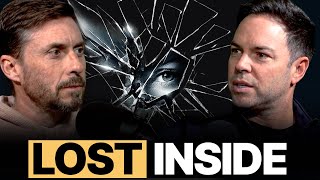
John Bowerman built a successful agency but felt betrayed when pushed out after selling it. He learned that chasing external wins like money and status costs your authentic self, and rebuilt his life around creative time, real freedom, and inner fulfillment instead.
Chapters
You get one shot. You don't stick this out, your life's over. I grew this agency successfully. If I wreck this, I'll never have another shot.
Your true self versus the self that's chasing money and success. What was that like?
Restarting proved to me that I can, I can do it again. I can do it again and I can do it on my terms.
Jon Bauermann is a writer, entrepreneur, and lifelong builder who brings the heart of a parent and the mindset of an entrepreneur to his work. He creates stories that inspire Clarity, Confidence, and Possibility, helping others rethink what's possible at any stage of life. Throughout his career, John has been a builder, designer, and founder across marketing and technology, including serving as the co-founder of Stealth, a strategy-first consulting firm helping leaders build brands that matter. He is the author of You're Not Lost, You're Just Starting, and shares practical tools through the Everyday Entrepreneur Action Guide. His work is rooted in one belief. It's It's never too late to design a life that honors the dreams of your inner child.
I had gone, gone into engineering school because that's where the money was. I turned my back on my art, which was one of the greatest passions I've had.
What it was like betraying this identity, man, I hated it. You have to ignore your passions and you, you have to be a provider and you have to take opportunities that are given, not earned. How do you start to shift that over time?
I don't just have to I don't take on a client because they're willing to write me a check. I could take on a client because—
Do you feel successful now? Welcome to Money Stories, where we have real conversations with founders about money, meaning, and what makes a truly rich life. Today I'm joined by my dear friend John Bowerman, serial agency builder, built and sold HighLevel Marketing in 2021, and now at the helm of Stealth. Another marketing firm. John, I'm really excited to have you here. You're one of the most thoughtful and intentional, uh, humans that I know. I'm really excited to, uh, to have you on.
I appreciate that, Mike. Thanks.
So let's start at the beginning. What are some of your early memories about money, and how did those shape you?
One of the biggest memories is we didn't have it, so it was always something that you chased after. Um, you know, grew up, uh, grew up in a bedroom where barely the bed fit in it, but I had a bed, I had a bedroom. Um, so I was taught to be thankful for that. And then so, you know, money was something that we didn't really— it was, it was the enemy of what you should desire in life, uh, is what I pretty much was the theme of everything that I grew up around, which was that any— if you desired money, that was bad, that was wrong, that's not where your heart should be. And so wanting things that money could get you was also tied in with that.
Do you have any specific memories or events that might have shaped your ideas about money?
Yeah, like a lot of people, I had a lemonade stand. That was, that was my first introduction to me having the power to be able to produce it versus it, it coming from, from something else. And then, you know, it was one of the earlier memories I have is the lengths that you can go to to get it when it's unavailable. One of those early stories was having to go into a store, buy a VCR with a credit card, and then have a different— go in with a different parent to try and return it and get a refund in cash so that we could use that cash for, for food or for gas, things like that.
What did that leave you with as a child watching the kind of bait and switch?
Didn't fully understand it at the time of what was going on, but I could feel the pickup on the stress. And I think it really taught me at a young age that the, the ends don't, don't necessarily justify the means, meaning that as long as you can get it As long as you can get it and you can make it work, then how you had to get there, you know, really doesn't, really doesn't matter. Yeah.
And how did that drive you to change your circumstances or become successful?
I tried to try to drop out of college about 20 different times with different businesses that I had started. I had gone, gone into engineering. School because that's where the money was. I turned my back on my art, which was one of the greatest passions I've had, something I loved since I was just at a very young age. That's where I began to get my first praise, was through my art. I had one of my biggest mentors in high school was my art teacher. Um, you know, I love that guy. And, uh, that was one of my first senses of real betrayal was when I told him that I was going into engineering school instead of art school. And within about 2 months of engineering school, I hated it. Tried to drop out. I was supposed to go in the military. Day before I was supposed to leave for basic training, I called the sergeant, said I wasn't going to show up because it wasn't me. That was the second time that I felt like I really let my dad down. It was Air Force. And I decided, well, I'm going to go into architecture because that blends some art and that brings in some engineering. Graduated with an architecture degree, never did anything with it because I was just trying to, trying to survive at that time.
Yeah. And give me a sense of what it was like sort of betraying this identity, you know, art is such an important part of your life, but you've got to get money. Give me a sense of what that's like.
My mom is one of the most incredible artists I've ever met. She was an old-school calligrapher, which is where I learned a lot of my hand techniques, things like that. And she would relentlessly be making dolls and everything for craft shows. I grew up with art always being looked at as a side hustle. That was the thing that— but Dad, Dad's work is the main thing that matters for this family, and Mom's art is the thing that, you know, we allow her to have something on the side. And so I think I always looked at that for the rest of my life, and that was that I need to follow in the path of my father, which was don't give up this opportunity that you've been given. Because I didn't— I hadn't earned anything growing up Baptist. Meant that everything that I was ever fortunate enough to experience was because it was given. It was not earned. It was— it would have been huge for me to give up that. And art just could never be looked at as something primary in my life. So it always— I'll get around to it, I'll get around to it, I'll get around to it, but I don't have time for a side hustle.
And what were some of your early business experiences and what was that like?
Yeah, turned down an early offer to be part of the PayPal team when they were under 100 employees. Because I didn't believe that the technology would work. I was wrong. As I have been many times. I, with a buddy, created what was the first— what we recognized was that the used bookstores were taking advantage of students. We said, well, this would be a lot better if there was an exchange where students could sell books to each other. Made quite a bit of money with that. And being wise entrepreneurs we were, we invested it all in t-shirts for sorority girls and then just turned to other businesses after that, which didn't really pan out.
When did you first feel successful?
First felt successful going to a steakhouse. And as you know, being at a steakhouse, there is a hierarchy of seating. At a steakhouse. I was a— now I look back— a 26-year-old kid going in with my wife to celebrate first million dollars of our company. And of course, we got sat at the junior table against the wall where it's a little colder. We got the junior waiter who's just starting, trying his best. And I asked for the captain's list and ordered at the time, which was a $300 bottle of wine. And within about 30 seconds, the whole entourage of ownership walked out from the back of the restaurant— the owner, the sommelier, the, the everyone. And, um, and the owner introduced himself and said, this bottle of wine does not belong at this table, uh, here. And they showed me to— me and my wife— to the most prominent table in the place, sat us down, decanted the bottle, uh, and from then on out we were treated treated like royalty. And that was something that I hadn't really ever experienced. But that was— that was where I really felt like I'm the kind of person that can get a $300 bottle of wine. That's where I really, really kind of felt successful.
You know, I know, I know there were some tough times leading up to that experience. Take me back to some of the harder times on the way up.
One of the most difficult times was we had— I was working at a company and decided to leave that company. And 2 weeks later found out we were pregnant with our son. Had that happened 2 weeks earlier, it might have changed the complete trajectory of my life. But I found myself 5 months later with my company that I decided to start. And I distinctly remember a sales meeting and knowing that if I didn't make this sale, I was— if I didn't walk out of there with a check, I was not going to have money to pay our mortgage, which was already a month and a half behind. And that was going to lead to potentially losing our house. And I was going to be this dad that's supposed to take care of a family, bringing a kid into the world, and not going to have a place to live. I wasn't leaving without that sale. That was, that was one of the most stressful and difficult times.
What did you learn, I guess, from, you know, this, this story that, that you have to ignore your passions and you have to be a provider and you have to take opportunities that are given, not earned? How do you start to shift that over time?
I'd always looked at art as the, as the literal way to, to monetize it, which meant I have to paint pictures, I have to do drawings, and I have to go to art shows and I have to sell them in versus, well, how could I integrate it into, into my life? How can it be a, how can it be a bit a part of, of who I am? Struggled so many years just not even being able to figure out how to introduce myself to someone new because I wasn't sure if you would accept me more if you found out first that I was a chief technology officer, if I was a writer or an artist. Would you accept me more if you found out that I was a marketer or an entrepreneur? So I would, I would really size up everyone that I met and say, who, who is the John that they're going to accept most? Until I accepted that I'm an artist first and foremost, which means that there's not any one medium that I love. It's just even, even a spreadsheet can be a work of art and really just kind of applied that. I will say one of the— even before the business— most pivotal times in my, my life where I really actually felt that my achievements and my performance weren't the number one things that mattered to how people would receive me as a person was I'd left the engineering school. I had decided to go into the architecture school and I applied. I took full advantage of the school's academic probation policy. I was on it many times and I got denied. So I had already told my, my parents I wasn't going into the military. I'd left engineering school and now my entire life plan was blown up because I was denied for the architecture school. Well, I put on a suit and I said, I'm not— I'm not taking denial as an answer. And I went into the dean's office and sat there. I ended up sitting, sitting in the office for about 6 hours waiting. The dean's schedule's booked. Brought me into the conference room and said, I looked at this whiteboard and on the whiteboard are the names of everyone that was accepted. You got this big list of accepted, you got this big list of waitlist, and there on the list of denied was my name prominently. The minimum GPA of everyone that was accepted was like a 3.9. It was highly competitive. Then you had, had me sitting there with a 2.4. Over the course of 2 hours, Uh, my essay, I Got Lost, right? I had the privilege of going to Germany, learn about concentration camps, and that's what talked about how the architecture of those camps influenced me. I talked about, um, the different ways that I felt like I could shift people's emotions through changing their environment. And at one point, the dean brought in one of my architecture professors who's one of my biggest fans, and and he couldn't believe that I wasn't in. And he said, he's not in. He needs to be in. Eventually, after about 2 hours, there was about 8 other professors in that room and they took a vote. And the dean told me, said, you know what? I hadn't really taken college so seriously myself. I struggled a lot. He's like, if you can tell me right now that you're focused on what comes next, he's like, I believe in you. And they took a vote and it was unanimous. That I was in. I went from— they erased my name from denied, and I watched this. One of the most distinctive memories in my mind is them writing my name on the accepted list with about half the GPA of everyone else that got in. And that's what really showed me that it wasn't so much my achievements. My achievements weren't the reason that I got in. It was It was myself. It was the way that, uh, it was how deep I just was entrenched in the world.
How did you carry that forward to create more success?
I've always, uh, I think from there I understood, uh, very early that it wasn't about— I had the opportunity in architecture school to see so many students with superior designs, superior ideas, land short because they couldn't communicate that. And I really understood through that very early on that it is not so much about what you're able to create or what you're able to produce. It's about how much of that the other person hears and understands. You know, so many people— one of my most brilliant art directors at my agency, I didn't come to find out until about 6 months after he'd been there that he was colorblind. and he was in charge of designing everything for clients. And, and, and through those type of experiences, I really like, oh, so everyone sees this world in a different way. And I had used art through my life to be able to bring people together around something, around something beautiful. And so I applied that to anything I had to communicate, which was How can I bring most, most people around this? And also accept that people are going to see it and hear it in different ways, and I can't control that. I can't control what they're going to walk away with. All I can do is put out what, what I believe, what I believe is best.
And how does your view around money start to shift as you become more successful?
Money and wealth are so different. Uh, I consider myself as a kid, looking back, very wealthy. I grew up, I grew up very wealthy without much money at all. Um, I had parents that encouraged creativity. I had parents that encouraged open debate at the dinner table. I had, I had parents that provided a dinner every night. Like, I had parents that loved me. I had family that loved me. I had siblings that I got to go through life with. I lost that through much of my 20s and 30s, that that's where the, the wealth lived because I was chasing the, the symbol, the symbols of wealth through money. And then as much as I enjoyed the experience of that first $300 bottle of wine, The 12th time around, it, it, that, that void still existed and I couldn't fill it with that. Even if it was a $300 bottle or a $3,000 bottle.
Take me through the journey of, of the dissonance, right? Of, of your true self versus the self that's chasing money and success. What, what was that like?
My true self. Needs very little money to be happy. I'm happiest, happiest when I'm creating, when I call it my performance art, my sand sculpting on a public busy beach where I get to do that. And, and the great thing about that is a, is a shovel and there's an enormous amount of free sand on the beach and it really doesn't require much. The chase after money was, although I had it, I didn't believe I was successful. I really, I really, for most of my life, on paper you would have thought I was incredibly successful. I did not feel successful. I didn't feel— I felt like while I was helping so many people, I wasn't, I wasn't helping myself. I wasn't helping. I wasn't helping the, the little boy that I used to be, which was— it would make me so happy just to draw a little picture and give it to a little girl in second grade or third grade or something like that. And just to see, see their face light up. And we smiled. And I was helping a lot of thousands of people, millions of people on a monthly basis. And I wasn't— I wasn't feeling that because what I— how in the way that I was helping people was a way that would result in a lot of money. But it— but it never— it never fed— fed my soul.
What I'm hearing is money and success requires betrayal of self.
Hmm. We— my dad worked a lot, 85, 90 hours a week. Whenever there was overtime, he was taking overtime. When he was working, it wasn't fun. When payday would come and my dad would have a Saturday off, we would go out and that's when we would have fun. Uh, and that's when he would be himself. During the week when he was working, he wasn't himself. Um, he'd come back tired, exhausted. Uh, that wasn't my father. My father is one of the most joyous, storytelling, animated people. And during the week, he, he wasn't able to be that. Uh, and then when we had those Saturdays, that's when he could be that. And that's when, as kids, we loved it the most. And I just, I felt like that was the, well, you, you sacrifice, you sacrifice, you sacrifice for this, for the small slivers of immense joy that will, will become available. But the idea that you'd live with immense joy most of the time was, well, that's just, that's not a phrase that I grew up with that I, um, stuck with me for a long time was that's not realistic. And it was always— that's kind of where I dismissed it. That's, that's not realistic.
So you're building this highly successful agency along the way, but encoded in that is you sacrifice to be successful, to make money with just these tiny slivers of joy. How do you start to repattern that? Or when did you know that something had to change?
About 2 years ago, and I looked in the mirror and I just, I didn't recognize myself. My, I've always been in tune to color, see a lot of color, and I love, you know, using that in art. I would have described my eyes as black. I would have described my face as this like shell. And I really just didn't— I almost, almost looked like I was— like I had passed. And I wasn't— I was not at all happy about that, which I felt like I was doing everything right, right? I felt like I was just moving through the checklist of life, and, um, but why was it— why was it still not producing overall happiness?
Yeah, so is there a moment that you can take me back to when you knew something had to change?
Yeah, uh, after I sold my agency, I stayed on as a CTO, and the idea was I'm going to be a part of the next chapter of this company, and I'm going to help, help grow it. And, um, and I won't have all the problems of being the, the, you know, one of the, the two founders. A lot of those problems are going to go away. Uh, and I, because I had built so much of the infrastructure, the architecture of the company, the technology, everything like that, I believed— I'd always believed myself as invincible, uh, as irreplaceable. And I showed up one day and found out that my replacement had already been hired, that I was to assume this new title in the company and I was to make an announcement to the company that it was my idea. And I had absolutely felt one of the greatest moments of betrayal in my life. And at that moment, I could take the route of the income continuing to come in And I said, I could, you know what, I could probably just mail this in and maybe do some stuff more I enjoy on the side. And that, that, that sounded like a good idea for about 48 hours until, until I said, no, this is— I could see myself in 10 years as miserable as I am in this moment, if not more. And I said, this, this has to— I have to, I have to, I have to burn it down. And I can't be— I have to take a step to put myself first. And this is not— this is not putting myself first. And I decided to walk away.
Where did you go from there?
Rekindled relationship with my founding business partner of the original agency. It was best for us to take a little time apart and reset our relationship. Through that process, I found out this is one of the, the people that I can trust most in the world. And we restarted our new company without the burden of the baggage, but with the insight. And within 2 years, we had reached the mark of the first company that took us about 10 years to achieve. And that really showed me that You know, that, that go back to that earlier concept around don't destroy what you've been given. You get one shot. You know, if you don't go to the right college, you get one shot. Your life's over. You don't stick this out, your life's over. You get one shot. And I believe so much that, man, I got— I grew this agency successfully. I got one shot. If I wreck this, I'll never have another shot. Restarting just proved to me that I can, I can do it again. I can do it again and I can do it on my terms. I can do it in a way that I don't, I don't just have to take on a client because they're willing to write me a check. I can take on a client because it's the right, it's the right fit. It brings alignment and I, I can determine the way my life is shaped, not the other way around, where my calendar is mine to own. I learned through Unbreakable Wealth that it gave me the courage to put a 4-hour block on a Friday that is off-limits time. That's not work time. That is my creative time. Now make that 4-hour block 5. Can it be 6? Can it be all day Friday is your time? And now I've kind of learned that, yeah, whatever, whatever boundary I set, I can, I can make work.
You give an amazing talk to Baby Bathwater about vulnerability. Um, I'd love if you could just share a little bit of that, of that journey for you leaning into vulnerability and what that means.
I, as the youngest kid in my grade. I was able to make the cutoff by— because I was born 2 hours within the right amount of time. Had I been born 2 hours later, I would have had to wait a year. And so my parents put me in school at a very early age to— as an advantage. Being a boy and undersized and underage is a very big disadvantage. Um, I went through school as a very scared boy because there were a lot of threats around me. I grew up in a very loving household. I went to school in a very unloving environment. As I moved especially into and through college, and as I, you know, started to age, was that the world is not kind to scared little boys. And so what that meant is I needed to build a facade that was a powerful facade that would protect that scared little boy, that kind little boy, that, you know, very, very nurturing and empathetic little boy. And that wasn't how I could— I had to, I had to show up as a warrior. I needed the world to see me as a warrior. And vulnerability was something that I, I hid behind that shell. I wanted you to see me as a warrior, this really tough, uh, this tough person, uh, until I'd gone through a lot of work. And there was a distinctive moment at a Baby Bathwater event where I was about to leave the group because I did not believe that anybody would miss me if I left. And I showed up to dinner late because who's going to— no one saving a seat for me. No one's going to care. And I proceeded to find out that I was the Attendee of the Year. I thought everyone saw me as a sarcastic asshole because that was my tough facade was, man, I'm just this quick-witted— it's the assholes that win in this world. And I asked you that very question, Mike. I said, I thought the world saw me as a sarcastic asshole. And you said, no, we see you as someone who's completely different. And I think while I thought I was putting on this protective facade that was protecting this kind, creative little boy, I think, I think that's how I don't think I could actually hide that. And I think that's how that was the reality of, of how people were seeing me. And once I looked in the mirror and saw myself as that, it really, it really changed my perspective on, on who I believed I was.
What was it like, you know, having this carefully manicured self-image? That you were— you thought you were doing a great job of projecting to the world and then finding out that that's not how you were seen at all. How did those two come together for you?
I felt like— I felt like a failure. I felt a lot of shame that— that I had tricked— I'd let myself get tricked by myself. that like, man, I, I, I sold myself on this. Um, and an immense regret of, of how many years and how much energy went into protecting that, uh, and realizing it was, it was, it was, it was never necessary.
And how do you start to begin to reconnect with that version of yourself that you hid?
As I lead now with vulnerability in, in the way that I'm here to share, I'm here to bring, bring what I have, uh, unfiltered. So I don't, I don't need to tailor that, or I don't need to tailor that message or myself for the world. What, what, uh, what I, um, what I allowed doing some, some identity work is that, uh, the, um, the calculator of safety version of myself, the one that would never speak first in a group, um, because he's unsure of, of, uh, if he would be safe if he did, or if he would be accepted for what he had to say or what his perspective was, um, that, that identity, that version of myself could, can take a backseat. It had served me, served me for so many years, uh, but that didn't need to be how, how I, how I, how I led.
Now you go through, you, you build this massively successful company, you sell it off, you had this reckoning where you were literally asked to betray yourself and your values. You chose the opposite route. How do you start to marry up your external success, the external facade of success, with how you felt internally?
I was always chasing that, uh, and I was pushing it out. I always, I always had a number, which was the retirement goal, right? At first it was 45. I'm gonna retire at 40. I'm going to retire at 45, and it's 50. And that was success. The younger— my goal was to be the youngest person in my family, in my friends, of anyone that I knew that retired. I hit the— I will hit the finish line. I'll be the fastest driver to the retirement finish line of anyone you've ever met. And you will see that as the epitome of success, because once you retire, now you begin to live life. I've come to realize that I never want to retire, that that's not— that was such a false goal. As I build my life now, which is a life that I never want to retire from, success— success is about waking up excited and falling asleep aligned with knowing that I was, I was meant to be here in this place on this day with these people, with my kids, that, that this is where, this is where I was supposed to be. And it wasn't about anything particular thing getting done. It was just about, um, just about living in, in today.
What does wealth mean to you now?
My health, it's a big one. In many ways, freedom, um, to pursue, um, pursue my my artistic passions. Wealth is the freedom of my mind. And wealth is feeling like I'm wealthy. I felt even when I was wealthy, I felt, felt poor. It would— and I've said this— if my income was $100 less in a month than my expenses, my world was ending around me. If my income was $100 more than my expenses, I was a billionaire. And I had unlimited, unlimited funds, and I would live life like that and then experience deep shame and guilt, um, as I had to, to face the consequences of doing that and, um, the emotional turmoil that I put myself through, that, that roller coaster, and, and everyone around me. My energy would show up like that in my relationship with my kids. Even if I try to hide it. As I've found out, I'm not very good at hiding things, uh, is that that would, that would show up. And even we would have all the right, all the right things, all the right symbols of wealth, but still, still just not feel it.
And how do you start to re-pattern that, that relationship with money and success?
There was this idea that if I had accumulated something, that means I had to— I have to keep and maintain that thing forever. Meaning if something excites me, say it excites me for a month and that thing no longer excites me, if I get rid of anything, it means that I am I'm turning down my success. Like, all of those things were my measure of success is look at the list of things that he's been able to accumulate instead of releasing myself from, from the burden of those things. And I love the expression that said to me, which is, you know, no longer obligated to be the person that I said I was 5 minutes ago. Uh, I, I'm no longer obligated to serve the goal that I'd set 5 minutes ago.
If, if, as things change, I've watched you through this incredible journey of, of unleashing the artist within. What has that been like for you?
It has opened me up to a life that I never would've imagined was possible. Recently, about 4 months ago, I did a sand sculpture on the beach that really even took that a step further. I loved doing sand sculpting on beaches, especially as kids get to drop from this. I love, I love people seeing that this sand has existed here forever and all I'm doing is moving, moving the sand in a different shape than it has existed for so long. Um, and for people to, to see that, to, for, to breathe life into something. But I, but I'd always approached it as, let me think of something I can create that people are going to enjoy the most. What are, what is going to appeal to the greatest number of people? Like, what? And about 4 months ago, I decided I was feeling an immense level of sadness, and I decided to create something for me outside of how anyone else perceived it. Um, and still to this day, every time before I go to create any piece of art, I, I go through about 5 minutes of, man, what an imposter you You have no idea what you're doing. You are probably going to mess this up. Um, and, and I just— I shovel, because that shovel, that getting in touch with my body, um, instead of living just up in my mind where all these things can circulate and be toxic, getting into my body, uh, helps, helps release that. And I decided I'm just going to let my emotions come out in this sculpture. I didn't know exactly what it was going to be. And a woman walked by me 10 minutes into just this raw, rough form, and she asked, she's like, is that a woman crying? There, there was hardly any perceived shape that this was a woman crying, but that's what she felt. And I said, that's what, that's what I'm feeling right now. And yes, this is, this is a woman crying. And I proceeded to, to make a mermaid on the beach that had been trapped and was crying. And that was one of the most impactful sculptures that I've ever, ever made. People, people would walk up and start to tear up themselves. And that was such a, such a big moment for me because it opened, it opened me up to the impact that I could make in the world with, with my art. Um, not by thinking about what people want or what people need, or— but I have enough lived experience. I have enough. I am enough to, uh, to create something beautiful just because it comes out of me.
So Knowing, having all this experience, you know, knowing what you know now, what would you go back and tell yourself 10 years ago?
You would be dancing in the streets if you knew who you're going to become in 10 years. And I would tell myself that The work that you're doing is not about marketing. It's not about technology. It's not about clients. It is, it is that you are surrounded by people that have faith in you that you don't need to prove or earn, but they believe that you are going to lead them and they have chosen to share this piece of their life with you. And that is really the work that you are doing is helping them through, through their lives. And all of the results that you need to see are in the people they're becoming and in their faces. I would, I would have, I would have loved to know that 10 years ago because I'd written myself off as not a people person. I am not a people person. I am an asshole. And I was anything but. But I just didn't believe that. That's who I would convince myself 10 years ago.
And what would you tell someone listening who might be hearing this journey and, and maybe they're resonating with the idea that they look externally successful, but they're not feeling internally successful? What would you share with that person?
Look outside. What you think is your closest ring of success, which is how much money do you have, what awards have you gotten, who's your network, all of that. But take that to the second, the third ring, which is how have you impacted the lives of the people around you. Now imagine, imagine the people that you have impacted. And now by impacting the people around you, just imagine what that is doing for the people around them. And then the people around them. One of the things I love about sand sculpting so much is there's always, there's always a little kid, 5 years or younger, who wants to help, always comes up and helps. So I bring a little shovel, I bring a pen. When I'm done with this sculpture, I always give the shovel and the pen to the little kid who, when I give it to him, that that shovel's like Thor's hammer. I have come to learn that some of those kids Even some of the kids that I've done illustration sessions with, I've heard later from parents that their child wants to be an artist, their child wants to create. And that is— so my initial, when I look at success, is how many people took a picture of the sculpture and enjoyed it? How many people How many followers do I have on Instagram because of this sculpture? When I think about inspiring a kid to, to want to pursue art and forever that child's life is changed and he's going to want to make a sand sculpture. Imagine the people that are going to see that and get impacted by that. And he might inspire someone else. He or she might inspire someone else. And when I think about that energy of inspiration that I've put into the universe, I— it is— success is immeasurable. Um, and I think more of us do that than we give ourselves credit for. I'll give you an example. My wife is a very, very accomplished Pridho yoga practitioner. And sometimes, you know, marketing, getting customers struggles, but she has worked with over 1,000 moms. Those 1,000 moms have had multiple thousand— thousands of kids each, but you get it. And she instills the confidence in moms to not just listen and take direction from everyone around them, what is telling them, but to be the advocate for themselves. The influence on the universe that she has created by these moms being the advocate for themselves and their kids seeing their mom be the advocate for themselves, growing up in an environment where they themselves can be the advocate for themselves. Um, the success of that cannot be measured on a balance sheet, social engagement, anything like that. And that's what I would encourage other people to do, is let your, let your mind wander into What is the, what is the impact that the impact that you're making is?
Yeah. The concentric circles.
The concentric circles.
You also, uh, released a book this year. Uh, I'd love for you to share a little bit about that.
Yeah. Uh, You're Not Lost, You're Just Starting: How to Make Anything Possible. My, I have two teenage children and the most common question that circulates around the school, especially with my son. Is, where's he going to college? Where's he going to college? That, that question for me is visceral because it brings up a lot of— I turned my back on myself answering that same question when I was his age. And I am here to help guide him in a way that is not the same path that I took. And I do not believe that where Is he— are our kids going to college is the number one question that we've been thinking. If I could go back to myself when I was 16, is how do you like creating joy in this world? How do you like serving others? Which is far more important than where are you going to college. And as I took this concept further, it was really— that's the— that's what I believe is the spirit of the entrepreneur, is just the, the enjoyment of serving others and creating joy in however you manifest that. And there's this misconception about entrepreneurship that it means you have to start a business. And I don't believe that that is the case. I believe that anyone can show up. I realize that throughout my whole life I've showed up as an entrepreneur, and I was an entrepreneur before I ever started a business. You know, I'm John. I'm the CEO of the John Bauman Company, whether that company is an LLC or anything like that. But being the CEO of myself means that I live like an entrepreneur, which is, you know, I'm not afraid to hear no. I'm not afraid to ask. You know, there's a lesson in every loss. There's so many different lessons there, and I wanted to create this, this guide that my kids could have for the rest of their lives, meaning you don't have to— you don't need the pressure of making this one decision. Guess what? You don't have one shot. You got 1,000 shots. You got a million shots if you want. And likely what you think you are going to be doing Uh, because any of us, we'll go back 20 years, we have no idea the 20-year-from-now person is, that what I'd be doing. Um, and so likely you're going to have to change, you're going to have to pivot. Um, but as long as you're staying true to yourself and applying, you know, what entrepreneurs, uh, know, you can really make anything, anything possible. Um, and specifically for for my daughter. The main, main characters in the book are women because I believe women should be running the world. I think we would, we would all be better off. And I wanted her to have more to look up. I wanted her to see a successful female entrepreneur and then that, that was possible. I wanted that to be the authority figure. I wanted to represent that. Uh, I've witnessed it, um, with my own wife. I've witnessed it in a lot of women, this, the struggle of, can I be a good mom and serve my passion? And every minute with my passion is a minute I take away from being a mom. A minute being a good mom is a minute I take away from my passion. Uh, and through the book, I wanted to convey that, that you can be both. as I've seen, as I've seen many, many women do. And I wanted, I wanted my daughter going into this world knowing that she didn't have to make a choice, that really she can make anything possible. She has the power to define what that looks like.
What a beautiful gift to give your children and so many other kids. Who, who read that book. Do you feel successful now?
Tremendously. Yeah, tremendously.
Why?
I figured out who I am. Um, I've developed the the courage, the honor that person. I live life going in, in directions that I define. My relationship with money specifically is healthy. Uh, I'll tell you a story, short story of my transformation in this. Uh, you know, well, I wrote it, uh, Spicy Rigatoni. Uh, for, for years through college, I had to make conscious decisions. I— there are many— most weeks I would have about $20 grocery budget for the week. A lot of ramen noodle, a lot of grilled cheese, a lot of days where I just would wait till the next day. And so $20 in my mind was a strong symbol very early on. And there's one of my favorite coffee shops, Scribe, and I drive by this place. I take my kids in one of the most— the best private schools in the country, drive by our world-class country club. Live in one of the most affluent communities, incredible sports car, all of this. And after I dropped my kids off at the school, pull into the coffee shop, and on the shelf they would have this pasta called Spicy Rigatoni. And unfortunately it cost $18. I would never buy it. I would look at that and say, how irresponsible. To spend almost a week's worth of groceries on one pasta dish. Like, that is— I, I am so irresponsible. I cannot, I cannot do that, even though I, I know I love it. Like, I know I love it, but that would be so irresponsible. And through my transformation of having a healthy relationship with money was that I could release that $20, that $20 no longer represented my, my grocery budget. My, um, that was not real. It wasn't something real. It was just, it was just in my mind. It was a, it was a limiting belief that I hadn't embodied. And, and then one day after doing some of the work with this. I said, I'm gonna have some spicy rigatoni. In fact, I'm gonna have 2 spicy rigatonis. So I bought it. I said, I'm gonna have one for lunch and I'm gonna have one tomorrow too. Uh, and it was one of the best, best dishes I've had. And I get spicy rigatoni quite regularly now, um, without the guilt around eating it, around the— without the shame or the fear of, am I going to be able to— will I have money to eat again? Will I be able to feed my kids if I spend $18 on this pasta dish? I mean, that was a real tense— feel it in my shoulders, my heart, my jaw— around, around getting that. And I don't anymore. Now I look forward to it.
Such a beautiful story. John, thank you so much for coming on, sharing your wisdom and your gifts with us. Where can people find you? Where can they find your work? Maybe buy your book?
Yeah, you can go to johnbowerman.com or write for the book. It's notloststarting.com. And I, I have a free— even if you don't get the book, which I hope you do, Uh, but I, I created a— it's called an Everyday Entrepreneur Action Guide, um, which is a step in to living life like an entrepreneur, uh, which means you don't have to quit your job, you don't have to make this giant leap, but there's just small steps of how to ask, ask for more. You feel like you should be compensated more in what you do ask, you know, just some small steps to start to bring an idea to life, things like that. And that, that's available because I really— is important to me is that as many people as possible get to experience the freedom of defining how you show up.
John, thanks so much for coming on the show. I appreciate you deeply, and, uh, you're, you're a beautiful human. My friend.
Oh, you too as well. Like, man, this wouldn't, wouldn't be possible if it wasn't through this work. Cool.
All right, you guys, buy the book. Thanks, John. We'll see you next time.










