This Millionaire's Wake-Up Call That Brought Him Home (Preston Brown)
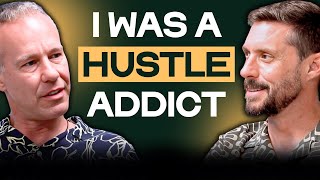
Preston Brown, an entrepreneur and podcaster, talks about losing his father in 2019 and how it redirected him from chasing money toward building real wealth. He breaks down the difference between being rich and actually having wealth, and how automating his business gave him back his life.
Chapters
I built some pretty big companies. I was ruthless as shit. I was the father that was never there, the husband that was never home. I was the hustle and grind entrepreneur that you can find a million of on Instagram, and I was just like all of them, and I had it wrong.
How did that feel?
It, it felt— money's fucking easy. Wealth is really, really, really hard. There's a huge difference between rich and wealth, and it generally has nothing to do with money. Making money is really easy.
Like, I can attract money so fast it's not even funny.
I could probably walk outside of this room and raise $1 million in 10 minutes if I wanted to. But getting rich is not wealth. Wealth is freedom from—
I love that definition.
One day in 2019, I get the phone call and it was my brother-in-law and he said, "Dude, you need to get over here. Your dad's gone." We had like the perfect family, amazing dad, amazing mom. There was not money, but there was this other thing that was called love. When I lost him, I remember standing there in my parents' house and I'm sitting there and I'm looking around and I realized, fuck, the lesson I should have learned is Welcome to another episode of Money Stories.
I'm here with Preston Brown, who has scaled, automated, sold, built massive companies, and currently, uh, podcaster of the moment. Uh, and really excited for this conversation. We actually just met today, so I don't know anything about you, and I cannot wait to dive into your story because So many people that I respect speak so highly of you. So welcome to the show.
Thank you for having me. It's an honor. I was not expecting to do a podcast today, so this is fun.
Jumping right in and making some magic, right?
Let's put the F.U. in fun.
Well, that's, that's what we try to do. Maybe that's my new podcast tagline. So here's how I like to start the show is kind of dive into some history. But the world has enough interview shows, so we're not looking to talk about skit, you know, hiring A players or scaling companies. Where I'd like to start is, how did you grow up with money, and, uh, what, what, how did your relationship with money start to form?
I did not grow up with money. I grew up without money. We, uh, we had the small trailer, uh, in Cañeteo, Texas, which, if you know where El Paso is, like, here's El Paso, over there's Cañeteo. We had that trailer in the trailer park, and You know, there, there, there was not money, but there was this other thing that was, that was called love. It was far better than money. And, you know, I had no idea what money was. I didn't know if we were poor or rich. Those weren't even constructs I had figured out. Um, we, we had like the perfect family, amazing dad, amazing mom, like everything else, just missing the money piece. And I remember the money thing came in, but it came in when I was a little older. 7, 8, 9 years old. I'm not good on past dates. So roughly that age. Dad wanted the life he saw on TV, not the one that we had. And so, you know, he opened his own business. He did the entrepreneur thing. And, and we had a shed out back that like one of those little tin sheds, which in El Paso, you know, we actually stole an air conditioner to put in the shed to keep him from dying of heatstroke. And he opened his business. He was a metallurgical engineer by trade, not education. He made things. He made parts for high-end cars for people that didn't want to go buy it from Ferrari or Porsche. He made all sorts of different stuff in there. He was there 8 a.m. to sometimes midnight, and, and he started his business. He didn't know some of the fundamentals, though. So of course, that led to things going wrong. 3, 4, 5 months in, the, the fight happened. Mom, you know, I don't remember all the things she said, but she threw one of those big, thick cast iron pans up against the wall, and it lodged in and clanked to the floor. And, you know, she knew how to get attention. Should have gone in marketing. She was a psychology gal, not a marketing girl, but she figured it out. Um, and she said, a real man can feed his family. Collect what you owed or don't come home.
Wow.
And the mistake Dad made was he didn't understand billing, charging, collecting, valuing his product, pricing, any of those things that people can go to a different podcast and learn. And of course, it knocked him out. Like, I got to be the charity piece. I went up with him to the man's house that you know, owed him the most money. And there's my dad, like superhero guy, 6'4", like towering over this little guy that had to be all 5'9". And, uh, you know, it started exactly how you'd think. He, uh, he started demanding what he was owed, and demanding led to asking led to— I wouldn't say it was begging, but it wasn't far from it. It was, it was kind of that, that, hey man, look, I— if I can't feed my family, like, my wife's gonna leave me, this is gonna happen. And, uh, A wad of cash was taken out of the man's pocket. It was probably, you know, it wasn't the thousands of dollars that he was owed. It's probably $100 or a few hundred bucks. And my dad settled. My dad compromised. We, uh, drove to the local Albertsons, or I guess it was a Smith's back then, I think, but it was— it's an Albertsons now. And I got to ride back with ramen noodles on my lap and my hero not talking to me. And what the little boy learned was I had it wrong. Love is not the meaning of life. Money is the meaning of life. And with, you know, with that, I became an entrepreneur at 7, 8, 9 years old. I started working for money. And this went on till— well, went on. I've never really stopped, but it went on full-blown working for money until 2019. I mean, I built some pretty big companies. I was ruthless as shit. I was the father that was never there, the husband that was never home. I was the hustle and grind entrepreneur that you can find a million of on Instagram, and I was just like all of them. And one day in 2019, I get the phone call and it was my brother-in-law and he said, dude, you need to get over here. Your dad's gone.
Wow. Well, so much to unpack here, and we'll definitely get to that part of the story. But I want you to just take me back to that ride home with your dad. How did that feel?
It felt confusing. It felt Like, I wanted to underwrite the situation. I knew something was wrong, but I didn't know what. And, uh, and, and, you know, my dad was doing the right thing. Like, I didn't, I didn't catch it. I don't know that my dad was doing the right thing the right way, but the lesson I should have learned is family first. He will compromise his dreams to take care of his family. I didn't get that lesson though.
I mean, it's tough for a 7-year-old. Yeah.
And, and, and, you know, if you're the parent driving the kid back after a situation like that when they're the charity case, I mean I, I have no negative thing to say about my dad, but make sure you talk to him because they can, they can learn the wrong thing from what could have been a beautiful lesson.
Yeah, yeah. If, if with, with the absence of, of giving the lesson, you're going to make your own meaning in that moment, especially as a kid.
Yep.
We're going to interpret the world, uh, the only way that we know how in that moment. And what I'm hearing is really so much shame.
What do you mean?
Seeing your dad humble himself, have to go hat in hand, and then not speaking on the car. How—
yeah, he— I mean, it was definitely a compromise situation. He was giving up on, on what he wanted to do, and he was— he was doing that maybe for the right reasons, but the unintended consequence was what, you know, significant emotional events in life create significant emotional events, like it says in And at least the book I read, The Sins of the Father, The Sins of the Son, like, so I took his sin in a very different path and I became a transactional entrepreneur. But I was not a happy guy. I was not a loving guy. Like all the people that think Donald Trump's transactional or a little abrasive, man, they would have hated me. I might have said you're fired more directly than he ever did. But I built some good-sized companies, had what from the outside looking in looked like success. And, uh, I, I was miserable. I didn't know what I was looking for because, you know, you can make all the money in the world and you're not going to find it. And, and when I lost him, 2019, it, it didn't— I wasn't— it wasn't like an overnight aha breakthrough. It was more of like, uh, I remember standing there in my, in my parents' house, and Dad's in the other room. He'd gone to sleep in his favorite chair and went home. And my mom's broken, my sister's broken, my whole family's broken. Like, it was like, like, my mom is this beautiful, radiant woman, and she looked more Smeagol out of The Lord of the Rings. Like, she was contorted. You could tell her entire world had shifted in, in this moment. She'd spent the day out doing something she loved and, and had come home and she'd found him. And, uh, and I'm sitting there and I'm looking around and I realized, fuck, I have ruined years and years and years of opportunities of spending time with family. And so I, I got— I did get a paradigm shift That day I was like, I'm done with the hustle and grind. I need to automate these companies. These are the people I want to be with. I want to be able to spend time with them. I want to have time with them. And so my dad was kind of my greatest teacher. My dad made me an entrepreneur. And then by leaving, my dad retaught me that, hey, love is the meaning of life. It's not money. You've built these beautiful skills, but you better go automate this shit so that you really have time and you can be with the people. Because all the money in the world without the people that you're going to share time with is worthless.
And what does wealth mean to you now after this epiphany?
Wealth now, I mean, at this stage in my life, has nothing to do with money. I mean, I would say wealth has more to do with happiness and grace and, and, and a willingness to accept life as, as, as it comes, you know. I mean, wealth is the ability to make a decision unencumbered by something projected onto you by yourself or others.
And I love that definition— freedom of mind.
Yeah, I mean, freedom of mind, freedom of heart, freedom, freedom to be who you are. And, and I don't know that, uh, you know, people like— I think everybody should go get rich, but getting rich is, is not wealth. And if you go get rich you're, you're, you're going to find out very quickly that it's not what you were thinking and it's not what you were expecting. I have a lot of very rich friends. Like, if you want to get rich, there is this point in your life where you have to subordinate everything to getting rich. I mean, your wife, your kids, your family, everything. And you know what? Good for those that do. Please don't judge them because we need those people out there. But the problem with taking that path and going on the get rich road is it's an addiction like any drug, and it's very hard to get off that path. It's very hard to derail yourself from that path. I mean, a lot of people that have gotten phenomenally rich and they're miserable in their later stages of life— and by later stages, I mean like 40 on. I'm not talking like they're 80 and they're miserable. I'm talking they're 40 and they've got another 40, 50, 60 years potentially left, and their kids don't know them, and their wife has left them, and They're keeping up with the Joneses, trying to, you know, you can go have the airplane, but don't buy the airplane because you're going to compare it to somebody's airplane. Buy it because you want to fucking use it or something like that.
There's always a bigger airplane.
There's a huge difference between rich and wealth, and it generally has nothing to do with money. Like, I— making money is really easy. Like, I can attract money so fast it's not even funny. I could probably walk outside of this room and raise $1 million in 10 minutes if I wanted to. And that's a result of track record and experience and all of that. Money's fucking easy. Wealth is really, really, really hard. Wealth requires wisdom.
I can see why you were recommended as a guest on this show, uh, because my view is that money's a battery, right? Money's an amplifier, it's a store of energy, and it's only useful in so much as that it creates the life, the experiences, serves your values, the things that you actually want to do with it. But as a store, it's not useful at all if it's trapped in a vacuum.
I wonder, you know, I—
Yeah, go ahead.
Let me add to that. So, so I, when I created a mastermind in the past, like, it was funny, like, I lost Dad and like a fool, I went and delegated Dad energy to Tony Robbins. And then, you know, I traveled with him and his Plat Group and Lion Group, and then he stopped traveling due to COVID. I hired, like any good entrepreneur in a recession, like, I hired some people that have been laid off or left all the travel companies, and I formed my own group because I wanted to keep traveling. The small group could, right? Somehow I triggered Tony Robbins, and, and then I'm getting the fucking lawsuit letters from his super attorneys out of, you know, San Diego. And, you know, like, imagine the guy you delegated all the dad energy, and now you're hitting this with it again. Like, like, wow. It's funny, God sends you to this earth to learn something, and if you miss it, he's going to teach it to you again in a, in very, very, very different way. And, you know, wealth, kind of coming back to that, is the ability to learn the lesson that God, the universe, whatever you want, is trying to teach you. And right on the other side of that, when you get the answer to that question, there's a new lesson that's coming as well. Like, wealth is a concept we could talk about for hours or days probably and not fully dive into.
Yeah, I think that, you know, when, when I host retreats, I ask, I ask people to define wealth, and we usually start somewhere with money, and then we start evolving, and the word that comes up most often is freedom. And I define wealth as freedom, and I used to define it as freedom in 4 areas. Now I define it in 5. Freedom of health, that's fundamental. Freedom of relationships. So I can, I can be unencumbered, like you said, to, to spend time with people that I love and, and not feel like I owe them something or they owe me something. Freedom of time. As we move up the ladder, freedom of mind and then freedom of soul, right? Really, how do I get to walk this earth, uh, completely sovereign and building wealth in those multi-dimensional areas?
So let's tap into that because the reason I wanted to go to the mastermind and then I just lost myself rambling because I do that now was, was this thing that we started building the mastermind around and it was faith, family, fitness, finance, right?
Yeah.
And like if you hold up 4 fingers on your hand, faith, family, fitness, finance, progress equals happiness. Picture the hand going up. Well, all of these things are like an energy and money is an energy in its own right too. We live in this transactional world. When you see how money works, you can start learning to leverage how that works. But it's not the only type of energy. I mean, there's an energy around family, fitness, and faith as well. So money is just supposed to be a teacher in this world of form, of structure, of hierarchy, to show you how to leverage not the exact same kind of energy, but energy into the other areas, right?
Correct.
So I, I don't think money's bad. I think everybody should have lots and lots of it.
I think I've been rich and poor. It's better to be rich.
It's better to be rich. Like, you know, The, um, the money won't buy you happiness, the all of this shit. Like, have you tried poverty?
Yeah, lack of money buys a lot of misery.
Will that buy you happiness? And like, you, you talked about freedom. I would say wealth is, is not necessarily financial freedom. It's not not financial freedom, because when you have wealth, you have the wisdom to be able to create financial assets or assets of any other type, right? But wealth is freedom from anger and fear. And I would say the negative emotions more than it's freedom from monetary concerns.
Correct.
Like, you know, we go and we study this thing called anger. And if you—
if you've been angry, I'm sure at some point in your past, still angry all the time.
Cool.
Yeah, it happens. We're as humans. Is it a natural part of life?
Fair question. And I don't know, I, I think it's a natural part of the, the form-based side of the life, not the spirituality-based side of life. Because can you be angry without feeling the need to be right?
So this is, uh, we can, we can go way down the rabbit hole, you know. As, as my own spiritualities evolved, um, what I found is that acceptance and neutrality around all emotions, uh, looking at as it arises, right? Like, we have this idea that we have to be non-attached, right? Which, which is, uh, deep, deeply woven through the, the Eastern wisdom traditions. And people get non-attachment wrong. They think non-attachment means renunciation or being above it. Oh, it's— if you're enlightened, you're above anger. I actually think it's, it's allowing anger to be there with neutrality, witnessing, noticing but not becoming the emotion, right? Saying, oh, of course I'm angry because this guy cut me off in traffic. I'm a human. That's what we do. And I am not my anger.
I think there's a difference between being able to feel anger and being anger.
Yeah.
I think the moment you're taking anything into your being, you're attaching it to your identity and allowing it to be part of you. And when I started getting— and I, you know, I don't want to pretend I'm good at this, But when I, when I started getting the understanding that I could be free from anger— yeah, like, you may not be free in the moment, but the emotion becomes an indicator rather than a definition, pointing out instructions. Absolutely. And so, like, and then you can let it pass. When you get on the other side of this thing called anger, or fear, which is just another flavor of anger, you know, because you need something to be right or wrong good or bad, bad guy or good guy, whatever, for those emotions to even persist. When, when you start having wisdom and you start having wealth, then you, you kind of accept— like, you, you can feel the anger, but you can complement the anger paradoxically with enough forgiveness to offset it to where you're not living it. And, and even if you need to show it for the other person's benefit, it's more of a karmic anger because they might need that to learn than an actual physical embodiment of the anger where you're diving into that and becoming that state.
Well, and even I think our language, English in particular, is incomplete. Like if we look at Spanish, ser and estar both mean be. One means present tense, one means permanence. And when we say I am angry, we actually don't differentiate between am I angry in this moment or am I permanently angry? And so we start just even from a linguistic perspective to identify ourselves with our emotions, which is actually not the case at all.
Well, and the 'I am' word is so powerful. Like when, when, when, when, you know, and I follow the Christian faith, not to like project that that's the only one of value, but I mean, that's my methodology and modality. But, you know, when God was asked who he was, he said, 'I am that I am.' Jesus said, 'I am the way, the truth, and the light.' Like some Christians would say that means he was, and some Christians would say You know, if they, if they think deeply, then I am is who you are in the moment. Like, if you are saying I am angry, you are attaching anger to your identity in literally the most biblical way imaginable. Like, and if I want to do something biblically, it would be like love, not anger.
Yeah. Let's pick another one. Right. Well, let's, let's go back to 2019 and you have this tragic event in your life, losing your father. It was your wake-up call. Were the cracks showing before then? Like, was it— were there any other moments leading up to that where you said, I built all this shit, maybe this isn't it?
There were many. There was all sorts of little betrayals of business partnerships. There was all sorts of good guy, bad guy stuff. I wasn't, I wasn't learning the lesson. I always needed an enemy. I always needed a bad guy. I always needed something to chase, something to conquer, someone to beat. And, and I was, I was good enough that I could build a formula for anything. Like, I'm known for being the formula guy. Like, I, I have a formula that any entrepreneur can use to grow any business and they'll all be successful and it's great, right? But like, lose your dad, solve that problem. What formula can you get for that? There's no formula that's going to solve that. And so what did I do? My narcissistic way, I, I, I went to solve it by delegating daddy energy to Tony Robbins.
Right.
Well, how did that work out? Litigation. You know, I'm projecting my father's love from him to me, and I'm projecting daddy love from me onto him because I had a wound that rather than deal with it, rather than heal with it, I just— I tried to cover it.
It's good medication.
And yeah, and Tony, to his credit, knowingly or unknowingly, I don't fucking know, I don't really care, but he gave me the breakthrough I needed when he sued me. Yeah, like, and which, which is, I mean, fascinating to think that's maybe in one of the ways that he operates his purpose. I don't think he knowingly did it on this one, but it still worked out just great for me.
Um, yeah, we call those divine assignments, right?
Yeah, right. It was a long journey and it's still going. Like, I mean, it's, it's been a pathway where it took me through the automation steps and I started automating my companies. And go, go figure that that will radically change your wealth. Like, if you're at a stage where you could stop doing in the business and start automating, really truly work on the business— I mean, you know, for anybody listening to this that's doing their, you know, $50,000 a year income, half a million dollar a year revenue company, like, please don't do this. But if you have somebody that's doing $20 million, $30 million, and you're still being the operator in a ton of different ways, like, get the fuck out of the way. Hire a sweet C-suite team and go work on it, not in it, right? And my net worth, it just— I mean, it exploded, skyrocketed, which, you know, we were talking about this outside offline and like, it's funny because that gives me the time and the ability to go really dive in and do the work to explore the other stuff. So, I mean, my dad passing literally made me one of the best business people imaginable because I went in, I wouldn't have gone and automated. I would have done everything I'd been rewarded to do. No, they're no different than Pavlov's dog ringing the bell. Here they come for food. So my dad was my teacher there. Tony was my teacher there. And, and, and it put me in a place where now I can still do all the things that I think business is in many ways my purpose, but it's not my identity, right? Does that make sense? Like, of course you can do the thing without being the thing.
You can be You can do anger without being anger. It's, it's right. It's actually completely linked, right? Business is what you do. This is not who you are, right? And when you create from that place, you ask most people, who are you?
Yeah, tell me about you. They don't tell you about who they are. They don't know how to answer the question, who are you? Like, and, and it's, it's one of the most simple fascinating, beautiful questions you can ask somebody to find out, like, where they really sit. Like, I mean, you know, I think spirituality begins with the ability to remove the question from your life, what about me? But so does working on knowing who you are. When you remove the question, paradoxically, What about me from your life? You can actually sit outside of yourself in a deep meditation and really get a framework and a picture of who you are, which is more linked to the I ams that you've done and the wants that you have and the goals and dreams that you've— and the people you're linked to than it is to anything you'll ever do. Yeah.
When I, when I help people think about wealth, in the next level in their life. The question isn't what do I need to do? It's who do I need to become? Who do I get to be, right, in that phase? And it's not a process of adding, it's a process of removing. And so if I think about a concept I love called entelechy, which is the idea that the oak tree exists within the acorn, the conditions just have to be right for the oak tree to emerge, right? We're not adding anything to the acorn. We're just actually setting the conditions and then removing barriers that would keep it from becoming an oak tree. And much the same in, in who we are truly. It's a process of letting go, letting go of stories, letting go of identities and allow and setting the conditions for our natural state to actually emerge.
I agree 100%. I think who you are is not what you do, but it is oftentimes what you create. If God made you in his image, he made you a creator. But what you create is not what you do. That's where the paradox steps in. And it's— I hope everybody who's listening to this show or any of your others, like, like, like they can really dive into that because it won't be a short journey. It'll be a lifelong question with lifelong answers that are probably providing more questions that might give you clarity that you will shift the way you operate.
So let's go back to the process, because it sounds like you've done a tremendous deep dive into who am I without my business, who am I without my achievements, who am I? So who are you now?
I think who I am today is, is if I had to answer, I'd say who I am is choice. I mean, I have a freedom financially and the ability to create freedom emotionally where I've worked— I like the word triggered. I've worked on eliminating the lasting effect of triggers, not, not noticing them. Like, I don't want to like turn the world off, correct? But I want to eliminate the negative impact. I only want to see— if I can see something negative about you or any other person, I want to see the counterpole positive that, that would go with it, or, or maybe some of the story that makes you just another beautiful soul that created that negative. And, and it really dulls the blow. It gives me the ability to choose. And I mean, I think I'm an observer, I think I'm a creator, and I think I'm a chooser. I think that is the best way to describe I am in, in the minutes we probably have left on the show.
Yeah, I think that's a great definition, um, because I think on the other side of, of letting go of identity there is just this boundless creative energy that you get to play in. And for me, at this point in my life, it is all about play. And even what someone might consider work feels like play because there's, there's creation inherent in those actions.
100%. I mean, you know, we all love children. We, we love learning from them. They're sometimes our greatest teachers. I remember a few years ago my kids were younger than they are now. They're still pretty young, but they were younger than they are now. We went to a playground. There was no second thought in this playground full of kids. They, they, they both had new best friends within 10 minutes of getting there. And, and it hit me then. I was like, you know, we go to work and we get in a foxhole and we point our guns at the other guy in the other foxhole. These kids show up and they go play. I mean, when you can replace this idea of productivity around the fight with the play, it changes the entire nature of the game. It's almost gamifying life if you want. And it makes people feel like the compelling future that you're creating for them now.
Yeah. I mean, I don't want a life where I have to have discipline, where I have to compel myself to do things that I don't want to do. If my actions are actually aligned to my values, then I get to leap out of bed and Even, you know, mailing stuff at the post office or, you know, all the shit that— the shit work that we all have to do is no longer from compulsion. It's no longer from force. It's from power. It's like, hey, I know this gets me to the place that I want to go because ultimately what you said earlier, like when you really make it not about you, the possibility that opens up on the backside of that is just stunning.
When you make it not about you, you no longer need to be right. And then anger starts going away. Like, not that you can't feel it in the moment, but it can't hold you the way it used to. You know, anger, pain, suffering, all these, like, different, you know, words that we, we come up with. Most people can only feel the emotions of the words that they can write down. If you give them a minute to write down every emotion they can think of, those are the things they also know how to feel. It's, it's, it's, it's fascinating to see that they pick 20 negative words and 3 positive words. And then, you know, they spend about 5% of their time in the positive too. But when you can get free of the negative BS, something happening in a moment becomes an indicator, not a dictation of who you are or how you have to act and behave. It gives you a level of freedom where you can create. It gives you a little level of perspective where, yeah, you can get hurt, but you can also forgive. And it's almost instantaneous. It's removing the 'what about me' gives you the freedom to not be anchored to anger or fear the way you used to be, because you no longer need to be right in every circumstance. 'What about we?' is a better question.
This kind of work, this kind of liberation doesn't happen overnight. So from 2019 to now, it's, it's clear that you've done a tremendous amount of work on yourself. And take me through that journey. Where did you start? So you knew it wasn't working. Your dad passes, you go through this thing with Tony. Where do you start to unravel some of these old stories?
I think you start in the moment. I think you stop projecting what you want on the world to be your reality, and you start accepting the world as your reality. I mean, I, I think paradoxically life has two meanings. One meaning is love, and, and our goal is to not just feel love or find a soulmate that unlocks our love box, but rather figure out how to not need any modality of just a single relationship, but rather use all modalities or methodologies to unlock our own box and feel love all the time. And paradoxically, the counterpoint of that is problems. As you grow, as you age, you're going to have more problems, not less. Can you still love when the problems arise? And then when you can, you're going to get more problems. Can you still love when the problems arrive? In the Christian context, he proved he kept loving and kept loving and kept loving. Well, what did he get? The cross. How did he end? Forgive them, Father, for they know not what they do. What a loving comment for him to make. I mean, love and problems paradoxically are the meaning of life, and we're trying to make our own meaning instead of accepting the meaning that is so obviously present for all of us. And I don't try to project that onto the world. Like, if you have something better that works for you, like, please use it. But like, for me, problems are gifts and guides. And if I can be loving as I'm operating through that, Amazing. And if I can't, then that's where the question lies. What's stopping me? That's where the— that's the bullseye of what work can I do? Because the only work you need to do is when you can't be loving despite your problems. Like Christ said, with the faith of a mustard seed, you could move mountains. Well, maybe we should look up what faith is. Can God create a rock so big that God could not lift the rock? And the answer is, of course, yes. And the answer is, of course, also no. I.e., paradox, which means when we climb to the top of this mountain and we climb to the top of this mountain and we find the chasm in the center, if we understand both mountains and we've climbed them both, it's not a huge leap of faith. It's just a mustard seed. You can step across it. If you don't take the time to discern both of them, well, then you're going to have some argument on whether God is God and whether he could create the rock or whether he couldn't create the rock. And that would be stupid. Why would we spend our time doing stupid things?
The ability to hold paradox is the hallmark of self-actualization, right? Believing two thoughts simultaneously that seem opposing in nature but actually can both be true. So, I am enough exactly as I am, and I'll never stop growing. Both are true, both are right, and yet seemingly opposing nature, right? And, and the more we can actually hold paradox, the further we can actually liberate ourselves, right? I, I am a person. I am a human that lives here, and I am also so much more than that, right? Paradoxically, both are true in this, in the same instance. And I think to hold paradox, we do, we have, we have to let go of being right.
We have a lot of desire for control. We have a lot of need for surrender. I would challenge those that don't know how to surrender that maybe you could control your surrender. And I would challenge those that don't know the other, maybe you could surrender your control. The paradox is true. Like, you know, people think they're parallel lines that never come together. The most heat, the hottest hot and the coldest cold are still both temperature. They come together, you know. Without light, you get darkness. Add light, you're still in the same place. People spend their lives looking up for heaven in a world that's round. We have a confusing way of looking for heaven. Heaven's right now, but so is hell. What I am are you today.
As you've learned to hold paradox, as you've become choice embodied, as you've said, sometimes, and sometimes I'm just a crazy goofy motherfucker playing with my kids. That's what I was going to ask is, what is it like to be human?
It's more fun.
Yeah.
Like, we're in human school. We should be human, but we should also accept others that are on different levels of walk and journey while they're being human. Some people don't— like, most people who are angry or most people that are fearful would not choose that. And so if you choose to get angry that they're angry, Are you a robot or are you in control? Wealth is the ability to decide. Mean people need love too. If you see somebody that's in pain, maybe that's the first person you should hug. And someone acting angry or cruel or rude, it's just a cry for help. They need love. There's loving communications, there's cry for help. Which one are they doing? They're a human. They're in human school. We're all in human school. We should do the fucking curriculum. But you can do the curriculum in a loving way to others that are not at the same level or structure. You know, maybe you're the graduating senior, right? Maybe they're the freshman. Love the freshman. So they will be so fucking attracted to it if you go up and show love when they're acting like they don't deserve it. Something in their soul will know. The mind divides, the heart connects, the body feels, the soul knows. You show them love when they're acting outside of deserving it, they will feel it, and they will know what unconditional love feels like. They will be attracted to you. You'll create a bond, something beautiful.
What a gift.
Yeah, the ultimate gift, really, in the present.
When we start speaking in these terms of liberation and choice. Something that I hear so often is, yeah, easy for you to say, you're already rich. How do people who haven't achieved financial freedom start to access this path?
Well, I would give you the first recommendation: go get rich. Like, getting rich is sort of like getting thin. If you're eating Big Macs every day, you know not to. Get on the fucking treadmill and go. You'll be thinner. Eat salads instead of Big Macs, you'll be thinner. Getting rich, you know, most people don't actually want to be rich. Like, all rich— the biggest difference between rich and not rich is time. Like, having more money, great. Having less money, great. You can find spirituality through suffering, and you can find spirituality through study and meditation. I highly recommend the second. The latter is a more appealing route for me. And, you know, if you can't find it that way, use suffering. Either way, remove the 'what about me' and you will find spirituality. Like, there's not one road to Rome. All roads lead to Rome. Like, if you want to do it the way that we're talking about doing it as successful business guys who now get to the top and realize, oh, fuck, look, I'm here at the top. Wow, how amazing to be at this thing called the top. Why is everybody so fucking lonely? If you want to do it our way, get rich first. Nothing wrong with it. I mean, you can go get my courses. I'm sure you have courses. Everybody's got courses. And you know what they all say? The same fucking thing.
Do the work.
Yeah, do the work. And by the way, somebody's course doesn't work, there's a million other guys with courses. Do that work instead. You don't have to have a straight line to financial success. But if there's something that triggers you about getting rich and you don't feel that that's your path, that's okay too. It doesn't block spirituality. Spirituality, I think, is around— you know, we're all looking for an emotion, we're looking for a feeling, we're looking for what the body gives us, some kind of high. That's just a biochemical reaction. I think the meaning of life and the meaning of spirituality is much more not about emotion, it's about love. Love is not an emotion. Love may make us feel other emotions. Love's an essence. Fire is also an essence. Fire consumes, fire creates. Love can consume us, and love can be creation. Like, if life is problems and love, then he who has more poverty has more problems and can find love all the sooner. If you want to go the harder route, get rich. You'll find more problems. They get bigger as you go. Like, I don't know any really rich people that are like, man, my problems are getting smaller. I haven't met that guy.
You get the gift of bigger problems.
Yeah. I mean, we all came to this world to learn something, and we're all going to learn something. You don't need to be rich to become spiritual. Like, I recommend that route because it's the only one I know, right?
But worked for me.
Yeah, it worked for me. But I know a lot of very rich people that are very not spiritual, and they're toxic as fuck.
Very unhappy, fundamentally broken, right? And why is that the case?
Because it's not about the money, right? They missed the lesson. Like, if you want to get rich, yeah, dive into that zone, subordinate everything to getting rich. But it's a really hard thing to get out of. There's going to be a day where the universe, God, Christ, whatever you want to call it, comes knocking and says, hey, it's time to get in a different lane. It's time to realize there's enough here. And by the way, if that's already knocking and you're past that age or stage or whatever, that where you're going to go make money, Answer the door. It's so much more important. Like, I, I went on a spiritual journey, and, and in a deep meditation, I got this, um, you know, I had a, as you can imagine, like a fixation on death with my dad dying. And I got this message from Spirit. It said, you know, the two greatest gifts in life are, are love and death, and, and we fuck them both up. And I don't think the spirit world said fuck. But I ad-libbed my own words.
So we like that word around here.
Yeah, yeah, it's a great word. Of course, I, I had all these projections on death is bad. I was like, how could death be a gift? And it said, do you believe— this is the spirit world asking me in a deep meditation— do you believe death is a part of life? Does everybody that's alive, everything that's alive, experience death? And I was like, yes. Well, do you often say that life is a gift from God? And I was like, yes. It says, well, then if you fear death, you worship life, not God. Where is your wisdom? And it hit me like a ton of bricks. Death is the doorway to go home. Love is the thing we're supposed to learn here. But you need your problems and the paradox of the problems and the love to find them. However you do that as your strategy, there is no one better or worse. There's no one above you or below you. When you look at something, you will find that that is the truth. You know, I even think that— and I'm a Christian— I think that we bastardize the gift of Christ as Christians. Oftentimes it's hard to have this conversation with Christians, but, you know, I believe that Christ is the Son of God. I believe that God humbled himself and brought himself down to human form to live amongst us humans. We spend so much time and energy deifying Christ, and that is the opposite of what God did with Christ. Christ wanted to humanify, or whatever you want to call it, himself, to come be eye to eye with us so he could lead us and guide us. And even Christ said himself, I tell you the truth, with the faith of a mustard seed, you could move mountains. Why do we deify somebody that wanted to humanify himself? Why do we do that? Why can't we allow ourselves to call the man who we called teacher when he was alive teacher? No, we need to call him God now.
Why?
So he can make himself so big and ourselves so small that we would never be able to follow in his guidance? What fools are we? I'll tell you the truth, we do that out of an abundance of love. Christians do that out of an abundance of love. We love Jesus, so we put him right back in the deity space. Why not put him in the brother space? Yeah, he's the Son of God. Are you not also a son of God? God sent you a brother to be your guide, and you bastardize the gift by putting him right back where he came from instead of allowing him to be here in your heart. Like, when you start thinking about the paradox on the other side of everything, then you get both sides of the mountain, and it truly is the faith of a mustard seed. You get outside of anger, outside of fear, and when you no longer have these attachments, at least that define you, that's where you become what God intended to create. A creator. You are in his image. Community of souls, community of cells, creator, creator. But you cannot do that when you're attached to the things that are of this world, a form of structure, of anger, of fear, of pain, of threat, of anything else.
I think this, this conversation is so relevant to everyone who may be listening right now that have done it, whatever done it means, right? Like, I've built the company, I've got the money, I've done the thing I was supposed to do. And now what? Is this really it? Is this really it? What would you say to that person?
I would say, have you met your kids? Have you met your wife? Is there a stranger you could get curious about out there? Inspiration comes from the word in spirit. Breath. The biblical word for breath is ruach. It means breath, it means wind, and it means spirit. If you are uninspired by where you are at today, take a deep fucking breath and get curious about something beautiful that God created that's right next to you. If this is it to you, take off your blinders If I have a pickpocket and Jesus Christ himself standing in front of me, I will see them both. Christ will see the ability to forgive him, but the pickpocket will see nothing more than Christ in his pocket. What you project onto the world outside of you is what you will receive back. Remove the projection because that's an attachment too. And just go find something beautiful. If you open your eyes for a second without the preframe of what's supposed to be, you'll see what is. And it's amazing.
I was taking a hike the other day with two of my dear friends. We're walking through this beautiful burned area of Rocky Mountain National Park, and we were just in awe of the creative destruction of fire, which we touched on earlier. Just, just such a stunning silent, haunting hike. And this dude comes up the trail and he looks at us and goes, "Is it like this the whole way or does it get green?" And I think that's— that really drives home exactly what you're saying here is that how could you wish for it to be any different than it already is? There's so much beauty in every moment, in every present experience that we have. And yet we trick ourselves into wishing it was an evergreen forest when there's this beautiful burned thing that's right under our nose. So you found this path. What's the, what's the most surprising thing or what's the hardest thing that— there you are again in 2019. I've got to wake up. I got to change my life. I got to do something different. Okay, I'm ready. What surprised you along the way, along this journey?
How easy it is to slip backwards, like, and, you know, it's really easy to fall into any pattern sin that you had before. And I think we all do all the time. It's easy. To become angry and not let it be an indicator. It's easy to lust. It's easy, like, oh, you know, you'll have these spiritual conversations and someone will be like, wow, they're so advanced. You gotta know that the same sinner that was there before is still there, and that all you're doing on the spiritual walk is choosing. Like, you have to, like, let the thoughts come in and let them go. Like, thoughts are fascinating things. Another biblical reference: Christ on his 40-day fast, the devil walks up to him and says, why not turn this stone into bread? Christ says, get behind me, Satan. That's profound when you realize that in ancient Aramaic, Satan means crazy thought. Get behind me, crazy thought. Which crazy thought is possessing you today? Do you need to work out that demon, exorcise him out? You know, the church likes to call exorcisms these whole big processes. What thought is getting you to fall off the wagon in this moment? Is this an I Am moment, or are you the robot in the moment? And anybody who says, "Oh, I'm in the I AM all the time," is a fucking liar. I mean, I think I try to be in the I AM as much as I can. And maybe I am 30%, 40%. It's funny, we sit in these conversations, my eyes water and I'm like, "Why am I fucking crying?" They say the eyes are the window to the soul. We'll go out there and we'll start telling jokes and somebody will start gossiping and I'll catch myself just being in it. But that's not the I AM, that's the robotics. We have to remember that we're pattern-oriented beings and that humans have dominated the entire Earth because of mastery of patterns. When are you in pattern and you're robotically operating, and when are you in I Am? And how can we move the needle just a little bit to spend a little more time in I Am, a little more time in the present, a little more time in our conscious behaviors where our subconscious mind's patterns aren't dragging us into something robotic? That makes us not who we want to be.
I love it. And, and when you find yourself drifting into the humanist, the robot—
so daily.
Yeah, yeah. How do you interrupt that?
I think you need to be okay with failing, because once you set certain values and certain standards, anything outside of those values becomes failure. So it doesn't have to be a long road of failure. You just start, like, if you're getting into the gossiping and you realize, oh shit, I'm here, that's not my value. I mean, maybe fun, but if it's not your value, recognize it and then, hey, politely excuse yourself. Don't judge them, let them do their thing. Don't holier-than-thou, don't browbeat, don't cancel, don't do anything else. Just go fucking check yourself. Like, Go take a walk. Go hug a tree. Go, you know, shoot the shit with somebody else that's in a different frame. Whatever. Like, just get out of whatever. Like, the word sin means miss, right? We miss it, you know. You don't have to hit a bullseye every day, all day long, every single time. Like, miss sometimes. It's part of the human experience.
My friend Dan likes to say you can start a diet halfway through a bag of chips.
Yeah. I've probably done that many times.
Uh, and my, my other favorite quote is Alan Watts, uh, I'm under no obligation to be the person I was 5 minutes ago, and I love changing my mind.
Amen.
And we get so stuck in these stories, we get so stuck in these loops, and really all it takes is one moment, one aha, to go, I don't have to do this right now.
Well, here's, here's the question for that one. Are you the story, or are you the person watching the story? Stories are profound. Stories are important. Like, I go to the Christian faith, and one of my favorite things to ask Christians: if God is God, why did Jesus have to die? God could have snapped his fingers. The existence of Christ for the Christians is a paradox because God could have snapped his fingers and made everybody forgiven. No need to kill Jesus. No need to let him suffer on the cross. So why did we need Jesus? Well, another humble, beautiful thing that God did, he gave us a story. Because facts tell, stories sell. So are you the story that's selling somebody else today? Are you the I Am, or are you the robot bystander that's just participating in somebody else's story?
I love it, Preston. Such a beautiful conversation. If you could leave our listeners with one thing just send one message, what would it be?
Problems are your gifts. Problems are your guides. The biggest problem we have in the world is thinking that we shouldn't have any problems. We call falling in love falling in love because it's not a controlled landing. You're gonna fall either way. Might as well ride your problems down and fall in love with them because there will be a lesson on the other end. That'll bring you true happiness.
What a beautiful conversation. Where can people get in touch with you? Where can they find you? What are you working on that's exciting right now?
I've got a new podcast we launched earlier this year called Problems to Profit. You can tell I love problems. And then any of my social medias, all my social medias are the Preston Brown. I wanted to get my name, but some much more handsome big buffed black dude that's a professional football player has Preston Brown. So I had to go with the Preston Brown.
So try being Mike Brown sometime.
Hey, you know what, you've had several mic drops on this one.
I love it, I love it. Well, thanks so much for being here. It's a pleasure getting to know you, and, uh, I can't wait to dive deeper.
Thanks for having me, it's an honor.
Cheers.
Cheers.










