What Happens After You Get Everything You Think You Want (Ryan Larson)
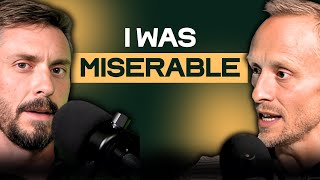
Ryan Larsen, founder of US Tax Services, built a successful business but felt empty after achieving financial success. He talks about burnout, therapy, and meditation, then shifted from chasing money to coaching other founders.
Chapters
I have everything I ever wanted and I'm fucking miserable. After all of these years of hard work, after all the sacrifices, you know, my oldest daughter, I barely saw her for the first 5 or 6 years of her life because I was always working and I had put so much into the business.
And so you've been grinding for 10 years?
Yeah, I was in the office every morning early until late at night. So I would get home and If I was lucky, you know, I could spend a little bit of time with my first daughter before she went to bed, and then I would go to bed, but I couldn't sleep, and I felt like a failure. I thought that I should have everything figured out. One of the pivotal moments for me was Saturday in my office at home working, and my daughter, who was maybe 5 years old at the time, walks into my office, looks at me, and she said, Daddy, why are you working so much? And I thought, oh shit, that's a really good question. And in that moment, I promised myself that I was going to find a way to be happy because I had kept waiting and waiting and waiting for the fulfillment to come. And it just wasn't.
You thought money would make you happy. It doesn't work that way. What do you do from there?
What I realized along the way is that all I had to do was Welcome to another episode of Money Stories.
Today's guest is one of my favorite humans, one of the most well-considered, thoughtful men that I know, visiting us all the way from Zurich, Switzerland. Ryan Larsen, founder of US Tax Services that specializes in helping US citizens abroad with tax compliance. And just such an honor for you to be here. Welcome to the show, Ryan.
Thank you, Mike. Pleasure to be here.
So let's, let's dive right to it. I'd love to learn how you grew up with money and maybe how that influenced you to become an entrepreneur.
Sure. I grew up in a small town in Alaska. My dad was a school custodian. My mom had odd jobs. I have 5 brothers. So raising 6 boys on a limited income led to a lot of financial stress in the household. I think that was the root of some lingering issues. And as I, as I grew up, you know, I, I would find ways to help as much as I could. So very often when I was in 6th grade, I remember I would skip school on Fridays pretty often to help my mom go clean houses to, to earn extra money. So I, I took on a role of provider for the family from a very young age. But this, the scarcity mentality was, was very deeply ingrained in, in who I was growing up, and it led to a lot of success later in life for sure. But the path from where I started to where I am now was ultra rocky for a lot of the period.
Yeah. So, so let's dive in a bit. You know, there you are in 6th grade, skipping school for odd jobs. Was, was that stress ever present, or how did you even know to do that?
I felt an obligation to do it, and it was ever present because I saw what, you know, my— we were never lacking for anything. We had a nice house to grow up in and food on the table, but at Christmas every year, my mom would go into debt to buy us nice presents, and then she would spend the rest of the year working to pay off the, the credit card debt, which led to stress between her and my dad. And I was looking for ways to contribute as much as I could. And as soon as I was old enough to have a job, I, I was working after school and paying my own way as much as I could. So I didn't want to contribute to what I perceived as an already stressful environment. So, um, it had its upsides for sure. It made me resourceful. It made me have a strong inclination towards entrepreneurship. So my first adventure there was in 6th grade. I would buy bulk Jolly Ranchers from the store and then sell them at recess until the teacher shut me down. So this was always in my blood somehow. I knew what was happening and I knew that I didn't want to live like that the rest of my life. So on the one hand, it motivated me to to get out and do something with my life. On the other hand, it created this underlying level of tension that I carried with me really until my early 40s. You know, despite having financial success later in life, that underlying tension didn't leave for a long time because, you know, first you don't have it, so you stress about money, and then once you get some, you stress that you, you're going to lose it because now you actually have something to lose. Yeah.
And that's so common for so many founders is this story of never enough, right? There's an insatiable hole that we try to fill when we grow up with that kind of lack. And how did that influence your early entrepreneurship career?
It prompted me to work very, very hard, which had its upsides. For sure, but I put a lot of additional pressure on myself that didn't need to be there, and that carried over into my day-to-day life, my family life. So I was bringing home a lot of stress that, that should never have been a part of the picture. I guess what I learned along the way is that the, the, the drives and the motivations that get us from where we were to, you know, a more advanced place, so to speak, are not necessarily the best things that, that will serve us to get from, from there to a place of real prosperity, which is more than just about money. So it was, it was integral to, to my journey, and I don't regret it in any way, but in retrospect, I certainly could have done it more skillfully. Yeah.
And, and so take me back to Um, you know, literally, so we got 6th grade, you're selling Jolly Ranchers, getting shut down by the man, doing odd jobs. What, what was your next foray into entrepreneurship or, or what, what did your path look like from there?
At a certain point I ended up in Boston. So a couple years after I graduated from high school, I was living there and I was at, at that point eBay was relatively new, so I was buying computer components in bulk. I used to build my own computers, so I would buy hard drives and, you know, cases and things like that. And then I would resell them on eBay. And this was a really nice foray for me into this world because I had an entrepreneurial spark, but I had no real idea what to do with it because growing up, I didn't have role models in that sense. I didn't have entrepreneurs around me. So the first real role model that I had was Tony Robbins, but that was watching infomercials at, you know, from like midnight until 2 in the morning. So the, the, the roots were there, but the tree withered a little bit because I didn't know how to nourish it. But I had known from the time that I was little, despite everything in my life point in the opposite direction. I knew that one day I would have my own business. I knew that one day I would be successful. I knew that one day I would have financial abundance, and eventually it happened.
Yeah. So, so take me from selling components on eBay to US Tech Services. Was that your first business or, or—
That was my first real business. Yeah. Yeah. So I, I worked and put myself through school. So I was a 7, 8-year bachelor's student. I attended, I think, 8 different universities across 3 states and 2 countries. So eventually I went on an exchange program to Germany and I was there for 2 years. At the end of that second year, I met my wife who is Swiss. So that's what eventually took me to Switzerland. And a few months after I arrived in Switzerland, I had met another American woman who had a tax business and she was looking for a successor in the business. So we came to an agreement and, you know, I started running the company and when, when I agreed to buy the company, I had never even done my own tax return. So I knew nothing whatsoever about it, but I knew that I could figure it out and starting from essentially sole proprietorship to where we are now over the course of 20-ish years, you know, has been just a journey of epic proportions with all of the, with all of the requisite ups and downs along the way.
Yeah. So, so take me back to those early days. You know, we, you mentioned that this deeply embedded scarcity story drove you to success on one hand, but also some downside. What were those hard times? What did that look like for you?
Yeah, so the first probably 2 or 3 years were just golden. You know, I was working all the time and I didn't care. Nights, holidays, weekends. It was fantastic until it wasn't. And you know, I had my first burnout because I was giving my heart and soul to this thing and I wasn't getting back what I expected to get back. And I don't mean in a financial sense, I mean in a fulfillment sense. So gradually though, the business continued to, to, to grow. We brought in more employees, the, the customers kept going. So from a business perspective, everything was going well. I mean, as you know, as an entrepreneur, it's, it's, it's really organized chaos 99% of the time. And I was in a new country speaking a new language with new people and a new business. Having learned something completely new. So I was— I had all this newness at once. So it wasn't just the business, it was the whole package that I was— that I was diving into and figuring out as I went. And it really came to a head 12 years ago now. We had just moved into a beautiful new house, and I stood there in the living room holding my wife in my arms, and I said, I have everything I ever wanted, and I'm fucking miserable. And in that moment, I promised myself that I was going to find a way to be happy because I had kept waiting and waiting and waiting for the fulfillment to come, and it just wasn't. And when, when I had that moment, you know, it really compounded everything that I've been feeling over the years, this lack of fulfillment, this lack of satisfaction, because, you know, by all outside metrics, I should have been happy. And perhaps even worse, everybody thought that I was. You know, nobody knew what was going on inside of me because I couldn't share it with anyone.
And what was going on inside of you? Like, like, take me back to that time if you can. You're holding your wife in your arms. What, what's happening in your life that, that is so miserable?
I mean, objectively, life was going very well. My relationship with her was great. The business was running, you know, everything was working. It was my subjective experience of that, that, that just wasn't in alignment. So there was nothing that, that needed to be fixed about my life except my experience of it.
Yeah. And what, what made it come to a head? Like what, what was the catalyst for you to say, I'm miserable and something's got to change?
I really think it was, it was finally moving into this house. and this was for me kind of the, the cherry on top, right? And after, after all of these years of hard work, after all the sacrifices, you know, my, my oldest daughter, I barely saw her for the first 5 or 6 years of her life because I was always working and I had put so much into the business and kept waiting and waiting and waiting for this hole inside of me to be filled. And eventually I just had to stop lying to myself. You know, I think that, that was really the point. I, I, I, I wouldn't allow myself to lie to myself anymore because my subjective experience was screaming at me that something needed to change. And that was really a, a nexus point in my life. Not just with my relationship with the business, but in my, my whole arc as a human being and everything that I am now, 12 years on, you know, again, I wouldn't go back and change a single thing about it because all of those things needed to happen for me to be who I am now. So in the moment, it sucked, of course, but The, the experience of having been able to go through that now and to be able to help other people that are going through it now has been such a joy in my life.
Yeah. And how long have you been in business at that point? At this moment of change?
Uh, this would have been about 10 years, more or less, something like that.
So you've been grinding for 10 years.
Yeah.
And like, and what did that look like? Like how hard were you working?
I mean, work was my life, you know, I would, uh, I was in the office every morning early until late at night. So I would get home and if I was lucky, you know, I could spend a little bit of time with, with my, I, I only had my, my first daughter at the time, you know, I could spend a little bit of time with her before she went to bed and then I would go to bed. But I couldn't sleep because I was thinking about all of the things that I should have done, all of the calls that I should have made, all of the, the people that were counting on me. And I felt like a failure because I thought that I should have everything figured out. So the, the expectation that I had, that at a certain point everything was just going to come together and deliver me on a platter, like this, this dream life that I've been waiting for, just wasn't happening. So the, the commitments that I made to the business, um, were outweighing the commitments that I had made to myself and to my family. And even worse than that is that I found myself working when I didn't actually need to. So one of the pivotal moments for me was it was a Saturday. I was at home in my office at home working, and my daughter, who was maybe 5 years old at the time, walks into my office, looks at me, and she said, Daddy, why are you working so much? And I thought, oh shit, that's a really good question. Because if there's work to be done, of course I can do it, but I'd become addicted to the process of work. You know, I was hustling and grinding, which has its place, but it should be a place, not the, the, not the thing itself.
Yeah. And typically when we're hustling like that, it's to try to create a sense of safety.
Absolutely.
Because like, like you said, it's business is controlled chaos. And I think so many of us create a narrative or create a story that if I just work my way through this. Someday it's going to be okay. And as you found out, holy shit, it never landed. It never worked. So you have this breakdown moment holding your wife in your arms. This isn't working. Now what?
Uh, I made a vow to myself. I made a promise to myself. I made a decision, and that was ultra important because before then I was negotiating with myself and I was making compromises and I, I was intentionally blind to what was going on in my life. And as soon as I made that vow to myself, things began to change. So I was still working very hard. but I began to have a healthier life. You know, I started eating better. I started exercising, yoga, meditation, breathwork, you know, all of the things that, that, that now are really a fundamental part of my life. But at the time I had to find ways to, to fit them in. I remember I would very often wake up at like 3:30, 4 in the morning and I would just go up to my office at home and think, okay, like, what can I do now to improve my situation? So I tried everything, you know, everything that I just mentioned, plus hypnotherapy and psychotherapy and neurofeedback. And gradually, gradually, gradually things started to get better.
And what do you think it was? Was there, was there any single habit or modality that was more effective or how did, or was it just a combination of everything stacking?
It was a combination of everything stacking, but really the, the, the most important thing that I did was make a promise to myself.
Yeah.
If, if I hadn't done that and if I hadn't followed through on that, I think that I could have stacked the habits and I could have done, you know, begun doing the right things. But without that 100% commitment to keeping my word to myself, nothing really would have changed, or at least it wouldn't have changed in such a dramatic way. Because there was a, what I, what I realized later as well is that I had a, a, a strong lack of trust. In myself, to follow through on my word to myself. And with a lack of trust in myself, there was a lack of trust in the world around me. And when we can't trust ourselves and we can't trust the world, then how are we really ever going to come to peace with who we are and our place in the world, regardless of what we have to decorate our life with?
And where did that lack of trust come from?
It's a really good question because, again, objectively, my life was working and things were falling into place, but my core programming was not in alignment with, with who I was. So a big part of my journey over these years has been to deconstruct my identity. To go back to the roots in my childhood. So growing up with a scarcity mentality where you expect that things just aren't going to work out because that's what you experience for all of those years growing up, that, that there's, there's always going to be some kind of a conflict, there's always going to be some kind of, of lack, either in, in financial terms or in affection or in attention or in whatever case, when life keeps feeding this this to, to you, that becomes the signal instead of the noise, right? So that's, that was what I was focusing on. And as long as I was focusing on the everything that wasn't working well in my life, I could never tune into the signal of what was. So again, objectively, things were working out fine in my life, but my subjective experience didn't match it because I was focusing on the wrong things. I was putting my attention on all of the things that didn't really matter and ignoring all of the things that did.
So when we talk about the things that were working, by this point, you had stepped into financial abundance. Growing up with a severe lack of financial success, what did it feel like to first start making money?
It was amazing. It was amazing to be able to go to the grocery store and just put food in the cart without having to kind of check the prices and add things up. To go on vacation without having to really worry about what it was going to do to the bank account. This is why, especially in the first years, I had so much joy about what I was doing because I had security, like real financial security for the first time in my life. And I wasn't, I wasn't doing anything extravagant with it. I was just living. But to be able to live without all of that background stress, that all that background noise the what-ifs creeping in. That was a complete game changer for me. So it was, yeah, this, this first sense of real security in my life. And I just, I, you know, I, I embraced it and it worked really well until it didn't.
Right. Because at some point that becomes hollow.
Exactly. Exactly. Because again, when I have, okay, so I can go out and buy a shirt without having to worry about it, but I go home and I can't sleep at night, right? You know, so where really is the, the reward coming in? Because the, my, my feeling about the whole thing, I get the, the short-term dopamine spike and then reality sets in again and I'm just not happy. I'm not satisfied with, with how it was going. So it was, it was, you know, I, I, I think about those days often actually, because it was a really important transition point for me. And, you know, I've got nieces and nephews, for example, who are still figuring out their, their place in the world. And, and I talk with them about this and, you know, there are so many people who just think, well, How can you have anything to worry about if you're financially secure? And it's a good question. I get it. But it's one of those things that you just have to live for yourself because nobody— you can't experience it until you can't know it until you experience it.
Yeah. And I mean, I say often, right? Like self-actualization is a privilege. If you are caught in the scarcity loop and in struggle, all you want is to find that security.
Absolutely.
Then once you gain it, now you have the opportunity to go, oh no, was this at the cost of myself? What was this self-sacrifice all worth it or not? And the question changes.
Absolutely.
So how do you unwind that? You thought money would make you happy. Newsflash.
Yeah, it doesn't work.
It doesn't work that way. What do you do from there? What were like, where do you go from there? You started stacking these habits.
Yeah. So I made some, some other resolutions along the way and, you know, I worried for a long time about how everything was going to play out. And at a certain point along the way, I just thought it doesn't matter. Like I'm just going to get up every day and do the right things and live my life and let it unfold as it will. Right? And when I began to put more, much more focus and attention on the inputs and not worrying about the outputs anymore, I began to, you know, I, I internalized my locus of control and I began to trust myself more. And as I began to, to combine these things, suddenly, I guess, a substance emerged inside of me that hadn't been there before. It had been there, but it had been malnourished. Right? And it was all of these little things together. But really, the— you know, I also made a decision along the way. I was at a Tony Robbins seminar now 11, 12 years ago, and he was talking about being in service to people. And that really resonated with me, but I didn't know what to do with it because at the time I was— I felt like I could barely be in service to myself. But I adopted it as a core principle in my life. And what's happened along the way is that as I stopped focusing all the attention on myself and began to focus it outward, like it's no more how, how can I help myself, how can I help myself to prosper, but how can I help others, how can I help my clients, how can I help my friends and my family and people that I don't even know, suddenly my perspective on life began to shift more and more and more. And what I recognized is that part of this hole that had been inside of me, this, this lack of fulfillment, is because I was, I was looking in the wrong direction. I thought it had to be all about me. And what I recognized is that as I turn my attention to being in service to others, suddenly the whole world in a way began to be in service to me. You know, so all of these things began to manifest in my life and come into my life in ways that I never could have imagined. And I'm certain that that never would have happened if I had continued to hyperfixate on myself and what I needed in order to be happy. It was really, I mean, it sounds a bit trite and oversimplified now, but so much of it was really just about putting myself in a position to, to, to help others. And as I did that, I began to grow and change and develop in ways that I never could have imagined. And everything now has come together in such a way that, that I still have the financial abundance, but I also have the happiness and I have the fulfillment because I'm doing things for the right reasons. And it's being reflected back to me by, by everything and everyone in my environment.
Yeah, I mean, we share a core philosophy in that true wealth is just a byproduct of alignment to service. And that as long as we're making it about us, we're always going to find that same dead end that you found when it was all about you. As you started stepping into this life of service and reorienting your values and your actions, what was that experience like?
It was hard. It was hard because I had to change all of my, my models of reality. And there were, there were things that happened along the way, which were also hard, but ultimately very helpful. So I'll give you one really extreme example. About 10 years ago now, a dear friend of mine committed suicide, and I went to the funeral. I spoke to his parents, I spoke to other friends. Nobody had any idea what had happened. And I went home and I thought about it, and I thought, you know, how could this have happened? How could you be in— how could you have been in so much pain and never been able to share that with anyone? Never been able to ask for help. And then I realized, oh shit, I'm doing exactly the same thing because I was suffering in my own way and I couldn't allow anyone in because I was sure that if I did, people wouldn't trust me anymore. People wouldn't love me. You know, my wife would leave me. All these, these, these crazy thoughts that came from, again, this lack of, of trust in a lot of ways, again, a scarcity mentality, just in a different form. And so I promised myself that I would take something positive out, out of that experience, as difficult as it was. And what ended up happening is that I made a resolution to open up to my friends and to open up to my wife and to share with them a lot of the struggles that I was going through. Because from the outside in, everybody thought that I had the perfect life. They, they had no idea. And by me opening up to them and being vulnerable with them, that allowed an authenticity to emerge that, that had been subdued before. And that changed not just my life, but the lives of the people around me. Because when we, when we do this, we give permission for the people in our lives to do the same. So money is one form of prosperity. Relationships are another form of prosperity. And I began to find prosperity in my life and all of these areas that that I had never even really considered before. And not just prosperity, but just an abundance of wealth in those areas.
Well, what you're describing is the classic founder's trap, right? We, we start our business, we find financial success, we do all the things that society tells us will make us happy. And then all of a sudden we get to the top of that mountain and we realize that it's empty. And now what compounds this trap is the shame. You did the things. What's wrong with me? Why didn't this make, make me happy? Right? So there's really a true compounding effect because it's not just the fundamental lack of happiness, but it's also why didn't it work? And who am I going to tell about it?
And I've been astonished to have this discussion with other founders, with other entrepreneurs, and to really understand how ubiquitous this is. You know, this combined with the, the imposter syndrome, like it's, it's such a, such an incredibly kind of vile trap that, that so many of us fall into. And this is why I appreciate you so much and what you're doing to help, to help people understand that that, you know, money is money. Money is just an energy. And there are ways to have this abundance in so many other areas of life. And that actually we're not alone, you know, because so many founders think that, oh shit, I'm the, I'm the only one going through this. I'm the only one who, who can possibly be screwing things up in such a stupendously amazing fashion. And to understand that we're not actually in this alone, that this is a pretty common experience. For, for people in, in all lines of business, it to be able to be open about that. You know, we had the pleasure of joining you this morning and some of your friends for the sauna session, and the, the amount of, of sharing that we were able to do in openness and this, this brotherly camaraderie that came out of this. I, I can't imagine myself being a part of something like that 10 years ago. I would not have been able to to be open and share like that. And it would have shocked me, frankly, to see other people in your position, in our position, allowing themselves to do that. So for me, this is like a— this is a massive win for, for the whole kind of entrepreneurial community. You know, I— we go to a number of events together. This is where we had the pleasure of meeting. And the conversations that I've been having with people over the last 2 to 3 years are very different than the conversations we were having the 2 to 3 years before that. So there's a shift in perspective that's happening and an understanding and acceptance for the people that are involved in, in, in these communities that it doesn't just have to be about me anymore. I've done something now. Now what else can I do for others? What else can I do for the world? What else can I do to to, to not just change my bank account, but completely alter the dynamics of my life and the lives of the people around me, the lives of my family, my, my wife, my children. And this is where— so, I mean, this is where it gets really cool, right? Because life just takes on a whole new complexion.
So on that note, what does wealth mean to you now?
Freedom. I mean, that's, that's really what it comes down to, the, the freedom to, to be here now. You know, I flew in from Switzerland yesterday, and the freedom to be able to spend time with, with people that I love and people that I respect and admire, and to be able to, to share things like this, the freedom to be able to go home at night and be present with my wife and to be present with my children And to sit down and watch cartoons with my kids without worrying in the back of my mind that there's something I should have done or needed to do. Experiences really in, in, in all forms and fashion. I, I still like things, but I'm much more interested in experiences. Yeah.
And thinking about that definition of wealth, which by the way, surprise, surprise. I didn't hear you say anything about money, right? Money is an energy to power all of those things, but money alone in a vacuum is completely useless. It's just, it's just a store of energy. What would you go back and tell yourself 10 years ago?
Stop trying to figure it all out. Chill the fuck out. Just get up every day. Most days at least. Do the right thing. And life is going to work out. Because I, I spent so much time worried about how it would all come together. And what I recognized along the way is that actually it doesn't matter because life is going to happen. We can lay the best plans and any external factor can come in and completely alter them. And at the end of the day, honestly, I never could have planned for my life to be this cool. I never could have written a story this great. So by allowing myself to just live and let things fall into place, I end up at a, at a level and a place and a state of being that I never possibly could have planned for.
Yeah, there's such a beauty in that, you know, if we are constantly planning and scheming and imagining what we want our life to be like, like, what a stupid limitation. Like, our imagination is, is very limited when it comes to the abundant possibilities available to us when we trust the process rather than focusing on the outcome.
100%.
But on the other hand, you know, I imagine there's a lot of people listening right now go, yeah, easy for you to say, you already made it. So what would you tell those people? How do you start trusting the process? Where do you even begin?
Yeah, first of all, I would say, you know, I, I wasn't born into this in any way, shape, or form. Um, the, the nobody is really self-made, right? Because we're, we're also the product of our environment and the product of the people we put ourselves or that we put around us. But we have agency, we can choose, right? It starts with a deep sense of self-responsibility, taking control of our lives, which is to say anything could happen. And, and everybody has a traumatic event or one form or another in their lives. And it's not to say that they're responsible for, for what happened, but we are all responsible for the way that we react to what happened. So taking responsibility for our lives, choosing to live a different life, and then just getting up every day and working toward that. You know, it doesn't happen in one giant leap. It's compound interest. You know, 1% improvements across many areas of life lead to these, you know, exponential returns over time. So if I can do it, anybody can do it. Ultimately, you know, the proof is in the pudding, as they say. There's there's really nothing stopping us except ourselves, our beliefs about ourselves. So I guess to sum it up, I'd say tell yourself a new story. Hmm.
Which I love because that really is kind of the basis of personal development, right? Is what story am I telling myself and how do I rewrite that story? And I know this is a rabbit hole you've been deep down. So what does personal development mean to you, and what does the process of rewriting stories look like for you?
So I used to think that I needed to become somebody different in order to be happy, and what I realized along the way is that I just needed to stop being all of the people that I'm not. So, you know, people ask, like, what— they say, you know, I'm, I'm finding myself. Stop trying to find yourself. Find all of the, the, the programming that is not yours, all the beliefs that are not yours, all of the, the, the things that you say, the things that you do that you inherited from somebody else, from a parent or from school or from the, the church or whomever. Recognize that they don't belong to you and then just stop doing them. And what happens along the way is that we begin to shed these identities. It's not about becoming somebody else, right? The real authentic, like, superhero version of us is just waiting inside for everything else to be removed so that it can emerge.
I love the way you frame that. And you know what I'm hearing for you, and I'm in deep agreement with you, is it's not about becoming something that you're not. It's about unbecoming everything that you're not.
100%. 100%. Um, I, I do also really like role models. You know, I, I grew up reading comic books, so I, I like this, this kind of superhero archetype. And I always felt like there was, there was this superhero inside of me that was just slumbering. And again, what I realized along the way is that all I had to do was, was just remove all of the, the costumes that, that I was wearing to allow it to emerge. We don't have to be somebody else. We don't have to try and live the life of somebody else. We can, we could admire other people. We can admire the things that we're, that they're doing. But to the extent that we admire those things, it's just a reflection of something that's already inside of us. So it's not about becoming somebody else. It's about seeing the, the, the, the behavior that they're modeling or the way that they think. And then figuring out where that already exists inside of us and then nurturing it in the same way that you nurture a plant, you know, you, you tend to it, you fertilize it, you water it, you take care of it. And the more that we do that and allow this, these, these parts of ourselves to emerge naturally, the more whole we become. And again, this, this whole notion of authenticity, I think, is very overused and kind of misunderstood. But at the core, we don't have to change who we are. We just have to nurture those parts that are already inherent to us.
And, you know, in this process, you know, as you speak, I'm reminded of a concept that I, that I really love called entelechy, which is this, the acorn within the acorn, the oak tree already exists. You just have to create the conditions for it to emerge. What are the underpinnings of your philosophy now? And who are you becoming currently?
I think the top two would be our self-narrative, the stories that we tell ourselves about ourselves, the stories that we tell ourselves about others and about the world, and stories that we tell ourselves about what other people think about us. You know, it's our— our lives are based on stories at the end of the day. So when we can understand the stories that we're telling ourselves recognize them for what they are, and then take deep responsibility for doing something about it, that's when things really begin to shift. Because when things happen and we blame someone else, or we blame a situation, we are outsourcing our power to those people, especially if there were people that hurt us in some way. So to me, it seems just ludicrous, although I did it for a long time, to say like this shitty thing happened and I can't be happy because of that. What I choose to do instead is to reclaim my power, to reclaim my sovereignty, and to have responsibility for my life, to write my own narrative. And I mean this literally. One of the most powerful exercises that I did— this was in 2015— well, let's say in 2019, I found a letter that I had written to myself. Some years prior, and it described my perfect day from, from the moment of waking up, how I looked in the mirror, how I moved, how I felt, how my, my experience with the business was, how my experience with the family was, to coming home at night. And I'd completely forgotten that I even wrote the letter. And then I found it and I read through it and my life was 80% in alignment with it. And I, I know for sure that when I wrote it, my life was nothing like that. So I literally wrote the story of my life. And it's a practice that I continue to do now. Is all of it going to happen?
No.
And it's okay, right? We can, you could, we can aim high. And if you don't get all the way there, you know, it's still going to be a hell of a lot better than it is now. So telling ourselves a better story, taking responsibility for it, and then stacking small improvements. For me, this, this is really the cornerstone of, of all of it. And the— I mean, at least in my case, the results speak for themselves because who I am now is very, very different than who I was 12 years ago or even 5 years ago. So the, the, the— one of my Also, one of my fundamental philosophies is evolution, and it's the evolution of consciousness. It's physical evolution, because if we're not fit and healthy, nothing else is going to work. How are we gonna— how are we going to, to cultivate the energy in our lives to serve our business and to serve our family and to serve our, our friends and community if we're physically ill, right? So the, the whole idea of evolving ourselves and all of these different ways through all of the, the ways that I already mentioned, just brings all of this together for me in this really tidy package. And this is what I love so much to share with other people now.
And, and so impactful, right? I mean, I think both of us sort of share this kind of mentality of, look, I don't have it all figured out, but I've made a lot of mistakes along the way. And let me give you some tips to maybe shortcut some of that pain. And, and really it's one of the most powerful things we can do is use the power of our own story and go, hey, look, I don't know if my experience is going to map to yours exactly, but I know the things that helped me and let me share those at this point. What does that look like for you now?
I'm working a lot with founders and entrepreneurs now who are going through the same thing that I, you know, that I went through. So I see myself as a bit of a sherpa. You know, somebody goes to Mount Everest and they need to climb the mountain. It would be very helpful if you could find somebody who already knows the paths up the mountain. Maybe you can figure it out for yourself, but there's going to be a lot of back and forth and unnecessary movement along the way. If you can find somebody who's already been on those trails, cleared, cleared the way to a certain extent, and can help you to, to get to the destination in a much more efficient and honestly much more fun way. Then why not? So that's really the way that I see myself. I'm a guide, essentially, in a lot of different ways. And I love to— I love to see people thrive. This, this brings me so much joy to see and experience, like, really profound transformation in people's lives. So, uh, this is really the next part of my journey, is to work with, with people in group settings and one-on-one to help them not just overcome the hurdles because we all need, you know, we need the challenges. That's how we— that's how we, you know, iron sharpens iron, but to do it in a more skillful manner and to do it without all the unnecessary misery along the way.
Yeah, I mean, pain is inevitable. Suffering is optional.
100%.
And on this path for you, right, I'm You're describing a deep arc of personal development. But I know from our discussions, you also happen to be a deeply spiritual person. How do you think about the axis of waking up versus cleaning up?
Yeah, so that was, that was a very important part of my journey, this, this whole waking up experience. You know, my life, honestly, now is mostly the same as it was 12 years ago, but my experience of life is wildly different. And to me, that's applied spirituality, because you can have an aha moment, you can have a deeply religious experience, but if your life doesn't actually change, it's just mental masturbation. So to be able to merge these two parts is really beautiful for me. And, and honestly, this was one of the hardest parts along the way, because I went from a very kind of materialistic worldview to a very spiritual worldview. And now I'm coming back to the middle. And when I work with other founders, really, this actually is mostly the, you know, where I get the most pushback. And what I really try to help them understand is that spirituality doesn't have to be about God. It doesn't have to be about sitting in meditation or praying. Spirituality for me is about being connected with something bigger than ourselves, a higher calling in whatever way that means. And that could be a charitable endeavor. It could be family. It really doesn't matter. It's just that it's no longer all about us anymore. It's about something that transcends our personal experience and transcends the, the, the need to prove ourselves in a certain way. So, you know, this kind of comes back to this whole idea of evolution. And for me, like, the evolution of my own consciousness has been massive along the way. And a lot of it was intentional, some of it wasn't, you know, some of it just, just happens, which, you know, is always kind of interesting and a nice surprise. But this, this whole concept of spirituality and integrating this into a a business context is, is really important to me because I really don't think that you can have one without the other in a, in a sustainable and be sustained to be aligned in a sustainable way over the long term. Yeah.
And I think what's, what's important to consider is, you know, spirituality is sort of fundamentally opposed to the rugged individualism and, and you know, rational materialist worldview that serve us so well as entrepreneurs. But at some point, like you said, in this evolution of self, eventually we realize it's not about us. And that's the waking up experience that you're describing. The experience of the spiritual doesn't have to be mystical. But there is a point for all of us, I think, on this path. At some point we realize, oh yeah, it really isn't about me. And yes, I'm a part of the greater good. And yes, I need to care for myself in a way that I can be of service, right? If I'm, if I'm self-abandoning and, you know, in, in acting as a martyr, I'm actually never going to get the outcome for the whole. But at some point you have to let that go. And those, they tend to be diametrically opposed on the, on the first mountain journey of, you know, accumulation and external validation and success and achievement. All of a sudden there is usually some waking up point where we go, oh no, I've been doing it wrong. And that's where the spirituality piece comes in.
And that's why people tend to hit the valley in between, you know, in between the two peaks, because yes, it, on the surface, it does seem diametrically opposed. Like, where do you bring spirituality into capitalism? Right. And I think we, we can all clearly see around us that, that in the current form, the way that the majority of people view this is not sustainable. It's just not, not in an individual sense and also not in a collective sense. So it's been interesting for me to, to be outside of the US now for more or less the last 20 years and seeing everything that, that's happening here and sad, quite frankly, because there are so many seemingly simple things that people just aren't quite getting. And this, this to me is really the core of it. When we, when we understand that we can still be rugged individuals in the sense that like, I'm going to take responsibility for myself. I'm not going to, to rely on other people to take care of me, but at the same time, I can be part of a bigger community. And I can accept help from people when I need it and when they want to offer it, and I can offer help to others, you know, so it creates this positive feedback loop. So all of the components are still there. We're just using them in a different way. And it creates a much more sustainable model and a much more contributive model because it's not all about extraction anymore. When, when for me, again, you know, when it went from being all about me to how can I be in service to others, like, my life changed. And it took me some years to, to really understand the scope of it. But what underpins it all is this understanding, this realization that we are all one. And the more that I can do for others, the more that I can do to, to give to others and to help others in whatever way is appropriate at the time, the more it all flows back to me because I'm, I'm part of the ecosystem. So when I contribute in a very positive way to the ecosystem, I'm rewarded for my efforts, even though I'm not doing it for myself.
Totally agree. And so if there's someone listening right now that's standing on top of that first mountain, they've done the things they're supposed to do. And, you know, even hearing this podcast, they're, they're sitting there going, is this really it? How does someone make that leap? What would you, what would you tell that person to start stepping into what you and I have been talking about?
We change through inspiration or desperation. I changed through desperation because I had to. And my, my invitation, my strong suggestion is to find something to be inspired by, whether it's something in yourself or something that you see in somebody else. It, it doesn't matter. But to the extent that we can find this inspiration and, and make one small move, understand that you, you're not gonna jump across the valley, across the valley. You know, we, we all have our ups and downs along the way, and that's part of the adventure. There's no movie, there's no really good novel where the protagonist wakes up every day and has the perfect day and goes to bed. That there has to be tension. Evolution is not frictionless. So find something that inspires you, make incremental improvements, and understand that there are going to be challenges along the way. But if I get it right at least 51% of the time, my life is going to continue to get better. It's, it's—
I, I love the recognition of the challenge along the way, right? Because I think that there is a fundamental supposition that we make is like, if I start going down this path, it's everything's going to be sunshine and rainbows. And that, that's certainly not the case. It's not been my experience. I know it hasn't been your experience, right? Like, but I start to build a foundation where as I experience adversity, those things no longer break me. They no longer spin me out, right? And so really what I think about, and you know, hence the brand name Unbreakable, is it's not that I'm seeking this constant bliss state. It's actually, hey, I know that life is going to toss me ups and downs, and the only constant is change, right? Like, if, if I'm having a really good day, I know that, that, you know, that's not going to persist forever. But on the, on the flip side, if things are tough, I also know that's not permanent. So how do I build a foundation that allows me to you know, kind of be a rock in the sea. There's sometimes the waves are big, sometimes the waves are small, but I want to have that foundation where my experience is no longer linked to how big the waves are.
One of the most important factors for me along the way has been meditation. So the ability to be able to step back in the moment from whatever is happening and take a detached perspective on it. So that I can respond rather than react. And that helps me in the moment. But over time, what happens, we build calluses, right? We, we build resiliency. And as we continue to do these things, our courage develops. So suddenly I can see like I did something hard and I, and I got through it. That gives me more trust in myself. It gives me more courage to take on the next hard thing. And then we begin to understand again that the obstacles are not to be avoided, they're to be overcome, because that's what makes a good story. That's what, that's what helps us to grow. And at the end of the day, you can have all the things in the world, but if, if you as an individual have not developed yourself into the person that you're proud of, or person you can be proud of, then what is, what does all the external stuff matter? So You know, the, the grind is just part of it, but it doesn't have to be all about it.
So looking back at this journey, the, this 12-year growth path of waking up and cleaning up that you've been on, what are you most proud of in that, in that journey?
Oh, that's a good question. I am most proud of the positive influence that I have on others. That's what brings me the most joy, when I can spend an hour with somebody or a day or a few days with somebody and they tell me what an impact that's had on their life. Not because I'm preaching to them, not because I'm telling them what to do, but because I'm doing this. I'm telling them my stories. And when we can be open enough to share not just the highs, but the very low lows, people, again, they, they, they see themselves reflected in that. And that's where a lot of this, I think, recognition and courage can come from. Because we'd say, like, if he can do it, then why can't I? Ultimately. So yeah, I, I just love to see people lit up. I love to see people evolving. Yeah.
Which is ultimately the highest form of service.
100%.
Ryan, thanks so much for being here. It's such a pleasure. I could jam with you for hours on this subject, but, you know, I'd just like to reflect, you've been such an inspiration for me watching your journey, both from near and afar. It's just, it's so cool. I love what you're bringing to the world and thanks for doing what you're doing.
Thank you, Mike. The feeling is very mutual.
Cheers.
Cheers, brother.










