You Built Someone Else’s Dream and Called It Your Life (Kevin Dahlstrom, - Money Stories Ep 7)
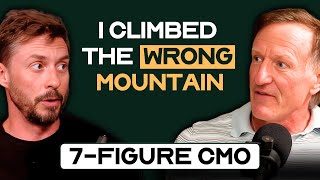
In this Money Stories episode, host Mike Brown interviews Kevin Dahlstrom, a former C‑suite executive who left a high‑earning corporate career to pursue rock climbing and a life built around time freedom. Dahlstrom recounts his epiphany in a boardroom that he was climbing someone else’s mountain, the dramatic decision to quit his job without a concrete plan, and the move from Dallas to Boulder to align his daily schedule with climbing conditions. He reframes wealth as control over time rather than net‑worth, emphasizing that modest cash reserves can provide true freedom when paired with intentional lifestyle design. The conversation explores concepts such as financial independence (FIRE), escape velocity, liquidity versus illiquid assets, the importance of “forcing functions” to create change, and the value of minimalism and multidimensional identity. Dahlstrom shares practical tools – the “ideal end‑state” exercise, contrast vacations, and the notion of seasons of life – to help listeners build a resilient, purpose‑driven life. He also discusses the pitfalls of debt, the role of optionality, and how bold moves, even when risky, can unlock personal sovereignty. The episode ends with Dahlstrom pointing listeners to his X (Twitter) handle @Camp4 and his newsletter for further insights.
Chapters
I made it all the way to the top, to the C-suite. On paper, I checked all the boxes that define success. The big title, 7-figure income, big house in the suburbs, 2 and a half kids, a beautiful wife. I realized that wasn't the life I wanted. I climbed the wrong mountain. I quit my job with really no plan for the future.
When did you realize you climbed someone else's mountain?
I actually get chills when I start talking about this. It was a very dramatic epiphany that happened.
What's your definition of wealth now?
It's really simple to me, is you don't have to be worth $50 million to do that. In fact, you need less money than most people think. Whether you're a billionaire or you're broke, you're still awake for 16 hours. We're told that the measure of you as a man is your status and your net worth. And so how do we react to that? There's guys worth $20 million that felt like they couldn't get off the hamster wheel because they needed that income.
Welcome to another episode of The Money Stories podcast. Today, our guest, the man, the myth, the legend, Kevin Dahlstrom. I asked him how he likes to be introduced and he said, why don't we kick the— why don't we kick the show off with that as a question? So I would say rock climber and Twitter influencer. What would you say? Wow. How do you like to introduce yourself?
I like the fact that you put rock climber first because that has become probably like to me the most important part of my identity. But the reason I thought it'd be a fun question to start with is because I struggle to answer that question when people say, what do you do? And my kids ask me that question actually. What, what do you do? And you know, on one hand you could say I'm retired because, you know, I had a long career in the corporate world. I was an executive in big companies. I founded a bunch of companies. Had a few exits. And so, you know, I gained control of my time. So on one hand, yes, I'm retired in the sense that I don't have a normal job. But if you followed me around for a week, you probably would not say that guy's retired because I'm in the midst of launching two new business ventures. You know, I still say super busy. But, you know, to me and, you know, you and I have talked about this before at length is Uh, my definition of success is controlling your time and what you do with that time. And so when people ask me what that means for me, I say, you know, I moved to Boulder for a very specific reason, which is I am a rock climber. And so my whole week revolves around weather. So I schedule my day. I look at the forecast at the beginning of the week and I schedule my climbing days. And then I fit in— I'm still super passionate about things you would call work, but I fit those into the days when I'm not climbing. And I look forward to those days. I look forward to my climbing days. As you were saying earlier, before we started recording, you leap out of bed every morning now. I'm the same. Like, I'm so excited about everything I do. I kind of pinch myself and it's, it's a huge privilege. But in my case, was, was hard earned. I mean, it wasn't always that way.
Yeah, well, I think that's as good a place to start as any because your journey, at least this iteration of your journey, really starts standing at the top of the corporate mountain.
Yep.
Take me back there and, and let's go from there.
Yeah, I'll go way back. I mean, I came out of college in the mid-'90s and I was a smart kid, you know, got a degree in engineering, had high grades. And this is kind of like the internet was just becoming a thing. Social media wasn't a thing. I had no models to look to, you know, people I wanted to emulate. So I sort of just listened to whatever society told me. And society told me and still tells us today that the definition of success is, you know, financial, right? Make a bunch of money, work your way up the corporate ladder, start a business, own a business, whatever. And so I, that's what I did. I put my head down. I started off in the corporate world, worked my way up along the way, ended up starting a couple companies. But, but essentially, you know, I made it all the way to the top, to the C-suite, you know, multi-billion dollar companies. I was a C-level executive. I was always a chief marketing officer. And so on paper, I did all, you know, checked all the boxes that define success. You know, the, the big title. You know, 7-figure income, big house in the suburbs, you know, 2.5 kids, a beautiful wife, all the things. The problem is that I realized that wasn't the life I wanted. I had, I had done an incredible job building a life that maybe somebody would be somebody else's definition of success, but I realized it wasn't my definition of success. There's a great quote. From a guy named Yvon Chouinard, who's a climber. He's the founder of the clothing company Patagonia. And he says, it turns out when you get to the summit, there's nothing there, right? All we have is the climb. And I climbed the wrong mountain. And so I did something that I don't think many people do because it's very hard. You know, like the golden handcuffs are for real. So in 2018, which I guess, gosh, now is 7 years ago, I pulled the plug on that life and it was really scary. I mean, even though, you know, financially we were really well off and all that, it's really scary to reboot your life. And, you know, because you're— in my case, I had a family. I was bringing my family along. So long— it's a long story which we can go into as much as you want. But the short version is I quit my job with really no plan for the future, moved the family from Dallas, Texas to Boulder, Colorado, really to be closer to rock climbing, and I haven't looked back since.
So what was the moment like? How, how did you know? When did you realize you climbed someone else's mountain? What was that tipping point like for you?
Yeah, in my case, it is kind of dramatic. I actually get chills when I start talking about this. It was a very dramatic epiphany that happened. There was a moment in time I was sitting in a boardroom. It was a board meeting for this multibillion-dollar company. I was a C-level executive. I was in the room, so to speak, and I don't know, I was just sort of, sort of like, it was a moment of clarity where I just looked around the room. There's like 10 other guys in the room, all of them incredibly, quote unquote, successful by society's definition. But there wasn't a single person who I wanted to emulate. In fact, it was the opposite. Like, I knew they had, in my estimation, crappy lives. I knew broken families. They, most of them were incredibly unhealthy. They didn't have any passion outside of work. That wasn't the life that I wanted. And honestly, Mike, the, the feeling that I had was like panic. I just wanted to get up and run. So it was a very moment in time thing for me, but the truth is that seed had been planted years earlier and it, that, that feeling had been building over years and it just kind of came to a head. And, you know, it was kind of a rip the bandaid off moment.
Well, something you mentioned that I think is so true is that I actually think a lot of people might have that panic moment and then they just shove it down. They go, they get back up the next day and say, well, but this is exactly what I'm supposed to be doing. So what was it? What was it for you that said, you know what, I'm going to go reboot this thing and, and, and, you know, maybe just, just share some of the emotions that you, that you experienced as you were on that path.
Yeah. It's a roller coaster. And, you know, like, I'll just say a lot of people do have that feeling, which is why I think my story resonates. And but it's, it's hard to go against the grain of society. It really is. There's so much momentum. I mentioned, you know, the golden handcuffs, the comfort we have. For me, the cat— to be honest, the catalyst for this change was rock climbing. So, you know, in 1999, I stumbled into an old rock climbing gym in Dallas, Texas, and was immediately hooked. I loved everything about it. I loved the, the physical challenge, the mental challenge. I loved the people and the community. I loved the places that it takes you. And just the more I did it, the more I wanted. But really what it did is it was like basically my version of the red pill. It exposed me to a world that I didn't even know existed where people valued things other than your status and your money. And it blew my mind. I met these people who, you know, were not wealthy, right? In fact, you might call them even poor or very modest means that had these incredible lives and they were happy. They were having incredible adventures and had amazing relationships. And I just wanted more of that. And so that was really the seed that got planted and it grew slowly, slowly, slowly until it kind of came to a head. But I do think in my experience, because now I write about a lot of this stuff and I've talked to, I mean, probably way over 100 people who have either had a similar journey or in the place you talked about where they realize they're not happy, you know, they got to the summit and there's nothing there. And so, you know, it's a, it's a hard change to make. But I think there has to be some sort of catalyst for it. That's been my experience.
Yeah, definitely. I mean, you know, we will never make a change unless the pain of staying the same is greater than the pain, the perceived pain.
Yeah.
Required to make that change.
Yeah.
And, you know, taking that leap does take courage. You know, I also went through my own self-manufactured midlife crisis after selling my company and realizing that the mountaintop was empty.
Yep.
And it was terrifying. I mean, it was, it really, and, and I think the thing that I was scared of came true, which is it got worse before it got better. Mm-hmm.
Yeah. You act, you asked about the feelings and the emotions. So I, after I quit my job, my big executive job, I would literally wake up in the middle of the night in a panic, like, what in the hell have I done? How am I going to— and some of these thoughts were irrational, of course, but they still come, right? And they feel very real and scary. What have I done? How am I going to provide for my family? How is this going to impact my kids? How is this going to impact my marriage? Am I ever going to be able to find, you know, work again? It, it really is scary. And I think you're exactly right. You know, that's what makes these changes so hard because You're jumping off in the deep end and it does get harder before it gets easier, which is why most people don't do it. It's unfortunate, you know, like I say, you know, I've written that, you know, maybe 1 in 100 people end up making that type of bold move. But, but the sad thing is if you talk to, you know, 100 of those people who have made that bold move, 100 of them would say, It was the best thing they ever did. Now, that doesn't mean it works out exactly as you had planned, but inevitably, if you make a calculated, bold move and do it for the right reasons, then things tend to work out 100% of the time.
Yeah, absolutely. There's really— what I'm hearing is that there's trust, that you have to, that you have to just say, hey, you know what, I don't know what it's going to look like. This is really scary. And I trust that whatever happens will work out in the end. And it probably is going to look a lot different than you thought. I mean, I certainly, if you'd have told 35-year-old me that I would be coaching entrepreneurs and, and, and talking about wealth, you know, being an influencer, which is, which is a funny word, but I would have laughed you out of the room. Like I could have never imagined the life that I have now created for myself. And the only reason I was able to do it is going through that journey, is going through the pain and stepping into that unknown void.
Yeah. I mean, it's, it's scary for sure. And, you know, the trust is a great word and really in a way what you're doing is you're betting on yourself. Yeah. And that, that can be scary, but it's also incredibly fulfilling, right? To, You know, I'm a big believer in forcing functions. Like, I, and I still do this to myself today. Like, uh, in fact, I was just telling my daughter before I, I came over to record this— she, my daughter, quick brag, my daughter got invited to give a speech at the annual honor society meeting at her school, and she wanted me to help her draft an email declining the invitation. And I said, Allie, this is an opportunity to to grow. And I call them forcing functions. So I still do this today. It's like I'll put things on my calendar, I'll commit to things that are scary and unknown, and I'm kind of betting on myself because I know that's how we grow. And, you know, making bold— if you don't make bold moves, you don't get the, the big returns, the, the rewards.
Well, it's— it was clear to you then that the corporate job, the trappings of success as society defines it wasn't your definition of wealth.
Yeah.
What's your definition of wealth now?
Yeah. So it's really simple to me is as good as it gets in my opinion is, is control, controlling your time. But, but it's even, that's not enough. Because in theory, anybody who's wealthy has the ability to control their time, but you have to be able to fill it with meaningful things. I still say, I always say, whether you're a billionaire or you're broke, you're still awake for 16 hours. And actually, you've probably experienced this because one thing that happens to a lot of people who have like a big exit or success in business is they find themselves like now they have control. And they're incredibly bored. They're like, what now? I, I actually have a friend who had a multi-hundred million dollar exit and he's really struggling with that right now. Like, this, this was my whole life. What do I do now? And so I always say like, building a great life is just like building a great career. It doesn't happen overnight. It takes years and decades. That's why you need to start now. You need to start building what I call a multidimensional life now. So that as you gain control, you can fill it with all this amazing stuff. And for me, climbing was a big part of that. I've, I mean, I've, I have a lot of curiosity. I'm a curious person, so I have a lot of passions. But as I said earlier, I still do business stuff, but I do it on my terms. And so the definition of success is having control of your time and then being able to fill it with things that make you leap out of bed in the morning. Yeah. How, what could be better than that? And here's the thing, and I know this, this podcast is about money. It doesn't— the thing that I wish I had known or someone had told me is it doesn't— you don't have to be worth $50 million to do that. In fact, you need less money than most people think. And I'll be honest with you, one thing that actually probably was the final thing that pushed me over the finish line to kind of do this major reboot, I was climbing one time in— actually, I was visiting Boulder. I still lived in Dallas, and I met this younger guy named John, and we just started chatting about, you know, life and money and stuff. He's like, have you ever heard of Mr. Money Mustache? I was like, Mr. what the heck is like— that sounds weird. And he's like, yeah, Mr. Money Mustache is like one of these— he's a big influencer, and he talks a lot about this thing called FIRE, which is Financial Independence, Retire Early. You know, you know, people have their own opinions about FIRE. It's, it's, there's a lot of different versions and ways to explain it, but the, the simple concept being that it, it's a simple formula that allows you, or, or for me at least made me realize, wait, I've, I've already got enough money to control my time. In fact, I need way less than I thought I did because believe it or not, when you're, even when you're making, you know, well into the 7 figures a year, you can still feel poor. We used to joke in the boardroom that, you know, the only way we would actually get ahead financially is when we got our annual bonus because our lifestyle matched our income. And we all felt like we were on the hamster wheel and weren't able to step off. Like there's guys worth, you know, $20 million that felt like they couldn't get off the hamster wheel because they needed that income. It's, it's, it's actually kind of a sickness.
Yeah. Yeah. I mean, this is, this is something that comes up over and over again in my work is that most of the entrepreneurs I work with are either at or within striking distance of, of that financial freedom. I call it escape velocity, right? That's, that's when you, your assets generate enough income that you never have to draw down on the principal and you, and you can cover your spending for the rest of your life.
Yeah.
For most of us, that's actually a lot closer than, you know, for, for entrepreneurs who have built a successful business, a lot closer than they might think. I used to think I needed $100 million to be successful.
Yep.
And so after my 8-figure exit, I took that money and I was swinging for the fences. And the reality is I had all the money I could ever need. And yet I delayed that freedom.
Yeah.
And I self-sabotage by investing in all of this stuff because I thought I needed so much more than I actually did.
So you're already there and you just didn't know it.
I had no idea because again, there's, there's, there's a severe lack of role models that are, that are putting their hand up in this, you know, look, I, I don't think there are any new ideas under the sun. I'm not delusional enough to believe that. I'm putting something out that is novel or unique, but I don't think there's a lot of voices that are saying, hey, like, you can drop out. You don't have to stay on this treadmill. And this is actually how we connected is you gave a talk at Baby Bathwater and I saw your talk and I was like, oh, this guy gets it.
Yeah.
Like, so share just kind of the underpinnings of that talk and your philosophy a little bit, because I know it'll resonate with a lot of listeners.
Yeah. So the talk was called How to Build a Kick-Ass Life. I wanted to get people's attention and, and, and maybe we can put a link in the show notes. It's actually publicly available on YouTube. It's like a 40-minute talk. And you know, basically that was a forcing function for me, by the way. When Hollis, who owns Baby Bathwater, asked me to speak at an event, I agreed to because I needed something to force me to get my story together. I've been writing about this stuff mostly on Twitter or X for like 5 years. And, but I've never taken the time, never been forced to kind of put my best of together and like, what is my philosophy? And so this was a great forcing function for that. But, you know, a big part of it is, is, you know, and it goes hand in hand with this philosophy on money. Is this idea that less is more, right? And it's— I think to, to really embrace that, you have to have something like climbing that opens your eyes to this, right? So that, you know, the, the, the hamster wheel that I describe, which is what most people are on, is this, you know, the cycle of consumerism, right? It's never enough. In fact, you can never get ahead no matter how much money you're making.
There's always a bigger jet.
Yes, there's always a bigger jet, there's always a bigger yacht. And I guess climbing was the way my eyes got open to this idea that it's, you know, it's cliché, but it really is true that the best experiences this world has to offer don't cost very much. And so I'll tell you, like, fast forward to today, like, I've reached escape velocity. I don't have to worry about money anymore, but, but still I'm— I want less, not more. Yeah, we talked about this before we started recording. Like, we're both in kind of that, the, the early stages of, of, you know, just shedding. Because again, like, simplicity is the ultimate luxury. Like, I've learned the hard way that every little thing that you own owns a piece of you. It really is true. And so just trying to simplify life as much as possible And you know, what we're really talking about here is minimalism. And minimalism is widely misunderstood. People think of it as like, you know, you're trying to live like a monk and you need to deny yourself of pleasure. And it's actually the exact opposite. Minimalism is simply about asking of everything, does this bring me joy? And if it doesn't bring you joy, get rid of it so that you make more room for things that do bring you joy. So it's kind of hedonistic in a way. Because the whole idea of minimalism is to gorge on things that bring you joy. So today I live a very simple life and there's only a few things that I allow onto my, into my schedule. And you know, it's climbing, it's family, it's my work projects, and anything else is, it's very hard to get a yes outta me for anything else.
And, and protecting your, your freedom or your time or your, your mental bandwidth, your energy that way. Takes practice and it takes intentionality.
Does.
And there's an inherent discipline in creating that kind of middle ground and embracing it. You know, I, I recently sold my Lambo. I custom ordered a beautiful, a beautiful Lamborghini Huracán. And the reality is like supercars have been a big part of my life. Like for me, I had a Lamborghini poster on my wall when I was growing up and like, that's what success meant to me. And I'm really glad that I did that. Supercars brought me so much joy for so long. I would do track days, I would go on, you know, rallies, car meets, all of this stuff. And then a couple of months ago, my wife, who loves to call me on my shit.
Yeah.
Was like, hey, when was the last time you drove the Lamborghini? And I was like, ooh, I can't remember. And I went and looked at it and I was like, oh, sure enough, I put less than 1,000 miles on it in a year. And there was a beautiful part of the process which was acknowledging that, like, I don't regret it. I don't, I don't regret that part of my life and owning supercars. They brought me a tremendous amount of joy and my priorities are shifting.
Yep.
Right. So it's— there's, there's something beautiful about being real about does this bring me joy? And just because it brought me joy yesterday.
Yep.
Doesn't mean it does today.
Well, I'm a big believer in seasons of life and your priorities can change. Dramatically. One of the things, like, I have— I get contacted or DMs on X from a bunch of young guys, and they're like, hey, I want a life like yours. I'm like, well, I'm flattered, thank you, but, but also recognize that I've been at this for 30 years. You're not in the same season as me. There is a season to put your head down and grind, and maybe there's even a season where you get a lot of joy out of things that maybe later in life won't bring you as much joy. And, and the thing— here's, here's the thing about minimalism again that a lot of people misunderstand is it's different for everybody. Like, if you're really into supercars, that brings you great joy, that's, that's your form of minimalism, right? But you can't be into everything. Like, you have to make room for the things that bring you joy and go sort of go all in on those. I have a very similar story. This was years ago when I, I sort of first broke into the C-suite. I got this huge bonus and I was like, you know, I'm gonna go buy a Porsche 911. I, in my case, I'm not a huge car guy, but like a lot of kids in the '80s, you know, growing up, I had the, the poster of the Porsche 911 on my, you know, bedroom wall. It always just represented the pinnacle of success to me, the most beautiful car ever designed. And so I said, I'm gonna go buy a Porsche 911. So I went to Park City's Porsche in Dallas, Texas, paid cash for a 911 twin turbo convertible. It was absolutely gorgeous. So 2.7-second 0 to 60, fast, like just everything I dreamed of as a kid. And I kid you not, I drove the car home, put it in the garage. That night I'm laying in bed wide awake. Thinking about that car. That car was stressing me out. I was thinking, you know, thinking about like, you know, when am I going to drive it? How much should I drive it? You know, how often do I need to get it maintained? Every little thing owns a piece of you. What I realized very quickly was I wasn't 16-year-old Kevin anymore. That car did not represent success to me anymore. Success to me was not having a car that I have to worry about. So So fast forward to today, I drive a 2008 truck with 180,000 miles on it, but I love that truck because I don't have to think about it. I can beat the hell out of it. It's got slide-out drawers in the back with all my climbing gear. I drove it to the crag this morning, went climbing. That represents success to me. And I talk about how, you know, You know, sometimes less really is more. Well, really tangible example is exactly that. So that, this was many years ago, it probably cost a lot more now, but that 911 was $220,000. My mechanic tells me that my truck is worth at best $2,000. So it's a 100-to-1 ratio, but I actually get more joy out of the truck that my kids call the jalopy because it fits the lifestyle that I want.
Yeah, there's, there's, there's something really profound in there, right? And here's the thing that, that I offer to people is buy the ticket, take the ride. Like, like it's— I think, I think there's something really great about buying the car, right? And then realizing and gaining the freedom on the backside, realizing that you don't need it or it didn't do the thing that you thought it was going to do. Right. And when I think about purchases, I like to ask two questions. Number one is, How do I want to feel by making this purchase? And number 2 is how do I want to not feel?
Yep.
Right? And so for me, buying a car, what does that— how do I want to feel? I want to feel successful. I want to feel like I've arrived. I want to feel like I've made it. I want to feel like I can go to that third-year-old, third-grade kid who didn't have that car on his wall and say, hey, anything is possible. And I don't need to own that car long-term in order to do that.
Yeah. Yeah, I think it's totally fine and sometimes necessary to check those boxes. And by the way, you know, let's not pretend, you know, I always talk about minimalism that, that, you know, being poor sucks. Let's, let's be honest. Yeah. You said something at a talk I attended of yours that really stuck with me, which is, I think you said once you get to an income of, was it $30,000 a month or $50,000 a month? One of the two.
Between, it's, it's actually between the two. Yeah. Like, like it's above $50,000. It's, it's really hard to increase enjoyment outta life without like collecting shit or collecting homes or flying private. That's right.
That's right. So there is a sweet spot, right? Being poor sucks, but there is, you know, you know, rapidly declining benefit. And I think you nailed it. I think like kind of in that range and recognizing that that's a privileged place to be.
I mean, absolutely. It's still a tremendous amount of money.
It's a lot of money. but it's not $100 million.
Correct.
Right. And, and the other thing that I wish I would've understood about money when I was younger is, so there's like, there's, there's the sort of FIRE-based approach, which says, you know, you have assets that, uh, produce enough, you know, you can basically withdraw 4% of your assets and if you can live on that, then you'll never run outta money. But there's even faster way to get there, which is just building cash flows. Right. And that's, that's the piece I had never, like, never even thought about, never heard of.
Totally.
It's often a lot faster to get to a place where you've got enough cash flow, even if you don't have lots of assets in the bank, you know, investments and whatnot. You've got a business that's driving enough cash flow that will support your life indefinitely. And beyond that, you know that you have the ability to generate that cash flow. So back to that trust and betting on yourself. Um, that's probably the fastest way to get there or to achieve freedom.
Yeah, absolutely. I mean, uh, you know, there, there's many paths, uh, to get there, but you know, the reality is, and I learned this the hard way, is that net worth doesn't matter. Right. I mean, I was, I was a multimillionaire on paper and I couldn't access any of my liquidity and I ran out of optionality. And, you know, liquidity to me is optionality. It is because the only way to get knocked out of the game is to run out of money.
Yeah.
I mean, I mean, ultimately, right? And building a multimillion dollar portfolio that you can't access has zero utility. Yeah, right. It's great to brag at parties. I'm an investor in this, this VC-backed company or whatever. But the reality is I needed another VC investment like I needed a hole in the head.
Yeah, I'll get real with you because that resonates with me. I don't think I took it to the extreme you did, but look, I'm 54 years old. I'm like, you know, You know, so like, even though I'm not retired, but I have a retirement mindset when it comes to my, my finances. And I, years ago, I thought I wanted to be an angel investor, right? And I went pretty deep. I actually, to this day, still have over 50 angel investor investments. I would sell those for par today, dude. I like— and I've done okay. But dude, liquidity is so important and I've got a ton of money locked up in that. I've got a ton of money locked up in non-liquid real estate. And like, this is a recent epiphany that I had, which is like, gosh, I wish I just had all that just in the S&P 500. Like, and, and again, there's seasons to life and I think, you know, look, takes big swings for the fence when you're young, but Over time, I've really begun to appreciate the value of just having like very boring liquid assets.
Yeah, I mean, this is, this is, I would actually say build your safety net first, build your escape velocity first.
Yeah.
And then go, you can go swing for the fences with every dollar beyond, you know, beyond that escape velocity. If you've already got your lifestyle covered for the rest of your life, now you can be the world's best angel investor and you can lose every single penny, right?
Because it doesn't matter.
It doesn't, it doesn't shake your foundation.
But again, like it's, it's It's like everything you do owns a piece of you.
Yeah.
And is that the thing that brings you joy?
Totally.
I learned very quickly in the case of angel investing that not only did it not bring me joy, I hated it. I thought I was going to love it because I've been an entrepreneur a bunch of times, raised money, you know, venture-backed tens of millions of dollars. And I thought— I always just thought like, how fun would it be to be on the other side? Well, it's actually not. It's miserable because you have no skin in the game. You're, you're passive. Guess what? Your money's locked up. You have to assume for 10 years. Yeah. And so in my case, like, and, and, you know, again, it's different for everybody. I know people who love that game. Like, that's, that brings them a ton of joy. Not for me. And so because, and in fact, I don't enjoy managing money at all. And so because I don't get any joy at all for managing money, for me, I need to keep my financial life Ultra simple, like cruise control, right? Because other things bring me joy and I don't want— I literally don't want to spend one second on taxes. For example, my tax guy just reached out to me yesterday. I was like, the only thing I have to do is like compile the docs. And even that, it takes 20 minutes. It takes 20 minutes.
I'll put it off for months.
Yeah, I'll put it off for months because I— so I think listen to those signals, right? When you're, when you're thinking about like the type of life you want, It's like, where do you want to invest your, your time?
Well, and really what we're circling around here is that money as an end is not the answer because it's— money is only useful in so much that you create the life that you want to build. So what does a multidimensional life mean to you?
Yeah. And I was just, as you were saying that, I was just thinking that I'm, I feel very lucky that all the things that bring me joy don't require a lot of money, but maybe that's a universal truth. I don't know. Because I, I see, I still see a lot of my friends, you know, doing things that require a lot of money and some of them seem to get some joy out of it. But so, so maybe I'm just like, and I think, you know, in a way, like the fact that climbing is, you know, such a big part of my life. Probably, probably has influenced that. So I'm sorry, what was the question?
Because yeah, what, what, what does multidimensional life mean to you? Right. This is kind of the underpinning of what we're talking about here because you, you've talked about climbing quite a bit, but it's a lot more than that.
Yeah. So to me, building a multidimensional life is the whole ballgame and it's the way to become in a way bulletproof. So look, and this is a problem that you see among men much more commonly than women. And it's really because it's what we're told by society. We're told that the measure of you as a man is your status and your net worth. And so how do we react to that? We go all in.
Let's go.
And like, and like, look, early in your career, you gotta pay the bill. Like, especially if you've got a family, you gotta do what you gotta do to get ahead. You gotta pay the bills, but you gotta do it with the end in mind. And that's the key. I mean, there was, look, in my 20s and 30s, I was grinding. Like, my— most of my identity was wrapped up in my work. And I like to think of it as a sliding scale. So when you're young, you have zero control. I mean, I don't know about you, but when I came— when I was young, coming out of college, I didn't know anything. I had zero control. I had zero money. Um, I had to basically do like what I had to do to get ahead. Yeah, right. But do that with the end in mind. Do that with the idea that slowly I'm going to gain control, right? As I start to build up my nest egg, as I start to move up the, the ladder, I'm slowly gaining bits of control. Don't use that to then just double down again on your work stuff. You could do that for a while, but ultimately that's a road to nowhere, right? So as you start to gain control, you need to devote your time and energy to other things that bring you energy. Doesn't mean like You can love your work and get a lot of fulfillment out of it, but ultimately that's not gonna be enough. You know, when you're, when you're my age, 54, and work's 100% of your identity, I promise you that's not gonna be enough. And so, you know, of course family is, is all, and I would say like, you know, that's a table stake. Like if you've got a family that has to be an important— I'd say a lot of people pay lip service to that. They say that family's a big part of their identity. And really important to them. But if you looked at their, you know, show me the receipts, if you looked at their calendar, you know, you know, it's eye-opening sometimes. But I think there also has to be more. And it's really a matter of like, follow your curiosity, listen to your, you know, your inner voice and like, what are the things that you, you know, would do if you're not paid, would do if you had infinite free time? And one of the most common questions I get is like, how do I find that thing? And I think the answer is you just have to try a lot of things, right? Because often, like, there is a price of entry into anything. Like, you know, I was natural. I was like, from the first time I went climbing in a gym, it kind of clicked for me. But there was a huge entry price of like learning to climb and meeting people and building that community. The, you know, I always say that I came for the climbing, I stayed for the community.
Yeah.
It's the community that makes anything. Stick. And so I talk about this sliding scale where, let's say, maybe when you're in your 20s, 90% of your identity is your work and 10% is other stuff. But, you know, control that so that slowly you get to a point when you're my age where like 20% of your identity is your work. You're still— I'm still doing work, I'm, I'm going hard, I'm passionate about it, but 80% of my identity is other stuff. It's more important to me. And the thing is, you never get there unless you— it's a deliberate effort. There's a lot of someday thinking out there where people say, I want to get to $20 million liquid and then I'll start to build a great life. I've never seen someone do that successfully.
I love it. And there's also a point about building a multidimensional life that, that you bring up that I love. And it's no coincidence that, that the name of my community is Unbreakable Wealth.
Yeah.
Because what about building a multi-dimensional life, ah, makes you unbreakable?
Yeah. So when, when your identity is wrapped up in one thing, let's just say for men, a lot of men, it's, it's work. Your whole life goes as your work goes. That's a terrible way to live. You have a rough day at work, you're, or a rough a year at work, it takes a huge toll on you, right? And if you're multidimensional, there's always something else that you can turn to. In fact, you know, like, there's no kill shots. Like, right now, I'd say, like, my work projects could go really poorly and go away, and it would bum me out, but I'd still be psyched to go climbing tomorrow, right? I'd be psyched to spend time with my friend. I'd be psyched about the trips I have on the calendar. Coming up. And so that's how you become bulletproof, when there's no one thing that could go wrong in your life, no one component of your life, and it completely drags you down, takes you out.
And, and, and I mean, the reality is that bad seasons are inevitable in, in any of those areas of multidimensionality, right?
Yep.
You can get injured and not be able to climb for a while, right? A work project can go to zero. You can be having relationship troubles, like it's inevitable at some point you will go through troughs. And, and what I love is this idea that, you know, if, if you are building intentionally and making sure that you're allocated, you know, with a good portfolio spread, none of those things will sink you.
That's right. Yeah, that's right. And by the way, even though I say, you know, work is 20% of my identity, I still believe my best work is ahead of me. Yeah, that doesn't mean I don't have the, the, the, the passion and the desire and the intensity. In fact, for me, I believe now that I have control, that gives me the ability, the privilege to do the best work of my life. I was telling you before we started recording that I'm working on two projects right now, and they're both like two of the most exciting things I've ever worked on. And I think they also have like— the financial upside is unlimited. So, you know, ironically by like making work a smaller part of your identity and gaining control, you may end up doing the best work of your life and making more money than you ever did.
Well, it really is about, about— you call it control, I call it sovereignty, right? Yeah. Is that word that when I take care of the small things, when I invest on the compound interest curve, you know, I stack money and reach that escape velocity, it actually frees up your decision-making to go, go and swing for the fences. But the problem is, if you do that too early, if you, if you go all in, like now you actually have risk. You have to think about how am I going to pay my bills and feed my family and do all of these things. And it doesn't allow you to step into that best work.
You know, my dad, when I was young, was always like super anti-debt. My dad, never had a credit card, never had a loan of any kind, including a mortgage. I mean, he took it to the, to a pretty extreme. He always used to say debt is bondage, and I never really understood that until I got older. It really is bondage because when you don't have your financial house in order, it takes optionality off the table, right? You can't pounce on opportunities when they come along. You can't follow your curiosity. Mark Cuban has said the same thing. I'm not necessarily a huge fan of Mark Cuban, But one thing he's, he's said many, many times is he said the most important thing you can do is be debt-free because it gives you optionality. It allows you to, when an opportunity comes along, you can take it and maybe take a pay cut from your 9 to 5, you know, compared to your 9 to 5 to go pursue something with more upside. Or you can pivot and do something that you're more passionate about, which probably over the long term will lead to a greater return.
Or when you're sitting in that corporate boardroom and you have an epiphany, it gives you the freedom to quit that job without necessarily the panic and, and some of those other negative feelings that are associated with it. Right. I mean, how much easier would it have been to quit that job if you were already financially free?
100%. And in my case, I was financially free. I just didn't know it.
Yeah. Which, which I love. Right. You know, it really does. Like, we think we need so much more.
Yeah.
And need is certainly an interesting word, right? Like balancing needs and wants. The reality is everything that any of us have is a want at this point beyond basic food, water, and shelter. And people are always like, well, I don't need that. And it's like, well, you know, you can say you don't want that, but like, you don't need any of the stuff that you have.
So it's just getting clear about what, what do I choose to You want, so I'll tell you a quick story of a friend of mine who I love to use as an example, because like it's easy to talk about financial freedom when you've had a, an 8-figure exit or when you've, you know, you've got assets that can fund your lifestyle indefinitely. But one of my good friends is a guy named Tom. He's a, he's a climbing guide based in Las Vegas and he's ex-military. He's never in his life made more than $70,000 in a year. But he's always been very careful with his money. He lives a very, very simple life. He is single, no kids, so that makes it a little bit easier. But he's been— he's always lived a simple life. He's always been a saver, and he's got financial freedom. And one of the— it's— I remember when I would go climbing with Tom back when I was in the corporate world, I'd be like, I make 50 times more than Tom, but Tom's got a better life. How is that possible? What's going on here? It really was jarring. And it's because Tom was really deliberate. So what does his life look like now? He works 4 to 6 months out of the year, travels the world and climbs on his own the rest of the year. He's not wealthy by, you know, any pure financial measure. But he's got freedom and control. He's got sovereignty and he's got a great life.
Yeah, it's wealth beyond measure.
Yeah. And in his, in his case, he just made an extreme— he realized he's probably never going to have millions of dollars in the bank. I mean, for him, even a couple million dollars would be a stretch. So he realized that to get freedom, in his case, it had to mean living a super simple life. Tom, like me, it turns out, like, the things he likes to do don't cost a lot of money anyway. Yeah, right. Just being out, outside in nature, being with friends. And by the way, in their heart of hearts, that's how most people are. Experiences and relationships. That's really all there is in the end. If you ask a bunch of elderly people what they treasure most, how many do you think will pull out their phone and show you their bank account balance? Oh, look at this. No, they're gonna talk about people they love and the amazing memories they have from doing cool things with cool people. That's all there is.
That's it. I mean, that's, you know, kind of, kind of the underpinning philosophy, you know, of my upcoming book and my entire program is this Law of Now, which is if you can't be rich now, you'll never be rich because wealth is a state of being.
Yeah.
And we can cultivate that at any point. And yes, you know, I love snowboarding. So the epitome of snowboarding is heli-skiing. Well, that costs a lot of money.
Yeah.
Right. And that is dramatically better than skiing at a resort. All right. But it doesn't cost $100 million. Right. Like I can heli ski a lot. Right.
And you could throttle that down if you ever needed to, to like, you happen to, you make enough money to do that and that's great. But you could, if you didn't have that money, you could throttle that down. You actually said something before we started recording that I think is very, very relevant to this, which is like, you just finished a streak of like too many peak experiences. I thought that was a really cool observation. So talk about that.
Yeah, I don't know who's doing the interviewing here, but I, you know, basically I, I do live in this, this very privileged position where I get— I have control over my time. I have control over my schedule. I have enough money to be able to book these peak experiences. And I value intentionality. And, you know, I said yes to a lot of things that I really wanted to do, but they just all kind of happened to stack in the same, in the same season. So I went cat skiing at Baldface Lodge. I went to Cabo, I went to heli skiing at Silvertip, then I sailed a week in the BVIs, then I came back and went to the surf ranch. All of those are objectively amazing experiences. And as I was on the flight home from the surf ranch, I've just been surfing 1-minute-long perfect man-made waves, getting barreled out of my mind, like having the time of my life. I'm on the plane home and I find myself feeling almost guilty for wanting to go back to sitting at my desk, banging away on spreadsheets, you know, being on, on client calls. But turns out I really love my life. And if we don't have the contrast, if we don't have the space between those two experiences, they actually lose their luster. Like, 100%, the, the extraordinary in, in too much becomes ordinary.
100%. Yep. And my wife and I actually have a thing we call contrast vacations. We intentionally design our vacations to be like half doing something really hard, you know, sleeping in a tent, whatever, and then half indulging in pure luxury, because each makes the other better, right? And, and you've gotta have that, that contrast. And, and the reason I asked you to, to talk about that is because when you said that, what it made me think is there's a great litmus test for whether you've built a great life or not, which in my, I say is, do you get grumpy on vacation? Like, I, I just got back from an amazing, like, 5-star vacation in Mexico with my family. And to be honest, like toward the end of it, I just wanted to be home. Like, I, I got a little grumpy because my life at my day-to-day life is so dialed, you know. I, I already do what I want to do every day, and that includes some work, includes some climbing, includes hanging out with friends and family. I like my coffee setup the way I've got it. I like my home office setup the way I've got it. And so, you know, I like my day-to-day life. I don't— the peak experiences are great, But I don't want to have an endless string of them. And I think that's my observation is people think by default, because this is what Instagram tells us.
Yeah.
That a great life is just a bunch of peak experiences strung together. And, but the sublime is found in the mundane day-to-day, having a great day-to-day life.
Absolutely. I mean, the, the reality is, as much as I love getting barreled on a perfect wave, I love my coffee and I love my cat.
Yeah.
Right. And, and, and I want to be home in my own bed, you know, and, and again, you don't have to have a multimillion dollar house to love your environment and craft your environment. And I think that's one of the most underrated things that, uh, people miss out on is you can create a great life, one of deep intention in the mundane, in, you know, you don't have to have a lot of money to do that.
Yeah. I, you know, my morning routine is sacrosanct, and that's, that's the thing I miss when I'm like away on vacation or whatever. Uh, it's so dialed, it's so important, and it's just so simple. It's like, it's stretching, coffee, it's listening to music, it's writing, and being in my happy place, which is, you know, Boulder, Colorado. And that can be done without a lot of money. In fact, you know, we're, we're about to be empty nesters. We're just a few months away from being empty nesters. So in our future is not more stuff, but less. Like we do have the multimillion dollar house and we're gonna be scaling it down. But the way I live my life isn't gonna change at all, right? Because that's, that the having a big house is just not a big part of what brings me joy. Having a big house brings me joy, brings us joy now because it's filled with kids and we host friends that visit us. And so we're able to use that house to create experiences. But once it's just my wife and I, do we need 5,000 square feet to live our life? No. In fact, that starts to take away from the simplicity, the simple life that we want.
Yeah, I love this. And one point though, that I want to go back to, you said earlier that really struck me is it is easy to say simplify. You don't need all these crazy things when you've already gone out and experienced them. So what would you tell somebody, you know, early 30s, and you talk about this stuff a lot on Twitter, like what would you tell somebody who's at the beginning of the mountain instead of, you know, crest of the mountain and coming back down the other side?
Be careful who you emulate because you just might do it.
The—
I think it's really important to have, to be very intentional about your end goal, understanding that end goal can change. And, and, and I think it's really important to find people who are living that end goal, right? And so, you know, a lot, it's easy to say, I wanna be the CEO of a public company. Well, go talk, like, go observe some CEOs, look at their whole life, not just their work life, and then tell me if that's what you want, if that's what you wanna emulate. Great. But find people who have the end state life that you want and then listen to them and try to emulate them. We were debating earlier about whether, like, do you have to learn this the hard way or can you actually internalize some of this? And I think one way to internalize it is by observing, you know, call it mentors or just people you observe who are already doing it and what are they doing.
Yeah, I mean, getting, getting really clear about what you want and, and beyond traditional success, right? Is what kind of person do I want to be? How do I want to show up in the world?
Yep.
What brings me joy? What brings me meaning and purpose?
Yep.
Like those are the really important questions to answer.
Yeah. And it's, it's, so I have an exercise that I recommend called the ideal end state. It's not a sexy name, but it's a really simple but incredibly powerful exercise where basically you just get out a piece of paper or use your, your notes app in your phone if you want. And just start writing down bullets. Like, if you could have any life you want and there was no constraints, what would that look like? And be very specific and descriptive. Like, it, it, and, and importantly, it's not a list of achievements. It's not a bucket list. It's a, it's a state of being. So like on my list, it says things like get lots of sunshine every day. You know, always have at least one creative project going with each of my daughters, things like that. I, I say control 80% of my time because I think it's dangerous to control 100%. Of your time. So just bullet out. It's usually for most people, it's 20 or 30 items, and it's an eye-opening exercise because we all sort of have this very vague picture in our minds of what success looks like. When you actually take the time to search your soul and write it down, it, it ends up being quite different than you thought. In fact, it's a really powerful way to realize that for most people, and I've done this with so many people from like broke college students to billionaires, They look at their list and they're like, wait, most of these things don't cost money at all. Right. That's, that's the epiphany. So it goes hand in hand with a lot of the financial principles we've been talking about.
Yeah. So, and I have a very similar exercise called the Unbreakable Year that essentially, you know, is, is that, that perfect vision. And my experience is 100% consistent with what you just said is that when people look at that, most of the changes to get to their ideal state have nothing to do with money.
Yeah.
It's, oh, I should probably be reading books to my kids every night.
Yeah.
Right.
And, well, and, and also the, it comes back to this, the first thing we talked about, which is making bold moves. Inevitably, you're probably gonna have to make some bold moves and change the status quo to get to that end state. And so it's really about courage. It's not about money. I have found when I go through this exercise, people will tend to use money as an excuse, right? Well, yes, it says on my end state that I wanna live in the mountains, but you know, you can't do that unless you have a bunch of money because what if this happens and what if this happens and what if this happens? And they tend to like magnify the risks of a bold move by 100x while simultaneously underestimating the serendipity and the upside that will come from it. And so it does take a little bit of courage. That's where it's helpful to have to like have someone to look at who's done it right and, and can, you know, it gives you a little bit of assurance.
Yeah. I mean, when I think about my own bold move, well before I sold my company, I moved from Texas. I was in the oil and gas industry. I moved from Texas to Colorado and everybody says, this is going to torpedo your oil and gas career. And I was like, no, it won't. I've got all these reasons why it's not going to. It was a really bold move. Yeah. Turns out it torpedoed my oil and gas career because that's exactly what needed to happen. Exactly. I found out that's not what I wanted at all.
Yeah.
And but, but it took that, that leap of faith. Listen, I think this is such a great note to end on. You have so much wisdom. Your philosophy aligns so much, and I think will really resonate with, with a lot of the listeners. Where can they find you? Where can they learn more? What are you excited about? Where do you want to point them?
Yeah. So the best way to find me is on X. So my handle is @Camp4, C-A-M-P number 4. That's a, anyone who's listening to this who's a climber will probably recognize that's a reference to climbing. Camp 4 is the climbers' campground at Yosemite National Park, which is, you know, in my opinion, the most beautiful place on earth. But yeah, I, I, I write a lot there. I've got a newsletter, but there's a link in my bio.
Yeah. Yeah. We'll totally point people there. Kevin, it's, it's been such a pleasure getting to know you this year and, I'm so excited to have voices like yours to challenge the status quo. And I really appreciate your bravery in stepping out and putting yourself out there and writing and telling people that, hey, there's a better way.
Yeah. Well, likewise, man. I always enjoy our chats. The moment we met, we both knew we were like brothers from another mother. Yeah. And so, yeah, we could do a 4-hour podcast if we needed to, but this is—
Oh, you'll be back. And thanks for coming on. And yeah. Yeah, dude. Thanks.










