You Feared Success More than You Feared Failure (Kristen Brown - Money Stories Ep 8)
In this Money Stories podcast episode, host Mike Brown interviews Kristin Graham Brown, founder of Hoot Design, a culture‑driven branding agency. The conversation begins with Kristin recounting a crisis when a client that generated 40% of her revenue abruptly terminated the contract, triggering panic, shame, and financial uncertainty. Through coaching, she uncovered both mechanical fixes—creating a simple cash‑runway spreadsheet and understanding her runway—and emotional work, unpacking scarcity and shame rooted in her upbringing and cultural narratives about wealth. Kristin explains Hoot’s “Brand Bean Method,” emphasizing that brand is the internal culture (the bean) that informs external execution (the marketing). She describes the agency’s evolution from a general ad shop to a niche brand strategist, the importance of having a hot take that repels as well as attracts, and the future impact of AI on agency work, arguing that deep brand foundations are essential before AI can be leveraged. The interview delves into her philosophy of wealth as freedom and impact rather than money, and how that drives a suite of employee‑focused benefits—generous maternity leave, mental‑health reimbursement, a “Life Support” stipend for services that buy back time, and childcare subsidies—aimed at supporting primarily women employees and fostering a resilient, purpose‑driven culture. Kristin also discusses gender dynamics in entrepreneurship, the intentional shift of her household to her being the primary breadwinner, the importance of intentional division of labor, and the broader cultural shift toward equitable partnerships. Throughout, she rejects “fake‑it‑till‑you‑make‑it,” advocates evidence‑based confidence, and encourages entrepreneurs to set boundaries, embrace scarcity as a catalyst for growth, and never “play small.”
Chapters
I actually don't believe in fake it till you make it. Okay, there you are. Your client that's 40% of your revenue has just fired you. What are the feelings that are coming up for you in that moment?
How did I let this happen? And now I have, you know, 12 employees or whatever. Are we going to have to lay people off? Like, how are we going to dig out of this? What happens to my family financially because of this? And then it ended up being absolutely the best thing that could have happened.
Why?
I was definitely coming from the spectrum of like, rich people are evil or bad. Well, how are you ever going to get really wealthy if in your bones that feels unsafe?
People want us to be just successful enough. We're supposed to work hard and be successful, but we're not supposed to be so successful that we outpace everybody else. Hey, welcome to Money Stories. Today I have my very dear friend, one of my favorite humans, Kristin Graham Brown, founder of Hoot Design, a creative agency that is so much more than branding. Branding, I guess, is kind of the word that you use, but really you're diving into the heart and soul of what people are trying to do. And I think that's what makes you so unique. So why don't we just start there? Can you kind of tell me about your journey into Hoot and what you guys do and what makes you different?
Sure. So yeah, we, we say we're a culture-driven branding agency and our approach is really that without culture being in alignment, you know, the external never will. So brand is really an unleveraged tool, I think, very often to create the culture that you want, which is the engine for the business that you want. And I think a lot of people think that brand is like your logo, you know, or like maybe your brochure or whatever. And it's so much more than that. The logos that people say that they love are always the brands that they worship, right? And the brand is so much more than that. So like Nike comes up all the time, for example, you know, Nike, it is not the swoosh. I mean, I love the swoosh, Nothing wrong with it.
Cool logo.
Yeah, well done. But that is not the brand. You know, the brand is the ethos. The brand is who they are and how the— what they are in this world and how they have changed our culture. Right. And that's what I think really powerful brands do. They create change. And that's what I absolutely love about what we do. You know, it's being part of that change that I think is what makes this job so, you know, magical and really an honor to do every day.
Well, it's so cool. And you've really shaped a lot of my thinking about purpose, vision, values, and how core they are to both like an internal culture and then to an external culture. And I think maybe that's what so many people get wrong is they think about branding as external.
Absolutely.
And never really address the internal. So how do you think about it? How did, how did you get there? Like, how did that shape up for you?
Well, very organically and through like a lot of time. So I definitely didn't have this perspective 15 years ago when we started. It's really grown very organically through my own process of trying to help people execute and realizing that it is impossible to execute without this really foundational level. So now we have this, you know, methodology. We call it the Brand Bean Method because brand is the bean Marketing is the doing. So, so often people wanna start with the doing, and they came to us for the doing too, right? Like, we need a website, we need a brochure, whatever. And you start running down the road of the doing and you don't have the being. And the being is what makes every decision on the other side of the doing so simple. But it takes time. And entrepreneurs are— founders are hard people. People to get to pause and take time to, you know, silence the noise, pause, really give me your focus for a certain amount of time to— because it's a huge deal to try and establish what are we here for? Why should anyone care if we were blown off the face of the earth? Why would anyone care? You know, that, that's a huge thing. So I mean, yeah, having you sit down and, and take the time to really reflect on that, and a lot of times that comes from who you are as a person, a leader, the experiences you've had, and then marrying that with the business that you want to build and the change that you want to create in the world, you know. So yeah, I think when we first started running down the road of the doing with clients as well, we realized very quickly like, oh, this is very hard without this foundational strategy. And then as you just keep peeling back the layers, that process became more and more fleshed out and polished through the years of like, like, for example, we don't do mission. Lots of people do mission. I just don't think we need it. I think purpose and vision are enough. I think they get you there. And so we don't do mission. You know, those are things that were finessed through the years. We push people to do no more than 4 values. That came through mess-ups, right? That came through doing it the wrong way. Having 7 values, none of your employees will remember them. So they are worthless. So things like that, you know, it's obviously an evolution of time and really honing expertise. I also feel like I didn't— I wasn't this confident 5 years ago. Now, because I've seen this process work for so many people, I feel so confident. You know, I would go toe to toe with somebody and argue this stuff out on a stage or something versus—
and I've seen it.
Yes. Versus the way I used to feel, you know.
Yeah, that totally makes sense, right? I call that evidence-based confidence. Yes.
Yes.
And I actually don't believe in fake it till you make it.
Me neither. Totally agree.
You need the evidence and the trophies on the shelf and seeing the success to actually cultivate that expertise. And that's where confidence comes from.
Yes.
Right. And everybody has to start somewhere. But when I think about people just starting off, It's like, hey, go, go do what you want to do, provide some results, and then learn from it and start honing that expertise over time. Right. And, and fake it till you make it culture, I think, is really damaging in some ways.
Totally agree. I really think too, for us, I can say through my evolution of my own business, we only niche down more and more. You know, we started— I mean, way back in the day we were like paper goods, then we were an ad agency. And then it just evolved to be like, okay, no, we're gonna specialize in brand so that we can be absolute experts in this one thing, brand. Now we still help people with a lot of campaigns on the other side, but for us it all starts with brand. And so we're able to say now, like, if you don't wanna start with brand, we're probably not for you. You know, if you're not willing to pause, reflect, think about what this foundation is, you know, we're probably not the right executioners for you, for you, because we're not just going to do that.
People can get a logo anywhere.
Yes, exactly. Especially now. Especially now. So I think, I think brand strategy will become even more critical. The strategy part, not the execution. So we're working very hard to how do we every day think about the production work that we're doing and, and you know, insulating ourselves from that being taken over by AI, because that is not gonna be the future. In 2 to 3 years, you won't have agencies producing for you. But I think that you cannot produce great work with AI unless you've done this foundational brand being work, is what I would say. Because then once you upload that to AI, I mean, you're like off to the races and you truly don't need us. I'm happy to help you if you're just not gonna get it done otherwise. But that is not the work of agencies of the future.
I don't think you've got to distill the core before you can do the work.
Absolutely. And that's the key. Like, you know, AI can, can crush for you now. Not if you don't know who you are, right? Because then it's just grabbing shit from the internet and you look like everybody else. You're also so, you know, squirrel. You're so distracted because like, I hear this all the time, like You know, now I've heard YouTube is the thing, you know, email's the thing. It's like, it's never— it's never the thing, it's what is the thing for you. Because you know exactly who you're for, right? Like, you know exactly where is your customer showing up, and then how do you show up authentically to meet them. And it has nothing to do with the latest trend, right? Like, if you're targeting boomers, we don't need to be on TikTok. And that's a waste of your time, you know.
100%.
Also wouldn't target boomers.
Well, one of the things that I have stolen from you that I love is have a hot take.
Oh yeah.
What does that mean to you?
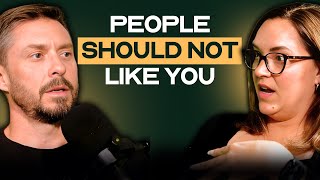
So this is something I think that people, you know, people are just so afraid to choose a lane, you know, have a conviction, choose a brand advocate, right? Choose an audience. Because of like the FOMO. I don't know if it's FOMO or greed or what, fear. Honestly, I have no idea why people won't choose a lane and choose a target. And the only way to cut through the clutter is to actually add value with what you're saying. And so if I am just like this clanging gong saying what everyone else is saying, like, you know, like, who's reading your emails, right? They're reading your emails because you're saying stuff that is unique and interesting that actually came from you, that you're not just repeating things, and that you're able— you're willing to take a stand on something. Because like you said, it's like evidence-based confidence. That is what expertise is, and that is what thought leadership is. If you have no hot takes, you know, I have a hard time believing you have a lot of experience and that you're someone I should be listening to. It sounds to me like you're afraid to piss anybody off. Which is the opposite of brand. So I think this is a huge undervalued thing too, is like, brands should repel. It should absolutely repel. So people should not like you, and if everyone likes you, you're doing it wrong. All— Nike is like such a cliché but fabulous example of like, they know who they're for. And like, this Colin Kaepernick ad, I always reference it. They were willing to go hard because they were willing to say like, we know who our people are and we're okay to piss a bunch of other people off because it means that the people who love us, they love us that much more, you know. And these are the brands that we remember instead of like the, you know, the trying to have it always and be for everybody kind of shit. I hate that. I just don't think that's what brand is.
Well, I don't think it's effective, right? Like, the way I think about content is it should be a lightning rod. Yeah, the people who I am for will know it's for them.
Yes.
And the people who I am not for are going to be repelled.
Yes.
Because, you know, I am and I'm talking about me personally here, but, you know, I'm kind of showing up in this very vulnerable way. I talk about losing $1 million way more than I talk about my 8-figure exit, right? Why do I do that? Because if you're looking for a get-rich-quick scheme, if you're looking for hustle culture, you know, grind, like, that's not me, right? And if I fall into talking about that just to attract an audience, it's going to be inauthentic and it's never going to work.
Yes, 100%. Yeah.
All right, well, let's back up a little bit here. And when we first met.
Yes.
You were in a bit of a crisis. Can you take me back there? And let's just start with that.
Yeah. And I'm not even sure who, you know, someone in the group that we're both a part of is the person who referred me to you. And I don't even know what they said that made me be like, okay, maybe he can help me. You know what I think it was? I think it was that you look at the books and the psychology, like, right? Like the mindset part that is me. But you also have enough experience and expertise to actually look at my books too, because there— I don't know other coaches necessarily doing that, both of those things. So that was very meaningful to me. So yeah, I totally reached out to you. I was in, you know, I would say the worst crisis my business has ever had monetarily, for sure. Was that we were fired by our biggest client in '23 after 7 years of working with them with basically no notice. And it was about 40% of our annual income. One client. Don't recommend. It's like Agency 101. You don't concentrate. But I also— just a little, you know, tangent on that— it's hard to do when you have a client growing like that, just absorbing more and more resources. It is hard. You try to insulate yourself against it and it is very difficult. So now I know that when I see other agencies with the same issue, it's very hard to turn away money basically.
Yeah. I mean, yeah, you're not, you're not going to do that, right?
Yeah.
I mean, that's, that's, that's the reality. And even though you know that this concentration risk exists, like you're not going to turn that down, that would, that would not be a great business move either, right? So, okay, there you are.
Yes, full panic, full panic mode.
Your client that's 40% of your revenue has just fired you. What are the feelings that are coming up for you in that moment?
I mean, definitely panic, like full-blown panic. I thought, you know, I think a lot of shame too, because of like, I got us there, you know. It's not like COVID, it's not like a recession. Where I am somewhat of a victim, as is everyone else, to the situation. It is very much like, how did I let this happen? And now I have, you know, 12 employees or whatever that— are we gonna have to lay people off? Like, how are we going to dig out of this? What happens to my family financially because of this? All of those fears. And I think because I just did not have the work that you and I then did afterwards I felt totally afraid, alone, ashamed, petrified. Very hard not to be completely hijacked emotionally. So like, you know, not sleeping, definitely not paying attention to my kids. I felt like I was like a zombie. Like, I'm physically here, my mind is elsewhere kind of thing. Fight or flight, right? All the time.
Totally. And, and A, understandable. Yeah, you— 40% of your revenue evaporates overnight. And when I look at any of these types of situations, there's always two fixes, right? There's the, there's the mechanical or the systems fix, there's looking at the data, and then there's the deeper emotional fix, right? And when we dove in, we uncovered both of those. Can you, can you kind of walk us through that part?
Oh, absolutely. Well, I think first was like the having, having someone look at all my books. And like the, the cash runway thing I think is so embarrassing. I'm very embarrassed still that I didn't have that until working with you. Or if I had it, I, I didn't know I had it and didn't understand how it worked. And that was, that's crazy because I have been around for 15 years and that was, you know, 3 or 4 years ago. So I feel like that it's crazy to me that I had never run those calculations of like, okay, so how much money do I actually have in the bank and how much invoices do I have, you know, contracted to go out? How much are my expenses every month? And here's a calculation that is literally like an 8-line spreadsheet thing. It's very simple. Now I look at that thing every single week. You know, so do the other leaders of the company. It's very a huge part of how we run operations. So you showing me that and being like, hey, okay, this is scary. I'm validating that this, this sucks. You are not in full-blown crisis yet. You actually have like, I think it was 6 or 7 months or something to dig out of this, to like figure out what to do. Which to me was an epiphany. Like, I was like, oh my gosh, yeah, that's not that crazy. There's a lot that could happen in that amount of time. And so just chilling. Yeah, but chilling based on data. Like, you weren't just like, hey, calm down. You showed me the data that supported that this was okay. And then I could start tackling both sides of the coin, probably. Like, now we dig out logistically, like, how do we bring in a new client of this size, blah blah blah. And then also now dealing with like the scarcity mindset that I definitely had and that I think is very wrapped up like probably like a two-headed monster with shame for me. Like scarcity and shame are very intertwined.
Well, we're definitely going to dig into that, but the reason I bring up this story is because I, I think that your situation, and I really appreciate you being open about it here, is so typical for entrepreneurs, which is We're really good at doing the thing that we're good at, right? But the reality is most of us, our numbers are either a mystery or they're a mess, right? And, and we know our business is doing well. The bank account goes up every month, and if the bank account goes down every month, you know, then it's a problem. And, and the reality is we need to have a frame and an understanding of our numbers and own those numbers. And there's only a few numbers in any business that really makes sense, like some money in, money out, and then, you know, different for every business what the other two are. But if you can take ownership of those four numbers, then you get really clear about where you actually stand versus this emotional roller coaster of, of things going up or down. So first we anchored into the data and looked at it in an appropriate time frame and go, okay, actually you're safer than you think. You have this runway, you've been stockpiling cash, you've been a good steward of your wealth. But then now we're digging into scarcity and shame, right? And, and walk me through that journey. What do you— what did you start to uncover?
Yes, that was like very profound for me. I know, I think it's like really deep. I think it goes back to like, you know, how you were raised, many elements about how you were raised, not just your family of origin, but like the culture I grew up in, the state, you know, the like place in the country where I grew up. And, you know, all of those things I think had such an impact as they do to anyone.
So, so give me, give me some, some detail there. Like how did you grow up with money and how did that, the culture, the place where you grew up shape your views of money?
I think I grew up in a place where, and this is just my experience of where I'm from, it was very like frugal, and that was maybe like a moral high ground, right? So being frugal, being conservative, being responsible, being like not flashy. Like, this is something we've talked a lot about. Like, to me, like buying a Range Rover, like I would not buy, cannot, I'm not at that point yet where I would even consider buying a Range Rover because to me that has like the look at me factor of I want people to know I'm wealthy. And that is very deeply embedded in me that I don't want that, that that's like not appropriate or, you know, whatever. That's not what good people do, you know? And so that I'm like basically unlearning that. And, and that's something I started unpacking, you know, trying to unpack a while ago. Cuz like this idea that like rich people are evil, like you talk about that a lot. It's like you're usually on one end of the spectrum or the other. And I was definitely coming from the spectrum of like, rich people are evil or bad or scuzzy, whatever. And so, well, how are you ever going to get really wealthy if in your bones that feels unsafe? You know, your body will reject becoming wealthy. And so that really took on a big part of it for me was the unlearning of like, why do I think rich people are bad? What is it about them? What is rich? Even, you know, all those things that you start to kind of like unwind. And so that was just like a huge part of the journey for me was to figure out like being comfortable with one, like deserving it, right? I mean, that it's like so multifaceted. Like, do I deserve it? What makes me deserving of making a lot of money? Does it have to be hard to make a lot of money? If I'm not hustling enough, do I deserve to make money? Should I be sacrificing more to make money? You know, it was all a part of this process, you know, coming to where I feel much safer on the other side.
So, I mean, so many money stories.
Yes.
It's not just a clever name. Right. Of the podcast, right? Well done. Like the way that we grow up with money in our family of origin, but also just in the culture.
Yeah.
Right? The reality is for most of us, people want us to be just successful enough. Like we're supposed to work hard and be successful, but we're not supposed to be so successful that we outpace everybody else.
Yes. To like incite envy.
Totally. And there's this inherent tension that we all start to grapple with. And unless we start addressing some of that stuff head on, we'll only allow ourselves to be just successful enough to not upset the apple cart. And it strikes me is that that's kind of the place that you were.
Oh, for sure.
Your, your agency had grown, become really successful, but just successful enough.
Yes.
So how did you start to unwind that and break through?
I mean, I think it was like a lot of hard work. So I do think that people, you know, I mean, I'm a huge therapy advocate. I also, like, you were, I think, the first coach I had done tapping in the past, EFT, but this was like the first more like business coaching I had done, which I— that was very impactful for me because it was very different from therapy, which I think both are very valid and helpful. But it helped to have someone be like more challenging and not like, okay, and how'd that make you feel? It was much more like, you know, confrontational in a really good way.
With love.
Yeah, yeah, yeah. Because you care. Yeah, yeah. That's what it felt like to me. And so, so that like pushed me. Let's say that it pushed me more and maybe faster. I really feel like the unwinding the patterns of like, rich is bad, I don't want to be rich, or what does it mean to be rich? And I think there's also a lot of stuff there for me too, being a woman. And I think that's a unique experience of like, it's kind of like the soft bias of low expectations. Like, no one expects you as a woman to make a lot of money, you know? That's not really— no one when you're a kid is like, Well, whatever career you choose, you've got to be able to support your family. You know, I think that's a real— that's painful for men. I, I am sorry for boys who have to deal with that. You know, like, I'm definitely trying to do that differently with my kids because none of my kids, no matter what gender, should feel the pressure of, well, you better make a lot of money so you can support your family. You know, that's a whole nother podcast, I think. But I, I think that that also was almost like You know, the fear of outshining and the, like, the— in some ways it's awesome to have low expectations because people are always like, oh damn, damn, this is a big— great, good for you. Yes, yes. And people would not say that if I were a man, you know. I don't think I would get this like, oh holy shit, right?
There's a hidden message there is that you shouldn't be here.
Yes, not, you know, not said with malicious intent or anything. They're just genuinely surprised.
Yeah, right.
Soft bias of low expectations. Yeah. So I think that that also was part of this for me, was really leaning into like, no, I do deserve to be here. I have done this myself. I didn't fall ass backwards into this. This isn't luck.
This is not an accident.
Yeah, totally. I really think something that I like wrote about as we came up on 15 years, and I was like reflecting back on like, oh my God, so many times I felt like things were so bad and they were actually the best thing that could have happened. Like the firing, right? Like that day, you know, I remember being like, oh God, this is catastrophic. I'll never—
this is it.
Yeah. And then it ended up being absolutely the best thing that could have happened.
Why?
Well, because we completely innovated. We became the agency that we should have been, you know. We became like total badasses instead of like limping along with this like cash cow, basically doing whatever they wanted whenever they wanted. We weren't actually a good vendor. Because we were so afraid. And if you're doing strategy, you have to be able to push back, like what you do. You can't be afraid that you're going to get fired because you give hard advice. You say the hard thing. I actually think, like, the harder things you are willing to say, the more you get paid, you know?
Yeah, hard conversation, easy life. Yes, easy conversations, hard life.
So I feel like that was all of these times that I've been like, oh man, this sucks. It ended up being so wonderful. But I think that's not luck. I think that's actually like, that is the grit of true entrepreneurship, because everything that happens to you, you turn it into a positive. It's this like relentless drive to land on your feet. And so you are leveraging every other fucking thing to the best of your— you know, like if I— I mean, I'm terrified of a recession right now. But I think, okay, we're nimble, we're small, we have a lot of capital saved. Like, we are probably in a better position to weather this storm than other agencies, which could take some of my competition down. During a recession, you have layoffs. Sometimes that's the best time to go to an agency where we don't have, you know, the overhead of employees and stuff. So like, you know, the client doesn't. So I think that leveraging these punches in the face to your advantage is like, that is honestly what successful entrepreneurs do.
I love that as a thread. And, you know, number one, you can't learn from it like in the moment, right? Like, like this, this is all from a hindsight, right? Like, and, and I think we like, we know that we're supposed to learn from hard experiences, but you have to sit in it and still get through it before you can start integrating those lessons.
Oh, absolutely. And have your freakout moment, you know, have the like scream into the pillow or whatever. So absolutely.
And as you started to build this resilience, as you started to go, hey, actually I can hold boundaries and this is going to make me a better agency, how did that journey feel? And can you kind of give us some insight into, into what that looked like for you?
Yeah, I think that was like the really critical part of the journey as well, was probably like realizing like the people-pleasing— like, again, a lot of these things that are so laid down, like, feels like in your DNA, like scarcity or shame or whatever. There was also a lot of people-pleasing for me, wanting to make everybody happy, wanting to make all employees happy, you know, and feeling finally kind of like Okay, and I think that's probably just like some wisdom, right? Being all around on the planet longer and then also in business longer to be like, okay, I can live with disappointing someone if I feel like it's aligned with my values.
And, you know, it's, it's a hot take, right?
Exactly. Is it something that I can like live with the, the fallout from this decision because I'm this convicted about it? You know, yes. And so that was kind of part of that transformation too, was like unwinding the people pleasing. And that's hard for, I think, entrepreneurs. Like, you know, you can't, you can't please everybody.
Yeah, impossible. You're going to be very burnt out and very exhausted if you're trying to be all things to all people all of the time.
For sure.
And, and you're right, like building a resilient business has to— I mean, I think the journey of every entrepreneur goes through a period of learning how to set boundaries because otherwise employees run over you, clients run over you, customers run over you. Right. And it's just such a critical part of, of the entrepreneurship journey. And I always say that entrepreneurship is the best personal development school there is.
Yes, totally.
Because you're going to have to face all of this shit. And if you don't learn to set those boundaries, like you will, you will burn out. You will, you will land in a place where, you know, you— it's just no longer worth it. And it's kind of a forcing function.
I totally agree. I totally agree with that.
Well, another story that I love from our work together is, you know, when you kind of got out of this really tough place and, and recovered and then came back stronger and actually broke through previous revenue ceilings. I gave you a homework assignment. I don't know. I don't know if you remember this, that when you hit your profit and revenue goals, you had to buy yourself a present.
Okay. Yes. Yes.
Can you talk about that journey?
Yes. Okay. That's— I'm glad you brought that up. I haven't thought about that in a while. And that was really hard for me because when you said buy yourself something. I immediately thought like, okay, totally, like a vacation for my family or something. And you were like, no, this is just for you. And that was— and not to make it sound like I don't do things for myself, but yeah, to buy something that felt frivolous, or like not obscene, because this thing that I bought was not obscene, but I mean, like, to me there was a sense of like, so what is obscene? And I even remember asking you Like, how much money? And you were like, well, that's for you to decide. And I was like, well, how much do you think? And I wanted you— I think I wanted you to give me permission, right? Of like, this is the amount of money that is appropriate. Even the word appropriate, right, is like, it goes back to that old shit.
Yeah, the story of the culture of where you grew up. Don't be flashy, right?
Yeah. And so what I ended up— when I thought, okay, what is something that I want that's like kind of feels like frivolous, basically feels like unnecessary, not about personal development, not like a Peloton bike or something, but just like fancy? And so I ended up getting jewelry. I got this ring. It also kind of signified a new relationship for me in my partnership too with my husband. Who we've also been on a journey over the last, you know, 4 years, I think doing a lot of super hard work on our relationship, flipping the dynamic in our relationship between co-breadwinners to like me being the breadwinner was a very like its own massive journey. And so to me it was something really cool to signify this is something I wanna buy for myself that I love and also signifies this like evolution for us. And then I did engrave on the inside, like, "Never play small," because I think that's what I had inadvertently learned, you know, was to play small. Again, so subconsciously to play small because it's like, you know, either makes me comfortable, other people comfortable. I mean, I don't know where all that stuff comes from, but I think that that was like, to me, to continue to challenge myself to like, do not play small.
What does never play small mean to you now?
So I thought a lot about this when I— because I was like, I'm gonna engrave this on here, you know, I better be able to like really articulate what it is. To me, it is not make decisions out of fear, you know, which is what I think a huge part of my work with you was you saying, okay, hold, hold up here. And I remember on that first day you said, you are safe. But just because I tell you you're safe does not mean that you believe you're safe. And that's what we're going to do together, is get to a place where you believe, you know, that you're safe.
You feel it.
Yeah, you feel it deep in your body. And that probably sums up this whole podcast, I would say, because like that has been the most transformational thing for me. And even as we head into potentially a recession, I feel very safe. I feel very grounded. I feel very like I can, whatever challenge this is, I'm here for it. You know, I've like continued to land on my feet. That is not luck. That is me. You know, so like this super inner confidence that was there, but it was probably just like covered up with lots of layers of like dust and sludge and stuff. And I just like needed somebody to, shake that off.
Well, I love it. And I can say with my own confidence that, that watching you on the backside of that decision, on the backside of the decision to never play small, has been nothing short of awe-inspiring. So on the backside of that, what does wealth mean to you now, and how do you think about creating a rich life?
Oh, that's such a good question. I mean, I think wealth means to me now, like, freedom and control. Like, I think it's not money, you know? I don't feel like it's money. Money makes things a lot easier. But like, you know, I love creating, like, I love breaking the rules. And I feel like that is what wealth is to me, is like this, like, because I love change. I mean, that's literally my entire business ever is around like creating change and like getting momentum for other companies and organizations and stuff. And I feel like that for me is so just like fills my cup. It's absolutely my purpose is to, you know, create change. And so having the freedom, whether it's to create change in my schedule, create change for my family, You know, create change in the employees' lives. Like, I know that's something we've talked about. Like, I just love having the freedom to break the rules. I think that a lot of these rules are not very helpful. You know, they're like societal rules and standards that we've had for a really long time. They're not working anymore. And people have this feeling of like, this is broken, how do we fix it? Honestly, I think you unleash a bunch of like entrepreneurs on these problems and they are very fixable. They're very manageable.
So how do you think about creating change for your employees?
I mean, I, I just love being able to like have a small enough team and a small enough, you know, footprint, responsibility as far as financially, etc., that we can try things and we can tweak them and we can try again and move forward. So, you know, some of the things something that we've done in the last few years, you know, since the recovery from this fallout of the firing and everything, is to implement these like really unique benefits. And I think that benefits, like an ecosystem of benefits, those should feel on brand and those should feel like things that like, again, like we've had people recruited. I know every single one of my people could go work somewhere else and make more money, hands down, probably even, you know, potentially twice as much money, you know. And I think that it is because of this ecosystem of benefits that we have that they won't walk away at this point. And the environment and all of that. But like some of the benefits we have, I mean, I'm a huge proponent of maternity leave. I think that is— and it's very hard as a small business to have maternity leave.
Yeah, totally. I mean, like, it's great in theory. And then you have 12 employees and 3 go out at one time and 3 go out at one time, right? Because you primarily employ women.
Yes. We employ almost completely women. And yeah, maternity leave is something like, again, it's like that flag in the sand though. It's like, come hell or high water, I believe so much in this benefit. Like, I will not bend. Although it totally affects the bottom line, right? But like, when, like, if someone were to say like, this is just business, it's not just business to me. This is self-actualization. Like, I believe in a world where people can become their best selves through work. It's not about the bottom line at the end of the day. And I think I've created in an agency environment a lot of loyalty where a lot of people like— it's mass turnover in agency land, you know, and I think we fight that with this ecosystem of benefits. So like we do maternity leave, we let you bring your baby to work, you know, after maternity leave because that's a really hard time for a lot of people. We pay for 50% of mental health. That's a huge thing to me because I want to see my values and my benefits, like, for the company. How did they transform the employees? Like, when they leave, what will they say? And if all they said was, I'd never been to therapy and now I have, you know, it's like, you— I don't need you to say anything else about Hoot if you said that, you know. And a lot of times, like, you know, it's couples counseling for people who've never been to Couples counseling. I mean, that's like, yeah, it's also better for us that you don't get divorced. You're not a fabulous employee, probably.
By taking care of your employees, you're actually taking care of yourself.
100%. 100%. And then this other thing that we've done, which I'm just a huge proponent of, is this thing called Life Support, where we reimburse you up to $250 a month for anything that allows you to buy back your time. Because statistically, women still carry a bigger load at home, typically. And so how do I help you get more free time? And again, this is people who've never had a house cleaner, maybe, and now they have a home, you know, they have their house cleaned every, every 2 weeks. What an impact that has on their family. And then they're thinking that this is from Hoot, right? It's like that soft power of I am loyal to you, you are loyal to me. When I ask you to dig deep, you're there because we have a, a big effect on your lifestyle, you know, whether it's meal prep, dog walking, etc. This year too, for the first time, we're doing subsidized childcare. Is people pay, you pay, you know, everyone in America right now is paying more for childcare than their mortgage in all 50 states. Often that means women step out of the workforce, and it is so important to me that we are a workplace where you can be a mom and have a career, or a dad, or dad. Obviously all these policies impact men positively as well. But I would say, you know, you can be a mom and have a career that you care about, not just punch a clock. Because there's a big difference between like, in order to be a mom, I have to have a career that is low-key, or that I don't really care about, you know, that I, that I'm not invested in, because you can't do both. 'Cause I think it is hard to do both, you know? So how do we create a system of benefits that makes that possible? And you know, I always say, I wish we have a very strong employer brand. I wish we had as many sales inquiries as we do employee inquiries, right? Like we get people all the time reaching out to say like, I hate being at a place where I'm like not supposed to act like I have a family. Like I'm not supposed to address that I have a family. I can't, you know, it's like a huge deal when a kid is sick. I mean, kids get sick. It sucks for us too. It affects our productivity too, but it shouldn't be a shameful thing. And one thing that has come about that I just am so proud of too is like, we rally around each other every time something like that happens. So you will— it is not weird to see like someone brings their kid in and another employee is watching them while they're on a meeting. Someone takes a kid to daycare for someone else because they got called into a fire drill. You know, it's just like, I think that's what we need right now. And there are ways to build the infrastructure for this that I think are just not— probably because there's not enough female leaders.
I, I couldn't agree more. I, I love working with female founders because, you know, you really do have this pressure that men just don't. And I hate being gender normative, right?
But it is kind of a reality.
But the reality is, yeah, You know, you are supposed to run your company like a boss.
Yes.
You're supposed to keep a clean home, do all the childcare. Like all of this falls to female entrepreneurs in a way that it just— it doesn't, right? It's totally normalized in our society for a male founder to shirk his responsibilities.
Oh, totally.
Right. And then if they do pick up some of the home responsibilities. Yeah.
Now you're a king.
Yeah, totally. Right. And whereas that's the baseline expectation, you are absolutely, as a female founder, supposed to be able to do it all.
Exactly.
Yeah. And what I love on this thread that we're pulling here is that, you know, knowing that that's the reality for you, you've actually gone and done something about it for your employees.
Yes.
Right. That—
instead of just talk about it.
Instead of just talk about it. And there is a real impact to the bottom line.
For sure.
So, so like, I think life support is such an innovative idea, but I would expect to be coming from Google or Facebook, right? One of these massive companies that can afford to put slides in their office building and maybe they can pay for, for mental health care and things like that. So how do you do that as a small business? Like if someone is going, wow, this sounds amazing, I would love to take care of my employees. How do you actually execute on that? Yeah, a business as your size.
Well, I remember doing that exercise with you because I think you said something like, what's, what's something that you really want, like a goal or something? And we were talking about and I was like, you know, I've always wanted to implement this thing called life support where this is what we're going to do. And you said, okay, just run the numbers. I think as someone I have always been, you know, I was a designer I had always been like, oh, math, you know, I hate that stuff. And I think having you be like, you know, hey, you can do this, this is actually not that hard. So let's run the numbers right now. It's this many employees, it's this much rent, there's this much per year. I know to some people listening to this right now, they're probably like, yeah, it's called a calculator. But I think there are a lot of people who are so afraid of these things, and you're going on gut versus like data. And a lot of times when you actually have the data, it's It's not scary, it's empowering. So you just helped me run the numbers and I was like, okay, I could totally do this, you know? And I think it makes, I think it will make a big impact and I think it has. I mean, there's a lot of buzz in my office around the things that people are doing. Like they all share what they're doing with life support. Like maybe I'll do this with life support.
So it's like, what are some of the unique things people are doing?
I mean, the house cleaning to me is like 101. I'm actually surprised how many people don't do that. So we have a lot of people doing Nuuly, which is a clothing rental. Shout out to Nuuly. Yeah, so it's a clothing rental, which is like a cool thing to like— yeah, it's one less thing for me to worry about, is like, do I have cool stuff to wear for meetings and stuff like that, where I feel like my office is supporting me again in this way that is like very—
I mean, that's a really outside-of-the-box benefit. Like, one of the things you— it's okay, cool, we'll pay for 50% of therapy, right? Paying, reimbursing you for renting clothes is a whole different thing.
Yeah.
How do you think that impacts your culture and productivity?
Oh, I mean, I just feel like our culture is very, very strong and unique. And if anything, I would just love to scale. Like, that's one of my motivations for scale. It's not actually like me getting really rich, you know, because I just feel like what's rich to me is freedom, flexibility, and impact. So having an impact on these people is very rewarding to me. Like, having them be like, step away and be like, I can have— I can be the mom I want, like, not a trash mom. And I can also be the employee and have the career. I can grow. I can push myself to get— like, I'm learning. I'm challenging myself. Like, that is what I think a great job does. That's easy. You know, it's self-actualization. It's like you becoming a better version of yourself. And so I think that allowing, like having people to have these, this ecosystem of benefits that really brings home who we are. Like, it's like walking the talk, basically. That's what I would say. It's walking the talk. So instead of being like, we're a great culture, it's like, and we're gonna show up for you in the following ways, and then I need you to show up for me sometimes too. And I just feel like we have a very ride or die, group of people there.
Well, I know you do because I've seen it firsthand. And, you know, this, this walking the talk is something that I think you do maybe better than anyone else I know. Oh, thank you. Is, is creating this culture. And back to what you said, what wealth for you is, is actually helping your employees become the best version of themselves.
Yeah.
I mean, look, that's a, that's a great tagline. People love to say that. No one's actually doing that. It's very rare that someone takes a stand in that way and go, yeah, I know this might impact my bottom line, my bottom line from a dollars and cents perspective. But what you then get in return, because I've, because I've seen it, right, is more employee applications than client applications.
Right.
Like what a But what a cool thing. No one is getting that. And it's really driving something unique and special at your organization. And but it started with that line in the sand, right? It started with the decision of, hey, I'm going to implement this thing.
Mm-hmm.
And yeah, okay, I'll take home a little bit less as a result. Like there's a real consequence there, right?
And yet on the backside, Oh, I think it pays me in dividends for sure. Because like, you know, one thing that what we do is really emotional, right? You're— I'm asking people to be creative every day, and that you kind of do have to dig deep sometimes to make that happen. And I think that like, if we weren't supporting them as human beings and asking, you know, saying we want you to be better versions of yourself, I think it's like, it's really hard to have like fantastic, magical, creative output. Like, I'm asking you to put your heart out there every single day, you know, and like leave it all on the floor kind of thing. And so I think if we weren't supporting them in these ways that like helps them do that, I think we would have more burnout. We'd have like more turnover for sure, because it is a meat grinder of an industry just as far as like, you know, it's, it's kind of feast or famine. It's hard to control the hours all the time. And I'm just— I'm— I really feel like I'm asking people to create magic, you know? That is what I think we do. So then it's like, I better show up for you in some unique ways. And I think, you know, it's an office full of creative problem solvers. That's really what we are. And so, like, of course I need to be that for them too.
Well, I, I love that so much, but I know it's— this wasn't an easy road, right? If someone, if a female employee is resistant to getting a house cleaner, like, yeah, how do you help them with that? Because that's— it's, it's so prevalent, right? Like, they, they feel like, you know, a lot of times what I hear is that, like, they get their value— they're told that their societal value is here. How do you, how do you help them start to embrace some of these things?
Oh my gosh, I've definitely heard people say out loud, I don't want my mom to know I have a house cleaner. Cleaner. Or this is a way for them to say, hey, the office pays for me to have a house cleaner. So, you know, it would be like me being like, the rain— someone gave me this Range Rover, so don't worry about it. I think that's fascinating. One thing I do— I mean, I don't feel like I have a great answer for this because I mostly try to challenge them and say, you know, almost kid them, like tease, like, you know, you're not using your life support. Or you're one of the only people not using their life support. And then they definitely have a line item on their like employee dashboard that says like, could have gotten, you know, $2,400 this year on life support, only used $400 or whatever. Just kind of calling it out for them in cold hard facts. 'Cause we do make them show receipts. I think this is interesting too. This is not a bonus. This isn't just like everybody gets $250 on their paycheck. They have to show us what they're doing. To prove that they are doing it, you know, because I— it was a little bit shocking to me, and it shouldn't have been, right? Because I mean, look at all the work I did with you. This is the same thing happening for them. I mean, these are money stories, these are identity stories. Who am I as a woman if I don't clean? Or, you know, am I so bougie to have clothing rental? Whatever. That I think that was really helpful for me too, to just kind of like poke that And then there's total social proof and social, like, pressure. So you see everyone else doing it. I mean, that's been the coolest thing about the mental health. So I used to, I used to force managers to do mental health support. It was like mandatory. Wow. Yeah, I don't— that's probably not a good idea. And it has turned into such a part of the culture that they basically pressure each other, you know? Like, now it's like not even— I don't even ever bring it up. They are almost, you know, because they're constantly talking about going to therapy, getting support, you know, marital counseling, whatever. It is a drumbeat. That is what culture is, right? It doesn't come from me mandating stuff. It comes from everybody on board singing the same song. And that only comes when you know who you are and you are willing to have the hot take, right? Like, I definitely have gotten pushback about like, oh, this is a great place for women. It's a great place for moms. It's a great place for everybody. We have focused our— we know who we're for again. And like, and it's a great place for dads, obviously, too. I would say that we are— we try to be a place that like really recognizes how tough parenting is right now. And ad agency land, branding agency land is not parent-friendly. So again, I'm standing out that way as an employer to say like, no, I wanna be a place where you can be a parent because I'm a parent. It's very fulfilling for me and I am not willing to not have this career. And for, for someone to say to me like, you can't really do both of those at the same time.
Well, let's, uh, I would love to dive in further. You know, you, you brought up this journey you know, with your husband on this journey to becoming the primary breadwinner. If you can share that journey with us a bit, what those dynamics, how those have been reflected, how you've navigated those, because it's so interesting.
Yeah, well, thank you for asking. He's very supportive of me talking about this. He always lets me like write about it in our newsletters. Which always get the best clicks.
Totally. And by the way, you guys, Kristen writes a killer newsletter.
Oh, thank you.
We'll put the link in the show notes.
I appreciate it.
The name is The Parliament, right? But she puts a ton of time in to writing things that I don't see being talked about.
Oh, thank you.
Elsewhere, like this dynamic.
Yes, yes. I think it's like, one, I think it's just like The only advice or hot tip I would have about this for people is to just be intentional about it. I think so often you just, you're going 100 miles an hour, especially when you have kids, you have careers and stuff, and you're not even, you're never stopping to pause and say like, are you happy with your career? Am I happy? How much should you bring in versus me? And what does that mean for us within the home? And I think often women bear the brunt of this, right? Because it's like that, that's how we ended up getting more work in the home in the first place is 'cause it's just like, it's not intentional. It was just the way it always was kind of thing. And so I think like for us it was a very much a journey of like, okay, I love, and we did not set out this way. You know, when we got married we were never like, I'll probably be the breadwinner. You know, I mean, I was a designer and he's an engineer. And I think very, very good at his job, but never loved it, never found purpose. I don't think he was ever like, I was born to do this, which is how I feel. And so as Hoot grew, it just became more of an intentional conversation for us around like, you know, I don't love what I'm doing for him. Should I maybe step back? And that is scary in a lot of ways. You know, I think it's becoming much more— I, I have a lot of high hopes for future generations. I think it's becoming much more normal. To consider which partner will be the breadwinner instead of like, well, it's going to be the man most likely. And so for us, that was just kind of saying, so what does it look like if I work more and you work less? And I cannot recommend Fair Play enough. I'm like an evangelist for this book. I give it to everybody for free. I feel like it should be required reading before you get married.
Amazing.
Yeah, it's all about—
definitely put a link in the show notes.
It's all about like the division of labor. And what about the mental load too? Like, I know we've talked about this with you and Claire as well, that the mental load is a very real thing. So how do you address all of that intentionally? She even has these like cards, these like physical cards that you, so you can see almost like this tangible example of the loads, which is very cool. And so yeah, we just started like slowly stair-stepping into that dynamic of, you know, I'm working more, he's working less, and he's taking more on at home. And I think it has to be intentional. You have to talk about it. It cannot, if it's not intentional, you will not, I mean, I would venture to say you will struggle.
Yeah.
Because it's just too much. I think parenting now, that expectations for parenting have gone up. The village has crumbled. Expectations of work have gone up as well. And so you're just in like this vice grip right now. And so how do you get, you know, like house managers, like we've talked about this conversation, whether it's cleaning or house managers or whatever, I think it's like you have to get support or one person has to say, I'm willing to be that person. And I think one thing that is cool in our dynamic is that because it is counterintuitive or countercultural, we have a lot of gratitude for each other. So like, he doesn't want to work full time because this career was not fulfilling, probably because he was always pressured to make money.
So this is, this is what I'm finding fascinating about your answer here is that you didn't look at this from a who can earn more. That wasn't, that wasn't the first, which I think is probably where most people would start is like, well, who has a higher earning potential? Let's bet on this. You were like, who likes what they do more.
Yes.
Fascinating.
Oh, like, I— we used to joke all the time about— I would drive to work on Monday mornings at like 60 miles an hour blasting Beyoncé. He would drive to work as slow as possible, taking the most roundabout way, listening to like classical piano or something, because he was like on a death march for himself. And I— that is terrible, you know? That is just like— that nobody should feel that way. And that's what I want to push for my kids is like I think there is a lot more of a, you know, moving in this direction of like, what kind of life do you want? What kind of like hours do you want to work? What lights you up? Let's, let's reverse engineer what you want to do based on that. Not like, you know, I really think a lot of men, especially in our generation, were pressured like, you better make a lot of fucking money. You know, I think that is still kind of a thing. Yeah. And like your value is your net worth.
If a woman's value is how well of a house she keeps—
yes—
or beauty, doing it all—
yes—
a man's, in our society, very much is tied to how much you earn.
Oh my gosh. And I think for a lot of women, it was like, what kind of husband can you snag, right? You know? And that was what the pressure was, like, go get your Mrs. degree or whatever.
Yeah, totally.
And I think now you— there's this massive shift for women into like, no, no, no, I want a career. My parents told me— I've heard this great line, like, you know, like, boomer parents told their kids, like, you know, they told their women, you can be anything you want to be. They never prepared their boys for what that would look like. And now you've got all these women, like, making more than men, and they want to— they want to marry laterally or up. Now I have a hot take on this. I think the only reason they wanna marry that way is because they believe they'll also be doing everything else. So it's like, well, at least you gotta be bringing in some money. Yeah. So we can get the house manager, right? If I think if there became this change of like, it is, it is masculine to be a caretaker, it is masculine to volunteer at school, whatever, you would have this shift of like, it would come down more to like who loves what they do. Who wants to be at work because they love it that much. Sometimes both, both people do. Then you get the house manager, right? Or the nanny, etc.
Totally. Well, yeah, I think the reality is I would not be doing what I'm doing right now if it weren't for my wife Claire.
Yeah, right.
Like, because she's invested so much in her life, you know, growing a multi-seven-figure agency. Yeah, she You know, after I kind of went through my what does it all mean thing and trying to figure out what my life looked like, like she was the primary breadwinner and still is while I get to go step into my purpose. And I got, I got the time and the space to be able to really step into something that, you know, wasn't paying the bills at first.
Totally.
But I had the freedom to now I leap out of bed to work.
Work, right?
Right. If I had had that earning pressure, I would have fallen back into a more traditional path and never end up, you know, with this level of fulfillment and this, and this level of alignment that I get from living into my purpose. And that is a gift that I got from my wife.
100%.
The time and the space to do that, right? Like, what a superpower as a couple. Yeah. To be able to take on that role reversal And, and for me, you know, I think the fear for many men is that it's emasculating, right? For me, I'm like, how cool that my partner can support me and that we have an equal partnership. And that, you know, yeah, sometimes maybe I'll be the primary breadwinner, and sometimes— and we can, we can shift back and forth, ebb and flow in those roles, right? What a superpower, right?
And I think that all that means for men, I think it's very simple. All that means for men is be more involved at home. This— it's not complicated because I think what I see is a lot of dudes who are like, oh hell yeah, I want my wife to make a lot of money if I don't have to sacrifice anything. That's not how that works. Yeah, you don't get to have some ballin' wife making hella money and you just get to fucking chill. Like, my husband, you know, constantly— like, I'm away right now on this trip he is home alone with my kids. You know, do you— I think like we should expect fathers stay home alone with their kids while your wife is on a business trip. You do not need backup. We do not need mother-in-law to swoop into town. That is— normalize it, normalize it, right?
So, so what do you say to the, to the, the tradwife movement, or the people, the people that say you're upsetting the divine balance of the masculine and feminine? Like, what's your counterargument to that?
I mean, I love this argument. I think that that is only the divine balance because that's what you've known, right? I would say it's already very upset, so that the ship has sailed, you know, that's gone now.
Here we are.
Yeah, here we are. I think this is only going to perpetuate further for future generations, so we can go extinct or you guys can evolve, is what I would say. Because like, you are not— you are going to see a massive crash in procreation. Is that what you want? There is no putting this genie back in the bottle. You, you know, we encouraged women to like go out there and get it. We literally said you can do anything you want to do, and now they have. And you know, there is—
careful what you wish for.
Yeah, exactly, exactly. And like, I think Scott Galloway has this great line that like This is the most powerful financial engine of your entire life, is your partner. So seeing your female partner as some kind of like, you know, you know, she's holding you back, like, you, you shouldn't be celebrating the fact that like, yeah, you guys are wealthier now together as a power, like, like force multiplier.
Like 1 1 is much greater than 2 in this scenario. And you know, I, I would just say that I think it requires more self-confidence, more inner knowing and masculinity to say, I am, you know, I have an equally powerful partner that, you know, is an absolute force of nature. And like, like what courage it takes to step back and go, you know what, I'll, I'll be— I'll, I'll take on the lion's share of domestic responsibilities. Like, that to me is more manly than just following the status quo and, and being stuck in this men have to earn and protect women.
I 100% agree. I think that is— it absolutely takes more of a man. And I think that's why I really push back against this idea that, like, you know, women really— they only marry at their level and up, it is not because they're gold digging, you know. It is because they want a partner.
Absolutely.
And if that partner is a partner at home, that is wonderful. Preferably who's also done personal development work.
I love it.
But yeah, like, I really feel like, you know, my husband, not only is he supporting me, like, through doing the lion's share of this work, he also is supporting me as, like, he is not outshined by me. And I think that is true confidence in masculinity, is to say like, yeah, go get it. I am happy to be your support person. I am happy for people to know that I'm the husband of the owner of this business. You know, it's just like, it's very badass.
Yeah, it's very badass. Kristen, thank you. I can't imagine a better mic drop moment than this conversation.
I hope you get some hate mail.
Totally. That means I have a hot take. I'm a lightning rod, right? I'm repelling somebody with this conversation. Or maybe they can use this as an invitation to break out of the paradigm and start questioning the status quo and go, what would it look like if my wife and I had a true partnership?
Right, right.
And I hope that I can inspire that by, by having this conversation and bring it to the light, because I think it's so important I think what you're doing with life support and culture is so incredible. It's such an honor to have you. Thank you so much for coming on. Where can people find you? Where, where, beyond the newsletter, where can people find you? Where can they get in touch with Hoot?
So it's hootdesigncompany.com. That's basically, that's where all the Parliament newsletters are. That's where you can read everything about us. We're on Instagram and TikTok. I wouldn't say we're awesome at keeping up with that, but yeah, absolutely. The website and Parliament. Are for sure where you can stay. We release Parliament every single week.
Amazing. All right, so you guys subscribe to Parliament. It's a great newsletter. And Kristen, thanks for being here.
Thank you.










