I've made $10m from recruiting. If you're a recruiter, please watch this video
Mohammed Adris, who built a $10m recruitment agency, shares eight lessons for scaling: pick a narrow niche, start before you're ready, systematize lead generation, hire and use AI to break the solo ceiling, charge 15%+ value-based fees, build a personal brand, focus on repeat business, and design systems that run without you.
Chapters
I've made over 10 million in the recruitment industry. Not from just one lucky year, not from one massive placement, but from building and growing a recruitment business with a team over years. And I'm still doing it right now. And along the way, I've helped others. This includes people with no experience set up a recruitment business, go from 0 to 30k in less than 90 days. And I've helped recruiters from varying levels, some doing 5k a month, 10k a month, even 50k a month, who have more than doubled their entire businesses. And you can see some of these success stories just on my YouTube channel. Heck, I've even seen some people go into recruitment with no previous recruitment experience and their first placement was in the range of 40k. So in this video, I'm going to share with you the eight biggest lessons that I've learned growing my recruitment business. So regardless if you're working in a job, thinking about starting an agency, working in recruitment, thinking about starting an agency, or you're running an agency and you're struggling to find the moments in which you should push and grow, then this video contains all of the things that I wish somebody had told me when I was starting my journey. So diving straight in to the first one is picking the right niche. And honestly, this might be the most important part of the video, because the recruiters that I speak to, they're doing a few different things. Either they're trying to be everything to everyone, or they're trying to split, test and jump between a few different niches, or even trying to get AI to find the niche for them. And when I started, I did the same thing. I did actually start in one particular niche. Well, at least I thought I did. Yes, I stayed in my actual industry, but I focused on too many geographic locations. And it was only the moment that I narrowed in and I focused in on one particular niche, that's when everything started to fall in place. And that kind of touches on some of the mistakes that I see, which is you could go too broad in terms of how many different types of candidates you can serve to your clients. You can go too broad in how many different types of clients you actually serve, and you can go too broad in how many different geographic locations you can serve. And when you put all of these together, one geographic location, one particular client type, one candidate type, and when you go into that niche where you are literally the only person that specializes in that particular niche, provided the demand is validated, that's when you know that you have a validated niche that is worth pursuing. Think of how many companies exist in one geographic location that can profile as the same kind of clients that you could work with. I'm going to give the example of electricians and plumbers. How many electricians and plumbing firms are there in London? And even then, electricians and plumbers are two completely different things. Yes, you get some people that can do a little bit of both, but ultimately they're two completely different people. So imagine you set out to serve every single electrician and plumbing firm in London. Is that a good niche? Well, what happens when you go into all of the other territories across the whole of the uk, the US market, the European market, It just becomes too big. You handle the demand that's going to come from all of them. You're going to disappoint a lot of people. That includes both candidates and clients. So if you are choosing that particular niche, then why not only recruit electricians in one location with certain companies of this particular caliber? And you set your own criteria and you do that based on some of your past success or some of the success that you can forecast. Meaning companies with five employees or less are probably not going to be spending a lot of money on recruitment fees. And companies with 50 or more employees, they're probably going to be trying to build an internal recruitment department. And this is a very general rule. You've got to apply it to your specific niche. But I'm just giving you an idea here. How narrow can you go in terms of the type of client and company that you serve? Because if you become the only person that they can possibly turn to who is seen as the expert in that particular niche, then the company just doesn't have a choice all of a sudden. Preferred supplier lists and PSL agreements and internal recruiters that are usually the places where most recruiters get stuck, they don't become a problem anymore. Do you think I've never been hit with we've got a PSL or we have an internal recruitment team and they still come and use us for our recruitment services? Yes, that happens all because we are the only specialist in our industry, in our niche, the way that we've carved it out. Nobody else is doing that, not even my competitors. Because once you've identified your niche, the next thing that holds people back is actually getting started. And this is point number two. Stop waiting for the perfect moment. It just doesn't exist. I literally have conversations with people every single week who tell me they want to start their own agency, but they're waiting because they have this emergency to attend to. There's this family situation going on. I want to save up a little bit more money. And all of these situations, they're not situations that are going to play out just right now at the beginning of your journey and they're never going to happen again. A lot of these situations are going to play out while you're running your business. So if that's one of the reasons that you have for not starting a business, this is not a justification. This is just procrastination in disguise. I get it. These feel like real barriers. But I want to give you an example. I've seen people build a recruitment business with no recruitment experience, make 30k in less than 90 days while they still had a full time job and they had rent and bills to pay. They had other expenses, they had a wife to take care of as well. So the winners are not the ones who start when they're ready. It's the ones who start before they're ready. And the reality is this. Every single fear doubt. I've been through that experience. I was worried about my contracts while I was working in recruitment. I was worried about if my clients would talk to me ever again. I was worried about not having enough money to cover rent and bills, never mind the running costs of the recruitment business. And all it is, is these are fears. You know that there are other people that have been through this exact same journey and solve these exact problems. And it's literally fear that's holding you back. Because as you begin to business, fear creeps in in different ways and at different angles. There's going to be a moment in time where you're questioning whether you should invest in a particular tool or a software, or whether now is the right time to hire or not, or whether the right time to fire or not. And all of these things will come into play. So if you're waiting for fear and the anxiety of not knowing what's next to disappear before you actually take action, then you're in for a bumpy ride. Because growing a business is like growing a living organism. There are things that happen that are unexpected. And during the time that I've been running and growing my recruitment business, I've been in debt, I've had money stolen from me, I've had a court case, I've been on holiday, I've had two kids. And I'm still here to tell the story today. But just keep in mind, starting is just half the battle. Because the things that separate the agencies, the ones who stay steady and the ones who actually grow. Well, that's the next point. And number three is this lead generation and marketing is everything. And for that I don't mean posting on job boards and then either hoping for the best or hopping to the next job board. I'm talking about having a system that is predictable for generating clients and candidates consistently on demand, whether you're there or not. And when I do speak to people who are either starting or about to grow their recruitment businesses, I find that it's a similar kind of challenge over and over again. And that is the mechanism for getting clients and candidates. A lot of recruiters are waiting for things to happen to them. They're waiting for the perfect application, they're waiting for the client to come to them. And if they are being proactive, then they lean into traditional and I'm going to say borderline old school methods. Hunting down on cold calls, LinkedIn, inmails, messaging endlessly. Why? Because everyone else is doing it. They're making money from cold calls, they're making money from sending in mails and emails, so why can't I? But if you're going to do the same thing as everybody else, then what makes you different? What makes you stand out? And why should a client choose you over one of your competitors if on the outside you do exactly the same thing as everyone else? And while everybody's so focused on generating clients through the next tool, the next tactic, like cold calling has become fashionable because some people have started making videos from it. Heck, if you want to push it a whole new level from AI services, like the same AI services that people sell, that's not how they're using to generate their own clients. And the reality is, is that when you get your lead generation system for clients and candidates on point, it's like flicking a switch. And then all of a sudden everything just begins to flow in place. And the same thing happened for us, and that happened when we developed a sales process for both clients and candidates. And I want to give you some insight into how it happens. You can start a conversation with a client however you'd like. It could be over the phone, could be over text, could be over LinkedIn, could be of Instagram, Twitter, I don't care. You just need two way communication and then that prospect becomes a lead. Eventually that lead is going to get on a call with you. And the quality of your conversation depends on two things. Number one is all of the problems that come up later on in the journey. And the other part is the quality of your questions. I'm going to Speak about the second one first. Imagine you are meeting someone for the first time and they ask you, what do you do for a living? Very typical small talk question. And you say, I work in recruitment. And the person they respond with, oh, you work in recruitment? What software do you use, by the way? What CRM? Just by them asking that question, you instantly know this person knows something about recruitment. Are they a coach, A lead gen agency? I mean, it might just be scratching the surface, but the next question would go a little bit deeper again. So the questions that you ask to your clients and candidates when they're on calls with you, they demonstrate how well you know the market and the industry, but they also show that you are an expert. So asking good questions is half the equation. The other half of the equation is what you understand about the entire process. So when you're speaking to candidates, how many of them are going to accept counteroffers? How do you preempt that and just ask them the question up front? For your clients, how many problems do you come up with? Do you come up with problems with invoicing? Do you come up with problems with arranging interviews? Do you have problems like getting through to the right decision maker? All of these come out in the first call if you can map out the entire journey. Because once you've mapped out the entire journey and you've seen all the problems that come up, then these are the questions that you ask upfront. And that's what makes a really, a really good sales process. Now if you are in that process where you are struggling with clients and candidates, you just get on a call with them. You just don't know what to say. I'm thinking about hosting a live webinar where I can help you. It's going to be interactive with everybody involved. If you want to be part of it at this moment in time, I just want to check for demand. So just comment webinar and I'll be able to see how many people are actually interested in this. If you're interested, then it's something that we can work on. And if you're following along with this video, you've got a good niche, you've taken action and you've got some sort of lead flow in place. And now you're getting on sales calls. And this is exactly where you hit your next ceiling. Which moves me on to point number four. At what point do you accept that you can't take calls from candidates and clients all day, every day? I mean, you could, but what happens to the growth of your Business, what happens to your income? Like you know that you've hit a ceiling at this moment in time where you literally don't have enough time to handle the amount of responsibilities that you're dealing with day to day. And that capacity element hits people in different ways. Like you could be recruiting in a niche where the fees are 100k each time and you make four placements a month, in which case, well done to you, 400k a month is now your new ceiling. Nice problem to have. What happens when I go on holiday? What happens when I take time off? What happens when I've got an emergency? And this is usually the place where recruiters get stuck because yes, anywhere from 10, even up to 80k a month is good money, probably a lot more than what you were making in your 9 to 5. And when you hit those revenue numbers, 20, 30, 40, even 50k a month, you think you made it and you have just completed the game on hard level. That's not it. That's far from the truth. What you've built for yourself in that situation is a job inside your business. You are the sales call taker and the candidate qualifier and the closer for your business. You might be content there, but again, you're one emergency, one holiday away from your pipeline drying up. And the real money in recruitment, I'm talking like 10 million plus a year recruitment businesses, that kind of money only comes from one way and that is building a team. Because now that business grows with how many people you hire, not with how many placements you make. And it's a point to mention here. There's two reasons why you might be motivated to do it. Number one, you genuinely want to grow a business and achieve really big numbers. The other one is you might have restrictions outside of work. And this was actually my personal driver. So I want to share it here for a moment. The moment at which it really occurred to me that I had to change something about my business is as my family began to grow, I knew that I couldn't be all things to all people in every niche, every single time, doing all the lead generation and the client calls and the candidates and chasing invoices and do all of that and be a present dad, especially to a child with special needs. This is not going to happen. So I had to change something about the business. I was actually inspired by Tim Ferriss four Hour Workweek and implemented everything in there to the T. But regardless of your motivator, being a solo operator is a stepping stone in the journey, not the end goal. You might genuinely be happy there. And I can tell you from my experience, it was a milestone that felt massive. It was like, oh my gosh, I can't believe all of this is coming together and I'm making good money and I don't have a pain in the ass of a boss who I have to deal with. It was so liberating. But that feeling of liberation wears off after a little while. For some people, it takes a few months. For some people it takes a few years. But the reality still hits hard is that you are kept from a ceiling perspective, from an income perspective, from a growth perspective, until you start to hire a team. And at this moment in time, when I talk about hiring a team, I'm not just talking about literally humans, people that will work for you. I'm also talking about software. Because AI and automation can do so much for you these days. Lean into it. It might be the case that the work that you're trying to do and amplify can be done much better by just deploying more software, rather than hiring a recruiter, in which case do that first, because that also creates a leverage point when you come to hire. Because now imagine a recruiter coming into a job where they're just kitted out with AI and automation tools and their job becomes so much easier. They don't have to work overtime and they get paid well. Well, that becomes a dream job for them. I know so because I have this lens that I look through while I'm building my own recruitment business. And that is how do I create an opportunity that's so good that nobody wants to leave? And if you look at our average 10 up for employees, then we are way above industry average. And that's because I've only ever seen one resignation. Every single other person who has left the business has been fired. Or it was mutually agreed that things weren't working out. But I've only ever seen one resignation where somebody was leaving to go for a better opportunity. And the difference from staying solo to building a business beyond that point is not to do with talent. It's not to do with whether you have experience of hiring or training or not. It's purely the decision to committing to building a business that is bigger than you and one that can operate without depending on you. And once you start building, there are one or two things that are either going to make or break your recruitment business, which is point number five. But by the way, if any of this is resonating with you and you feel like I might be able to help you with your journey. Then I do help people in group settings and in private one to one settings as well. So if you want that kind of support or help for me, just to even see if we're a good fit for each other, then there's a link below, you can go and check it out, some information, fill out a form and you'll speak to someone in my team and you'll be on a call with me. And point number five is this. You should charge what you're worth. I just see too many recruiters just competing on price and racing to the bottom. 12% fees, 10%, fees, 8% just to win the client. And then they wonder why they're working twice as hard compared to their peers. And they are. It's because they're working for half the money for the exact same job as what their peers are doing. Because when you're good at what you do, you specialize in your niche and a couple of other things, then you don't need to compete on price. You basically compete on results. I've literally never been the cheapest option. I've never done a placement below 15% even when I was employed. And that's just a deliberate choice. And I strongly believe the reason why a lot of recruiters struggle to price their services is because they don't know what they're selling against and they don't fully understand the solution that they're providing. So let me give you an example. Let's just say there is a car repair garage and they have one guy or girl who specializes in repairing cars and they do all the bodywork stuff, the spraying and everything else that comes into it. And when you consider the amount of customers that come in for repairing cars, that business generates half a million a year just from that one person's work. And then that person resigns or leaves or goes on sick, what happens? There is half a million a year in business that is about to get squashed or lost because they don't have the delivery mechanism which was that person who does the repair on their business. Now put yourself in that position. If somebody said to you, give me 20 grand or 50 grand, heck even 100 grand, and I'll make sure you don't lose that half a million a year revenue. Because I'm going to find somebody who can pick up all of this work and do it straight away without any interruption to what you're doing. So not a good deal. Well, yeah, it is when you think of it like that. But when you're competing with 10 other recruitment companies who are all doing the exact same thing, Then it's like, okay, well, it's going to cost me 20 grand. This person is going to do it for 10, that person is going to do it for five. I might as well go for the one that's five. Look, you're not pitching against other recruitment companies. You're pitching to solve the client solution. And that's where results matter. And this is why you might hear in other podcasts and interviews that you might listen to, nobody cares about your website. There's so much time and emphasis that's spent on your website. Because in a B2B environment, clients don't care about aesthetics. The only thing they care about is the result that they're going to get. And if somebody had a guaranteed way to turn a pound into 10 million and it can happen overnight, then I'm not going to be checking their website. I'm going to be giving them as much money as I possibly can. Especially if it worked and it was a quick turnaround, I got the result the first time. Heck, I'm going to do it again. And that's how the B2B environment works. It works on logic. So rather than pitching yourself against other recruiters, pitch yourself against the problem that you're solving for the client. And yes, you will encounter challenges along the way. Sometimes clients are going to say, literally right at the last minute when you're about to make the placement, hey, can we reduce the fee or adjust your terms a little bit? I'm going to save that for. For another video. So just make sure you subscribe. But if you want to know something else that's going to cost you money, something that you might not even realize, well, that's the next point. And number six is build your personal brand. For some people, it sounds like something only influencers do. And for some people, they stop, but they get lost or they can't stay consistent. Look, your personal brand in recruitment is half of your business. Because everything that you post about and you talk about it attracts your clients. And your clients, they want to work with people who they trust, that they know and they like. And the same thing for your candidates. So now, if you're posting regularly on any platform, doesn't have to just be LinkedIn. If you're just posting regularly and you're talking to your specific clients and candidates and giving them advice, then it gives you two benefits. Number one is the previous clients and candidates who engage with you. And for whatever reason you might have lost contact, you're now front of mind for them and for your candidates when they are looking for a job, they will come to you because now they remember you just because they see your posts every single day. So please don't sit on this. Don't underestimate the power of personal branding. I'm not going to make this the priority from a business development standpoint or from a lead gen generation standpoint, but for your existing customers or your existing prospects, or your existing leads, this is the perfect way to draw them in towards you. It's a slow process, it happens in the background, but don't underestimate the power of it because it really does pile up very quickly. And keep in mind, if you're ever struggling for a way to present yourself in a unique way, then your personal brand is something that is so unique to you that your competitors can't copy. Next point is probably going to be the most underrated thing on this list and that is the longevity of this game. So point number seven is play the long game. Recruitment, for whatever reason, just attracts a lot of short term thinkers and they're always chasing how much money can be made in the first 30 days, first 60 days, first 90 days, first six months. And I get it, there's going to be pressure. You need to earn at the end of the day. But the recruiters who build real wealth and actually do well in the industry, they understand that year two billings are always better than year one billings. If you're new to recruitment, then billings is what recruiters refer to as revenue. But they build confidence on it. Meaning that we know we're going to do better next year compared to this year. Why? Because you have clients, you have candidates, you have relationships. And all of these people who you've built trust and confidence with, they will come back to you on repeat. Because that client six months or even a year ago who spent several thousand pounds dollars or euros with you to help you place a candidate into their business, they're going to come back to you again. Because especially if you do a good job, because guess what? They're going to want another person who's just as good as the person that you place. So yeah, you do a good job for your clients, they're going to come back to you again. So when I started my business, yes, I wanted to make a placement as quickly and fast as I possibly could, but I was never interested in my income for year one. I was looking at it as what would my business look like in year three or year four or year five? And only by having that long term vision, now I can look back and reflect and say, okay, cool, 10 years in the game, this is what it looks like. That's 10 years running my own business, 13 years, including what I did while I was employed. And now all of a sudden you start to pay attention to different metrics. You're not paying attention to how many leads did you convert, how many interviews did you book, you're paying attention to how many candidates came back to you again. And if your retention rate for clients and candidates is not being considered, then that's going to be a place where you're probably losing money. Because now, if your only job is to find new clients and new candidates and then get them placed, then what about the previous ones who you've already served, who already know you? If you're not doing anything for them, you're losing money. That's probably half your business. And that's exactly why there's so much FOMO and so much anxiety around the newest lead generation tool or the newest lead generation tactic, or the next software that you should implement. Because everyone's thinking about this from a short term perspective. How many leads can I convert in the next 30 days? In the next 90 days? Heck, man, you could set up a marketing system that completely ruins your business as well. Have you thought about that for a second? So instead of asking yourself the question of how much money can I make in year one, year two, year three, why not ask yourself the question, how much money can I make in year seven, eight or nine? Because that also feeds into the decisions that you make for how you generate your clients and candidates. If you're really pushy and you're aggressive, yes, you might make a lot of money in year one, but those clients and candidates will never come back to you ever again. And the last thing I want to leave you with is probably the most important mental shift that you can have. And that's point number eight. Think like a business owner, stop thinking like a recruiter, stop thinking like an employee, but think like a business owner. And most people in this industry, they see themselves as a recruiter that runs a business. I don't think of it like that. I'm a business owner that operates in the recruitment industry because that one shift changes everything. You start to question all of your decisions about where your time is spent, how you hire, how you train, how you onboard, how you market, how you build. Whereas a recruiter, they think about placements, they think about money that comes into their bank account. As a business owner, you think about how Do I build this machine so that it works without me, without me having to touch anything? And stuff still happens. And that's when you think about systems, about scaling and about long term value. So just ask yourself the question. If you are a solo recruiter or you plan on becoming one, and then you're going to make 100, 200, even 500k a year, congratulations, well done. Would you rather do that and work full time in your business or would you rather have 10 to 20 people who make 100, 200, heck, even 500k a year each for your business and you pay them for doing that work? Which position would you rather be? And that was the exact mindset shift that took me from being an independent recruiter to a business owner. Because over the last 10 years, I have hired, fired and trained every single software and employee in the business. So now you've got all the lessons. But I want to be clear, knowing and doing are two completely different things. And the biggest question that I get after videos like this is, okay, Mohammed, where do I actually start? So click this video here and I'll show you the exact step by step process of what I would do if I would start my entire business all again from scratch.
More from Mohammed








How to Build Client and Candidate Relationships That Make You Impossible to Replace

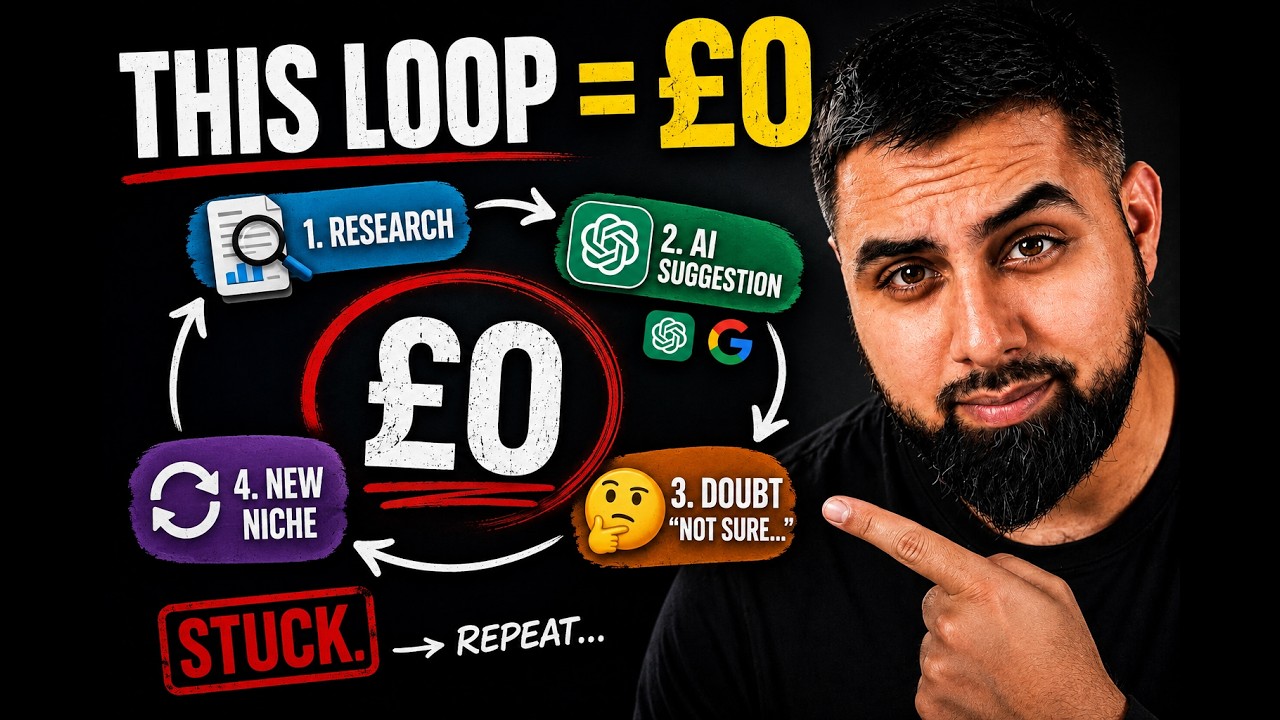
The Real Reason You're Afraid to Pick a Niche And What It's Actually Costing You