You're Not Behind. You're Just Afraid

Mohammed Adris argues that fear, not lack of knowledge, stops recruiters from starting. You need real conversations with clients and candidates to learn pricing and objections, not perfect tools. Start manual: send personalized emails before any automation, pick a niche, make a list, write one paragraph, and go.
Chapters
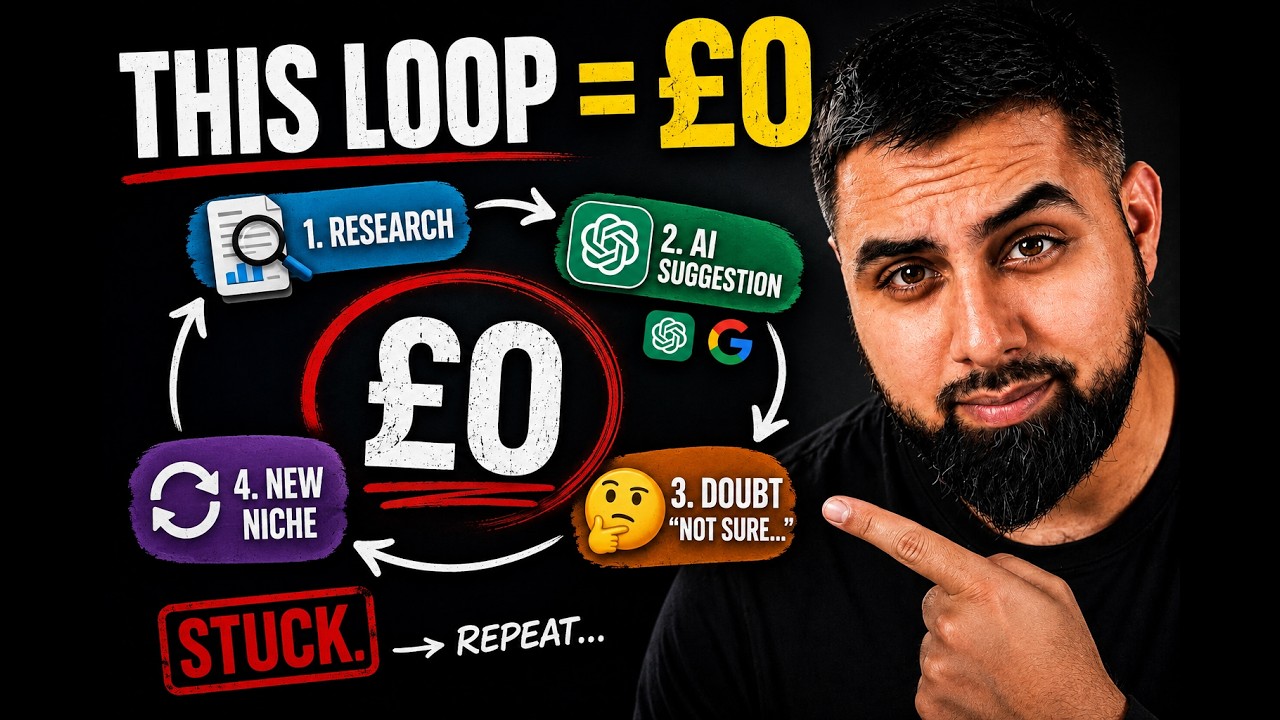
If you've been sitting on the idea of starting or even growing your own recruitment business and it's been more than 3 months, then this video is going to be a little bit uncomfortable, a little bit uncomfortable to watch, because in the next 10 minutes, I'm not going to give you another framework for picking a niche. I'm not going to teach you another cold email template. I'm not even going to show you what the perfect outreach automation system or workflow is, because none of those things are the reason why you haven't started. All because what's stopping you isn't a lack of knowledge, it's not lack of tools, it's not even a lack of time. It's literally fear dressed up to look like logic. And if you just look at some of the people that I've helped, people go from zero to 30K months, zero to 100K in a quarter, and these aren't one-off instances anymore. Maybe someone could say that about me when I first started, but not anymore. And even for me, I still actively run my own recruitment business, and the patterns that I see I've seen them over and over again in different niches. I've seen them in different geographic locations, different specialisms, and even varying skill sets with recruiters. And I'm gonna show you exactly what it looks like in your business and why it's costing you years and how to break out from it before you finish watching this video. So let's start with what fear actually looks like when it's pretending to be logic. Imagine you're someone who just decided that they're going to take a trip, and this person, they know the destination, they've booked the flights, but before they confirm the hotel, they want to know exactly, exactly which restaurant they're going to eat at on day 3. And before they know that, they want to check whether it'll rain. And before they can work that out, they want to see whether the currency exchange rate is good enough to justify going at all. And then 2 months later, they haven't gone anywhere. The flight window closed, the hotel prices went up, and they're still at home. Fully researched, but just completely paralyzed and just no closer to the trip than they were on the day that they actually had the idea of going. And I literally see this every single week with people who want to start, who want to scale their own recruitment business. And they tell me that they need to build the perfect CRM before they send a single email. They've got to write the perfect cold email template before they pick up the phone. And they need to read 3 more books on sales before they reach out to any real prospect. Or they want to wait until LinkedIn finalises their quarterly LinkedIn price increase before they actually commit. None of those are bad ideas in isolation, but every single one of them has a place where fear can hide and look productive. And the test is simple. If your planning hasn't produced a single conversation with a real client or candidate in the last 2 weeks, you're not planning. You're hiding. That's not preparation. That's fear with a spreadsheet. And there's a second version to that excuse. And that's even more common than the spreadsheet one because it sounds more reasonable. A lot of people delay starting their recruitment business because they're waiting for something specific to happen first. A baby due in 3 months, debt that they want cleared, a trip that they've already planned, a heavy quarter at work, a house move, a partner who needs them around. Those things matter. But I want to be honest with you about something most people just don't say out loud. When you actually start your business, none of those things stop happening. The baby comes, then the second baby, then the school run, then the teenager problems. The debt's clear, then new debts appear because life expands to fit your income. And the trip happens, then another one and another, and travel doesn't stop just because you've started a business. And then work gets quieter for a month, then it gets busy again, then your team has issues, then a key person leaves, and now all of a sudden your partner needs you. They'll always need you. That's what relationships are. So if you delay starting a business because of any of those things, what you're really telling yourself is, "I'll start when life pauses." And life doesn't pause. Not for anyone. Not for me, not for you, not for the hundreds of recruiters that I've worked with. And here's the hard truth: when one of those things hits you while you're already in business, and it will, you will use the same logic to close the business that you used to delay it. The off switch is the same. Life will keep flipping it for the next 40 years. So the question isn't, can I find a calm enough moment to start? The question is, can I build something that survives the storms? Because the storms are not optional. The recruiters that I've watched build real businesses are not the ones who had a clear runway. They started while their other half was pregnant, or they were expecting a child, while they were paying off £20K in debt. And they started while they were doing 60-hour weeks in their day job, while their dad was unwell, while they were in the middle of buying a house. They didn't wait for the challenges to clear. They built the business through them. The wins in this game don't come from people who had a clear run. They came from people who kept going while life kept happening. And if you wait for the perfect window, you'll wait the rest of your life. Now, once you accept that, there's one thing you have to accept, and it's the thing that finally gets people to send their first message. The information you need to grow a recruitment business is not in any book. It's not in any course. It's not even in this video. It's inside the conversations you haven't had yet. When I started my agency, I didn't stop sending messages or emails, and it was within the first 72 hours that I had someone come back to me and agree to work with me, resulting in my first placement in my first week. I couldn't have found the information of that vacancy and that candidate in any book, in any podcast, in any LinkedIn post. I wouldn't have got anywhere with it. They are the things that only real conversations teach you, and you can't access them from behind the screen. A screen that hasn't sent a single email yet. And one of the things is what the actual market pays you. Not from what you think you should get paid, not what your old employer charged, but what real clients with real budgets will actually agree right now. And the second thing that you'll get from these conversations is which objections are real and which are just noise. Half the objections you're imagining probably never come up, and the ones that do come up are usually things that you'd never have predicted. And number 3 is how your offer needs to evolve to fit reality because the first offer might be wrong. That's fine. You might go in thinking that your client really, really needs a permanent solution and then they choose contract or retained or RPO, whatever it might be. But the real problem is actually sits with you because you spent 3 months perfecting an offer in private before you've even tested the market and you don't even know if it's correct. The replies that you get, the silence that you get, the objections that you hear, the questions clients ask you, that is your real curriculum. And you can't access it from behind a screen that hasn't sent a single email yet. And by the way, if any of this is hitting home and you've been following me along for however many months, then I want to share this with you, that you're probably the person that I want to work with. If you're somebody who's just made like a really, really short decision, like, okay, you know, recruitment seems like a good idea, let's give this a go, then carry on watching my YouTube videos. But if you're in that phase where you've done the research, you've done the due diligence, you've been watching my content, then it's probably time to have a conversation with me or someone in my team. And basically, let's get this show on the road. That's only if you wanna skip the fear and the false starts. Well, for you, the link is in the description. Now, there's a version of all of this that plays out around tools and tech, and it's the most expensive version because it can take you 6 months just to notice it. People spend weeks trying to build the perfect outreach system. They download Clay, they connect Apollo, they test LinkedIn automation sequences, they start watching tutorials on how to use different email sending platforms. Then they discover that the data they pulled isn't good enough to send anyway, or that the niche that they're targeting is either too broad or too narrow, or the message that they've automated doesn't actually get replies at scale. Meanwhile, someone else sat down on a Tuesday morning, wrote 10 emails by hand, sent them, and got 2 replies on the same day. It's not about being anti-tools or anti-tech or anti-AI. I'm sure you know this about me if you've been following me for a while. I, I love all the tools and tech. I run my entire client acquisition using automation and AI, but I built that automation after I'd already proven the manual version works. And that's why the tools, they amplified something that was already producing results. They didn't create the result. Tools are a multiplier. They're not an initiator. So if you've got nothing to multiply yet, automation just produces the wrong things faster. You have to go manual first, automate second. There's no shortcut around that order. And once you start having those conversations, here's something that almost nobody tells you when you're starting out. The people you speak to in the first 6 months of your business are going to come back to you later in a completely different form. The candidates you place today might be hiring managers in 5 years' time. The person who says, "We're not hiring right now," might be the one who calls you the moment their headcount budget opens. And the junior that you helped find a role at the start of your career might be the one who recommends you to their entire network a decade later. And yes, I I'm talking in long timeframes because I still plan on being in business in a decade's time. So if you're not thinking with that long-term mindset, then you're gonna have some challenges. All because none of that is visible when you're in the earlier stages. You're making calls, you're sending emails, you're having conversations, and it feels like nothing is accumulating, but it is. The candidate I placed introduced me to their network. 18 months later, that person is now one of the biggest clients in our company. I couldn't have predicted that, and neither can you from day one, but you can guarantee that it will happen by doing one thing consistently, and that's showing up. Treating people well, building relationships, even when there's nothing immediately to gain. And the recruiters who build lasting businesses are not the ones who were the most technically perfect on day one. They are the ones who had the most conversations and treated each one like it might matter 5 years later. So if you take nothing else from this video, take this: you don't need to have everything figured out to start. You need 3 things, and that is your minimum viable product. The first, you need a niche. One industry, one role type, one geography, not construction as a whole, and one core offer too, specific enough that you sound like an expert when you actually reach out to them. Number two is that you need a list. You can start with 50 or you can start with 5,000, but you need a list of companies that fall into your niche with hiring managers, maybe even founders, and you can build this in an afternoon using Sales Navigator. And number 3 is a first message, 1 paragraph. Send it today, not tomorrow, today. That's it. That's the MVP. Everything else, the CRM, the automation, the perfect website, the brand colors, all of it can wait until you sent that message and you get a reply. If you've been sitting on this idea for 3 months, 6 months, 2 years, that's the version of you I'm speaking to right now. You don't need another video. You don't need another book. You don't need another course. If you want courses, one for free on my channel, links below. You need to send that message. The fear doesn't go away before you start. It goes away because you started. So if you've watched this video and you're thinking, alright, I've got a niche, I've got the list, but I don't actually know what to say in the first message, then go and check out this video because it's where I break down how I landed my first recruitment client and made my first placement in my first 7 days, step by step. I will see you there.
More from Mohammed








How to Build Client and Candidate Relationships That Make You Impossible to Replace

The Real Reason You're Afraid to Pick a Niche And What It's Actually Costing You