Episode 2- Founder of Ticket Tree- Elijah Wilson
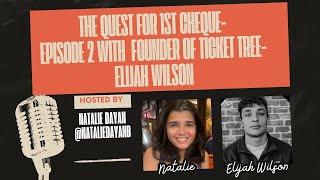
In this YouTube interview, host Natalie Dayan talks with Elijah Wilson, founder of Ticketree, about the company’s mission to reshape ticketing through blockchain technology. Wilson explains how a personal experience with a fraudulent Ticketmaster purchase sparked his interest in on‑chain tickets. Ticketree’s platform has two sides: a host dashboard for creating events and issuing tickets, and a fan portal where tickets are purchased with traditional payment methods but recorded on Solana. After an event, each ticket is automatically transformed into a digital collectible that can be randomly distributed to attendees. The collectibles can be shared on social media to earn points redeemable for future tickets, creating a “fan flywheel.” The team of five founders—Elijah, co‑founders Carter and Matt, and engineers Hunter and Ben—bring complementary expertise in entrepreneurship, blockchain, sports media, and software engineering. Technical decisions are driven by Solana’s high throughput and low fees; Ticketree uses compression and a proprietary “Box Office Protocol” (built on open‑source components) to mint NFTs efficiently, storing data partially on‑chain. Early pilots with the Cage Titans MMA promotion demonstrated a 19‑minute average distribution time and activation rates up to 22%, delivering a 26% lift in social‑media impressions. Ticketree’s business model charges hosts a modest markup (≈8‑15%) on ticket sales while offering the collectibles for free, positioning the platform as a fan‑engagement ecosystem rather than a pure ticket seller. User acquisition relies on host partnerships, QR‑code activation at venues, and referral/discount mechanisms. Current metrics show a few hundred fan users and four host organizations, with plans to scale to thousands as new events launch. The roadmap includes referral links, a points‑based rewards system, friend networks, a collectible marketplace, and a mobile app. Regarding IP, the core protocol is not yet patented but is under legal review. Wilson acknowledges competitive risk—other platforms may attempt similar solutions—and blockchain‑related risks such as network downtime or market downturns, mitigated by multi‑chain strategies (e.g., Near, Polygon). Privacy concerns are addressed by partnering with host media owners to distribute exclusive content securely. Finally, Ticketree is raising a pre‑seed round of about $250 k, with equity terms flexible to attract strategic investors who can provide business‑development connections.
Chapters
All right, thank you so much, Elijah, for taking the time for this. I, first of all, let me start by saying how inspired and fascinated I am by you and everything you're working on. Uh, when I was an analyst at Export Dojo, I was going through different startups because part of my main job was sourcing, and I came across Picatree, um, which had a different name at that point, different spelling, my bad, but I was pretty fascinated what you guys are doing, especially being in college. Working on this and, you know, for starting, it can be hard, but you guys are absolutely crushing it. And especially right now in this day and age when all the drama that came about with Ticketmaster, without spoiling it, it's so needed. But before that, Jack, would you go on and introduce who you are and what Ticketree is all about?
Yeah. Yeah. Thanks for having me on. I'm pumped to do this again. Yeah. My name is Elijah Wilson. I'm the founder of Ticketree. Ticketree grows fan engagement through ticketing beyond the event. Our on-chain protocols actually empower fans to not only purchase affordable and authentic tickets but actually interact with their favorite teams after the event through digital collectibles, where each ticket on our platform is effortlessly transformed into a digital collectible after the event. These digital collectibles can be interacted with socially. So for example, a fan can post their collectible on social media to earn points on our platform. Those points can be used to go towards future ticket purchases for that organization. So we try to create a fan flywheel instead of the kind of linear broken fan experience that we see right now.
That's very fascinating. But I'm curious to know what inspired you to start this.
Yeah, yeah, totally. I got involved in blockchain late 2020 or so. I was actually in a gym in my hometown during COVID times, and one of my old friends from my hometown came up to me and said, hey, you should check out this Solana blockchain NFT thing. And I checked it out. I was fascinated. Couple years went by and I went to a Boston Celtics game, bought tickets off Ticketmaster for about $400 for my girlfriend and I. We arrived to TD Garden, which is the Boston Celtics stadium. The admission guard had scanned my ticket and told me I got scammed. I bought fraudulent tickets. So I was down $400. I quickly buy, I think it was like at the time, another $500 worth of nosebleed seats with, you know, Boston fans behind me. And Boston is known for being patient. So that was a fun experience for me.
I'm sorry that happened, but I'm glad that you took that experience into launching what Ticketree is today. So, you know, so how did— so how did— so I know that it's not just you, it's like the team of, I think, 4, 4 of y'all, right? So how— yeah, 5, my bad. So how did, how, how did you all, you know, meet up and how did you all go from that idea stage to being where you're at right now?
Yeah, yeah. So the 2 co-founders, Carter and Matt, um, we had actually known each other kind of all our life, um, We grew up in the same hometown, played the same sports when we were young, and then at college and university, we all kind of went our separate ways. Carter, entrepreneurship major, graduated Suffolk, has a lot of good experience there. He's actually president at one time of their blockchain club at that school. And Matt had gone and done a ton of really cool internships in the sports media space, notably like with Fox Sports. So then when the idea of Ticketree came to me, I talk to them, see what they thought about it. I got around and started ideating on different value props and how we can spin off into what it is now. And then the other two team members, the other two members of the founding team, Hunter and Ben. Hunter, again from the hometown, reconnected with him. I know he was studying software engineering and math in a dual major, so one of the smartest guys I know. So reached out to him. He was very fascinated, already working in blockchain smart contract development. And then with Ben, met Matt at Matt's school. So yeah, that's how we kind of all met. All 5 of us have kind of a different skill set that we bring to the table, but we all kind of have that same passion for sports and live music events.
I like how you all have different skill sets, which is so needed because especially when you're building a startup that's like, you know, like that is in the blockchain. Space and also in the ticketing space, right? You all need to have certain skill sets in order to complement each other and in order to have a team wherein you can rely on each other and do exactly what's needed to scale up, which is very fascinating. And also you guys have that shared passion, which is so needed because especially when you're running a startup, you know, having that same vision towards where you're going and that passion is needed or else you burn out and just, you know, stop working on something, which I definitely see you guys not doing for like a very long time. And I see the passion and I have It feels like I've seen you guys grown from like June until right now, and it's been like a crazy journey until now, which I won't spoil it. I want you to tell us more about it. But anyways, you know, for like those, can you like go ahead and explain us how Ticketree exactly works for those of y'all, you know, haven't used the platform yet?
Yeah. Yeah, totally. So again, I got scammed at a Celtics game. Um, the initial kind of solution there was like, hey, let's just put tickets on the blockchain because. You can know nothing about blockchain, but the only thing you do have to know is that it verifies ownership of digital assets. So at the time, in theory, I was like, hey, we put tickets on the blockchain, no one gets scammed again, right? And that was the original kind of operational solution. Not to mention that right now, the ticketing platforms, whether it's Ticketmaster, SeatGeek, StubHub, you name it, really, even like the lower ticketing platforms that we kind of go against or go after right now, all have like hidden fees, delivery fees, which they charge you like 15% just to send you an email. and with the blockchain, we can kind of just reduce and eradicate most of those BS fees. So that was kind of the initial solution for Ticketry. And then I was able to talk to some executives at like the, in the NBA and NHL space, and they said, hey, yeah, we don't like Ticketmaster, we don't like SeatGeek because of those issues, but there's a real missed opportunity there in terms of bringing fans back to the event for the next game. With that ticketing asset that they hold. So that's where Ticketree kind of went from an operational solution to a marketing tool for these host organizations, for these teams. So how it works, it's pretty simple. We have two kind of branches of our platform. We have the fan side and we have the host side. So the first step is we onboard a host. They come onto the platform, they go into their host dashboard, they get set up, and then they go and create their events. They create an event, create different tickets, set ticket prices, name, descriptions, all that fun stuff. And then they publish event, it goes live, fans come onto the event on the fan side of it, onto the event page, purchase the ticket. And now it's very important, like, again, I've been using blockchain for the better half, like a decade now almost. So I'm very familiar with the tech. I understand that a lot of people in like I actually agree with them for the most part. Hear blockchain or NFTs or cryptocurrency and get turned away because of all the, uh, nonsense that's happened over the past few years. So fans come onto our platform, and while we kind of run the blockchain on the back end, they set up an account with a Gmail or phone number or an email account, and they check out with their debit or credit card. Um, so it's very Web2 traditional friendly in that, uh, sense in our user experience. Um, and then after the event, the host can actually upload digital a piece of content, our platform transforms them into digital collectibles, and then those collectibles are distributed at random to fans. So for example, a host can say, uh, hey, we want to upload 5 different media clips and we want them to be kind of distributed at a different rate for each one. So we're going to have, you know, a common that goes out to 56% of people, we're going to have a unique that's going to go to 40%, rare, legendary, and then a 1 out of 1 where only one fan receives that last one collectible. And then what they can do, because again, these assets are verified on chain, is they can view which fan receives which digital collectible and attach a real life kind of tangible reward behind that. Now those rewards can be, hey, congrats, you got the one collectible. You can now have a free ticket to the next event. You can have a meet and greet with the athlete or player that's on the collectible himself, a signed piece of memorabilia. It's just another way to kind of increase touch points within the fan experience for the host.
I like how you guys are transforming like the whole ticket experience, like not just like having a fan like have a paper ticket or like a, you know, virtual ticket and being like, hey, you know, now the event is done, it's like done and dusted, right? You're never gonna see the ticket again until you have it, you know, saved up with you being like, hey, I went for this event, it was memorable. But then, you know, what, what after that, right? It just becomes useless. But I like how you guys are transforming that whole experience. For the fans, but also for the creators, that's the host of the event, which is like something which is, you know, very fascinating. But I'm curious to know more about, you know, like the collectibles, like the whole process of, you know, having the collectibles. And like, does the collectible a person who attended the event gets depend on how much they paid for the ticket, or like is it just like randomly done? Like, can you explain the whole process? Okay.
Yeah, no, it's completely at random. Um, We, we essentially allow host organizations to create those different tiers, to create the different collectibles, um, and then it goes and they can either choose— right now it's a logarithmic or linear, uh, kind of probability distribution. Um, they select that. I'm trying to think, I'm trying to imagine all my head. Um, after those ranks are all set up and those tiers are set up, it brings them to the kind of, uh, randomized page, um, where they go ahead and then they can hit randomize and it will go to different attendees, and they can hit it again and again and again and again and kind of just like run it through 5 times just to kind of ensure fairness, which is really important like in the fan experience right now when it comes to ticketing. Like, the fan— what is the fan's perception of fairness, whether it's in kind of the transactional value of the ticket, right? So the initial purchase, and then kind of how they value what they paid for in terms of what— in relation to like the experience that they had. And also the emotional kind of attachment that that has, or the emotional fairness, right? So we do have it technically that if they wanted to go and like say, hey, if you sat in the front row, you get the better collectibles. But the way that we have it set up right now, we kind of just want to ensure fairness to everyone at the event. But at the same time, like we do recognize that some fans may value these collectibles more than others depending on, say, generational preferences. So we do kind of have subsets allowed on the host dashboard to kind of distribute those collectibles to kind of different segments or demographics of fans.
I like that you said that there's absolute fairness because to me it's like somebody paid more for a ticket versus me if I'm just trying to go to the event and not really care what I'm at, you know what I mean? Like how much I paid for it. So I feel like that is something which I really value as a user, and I feel like that is something which really stood out to me and seems very fascinating that you guys are working on it. How long does it take to make a collectible from the digital content being uploaded to the actual collectible being made? And does that happen right during the event or after the event? I mean, I did watch a video that said how it worked, but I'm curious to know more about how it did. Yeah, yeah, you can explain better.
No, it's a good question. So for the last, so for our two last events we hosted with Cage Titans, Cage Titans is a semi-professional MMA promotion here in New England, probably one of the biggest in New England. It's a really great event and we actually distributed collectibles for each fight on the main card. So, you know, if you think about a basketball, football, soccer, NHL game or something, or hockey game or something, you— each fan would in theory just get one collectible per the event. But, uh, at these MMA events, there's a ton of different fights, right? So we said, hey, on the main card there's 8 fights, we'll distribute one collectible per fight on the main card. Um, so that's exactly what we did. Um, so each fan got, I want to say, 7 or 8 collectibles per the last 2 events, so 16 in total. Um, we distributed them during the event, so it was actually Again, MMA is different, right? So after each event— or sorry, after each fight concluded, we immediately sent out that fight's collectibles to fans, which was, you know, an intense, fun process. And then for the last fight, we actually waited until the next day because the fights end late. It was like the fight ends after midnight, people are driving home. We don't want people looking at the phone while they're driving. We want them to kind of have the full attention to this collectible experience. And on average, I think for those collectible distributions, it took about 19 minutes. But in theory, when you post it after the game, there's not— or the day after the event, and there's not 8 collectibles to distribute in the media that we have to go capture and then upload to our device and then download and then kind of run through our collectible simulator. Yeah, 19 minutes was the average score, but we're really hoping to nail that down for the next few events.
That is— yeah, wow. I mean, just doing that during the event, like, I can understand how intense that sounds. But also, it's like, like, some people have— like, for example, if I do something, I'm like, somebody says, oh, I'm gonna send this to you, right? And I expect it to like take like a whole 2 days or like a week at least. But that will happen. But just like the way you guys are on it just shows the passion and also how you guys actually care about elevating the fans' experience versus just like doing it for the heck of it, right? Which is something that stood out to me. But like, so I'm just curious to know more about this before I jump onto my next question. I'm sorry, I'm like asking so many questions because I'm so fascinated by this. Um, did you guys come up with the whole like the tech yourself to be able to transform that?
Yeah, yeah. So we built, um, so let me start by saying like we chose the Solana blockchain, um, because the Solana network right now is kind of the most scalable in our eyes. They have the highest TPS transactions per second right now live. Actually, I can check. I can check right now. I always have this little tab open right now. Solana transactions per second is over 1,000. If you compare that to something like Ethereum, we have Ethereum down here, 16 transactions per second. So I mean, Ethereum, Bitcoin are kind of the big networks you hear of all the time. Solana is extremely more scalable than both of them combined. The max reported kind of TPS on Solana is over 7,000, and in theory it's around 65,000 transactions per second. So we chose it for the Solana for the transaction speed so that, hey, when we have a ton of fans buying tickets at one time, our platform can handle it. And there's no Taylor Swift debacle that you saw a couple of years ago. And we also chose it because there's really low gas fees. So if you kind of use a network like Ethereum or Bitcoin, you know that on each transaction, whether you're sending a digital asset from one wallet to another, paying kind of swaps on those networks or whatever, you usually have to pay like a significant gas fee. It can be anywhere from $20 to $50 to $75, maybe more sometimes. Solana, it's less than a penny. So it is super quick and it is super cheap. So that's why we like Solana. It also has a huge developer community. I think it was actually voted the best developer community in 2024, or maybe had the most developers on their network in 2024. So that's why we kind of chose Solana, doubled down on them over the past few years. And in terms of that developer community, they do a lot of good open source work. So we actually took some open source material and kind of spun it off our own way. Long story short, to be as cost effective in the kind of minting. So the the launch or the distribution of these NFT tickets and collectibles to be able to be stored half on chain, half— well, not half and half, but some on chain, some off chain to save us a lot of money and just again, allow it to be scalable. There's actually a really good website out there that shows kind of how compression in the NFT space can really grow. That's only on Solana right now from what we've been able to see. So I'm going on forever and ever. But yeah, we essentially took some open source material and spun it off in our own way because with kind of the compressed digital assets, there are kind of some mass distribution hurdles we had to kind of get over at first. And also the way that we kind of transform those original assets into the collectibles after. So yeah, we call it our Box Office Protocol is what we would call it if it was open source. But we don't have any plans to open source that right now.
That's smart. So you guys have— is it patented or do you guys have any plans on patenting that?
Yeah, yeah. No, it's not patented yet. Um, we actually did kind of talk with our legal team on like, hey, what do you guys think? Is this going to be able to get approved? They gave us a green light. Um, so we're just essentially refining it before we go ahead and, uh, apply for that.
So I think that would be very smart, you know. Yeah, I think about it ahead. Like, I mean, people right now, given the extreme amount of competition, like everybody wants to use Solana, right? I mean, I've heard about it, but then now that you told me about it, it sounds like something which everybody's gonna try to do, but then if you patent it already, you have a leverage over other people.
Yeah, yeah. And it's, it's like other platforms have talked about going on the blockchain for a long time. It's one of like the, the first things that come to mind. It kind of seems so obvious, but then there's a, it's like, hey, why hasn't anyone actually done it yet? And it's for kind of a wide variety of reasons, whether it's choosing the wrong network. Some platforms are already so big that it's going to be in terms of like ticket volume, users, and specifically like tickets that they already have sold for 18 months, 36 months from now, it's going to be really hard for any platform to convert those, their existing platform onto the blockchain. If you think of it, you have the big dogs in the platform, in the ticketing industry, you can think of them as like skyscrapers. And to go on blockchain, it would be like kind of wiping out or changing the foundation or the basement of that skyscraper. It's gonna be really difficult. But for kind of a startup like Ticketree, you can build that foundation right away, then you're in for a good time.
That's right. You guys are pretty smart about it. I mean, you guys thought this way ahead, which is so cool. And definitely that explains why you guys have been able to get to the stage where you guys are. At right now, like I'm curious to know, you know, how many users do you guys have right now? And like, you know, how do you plan on getting, like, you know, how do you go about getting those users and what's like your plan to acquire more users?
Yeah, totally. So our GDM is honestly focused around the collectible aspect of our platform where we kind of go to teams and organizations and venues that are in their existing ticketing contracts. And say, hey, look, you guys can go and do ticketing for the rest of the year, for the rest of the next 2 years, 2 seasons, whatever it may be. But would you like to do the digital collectibles with us where we can kind of modularize our offerings? So the initial kind of flywheel of tickets to collectibles to the social collectible interactions is now just going to be the collectibles to the social actions. And kind of the entry to that ecosystem is now going to be like, for our first partner, was kind of just QR codes around the venue. Where users just, or fans actually in the audience, just scan the QR code, claim their collectible, made a Ticketry account, and then after, or after the fights and after the day the event ended, we sent them their collectibles. And we actually saw a 26% social media impression boost for the Cage Titans social media platforms, primarily on Instagram where we tracked, from fans posting their collectibles on their Instagram stories. And that was for 2 events, collectibles only. Yeah, it's pretty powerful. And with those 2 events, the activation rate for the first one, I wanna say was like around 4%. The second was around 8%. We did another collectible event for a different promotion a couple weeks ago. I think we got like a 22% activation rate. I think industry average right now is like 5%. And then the question is like, hey, you guys are seeing a 26% boost on 4%, 8% impression activation rates. How do you get that impression number up? Well, you get the activation number up, and the easiest way to do that is just convert fully from collectibles to ticketing. So because when fans buy tickets to get into the event, they're automatically eligible to receive the digital collectibles and all the rewards that come with it. In terms of total user base right now, I think we are probably hovering around— we actually talked about this number the other day. It's a few hundred, a couple hundred. It's not—
that's pretty cool.
Yeah, it's not bad. It's definitely a good start, but with the ticket launches that we have lined up, it'll kind of break thousands pretty quickly. So that's on the fan side. On the host side, we have 4 host organizations that are using our platform right now to launch different events. We've announced 2 of them so far, one being Cage Titans and another one being the Hagerstown Flying Boxcars, which is an independent minor league baseball team out in Maryland. And they're again, they were already in there taking a contract for 2025. So we said, hey, do you want to distribute digital collectibles, kind of get your social media pages boosted a little bit? And they were, they were really excited to do so. So we onboarded them. We'll be starting that in the spring at the beginning of their season.
That's a great strategy, by the way, to acquire more users on your platform. Like, honestly, that's so smart. Like, leverage on your collectibles. So what's like the pricing model? Okai?
Yeah, yeah. So for collectibles, we do that all— that's all free. Um, we pretty much just ask for a seat at the table when they're opening up their next or deciding their next ticketing partner. Um, we have— we've like internally talked about, um, ways to kind of again modularize our offerings. Um, like the past month or so has showed us that we're not really selling tickets as much as selling that fan ecosystem. Um, so if we can kind of if we need to tweak the kind of point of access to the ecosystem. Again, right now it's tickets. They buy tickets and they're eligible for all the rewards in the flywheel. But if we need to change that to maybe the QR codes and geotags or some other, some other maybe strategies that we've been talking about and that can fly, then we'll do that. But yeah, really just like staying really agile, I guess, in the way that we kind of push that ecosystem.
Got it. So what's like your business model?
Yeah.
Okay. Yeah.
So right now we charge hosts nothing. We simply add a 15% markup. Actually, I think it's around 8% right now onto tickets for fans, which is significantly less than industry standard. And not only are they paying less, but they're also getting more. So it's a win-win. We actually had, I think it was a couple weeks ago, we launched our first tickets, ticket sales, and we're sitting there, we're like, all right, just wait to get the first support email from a fan because, I mean, everything looks good on our end, but that's because we're so familiar with the platform. We finally got that first email and someone was saying like, hey, this platform's great. I didn't have to charge or pay like a $25 fee like I did on their previous platform. Like, where can I buy, can I buy tickets to other events on your platform? So it was really cool.
That's pretty cool. How do you guys, I mean, now that I asked that, I was wondering what are the new features that you plan on coming up with for this platform? And I know that there's existing competition right now, and of course there's going to be new competition given that we live in the age of technology and everybody wants to come up with something, right? So what's your strategy to deal with that? And also new features coming up? Yeah, that's basically what I can think about right now.
Yeah, yeah, we have some really simple features that we're rolling out like referral links, tracking links, discount codes, promo codes, affiliate— I feel like I might have already said affiliate links, but again, things that help host organizations kind of better get a better understanding of their fans, better fan profiling. And then after that, we're rolling out our point system where fans kind of— they get points based on the rarity of their collectibles. They get the most rare collectible from the event, the one out of one, they're going to receive the most points. If they go and they post that on social media, they're going to receive more points. That's where we're probably gonna bang all these out in the next, like, 10 days before January 1st is our goal. We're already testing a lot of them. But yeah, those features. And again, it's like, if you look at the ticketing landscape now, it's just really outdated. Again, like, a lot of times I'm like, oh, I'm so like, we're young, we're a young group of, we're a young team, right? So it's like, we get that question a lot about, hey, how does being young kind of affect this and the other? It's like, well, we actually kind of understand the younger generations a bit better because we've lived it. If you look at like any data on millennials and Gen Z, they actually go to the event. Their kind of influence of going to an event or not isn't as transactional as maybe older generations where it's like, hey, I'm gonna go to the Boston Yankee, the Red Sox versus Yankees game because that game's gonna be great. It's more with younger generations, it's more, hey, I'm gonna go to the Red Sox Yankees games because I think my friends might go. I think my peers might go. It's more of a social emotional event. Than that kind of transactional event from decades past, I guess. So to build on that sense, like really just turning Ticketry into a social event platform where ticketing is just kind of the entry system to that platform. So what that looks like is friends, which are rolling out now. So fans can actually add friends, see what collectibles they're receiving after the event, kind of like a feed. They can send their tickets or collectibles from one friend to another, trade with them. And hopefully our big goals for next year are the mobile app launch as well as the collectible marketplace launch where if—
That's so cool.
Yeah. Where if a fan receives a collectible that, like, again, the example I always use is say you're at a Celtics-Lakers game and I'm a Celtics fan, but I get a collectible of— Is LeBron even playing anymore? I know he took some time off, but LeBron—
I think he does. He does play. I mean, I went to USC and his son was on the team, but now he's Yeah, he was at USC for a while. Yeah, no, yeah, he's good.
Um, well, Brownie's— Brownie's all right. But yeah, if you get— if I get a Celtics fan— if I get a clip of, or collectible of LeBron hitting a game winner on my team, I don't necessarily want that. Um, but I know a Lakers fan who might, so I'm gonna go and list it on the collectible marketplace. Um, and that Lakers fan can come and purchase it. And then essentially royalty will go back to the host organization as well as small royalty back to our team.
I think that's very smart. And also when you mentioned about young team, I feel like these kind of things need to be done by people who are young because they understand the industry better. And not just that, but when you're young, you have no responsibilities. You're super entrepreneurial. You can go all in to your dream. And I feel like, you know, every person should support people who are younger versus people older, life experience. Is different. But yeah, I mean, that being said, I feel like this platform is pretty cool that you guys run it. The ticketing industry should be run by someone who's younger. Yeah, that's a hot take.
I think so. Yeah, I think so. Again, it's just really understanding that it's more of a social event or kind of these younger fans are influenced more by kind of social effects more than anything. And like, oh man, I can't start talking about this, but Obviously younger generations are, I mean, it's all, they're the next younger generation, generation after that is always gonna be more tech savvy 'cause they just grow up with it. So it's a lot easier for younger people to kind of see through the BS that's happening on existing ticketing platforms as well.
So. Got it. I have a few more questions. One of them being that how do you guys plan on dealing with the privacy laws slash Or like, what do you guys think about the risk that might come up with investing in the startup? And how do you plan on dealing with it? Because I do know you're fundraising right now, so I will ask that question right after this, but kind of directing this towards the next question.
So the privacy in terms of like user privacy or more geared towards the media privacy, because right now What we're learning is like the, the markets that we're going after. So of course, like if you take a team, I don't want to use any teams, but theoretically if you use a team like the Celtics, say the Celtics have a third-party kind of media partner that owns and controls other media, it's actually pretty simple. We would just partner with their media partner and say, hey, look, this is the way that you can distribute exclusive content to your fans. We know that again, data shows us that younger generations want exclusive content and fans want exclusive content to kind of build their relationship closer to their team. And right now, whether it's the host organization that owns the rights to their media or kind of third party, there's no real effective way to distribute that exclusive content because once you post it on an Instagram or TikTok or Twitter, anyone can go and see it, right? So that's kind of the thought process there. And also what we've already seen with our existing partners that we've onboarded and what we hope to announce in the next 6 weeks, 8 weeks or so with another organization that we're fingers crossed onboarding.
So yeah, crossing our fingers for y'all because I, I see this becoming so big, honestly. So, but yeah, that's okay. Like, so you— this is how you guys plan on dealing with the user privacy and the host privacy. All right. And what do you guys think could go wrong with the startup? Why do you think— like, what are the risks that you see that would come up with investing in a startup like this? And how do you guys plan on dealing with it? Before I jump on to the next question about the fundraising part, which is something which you guys are working towards right now.
Yeah, yeah. I think— I mean, there's not— I have a bias of why I would say, oh, there's no risk in this, right? But I think there's no such thing as no risk, by the way.
Investing in any startup is investing in anything. It's doing everything as this. Everything. Yeah, yeah, yeah.
But when you see the vision like it's right in front of you, it's hard.
I would say you're entrepreneurial when you care about it. You don't see the risk. But I know you know something.
Yeah, I would say the risk is that this makes it— someone is going to do this at some point, whether right now no platform really seems close to kind of offering that immersive fan experience that we're creating. but someone will do this at some point. There's too much demand on the host side and the fan side for this not to happen. That is probably the biggest risk right now, if you could even say that's a risk. Another thing is like the risk of like, hey, Ticketrees is run on the blockchain. What happens if the crypto markets go down or blockchain goes down or the blockchain network goes down? And that was kind of an initial thought that I had too. But then we realized that, hey, if we just run the blockchain on the backend and not kind of as the payment system necessarily, that, that kind of mitigates a lot of that risk where if you look at like a traditional, hey, if I'm going to invest in an NFT marketplace company, that's going to be great during a bull run. But as soon as the market starts to turn and there's not as much trading volume on a marketplace like that, then, then, you know, the revenue for that marketplace is going to go down. There's a risk there. But with Ticketree, again, it uses blockchain technology in kind of a traditional market. To kind of combat that risk. And also, like, if the blockchain network goes down, that'd be a huge risk, which again is why we chose Solana, because it can handle kind of most transactions per second. But we also have plans to like move multi-chain to kind of combat that. So what we're looking at are blockchains like Near for this, for kind of the same reasons why we chose Solana, Near, Polygon. Maybe there's a new network that's going to come out called Monad. So yeah, those are, those are the risks, but I'm already thinking of ways to, to, you know, minimize that risk as much as possible.
So trust me, if I had the money to invest in you guys, I surely pray I did. Do at some point I would invest in you all because I see the vision, I see the passion, and not just that, but also I see that you guys have planned it way ahead then, you know, before the problem arises, which is, and you guys are ready to pivot. With, you know, anything that comes up. So like, oh, like one last question before I jump on to ask about why the name Ticketree, which I did not, but then I know that you guys are fundraising. So like, tell us more about, you know, what's like, you know, how much are you raising? How much have you raised before? What's like the equity part? You know, how much equity are you raising this at? And, you know, anything that you guys want to share about it?
Yeah, totally.
You know what I said about my bad.
No, you're good. We're raising our pre-seed round. We're looking to raise around $250,000. So pretty small round that we can kind of just bring on more developers to kind of accelerate our development timeline, specifically like mobile app, the mobile app and the collectible marketplace. Any platform that's winning right now tends to be mobile first. So that's a huge goal for us to be able to bring on kind of iOS and Android developers. And for the equity, it really depends. Like, we just want to bring on the right partner. Cash is great, but what's better than cash is cash and someone that can get you in the door to a lot of different kind of BD partners or clients essentially. So in terms of equity, I mean, it's just always going to depend on the partner themselves. But yeah, we're trying to raise a small round that we can kind of get through for the next year because again, hopefully like with a 12-month runway or so, because again, the ticketing space is so lucrative that each contract that we get turns out to be a decent amount of revenue. And with kind of our really high profit margin, it turns out to be a sweet deal. So that's our plan for fundraising for now. We're in no rush necessarily, but yeah.
Okay. Okay. All right. I really appreciate you taking the time off for this, but before we jump off the call, I just want to ask you one last question. What's the inspiration behind the name Ticketree?
I, I don't even know how he came about it. I think it was like, you think tree, you think Christmas tree, you think gifts. Tickets can kind of give you more rewards and more gifts after the event. Um, it kind of rolls nice off the tongue too, Ticketree. Um, it, uh, I don't know if there was a real specific moment for the name. Um, oh, actually not like super technical. There are these things on the blockchain called Merkle trees, and essentially we utilize Merkle trees to allow in our kind of programs and development scripts and smart contracts to allow for us to give all this cool stuff to fans. So it's called a Merkle tree. It's on a Solana blockchain. It's a kind of a piece of a program. And then you have tickets. So ticket tree. Powered by the Merkle tree, so tickets tree. Um, but yeah, I don't know if there's one specific thing. I just— we kind of just thought of it once and fell in love with it.
So, okay, that makes sense. That makes sense. I love how you guys came about that. But thank you so much for taking the time for this. Good luck on your fundraising journey. I'm sure you're going to kill it either ways. And, um, I wish the best for you guys. And once again, I really wish I had the money to invest in you guys because I absolutely would. But this is the only thing that I feel that I could do. So, you know, I— oh, this is— you know, you guys are doing a great job. And yes, thank you for taking the time off for this.
Thank you so