Episode 4- Founder of 103st- Ethan Babil
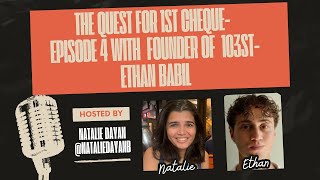
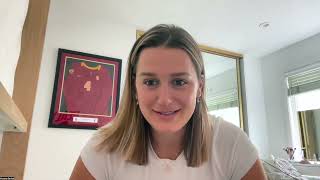
In this interview, host Natalie Dayan talks with Ethan Babil, the Miami‑born founder of 103rd Street (now rebranded as Fund Finder/Pitcher). Ethan recounts his entrepreneurial origins—flipping necklaces on the beach, launching a college laundry‑wash‑dry‑fold service, and an early acquisition—before becoming fascinated with venture capital. He describes his grassroots effort to break into VC scouting by cold‑contacting funds, learning their pain points, and building a personal network of roughly 50 close‑contact funds and a broader vetted CRM of about 900 funds. Initially, he launched a founder‑focused newsletter that grew to ~500 subscribers with a 65% open rate, interviewing founders weekly. Realizing the newsletter’s limits, he pivoted to an AI‑driven matching service: founders fill an eight‑question form, the data is processed via Claude’s API against 10,000+ data points, and an automated email is sent recommending 3‑10 suitable funds. Ethan explains the fully autonomous workflow, the speed (4‑20 hours), and how he bridges both sides—sending vetted deals to funds and connecting founders to investors. He emphasizes his “founder‑first” ethos, the importance of authenticity, and the competitive edge of being an independent scout with a large, vetted fund database. The conversation also touches on his personal philosophy (show‑not‑tell, acting over consuming), the difficulty of balancing university, startup, and social life, and his vision for the future: potentially evolving 103rd Street into a fund, focusing on AI‑enabled consumer‑goods investments and the growing demand for authenticity. Throughout, Ethan displays enthusiasm, confidence, and a reflective, entrepreneurial mindset.
Chapters
Thank you so much, Ethan, for taking the time out for this. I really appreciate you and what you're working on, 104th Street, without speaking much about it because I feel like you would be the perfect person for this. But then that being said, I have, you know, we connected over LinkedIn and because I think I first came across what you're working on and then I feel like just going through 104th Street on the website in general, I was pretty impressed with what you're working on at Hytchen, you think it's a real problem that you're trying to solve. So without giving much away, could you introduce yourself and tell us more about who you are and what 101st Street is all about?
Yeah, totally. So my name is Ethan Babil. I grew up in Miami, Florida. I've been an entrepreneur since the day of dawn. It all started on the beaches in, in my hometown. I was flipping necklaces on the beach, trying to hustle to tourists. And doing anything just to get a little bit of money in my pocket. I always wanted to buy a go-kart, like since I was super, super young. I wanted to get into racing. I feel like I just naturally have a need for speed and that adrenaline that, you know, I have to fulfill. So, you know, I went to my parents and I was like, hey, can I— can you get me a go-kart? And they're like, no. So like every— any responsible parent should say. So they're like, but you could buy it yourself. If you really want it that bad. And I was like, okay, I will. So that's kind of where that determination came from. And I was doing anything and everything just to make a dollar, starting business to business, which ultimately led me to my first, I would say, really successful business, which I could get into before we get into 103rd Street. It kind of just gives that background and a little bit more understanding of who I am and and the grind that I put into. So I started a laundry wash-dry-fold service called Water Laundry my freshman year of college. I'm a junior right now, so, you know, only 3 years ago, but I have came a long way since then. I started this because if you go to a university, I'm sure you've, you know, done laundry in the dorms and it's just absolutely disgusting. It's, it's not clean, it's time consuming. It's the last thing you want to do as a college student. And I noticed that there is a gap in this market where other universities, especially private institutions, had wash, dry, fold services. And University of Denver, which is the school that I go to, was missing that. So I started that business. I grew, scaled, and ended up taking a small acquisition. After a year and 3 months of that. And it, it took the life out of me. I was committed. I was, I was selling every single day. It was school. And then when I wasn't in school, I was on the like school campus tabling or I was knocking on doors or I was doing marketing. It was nonstop, 24/7. So the second I had the opportunity to you know, get out of, out of the game. I, I took it immediately. I, I lost passion for it, which is, you know, something that really, really strikes. And if I could give any advice, it's choose something that you're extremely passionate about that it, it doesn't feel like work anymore. And from the start, that felt like work. I was sort of the business to make money. So, you know, it, it's definitely something that you should not follow. If you're following the cash, you're gonna lose passion, period. So after that endeavor, I was a bit lost. I went back to my entrepreneurial hustling era. I was doing anything to make a dollar again. You know, I won't get into that, but I became really interested in venture and I ended up running into an angel investor just in town, family friend, and I would just kind of pick their brain. I'm like, what do you do for a living? And they gave me the rundown. I'm like, this is the coolest thing ever. Like, where do I start? And I'm like, oh, funny. And, you know, looking back at that and to the point where I am, which is only just a small margin, a small step from what I was back then, like, it, it's a lot of work and it is a lot of perseverance and It's thinking in a unique mindset to just even break into the world of venture, especially when you don't have family ties or, you know, you don't have a massive acquisition from your unicorn business that just blew up. So I started reading, I started listening, sort of watching everything that I could find, which then led me to have an exuberant amount of questions. So, you know, we were talking about this before, you know, you started recording, I walked into every single venture fund in Denver and a lot of them kicked me out. A lot of them didn't even open up the doors, meaning there's a receptionist and you just couldn't get past that. But the ones that I did get through, shout out Stout Street, they, you know, accepted my invite to just take them out for a coffee date and I just was able to go crazy with the questions. For an hour straight and, and try to solve some type of problem because in the back of my head I'm like, if I could figure some type of solution to just get my foot in the door, that is where it's at. So let's figure out where the problem is. So, you know, my questions aligned around like, what's your daily routine look like? What are you working on? What are your biggest pains points? What is the toughest part of your day? And if there's a solution, would you buy it? You know, like just framing that. And what I thought at the time was due diligence. I thought due diligence was the big problem. I thought that was, that was, that was it. So how can I solve a problem in diligence to save time, to save money, to be more effective and efficient? I wanted to create a massive database of founders So an investor fund could just go into the database, look into the, you know, private analytics and just kind of plug and play. Like, I like that business, let's reach out and you could directly message them. You know, there's some platforms like that. Think of it like Crunchbase X, like Instagram, you know, you could go to their profile and directly message them if you want to talk. So that was the original idea of 103rd Street and the The mission there was to help businesses raise funds, to have investors find value in something that I created. So that was version 1. Version 2, which I quickly learned that business owners don't just throw their private information into a random website that a 19-year-old is running. So I converted into a newsletter and media. I mean, even before I learned about Bullet Pitch, I was naive. I didn't do my market research. I just kind of said, okay, let's, let's just start interviewing founders, do what I do best. I'm emotionally intelligent. I'm not book smart. I'm dyslexic as it gets. So let's just go and lean into my strength. So that's what I did. I took the next, 10 weeks. I mean, there, it was, it was really stressful. I, I did, it was my, my own ego that said, I am not gonna miss a week for 10 weeks straight and see what happens. And I didn't. And I was in Europe at the time. I was studying abroad. So it was, you know, I was in a new environment. I was going crazy with 103rd Street and just every single week having a new founder that, that's just innovative to interview, to write about, to ultimately help them raise funds. So I did that for a while and it proved to be successful. I had some flow. I was making connections. I grew the letter to, I broke 100 venture funds that signed up. In total, there was about 500 subscribers, you know, for a newsletter, small. My open rate was over 50% on average, just about 65%, which is pretty solid for a newsletter. I probably could if I still kept at it. I've slowed down the pace. It probably could start selling ads soon, so there could be revenue there. But I pivoted, which we'll get into in a minute, and it was extremely redundant. And I felt that if my goal is to introduce founders to investors, it's not effective enough. And I knew that this was, this was running in the back of my head. So, you know, time kind of went on. There was a bit of a fog where I was just constantly working, you know, just, just had my nose to the grindstone. So I don't really remember that chapter of my life. Um, even though it was, you know, 3 months ago, um, it, it, it's kind of a, a bit of a fog, uh, until give or take 2 and a half weeks ago. I was laying in bed, you know, counting founders in my sleep, and I had this constant recurring thought of how can I become as lucrative as possible? I mean, I'm a scout at the end of the day. How can I feed as many deals to these funds as I can? And all of a sudden it just clicks and I see it. I just see the vision. I, I get what I have to do. And it was like maybe 10 at night. So I jumped out of bed. I just started writing, just put the idea down, put the idea down. Before I knew it, it was 3 AM. I was contacting people on Fiverr to put this thing together. I was reaching out to friends. I'm like, why is no one answering? It's 4 AM now. I'm like, I just had to go. I had to. I don't think I slept that night, to be honest with you. I was just so extremely excited to just get after it. Which what is today is Fun Finder. And, you know, after 5 days, I built, I developed, I completely rebranded 103rd Street to be the most lucrative scout in the game. So what does that mean? That means that you will go to our website, you fill in a couple of questions, it's 8 questions, and our AI called Fun Finder Well, the AI is called Pitcher. You use Fund Finder and it scans our entire CRM of over 900 venture funds. These are all vetted, you know, through my newsletter, through the past year of me breaking into venture. And, you know, it covers anything from their investment instruments to their geolocation where they want to invest. Their thesis, their preferences, their ticket size, their fund size, the whole nine. And it matchmakes. So it will scan this and then it would automatically send the founder an email of no less than 3 venture funds, no more than 10, and saying why they should reach out and why this is the right fit for them. And that's what we're working on today. So again, you know, My flow back in the newsletter era was about, you know, a good week was 8 new founders that I connected with. You know, I've been doing this now for 2 weeks. A good week has been 35 founders. So the flow is definitely, you know, what is that, 3x, something like that around that. I don't know math. I'm not a finance major. I got emotional intelligence. And yeah, that's the journey. And in a long-form version.
First of all, I really appreciate you for sharing that with me. Secondly, I feel like you answered most of the questions that I had, you know, the initial questions that I had for you. And secondly, I feel like, you know, you, you said you were an entrepreneur from the dawn, and that just reflects in your whole journey until now, because every time, that's what an entrepreneur does— pivot to the next idea or the next idea and make it better. And that's exactly what you did. And, you know, of course you said that you didn't know about bullet pitch, but you still Uh, you know, found the founders, which I'm curious to know, wait, how do you find them though? Like, how do you go about the whole process of interviewing them?
Yeah. Are we talking early stage or are we talking right now?
Like, how do you, like, before you said that you interviewed founders before you realized bullet pitch was a thing. I'm curious, you know, how do you go about finding them? You know, what sort of questions did you ask them? And like, how do you— I mean, I'm sure you told me that you pivoted to now being where you are at. So I mean, I'll move on to the technology next, but I'm curious to know about that.
Yeah, and I'll get into that in just a minute. I think there's a big point here, and it's venture media. Venture media is blowing up. It's a gap, and people are starting to realize that globally. So I've gotten a lot of questions and a lot of, you know, people that are like, I would love to do what you're doing. You know, can you run me through your story? And I'm happy to because I don't see it as a threat. The dedication that you have to put into this starting stage, it's your life. And many people can't sacrifice that. If you can, by all means, you know, let's work together. Let's come up. But most people don't have that intensity. And that is what the beginning looks like. The beginning looks like putting in close to 4 or 5 hours a day reaching out to founders. You're, you're, you're clocking in over 1,000 emails in a week. And, you know, not, I would say 750 to 1,000. It depends on the week and you're maybe getting a response to interview Again, a good week was 8. So you could only imagine how like, how tedious and how energy draining this, this process looks like. But if you could figure out a way to get through that and you could figure out a way to create a lucrative system that just flows naturally and there's value, you know, by all means, go, go right into it. Because I think that that is really where a lot of value comes from in the deal flow side of things. So like if you could think kind of how that process looked like, the initial problem was due diligence. I pivoted into media. Now I'm going into flow. Venture funds love deals. And, you know, a mentor of mine once told me that A good deal— no, I, I butchered that. Sorry to my mentor. Um, money follows a good deal, you know, period. And there's not enough good deals that are at the table, so when, you know, something that stands out is put down, you know, money will follow. So it's kind of that mentality that I've I've been really pushing towards. It's crazy because 4 months ago I was saying yes to everything and it's cool how the tables turned and now I'm starting to say no and passing up on things, which is like a venture capitalist's worst nightmare because let's say the next Apple or the next Uber or the next Pinterest comes around, it's like, oh, I just missed out on this deal. And You know, it's cool because now you can start to make your own judgments.
Uh, yeah, saying no in itself has a big power over everybody else. And yes, you said that people might be trying to work on this and, you know, could try to work on this, but then ultimately every— like, for example, you've been in VC and you understand this, but a lot of founders bet on the— like, sorry, a lot of VCs bet on the founders versus betting on the startups because they want to know about the team Why is this specific person, why is this specific team the perfect one to work on this startup? Because anybody and everybody can work on this. But then, you know, what's the passion? What's the desire? What's the, what's the reason beyond working on this? And just like you said, you know, if money is the reason beyond working on this, then you don't want to work on that. You know, you want to work on something that you wake up to and feel inspired to work on again and again, and something which you feel inspired to do that. Because if not, then you wouldn't have gone ahead and pivoted But once you realize that, you know, bullet pitch was a thing, and even, even for that matter, you know, you're a pretty good open rate, 50% open rate. You interviewed so many. How many founders did you say again you interviewed? 8? 8 on a good day?
And yeah, yeah, on a good week, on a good week. So it's been, it's been a journey. It's been a journey.
So, uh, but then that being said, you know, you've, you've been doing the work, you've you know, you've been inspired to do this. But, you know, before, before I jump on the next question, I'm curious to know, you know, what's the inspiration behind the name 103rd Street?
Yeah, I'd love to get into that. So I was raised on 103rd Street, and from the start, like I said, the goal was to help businesses raise funds. So I, you know, lived in a home with a beautiful family and they put a lot of care into me on 103rd Street. So there's a lot of meaning that, and a lot of memories that came out of that, you know, that childhood home, that childhood street. So I want to bring that same amount of care into the founder and the investor space. And really, you know, on one side of things, yes, I'm pushing deals and it's like, go, go, go. But at the same time, I want to slow down, get to know people, really, you take the time to just enjoy their presence and enjoy their mind and learn together and help in any means possible. So 103rd Street was the street that I was raised on in Florida, and it means a lot to me. So just even using that name, I mean, it's something that I always thought of. This is business, 103rd Street's business number. 7, maybe even 8. I've lost count at this point. So it's always been like, okay, when am I going to use this? Like, when am I going to use this street? And it just kind of was like, it felt right. And, you know, I'm not going to hold back on that. So, you know, it just kind of works together.
I mean, I love that. I love that there's a personal connection to this. And absolutely, since this is something you've now invested in, You know, pretty much shows that because you're trying to build exactly the, and you know, exactly the same thing that you felt growing up with your family. That's where you raised, that's where your model came from, and that's where the entrepreneurial drive came from. So it's a pretty big thing. I mean, uh, but then jumping on that, you know, I'm trying to understand, you know, more about how this whole thing works. So basically, so your founder fills in information, you say, and then post that, they get an email saying that these are the investors they should be connecting with. So who— okay, so A, how long does it take for the email to come up for, you know, once the information is filled up? And then two, it's like, what— who— so who exactly would you say is your target market? Would it be the founders or would it be the investors?
Yeah. Okay. So there's a couple of avenues that we'll take. So I'll first go into the system and then we'll go into target audience. So the system's fully autonomous from the submission to the email to even the follow-up. So what, what happens, even just to kind of repeat the process and then I'll go into detail here. So the founder would go to our site, they'd input their information. It's 8 questions. It talks about, you know, what's the investment size they're looking for, if it's a SAFE, if it's equity, if it's a convertible note. What industry they're in, their pitch deck, you know, things of that nature. Once they press submit, it runs through Claude's API. And from there, I have delegated over, let's see, it's over 10,000 data points that it's connecting. And I don't want to go super deep into the technology just because that's where a lot of my infrastructure is, and that's really where 103rd Street thrives. So I haven't taken my leap yet. That's— I'm still very beginning stage, so I don't feel comfortable, you know, diving super deep into that.
You can go in as you can say as much and whatever you're comfortable with. That's the goal.
Once that happens, once those data points are connected, then an email will be drafted. I've written the email. So again, this is all AI run. It would draft the email according to how I, you know, how I prompted it. And from there, it'd be automatically sent. Now the founder would get that depending on how, you know, how much it's being like like the frequency of use. So like, let's just say in a day, I mean, let's just say 5 founders submit their, like, submit the forum in a matter of 3 hours, like in that same period, it's going to take anywhere between 20 to 4 hours for it to send. There's, it's still quite buggy. You know, I have no computer science background and I developed the whole thing myself. I've taken some, some notes from a couple of friends. I've talked with a couple of like, you know, freelancers, but they just can't get the vision across. And that's the founder process. Now, on the investor side of things, there are two approaches. So the first approach is we've already met and vetted with the fund. And a lot of these came from my newsletter and the year of just the hustle and the hustle and bustle of just outreach, whether that's LinkedIn, email, cold approach, like walking into these offices. I'm from Miami, so I've met with a couple of funds out there in Denver, California, New York. And just really, you know, putting my teeth into that industry. So I would say, give or take, at this current moment, you know, 223, 225, I am friends with around 50 funds that I could personally call up and say, yo, check this deal out. I could email right under 150 funds saying, hey, check this deal out. And I could send a general message to around 800 funds. And that, again, that's all data that I've built over this past year. So two things happen, like I said, so that on the friendly side, I could just say, I look at every deal, I'm stoked. Like when I've gotten two messages in just the past time that we've talked and I've seen, I'm like, I need to look at these deals just to like see if I'm missing out on anything. So I could just like get moving. So once I look at that, if it's a good deal and I personally could vet it, I will, you know, reach out to the fund that I believe is, you know, best fit and say, yo, check this deal out. If I think it's a great company, a great startup, and I don't have access to the funds that, you know, they connected with, then I would, you know, reach out and say, hey, you matched with X company, here's their information, either reach out or I'd love to put you in contact. So I'm, I'm bridging the gap on both parties. So that's the founder side, that's the investor side. And I think that answers the question.
I am just so inspired. I'm just, because you so very rightfully said that you're basically a scout, except that you have access to so many more startups out there and you're automating this whole process and making it so much more of our founders. And just like the fact that you have so many connections with VCs in general, what makes you and your startup differentiate from, you know, everything else that's out there? Basically every other scout who's just basically tied down to one VC firm. I am just so inspired by this. You know, I, I don't even know. And just especially somebody who's no big computer science background, building this all from scratch and just doing on your own, it takes a lot. A huge commitment. So, you know, props to you for that.
So scouting is quite interesting in venture because it is below the intern, it is below the analyst, below the associate, you know, these bottom-tier jobs at, you know, venture funds. And it's kind of like this proof of concept. You could think of it like a business owner that's trying to validate their idea. It's you validating whether you are of value in the venture space. And I think it's so smart that a lot of these funds, especially large funds, are really leaning into this younger audience that is curious about venture. So, you know, it allows people like me again, like I, I want to make this as clear as possible, clear as day. I've only known about the space for a year. I just have the intensity. I have the drive to just figure out new innovative. I'm an entrepreneur at heart, so figure out the most lucrative way possible to be the best at what I am. I'm competitive as it comes, so I'm going to win no matter what. Now, on that note, going into scouting, great, great opportunity. If you're interested in venture, do that. Anyone that's listening that thinks that they want to look into venture, Find your scouting opportunities, go to LinkedIn, search up venture capital scout, and like go to, you're probably gonna get like a ton of just people. So like go to the person's profile, scroll down, see what fund that says scout, reach out to the fund. I think that's the best way possible to get into it. And that's where a lot of my intro connections came from. Now, from there, and you know, as you start to build credibility and start having a good amount of deal flow, which is really where the entrepreneurial spirit comes from. If you want to be a good scout, again, I've been doing this for less than a year, so take it with a grain of salt because I'm still learning. But what I have learned in the short period of scouting is two things. So first thing, What is your network? And a lot of these funds are capital rich, but socially poor. So what that means is they don't have access to these underground startups, these really bright individuals that are not shining yet. You know, you could call them the diamonds in the rough. So this, you know, socially poor bank account, you could say, allows us as scouts to really, you know, go in and start to make a difference. So if you're in my shoes, or if, you know, you want to go into this kind of route, look into local events, try to find accelerators, try to find incubators, try to find networking events. I mean, there's no no bad networking event. You know, there's somewhere like you'll talk like I've been to really bad networking events where only like 5 people show up and like, you know, startup fundraising, whatever. But, you know, at the end of the day, a connection is a connection. One will lead you to the next. And, you know, I would really just sink your teeth into those and just show up because at the end of the day, that's all that matters. Just, you know, every day just show up, do one thing at least. And then on the second side of things, that's just hard outreach, search on Google, your local place, you know, local events. That's the easiest route. Now, if you're an entrepreneur like me, if you're going into venture, I would reckon that you like the startup space, so you're innovative of some sort. Think of some way, you know, mine is Fund Finder. Think of some way to make yourself different. Because at the end of the day, that's really what these funds are looking for. There's so many scouts, there's so many people that say, I love to get into venture, but actually don't have the drive to do so. So if you could show and not tell, that's, that's the, that's it. That's it.
What, what is show, not tell in your, in your words mean? Because you've done this in one, in less than a year, you've found yourself from being a curious kid to now being in this field, you know, how— what does show not die look like in your perception?
Um, we could take this to a deeper level, and a lot of it has to do with this. And a lot of people our age, um, they fall into consumption. And I was having a conversation with the founder yesterday and we were, you know, a big portion of our conversation came in this topic where our cups are just overflowing. You know, imagine like this substance in here is just consumption. It's content. It's beats me. Just, just knowledge, information, which is beautiful to be in an age of abundance. But at the same time, our cups are overflowing. And we're not drinking. So what does drinking consist of? Drinking consists of acting on what your idea is, creating, building, doing, having conversations, putting yourself out there. And if we could just put our phones down, if we could just stop learning, even though it seems productive, but just stop learning for just a second and just go execute, for an hour, you know, learn 4 hours out of the day and go do for 1 hour. And whether that's, you know, reaching out, doing emails, connecting with people on LinkedIn, showing up to an event, going to your school's whatever networking career fair, like, just go do it. And that is the definition of whatever the question you asked.
So not that.
Yes, show, not tell. There you go.
I think that's a great advice. The more that you be phone down and just stop learning, more than stop learning, just listen to that inner child in your head and try to understand who you are at the core of it and what's your drive behind doing what you do. I feel like that's very hard. It seems, sounds very easy. I tried looking at the journaling, getting back into it again, and it's not easy, but I feel like that's where you realize, you know, like, you know, that's when you realize who you are and you can actually, you know, it's very easy to get lost in that noises and voices of everybody else. The more you consume, the more you learn, the more you realize you're not good enough, you're not this, you're not that. But then the more you sit with yourself, understand how far you've come and, you know, the drive behind why you want to do what you do, I feel like that just gets easier from there on. You know, you will be much more ahead than other people out there because you know exactly who you are instead of being told who you are by 10,000 people out there on the internet who you've never even met in your whole life. Yeah.
And, and it's a bit, it's a bit, it's a bit tough, the situation that most young individuals are put into. And a lot of us are looking for unconventional results. And are not following in, are, and are following conventional routes. So when everyone is walking left and you decide to go right, it's a hard decision. And, you know, we might think it, we might want to do it, but it's that, it's that actual step that you take to just leave the group and stop being a sheep for once. Is really where you're gonna see those unconventional results. And it's, it, it, it is, it is, I think with time, you know, where college is, is so normalized. I mean, if you look back in the '50s, an education is like high prestigious, you know, you could find that with most schools here, like in today's day and age, if you you go to a Harvard, a Yale, you know, Ivy League. But most institutions, I mean, I don't know that I might be pulling this from somewhere, but I heard this, you know, don't quote me, but it's somewhere between 90 to 95% of high schoolers go to university, whereas back in the '50s it was under 50%. So this higher education is, you know, highly, it's the path, It's the tradition, you know, you get your corporate job, you go, you work your, you know, your little cubicle and you go home. And if that's what makes you happy, you know, I'm pivoting now into another topic here. Not everyone is an entrepreneur. And I grew up my whole life an entrepreneur. So seeing that in, in other people aggravated me and I was like, why are you doing this? Like, stop doing this. You're ruining your life. And, and like, that's what it looks like to me. But people don't think that way, and you have to accept that. And everyone is different. There's a term, it's called sonder. I'm obsessed with this word. And, and the definition goes something around the lines of everyone is living an equally as impactful life with an equal amount of main character energy. So, you know, having that in mind and realizing that you are your own person and you cannot influence others. So just be completely confident with your decisions. So if you want to tap out of this, this socially ranking society, sure. If you want to keep following it, sure. You want to, you know, buy a van and, you know, cruise down California, go do it, you know. So, but by all means, everyone's their own person. Not everyone's an entrepreneur. And unconventional results come from unconventional pathways.
You've been working on this alongside school.
Oh yeah.
How do you do that? It's a passion, of course.
Yeah. So there's an answer that I want to reply with, but I haven't graduated school yet, so we're going to have to save that for another year. So we'll reconvene with this topic. I want to say that how I've been getting through this, and it's one word. I want to say it, but I can't say it just for the sake of my own education. And if like someone sees this from my school, so I'm gonna like, I'm gonna like not say that yet. I'm gonna say that for another time, but the balance is insanely hard. Like it is tough. It's so tough to do schooling, to have a full-time job, to have 103rd Street going, and to have a social life. You know, Balance is everything and it's something that I struggle with. But, you know, like, it's tough. This is the toughest aspect of my life. So I don't have advice for anyone in my position because I'm still going through it and I'm so young and inexperienced in this. I can tell you what my parents say and I can tell you what Alex Hormozi says because they have years on me. So My parents are a firm believer in balance. They believe that everything should be in sync, you know, yin and yang flow. And there's something powerful to that, and there's something peaceful to that. At the same time, you have someone like Alex Hormozi, which is somewhere, you know, someone that I look up to as a mentor, and I firmly believe in his theory of chapters where you could go on an elongated chapter of a year, 2 years of just straight grinding and putting your head down. And if you get to a position where you can now hire others to save your time, spending money to buy back your time, you could find that balance and you could find those times to have a drink with a friend or go surf or snowboard. But in my chapter and in my life right now, it's tough, especially being young. I'm 20, so a lot of my friends are partying and on a Saturday night, I have to finish my emails before I could go out. And I still go out, I still show my face, and I'm not struggling in that sake because I make a conscious effort. There's always more you could do, but is it really that important to sacrifice your friends? So again, that's your own endeavor. I have a buddy and he's extremely successful at a young age. And this is strictly because of the, the, the tunnel vision and the blinders that he puts up towards his social life. You know, no girlfriends. No friends, no partying, straight work. And will he become a billionaire?
Maybe.
He's going to make millions, most likely. Is it worth it? That's his decision.
I mean, I feel like asking that sort of question always helps make a decision and realize how you want to live. But then, you know, kind of pivoting to 101st Street, since we spoke about this before, I was wondering, you know, What is it that you feel is the mode of 104th Street and how do you go about, you know, making sure that you stay, you know, you stay ahead of the curve, especially with the rising competition?
Yeah, short answer, it's because I'm Ethan Mabiel. And is it possible to copy what I'm doing? Without a doubt. Will that probably come across my table? Yeah. I mean, Lyft came after Uber. It happens. But it's how you present yourself. It's, it's a competition at the end of the day. And like we talked about at the beginning, I'm going to win. It's inevitable. It's happened. It's written. And the reason why I have these thoughts is because it's happened before. You know, it, it meaning it, it's, it's done. I, I'm a firm believer in that. I, I believe that my dreams and aspirations have, have came through my mind because it's happened before. And the only reason that I'm thinking this way is because I, I know that I could get to that point. So on a competition standpoint, it, it's more of if I'm worried, And that's no. So bring it on to anyone that thinks that they could challenge me.
I love that. I love that, especially you saying that the only reason— I mean, ultimately every VC bets on a founder. So I mean, and if you are who you are and if you believe in your startup and have a pain point and, you know, it's tied to something who you just are in person, then it's, it's quite obvious that you're going to win and you're going to be successful at it no matter what. Amidst the rising competition, which is, you know, definitely a constant thing, especially in this day and age, especially with the rise in AI. But then I was wondering what's next for you and for 130?
I'm going to wake up tomorrow and send some emails I'm gonna reach out to more people on LinkedIn. I'm gonna tap into more networks. And I can't think past a week because I don't know what I'm doing tomorrow. I don't know what I'm doing 2 days from now. I know what I'm doing tomorrow. You know, I could have a general idea of who I'm gonna speak with during the week, but how fast the company has pivoted in less than a year, I couldn't tell you where I'm gonna go. And I can't tell you where I'm going to be. So what is next? Well, it's inevitable just based off deal flow that 103rd Sheet will turn into a fund. I think that Brett from Bullet Pitch, he uses the term called the F word. You know, we are a founder-first company, you know, from the start, that's the focus is to help founders. I mean, you know, with that care and with the spirit that I was raised with. So using that F word might alter the way that most founders will look at 103rd Street. So how can I keep that authenticity while also having access to an exuberant amount of funds and capital to invest with? Because I don't want these founders that I speak with to be nervous when they talk to me. I mean, I want to keep it as like, I have conversations and it, and it, you know, we could talk for 5 minutes about business and the hour we were talking about biohacking. So it's like I want to keep that same energy while also managing hundreds of millions of dollars, which is, which is hard to, you know, keep in alignment. So, you know, in the future, that is definitely the path that I'm taking and that the company is going to go. Into in the short run. I only know what I'm doing tomorrow because maybe on Wednesday I will have a whole different idea, a whole different vision that is going to be more successful and more lucrative than what I'm doing today.
Love the answer. And I definitely see this becoming a fund wherein— I mean, I love also like Brad says, but he said right now founder first, which is super important because you know, having that sort of trust with founders. Because ultimately, the only reason why VC firm is where it is is because the founders invested. And so having that close relationship with them and just like building— and it's a relationship-based, you know, field in general, because, you know, the better relationships you have, the more, you know, better outcome you're gonna get. And obviously deal flow is built on relationships. So, you know, it is Yes, capital poor.
Soon that, that will change, um, and let's hope that that authenticity sticks.
Absolutely. Um, you know, like, what's your— you know, I, I was wondering what's like your strategy to make sure that you have more— like, how many users do you have right now on your platform, and what's your strategy to acquire more of them so that you can ultimately turn open door fund, whatever you're comfortable sharing, FYI.
Yeah, um, you know, deal flow is, is fluid. I'll leave it at that. And I've gotten to this point, like, this weekend, where I have to start saying no to deals because your credibility is everything. So when I first started, these deals were everything to me because not only did the founder believe that I could raise their fund and lead their investment round, but also it gave me the opportunity to present myself to these venture funds. And now that I'm at the point where I have some type of name in the industry, Even if it's so small and so micro, that name still means something. And if I am presenting a poor business, it doesn't, it doesn't look good. So it's that balancing act. Do I say no to all businesses?
No.
Because at the end of the day, I want to see them thrive. And I am a firm believer in the entrepreneurial spirit forever. It will never leave me. We are a community. We are a unique set of individuals because not everyone thinks like us. So if you think in our general, you know, if you have some neural connection that allows us to want more, I will never say no to any entrepreneur, and that will be forever. So how can I create some type of ecosystem that not only provides as much value to venture funds, but also to founders? That's really where that teeter is starting to fall because it doesn't feel good saying no. I mean, as someone that's had a lifetime of nos and is finally getting to the other side of things where yeses are starting to fall in a line, you know, I know what the struggle is and I know what it looks like. So deal flow is steady. Reputation is everything.
I mean, I agree with like right now that you're starting to build your name in this industry, it's super important to present these flows that you personally believe in and know would grow and would be— because if you want to invest in a startup, then why would you expect somebody else would do that, right? And also, and I also love the fact that you're an entrepreneur at heart because you are, right? Building 103rd Street, it is a startup and, you know, it's focused on founders first, and then that you want to grow into a VC firm. Because it's like you're an interesting middle between the founders and VCs, because what you're running is, you know, an intersection and slash bridging the gap between both VCs and founders. So it's definitely a great intersection to be in. And, you know, obviously saying no hurts, but then, you know, it is what it is. But then as long as you say no with helping the founders understand why you say no, which I'm sure you do, is, you know, all what you can do. And that is what matters to the founders even more, because they appreciate that versus just getting a straight up no without a real reason behind why. Because a lot of VCs don't have the time for that. And, you know, personally, as someone who's been rejected multiple times and has had nos, I get it. And, you know, it's definitely a hard place to be in. But, you know, somebody who is also trying to establish— I mean, I get it, you know, VCs, a lot of founders reach out to me with their deals and then I don't believe in them, so I say no, and then that is okay and it hurts, but it is what it is. But, um, yeah, I mean, one last question for you, um, If, um, you know, where— okay, where do you see the VC world heading towards? Like, any investment trends or anything that's all that you feel personally, let's say, you would want to invest in? Or, you know, like, what do you— what are the investment trends that you see? And, you know, what is it that you feel like the venture world is heading towards? And also, you know, I said one last question, but like Do you really feel that AI could replace analysts?
That's inevitable. That's going to happen. Yes. Trends.
Trends.
AI is gonna intersect with consumer goods. That's my theory. I believe that every item will have some type of technological mind, you know, from my pen to my coin. And what does this mean for our society? My emotional mind leans on a lack of education, some type of manipulation. But at the same time, productivity, effort, energy will skyrocket. So it's that consumer good It's that thing that you wear. It's that lucky coin that you keep in your pocket. It's, it's, it's life. Everything will have some type of consciousness, and there's going to be a lot of room for profit there, but there might be a lot of harm. So that's why cybersecurity will always be profitable and always have room. So, you know, something to think about. I, I think that that's my, that's my trend. And again, that's, that's, that's the 20-year-old that lived in a dorm room and is still in university, just speaking his mind. It's my, it's my theory. Another thing I'll, I'll mention is authenticity. I mean, that's a trend. If you go on LinkedIn, if you go on YouTube, if you go on TikTok, I mean, everything is AI generated from, you know, the reels that are just like, you know, there's a rinse and repeat kind of form of content that's out. Use ChatGPT enough, you understand the way it speaks. I could read someone's paper and be like, bro, you use ChatGPT. Like, just like, even if you change every single word, like, just, just like the words that you like, you don't talk like that. And you only will know that if you use ChatGPT enough, you understand Claude, you understand DeepSeq, you know, they all have their own language, their own form of talking. And it's just going to become super numb at some point. So this personal brand, And this jonesing, wanting for authenticity is going to be a trend. So how are you going to capitalize off that? I don't know yet. I don't have an answer, but it's definitely something I'm thinking about.
Love that. Is there anything else that you wish to ask me?
Actually, I think I do have one thing.
Okay.
Okay. Dear Ethan, 10 years from now. It's, it's a, it's a pretty cool spot that you're in right now, and it wouldn't have came if you didn't roll with the punches. So continue taking hits, continue failing. The more you get nos, the faster you get to yeses. If you get knocked down, stand up again. And that's the reason why I'm where I am today, 10 years from now.
I love that. I hope you listen to this after— I hope you listen to this after I release this episode. Probably remind yourself of that. Yeah, um, you know, I really appreciate your time and just like, you know, learning about everything that you're working towards, you know, be it 103rd Street or just like, you know, just like everything you've done leading up until this point and, you know, just like everything you want to work towards, you know, after, like especially building your own fund, which is all big things and I definitely see that happening soon because you are like you said And you've done great things and you will keep moving forward.
It's my pleasure. Thanks for having me on the pod.