The Hidden Artists- Episode 12 with Victoria Garrick Browne
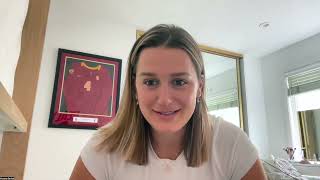
In this episode of The Hidden Artists, host Natalie Dayan interviews Victoria Garrick Browne, a former USC student‑athlete who transformed her own experiences with anxiety and depression into a platform for mental‑health advocacy. Victoria recounts how a personal crisis led to a TEDx talk, the founding of a nonprofit, and recognition on Forbes 30 Under 30. She explains the evolution of her career after graduation—from a public‑speaking tour to a pandemic‑forced pivot toward monetizing social media—and shares practical advice for listeners navigating uncertainty. Key themes include finding clarity amid social‑media overload, managing loneliness and the inner voice, time‑management techniques such as batching and delegation, recognizing and preventing burnout, and the role of education versus alternative pathways. Victoria concludes with actionable steps for graduates feeling lost and hints at her upcoming personal focus on family and working smarter, not harder.
Chapters
Yeah, Garrick Brown, thank you so much for being on my podcast. I so very appreciate you. So me and Victoria, you know, I remember seeing one of Victoria, like coming across Victoria's account when I was at USC and I was like, oh my God, she went to USC. She's so inspiring, you know, the way she turned her pain into purpose and just has been such a great advocate, had a TED Talk, you know, started a nonprofit organization inspired by her own struggles, has now made it to Forbes 30 30 Under 30 and is now on my podcast, which is a big thing because, you know, I remember meeting you sometime in October 2023, 25th October. I've written down the date when you came to USC. And I remember just randomly asking you, you know, if you could be on my podcast. I had no idea that you'd actually say yes to this. So I mean, I can't even thank you for taking the time out for this. And it's such an honor to have you here.
Of course. Thank you for having me. I'm So glad to be here. I mean, I know what it's like to be a USC student. I know what it's like to be a USC student who has a podcast. I know how hard it is to get guests and to grow your show. So anytime I can give back, especially to the USC family and help support the work that they're doing, I love the opportunity. So thank you for inviting me. I'm honored.
Thank you so much. So I know that whatever I said about you is so much lesser because only you can define or tell us more about yourself in your own words. So I'm sorry, I'm so nervous. I look up to you so much that I'm, you know, literally shaking right here.
Don't worry, it's just me, girl. All right, all right.
So could you begin by telling our guests more about who you are, more about yourself, what your experience is like, and how do you get to where you're at?
I mean, yeah, of course. So, um, I went to USC from 2015 to 2019, and I was studying journalism and I thought I'd be a sports reporter, but as an athlete myself, I realized that I thought that there was a bigger story to tell and it was really about the mental health of athletes. And I grew incredibly passionate about that conversation because of my own experiences with anxiety and depression as a student athlete. And it was really that which kind of brought me down this path that I really hadn't planned to go down. But just, you know, sometimes in life you go through something or a door opens and it's not expected, but you want to just walk through it. And that's really what I did. And I delivered a TEDx talk to share my story. And then from there, just kind of kept connecting with people and building the stepping stones that ended up being the foundation for the business that I have today.
Right. I really appreciate you sharing that. But let's go back to the basics. So, you know, a lot of people, you know, straight after high school don't really know what exactly to do in life. So let's go back to realizing when was it— when was the first time that you realized that you wanted to study broadcast journalism?
You know, I think I knew I always wanted to be like a performer in some way. I liked being on a stage or in front of a camera. Like, I really enjoyed that growing up, whether it was singing or being in a play or presenting in front of a whole class. So I think I knew, like, I'm not passionate about, like, theater, so I don't think I want to be an actor. I don't think I'm going to be a singer, although I would have loved to be a pop star. I think that's everyone's dream. So I thought, like, okay, it looks like being a broadcast journalist is that perfect place where I can like be in front of the camera and I can be, you know, commanding attention in that way. And then also talking about something I really love, which is sports. So that's just like what I was gravitating towards. I never really felt like this is my calling. I think I was just like, this maybe makes sense, which I think a lot of students can relate to. It's like, okay, this makes sense, but you know, do I feel like really connected to it in my soul? And I, I don't know. I don't think that I did. But I also didn't— I also was like, maybe I'm too young to really know my purpose. So I didn't worry about it too much. But then, you know, once I got there, you know, things changed.
So when— so I know that, I mean, everybody studies something and in the end they end up changing careers, realizing that's not for them. But during your path, you realized that there was something that clicked, which made you realize that, okay, you know, I need to turn my pain into purpose. So what was it that made you— like, what was that point and why specifically you chose the topic that you chose today?
Yeah, you know, I really didn't think about it that strategically at the time, which even for me to say is wild because the person I am now, at least even in business, like everything I do has like strategy behind it or I'm trying to optimize and I'm just trying to be like a high performer in all these ways that when it came to sharing my story, it didn't feel like, oh, this could be a career. I mean, I didn't think if I give a TED Talk, I'm going to speak again on a stage. I thought like that was the first time I'd ever given a public speech. So, you know, I think for me, I was just like really struggling and I was desperate. And it was like my cry for help was feeling like, hey, I don't think anything else matters. I don't think the grades I get in school matter. I don't think, you know, this silly, worrisome problem between my friend group matters. Like, I'm really unhappy and I see these other athletes who are struggling and no one's talking about it. It kind of felt like I just realized, like, everything else felt so superficial. And all I cared about in that moment was like being heard and being seen because I felt like I was in so much pain and I was so alone. And then the beautiful thing about life is that when you are authentic and you do step into your power and you listen to your heart, I mean, beautiful things come from that.
Absolutely. I love, I love that you shared that you came from a place of love and wanting to help people and just, you know, wanting to turn your pain, what you felt, into purpose. But, you know, how is it like from that point until after graduation? Did you ever ask yourself that question, that graduation, now what, what next? Especially when the people around you were, you know, ending up getting jobs and doing something which you know, maybe they didn't want to do, but then for LinkedIn or, you know, for the world, it seemed like a real career.
Yeah, I was lucky to have kind of started this as a sophomore. So, you know, my junior year I had a YouTube channel where I was sharing more about my life and experiences as a student athlete. And then my senior year, you know, I was like really thinking more critically about the brand that I was building and the story that I wanted to tell and how I wanted to impact people and kind of connect with the sports community. So by the time I was a senior, I was already visiting high schools and colleges speaking about mental health. So it was becoming clear to me like, hey, this could be a career. And so when I was graduating, of course, I had the identity crisis of like, I'm no longer a volleyball player. What does that mean? But I did feel this confidence because I was passionate about public speaking. So I went right into public speaking and my first year out of school was on a public speaking tour around the country visiting different universities. And that was definitely not traditional. And I remember my parents, you know, wanting me to explain to them like, hey, here's how this works. You know, I kind of looked at like how much money I thought that I was gonna be able to make as a public speaker versus like what the entry-level job would be for a journalist out of school. And it was really comparable. And so like, you know, I was able to be self-employed like from the moment that I graduated. And of course, when the pandemic hit, you know, my last few engagements were canceled and then it was like, pivoting to monetizing social media, which just opened up many more doors that I didn't know were there. So it happened really naturally. But to your point about like, you know, what looks good on LinkedIn or what is like the right thing to do next, I would just say, especially to students and seniors, you know, life is precious and you deserve to be happy and to do something that you love. And, you know, if you're accepting this job but you go to bed at night and you know it doesn't make you happy and it's not what you want to do, like, is there something else that you can try instead? You know, my husband Max is almost 30 and he is just now like finally feeling a lot of clarity on like his career and his work and he's almost 30. So this pressure for young people to be 21 years old and know exactly what they want to do and what ladder they want to climb, it's too much pressure.
I love— I mean, first of all, thank you for sharing that because I feel like every single point of time in your life. Once you, you know, graduated, or once you, you know, compare yourself to people on social media, just be like, you need to have a clarity on what is it that you love. But what is it that you recommend for people who don't know what next to do in life or don't know what they love? Because everything you see on social media just clouds your brain to the point that you just don't know who you are as a person. So what would you recommend someone do that to get that clarity? Yeah.
Well, I would say let's put the phone down because I, you know, and that's probably ironic coming from me, but like, it can be really overwhelming to just consume and consume like all these people's content and everything that they're saying and everything that they're doing. It's like sometimes I think about human beings like hundreds of years ago, you know, all you knew that was happening in the world was literally in your small community, your small village. And now it's like you can open your phone and you can literally watch a live video of someone like on the other side of the world and see what they're doing. And there's millions and millions and millions of people and, you know, hundreds of millions of social media accounts. It's just I don't think our brains were designed for that much input. So I think like a cleanse is really good. Like if you're feeling overwhelmed, if you're feeling like you're not sure, you know, take some time to be with yourself, you know, and do a little bit of a cleanse from social and spend time with the people that inspire you and journal and like take some time to kind of almost like filter out the toxins and like get the water clear. And then I would say like, let's just get really high level. Do you like working with people? Do you like working alone? Do you like working inside? Do you want to be outside? Do you like traveling? Do you not like traveling? Do you like leading and managing people, or do you like being told what to do and executing a plan? You know, let's just ask ourselves like the really high level questions, get your answers, and then be like, okay, this is a job that is similar these traits or characteristics, you know, I want to be doing. So, you know, I would start there and then you can always get into that environment and say, actually, I want my work to be more purpose-driven and I, and I want to be outside even though I thought I want to be inside, you know, baby steps. And someone else might have a perfect plan or someone might say that doesn't make sense. Why are you going to go here and now you're going to start a new job? But it's your life and you're the one that has to close your eyes and go to bed at night and be happy with your life. You know, not this person who's criticizing you. And people who are criticizing you are probably not happy with their own lives, and they kind of like to keep everyone miserable because they never took a chance on themselves and they never went and chased their dreams. So why should anyone else get to? So, you know, you just have to kind of like block out the noise and just be really engaged in the process.
So how do you That was a great answer, honestly. Just put your phone down and just focus on the internal voice in your head that's telling you to do something. How do you think one could deal with loneliness and the fear of missing out when putting down their phone while at the same time realizing which voice that they hear in their head is theirs versus which voice is the one of their family members or the external noises that's telling them to do something which probably their internal voice is not.
Yeah, Natalie, that's an amazing question. It's really difficult to figure out like, what do I actually want or what's my conditioned way of thinking based on like what my parents have said to me and what society has said to me? I mean, to your first question about loneliness, I would say we need to learn how to be like our own support system and how to be alone. You know, there's one of my favorite quotes is like, it's something along the lines of like, like humanity's biggest issue is the man's inability to sit quietly in a room alone. It's something like that if you Google it. And it's so true. It's like the world's biggest problem is people can't sit alone and quiet, like, a.k.a., where's the inner peace, right? There's not a lot of inner peace. There's all this like chaos we're all living in the world. So, you know, I would say like spend some time to be alone. It's going to be uncomfortable. You're going to have FOMO. But like, can you lean into the discomfort and can you try to self-soothe? You know, I try to do that a lot because I'm not perfect. I love to be with my husband. I love to be with my best friends. If I get in the car, I call someone. If I walk somewhere, I call someone. It's hard to be alone because then what does that mean? Your thoughts are going to come up and you're going to hear them. And that might not be fun, but it's important to expose ourselves to that and kind of push, push the boundaries. And then, you know, how do we know which thoughts are ours and which are from other people? Reflection, therapy. I'm a big fan of therapy. I've been going to therapy on and off for 8 years and just getting to know myself and question things and develop self-awareness. And I'd say to anyone who's a really, really intrigued by this. My best friend Aubrey and I read a book called A New Earth by Eckhart Tolle. It's incredible. And we did a podcast series called So Much to Say underneath my podcast, RealPod, and we talk all about the voice in our head and trying to figure out why it's there.
Well, that's something which everyone should listen to right after this.
I feel like you would love it, Natalie, if you haven't seen it or heard of it. I think you'd really enjoy it.
I really think I need to go back to it right after we're done with it. So my next question was, I know that in this day and age, like you, we all feel like we need to explore different passions of ours and not just box ourselves into a specific career, which the whole world says that, you know, 9 to 5, just be a finance pro, don't do anything else, or else you're, you're dumb or you just don't know yourself. But for those people who have who are multifaceted, who have different passions and talents, how do you think they should go about A, pursuing them, and B, managing their time in a way that they don't just half-heartedly or half-ass different things and just are good at it? Because you do it. I mean, you've done so many things. You have accomplished so many things and are successfully doing it. So I feel like time management tips or, you know, whatever it is that you feel one should, one could do in this.
Yeah, you know, it's tough and there's a lot of multitasking at play, especially as an entrepreneur. And I'd say something that helps me is really trying to kind of like batch my days and it helps my mind not be so all over the place. Like, okay, today I'm going to do emails and I'm going to do calls and I'm going to work on the nonprofit. And tomorrow is podcasting. I'm prepping for the interview. I'm recording the interview, I have another interview, and then I'm going to do the ads reads afterwards. And then maybe on the next day I'm filming content, you know, and I'm going to be editing and in front of the camera. So for me, it's helped to try to just like really categorize and batch the days at which I'm doing different things because it can get really overwhelming to wear like 7 different hats every single day.
That's a great way to be able to deal with all of these different things that you're doing. So do you ever feel like you've burned out? And if yes, how do you deal with that burnout and kind of recharge yourself to get back at it?
Of course, I have definitely experienced burnout. I would say that every time I do experience burnout, I try to like think, okay, how did I get to this point and how can I prevent it? And so I'm always trying to optimize my calendar and my schedule and my business and how I'm approaching things. So You know, over the years of my burning out, I've just learned like, you know, how much travel I can really do in a month. And it might not— like, it's gonna be less, you know, I'm gonna have a limit of I'm gonna do this many trips a month and like, that's that. And if someone else— there's an opportunity that is out of state, we just gotta put it on a different month or unfortunately I have to say no. And it's really hard to say no when you wanna do everything and everything's awesome and fun. But I've had to learn how to say no and, you know, remind myself that like saying no to this is saying yes to like balance and saying yes to avoid the burnout. Like remind yourself like why you're putting up the boundaries. You know, I'd also say I— what are some other things I've learned from burnout? You know, I think it's important to ask for help, whether you're just like asking someone in your life like to get dinner with you or to talk to you because you're struggling or for me me, like I'm super hands-on and I'm very much type A. So to delegate things and have people do things instead of myself doing them is really tough for me. I want to do everything, but as things grow, you have to delegate. So I've learned to do that and just kind of let, let go of the steering wheel. So my grip's not as tight.
I appreciate you sharing that. I mean, as somebody who's also type A, I struggle with that. So, and I also love that you said that. Saying no to some things means that you're saying yes to so many things that are so much better for your own self. But like, quick take on this: what is it that you think about school and success? Do you think that one needs to go to school to be as successful as you are, or just to be anywhere closer to their goals in life?
I definitely think having an education is a huge privilege, and it's something that if you make the most of it, you know, of course it's going to benefit you. I think, you know, especially going to a school like USC, there's so many opportunities, there's so many amazing people that you're in class with, that you're learning from, that you're walking across on campus. So, you know, I was super grateful for my college experience and I don't know where I would be without it. And I also know there are many famous and successful people who dropped out of college or that or they didn't go. So, you know, it's tough to say, you know, it depends on a person's situation. It's like that's something each person has to once again get quiet and deep and really ask themselves, like, what do I want with my life?
Got it. So what advice do you have for people who are, you know, maybe graduating, graduated, or, you know, kind of feeling lost and don't know, you know, who they are as a person or want to be where you are at?
Um, gosh, I wish I could say one thing and it would make those people feel purposeful and like they know who they are and could kind of take the cloud off of them. But unfortunately, you know, I guess the advice I could give is like, if you're feeling that way, like start somewhere, order the self-help book your friend said really helped them, make the appointment with the counselor, call someone you love and tell them how you're feeling. Like you have to take the first step. You know, if I think about my life in steps, I've had thousands. And it's like, you know, you only get somewhere by, by moving towards it and taking action. So it's like, yes, you know, you're going to sulk and you're going to sit in this funk. But then one day you have to say like, okay, I need to make my first step and what's it going to be? And I think slowly then you read the book and the book inspires you to think more about, you know, a new topic, and then you start to learn about it, and then you see there's a job that's related. You know, you never know how things connect, but you have to make that happen for yourself.
So let's take the first step. That's, that's what we get to. All right. One last question. So what's next for Victoria Garrick Brown? And what is it that you wish I asked you, but I did not?
Well, you did an amazing job and asked me some really thoughtful questions that I loved. What's next for me? My brother's getting married this month and I'm trying to slow down and take time off to be with my family and enjoy the summer. I do think there is such thing as working too hard. I'm trying to work harder. I'm trying to work smarter, not harder these days. And no, I thought all your questions were amazing. And I'm so glad I got to connect with you after meeting you at that speaking event. And I admire your ambition to have your own podcast and your courage to ask me to be on it.
I appreciate you. Thank you so much, Victoria, for taking the time off for this. You have no idea how grateful and how much I've learned from you. And so I'm pretty sure so are the people who are going to listen to this. Take away from, you know, some amazing insights from what you just shared with us.
Of course. Thank you so much for having me, Natalie. I appreciate it. And I'm wishing you all the best. Keep me posted on your journey. I want to know what you're up to.