"The Hidden Artists" Episode 9 with Singer/Songwriter Jack West
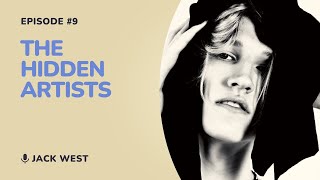
In this episode of The Hidden Artists, host Natalie Dayan interviews 18‑year‑old singer‑songwriter Jack West. Natalie discovered Jack after his Instagram liked a post of hers, leading to a conversation about his rapid rise. Jack recounts a pivotal moment at age 12 when he sang with Eddie Vedder of Pearl Jam on a Nashville stage, an experience that sparked his commitment to music. He describes his early development—piano and guitar lessons from age six, a teenage recording session in Seattle with a producer linked to Nirvana and Foo Fighters, and the creation of his first studio album at 13. The COVID‑19 pandemic prompted him to record his second, more personal album Numb in his bedroom. Throughout the interview, Jack discusses dealing with self‑doubt, the confidence boost from performing before 30,000 people, and how he balances school (now a senior in high school) with touring and releasing music. He outlines his musical influences ranging from classic rock (The Doors, Pearl Jam) to modern electronic acts (Daft Punk, Foster the People) and cites Lana Del Rey as a favorite contemporary artist. Jack shares his perspective on fan engagement, the importance of Instagram and social media, and the supportive role of his family. He offers advice to aspiring musicians: stay authentic, don’t let labels or managers dictate your art, manage time by working late nights, and treat music as a fun, creative outlet rather than a burdensome career. The episode concludes with Jack promoting his upcoming music and thanking listeners.
Chapters
Hi guys, I'm Natalie and this is Jack. So apparently, uh, it's very crazy how I happened to meet Jack. So I met Kid Laroi at The Grove in Los Angeles, and I, um, you know, I just posted a picture of it on Instagram and Jack just happened to like it. And then I was like, wait a minute, who's this guy? I mean, you know, he had a blue tick mark in there. I was like, Okay, maybe some artist, probably. And then I checked out his profile and then I was like, oh, this guy's really dope. And then I went out to listen. I think the first song I listened to yours was 21, and then I went on to listen to some more of his music. And then I realized that Jack just turned 18 and the time when he wrote it was 17. And, and, and Jack's not just an artist who's like, you know, has had his music out there, but he's like, uh, you know, being doing tours and has an album out already, something which is so rare for someone who's an artist given the self-doubt and, you know, all the different emotions that you feel about putting your own story and your own work out there. So props for you for doing that. Um, all right, so I'm just gonna stop talking and let you continue. So maybe why don't you introduce yourself to all the audience out there in your own words.
My name is Jack West. I'm originally from Rochester, New York, and I've been making music for about 8 years, 9 years. I just turned 18, so we'll see what happens.
All right. So I know a lot of people struggle with understanding what is it that they love and what is it that they want to do full time. So for you, how did you realize that music was for you and this is what you wanted to do as a career?
Um, when I was 12, I got the opportunity to sing with Eddie Vedder from Pearl Jam on stage in Nashville in front of like 30,000 people, and that, uh, that kind of like changed my life or perspective on what I wanted to do in life. And from then on out, you know, It was just 100% music and I haven't stopped since. But prior to that, you know, I was taking piano lessons and guitar lessons from the age of like 6 and up. So, you know, it's only progressed from there.
So wait a minute, you said you sung in front of 30,000 people?
Yeah, when I was 12 at this festival in Nashville, Nashville, Tennessee. I don't know if you know the band Pearl Jam, but—
I do, I do.
Yeah, yeah, yeah. I got to sing with Eddie Vedder on stage at this festival and it was super crazy. Like, the video went viral on YouTube. You know, not crazy, but it got some attention and got some fans from it for sure. So—
Wait, how did that happen though? I'm really curious to know. I'm sure everyone is.
Yeah, and I, um, earlier in the day I was, uh, in the lobby of my hotel I was staying at, and Eddie Vedder happened to be staying at the same hotel as me. And, uh, as he was leaving to go to the show, I ran into him and I asked for a picture, like a selfie and all that. And then I asked, you know, if I could sing with him, um, that night on stage, and, uh, he said yes. So, you know, I went to the show And I got to practice with them backstage, you know, I got to watch the show from side stage. And I went up to sing with them at the end of the night. And, you know, something I'll always remember for sure.
Wow, that sounds amazing.
Yeah, no, it was.
I think it was, it was meant to be. And like, it was for a bigger reason why you got all of that opportunity. Because, I mean, something had to happen for you to get to where you are today. And that was, I think, one thing. So, um, so that was like something which made you realize how— was it like the love that you got from your fans, like the people out there, that made you realize this was for you? Or how is it?
Because it was a combination of that and just the fact that, you know, I— you know, the fact that I just played in front of 30,000 people, I just thought I could, you know, if I could pull that off, you know, I could, I could do anything in the music world. But even though there's a lot to still do It just gave me a lot of confidence, I guess you could say, for sure.
So how do you— so like kind of retracing back to where you play, how did you get into this? So like after you, you know, had the— after the opportunity to sing in front of 30,000 people, so what was your next step? Like how did you, you know, decide that I'm just going to do it full time? Because I know a lot of self-doubt kicks in as well. And I know you had the opportunity to do that for 30,000 people, but like, still there is this human element or something which we all go through. You know, how do you just deal with that self-doubt and just feel like, you know, I'm just going to do it irrespective of whatever is out there?
Um, well, after that, you know, I was already like playing shows in my, you know, local town or whatever, you know, like shows around the town. And, uh, you know, I started to progress from there. I went to Seattle for, uh, a month when I was 13 to record my first album with, uh, the producer who produced, uh, Nirvana and the Foo Fighters. So I did that, and that was— and that only happens because the producer, um, found me because I sang with Eddie Vedder. You know, he like saw the video or whatever and started following me. So a lot of connections came from you know, that one opportunity and it led to a lot of cool things. So, you know, I mean, I just try to write music and, you know, tour, play shows, do the best I can.
Wow. So you said your music, your song, like the video went viral. That was what led you to get the opportunity?
Yeah, yeah, it did get quite a lot of views. You know, it didn't get like tens of millions of views or nothing, but it got quite a lot of views, especially for the Pearl Jam fans. They really clung on to that. I gained a lot of Pearl Jam followers on social media and stuff, so that was cool.
That's true. That's really big. And then you began writing your own music and now have an album out of yours. So, I mean, could you tell me more about what the process was like and how do you deal with self-doubt during that whole process? Because I feel like, you know, a lot of artists have the passion, have, you know, the talent, but what they really are scared of is failure. And like, obviously, you know, when you're putting a personal work out there, there's always this element of how it's going to be perceived by the audience. So how do you deal with that and what is it that you feel helped you? During that whole process? Like what training method, anything?
Well, with my— I have 2 albums out, and my first album I recorded when I was 13, like I said. That was, you know, I spent like 12 hours a day in an actual studio with a producer, you know, fine-tuning these songs I came in with. And my second album though, you know, it was during the whole quarantine stuff with COVID and I recorded it in my bedroom all remotely. And that was a more like personal album, like, you know, about, you know, my personal life and that kind of stuff. But, uh, I mean, between the two, I definitely say my second album, Numb, which just came out in May, was definitely more of a, you know, therapeutic way of writing, I guess you could say.
But, uh, yeah, I think that was the one I was listening to sometime back, and then I was like, whoa, like, like, I mean, I mean, even though I probably, you know, I don't know much about you because it's probably the first time you're speaking, but I could really tell about, you know, I could understand where you're coming from and like, you know, the way you put forth your music. I mean, the words really resonated with me, and I'm sure it did with a lot of people, which is why so many people show up for your concerts, for your shows. And, um, so what is it that, um, okay, so maybe, uh, what, like, who are your musical inspirations? And like, what, like, what's the vibe that you go for with your music? Because I see a lot of different, you know, mixture of genres.
Yeah, that's interesting you say that. Well, I grew up listening to The Doors and like the Red Hot Chili Peppers, Pearl Jam, you know, a lot of like '90s, '80s, '70s stuff, Pink Floyd. But, you know, when I like turned 14 or 15, I started listening to like electronic music, like, I don't know, Foster the People, Daft Punk, that kind of stuff. And I really just expanded my horizons on musical genres. And that's interesting you say there's a lot of genres in my music. I mean, I know you're asking me stuff, but what genres do you see my music as? I've just been curious for someone who listens to my music, how they perceive it.
I see a lot of '90s and '80s along with some pop music. Not like pop. Is it correct? Am I getting it Right, yeah, yeah, yeah, yeah, yeah, yeah, definitely. Because I feel like, I don't know, you listen to music, makes you feel like you're more of like an old soul. Something that I get told a lot, they're like, they're like, you're so young and like, how you, you know, asking the kind of questions that you do. And I see that same in you. I feel like your music is so old soul, like it's such an old soul that it's seen in your music. And I feel like that's why probably of like such a wide variety of audience, like from the young to the old. And so how's it been like for you? Yeah, I know, I mean, I think you should continue because I feel like you were saying something and then we went on a whole another tangent.
Yeah, my bad, I didn't mean to throw you off your course.
No, no, no, no, no, it's good, it's all good.
I don't even know what I was saying before, to be honest.
Oh, you were talking about your musical inspirations.
Yeah, so lately, you know, I've been listening to a lot of electronic music. You know, I listen to like Ian Dior, Foster the People, Lana Del Rey. I like Lana Del Rey. She's my favorite female artist. You know, it really just is a wide variety from punk to pop, classic rock to rap, to everything. I literally listen to everything.
That's good. I mean, I love Red Chili Peppers. I love Lana Del Rey. I love I.N.D.R. I like her too. Yeah, I mean, those are like my— They're like one of my favorite artists. And like, you know, it's funny you mentioned them because I definitely see a lot of that in your music. And of course, your own music, original music taste, and like your own, you know, your own— I see more of yourself in it, but also at the same time, more of like the inspiration that you gather, which is what makes it so much more interesting and diverse. I mean, makes up for like more of like a diverse music genre. So how's it like for you, you know, being around fans, being around people who you, you know, or what is it like? Is this something that you, you know, dreamed of? Is it something that you kind of, you know, knew that you would have one day? Or like, you know, what is it like for you?
There's still a lot of progress to be made as far as, you know, um, I'm not a superstar or anything, that's for sure. I'm, you know, I mean, but of course Everyone thinks that way. Yeah, yeah, yeah, yeah. But, you know, I do, I do love the people who, you know, rock with my music and stuff and listen to me and, you know, come to my shows, buy my merch, you know, because without any of that, you know, I wouldn't be able to, I wouldn't be able to do anything I, you know, I could do, you know, without like people listening and, you know, following me on social media. You know, I am grateful for it and I appreciate it. And it's something I wouldn't imagine when I was 10 or 11, that's for sure. Especially in school, I used to be, I used to be like really a studious person, like very academic, but I kind of gave that up for the music, you know, kind of just flip-flopped the other way. So. Here we are, I guess.
Yeah, I mean, of course. I mean, you can't just do everything at once. You've got to, you know, compromise on one thing or the other. So, I mean, writing music, was it ever daunting to you? Was it ever like— do you ever like feel distracted by your own emotions when you were writing? Like, you know, some people say that a lot, like they get on Instagram. I mean, I It happens to me too sometimes. It's like when, when I'm writing something personal, I just feel it's so overwhelming that I get drifted away. I mean, do Instagram, and that kind of, you know, ruins the whole experience of, you know, writing things down because they're meant to be personal and they're meant to be daunting, which is why we do it. So how's it— was it something that was a challenge for you? Or like, if it was, how do you deal with it?
Starting out writing, you know, I like produce my music too. Like, I, you know, play the keyboard, I play the guitar, I play the bass, I play some of the drums. I, you know, I mostly do it all. So when I was like learning how to do all that stuff, you know, when I was like 14, 15, it was, you know, it was pretty daunting. It was pretty— I didn't think I'd, you know, I was like, this is gonna take years to learn how to do like you know, there's so many different things and, you know, stuff you gotta, you know, be aware of. But, you know, now that I'm more experienced with it, you know, I find writing, you know, writing is one of my favorite things to do. You know, I'll stay up all night long and record music in my room, write, you know, just write about what's on my mind, you know what I mean?
So it's not so the Instagram or any sort of thing that hasn't ever been something that distracts you?
I mean, I guess I personally, I take my Instagram very seriously. I wouldn't say I get distracted from other people's Instagram accounts. You know, I don't, you know, like, think of in a jealous way or get distracted. But I certainly take my Instagram seriously and think it's a, you know, important part of being a musician for sure, and I spend a lot of time on it. So, but, uh, yeah, I mean, it's good to— it's a good thing to have to showcase your music for sure, right?
And you feel the pressure to compare? I mean, I know you said right now, but do you feel like the pressure to compare yourself? I mean, do you ever feel like you somehow just inherently compare yourself to other artists and feel like So does that pressure weigh on you, that pressure to like constantly get better? Is it like a good pressure or like a pressure that throws you off the tangent from what you're doing?
No, it's usually a good pressure because it just makes me, you know, like just drives me to become more successful than they are. Just, uh, you know, I just strive, you know, to be better than, you know, everyone else. Not in a selfish way, but just in a way that like, you know, makes me feel better about what I'm doing and just the quality of work I'm putting out, you know what I mean?
Yeah. So like, yeah, so you also mentioned that to, you know, do all of this, you had to give up on school or like—
I didn't completely give up on school. I'm currently in my senior year right now of high school. But, you know, like I was saying, when I was in like 3rd, 4th, 5th, 6th, you know, even 7th grade, you know, I took school pretty seriously. Like I was pretty smart. I got pretty good grades. But once like that whole thing happened with Eddie Vedder and the Pearl Jam thing, I just— just like something clicked in my head and I just completely— I didn't care about school. Like, I didn't care about, you know, doing my homework or any of that. I mean, I know that's like not like the greatest thing to say, but my focus was 100% on music and nothing else. But, you know, I made it to senior year in high school, so I'm graduating, and I'm graduating in 5 months, so it's all good. That's all good for sure.
Mazel tov on that. And, um, it was, was how Was your family like, did you ever feel guilty about, you know, not being that good kid and focusing on what you really love? A. And B, was your family okay with you putting in like 100% efforts into your music rather than academics?
My parents are very supportive, and especially my dad. So they think, you know, I should do whatever I think is best for me and whatever I love to do. And, you know, I just went into it with like no backup plan. Like, you know, it's either like, you know, I'm doing this music thing like 100% or I'm not. So it's just either like, you know, not make it until you break it, but just like, you know, I had to make it. I just had to make it work somehow. You know what I mean? And I have made it work for the past 5 years. And I only got like 5 months to go. So, wow.
Yeah, that's— yeah, so it's like just go all in. And you never felt guilty about doing all of this because your family obviously supported?
Yeah, yeah, I wouldn't say I felt guilty.
Right. Yeah, that's, that's cool because a lot of people, like at least me, if I want to pursue something that I feel drawn to, if I'm Yeah, if I'm not— like, I've always been that one, so I understand. But it's good that you don't feel the guilt.
Yeah.
Um, so I mean, obviously also now that you're getting love of fans and going on tours, so what do you like— what exactly would you like to tell your fans about? Like, you know, especially if somebody's listening to your music for the first time now, what is it that you want them to know? A, like the ones who show up for your art. Oh, I'm sorry, I cut you off.
No, no, no. I guess for the ones listening to, you know, particularly to my new album, for anyone listening, I guess I would want them to know that, you know, I wrote that whole album about like the last 3 years of my life and just like, you know, the ups and downs of it and, you know, the things you know, I went through, others went through. And I, you know, like you were saying, I think it's a very relatable album. Like you were saying, you listened to the song 21, right? You know, I just think, I just think it's a very relatable album and I want people my age or any age, but you know, you know, maybe for my age, it might be a little more relatable to just, you know, have something to go off and just have something to, you know, feel like they can listen to and connect to and just appreciate, I guess.
Yeah, I listened to more than just 21. I listened to Montreal. I listened— I mean, it just went on because when you like play one song out of it, you know, on Apple Music, the whole album starts playing. But like, I, I mean, I honestly just— yeah, I mean, I, I love the whole vibe that you've created with the home, they say. And for the art and for the fans who support you all the time, what is it that you've got to say to them?
Um, you know, thank you for coming to my shows in the, you know, in the cities I come to. Um, thank you for buying my merch. Uh, you know, it's been, you know, I haven't been doing this crazy long, but it's felt like a lifetime of playing music and putting music out. And I got a lot more coming on the way. So, uh, you know, I'm only 18 and We're just getting started, right?
Yeah, that sounds good. Um, also, like, what, what, what is it that you— I mean, I'm not gonna say 5 years down the line because that's crazy. The whole world— if the whole world could change in like one day, then, you know, who am I? Like, who am I to just ask someone about like 5 years? Because nobody knows what's gonna happen today or tomorrow. Um, but like, what do you So what's your plan for like, what do you see yourself doing after you graduate from high school?
Well, this past summer I lived in New York City, so I had to come back home to my hometown to finish school. So I'd like to move back to New York City in the summer. That's where my band lives. That's where, you know, I love New York City. You know, I grew up going there. I go there all the time. And It's just the place I want to be. It's a great music scene. And, you know, as far as shows and putting out music, you know, I'd love to be able to like, you know, sell out big venues and just, you know, travel internationally, you know, South America and that kind of stuff. That'd be sweet. But yeah, I mean, the next 5 years, I definitely would want to be touring bigger venues, you know, getting my streams up, getting my social media numbers up, just, you know, progressing and seeing, seeing where this all takes me.
I definitely see that happening. I mean, I don't just mean it because I'm interviewing you. I'm not saying it for that sake, but I really see that happening.
Thank you. Thank you. I will see.
Yeah. Also, 2 more questions. A, what is it that you feel like you wish you knew when you started that you now know?
I guess not to take it— I guess not to take all the music stuff so seriously. I mean, I stress myself out way too much. Like bad and, you know, just like overwhelmed and that kind of stuff. So, um, I guess I would just say, you know, it's, uh, more fun than it is serious. And just create what you— create what you want to create and don't let anyone tell you, tell you, you know, different.
Right. And, um, for those who want to pursue this full-time, what is it that you would want to tell them? And also probably, uh, any advice that you'd want you want to give them in terms of like getting representation, in terms of like a manager or something of that sort? Like any advice that you feel is necessary for someone who wants to pursue this as a career but is scared of doing it?
Yeah, um, well, like I said, I mean, you know, don't let anyone tell you, tell you different. Like, do what you want. Don't let any, you know, record label or manager try to control you or like make you wear certain stuff or make you put out certain songs or make you like do certain stuff. It should all be, you know, what you want to do and, uh, you know, how you want to like portray yourself. And I think, you know, that's the best advice I could give because I've taken that, you know, pretty seriously over the years. You know, just be yourself and don't let anyone tell you what to do, you know.
Yeah, like since you, since you also mentioned you're a student, and I know a lot of people who want to pursue this as a full-time option, I think that it's hard to do it, do both of the things at— I mean, alongside, you know, it's like either focus like one thing at a time, but you'll be managing both school as well as your music career. So any advice on people who think that it's an obstacle? Because people just Some people just like to complain and be like, oh, this is what's stopping me. But like, you, you do it, you do it both at the same time, and you've made it to senior year. So any advice on that time management, or like, whatever you feel?
Yeah, I will say it was a little easier for me because I was homeschooled for— I was homeschooled for 4 years, and I just went back to high school in in 11th grade. So this is my second year in an actual high school. But, you know, anyone in like college or school that's like trying to pursue music seriously, I mean, I know their parents aren't gonna like it, but I mean, you got the nighttime for a reason. Like, stay up, stay up late, you know, like work on your craft. I mean, nighttime, you know, after dark, the hours, you know, the middle of the night are the best time for artists to be working, in my opinion. You know, every artist I've talked to you know, makes their best music and just is most creative, you know, when everyone else is asleep. And, you know, that's what I think, at least.
Yeah, no, I've done it. I've done it. I'm seeing it that it works. Yeah, yeah, totally works for sure. Right. Thank you so much for doing this. I really appreciate you taking the time out for this. And anything that you want to say as a final closing message?
Um, no, I, uh, I got a lot of new music coming out this new year. Follow me on Instagram @jackwest32. Um, go listen to my latest album if you haven't. And, uh, thank you for everyone who's been supporting me over the years.
All right, thank you so much for doing this. I hope you have a great holidays. And for those who are listening, obviously I hope you tune in to Jack's music, follow him on Instagram, go on his— like, I mean, watch him perform whenever. I mean, of course you're gonna post those on your Instagram, right? Yeah. And your website. All right, right. Thank you for doing this. Yeah, thank you for having me.
All right, bye-bye.