The Best Business for 2025: Million Dollar Newsletters!
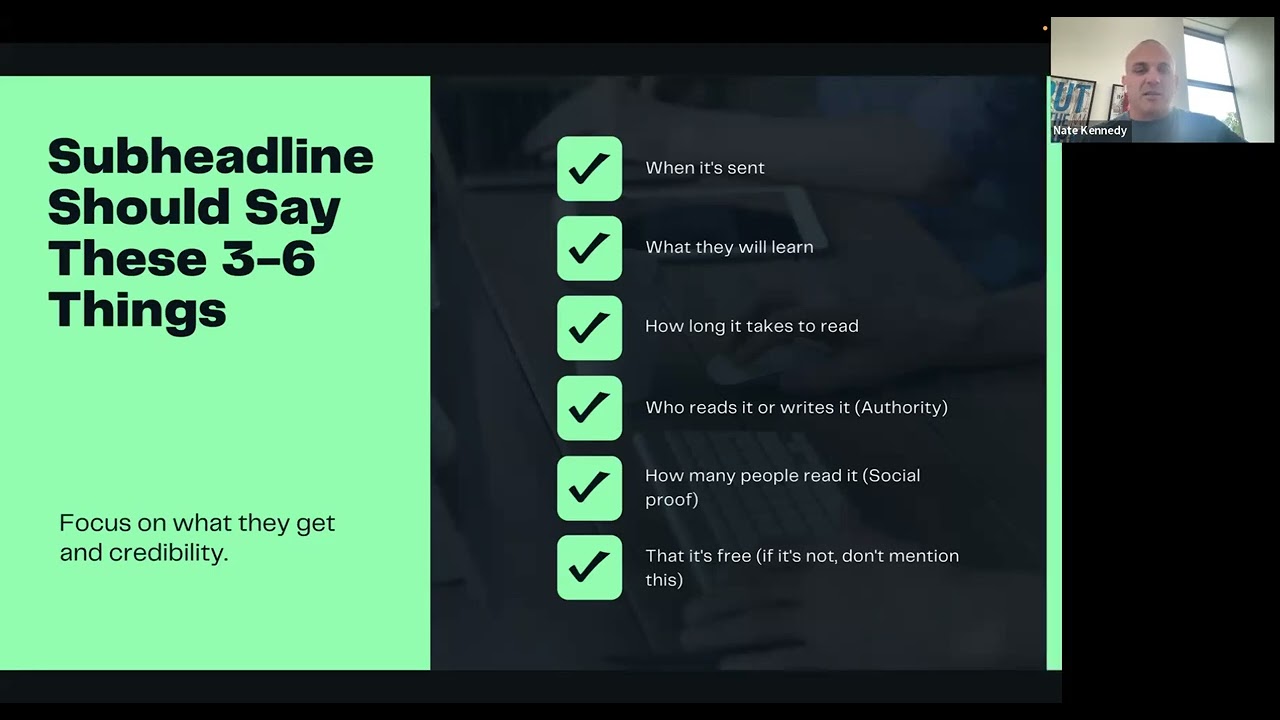
A February 23, 2024 YouTube interview in which Ed O'Keefe talks with Nate Kennedy about building and monetizing email newsletters as a business. Nate recounts his shift from real estate and running a marketing agency to building audience-first, niche-focused newsletters that sell ads, affiliate offers, and leads. He explains core tactics (owning audiences, segmenting subscribers into sub-lists, finding advertisers, simple outreach), business economics (example CPM model, typical margin range), operational setup (small team, brokers, content creators), and strategic options (scaling, acquisitions, exits).
Chapters
Hey, everybody, it's Ed o'. Keefe, and welcome to today's episode. I am super stoked because I brought on a good friend of mine, Mr. Nate Kennedy. Now, Nate, I'm kind of envious of him because I believe Nate has discovered and has. Is mastered probably the best type of business you could ever have right now in today's economy, but actually in good times and turbulent times, in crazy economic times. And if you're somebody who's an entrepreneur, loves digital marketing, loves whether, like myself, I run supplement businesses, I've had e comm companies, I've done agency work, all of those skill sets. If you're an investor, you're going to love what Nate has shared today because I think he has cracked the code on something that when I looked at it, I was like, dude, you got to tell me what you're up to. And it's called Million Dollar Newsletters. So anyhow, Nate, welcome to today's show. Great to have you.
Yeah, thanks for having me on. I'm excited to just wrap today about what we're doing and talking.
Well, dude, you kind of. You kind of frustrate me a little bit because I've known you for, what, going on 13 to 15 years now. And, you know, a few years ago, I was like, selling. I. I was helping a friend of mine, like, broker some leads and like, monetize leads and know what they were doing. I was just kind of helping the flow. And I should have. I should have paid more attention to. To what you had going on, because when you explained the other day about what you're doing with your newsletter business and your emails and how it's really the ultimate life freedom business for somebody who wants to create, like, an ATM machine lifestyle that also creates freedom. I was just. So everyone knows, I was like, dude, can I interview. Can we get you on the call? Because this is just so good. So why don't we just kind of start with a little bit of who are you? A little bit of backstory. We've known each other forever. And maybe a little backstory on how you got into what you're up to today.
Yeah, absolutely. Yeah. So we met when I was probably 7 or 8, possibly maybe 2007 at a event. So. It's a long time ago, man.
Yeah, yeah.
You know.
Yeah.
Which. Which is great because, you know, it's amazing what you can do in the virtual world of business, people you can meet. But, yeah, for me, I got. I. When we met back in the day, I was actually in the mortgage industry. And had a mortgage company and was building homes and investing in real estate and all that good stuff. And, and you know, in 2008, things really started shifting. I built up a multi million dollar company in real estate portfolio at the time. So I, you know, I was 26 years old, 27 years old. I'm crushing it, killing it. Great. Yeah. You know, my ego was big and I ended up losing everything. Right. Because I just got so focused on. I wasn't really looking at what was coming down the pipeline. I was just thinking all the success was me when at the end of the day there was a very hot market, so it was easy to be successful. And I kind of got caught up in, you know, thinking I didn't need to keep learning. So I lost everything, went completely bankrupt and I had to rebuild. And I had already at the end of that time, when I was losing everything in 2006 time, I got introduced to this Internet marketing thing and I started really kind of just playing around with it, trying it out. 2007, I started doing a little bit more and then when I lost everything, I was like, well, I'm starting fresh, let's go in on it. So I kept doing the real estate stuff. I was flipping real estate properties. But I started sending emails, I started collecting. A buddy came to me and said, hey man, why don't you put these on emails and you know, collect emails, use this system and send emails and just update people on what you're doing. So that's what I started doing. I started sending emails out, I started documenting.
Was it a certain industry or were.
You just real estate space? Okay, yeah, yeah. So my knowledge was in a. In real estate and funding. So I just started documenting what I was doing there and I started building an email list and that evolved. I got super curious and just enjoyed it. So I ended up building out from 2008. I started going really more into it. 2008, 9 and, and some of 10 I had built this business up to where all I was doing was sending emails and kind of hanging out for the day. So I wanted to. And, and I kind of. That what happened is I had a couple like Internet companies I built during that time that I sold and people came to me and said, hey Nate, can you do that for us? Can you help us with it? So that parlayed me into really being hired, turning into a more a marketing agency of all things.
Now.
Now. Yeah.
This is a curious question I have for you like on that because it's like, you know, you probably didn't realize and I've done this multiple times in my life where I transitioned out of businesses that were, were in hindsight, looking back with a little more maturity on my self, like I, I, I didn't really, I, I devalued how good of a quality of a business I had. What was it about switching from the business of sending out emails, making some cash, possibly selling off some brands, to thinking you should be into an agency or doing more stuff for other people.
So I was, I'm good at, I enjoyed the marketing side of it and I think the shift was, I always say it, you know, in the Internet world sometimes it's working so well we stop doing it, you know.
Yeah. Like it's almost a real business because it's just too easy in some ways.
Yeah. And it's kind of, and I felt I was like, well, if I get into this agency world and in the Internet when I was doing the marketing side, it was making good money and they're sending emails. But then I had clients that were paying me, like one of our first clients when I went to the agency paid me, you know, $50,000 for an upfront, you know, like 45 day commitment thing. So I was like, oh, this is nice, right?
Yeah.
And so I got, I kind of just stumbled upon that and I think for me it was more a money driven decision, thinking that I'd be able to still keep the same lifestyle but build the same type of a bigger business and make more money.
Yeah. And obviously like just, I mean it's, it makes sense, right? Like, well, you're, you're, you're banging away, but some dude just gave you 50 grand up front and you're like, oh well, if I do that 10 more times in the next three months, I just made half a million bucks. Where, you know, but you're not seeing the back end of where when people hire agencies, you know, it's kind of like I was talking to your friend Mr. X today and we were talking about like the whole like, do I need you or are we going to synergistically be better together? And the funny thing is, is that when people hire agencies, they need you, which means they're delivering all their problems on a silver platter when they show up at your front door.
Right. Yeah. And I, I had built a small team and we were building our marketing and doing all that stuff. Right. And I did a lot of it and I had a small team that was helping me with it and it just seemed okay, well, we can just now do this for clients. But it opened up a whole different realm now. I had to grow a bigger team because it was one thing working on my, my stuff. It changes when you start working on a bunch of client stuff, right? Yeah. So yeah, so I got in. That's how I got into the agency. So from 2010-11 time I started building out the agency and ran that for nine years, we did a bunch of different stuff. I remember I was like in the very beginning, I'm like, I'm going to grow the biggest agency ever. Right. I was so, you know, a little overly cocky. It was, you know, confident was a little bit cocky maybe, but so I did that and then as I got down to it and I ended up having a really big team of people and I ended up getting an office away from my office. I literally had an office of people and I went and rented another office that so I could just be by myself. So I wasn't enjoying even going to work. And in my, the company that I created, environment I created and it was because it was so everyone, I was a bottleneck. Everyone's coming to me, a lot of questions, a lot of client solute, you know, problem solving and fires putting out. So there's my kind of my way to get away and get stuff done. And then I'm like, you know what, I'm done. I was like, I'm not going to run a big agency anymore. I'm just going to go get clients that pay me a lot of money, I'm going to reduce my staff, I'm going to pay me a lot of money for my knowledge and expertise and my team will still operate as their virtual cmo, but we'll just take less clients, bigger profits, right? Yeah. And the problem there is, as great as that was to solve my immediate problem that I had. It created a whole. Another long term problem is we didn't have a company that could grow and we got stuck on profit. Like I, you know, we, we got to about a million dollars and we're just capped out every year over year and there was no growth. And the only way that I saw making more money and when you're making a million dollars in gross revenue, you know, that sounds cool. And a lot of business owners say that's their goal. But yeah, when you got a team of people, you're not making that. And what, when I had that realization, I was like, I'm making a million dollars in the company, I'm not making the company's making a million dollars. I'm not making a million dollars. Right. And so what is it? Typical. Yeah.
Nate, what's, what's a typical agency? Like, you know, like, net profit on. What do they operate on? Usually?
Any, you know, I was operating between 30 and 35% for my company.
Yeah, good.
Yeah.
Which is good. But you're working your ass off and you're, you're managing, you're managing a lot and you're. Yeah, got it, got it, got it.
So over that nine year period, kind of all this evolution happened with building that. And then on my 40th birthday, it's kind of that changing moment for me. And I, I ended up, I was at dinner, I was. Lived in San Diego at the time, but we had flown to Florida to hang out because we were thinking about moving to. Thinking about moving to Florida, back to the east coast side. And I'm at dinner with my wife and kids, and I get a phone call from a client freaking out, you know, about a mistake they made and they wanted me to fix it. I'm like, man, this is in the evening time on my 40th birthday. And I'm with my kids and my wife. Yep. My personality is like, okay, I'll go fix it. Because that was just how, you know, I solve problems. I like doing that. Right. But at the same time, it also gave me that realization. I can't even sit at a dinner with my family on my birthday without having a client freaking out calling me, and we have to put a fire out. I couldn't do it anymore. I was like, I'm done. I can't, I cannot be this stressed out. I cannot have other people control my time like this and still operate and run a business that I enjoy. Like, I just wasn't smiling, you know, I didn't enjoy it.
I think you had said too, like, to me that you're like your wife when you're talking about this, because, you know, obviously I, I, I married seven kids. And, you know, we, we, you and I are similar. That's why I think we're such good friends is that, like, we drop everything for our kids.
Right.
But our wives know when we start, when that, like, black and white now becomes gray. And I think you had said your wife, like, kind of gave you the look like, all right, go ahead and take the call. You know, like, go ahead. She or you. So you've almost, your clients, almost trained your spouse now to know how to respond when the phone calls come in at inopportune times.
Absolutely. Well, and then on top of that, what you don't realize is happening at the time is she's now having a cover for you, for the kids. Why did what. You know, especially the younger times. Right. So it just, it was challenging.
And yeah, I think that's the dark. Yeah, I think some guys are really, really good at like scaling agencies and they're just good at it. It's just what they do. But I think so many highly talented people that would benefit from what we're going to talk about here in a moment get like falling to like the dark side of the agency world. They don't even know it exists. And all of a sudden they're on this. They're like, they're in quicksand and they're looking every which way. But the guys that are teaching how to grow your agency don't even know how to fix the problems that they're facing, you know, so anyhow, so go ahead with, you know, what was the, so you have that moment with your spouse, you're sitting there on the weekend, your MF and things. What was the, what, what was your, how were you going to solve this and who did you go to or what was the breakthrough there?
So for me is I. The first thing I started doing was I remember looking at, really analyzing things of like all the things I've done. I started looking at like all the different businesses that I've been involved in, from mortgages to real estate to real estate investing to funding deals, investing in deals to building Internet companies, building a software company, trying, I tried building a supplement company. So like all these things I had done, just sending email and traveling with my wife for nine months before deciding what city we wanted to live in when we were going to get married. So we would, we literally would go to a new city every month. And all I did was send an email every day and hang out.
I'm like, I, I want to get.
And I looked at my wife and I was like, Susan, I was like, my goal is to get to the point next year where when I wake up, I send an email and my day is over. You know, that's where I was at. And so I have, I had done it before, I knew I could do it again. But I also had a, as you mentioned, Mr. X earlier, who I reached out to and he really kind of pushed me. Right. So having that thought of wanting to do that, but then also having paying clients that pay me 10,000 to $25,000 a month, you know, and I, I had a long standing client list that were with Me for years, right? So I had, it was a tough decision. And I called him. I was like, well, my challenge is I want to move on from this, but if I don't just cut it, I don't know that I'll ever do it. And he goes, well, that's, you just answered your own question. He's like, you have to cut the business. You have to do, you know, walk away from it. He goes, it's not easy walking away from a $25,000 check every month, right, in a business. And so, so that's what I did. I just, I, I realized I wanted to send email. I had a good friend that was willing to like, that I knew would tell me what I needed to hear instead of what I wanted to hear. And he pushed me. And so then I jumped right in and just got to work. And I, I, yeah, and the other.
The other criteria there, just to interrupt you real quick, is just because I think this comes back full circle to how you're helping people now, which is, I think super important, is that you had a model. Like you weren't just guessing. Like Mr. X was able to say, like this business works. You can, this is, you know, like you had a model of which I think even for all of us, right, we just need a little bit of like, is this going to work for me or not? Because that's like the fear basis. Well, if there's a model with similar, comparable skill sets and they look at you and, and this resonates for you, then you just got to follow the, the plan, correct?
Yeah, absolutely. He had a model and we, we jumped in and his actually was me. He goes, look, we're doing this and here's the model. He's like, well, with your skill set, I know that you can do 10 times more than we do. Right? That's so cool. And so, and so I came in and, you know, they taught me all those pieces in that model and then we expanded upon it and kept growing it. And absolutely, it's a model that was very easy to execute on, I guess I should say, you know, I didn't have to go figure it out myself.
So let's talk about the business a little bit. Right? So it's, you know, you call it million dollar newsletters. And I know there's a few people like talking about why you need newsletters. And you and I both came up in the day and age where Dan Kennedy would send out his like print copy newsletter, you know, and so Agora built a trillion dollar, not literally A trillion, but like a multi billion dollar business off the backs of newsletters. So, like, the newsletter concept's not like a quote unquote, brand new, but I think what you're doing that is I want you to kind of explain your business model so that it, you know, we could be a little more specific and like, I guess just dive right in. Share what you want to share as far as, like, what the business model really is and how you do it.
Yeah, absolutely. So with us in the. In the business model itself, our goal is to build audiences. Right. So one thing that I knew is after running a lot of traffic for clients on Facebook and Google and Twitter and all those networks, they were always. I knew that as an advertiser, they were always willing to spend money to get in front of an audience. Yeah. And one of my clients, I remember that I was, you know, working a. A lot of hours on making sure we got what they needed. We. There's a guy that came in and said, hey, I'll pay you $5,000 to send an email for me. And he paid him $5,000 to send an email. And I'm like. And then he sent the copies and everything. That's all. We just had to load it up and send it. I was like, I. I'm in the wrong spot for this transaction.
Yeah.
And so that happened as well when all that thing was going on and I was looking for the new model, but so I knew that they're willing to pay for audiences. I also know that a big challenge is a lot of industries is like the ad accounts. You are constantly. Algorithms are changing. Yeah. You know, ad strategies, all this stuff's changing and very rapidly. Accounts get shut down, you know, sporadically. So I knew that I wanted to own the audience. And so for us, a newsletter is a way for us to actually own that audience. So we extract them off of. And if we own that audience, people would then buy it from us. Yeah. So kind of just putting it all together, that's how we. That's the thought process behind it, is how do we own our audience? So we can have people that. Advertisers that want to come in give us money to get access to them. And so what we do is we build niches out of different audiences. You can go real wide, you can go real low, or kind of real detailed inside the niche. So there's a lot of different ways that you can build an audience. And so for us, I was like, I want to go actually to a wide audience. I want to bring that wide audience in. And I know that they are. I know that I can attract advertisers in these four niches. Right. And so that's what we did. We started building a wide audience of people. We used a news. News based website. Yeah. And to do that, and then we went to advertisers and those advertisers saying, hey, I'll pay you $1000. I'll pay you 1500, I'll pay you $3000 and send an email for me. And so they. And then the wider the, the wider the actual audience, what I have found is the less, the less they. They're going to pay for the size of that audience. Right. The more niche it is, the more they're gonna.
Do you mind breaking that? I'm giving it. Do you mind going a little deeper on, like when you say, like, you got your four categories, I'm assuming it's something with like, probably conservative politics or something like that. Do you mind sharing a little bit more specifics of what you're talking about? So you can go super wide or you can go a little bit more niche? Just.
Yeah, so. So we started with conservative news because we knew that that audience. Yeah. Buy health products, financial products, survival, slash tactical, two ways, like second Amendment stuff. And then they would also be involved in fundraising.
Yeah.
So we basically said, all right, so let's go out and let's generate content that they want to read that's valuable content they want to read. And then we'll. When they subscribe, we'll send them a daily newsletter with what's going on politically in the U.S. yeah. And that's. So that's really what we did there. And so we knew that the advertisers in all four of the, like, three, three of them were niches and one is fundraising, which was. There's a lot going on in 2020 with fundraising. So. Wow. And so that's what we did is we just, we focused on building that audience. And then what we started doing, I don't know how technically you want me to get with it, is we started. If we sent a health offer and they clicked on it, we would say, all right, great. We would just pull them out and say, you're interested in health products. So.
Yeah, well, I think that's great. I mean, I actually. Yeah, I mean, if you want to share a couple of those ninja. Like, I think this is what I wanted to get to. Like, I have a few questions because I. For our viewers now, I'm fascinated about this because many of you do know that I ran a health supplement business for 13 years and we, our main. Most people don't realize this, Nate. For supplement businesses, for financial newsletters, for survival, for even pet foods. Like, like the number one driver of so much of those medias are actually buying email drops. It's like everyone thinks Facebook Instagram is like your number one source. But that's so as Nate mentioned, it's so you fluctuate so much. So if like I had a gun in my head and I had to go get traffic tomorrow, I take whatever. Like if I'm an E car or if I'm an offer owner, I'd go say, well, who's got a newsletter that has my subscribers like a health one?
Right.
And so what Nate's explaining here is look, they went super wide and all of a sudden he chops it into multiple lists. And what I love about what you're sharing there is that this begins like this is what the seven and eight and nine figure mailers know that most people fail at this business because they don't know what you're about to share. So go ahead, yeah, share that a little bit. I know that you're gonna have some secret sauce.
Don't share.
But I do think it's important to give some of your nuggets away.
You know, some, some of the, some of the secrets.
My job's to pull some, some things out. I can't believe I shared that with them.
Yeah. So I think for one of the biggest thing is we now then started building out these sub lists, these smaller lists that were hyper targeted for what these advertisers wanted. So in turn we were now able to sell four or five different sponsorships and dedicateds and advertising placements a day as opposed to just one the same subscribers.
This is what's so important. So like say he spends a dollar to get a lead, but that that person's interested and they demonstrated because of behavior, their interest. Well, guess what? Nate now has four lists. And guess what Most people think, oh, they're, they're not going to like having multiple emails. But here's the reality. They're interested in the topic so they're going to open and click the topic. It's like they're the best buyers by the way. But God, I see I get geeked.
Up about this stuff.
Sorry, I keep jumping in.
Oh, it's good. It's. Yeah. And that's the biggest thing is when you have the people who open email and read email, they, they enjoy getting email. Now that's not for everybody. Right. So but the people that are subscribing, they obviously are subscribing because they, they want to get the email. So. Yeah, I mean that's, that's probably one of the, one of the biggest kind of leverage points that we were able to, to use in the very beginning side of the business was a big leverage point to help us really grow fast. Right? Yeah, yeah.
And so the other thing is, and then, so how do you get paid? I know you mentioned like, like, do you mind sharing the multiple ways you can get paid in this business?
Yeah. So there's different ways to run a newsletter. I'm speaking of how we run most of ours. If you, there's, if you're a news style website, you're going to get paid because an advertiser comes to you and says, hey, I want to access your audience. Can I pay you for a sponsorship location? So they might. Or will you send it. Send my email to your subscribers promoting my product. Right. So they'll pay on a kind of. Basically based on the size of your list, they'll pay on what they call CPM. So maybe it's $10 for every thousand people that it's on your distribution. Right. That you're going to email. So if you've got a hundred thousand people that could be a thousand dollars. Now in the niche side and financial, that stuff's higher. Right. You get 25, 30, 45, 50. Right. So it can become a little bit different. And so that's one way. The other way that we generate revenue in the company is we have people that just come to us as an affiliate so supplement company owners we've worked with and they just pay us per sale and they pay us on how many, you know, hey, I'm just going to give you X per per sale that you generate. And so that's one way. Another one that I like a lot is, is leads. So we can resell leads when people come in and we, someone could come and say, hey, I know that if I'm on Facebook, I'm paying $5 a lead. If it's on email and it's my hyper audience, I'm willing to pay that, you know, whether, whatever you negotiate. Right. Let's just say it's, they pay that same amount. Right. And so they come into us and now they're, they're paying us $5 for every lead we send them. Yeah. So I do like the lead lead side of it because it's. And then, so that's one those are a few ways that we generate revenue inside of our newsletter. But where it gets. I'll talk a little bit about how we find advertiser maybe at some point if you want me to find these people. But we also have websites that attach to our brand and we have ads running on those. So we have on site revenue opportunities as well. So there's a lot of different ways to.
So you can get paid cpm, arbitrage and other different things.
Yeah.
So this I want to share with everybody. What I love about this business. This is what I love about this business. Right. Is, is that if you're paying, let's say two bucks a lead to get leads into your own system and you could find three, four, five advertisers or offers that liquidate that $2 or they' it for you for a buck 50 to 30 cents. 50 cents. You could literally have that arbitrage being done within the first. What is your target date? Actually that's probably a really good question. These are a little bit questions, so.
Understand I'm going to give you the uncommon answer. I, I don't, I don't care.
Oh my God.
So I only worry about Engaged getting new Engaged subscribers because I know that we will monetize that. Our goal is to monetize the newsletter through advertising and we have advertisers and we, we know they're looking for more and more advertisers. So for us, what happens when we bring subscribers in, it's just regenerating the amount of customers that are advertised. Or when we're bringing new subscribers in, it's fresh people for our subscribe, for our advertisers to get in front of and they buy from us month after month after month. So once you build a relationship, an advertiser will spend with you every month. Wow.
Yeah, I think that's what I was trying to say was like if you knew today that you can go spend $2 per lead and that you're making that back in whatever, 10 days, 30 days, but you can scale that and then everything after that's just pure profit. Like that's my point. Like where else can you invest 10,000, 20,000, 30,000, 50,000, a hundred thousand to acquire leads or, or interested people and then you end up having a predictable ATM machine popping out cash. That was my point of saying that that's what's so beautiful about this. And it's simple. So let's see. So we talked about advertisers, we talked about CPA offers or offer owners will pay you per sale. So you can be an affiliate. And then if something gets super hot, you could just, you could double down on that and, and generate more leads off that. We talked about that. Yeah, we're, I guess one blockage I'd have. I'd be like, okay, well, Nate. Okay, this all makes sense. Where do I find advertisers if I'm interested in, say, we know that like political or conservative guys also are interested in survival and other other different types of newsletters. Where do I go find advertisers that would spend money with me?
Yeah, that's great question on that side. And there's a couple of different ways, and one of them is there might be other newsletters out there in a similar vertical issue. Yeah, there's websites out there with a similar, similar vertical issue. And so we really just go to those newsletters and see who's paying to advertise in theirs and reach out to them. And then we look at, we'll go to a website that's in a similar, similar vertical and we'll say, hey, wait a minute, they have AdSense on their site. What at. What advertisers are buying are actually coming up on that Adsense or if they're serving banners on the site. So we're looking at what advertisers are on the website and what ones are in the newsletters. And. And then we're just reaching out to them directly if they're buying traffic already. It's an easy conversation to have. Right?
Yeah, well, and so just for all our viewers and listeners, now I'm gonna try and dummy down some stuff and then I try and chunk it up. So it's really, really high level. But it's like Nate's not trying to reinvent the wheel. He's looking at like, okay, we're, we're, we're in the pet space. We have a newsletter for pet space. Well, let's go to the 3, 4, 5, 6 number, like highest ranking sites. Who's advertising with them? And then do you set what. I mean, I know you have scripts and stuff like that. I'm not asking you to give scripts. I know you give those to your students. But is, is it as simple as, like reaching out and be like, hey, we noticed, we saw your ads over there. Are you looking to. Would you be open to testing with us or at our newsletter?
Or is it. Yeah, we just keep it super clean. And we've got a, we've got a process we use obviously, and how those conversations go. But for the Most part when I first started it, it was as simple as emailing that advertised. I'd go first, I'd go look on their site to see if they have an advertise with us or kind of thing button who to get in touch with. Right. And then so I'd find that out and then from there I would really just send an email. Hey, we have an audience. And so this part, here's our, here's our website, here's the audience we've got. Are you interested in working together? That's it, you know, super simple. I didn't, I didn't try and complicate it. So keep in mind when I, when I just take a step back. When I launched this business, my goal was to keep everything as simple as possible. Yeah, that was my goal. I was building, you know, very complicated sales funnels and upsells down sells, cross sells. I was doing all of that stuff and ascension funnels, everything that goes involved in that. So like, for me, I just wanted to keep it as simple as possible. So I didn't. I find when we try and over complicate things is when we, we make less money. So.
Yeah, that's a great point. That's a great point. So then, I mean, what is your.
What?
I want to talk about how people are doing some of this wrong, but I want to first ask you, like, what does your team look like today?
Today?
Yeah.
As far as.
Yeah, what, like. Yeah, exactly. Who's doing what on your team?
Yeah. So we've got. Now the, the company runs pretty much without me, which is nice. And we do a big meeting once a week where we break down what's going on with data and everything else. So I have a couple content slash newsletter creators. I've got a data analyst kind of doing all of our data and plugging it in. Make sure that we're falling within the KPIs that we need to be at and looking at that. I've got brokers, I got a couple brokers that do a lot of the sales force. Yeah. So there's people out there that will just go find you. I didn't want to build a whole inside sales team long term. So I got some brokers that handle that. Now we do have some internal sales that we do as well. And I've got a guy that works on that. And then we have media. So basically media buying, which is buying, you know, getting new subscribers, focusing on traffic for new subscribers.
Yeah, like with brokers, like some people like try and do it internally and do everything from the get go on their own. But the fact of the matter is like what I like about this business is that like you and I have mutual friends who are in the same business. Like doing it like that are high level guys that like to be under the radar. No one knows who they are, but he or she are not really worried about like, is someone buying traffic from Nate? Because they're all like, if somebody's making money, it's not a zero sum game. Like, if I'm selling, I'll use the like the waffle business for an example. If I'm selling waffles and this guy over here selling waffles, I don't want him knowing anything that I'm doing. Where the fact is, is like leads are leads and like the, the. It's not a zero sum game. It's if my friend can be super wealthy in this business, Agora could be super wealthy in this business, Nate could be super wealthy in this business, and then new student coming out of the gate can be super wealthy in this business. Like, you're not stealing from the pie. The pie is unlimited. It's just a matter of creating your own brand and doing that. So that's why I just wanted to.
Share that about brokers.
Like it's okay to just leverage other people's Rolodexes. In fact, it's probably the smartest way to do it, you know.
Well, yeah, absolutely. And, and I think for me, when I actually ran the business all myself in the very beginning and it was, I was cranking the business up and we hit a million dollars pretty quick in revenue. And that was all done without any, any team. Wow. So it was. And I wasn't working eight hours. I literally was working on a bad day. I was working three.
Wow, you're kidding me. And now. So the other thing that I think you said earlier, but then we skipped over it is like, are you like writing the newsletter? Like, I mean when I think writing like it was a marketing blog, I had the gurus write their own emails. What type of emails are. Is it original content coming from you or is it curated content coming from around the best stories?
So when I first started out, it was curated content. Okay. So we were just taking content from on the web and develop delivering this to our subscribers so they didn't have to go search the web to hear the top stories that are going on that day. And then that evolved into now writing that content. And we actually, it came out to have a writer, writers on our team that were Writing it. And then from there as AI evolved and got better and stuff like that, we've developed a process that we use to create content, put it on our sites and then we, we send it out as well. And then so there. That's one model. But we also still have a couple newsletters. We use a couple different models. It really depends kind of what. When we break it down with our students, we're like, well, what, what do you want out of the business and how do you want it to look? And as we get into that and understand what their goal is and we can structure what we do because we have a couple different content models. Some we write all the content. We still do curated stuff where we actually. It takes about 30 minutes a day to curate the newsletter, get it out. And we had some of those newsletters are our most profitable ones last month. So yeah, you know, so it doesn't have. Don't feel like you gotta go write all the content. But if you are a thought leader, right. If you're a thought leader and you actually have a, the, the goal of sending your own newsletter, which there's a lot of influencers that are missing out and I would say experts missing out of growing their own email newsletter they're following and just sending good value content to them as well. Because we, we have, I have one myself and we have advertisers that promote that as well. So, you know, there, there's. You can do that as well. It just depends what your goal is. Right.
Yeah.
It's all.
People want to spend money with you if you have eyeballs. Period.
Exactly.
Yeah. So that's the, that's the beauty of this too.
So.
And then what's your, like, what's your vision of this? Now that like this is, you know, what are my options for this business? Can I scale it? Can I exit it? Is it a sellable asset? Can I start other businesses on the back end of it? What are all the ways I can make more money with it?
Lots. So one for, for me, I actually built, I'm building it because when I built the agency, I realized I didn't have a sellable business. And so when I was going through my process, what I'm going to do and I got involved in this, I wanted to build a sellable business, something that didn't require me to operate daily and something that could. That and that the fact that I don't operate daily is a, was a challenge in itself because I was so used to being in the trenches and. But.
And you're good at it, right? And you're good at it. So Identity, Right?
Yeah. Yeah. So it's. So for me, I wanted to build an exitable business, so I really had to work on that. I'm like, all right, we got to build systems and processes and get all that done and let this company run itself. So for me, the ultimate goal is to build our newsletters up to our newsletters up and then build out, you know, potentially some of our other founders that we work with are building their newsletters up and we, you know, we roll that up together for a nice large exit. So that, that's something that I, I'm shooting towards. But they are an exitable business. The question is, do you want to. Right, yeah.
Well, you know what, you're, what you're sharing. This is where I think most people, that's why I'm so glad we, we reconnected, is because, like, if you go back to ready firing with Michael Masterson, when he talks about how Agora built into like this billion dollar business, the one advantage that, that Agora had, that most people didn't understand was that they collaborated with their different lists. Does that make sense? Well, you already know this. Like, I want everyone else. Does that make sense to you? So, like, like, if you're a student of Nate's and all of a sudden your list is growing and he's got a comparable list. Well, if he has an advertiser that should be spending money with you, then there's no reason for him to not share that because the more leads you generate, well, guess what happens? You guys could do cross. You and Nate could do cross promos or lead shares or lead selling each other leads. My one buddy who's a data monetizer, I never even thought of it this way, is he sold his company for 40 million a couple years ago. And just, just doing what you're doing, right? Generating leads and monetizing them. And then a big network came up. They wanted all those eyeballs and they, they acquired it. And I would ask him questions like, well, do you buy traffic from that one? Or like this, this partner? And he's like, yeah, we buy traffic from them and we sell to them. And I never understood that until he had explained it to me. But you could be on both sides of the transaction. And, you know, it's really, really cool. What about if I wanted to start like an e commerce brand or supplement brand or like, say, I'm really passionate about an industry and I want to use a newsletter to help grow My, you know, so I, you know, I was in supplement, so that's why I was asking that question.
Yeah. So if you have your own products, and that's another way. Right. So if you have your own products and services, having your own newsletter is only going to generate more revenue. So what I. And you've seen this a lot because you've worked with a lot of supplement companies in the past too, outside of having your own. But a lot of people never send email. They just literally would generate the sale. Yeah, that was it. And it was like, how do I get more and more people in. In this front end? And then hopefully they rebuy. But a lot of people would never send emails. So it's amazing to me, like, if you already have a business, whether it be a supplement business or a product business, or even a service and or consulting business, like using and leveraging email to stay in touch with your customers and clients is going to generate you more revenue.
The other thing about that, Nate, that I always thought was like, look, if you're selling like, say, like Amazon products that have higher margins, you really can't do that with like stupid knickknacks where it's a commodity play. But like, if you're like, say I'm gonna. I'll just use pet supplements again, guys, I was never in pet supplements, but. Or let's say like I was in blood pressure, because I was in blood pressure. We had omega 3s. And cool stuff is I never, I never even thought of this. When I was growing my supplement business was I could have easily taken my clickers, created like Healthy Heart News.com and started selling those, like, selling those ad space to that. But then I could have promoted my Amazon products using my Healthy Heart News newsletter to just accelerate their rankings and grow that much faster too. I never did that, you know, but.
Anyhow, and on top of that, your other people that have complimentary products that you don't have could easily buy advertising space from you as well.
That's right.
Right. So you have another revenue stream that you wouldn't have if you didn't take those people and put them into that actual newsletter.
Okay, so give us the. What's the. What's a typical day right now for Nate Kennedy?
So, but typical day for me right now this time of year, get up. I couple days a week in the morning, I work out and then. But I get up and I, for the most part, I get up and I take my kids to school, kind of hang out around the house, get some stuff done around the house and I take them to school. I come into the OP actually I, on the way to the office, I stop, I get breakfast, I do some writing and thinking and then I come into the office and then I work on. What I'm working on now is our workshop and our newsletter founders and all that and thinking bigger of like how do we take this thing to a larger scheme. And then I've got two guys in my office that work with me that I coach football with. So yeah, so we get into a lot of football conversations and then getting our team ready for the week and then wake thing that I'm putting my energy into right now is we have a thing called Champions Football and it's a nonprofit that we started last year. And we've got our seasons kicking off here in December, January through crowds in December and then the season, January four through April. And so we're kind of prepping to, you know, kind of. It's how we give back. I, I focus on that because I'm giving back to the community. Right? Yeah. I built that to be able to kind of like do some cool stuff in the community, be involved and, and whatnot. So I mean it's that and then I have a meeting once a day, kind of just a quick check in in the morning. Sorry I skipped over that on the work side. But on the work side I get, I get a check in in the morning of kind of where we're at, where's data at, where's our rev at, where's where our deliverability, what's going on with our new newsletters, all that stuff on that. And that's pretty much a typical day. So I'm able and kind of got to the point now where the newsletter business runs with the team. I've got. So I'm working on new projects. Yeah, a lot of stuff on stuff I enjoy. So. Yeah.
Are you, are you comfortable sharing like what, what a, what a. I don't know, like a top line revenue and percentage net profits like a typical good running newsletter.
Like.
Or is that a little bit too specific?
I don't. It really depends on the way you build it.
Right.
There's a lot of different strategies you can do. So our goal for the newsletter business for the most part is to kick around 3 mil a year right now with what we have. And, and now we're looking at how do we get that bigger. And I think the, the bottom line, the bottom line, net profit can be anywhere from really 30 to 40% and it. There are Good margins, which is nice because you don't have. It doesn't require a huge team to grow. So you're not too labor intensive. Your. Our biggest expense every month is advertising and cost of email. So. And we've actually figured out a solution. We've actually slashed our cost of email considerably with this new, new system we're using. So for a newsletter, that might cost us 5,000 for the month, we're now doing it for about 200 bucks a month, which is crazy. So. Yeah, it's crazy. Yeah. No, I'm like. And we're trying to, like, how do we get all this stuff moved over? Right? Wow.
I want to hear about that offline. So I know that's a inner circle. Well, tell me about just the last few minutes together, I guess, is just, you know, who's the perfect person? Like, how would you. If I'm sitting here listening to talk, like, is this for me? I mean, obviously, like, people that want lifestyle with a atm, print, ATM type cash business that's printing money. Obviously, there's a learning curve, right? So. And this is. Anyone who's watched my show before knows, like, time collapsing.
My book.
It's all about, how do you shrink time? And the only way, like, if you don't have three things, I always say there's three things. There's. Number one, you gotta have a model that there's a. There's a. A blueprint. You just follow the model as if you're a cyborg and it should pop out the same result, period. And if you don't have a model and you're trying to do it on your own, and you're like, listening to. I see guys posting on Facebook like, oh, newsletters are amazing, but there's nobod. Nobody showing a, like, blueprint like you are. Number two is you got to have a mentor coach. And the reason I share that is because, like, Michael Phelps, this coach who used to poke holes into Michael Phelps's goggles during practice so he had to race with. With the water in his eyes. Little did he know that on the day he was trying to break the record with the whole world watching, Michael. Michael Phelps's God was broken. And he literally had to swim with, like, one goggle filled with water and one off his eyes. And, like, his coach knew that his coach knew how to see around the corner. So I was like, if you don't have a model and if you don't have a mentor or coach who's already been around the corner seeing that, like, you're Mr. X. And like you are, then you don't really have anything. You just have, like, you're 95% guaranteed to fail. And then number three, I always talk about, like, it's the whole. Iron sharpens iron. If you know the. I always say the Game of Thrones because it's my favorite thing where the two sisters, once they recaptured the castle and they're sitting there and they're like, they, you know, they, they had been separated. All their castles were like, stolen from them. It's kind of like when you lose everything and then you build it all back up and you're back together. The two sisters looked at each other and they said, you remember when father said, you know, when, when the cold wind blows and the snow falls during the winter, the lone wolf dies, but the pack survives. And they say to each other, we need to stick together. We got to get them back together. And the reason I share that is, like, you know, if you don't have a pack, that you're making each other better, that you're up, leveling each other, if you don't have the model, if you don't have the mentor, you really don't. I truly believe this. Even, like, when I coach volleyball, I'll be coaching today. It's like, what are we doing? We're following those three principles because those three, like, when you don't feel good or hits the fan or life's not good, you need those three things. So anyhow, I can go off on that because I think getting a mentor is number one rule in life because they have the model and then they're going to already go down the road where you haven't gone. So I think my question was, who's the perfect person that you're working with? And like, what are the different options?
I know there's.
There's a few different options, if you can remind me of what those might be.
Yeah. So the people that we work with, agency owners, right. I mean, that's agency owners that are looking for a additional revenue stream and. Or to escape the debt trap of agencies. Right. If it's not panning out how you thought, if you're not one of those guys that can. That is just great at scaling an agency. Right. So that's my story. That's what I did. We went from having an agency to growing this. So I think, obviously, and I've got a. We can help you with that. I think, you know, there's also the, the product owner and the, the person who owns a product and is looking to sell more of it. And then Even just a 3 o' clock that we can help with is somebody who has. If you're a thought leader or expert, like leveraging what we do inside the newsletter gives you the ability to, to grow that process, grow those subscribers and grow your business as well. So those are kind of like three of the core different segments, you know, that makes sense.
Yeah. And I would, I would think even like, like if you're, if you're an affiliate, right? If you're an affiliate who runs paid traffic or whatever, and you normally are just making money on the market, but you're not in a true asset, like, this is a no brainer. I would also say, I mean, I got a few other things because I'm an entrepreneur. Like, I'm a product owner. I'm somebody who loves learning new things like copywriters who. Or freelancers that have always made money for other people. But you're busting your ass trying to write emails or do emails. You're in the trenches. I mean, I, I could name like three or four brokers right now of like just of other people's products. And I'm like, God, if you own lists, you'd be the most important person in the room. But right now you're, you could be fired tomorrow. Like you could. And I mean, it's just crazy. What's that? You just said something that grabbed my attention. I think the one, oh, I want to ask you about buying lists versus building from scratch in one second. But I think the one thing too is in certain industries where, whether it's the guru industry or like, and there's. You can splice those up into so many things. There's not a lot of guys curating multiple different pieces of, of gurus and putting them in one place and then them being the thought leader. I mean, you don't. I think one of the misconceptions a lot of people have, Nate, is that they feel like they have to be the creator of so much crap. And it just, you know, you don't get paid. Like Nate's getting paid all day long because he's got other people leveraging topics that millions of people are interested in. You know, has nothing to do with the quality of Nate's writing. You know, I mean, that's, that's the other thing. So, okay, so here's my. Go ahead, bro. And then.
So one piece on that. So maybe we didn't touch on it, but when you start a newsletter, it doesn't have to be you, your name. Like when I, our first newsletters we started, I went with brand names, you know, like Financial Maverick was one we launched. American Conservatives was one we launched. Right. Like I went with good quality brand names that didn't need a face tool. Love it. That makes sense, you know. Yeah, don't forget that. Like, you don't have to be the expert, you don't have to be the guru.
One last question on that. So like for somebody who has a lot of capital and they want to like leapfrog to the front, do you recommend acquiring lists or, or just starting everything from scratch? Like how do you think about some of that?
If there's an out, if there's the availability to acquire a decent sized newsletter already, absolutely do it. And you know, if it makes sense and you understand how the business is going to operate, don't buy it. I'd still make sure you understand how it's going to operate and how you're going to grow it. Right. That's important because I've seen people buy, buy newsletters and they don't know what to do and then it just dies. So, so for us, for me, we actually happen to do that. So we started from scratch and then I went and bought another business that wanted to sell and they had, they actually had a handful of newsletters that they owned and had built up. And so we bought his business because he wanted to get out of that industry. So for us it made sense.
Yeah, that's great.
That's great.
And I know this is some of the advanced strategies you teach your guys, but one question I have on that, a follow up on that is I would imagine you could probably get some creative financing deals when you're acquiring lists.
So.
Or is it easier just to say, hey, what's your net? What was your net last 12 months? And then explain, go through that a little bit.
Yeah, so I'm not, so I'm not. I guess for me, when I, when a lot of times when we say, when we say list, people think they're just going to go buy a list and start mailing it. Right. It's not like buying data from a broker and kind of creating it. It's. You're buying someone who's already got an established newsletter, it's got a brand, it's got a name and ideally it's not their name. So. And then they've got a brand name to it and then you can buy it, you can, they can show you. One thing I'm going to look at is how engaged Is that are their subscribers? Because I've talked to people who say, oh, we've got150,000 subscribers. I'm like, all right, sounds good. How many are actually opening and clicking in the last 90 days? Oh, I don't know. Okay, so let's go look at that number first before we buy anything. Because you might find that's only 30, 000 people. And yeah, the value of that is completely different than the number they're selling. Right. And then they should be able to show you what kind of revenue is brought in through insertion orders, affiliate accounts. Right? Yeah. And so I'd look at that, I'd look at those basic numbers and then make an offer. If they're trying to sell off a small little newsletter though, like, and you want to kind of give yourself a jump start, you know, do some time collapsing. How do you not going to spend millions of dollars to do that? You know, you can get into. Get into one for a decent price.
And you actually just gave me another market of people that used to have newsletters or they were into a niche and they didn't realize that the asset they had and they maybe gave up on it and they could refire that up too, you know. All right, man. So how would people if. If they're interested in working with you, whether it's a virtual workshop, whether it's to do a one on one or to be a part of your elite mastermind if they want, if they're ready just to skip to the front of the line, where would you. What's the next steps for them?
Yeah, so Nate's Kennedy.com is my main site. You can get anything over there. But also if you want to just jump on a call and chat to see if pick. You know, I want to chat with me about any questions you got on a newsletter. Is it a good fit for your business? Is it not? You can go to nateskennedy.com forward/call. You know, go through that. Go through that process. Let's jump on a phone call. Just chat with either me or someone on my team and figure out if. If it's the right fit for you. Right. And if it is, then we can figure out the best way to get you there.
Yeah, I love this, bro. I love this so much. So, dude, it's been thanks for your time today. And. And if you guys like this episode, I'll. I'll bring Nate back on. I mean I got like a million questions. I mean he's gonna get s. Because I loved it so much. And but I highly recommend going over to nate kennedy.com forward/call, book a call with him. And. Yeah, see, this is a great fit for you. And get rolling. I mean, this is this is going to be one of the most one of the best businesses you could ever be in, especially rolling in 2024 with, like, turbulent, chaotic economic times like this. This is the type of business that's going to do well in good times, medium times and bad times, because people are going to be open to and clicking. It's just this is what I love about this model, bro. This is what I love about it. So have an awesome day. Go coach your kids and. All right.
Thank you very much.
All right, man.
Bye.
More from Nate


Anxiety doesn’t have to control your life. @realcraigballantyne breaks down how he faced it head-on
Chasing someone else's version of discipline cost him everything. Success on the outside means nothi
Scaling your business doesn’t have to be a slow grind. There’s a smarter way to grow faster without

Starting a business from scratch isn’t easy, but rebuilding it all over again was the best decision