Uncommon Advice Ep 21 - KEYS TO BUILDING A MILLION DOLLAR MEDIA BUSINESS
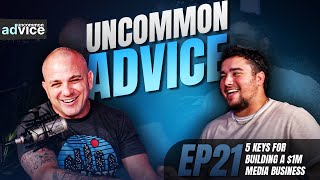
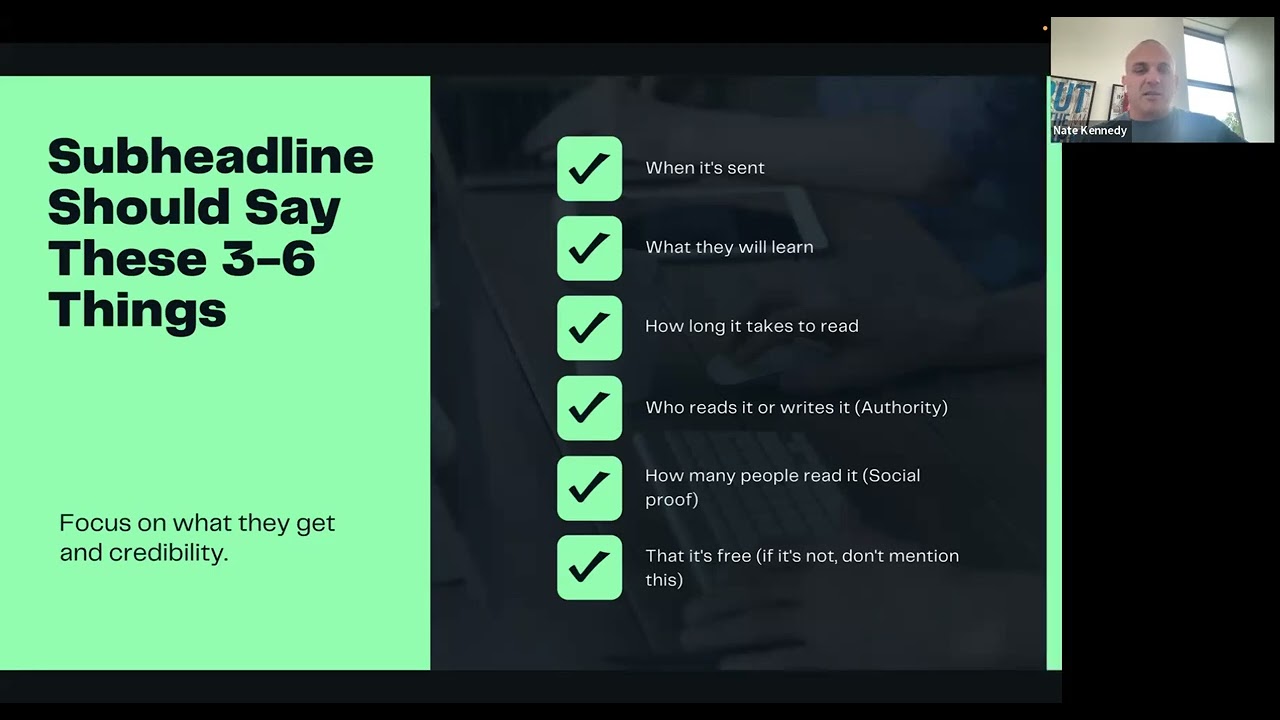
Podcast episode (Uncommon Advice Ep 21) where Nate Kennedy and Yazi compare building a media company versus running a newsletter, and share five keys to creating a million-dollar media business. They emphasize owning (not renting) audiences via email and SMS, curate real-time content (AI-assisted but human-reviewed), pick reliable communication platforms, dial in the right audience through testing and polls, and use mixed growth strategies (organic, paid, buying placements, broker relationships). They also share operational anecdotes and specific metrics (investment, revenue and uplift) and promise a follow-up deep-dive on newsletter/SMS campaigns for coaches, consultants and local businesses.
Questions this video answers
$300,000 (invested on the front end to grow subscribers).
Over $100,000 in revenue in month five (spoken claim).
Five newsletters/media properties (spoken claim).
Approximately 36% lift in revenue after adding SMS (spoken claim).
4,982 email addresses deleted (spoken claim).
Chapters
The ground running, I wanted to grow it as fast as possible. And for me, it was. I wanted to grow fast. I knew the bigger the audience I had, the more money I could make long term. All right, welcome back to another long awaited episode of Uncommon Advice. Excited to be back in the studio here with Yazi and kind of start diving into some really cool stuff that we've been working on.
Yep.
Because we've been behind the scenes doing a bunch of stuff and we frankly kind of fell off a little bit on a podcast. But we're back.
It's been a while. What? It's been what, a couple months? Oh, man. More than a couple months. Maybe four. Four months since we've sat in this room and got another podcast going. So excited, Excited to get it going. A lot of, A lot of new things have happened since, since the last one. So. Oh, yeah, can't wait to, can't wait to speak on them. But yeah, no, it's good to be back. It's good to get things going and it's good to give our audience some good things about us. Yeah.
So with that, we've even, even if you're watching this on YouTube, you're seeing that we got a little bit different setup than the last time, too. So changing it up, changing it up. But we're ready to go. We got, you know, always trying to improve, make things better. So we're excited to be back in. So today we're going to cover some, a handful of different topics that are, I think, very relevant to what's going on in today's marketplace. Number one is we're going to get into talking about a media company versus a newsletter. There's kind of some, there's differences there, and I think we want to clear that up for a lot of people that are seeing the different things about those two. And then we're going to get into kind of five keys for building $1 million media company. And then we're going to touch a little bit on newsletters and how to truly, truly leverage those for your business to, to have an impact. Right. And how you can leverage them effectively to have an impact. And now not every business, there, there's different nuances. So we're going to get into that stuff. You ready?
Yep. And no. And we're not fake gurus. Actually. We've done all this. So just letting you guys know, you're not sitting here just listening to people who think they can do it. No, this, this, we've, we've been through this. So let's get going. Yeah.
And I think touch on that. There's a lot of people out there that do talk about, like how to do things. And one of the things I saw recently which made me want to kind of jump back on and get this podcast rolling again and is I saw a person talking about, you know, how to get a thousand subscribers for your newsletter. It's really made me think like there is a difference, Right. The. The media company, our media company, we have millions of subscribers, right?
Correct.
A media company has. You have a lot of eyeballs. Now. There's nothing wrong with having a newsletter with a thousand subscriber. That's a great stepping stone. But if you're looking to drive revenue and income and, you know, a thousand subscribers. Having a newsletter and trying to sell media ad space at a thousand people is just. It's very difficult.
Yeah. I mean, I myself go through it. I mean, we have our side where we have our media company, which we'll get into more. But it's a lot easier to sell when I say I have 100,000 subscribers than when I'm trying to broker to some other list that I do. And hey, they have 2,000 subscribers. And the conversation is a little bit tougher just because you're not. They're not going to get as many eyeballs on their, on their offers or products that they have out there.
So now there's a time and a place for a smaller newsletter and like, we'll get into that, but let's talk a little bit about the difference. So a media company is you, you. It's a business and all by itself. Right. So a newsletter tends to be more of just kind of like something you can send out. We have the uncommon advice that actually goes out. It goes out once a week. That is a newsletter with some subscribers that we kind of keep up to date with what we're doing, what our company's up to, and some different insights of what's going on. But a media company is to the point of you own the, you own a larger audience. And for us at our, our media company, like I said, we've got million subscrib subscribers. We've got website ad placements, we've got newsletter ad placements. We even have a text messaging list. Right. So we own audiences in different mediums that advertisers come and buy space from us. Right. It's no different than you see these large, you know, you want right now you got a lot of large media sites out there from. Let's just throw some out there. ESPN obviously is a media company, right? Front Office Sports is a media company. You've got Fox News, cnn, those companies, they're media companies, right? So those are obviously on the large scale of what a media company is. But you can see they own their audiences in different mediums and it's not just one medium where they're just sending one update, you know, every day. So.
Well, I mean, you have your own, you go through, you have the media company, which I work at, and then you have, like you said, your Uncommon Advice newsletter. So you know the difference between both of them and you know how a lot easier it is to, like we talked earlier to get the advertisers from one side to your newsletters. You have your own Uncommon Advice newsletter. So.
Yeah, so a little bit different. So then if the biggest thing, though is the one thing I do love about the newsletters, because I don't want to. I'm not here to bash newsletters because we do really well with them.
That's not what this is about. That's where we make our money.
But newsletters are, they're great place to own your audience. And I want to stress that a newsletter allows you to own your audience. When you own your audience, you have control of where you want to go and what you're going to do with that. Those people. So there's a lot of people who own social media. They have their social media brands. They're, you know, you got influencers and creators and they have these followings and millions of people follow, you know, following them on different social platforms. Now those are phenomenal, right? So when you can get that growing. But the key is if you have that growing, if your account gets shut down or your account gets banned or you say something they don't like or whatever that is, right? And something negative happens to your account or the algorithm changes in your reach train and it suppresses your reach somehow. These things happen. You've heard the horror stories, so it's nothing new. We know it's a challenge. Obviously we operate and hope that it doesn't happen.
Exactly.
But what you want to start doing, if you have that type of audience, you want to extract your online audience to your newsletter. So now you own that audience, Right? So it's not a rented audience. It's not a rented audience, it's an owned audience. So that's a big key.
And when you start the newsletter, if you jump into the media company, you are owning your audience because like us or we have the control to. I won't say, I don't know if this is the right word, but dictate what our audience does. Right. If we want to start an sms, we can grab that, we can get into our newsletter. We put an SMS sign up SMS or a poll or something in the newsletter for them to sign up for our sms. So there's so much control because we're owning those millions of subscribers we have. We also own those. So yes, if you have a media company, you can own your audience, but with your newsletter as well, you can dictate what you want to do with that audience.
Yeah, absolutely. So I think that's, that's the biggest thing. There's a little bit difference between the two. So when you're getting into it, if. Look at it this way, are you trying to build a new company, which is a media company, which is where you want an audience in a very specific niche and you're growing that, or are you trying to leverage a newsletter potentially to grow your business? Right. So for example, you know, we also, we do coaching, consulting and agency work for our, some of our clients. So we also use our newsletter to help grow our own business internally for those. So maybe, maybe you're a, if you're a coach, great opportunity. Put a newsletter in place, you're a consultant, put a newsletter in place, you're a local business, have a newsletter. Right. So there's a lot of opportunity with that going forward.
Yeah. And we'll get more into some of those businesses that are, that can actually strive big from these newsletters that I think they're, well, not just newsletters, but SMS too, that I think are missing the opportunity. I mean, it's revenue. You're missing easy revenue. Because newsletter, email marketing, whatever you want to call, it's pretty similar, depends just on the content. But there's just so much revenue and it's like the lowest. What is it? Isn't it like the lowest cost, highest ROI or something like that with email? So take advantage of it.
It's, it's the fastest way to turn more leads into buyers. Right. It's the fastest way or it's the fastest way as well to turn buyers into repeat buyers, which a lot of people fail to do.
So it's, you've been preaching it lately. Retention, retention, marketing. That's, that's been our focus lately, trying to help some of these companies get their, get some of those buyers back, come back, because they will.
Yep.
You just got to get in front of them.
Well, let's dive in, man.
Let's.
I Want to, I wanted to take some time to actually really dive a little bit deeper. I mean could it be a broad stroke on media? Newsletter versus newsletter. But I want to dive in today and talk about really kind of the five keys of building a million dollar media company.
Yep.
And what comes with that? The things you need to know and if you got dial these pieces in and you understand the differences between them, you're going to be able to leverage them going forward. So let's, let's, let's focus on that today.
Let's do it. Oh, the platforms.
Yeah.
Listen, we've been. I would, I would. Look, I'm not going to bash any platform but I would say there's some platforms work better for others than they do for other people. For us we found out there's platforms out there that are not on our side and we've done the whole mitigation back and forth but I think it all comes out to testing. Right. Like you got to get on the platform, you got to see first of all is your content good or is that platform being a pain in the butt to work with. And one thing I will say like when you pick a plat when you're looking at platforms is support. Because if like we've had issues where we'll have a send that's scheduled to go out in the morning and send doesn't go out and next thing you know we don't get an answer for 24 hours. That's a day of money we just lost in our media company. We just, we just lost thousands of dollars that day just because that email did not go out. So platforms are very important. I'll let you, you have a little more experience in them, you have more of the communication side when talking with them. So I'll let you jump in a little bit.
Yeah. So when we talk platform, we're talking communication platform. Like what's, what platform are we going to use to talk one to many to our, to our subscribers. So email being one of them and there's, there's a handful of them. We've used a bunch over the years. We've used things like Marl Post Campaigner back in the day I used to use awe, which is still around. I mean still great platform but like for what I was doing at that time but for like growing. There's some different, different platforms that you want to use. It's another one that we use is like on Gauge. So there's, there's so many different things that you can get into to send Millions of emails a day. But the next thing being is that. So you just got to pick the one that's right for you, fits your budget. Because once you're entrenched in one, it's very difficult to transition to a new one. So if you build a brand in a email platform and you need to grab that platform, you need to grab those leads and say, move over to somewhere different, which we've done it a few times over the years. It is a challenge. You're going to lose subscribers along the way, but it is, it's. It can be a challenge. You just want to be confident with the one that you're doing. And now we've got. We have brand managers internally that use different ones. And it's kind of interesting to see, like, some love one platform, some love the other.
Yep.
And there are some nuances. But I think one thing I want to touch on, though, not just email. So SMS is another phenomenal opportunity that you can start growing that list. It's more expensive than email, but it also gave us a 36, I think when I went and did the numbers, when we started executing on it, a 36% lift in revenue just by adding that component to the business. So massive opportunity.
Well, yeah. And then with that, like I mentioned earlier, it's pretty easy to grow your SMS when you have already a big audience in emails. Right. It's who wants to opt in and stuff like that. So again, Nate, he's preaching and I know who, if you followed him and you follow social media, he says it like, own your audience. And it's true, own it. Because once you own it, there's so many things that you can drip underneath it that just benefits off of it.
Yeah. And also on top of that communication platform being social media. Right. You just touched on it. So social media is important as well. If you're building a brand, you can also take that content and push it out onto the social channels as well and start growing and picking up an audience and following over there. Now, there's a lot that goes into it. You got to be creative.
Nate had some good ones. Hey, he's had some good ones the last couple of weeks.
Yeah, those are my personal ones. But like, we, I will, I will be firmly. We have not cracked the code for social media in regards to building a brand that doesn't revolve around a person.
Correct.
So we haven't been able to crack the code on that yet. But I think that a lot of that's because social media is really is built for your peers and people you're communicating with. Right. So now a lot of companies have cracked it, we just haven't. We've gotten really, really good at email, we've gotten really good at sms. But we do know that there's massive value. So I don't want to not touch on that because we haven't cracked the code because maybe you're the one that's going to do it.
Exactly.
And then when you do, you can hook up with us and let it help us out.
So now, yeah, like you said, there is a lot of business out there. I mean there are big companies but like, I think it also depends on the content. Right. Like what is your audience and can you get eye catching content? Like rebel, like you go on a rebel, like their content is eye catching. Right. They're doing stuff that nobody else does. They're jumping off space into the, into earth. So they're doing things. And I think it just comes down to what really, it's not just go do random content because you'll never, you'll never really find your audience. It's like what content can I create that's going to target the people that I want to target and get the message across to them? Right. If you go in there and you one day you do this content, the next day you do this, you do this, you do this, you're never going to find like the, what is it like the stepping stone or like the brick and mortar of your social media. Because everything's going to be everywhere.
Yeah.
So.
Well, and that comes down to the right audience. Right. So we've already talked about owning an audience versus renting an audience. But understanding the, what's the audience you're going after. We struggled with this on some of our stuff. Right. We, we've, I, I love to believe that everything that we do and touch turns to gold.
But it doesn't.
But it doesn't. We do have a graveyard of a couple failed brands that we've attempted to, to roll out and, and do and they haven't worked out. And I think the biggest piece is we misjudged the audience on the front end.
Yep.
And if you do misjudge the audience, you gotta get that really dialed in. Who are they? Not just the point of like, oh, I love this content, I wanna push it out. But what do they really wanna know? What do they really wanna learn? What, who is that person? And you gotta dive into that avatar and that person a little bit deeper and then test pieces. Because once you test and Figure out what they're communicating with and what content you're sending. Are they engaging with, Are they not engaging with it? Doing polls inside your newsletters as well to try and get, you know, engagement, understand what do they want. I just personally ran one in mine that asked about some different content topics I'm going to do some trainings on, and it was very interesting to see. Like the one I thought that would win did not win. So that was interesting. Right. You just gotta ask.
That's usually how it goes.
A lot of times we, we run things based on our assumptions and not on actual data. And so you gotta get that data in and figure out what they want. But that'll help you dial in the right audience.
Correct. And I mean, I do, I've dealt with this actually these last couple months, me. So we have our media company, but then we started, like Nate said, we started managing and helping companies with their newsletter and there's one company that we're working with and their audience that they have in there does. So they, they're a restoration company. But some of the audience that's in there has nothing to do with restoration. So it's like you're putting out restoration content. You are trying to, you're doing polls, you're trying to involve them, you're trying to sell them stuff. But if they have no need for it, what's the point? What's the point of it? Right. So that's, it's always owning your audience. And make sure you also clean your audience. Right. Because people. Right. You have, you'll have random people sign up for your stuff that have no idea what you're doing, but they just signed up. Because you probably put one cool thing up there or you probably did something that might have caught their attention, but they will never touch or use your product. That's why it's always very important to, as much as you own it, make sure you're keeping it clean. Yeah.
Because it'll improve your deliverability, your engagement rates. Now, it does, does smack the ego around a little bit when you find yourself deleting like today. 4,982 emails.
Yeah, it does. It does.
Which I did in one of our, one of our pieces we've been working on growing. But it's, it has to happen. It's part of the game. It, it's, you know, the audience you, you want to engage. Not on an audience, not just a big audience.
Yep.
You don't, you don't need a ton of people that aren't listening to you. You need people that are listening to you.
So what are your thoughts on the rented audience? Is that, is that something you still, you, you still tell people still do it or.
I think it depends on who you are. So for if you have a rented audience, like social media to me is rented audience.
Okay. You're.
You're rented on that space and, and whatnot. Now there's some things you can do. I. So yes, I think that's a, a good thing to have is and whatnot. I've been able to figure some of that out on the personal side, but not so much on the company side. There's other people have done both. I do also on the flip side of that, there is a process and I guess we'll talk a little bit more when we get into growth strategy. But audience arbitrage. So going to some of these people that have an audience already, that and renting that from them. So there's a couple of different ways to look at it, but I'm a fan of it. I think it's. If you can have it. The key is to extract those people and put them into your own audience though.
Gotcha. So, so with you mentioning extract. So what would you say for you, I don't know if you've tested this. What would you say, what would you say is the best way to extract that audience? How do you, how do you go in and grab those people following you other than just, I mean you have the normal stuff where you can post and like click the link. But is there other ways to try to extract that audience into your newsletter or into whatever?
Yeah, well, number one, it's like you got to have a waveform. Right. I find that a lot of people put in like a bunch of like links in their bios and all this other stuff.
Yep.
So if you have a brand that is not a one. One thing that does work is if you have a brand, let's not say it's personal, it's a business brand. And there's a, there's a real estate company does a really, really good job of this. The real deal.
Okay.
They post their content on their social and then everything drives back to their website to read the article. Right. So you get kind of a snippet and then drives back to read the article. And then from there you have the ability to opt in and subscribe. Right. So if you can get them to your site, they can subscribe from there. Now if it was a, let's say as a consultant, you want to potentially maybe Have a link directly to your newsletter. Don't have, don't have 15 links in your bio or four or five. Just be very clear, concise call to action, get them to subscribe. And now as you communicate through email and through social, they're getting, you're hitting them in different mediums and now you have that ability to, to leverage it. So just keep it very clear, concise and drive into. Only have one or two links, max.
Gotcha. My last question I got on this social media stuff for you. Have you tried the broadcast feature? Has that give. Have you tried any of it? If you have, have you seen any benefit from it?
I have not. No, I have not tried the broadcast. I do know it's growing and more and more people are using it. I have not. So I can't really speak on it. And I mean I can, I can pull some out of a hat and tell you, but then I wouldn't be telling you. And one thing we like to stick to here is he and I is like, we like to give data and feedback based on our experiences, based on data, based on real world experiences that we've executed. So unfortunately, I can't really break down what we've done on broadcast because I haven't done it.
I was just wondering. I died. I have no idea on it. So that's why I asked. I wanted to see if there was a, there was something behind that.
Well, let's get into content strategy. Right. There's a lot of different ways to do content.
Content, content.
And a lot of people think you just, you know, a lot of people use AI for content. Some of that artificial intelligence, because we, we use it.
We use it. It does it, it does help us. I'm not gonna lie. It makes, makes work a little bit quicker.
Yeah, I'll say so for us it's, you know, content strategy matters.
Yep.
Now there's a lot of nuances that go into when you're sending emails and sending text messages. Text messages, you gotta, you gotta be a copywriter for that. Right. Because it's very short, quick, to the point, very.
There's words you really can use. What was it a couple weeks ago we were doing this sms. It was actually for a client. He booked space in our sms. That's another way we make money in the SMS side. And there was a word, which I didn't think it was a big word, it was threat, but we sent it over. We work really closely with our, with our SMS provider and we send it over and they're like, no, you can't send that, you'll get flagged. It's interesting. Like there's like keywords that I wouldn't think are, I wouldn't consider bad. They apparently are really bad in SMS for getting flagged and stuff. So you got to be very careful in SMS when you're working with. And if you do work with sms, that provider have very good relationship with them. So you can be able to communicate back and forth of hey, can I say this? Can I not say this? And they should be able to tell you. Yeah.
So just do the right thing because it's such a valuable audience for you. So if you make one mistake and put in one wrong word and they freeze your account, that's revenue lost. Right. Because one thing in the media game, you don't get the day back. If you're sending email, you're sending sms. If, if our account, if our email doesn't go out today or SMS doesn't go out today, like we don't get that money back. Like that's lost revenue, right?
Yep. So we're going to have to move into another day. That means that's another spot that's booked, that could have been booked for more money. So if he comes in, we know we've been through it. So it's, it's, it's fun.
Our prior. So I would say for us, our favorite content strategy is curated content.
Correct.
We leverage a lot of real time news and in our media company and that real time news we curate, we use AI to rewrite and create our own versions. We use AI to help with that and to speed the process up. But we still have a brand manager that is engaged with that content because it's not perfect.
Correct.
And they know what's opening and what's clicking, what's not. I do think that more so today we used to send, let's. What we used to send in our curated content was headline headlines with an image and a link. We found out over time that that was causing some inboxing issues for us so we had to change that up and we started writing more content in the newsletter and providing more, more insight before they click. And we're driving that way. So there's, there's different ways that you can run the content but you got to have a content strategy.
Correct.
That's the biggest thing you mentioned.
AI always say, and I've looked at it a couple of times, but like I said, our brand managers, they look at, they look at it and they see it when you're Using AI, you can't just, you can't just run it through AI and throw it on there. Like you have to have to use it and then you have to read it because there's stuff that you throw into AI and it does not make sense whatsoever. Like there's run punctuation, wrong dates, wrong topics. It's talking about. So you got to be very careful when using AI on. What's it called? On double checking the grammars, double checking punctuation, double checking that it flows. Because AI doesn't always flow either. And I know that because we've sat in a team and we've looked at it and it's like, yeah, this doesn't make any sense. So you have to just for you guys over there that use AI, which again, not bashing, we do it a lot, but we have someone who's reading through it and making sure that everything's flowing correctly.
Yeah, it's got to sound good. So have that content strategy in place and go from there. Stay consistent. Your subscribers get used to it. Now the next thing is growth. So when you have a media company, you want to be able to grow and you want to grow fast because it's growing well. You want to grow fast because you want to get to the dollars.
Correct.
So the faster you grow, the better. So there's a couple of different growth strategies. There's organic. Organic is a great growth strategy. It's a long term strategy. And frankly, those organic subscribers and leads are going to be your best subscribers and leads down the road. But it could take a really long time to get to where you want to go.
Yep.
So then there's also paid, you've got, you know, Facebook ads, Google Ads, you've got LinkedIn ads. You can run Twitter. There's a lot of different ways that you can drive our favorite strategy. Two of them is you can buy emails into other newsletters that have a similar audience and have them subscribe to your audience. So that's one way. And then another way that you actually we buy and sell leads in this manner is we work with trusted sources that have engaged subscribers. Correct. And then we work with them to turn them into subscribers for our stuff. Right. So you, you, I know. Handle that on both sides. Right. Buying and selling.
I do. Nate, quick question. I mean we maybe have talked about this in the past, podcast or you in a video, but tell us the media company right now that we're in, how did you grow it? How long did it take you to grow it? And if you're Comfortable with it. What was the investment you had to put in? And Nate might have a high number of investments, so don't throw anybody off, because everybody starts differently. But just tell us a little bit of how you grew this one and got to where it is today.
I hit the ground running. I wanted to grow it as fast as possible, and I knew how to do it right.
I had.
Somebody gave me the blueprint, and I'm like, all right, I'm gonna execute the blueprint. And we invested 300,000 on the front end to grow subscribers. We grew really fast. We ended up with five different media properties at that time. The way that we grew it and we grew within. Ironically, in the fifth month, we went over 100,000 in revenue. So at that time, I ran the entire thing by myself. I literally would be up early in the morning creating content, putting out sites, doing everything right. So it is. For me, it was. I wanted to grow fast. I knew the bigger the audience I had, the more money I could make long term. Right. I trusted that if I grow this audience, and the money that I'm investing will come back to me, and that's why I invested it right out of the gate. So 100%. I mean, that's really what I did. I just. I was. I was. I've. I have a book I wrote called all gas, no breaks. That's really how I operate in business and in life. So it is. The goal was to do really quick.
And so you mentioned you did it also. So. So you guys are hearing it out there. You don't need a team. So you mentioned you got it all running by yourself. How many newsletters were you handling? How many content pieces? Like, what. What was a little bit of the.
So I was curating content from other sites.
Okay.
I had five newsletters. I was sending. I had sponsorships on month two that I started selling and was managing those relationships and everything else.
Okay.
So I did have Swan person. I was doing all the sending and building and creating, and I had two partners. One sold ad space because he's already selling ad space. So he sold ad space. So he. He. I paid him a commission so I didn't have to work and stress about that.
Correct.
And then I also had a lead source that I was buying leads from, and I let them manage kind of that lead flow on the front end instead of me going in and running paid traffic and everything else. So we were able to bring a bunch of leads in. So, you know, I did do a bunch, but I strategically had two relationships that took two major pieces off my plate so I could focus on the growth, engagement and revenue.
And how important was that broker piece, that broker, that broker relationship you had, Just seeing it out there, I mean, you managing this, you said it was a lot on your play, having to curate the content, write the content, schedule the content, all that stuff. Plus, if you had to jump into sales, you probably wouldn't be seeing sales for a little longer than your second month. So how important was that broker piece that you, that you made?
It was big. That relationship was huge because it allowed someone who already. I was able to tap into relationships that were already created. So there was a level of trust that he had with all those advertisers and was able to say, by the way, I've got this new brand, these new brands that are launching and we had some really good brand names which helped. And so those that helped out, but it was, it was instrumental. And I mean, here it is this. We're almost on what, year five now of this. And, and you know, man, I won't get a secret, but you just had a conversation with that guy today.
I did.
Right. So he's still in the picture now. We do all of our own broker. We have for, you know, we've taken more and more on over the years. Zenon handles a lot of that. But he, you know, he's still involved like a great dude, just good guy.
And talk to him on a monthly basis. That's my man.
You'll find in the, in the industry when it comes to brokering different advertising space, a lot of people start knowing each other and they start working together and the communicating because it's, it's really the, it's not a competitive thing like I want to beat you. It's a more like, hey, man, I've got these advertisers doing really well. How can I help you exactly? And maybe can I can I intro you to these advertisers? And when they intro you to those advertisers, they're, they look good if you perform because now you. These advertisers that have budgets to spend, want to spend.
Yep.
And so they need more traffic and there's not always enough traffic for the amount they have in the budget. And so that's why it's kind of a cool relationship that we just had someone else share a bunch of contacts with us.
Yeah, we have three or four, three or four brokers that I have pretty good relationships with that it's between us. Either I will send over intro or they'll send them your intro. And we just, between all four of us, we just work together to try to get new partners, new vendors. Because in this industry, if, like, if I was, I would say being in it, if you can get, if you can work with a company where you're giving them results, you're trusted, you're staying communication, good relationship. These people will spend 20, 30, 40, 50, 60k with you a month easily. And that's one of the goals that why we all communicate so well is like one like guy you mentioned, like if he has someone hitting a home run, he'll reach out to me and say, hey, you working with him? No. All right, let me introduce. Because they're, they're killing it right now with us, so they'll bring us in and that's how it works. So just to throw it out there, if you have a healthy size newsletter and you need me to broker it. You got it. I would definitely have a good network that I can get you into.
Yeah. And I would say get. Breaking into the broker game is relatively difficult.
Oh yeah.
Frankly we just, us being able to grow so many different brands and newsletters allowed us to do that. Right. If we didn't have those brands, I think it would have been very difficult to come in and broker because a lot of these guys got a stronghold. But it also a testament in business you got to do right by people and build good relationships. Don't burn any bridges. And that, that's why these, you know, when you work with people and they, they're like, yeah, let's, let's do some deals. But if you go burn bridges, it's gonna be very tough for those people to, to let you back in.
Relationships are big. Especially like I said, I handle most of the sales and stuff. And I can tell you the relationships play a big role in this, in this industry.
So I'd say I, I think that is, that's a wrap on this podcast. What I want to do for the next one and tune in. I want to actually get into newsletters and some actual campaigns that we're going to shift it over to. If you're trying to grow your business using email and newsletters, let's say you're a coach consultant, small business, home services company. If you're one of those companies, I want to, we're going to dive into how to leverage email newsletters and SMS specifically for your company and we're going to talk about some campaigns that you can run right now to make more money in your business, turn more leads into buyers. And so we'll get into that in the next episode.
Absolutely. Now, you think anybody watching made a million dollar media company already? I don't know. I guess we'll find out if you did. Hey, hit us up. We'd love to have you on the show.
Yes. So one quick ask. Go ahead and hit the subscrib subscribe button if you want future updates, you know, subscribe to Uncommon Advice. So if you want to get the first to know when you get these, these podcasts drop. And other than that, man, thank you for paying attention and come on back.
Let's do it, man. We're excited.
More from Nate


Anxiety doesn’t have to control your life. @realcraigballantyne breaks down how he faced it head-on
Chasing someone else's version of discipline cost him everything. Success on the outside means nothi
Scaling your business doesn’t have to be a slow grind. There’s a smarter way to grow faster without
Starting a business from scratch isn’t easy, but rebuilding it all over again was the best decision