Uncommon Advice Ep 22 - Football Playbooks to Pom-Poms, Work-Life Balance, and Newsletter Powerhouse
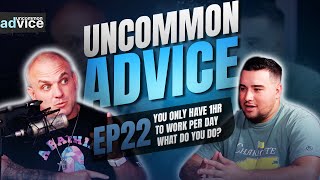
This YouTube episode (Uncommon Advice Ep 22) is a conversational podcast hosted by Nate Kennedy with a co-host. It opens with personal banter about haircuts, youth football, and family, then moves into two core themes: productivity/work-life tactics and media/newsletter strategy. The productivity segment explores 'one hour per day' trade-offs, identifying peak work rhythms (notably 6–8am and 3–6pm), a short morning routine, weekly action lists, goal-setting, and the importance of listening. The media segment argues that businesses, coaches, and influencers should build owned email audiences (newsletters) to monetize via sponsorships and affiliates, protect against platform risk, and drive revenue alongside social and website channels. The episode ends with a CTA to like/share/subscribe.
Chapters
Still caring about what others think. There's always going to be someone that you're going to always have two. You're going to have three camps, really. You're going to have people that are indifferent. You're going to have people that are haters, and then you're going to have the people that support you. So you want to stay in the camp of the people that are there helping you lift up. And never get it twisted. When I'm in the booth, you already know. I'm going to speak my truth. I'm going to share my pain. I'm going to share my story.
And we're back.
Another episode. Excited to dive into today's discussion. I think we've got some cool topics. We're gonna benefit some people.
Two for two.
Fresh fade.
Looks like. Oh, yeah, I had to go get a haircut. In the last video you saw, I had a lot of hair. And I think it was time. It was time to. I think that journey was done. And we're back. She's a clean cut, actually. It feels very cold. Not gonna lie. I haven't had this. Haven't been this. It's been like since I think last time I cut my hair before that was June. Yeah, it was a while late May.
So he lined it up nice, too.
He did. He did clean me up nice. So, yeah, no, happy to be back. Happy to sit here. Week two of us getting back into this. So, yeah, let's get it going. You have any fun news? Anything going on? Oh, man.
Youth football season started.
You and your youth football. Nate's always involved.
Oh, man. Yeah. So youth football started. I'm involved in one of the couple different organizations here locally. It'll be exciting to see how all these kids do this year. They've got this one year. My son's actually not playing. My son's not playing, but my daughter's on the cheer squad. One of the cheer squad. So I'll be involved a little bit more over there than I will in football because he's not playing, I'm not coaching, which actually I'm kind of excited about not coaching for a season. Kind of taking that off and chilling. Yeah.
I mean, it gets stressful. I mean, we've been. We did it together last year and we coached throughout the spring. The seven on seven stuff. So it's good to take a break. We kept our words that we were not going to go coach this. This fall where everybody else said it and they all went to coaching, so we actually kept word.
So Saturday, when The games kick off. I think it's going to become the time when mom and dad realize that little Timmy might not be the superstar that they all think he is. You know, because they realize, like, you're out here in pads with these little kids, and a lot of times they, you know, we. Sometimes these parents put massive expectations on these kids, and they realize that every kid is not a receiver and a quarterback because they've been playing flag football. Don't get me wrong, I love flag football. It's great. But I think it's, you know, parents have that transition period right now to learn, like, tackles a little bit different. And hey, what. What he did out there on the. It's just different. And you're gonna get throwing the ball a whole lot in Little League, Pop Warner a lot of times. Right.
The kid's not thinking about, oh, my flag's gonna get pulled. No, it's a. Oh, I'm gonna get smacked catching this, running this ball.
So here he comes.
There you go.
Yeah. No, I'm excited for the kids, man.
They're.
They're so. The kids get so excited about it. They're pumped. They got opening weekend.
Yep.
They get to go play game, you know, play football some the first time. Others, you know, been playing for years, so it'll be fun. I'm actually going to be out there this weekend with the crew and kind of keep an eye on the fields, make sure everything goes well and. And whatnot. So I'm excited for them.
They're gonna.
They're gonna crank out and awesome before.
We get going, you know. Football season is about to kick off. So what do you think? You think your Michigan Blues are going back for. For a Natty.
I have no idea what to expect. I have no idea what to expect out of Michigan this year. I don't have any expectations. I don't really go. I try not to go in with expectations any year. Just let them play. But the last three years been good years. They got. I like their coach. I think their coach is going to be. Was. Was great for them. He's already. He's. He's undefeated as a head coach over there.
He is.
Got that. They did lose a lot of players to the draft.
Yep.
But at the same time, like programs, these players every year to the draft.
So, hey, we're going to have to wait and see. We'll see how Michigan kicks off. I think Saturday was. I think it's a night game for them. So we'll see.
We'll see if the Ohio State team was, you know, were they just bought or were they, are they good? We'll find out. Maybe they're both.
Oh man, here we go.
So let's get in man, let's go. Topic 1 Discussion 1 what if this is a very interesting question. If you only had one hour to work per day, what would you do? How would you handle that? You, your, your answer might be a little bit different than mine, right. Because you manage the media team over here and run the, you've run that. I do a couple, you know, kind of different, different functions. So what would you do?
So I think you need sales, right? That's how you get your revenue. So I think I'd spend maybe in our, in our world of media and newsletter, I would probably spend about 30 minutes selling, getting something on the newsletters, getting of advertiser to book and then I'll spend my last 30 minutes doing my research, writing my newsletter and getting it out. So I think if I had one hour, spend the first 30 reaching out to as many people as possible, see who responds, get them on the calendar, book them. If they say, yeah, write that newsletter, put their sponsorship in, send them out, we'll make some money that way. I think that'd be, that's the best way. If I had one hour of just work, I think that's the way I do it.
Yeah, one hour a day for me. I think it, it'd be interesting. I would spend a portion of that, maybe 10, 15 minutes replying to high level emails back to people where I have conversations and pieces going on, trying to close deals, email and, or solve problems via email. I would have a time where I would do a, most likely a, a scrum call style, right. Where people are all direct points of things that we need to accomplish for that day. So you might, you might need to add that back in. You might need an hour and 15. So do it. But you could get Those done in 10 minutes, right? I mean they're, they're very efficient and effective. Where we at? What do you need? Where are we going today? Right. Answer those questions, make sure no one's got roadblocks for their hour that they're working.
True. I was thinking more of my hour of how do I gonna. Yeah, get something done, make some money, get out.
And then I think the, the next piece for me would be to. I would have to do an activity that opens conversations and I would have to do, add in an activity that closes deals. Right. So it's like open deals, closed deals, like each in that hour Right. To push that forward. So the meeting happens to make sure all the operational stuff is happening and getting done for the, you know, going forward and the clients are being serviced and the advertisers are making their money and getting performance. So we're making sure we're doing that. But then also open and closing, you know, those conversations at push the business forward going forward. But an hour, man, that's tough.
It's tough. I mean, or, I mean, not sure if you guys saw it, but jump on one of your lives quick. 10 minute live, get to communication, last 10 minutes, try to close some deals out of it.
So, yeah, the live went well. I was kind of, I, you know, I wasn't sure what to expect. It's been a long time since I've gone live and it's the first time I've gone live on that many platforms.
You did, you went live, I think, everywhere.
Yeah, that was. It'll be interesting to see. So the goal is to do that every week. All right. Once a week. I've got eight weeks already planned out for the content we're going to do, and I'm interested in seeing. I was talking with my buddy about it today, said, yeah, going live today. He's like, what do you got registered? I was like, we don't got a lot registered, but it's going to every platform. And I think it's a consistency thing, that going live is a consistency thing that as you do it, it grows and the audience grows.
Yeah. So what value do you, what value can people get from joining your lives? Even if it's like five minutes every day? What do you think? I mean, I know it's going to be different topics throughout the week, but what's like the main value?
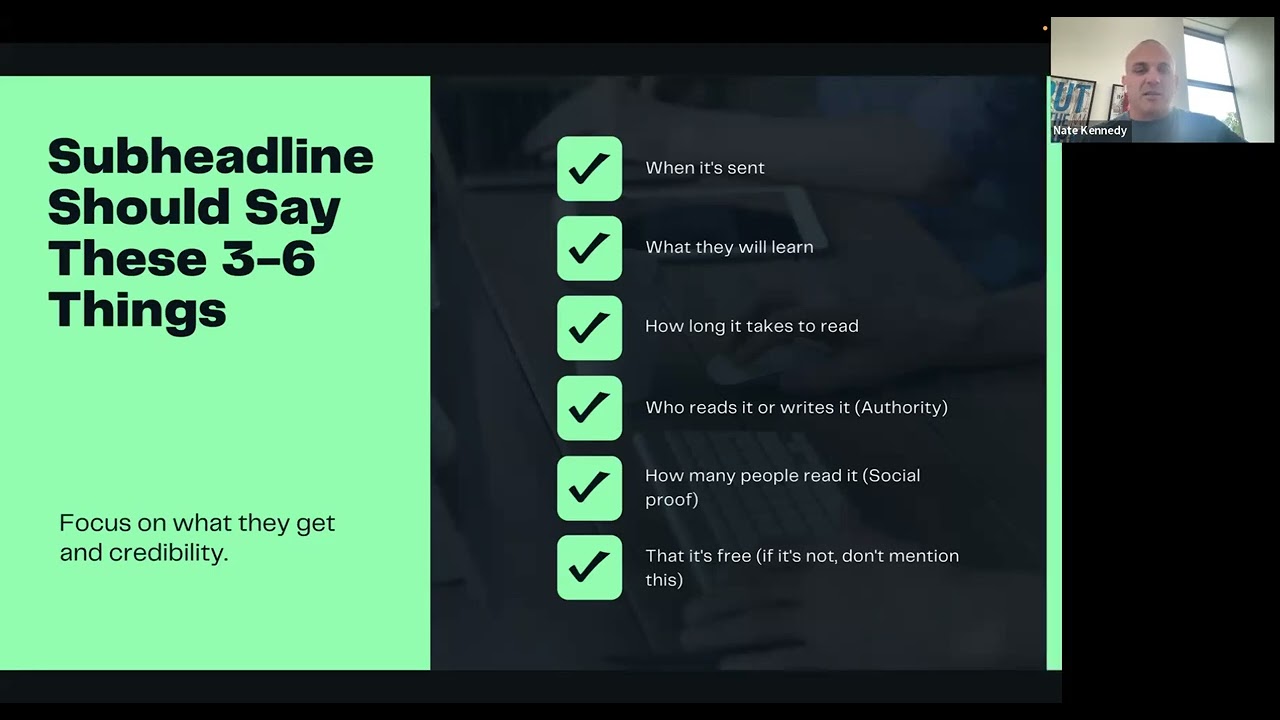
I'm doing it once right now. I'm just doing once a week. Okay, Right. And that live once a week is on a very specific topic. So Today's Live talked about how to monetize your audience with a newsletter, and I stuck. There's three, there's three different ways you can monetize an audience. Right. You've got social revenue, website revenue and newsletter revenue are kind of those core ways you can monetize that audience.
I've.
I dove into just the newsletter side of it. I didn't get into the social and website side. So there's different ways you can monetize audience, and I just focused on that today. Next week I'm going to get into. I, I think I've got a couple topics, but I think what I want to focus on is the thousand leads per day sales system.
Okay.
And it's just a lot of tactical stuff that people can come on the live, learn, and then go execute.
Awesome. Well, I hope for the monetized one, it was loaded because, man, the clients we work with and clients that have wanted to work with us and stuff, the first question is, how are we gonna make money? So there you go. He did it.
Today there was a. There was a lady on there who was told she cannot make money with a newsletter and an audience using affiliate products and doing sponsorships. And she was like, thank you for this call, because I was told, you can't do this. And I knew they were wrong because I. You can do it. And so I think we opened up. I kind of connected the dots for her to be able to go out and actually monetize it through sponsorships, through affiliate offers. Right.
So, I mean, if we can't do it, we wouldn't be in business. We wouldn't be standing here.
So she was. So there's a positive impact. So that was exciting to see that comment coming. At the very end, she was. We had a couple questions. Come on, people. Kind of clarifying. So it was cool, man. I enjoy the teaching side. I. I enjoy. And I always have enjoyed kind of educating.
Okay.
And training. I've never really enjoyed having to be on stage and sell. Right.
Gotcha.
Like, and even sales presentations, like, I've just never really been my thing. I'm always like, how can I just provide value, help you? And if you want to work with us, you want to work with us, you know, like, so now I probably. We don't. Probably don't generate as many sales as we should, because I'm that way. Right. But at the same time, it's just how I've been.
Yeah. No, that's cool. So if you guys. You guys want to learn. Nape got a new topic next week. Jump on the live. Like I said, it doesn't have to be the whole thing, but a couple minutes to get some value out of it, ask questions, and go from there. Yeah, awesome.
Let's go in, man. Let's get discussion number two. Hacks that changed your life. So let's go back and forth on these one for one. All right. You got a couple that you've got down? I've got a couple I've got down. Why don't. Why don't you go first?
Yeah, I'll go. My number one is stop caring what others thinks. I feel like that holds people back a lot because you, you feel like, oh, if I do this, these people won't accept it, or if I do this, you're going to get a negative response. At the end of the day, who cares? Nobody. Nobody's. If you make it, guess what? They're all going to be cheering you on. If you fail, then you might get it laughed at here, there. And it is what it is. And I think for myself, young, cared a lot about what people think. Trying to make people happy from family, then trying to be, I would say, cool friends, all that stuff. And then, like, as I got older here, these last like two, three years, it's like, I really don't care as long as. As long as what I'm doing makes me happy. I'm making money, I. Hitting my. My goals that I'm setting for myself. That's all that matters. I feel like a lot of people get caught in that, in their heads, like, oh, I don't want to post this, because what are they going to think? Or what are these you're going to think? At the end of the day, I probably don't even like my Instagram. I probably don't talk to, like, 90 of the people that I follow. They follow me. It's fallen off. So. And the ones that I do talk to, I know they'll support it no matter what. So.
Yeah, and it's. It's one of those things where sometimes we get in this loop where we, we make decisions based on what we think someone's going to think.
Exactly.
We have no clue. Yeah, right, exactly. And so that. That's a good one, man.
That's.
If you're listening on that, if you're still caring about what others think, there's always going to be someone that. You're going to always have two. You're going to have three camps, really. You're going to have people that are indifferent, you're going to have people that are haters and just going to be negative about anything you do. And then you're going to have the people that support you and the people that are kind of like, let's go, let's go, Great job. Right? So you want to stay in the camp of the people that are there helping you lift up and be better.
Correct.
Now, there's also people that are going to say, hey, look, man, you really screwed that up. But. And that's because my expectations are higher for you, and I think you can get there by doing this. There's going to be people that drive you to be better.
Exactly. Which that's good, that's good feedback. But the only way you get that feedback is you got to get out there. You just got to do it. If you don't do it, you're never going to learn, you're never going to make the mistake.
So.
Yeah, so just, just don't care what people think anymore.
I would say. All right, so mine is I'm gonna go number one. Understanding my work rhythm. So there's a circadian rhythm, right. Where your body ebbs and flows and how all that works. I can't get into the science of it. But what if you're into that? Cool. Mine is work rhythm. Maybe there's a cooler marketing name I could have put on this, but. But I didn't think of it. So what I recently got in the habit of, I've always, I'm a very, I'm a, I'm a creature of habit. I do the same things consistently and for me it was always get up, work out. Because if I don't get it done, I would, I know that the probability of me getting that workout done is decreases throughout the day, right. And so, but the problem was that was causing me not to be as productive. So I'd get up, I'd work out, I get my workout done. But then I would go in and I'd come to the office, I'd get stuff done, I'd mess around, I wouldn't get into that focus work mode until later. So my work with them rhythm, I'm most productive first thing in the morning. So now I get up. I know that between six and eight, I'm going to hammer out two hours worth of work and hyper focused work that it, maybe it'd be writing, whether it be ad campaigns, whether it be processes, whatever that is, right. Whatever it is that I'm working on, I'm going to be able to knock that out at 6 to 8 in my productivity now at this point I'm very like, all right, bam. I feel great, I'm accomplished. And then what I do is I go to the gym and get a workout in from about 8 to 9 and then I come home and then I go to the office. So what was happening is I was like, I gotta be there at this time, I gotta knock this out, this out. But then I'd get to where I'm going, I wouldn't get that stuff done. So now before when I was really getting a workout done between 8 and 10, I'm now getting done the most important task that I have for the day. And getting a workout in between 6 and. Or, I'm sorry, between 6 and 9:30. Whereas before I was just getting a workout in.
So what, How'd you, how did you figure out that six, between six and eight is your time? Did you just.
Well, I just get up early and I realized I'm like, I'm gonna sit down and just start working. I've always known I'm productive then, but I've gotten like the habit of just going to the gym right away.
And you've always been a morning person. Like that's like always for a long time now. Okay.
And the next thing is my other very hyper focused work time happens between 3 and 6, so I know that it's interesting to see how things kick in. I'll be kind of getting things done throughout the day, but not as productive as I need to be. But that 3 o' clock hits and for some odd reason it's like the focus comes back.
Yeah.
And I, and I tune everything out and I just knock out a bunch. So now with understanding my work rhythm, I'm getting five solid hours of hyper focused work done, which is more than a lot of people get done in a week really, sometimes depending on what they're doing. So for me now I'm being more productive. So understanding that work rhythm was probably one of the bigger recent hacks that have changed things for me. Increase productivity, increase happiness even, because I don't feel stressed because I didn't get that done right. I feel like, man, I accomplished that.
Well, I mean, yeah, you just get, it's like a tunnel vision. You just get in the zone. Yeah, I'm not a morning person. I'm a night owl.
Yeah, you said that. Right?
Yeah, we talked about it and I told them I'd rather work at night. I'll stay up till 2am, 2.30am working. And it's pretty easy for me to do that. My friends will be like, we'll be like, if, let's say we go grab dinner or something. They're like, what are you about? I'm gonna go sit on the couch and work. Oh, you're working. I was like, yep, gotta get it done somehow. So yeah, night night for me. Not a morning person. Actually, I've never really been a morning person. So maybe in the future, but right now it's not, it's not there yet.
I've always been relatively morning person. Then when I had kids, I really became a morning person person.
Oh, well, maybe, maybe that's what I start then.
So what's Number two.
Number two for me is setting goals. I think pretty much most of my life since I've let's say graduated high school, college, all that stuff. I've set goals of where I want to be and accomplished. Like one goal was to buy a house. Was actually was 21. I bought it at 20, bought my first house at 20. Got that done. Then my next, my next goal was to make a certain amount of money by this age. Got that done. And now my next. I have like three goals that I'm trying to hit before the age of 31. I'm trying to visit eight new countries before the age of 30, accomplishing one this year. Germany. Going. Actually it's going more than Germany's. Germany, Austria, Italy. So a couple, but eight new countries. Then my other goal is to own a house by the water. So Lake beach. We'll see where, which one we pick. I mean being a Florida boy, the beach is always better. But hey, the lake appears nice as well. Lake Beach. And then the last one is my age of 30 is to make a million.
Okay.
To make a million. So it's, it's, it's the goal. I have those three, I have those three goals to hit. I've hit pretty much all my other ones as they keep going. So we'll see where, where we go. I got what, six years left?
I just keep hearing a Milli Millie in my head.
Yeah.
By Lil Wayne right now.
That's a, that's a great song. That should, that should be an intro song right there. But no, yeah, that's, that's the goal. I got six years left to get to it and we're working towards it. So I'll keep you guys updated in year six.
So you're 24, right?
24, yeah.
So you're not, you got, you're going to get it.
We got time. So.
So number two for me is a hack that helped me was my five minute morning routine. Might not even be five minutes, but when I, first thing, when I wake up, what I do is I go to the bathroom, I splash cold water on my face, sometimes twice. And then I wipe my face off or I dry off. It wakes me up. The second thing I do is I brush my teeth.
Okay?
So now I'm like, all right, fresh breath, cold water, fresh breath. I'm ready to rock. And then I. And then from there what I do is I go and chug a 16 ounce thing of water and then I fill up another one. So I've got that next one ready Right. So for me, I'm waking up because you get dehydrated at night when you sleep. So I'm waking up, I'm one helping myself, kind of. Boom, you're awake now. I don't do the cold plunge first thing. A lot of people.
You're not going in?
No, I'm not. I did the cold plunge with Susan, remember? Oh, yeah, we did that a couple weeks ago. I did this cold plunge for the first time ever. And I'm like, my wife hates cold. I'm like, I'm a win. I'm winning. There's no way she's beating me in this. I lost. She stayed in longer than me.
Were you in there for like probably 15 minutes, 30 minutes?
No, the cold plunge.
Yeah.
No, man, I was in there for like 52 seconds or something. And I know the number because I was like counting every one of them, whereas she got in over a minute for the first time. It was. I like the cold plunge. I felt great, actually, afterwards. I see why people do it.
Does it. Does it catch that breath? Like when you get in, you're like, like, I start focus.
I'm like, man, I've seen all these people do this like crazy breathing stuff when they do their cold plunges. I'm gonna start breathing. It didn't work?
Nope.
I just felt everything tightening up. But yeah, yeah, but I did feel great, you know. Interesting though. My ankles feel great after.
Did it really weirdest thing. Did it have like bathing salt? Don't they put like the. What is it? Bathing water? He's like, I don't know. It was just cold. So.
And so those are the three things I do in my morning routine that help me wake up, get hydrated and start the day and get my mind functioning. Working.
Gotcha. So you're throwing cold water when it's like 30 degrees outside and those pipes are like super cold.
Just turn the faucet on.
Good to go.
It's not, it's not like a, you know, a 52 second cold plunge. It's literally just. It's not even that cold anyways. But I feel better. Gets me moving, man.
Again, I mean, you are from the north, so different. Takes being a boy from Florida. I don't know.
I don't know about that one.
I mean, in the summer it feels great. In the winter, I don't know, it's cold.
What's your next one?
Listening. Being at the young age. I was started working at an agency at the age of. Was it 1919. Going to school. I Always say this. I learned a lot more in the agency that I did at school. I actually think that was actually a time in school where I mentioned something to my professor. It was actually talking about SEM PPCs. And I told him, I told him that it's not like that and he got upset with me because when I what I learned in the agency was completely different what he was teaching in class and data. So agency I would one thing I always was always get a good listener. People always ask me, it's like, why are you not taking notes? It's like, because if I take notes I'm not going to listen to what you're telling me. I'm just, you're just saying. And I'm just writing where if I listen first I can listen. If I have a question I can ask it. So 19 listen. I learned a lot about digital marketing, was selling it, all that stuff. Then I moved on to another career. Learned a whole other whole other still in the marketing, still doing marketing but in a whole different industry. Learned a lot there from again listening a lot of it there now that was when I was working with cars that had to do a lot with like pipes and sounds and how this degree does this force like all that stuff and all I just came from like just taking it in. I've never, like I said, I've never been a note taker. There's times I've been a meeting and I hit like the note, the audio button just so it records everything. But I don't like taking notes because if I take notes I don't process what I'm being told. And being so young, a lot of young people think they know it all now. I'll say there's, there's things I would say I know it all, but I really don't. There's. I've learned. I mean I make mistakes. I've done it plenty of time. Actually I think a week ago I told n I was like, hey, yeah, I'm trying to figure this out. I think I, I messed this up pretty bad. And I was able, I mean I was, I had help. Someone helped me out figuring it out and fixing it. But everything came from listening and learning and same with you. I've never been in the newsletter space. I never email marketing. I knew it but we only ran it for other companies. But I didn't know that there is a whole other world where you can do the newsletter space and make money from it. I always thought you send the newsletter because it's part of your Business, and every business needs it. So I think listening is very important. I think a lot of people struggle with it. They just like to think they know it all. So just sit there, listen. Even if you do know it, just listen. You might learn one or two things out of that.
Well, they shut off when people talk, just like, is it not?
Yeah, exactly.
So. So my third one is I have a weekly action list. And a lot of times, this has been the best one for me. I've done all the different things to try and stay organized, get things done. I literally, on Monday, just write out my action list for the week of the most important things that I know I need to do that day or that week. Actually, my action list says, what's your action list today? And it's not for me, it's the week.
Okay.
And on there, that's the top five things, my three stretch goals, and then it's got notes for underneath it. So I put my top five things on there. I have my three stretch goals, and I usually should always hit those. And my goal is to accomplish that throughout the week. And so now what I do at 6, 8 in the morning is that number one, number one that gets knocked off, number two gets knocked. So I'm happening. I'm knocking them all out throughout the week. So those action goals, that action weekly action item list is big for me because a lot of times if you don't. If I don't have that list and I go through the week, I look at and go, what did I do? Sometimes I forget, like, well, I didn't accomplish anything this week. But really, you knock a bunch of stuff out. You just. We're just reacting and doing it. Whereas the action list allows me to be proactive in regards to what needs to get accomplished as opposed to reacting to what comes to my plate to get done. Yeah.
Is there ever a time that from that action list that something doesn't get done? And if it doesn't, like, what do you do?
Just move it to the top of.
The list for the next day. So that becomes your priority.
Yes.
Gotcha. Okay.
There's also things that have been on the action list that make it to week over week, and they don't get done because. And then at that point, I know it's not a priority.
Yeah.
Like, all right, well, I haven't done.
It, so I'm not rushing to it.
So clearly not a. You know, I try and also mark things down. What are revenue drivers as well on that action list and what are not. Right. So Keep an idea and make sure. Because a lot of times we can get busy being busy. And in small business you also have to keep focus on revenue. So I always try and identify what, what action items are driving revenue versus which ones are busy being busy.
Yep, that's good. I mean, I think everybody should have an action list. It's, it's important. Helps you knocks it out. And with work nowadays, I mean, you get lost. So especially in small businesses like us, here we were, we wear weight, we wear different hats. Maybe in a corporate world there's, they're bigger companies, more money, there's position for everything. But here you're wearing so many hats that things get lost. And emails. I mean, it's happened to me, it's happened to you. Where things get lost in that action lists. At least make sure, like you said, priorities get knocked. Knocked out and then the rest will come in little by little.
Agreed.
So.
Well, it would not be a podcast without talking about media newsletters.
Yep.
And whatnot. So let's get into it. This is where we left off on our last podcast and talked about, hey, we're going to get into this next week. So I want to make sure we fulfill what we said we would do.
Yep.
Which is who should be using newsletters, who should be using email, who should be owning audience?
Everyone. Well, not everyone. Every people who want to do it aside. But business wise, I think every business should have a newsletter because if you are a business, that means you probably have customers or clients. Clients or previous customers. And I promise you, without the newsletter, you're probably not keeping communication unless you have like account managers and stuff and they're active clients. But outside of that mean, your newsletter, I feel like is the way you provide a message. If there's an event, if there's an offer, if there's a sale and it's again, it can go for any industry. It doesn't matter if you're in the home service, it doesn't matter if you're in the retail, it doesn't matter if you're an affiliate, it doesn't matter if you're a newsletter. Just get it out there. Because that's again, if you're a business, you have clients and you have to make sure you're keeping them informed so you can retain them or they can refer you new clients.
Well, there's. Yeah. So that's a wrap, right Everybody, to answer that question. And for example, every business that has customers, has. Those are subscribers to your newsletter. If you're a coach or consultant if you're an agency owner, if you're a service business.
Right.
How do you. Well let's speak about coaches and consultants specifically. How are you going to be able to build that thought leadership with your tribe if you're not communicating with them consistently? Email makes it the easiest for you to speak one to many to also put yourself and position yourself as that thought leader for them that helps them going forward in a very simple way for coach consultants to do this. If you're like oh no, I push out. Out on social, yeah, great job. It's an owned audience and maybe a lot of people didn't see it. So if you extract them into your newsletter and into your follow up system you can send them that content as well to increase the chances of them watching it. So it's, it's a great way for you to ascend more leads into customers and turn more customers into repeat buyers if you're in that space. Home services companies, you've worked with plenty of them. Right. So that you know, it's huge. There's sales emails. Right. And you got to have direct sales emails at any company. But there's also the growth, the newsletter that provides value and knowledge and it builds rapport with the customer and says hey look this per. They're going to have number one person over here who only sends themselves emails. Then they're going to have company two over here that sends value and information to help them with whatever the service is but also produces sales.
Correct.
You know, also send sales emails. The person who's trying to you know, improve my knowledge and help me not always just take from me is the person that you're most likely going to choose to do business with.
Exactly. Especially and I can use an example. So in the H vac world, a lot of people don't know they got to get their ducts clean like their air vent ducts. I mean that's actually one of like the number one things of that start a house fire. All that lint that gets stuck in there and you got to get it cleaned up. We, when I was back at the agency we worked with H Vac companies and one thing that we did, one company did a email where they send out and they send out talking about like the val like why you need to be cleaning your hvat. Your h. Your. Your. Your air dry events, all this stuff and you have no idea how many people actually booked it. It wasn't a crazy offer. It was like, it was like for. It was like 45, 50 bucks. So many people Booked it. Because first you're giving them value on. Hey, this is. You have this. Everybody does. If you have a dryer in your house, you have it. You have this. This is one of the top causes of starting a house fire in the country, and this is what we can do to help you with it. People were signing up easy sale. We didn't. It wasn't a push. Nobody was pushing sale. We just told them, we gave them value. Information, information, information. Hey, and just letting you know, if you need someone to do it for you, we can do it for you. So that's. That, that's. That's one way, like when you're talking about values, doing. And you yourself, I mean, you have your own. Your own newsletter where you all. I mean, don't get me wrong, sometimes you do push a sale here and there, but most of what you're giving is value. And people reach out. Once you get value out there, people out. I mean, we did it with, with we. One of. One of our tasks. Newsletter agency, right? Give value, people start reaching out and build a little. Build some customer base out of it. So, so, so just, just keep giving it.
So the answer is, who should be using newsletters? Everybody.
Everybody. Exactly.
Influencers. If you're, if you are an influencer online, you should be leveraging a newsletter.
And nothing wrong with social.
You're a create influencer, slash creator. Like, social is great. Keep growing it, but put those people into an audience that you own. Because now think about it. When you have products that come to you and say, hey, I want to pay you for your name, image, and likeness, and I want you to promote my product, you're like, you know what? I'm. I'll do that for you on social. But do you happen to know that I also got a half million email subscribers that I can get in front of as well? Well, they're gonna. That's gonna increase the amount of money that you make as a creator, as an influencer, when that happens. And you have that asset because you're a competitor. A lot of your competitors do not.
Yep. And with social media, believe it or not, Instagram and Facebook got to make money. How do they make money? Ads, boosting posts. So why would they grab your post and show it to 100% of your audience? They're not. So what they do is. And I know this. This. I learned this from a conference I went to. So like Instagram, Instagram only shows Your post to 3 to 6% people of your following. If you want to get it to the rest, that's called boost. That means you got to spend money. I mean, it's advertisement, like you. That's how they make their money. So when you post out there. Yeah. If you have a million followers, you.3%. Some people might have a little bit higher, depending on their algorithm and the kind of. Kind of impact they have in that. In that audience. But Most of it's 3 to 6% is what you're getting out there. So when you're thinking social. Social newsletter, I think I'm going to take with my 50% open rate.
Well, yeah, I mean, it's phenomenal to use social to grow your audience and reach new people and then extract those people onto your. Onto your. Into your ecosystem that you own.
Yep. So.
And it'll increase the amount of money you make because you now have multiple audiences.
Correct. So. And you control your audience when you have a newsletter.
Yeah.
Instagram. Instagram account gets deleted. Guess what happens to those 5 million followers? They're gone. Can't get it back.
Yeah, just a guy, he had a smaller account guy that I. I just saw the other day that I know. He just. He sent me a friend request, and I'm like, wait a minute, is this a hack? Did he get hacked? What's going on? It happened to be his. But they. He had. It wasn't a large audience, but he had like 5,000 file. It was. It was like a combined audience, about 14,000. And they shut his account off and he couldn't get back into it. And so now he's starting from scratch. And he wasn't doing anything he shouldn't be doing. He was. It was just. Just what happened. So if you have those people on a newsletter, if that ever does happen to you, and he's not the first person. Right. We've all heard the horror stories, and it's. You now have that ability to. To build that back faster but also still communicate.
Yep. So there you go.
Well, that's a wrap, man. Appreciate y' all listening. Thank you. Do us a favor, like comment, share, do. Do all those things. And if you gain value, some of you want to hear, clip it. Send it to someone else. Let them. Let them, you know, share that value with someone, because sharing is caring, liking is great. And hit the subscribe button.
There you go.
All those good things, man.
And follow us on Instagram. There we go.
More from Nate


Anxiety doesn’t have to control your life. @realcraigballantyne breaks down how he faced it head-on
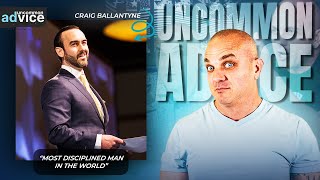
Chasing someone else's version of discipline cost him everything. Success on the outside means nothi
Scaling your business doesn’t have to be a slow grind. There’s a smarter way to grow faster without
Starting a business from scratch isn’t easy, but rebuilding it all over again was the best decision