Uncommon Advice Ep 25 - Turning Mundane Ventures into Financial Gold
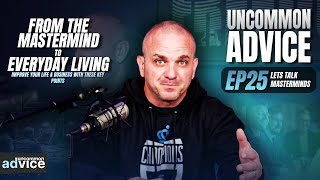
This is a transcript of Nate Kennedy's YouTube episode (Uncommon Advice Ep 25) reporting takeaways from a recent mastermind. Kennedy lists five practical lessons for entrepreneurs: (1) keep watching your business even while delegating, (2) decide where you want to go and stay disciplined (avoid shiny-object syndrome), (3) be willing to self-proclaim expertise when legitimately earned, (4) repeatedly replay and repackage your highest-performing content, and (5) prioritize long-term health—don't sacrifice health for wealth. He illustrates points with personal anecdotes about digital businesses, newsletter scale, and his fitness journey.
So if you know exactly what you want and you know where you want to get, you just have to stay disciplined and not do the shiny object syndrome.
This is the moment we waited for. Everything you want is right here. We gonna give them what it came for. We gonna take it up from last year.
Welcome back to another episode on Common Advice. Excited for this one? I just got back from a mastermind with about 18 guys just diving into each other's businesses. We had some guest speakers, a lot of great info. So I don't know if you're a part of a master or if you take time going to events to just get around people to help you think bigger. If you don't, I highly recommend it. If you do, you know the value, right? So what I want to do real quick is just break down five things, five lessons that I took away from being at this mastermind. So it's things, lessons and just smart ass stuff that people said that really kind of hit home. And so what I want to do is kind of go through those with you. I'm going to on today's podcast. So number one, this one was really, really interesting. Don't forget. So it was don't forget to watch your business while you're working on it. You've heard us, you've heard many people say you got to work on your business, not in your business, right? And so a lot of entrepreneurs and business owners really focus on getting to that point and I think they take it as hey, I'm going to go work on my business. So I got to hire someone, put them in place, I put that person in place, I assume they're doing all the stuff that needs to be done and then I move forward, right. And so I go focus on working on the business. So this happens very often. So the take that was said there was make sure to watch your business even while you're working on it was very important because I've been in businesses where I've put someone in place and things weren't going as planned. But I was so focused on working on it, I wasn't watching the business and things started falling apart, decided to come back and fix it. We've all heard got probably know somebody in business that's like man, you know, so and so stole X amount from me, right? I'm fortunate. I've never really had that, that issue in, in the digital world that I've been in. But the I've got friends and business owners that I know that have, you know, been working on their business Forgot to watch it and have lost millions of dollars through that process. So I think it's important to understand that the distinction between the two. But I thought this one really, really hit home, right? Don't forget to watch your business. So, yeah, yes, 100%. You got to work on it. There's gonna be times you gotta work in it too. But no matter what, you always gotta be watching it super important. So you don't wanna take the eye off the prize, right? And just assume everything's getting done. So the next thing is, the second thing that I think is that was super important is, and really hit home for me as well too was know where you want to go and stay disciplined to get there. So you hear all the time people talking about shiny object syndrome, right? You get an idea, you go work on it, and then all of a sudden it may not take off how you want, so you go work on another idea. And like, you never really go all in on, on, on kind of one thing and, and make it scale, right? So if you know exactly what you want and you know where you want to get, you just have to stay disciplined and not do the shiny object syndrome. So discipline looks a lot of different ways in regards to how that is for you. But for me, I've actually done this a few times where I've always, since, for. Not always, but for a long time I've been in the online Internet money game and generating businesses, leveraging digital media, right? So I've bounced from different companies. I've had education company, I've had an agency, I've got a media company, I've got another agency, we've launched. We've got a handful of different things that we've done over the years. And I have, I would definitely say I've probably. And I've also done a lot of this side stuff that I've tried to launch up and kick off. And I got to say that I know where I've wanted to go, but I haven't always stayed disciplined along that path. And it's funny, someone asked me the other day when I, when I was at this meeting was like, hey, you know, what kind of stuff you working on? Or we're just joking about business and whatnot. And, and I kind of cracked a joke that said I just wish I had a really boring business right now, right? So boring businesses can make really, really good money. But sometimes what happens is we get bored with them so we try and do a bunch of other stuff. So I think that's super important. Now this also doesn't just go for business, this goes for personal. I think I've done a much better job on the personal side, I would say staying disciplined than I have on some of the business stuff. That's just me being, you know, real with you on it. But the, the family's always been. I've known what I've wanted, known where I'm going and what I'm doing with that and kind of goals of the family and goals with my life and personal life and fitness and all that. And I've always stayed pretty disciplined along the way. So it goes both ways. So I just want to share that with you. I think that's a great, great insight that we gained from there. Now here's a, here's one that might raise some eyebrows and I don't know how I feel about it. When it was said and I see it, there's kind of two different ways of looking at it. But the next thing is you can self proclaim your status in your industry. So some people might call this fake it till you make it. And I think those are kind of two different things. I think you can self proclaim if you have the experience. But a lot of times people with experience, they don't proclaim it at all. Right? So you see it often in the coaching space where people are self proclaiming with no experience, or you see it in the education space where they self proclaim with no experience. But I'm talking about self proclaiming your status. When you actually have the experience, you actually know what you're doing. And I've actually got an example. There's a guy recently, I've seen that he was self proclaiming being this newsletter expert and doing all this stuff. And as you know, on one of our companies we send millions of emails a day and we generate a lot of revenue out of those emails annually. So with that said, when he started talking about being an expert, I've never really come out. It took me a while, probably three years of doing it and sending millions and millions of emails to come out and say we're experts at it. But at the same time he's got, he starts talking about being an expert, he's going to help you do this, help you do X, Y and Z. Come to find out, he's only got a thousand subscribers on his newsletter list. Now don't get me wrong, that's a decent amount of subscribers. It's good, you can do well. But if that's the only list you've ever built, you're not really an expert. You haven't tried, you know, maybe you've done some organic stuff and whatnot, but you haven't found a way to scale it yet. Like. Like our side of the business where we got over 3 million subs, right? So. Subs meaning subscribers. So I think, you know, he's self proclaiming that he's this expert in that space, but he hasn't hit any ups and downs in the business quite yet with those subscribers. So you kind of got to be cautious sometimes in how you do this. For me, I think you got to have the experience to self proclaim. But don't be fearful of owning it. I've always personally, in the past, been timid to come out and do some of that stuff because I know there's, you know, sometimes I feel like I don't know enough. Right. No matter how much I know. And then I have a conversation with someone that doesn't know anything about our industry. We start talking and going, and I'm. Helps them out a lot, helps them put that plan in place and all that good stuff. But I think it's. You got to be cautious on, on how you use that. Don't be fake about it, be real about it. But yeah, you can proclaim your status, right? Don't, don't be afraid to put your, you know, stake in the sand and draw or draw that line in the sand and say, this is who I am and this is how I'm gonna help you, right? People gotta know. And if you don't tell them, they don't always know, right? So it's the next thing. This one was by Jared. He. We're sitting there having a conversation at dinner, and when he said this, I'm like, oh, that just makes so much sense. Makes so much sense. Replay your greatest hits all the time. And he goes, think about it. All these musicians, all these different music artists, what do they do? They sell concerts out decades later, right? Rolling Stones did it for a long time. You, what's YouTube? Does it like all these different people that do concerts, they play the same songs over and over, and people keep coming back and listening. So when you equate that to your social media content, man, that is powerful, right? Boom. That just kind of opened your eyes, didn't it? So when you have great hits, we spend a lot of time creating content. We spend a lot of time developing different content pieces, whether it be video, writing, all that other stuff. But how often do you replay the ones that do? Well, how often do you replay Those hits. And so for me we're going to go back and start pulling some of those hits and start replaying them because they did well the first time, chances are to do well the second time. And now I'm not saying, just let's say you have a message, right? And it hits really well. You can, there's probably five, six, seven different ways that you can tell that story, that you can deliver that message in the same manner. That's actually going to be beneficial and the followers and subscribers are actually going to still gain value from it. So there's different ways you can tell it. So it doesn't always just have to be cut and paste. It can be actually replaying some of those hits in a just little different mechanism, a little different way, right? So I thought that was, it was definitely mind blowing at the moment. And it's amazing to me when you get into these rooms, there's some things that get said. It's not the most complicated things that get said. You know what's the most, the most valuable pieces are the one liners and the very valuable things that hit, right? So for example, replay your greatest hits of all time. That's not any massive crazy insight, but it's very powerful insight. It's not a complicated insight, it's very simple, powerful insight, right? So that's what I find in these rooms. It's those one quick things and the next one, the next one's actually gonna hit home. So I don't know about you, but I know fitness is something that's important to me. Health and fitness has been actually I spent a lot of time growing up actually working out and I was, got into lifting and then I got into powerlifting stuff and I played sports and did all that. Then I got real lazy and I went to college and when I got to college, I got lazy. I put on, I didn't do the freshman 20, I did the freshman 30 in three months actually. And then I just got super lazy, didn't work out, didn't do any of that. And then for about 10 years I did no working out. And then my wife got pregnant with our first son and when she's pregnant with Kaden, I decided, you know what, I need to, I gotta get back in shape, right? I got an example to set and ever since then it's been a very important piece to kind of. I took, I took a 10 year, I took a decade off, right now I'm back, but it was running. Health and fitness is super important. And this is why right so you don't want to be the oldest guy. He's like, sorry, let me rephrase that. You want to be the oldest guy in the gym, not the youngest guy in the nursing home. Think about that. You want to be the oldest guy in the gym, not the youngest guy in the nursing home. So when he stated this, the guy that stated this is 71, looks probably 20 years younger than that. Super vibrant killing business, doing some really cool things, high end consulting, working on billion dollar deals, just giving us like great insights. And that was one of the things that, that he put out there. And I'm like, holy smokes. Yes, fitness is important to me, but sometimes we just do it because it's for me, I've always done it as health and fitness been important because it one, it helps me keep that edge off. If I don't work out and eat right. I tend to get angrier sometimes, you know, so I don't want to be that way. So health and fitness kind of keeps me grounded, keeps my mental, you know, keeps me more focused, keeps just a lot of benefits for me. But long game, that's why the long game, that is exactly why. Because I want to be the oldest guy in the gym, I don't want to be that youngest guy in the nursing home. So I think that was a very eye opening insight as well. And I wanted to share that with you. Is and the next piece with that is really, I think to hit that one home is don't sacrifice your health for your wealth because it'd really be ashamed if you weren't able to enjoy the fruits of your labor. Right. So with that, man, this has been another quick episode of the uncommon advice. I hope these five insights that I gained from this past couple days has an impact on you as well. If it does, if something that you like here, do me a favor, kind of bro code, hit that like comment and share it with someone else because that helps us get the message out, helps us grow. I appreciate it, thank you very much.
More from Nate


Anxiety doesn’t have to control your life. @realcraigballantyne breaks down how he faced it head-on
Chasing someone else's version of discipline cost him everything. Success on the outside means nothi
Scaling your business doesn’t have to be a slow grind. There’s a smarter way to grow faster without
Starting a business from scratch isn’t easy, but rebuilding it all over again was the best decision