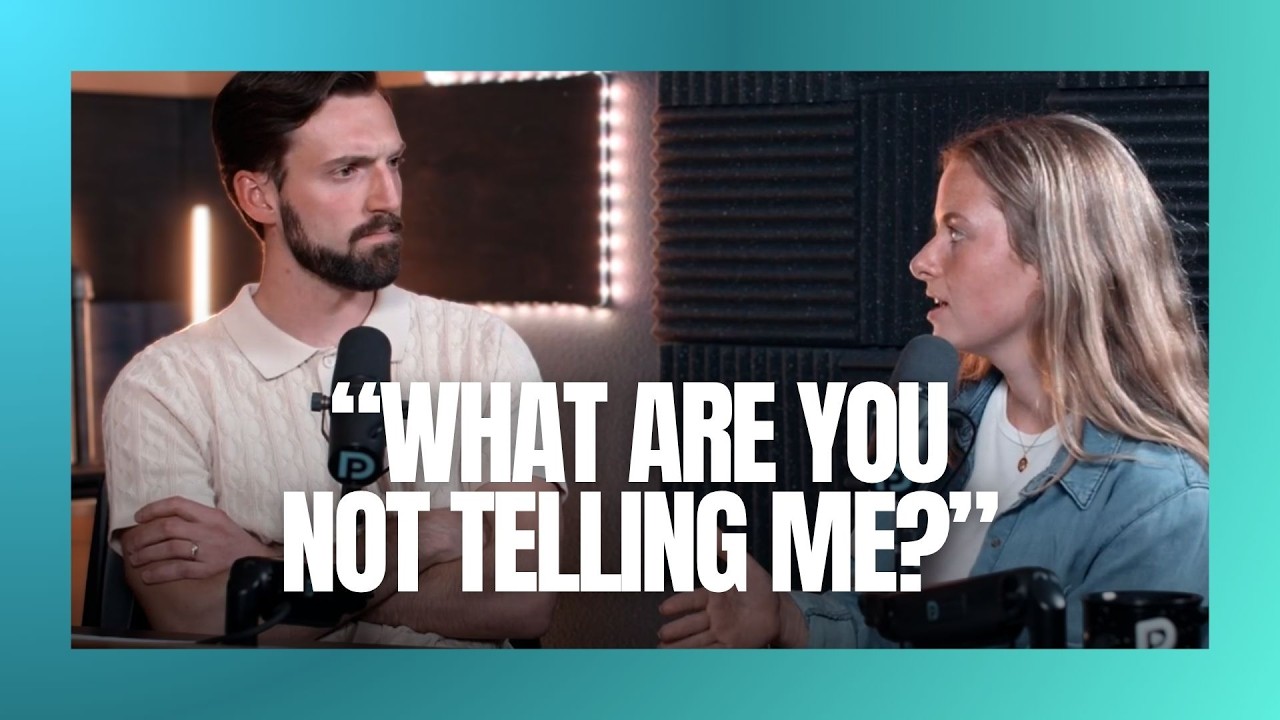
In this conversational episode, host John and co‑host Haley discuss with guest Nick Stumbo the importance of honesty about past or present addiction—particularly pornography—when forming romantic relationships and entering marriage. They explore how nondisclosure erodes trust, using a "dump‑truck" analogy to illustrate how hidden bricks of secrecy can crush a marriage. The participants argue that serious relationships demand serious conversations, recommending that the disclosure conversation begin around dates three to five, before exclusivity deepens. Nick explains the psychological toll of keeping a secret: fear of rejection and the daily strain of living a hidden part of one’s story, which undermines the relationship even if the secret never surfaces. Haley and John reference the 2016 Barna report’s "pornographic double bind," describing how many women feel trapped between staying with a partner who struggles with porn or leaving for another who may have the same issue. They present honesty as a litmus test—seeking a partner who offers compassion and space for ongoing work—rather than a test of unconditional love. Throughout, they cite real couples’ redemption stories from the Pure Desire community, emphasizing that early, transparent dialogue can shift cultural narratives and lay a foundation of trust for long‑term marriage.
Chapters
What do you believe is the impact on a marriage if someone chooses not to disclose, um, whether past or present, before they get married? So you've talked a little bit about that, but can you expand?
Well, just to say, we're only 40-something days into marriage, uh, so we definitely don't have, you know, all the pros. Yeah, we're not pros. We don't have all the answers. Haley, you want to lean in?
I think even just this last weekend, we got to hear some stories of couples who have been through this journey of crisis, betrayal, working through their addiction, and, and to see the redemption arc is so powerful. And yet, like, even in the hope that that brings, like, there's still so much pain and shame and And I mean, PD knows all too well that this is detrimental to marriages and that— yeah, I mean, keeping— I mean, even just in our relationship so far, having a foundation of honesty and trust is so crucial.
Mm-hmm.
And I can only imagine, you know, just if even like little bits and pieces are kind of hidden, like the way that that chips away at A strong foundation of a marriage.
One of the couples had said, John, like, did you prep Haley on what she was about to hear? And I was like, oh no, maybe I should have. And yeah, I don't know if I— because we live in this world where marriages often navigate addiction and betrayal and infidelity and all the things. And thankfully, as I get to work with donors, and ironically Haley also works with donors for another nonprofit here in town, I get to hear redemption stories. And so, you know, we're not sitting in the crisis like a counselor would at the beginning. But yeah, to get to be in the room with Hayley and just to get to experience some of these stories together, it's devastating. I feel like that's the only word to use when a wife, primarily, right, men can also be betrayed, but for the betrayed spouse to get dump trucked by the addict's addiction. I love that analogy. We use it a lot here at Pure Desire, but just, you know, backing up the truck and unloading the bricks and just them finding themselves below the surface. It's just like— You can, you can lay the foundation of those bricks with trust and honesty at the beginning or get dump-trucked. And my heart just breaks for whether it was the betrayed spouses this weekend that we got to be with or for those that are listening, because this isn't the sorority that they signed up for or fraternity of betrayed men or women, and yet they find themselves in this position.
Yeah, yeah.
I, I think when we don't share in a dating relationship, particularly, you know, as I've said at events, like, serious relationships invite serious conversations. So So the more serious you're getting in your relationship, the more serious and honest and deep your conversations need to get because you're looking at like till death do us part level commitment. Like that's huge. And so if you're entering into that knowing you're carrying like this part of your life, either one or two things is happening. Either one, you think it's not gonna impact us. I'm, you know, it's in the past. I'm gonna deal with it. It's gonna go away. And that's more where I was at. 'Cause I had shared to a degree with my wife, but I really think I believed like— it was just going to go away and it would be a non-factor, so I didn't probably share as much as I could have. Or someone knows this is a really big deal and I think if I share it, it's going to ruin the relationship and they won't marry me, which means they're going into marriage knowing that maybe that person wouldn't even marry them, which even if it doesn't come out, like, that's not a healthy foundation for a marriage.
No.
If you know I'm carrying something, and even if it wasn't true, like that fear of rejection, that fear of if I was wholly known they would leave, it is impacting that relationship every single day. And so I, I think that's where I've just seen in, in that relationship. And again, it doesn't mean everyone will do it on date one or week one, but as it's getting more and more serious, I think that place of being of it's all, it's all known, it's all out there. And the more I'm able to say, and here's some work I'm doing that gives me confidence I'm headed in the right direction and, and invites that person to, to see that.
Hmm.
That enables you to start on an entirely different footing than, hey, there is this little piece of my life that if I open that door, it could end the marriage. Like I said, whether it is known or not, that is impacting your relationship because you are living to a degree in hiding about a part of your story.
It makes me think, just to tag back into like that first date, you know, when do you share, when do you not share? I got a chance to write a blog and in it I said you should share something, at least maybe begin the conversation from anywhere from date 3 to 5, to your point, before it gets more serious of like, okay, if we're gonna take a step towards dating exclusively. One of my friends has this framework of like casual dating, as in like, I'm going on dates and I'm open to like being in a relationship, towards becoming exclusive, like, hey, it's just you and I, to becoming official. I don't know if that's a helpful framework, but I'm like, oh, that's helpful to think through. And if you're becoming exclusive with someone where you're like, hey, like, it's just you and I, I'd love to move towards becoming officially boyfriend-girlfriend, and then, you know, continuing into like conversations on marriage, to your point, Serious relationships require serious conversations, and I think I don't want any boyfriend or girlfriend or fiancé to be dump trucked. And so part of that blog is saying, hey, in date three to five, at least beginning the conversation of when were you exposed to porn? How have you navigated this? How is this you know actively showing up in your life? Is there struggle or not? I'm not saying that you have to share everything or tell a cohesive narrative. but to at least begin the conversation because it is so prevalent, right? We would be foolish not to have this conversation early on, but out of fear or complacency or even just the expectation that everybody's struggling. And you can speak to this, like how you, how you had entered some, you know, previous relationships of like the mentality that this is just what it's going to be.
Totally. Yeah, I was, I mean, in past relationships, I knew that porn was something that like would be a significant impact, would have a significant impact on a relationship. And, you know, I've seen the stats, like a lot of guys are gonna struggle with this. And so I think the question that I kept running into was, well, why would I leave this guy if over porn or masturbation or addiction if the next guy is just gonna struggle with it as well?
Which I remember reading the first Barna report in 2016 and And one of the experts they had interviewed had titled what she just said, the pornographic double bind that so many young women in the church are facing. Why would you leave the one guy to simply date another guy where it's the same story? And that breaks my heart. And that is one of the core reasons I continue to lead groups for singles going, what if that wasn't the narrative?
Mm-hmm.
Like, what if we could literally shift and shake culture where you have stories like Joel and Brian Where they've done work, they've dug into their story, and they're showing up with a level of honesty that then sets the foundation of those bricks.
Yeah.
Rather than them being dumped 5 or 10 or 20 or 50 years into marriage, some of the stories that we get to hear here at Pure Desire.
And one of the things you're discovering in bringing that into your dating relationship, not bringing the porn use in, but like bringing that level of honesty, I think you are discovering, is this a safe person for me? And I'm not, again, saying that you should just act like your behaviors aren't gonna change. You're not just trying to put them to the test, like, will you love me no matter what? That's not really a fair question in a dating relationship. But to figure out, like, hey, if you're doing some work, but you have a story and a history, and you share with that person, their response is compassion and curiosity.
Absolutely.
And I think that they request, hey, I want truth in our relationship. I don't want hiding and lies. That's gonna tell you a lot about the kind of person you're with to say, wow, I think this is someone I would like to go deep and they're just like, whoa, mm, no, they don't wanna talk about it, go there. Well, that's gonna be a difficult relationship. I just wanna say that because life and marriage is hard and we are all flawed and we're gonna do things that hurt one another. And if you start bringing up your story and they can't even create space for that.
Yes.
Like, I'm not sure they're ready to be in a marriage where there's gonna be hard conversations all along the way. And again, I'm not saying that means you should just be dragging bad behavior into the marriage and accept them to be okay, expect them to be okay with it. But if you're not willing to talk about it, But that if you're doing some work, you want to be with someone that makes room for that work and that honesty.
Yeah.
So yeah, I think it's kind of a litmus test, really, in a dating relationship.
One of our friends said, dating a marriage is hard enough as it is, and dragging an active addiction into that is only going to make it worse.
Amen to that.
And he said something so profound. He said, you sharing to some degree that this is here, right, breaking secrecy, actually puts the weight of discernment appropriately into, like, into their lap of like, hey, you have agency here to choose to continue dating me or not, rather than taking that away from them because you're holding it in secrecy. I'm like, oh my gosh, like, please give them the gift of choice that we should all have in any relationship, because so many men or women who are struggling with this out of fear hold it, right? Of like, to your point, like This person might not even continue dating me or might not want to be married to me if I'm holding this, but they don't tell them. And then it just— yeah, it just feels like that catch-22 of like, surprise, now we're covenanted together. And now I'm like, ah.