Developing Empathy For My Spouse w/ Carol Jurgensen Sheets | Ep. 462
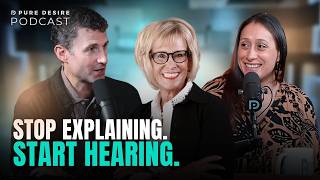
In this episode of the Pure Desire Podcast, host Nick Stumbo and co‑host Rebecca Vandermeer interview seasoned sex‑addiction therapist Carol Jorgensen Sheets (LCSW, CSAT, CCPS/S, PCC) about how couples can develop empathy after sexual betrayal or compulsive sexual behavior. The conversation defines empathy as perspective‑taking and emotional attunement, explains why addicts often lack empathy (either never learned it or lost it to the self‑focused addiction cycle), and outlines a structured clinical framework for building empathy. Key tools include the Early Recovery Couples Empathy Model (ERCUM), the AVR (Acknowledge‑Validate‑Reassure) and ABR (Acknowledge‑Validate‑Share) reflective‑listening techniques, the FASTR emotional awareness scale, and specific exercises such as anger‑containment mantras, “venomous letters,” the “Vesuvius” venting exercise, and a three‑part disclosure process. The episode also discusses the phases of trauma‑informed recovery, the importance of safety and stabilization, post‑traumatic growth, and the long‑term timeline (3‑5 years) for rebuilding a “new marriage.” Carol shares her resources – workbooks, two websites (sexhelpwithcarolthecoach.com / helpthemheal.com and helpingcoupleshealfrominfidelity.com), her new book on infidelity, and the IRCM certification for clinicians. The hosts emphasize that empathy is a skill that can be learned with intentional practice, supportive coaching, and community involvement, and they encourage listeners to use the tools provided in the show notes.
Chapters
Hello there, good listener. I am your host, Nick Stumbo, and you are listening to the Pure Desire Podcast, your biblically based and clinically informed approach to healing from betrayal and breaking free from compulsive sexual behaviors. And whether today is your first day in recovery or your 10,000th, we hope that you get to listen into conversations that will make a meaningful difference in your recovery journey today. Today is episode 462, and here joining me as my co-host for this series is Rebecca Vandermeer. Rebecca, good to see you again.
Hey, thank you. Good to see you. Thanks for having me. Such an honor.
Well, it's always fun to have a new co-host and to bring your perspective in, and I think we're having a lot of fun as we, uh, kind of unpack some of the nuances, the challenges of couples recovery, you know, because we do a lot in Pure Desire groups with the individual work, the struggler or addict, and then the betrayed. But coming back together can be a real challenge, and one of those challenging areas is learning to have empathy for our spouse. What are your thoughts about empathy and what we heard today?
My goodness, I love— one of the biggest takeaways, and I hope most of you audience can relate to after listening to this, is the reality of empathy being It's a continual learning process. It's a skill that maybe you don't know that you have it, or your spouse doesn't have it, or it's not showing it because of the addiction or compulsive behavior. But to hear just such a good sense of hope in terms of this is something that we can learn and incorporate, be intentional about incorporating in our day-to-day life and conversations that we know we're gonna have with our spouse, even if it's, you know, normal daily conversations, but to begin practicing those, uh, empathy skills, uh, can then develop into an organic way of doing life and relating to not just your spouse but with other people.
Yeah, yeah. I think that willingness to enter into the emotional experience of your spouse is really an indicator of the health of the relationship. And, and for many of us in our Years of struggle and addiction. Empathy was not a skill, but it can be learned. And I think that's what we heard from our guest today. She's really one of the best. Carol Jorgensen Sheets has kind of written the book on empathy. She has some great material out there, and she provided some really valuable perspective today. So a bit more about Carol. Carol Jorgensen Sheets has a lot of initials behind her name. She's an LCSW, a CSAT, a CCPS/S, a PCC. The short of it, she's been treating I know, and probably more that she didn't list, but she's been doing this work for 41 years. She's a certified sex addictions counselor and certified Partners of Sex Addiction trauma specialist. She also trains clinicians and coaches nationally and internationally and believes that her partner-sensitive treatment approach enhances treating sexual addiction and partner trauma in the relationship. Her style assists couples in healing the shame and the pain of sexual addiction and she uses post-traumatic growth to emphasize a client's strengths. She has authored or co-authored several books, including "Help Her Heal: An Empathy Workbook for Sex Addicts to Help Their Partners Heal," "Unleashing Your Power: Moving Through the Trauma of Partner Betrayal," and "Help Them Heal: Teaching You Both How to Heal Your Relationships After Sexual Betrayal." We are big fans of Carol Jurgensen Sheets, and I think you've got a lot in store for you listeners. So here now is part 3 of 5 in our series on couples recovery, and today talking about developing empathy for my spouse with Carol Jurgensen Sheets. Carol Jurgensen Sheets, welcome back to the Pure Desire Podcast.
Thank you so much. It's always good to be with you all.
Yes, we love having you as a guest. And when we thought about this topic, you know, we're in the middle of this series about couples recovery and knowing that an essential element is empathy. And we felt like, boy, there's no one better to talk about empathy in a coupleship than our friend Carol the coach. So let's jump in. And start there. Can you define empathy for us from your point of view and explain why empathy is so important for healing a relationship after discovery of an addiction or compulsive sexual behaviors?
Yeah, I would even go further to say that the relationship can't be restored if the betrayer who's in recovery doesn't learn empathy and create that safe place to begin the healing that the partner needs, and they both need eventually. So empathy is really being able to put yourself in another person's perspective. And with betrayal trauma, it is just imperative that the betrayer learns what's going on inside the heart, the soul, and the mind of the betrayed. But You know, groups like yours are just beginning to help. Well, you guys have been around for a while, but, you know, men in particular haven't learned empathy, and they didn't have it in biblical court, so they don't naturally have to develop it, right? And, and now they're getting the opportunity to learn it and to practice it and to help her feel safe so that she knows that her pain and her shame and her sadness and her grief are really well understood. So that's what I'd say empathy is: perspective-taking, recognizing emotionality in the body. You know, when he comes in, he needs to be able to say, "Hmm, something's not right here. Are you sad? And I bet you it's about my past that's making you sad today." And then he has to do so non-judgmentally. So if she overreacts, he knows it's a trauma response and not a woman going crazy.
Yeah, yeah, yeah.
You know, it's funny, uh, you, you have been noted for saying that addicts lack empathy. And so what I'm hearing you say a little bit is, is that rather they haven't been taught, they haven't been shown how to do that. Um, but would you mind caring— would you mind sharing a little bit about why do you think addicts have a hard time with empathy in general?
Only if you'll help me Only if you'll share your answers too. And what I really mean by that is I always ask groups, you know, I am doing an ERCUM training right this very minute, and that is the Early Recovery Couples Empathy Model. And I always ask my trainees, do you think addicts grew up without the ability to empathize? They didn't learn it, they didn't see it, um, they weren't taught it. Or do you think the addiction, the compulsive behavior, uh, the urges and cravings the sin robbed them from that ability to empathize. And so I'm going to ask you to— I'm going to put you on the hot seat. Um, what do you think? Do you think they had it and they lost it, or maybe they didn't have it to begin with and it led to compulsive sexual acting out?
Yeah, you know, I would say— we'll see, we'll see what you think— but I would say they had it and, uh, painful experiences in life in itself just robbed them from developing a bigger sense of it as they grew older. What do you think, Nick?
I mean, I think in some ways it's like a chicken or the egg question, which came first, that, that these are very commingled stories. And even to ask the question like, well, when did addiction start in my life? Did it start when I was in my late teens and was hiding behavior, or were the roots of it already deeper? And, and the two, like I said, I think they're so commingled it'd be tough to which is first, but what I would say is the entire nature, what we know of the addictive process, is it tends to create self-focus. So if you think about the binge-purge cycle, obviously the binge is very much about my pleasure, pleasure-seeking behaviors, medicating, like what do I need to feel better? That's a binge. But even the purge then becomes about my shame, my guilt. What about me? What have I done wrong? How do I make up for it? And it, in either side of that cycle, the focus is on me. And that can make it difficult because many of us have been stuck in that pattern even before we realized it was a pattern.
Mm-hmm.
And, and that becomes like just a, a paradigm or a way of viewing life that can make it difficult to realize how little time or energy or awareness I have had of other people's emotions or experience around me.
Yeah.
And so I, I think, yeah, it, it becomes very much a byproduct of the behavior, but is it also part of why the addiction developed? I think again it's very commingled in the process.
Well, and I would agree with you both, as well as it's really hard to have that addiction or that compulsivity where everything really is around you and to empathize, because then you would just feel terrible. And so I really feel like it, it buries any empathy that was in that person to begin with. But I really love that empathy a video that Brené Brown does, uh, that shows the 4 characteristics of empathy. It is so well done. It's so, um, explicit in the betrayer has to know his or her feelings, right? And if the betrayer doesn't know his or her feelings, he cannot spot them in the person that he or she loves. Now, I'm just going to talk heterosexual for the rest of this time, but I want to say Excitingly so, I just signed a contract to write Help Him Heal because we're seeing more and more and more and more and more—
that is so male—
betrayed persons and female betrayers that got caught up in that addictive urges and cravings and purging cycle too. I mean, God bless our internet, and it's been the demise of our relationships so far. And so women are getting their needs met in inappropriate ways too. And so I'm really excited about that. Look for Help Him Heal. That sounds possibly in the next 9 months.
Okay.
Collaborating with some people and creating a baby. You're another one. Yes.
That's awesome. Yeah.
So I agree with both of you. Back to you guys and, and me and, and our listening audience, because when there is that much of a trauma response and the partner is so devastated, it's really hard for any kind of connection to occur because of the rage and/or the disconnect. And then it's even harder to have empathy. You know, how can— then the betrayer doesn't feel safe to show empathy because they A) he or she doesn't feel like they deserve it, and B) they're afraid they're going to get shut down.
Yeah.
But what I do know is that couples want the help. They want to stay together. And so we're all in this field to do almost the impossible, and that is teach them the skills that they can use to begin to build safety so that they can grieve and mourn and get angry in safe ways. And then get over there to restoration or post-traumatic growth.
Yes.
Yeah, I really appreciate that insight that a lack of empathy may be a form of self-protection for the addict or struggler who's already, whether they're consciously aware of it or not, already carrying a fair amount of shame about their behavior and actions. And if I were to truly open up my heart to the experience or the pain I might be causing others, the weight of that is, is heavy, and it's It's, as we know, can be a very healing part of the process when I take the gravity of that and it creates the motive for change. But when we're stuck in the addiction, that lack of ability, you know, your brain was created to avoid pain. So you're not doing that because you're a narcissist or you're a bad person. I mean, those are separate conversations that you need to deal with. But that desire to protect yourself is actually God-given. God created us with the desire for self-protection, but that system is getting hijacked to keep me emotionally closed off to others and keeping me from the level of relationships that I can have. And I think that's what's exciting about this episode on empathy is it's really helping people see how can you have better relationships than you've ever had. And so in that regard, Carol, if we realize this is me, like, I don't, I don't really understand empathy. It was not modeled for me. I've not really learned how to do it. How do we learn empathy? Because it can feel like learning a foreign language. You know, like I'm being expected to speak German, but no one around me even speaks German. How do I speak a language that I don't speak and no one around me does? What would you say for someone who's trying to learn empathy and doesn't have great models around them for that?
Yeah, I would say to find empathy specialists, and we certainly have a lot of them us in the field that can help. Now, I'm a big believer in seeing the couple from the very first time together because I want to soften some of the trauma response by explaining the misconceptions, the misconceptions inherent in betrayal. And, you know, oftentimes the woman may, may not feel good enough and wonder what's wrong with her. And think about, was it our sex life? You know, was it because I bore 4 children? What is it? And she begins to doubt herself while the male is like, I'm not even sure how to approach her, let alone not get defensive when she's yelling at me or when she's making these statements and she is in that trauma response. So, you know, one of the things that I really believe is when I work with couples, I see them together for the first couple of sessions, then I offer to continue to do that. If not, I make sure they're resourced so they get to the right people because that is ever so important. And I really believe you need the manual. You need the manual that says, you know, if you really want to develop empathy, let's look at what are you willing to do? What are you willing to do for your partner to help her feel safe? I cannot talk enough about safety and stabilization, which is that first phase for the betrayed. You know, they've got to be able to feel safe to again move closer together. Um, and my experience is when I'm working with couples, within the first couple of months I see some empathy really blossom from the betrayed because she can see the work that he's doing. Now, he doesn't do it perfectly, but she's willing to see those changes. Maybe not comment on them because she's thinking, oh, I don't know, if I sing his praises, he may dupe me again. But she sees him She talks about it with me. And I always ask for couples when they see the beginning of change to notice it, to share their vulnerability about it. And so here's my formula. I believe that our betrayers or strugglers, as you call them, Nick— I remember you call them strugglers, and it is one of the kinder ways of talking about the situation. And we don't want to shame men or women, but you ask the betrayer to work on his feelings, and that needs to happen amongst his group.
Okay.
It needs to happen with reading materials. Help Her Heal does that. Help Them Heal does that. Helping couples— I mean, we work with the basics, and we keep it to 5: anger, sadness, loneliness, fear, and happiness. Now people will say, where's shame and guilt? And they are there, but that's actually a mind state that feels like a feeling. That's a byproduct of what somebody has done or experienced. So we work on feelings first, then we work on communication. That can only be done if the betrayer is in good recovery. And you know, there's not a better group of people that does recovery support and a fair recovery than you all. I mean, anybody who's wondering, are they in the right place with Pure Desire? It just doesn't get any better. You have really organized an incredible system of coaches, clinicians, groups, and it takes a whole committee to develop the supports to change these behaviors, because this is brain science. When somebody has compulsive problematic sexual behavior, they've got to develop new neurocircuitry. If they have cheated on their partner, they have to have supports available to interrupt any desires, urges, and cravings Uh, because cheating, betraying someone is different than, uh, compulsive problematic sexual behavior. It just is. One is about self-esteem and deficiency. The other is about having a condition that gets worse and worse and worse without intervention. So one of the best ways to start the relationship over is a disclosure. And that's a 3-part process, and it's formal, and it's therapeutic, and it has to be done with people that know how to do it. And you both have been trained in disclosures, am I not right?
Yeah, yeah. And that in our series As It Would Happen, that was last week's episode. So if anyone is jumping in on this week, make sure you catch that one as well.
Go back to it because it's a perfect, uh, complement to this. Yeah, absolutely. I love How you were sharing, um, the tools and, um, just the language and empathy, I guess, that it's being developed, that is being taught to the addict or struggler, um, to be able to navigate and give empathy to the— to their betrayed spouse. And so with that in mind, it— for the betrayed spouse, or maybe even a family member that is, uh, experiencing the hurt from the lack of empathy, receiving it from the betrayer. Um, what are some tools or some ways in which, on the other side of, of it, people— the spouse or the family member— can communicate to the, to the addict or betrayer about their lack of empathy and how that's affecting them in, in general or in specific areas?
Well, I always come at things from a clinical point of view because I am a clinician of 45 years, but I'm also a coach who believes in actualizing potential. And when the family members, not particularly the struggler or the betrayed, but family members, adult children, sisters, sister-in-laws, whoever it is that's really struggling too with what has been done, Um, I think they need education, and they probably need to be in a safe environment to talk about their feelings of anger, disbelief, because they too are going through betrayal trauma for their loved one or for their mother or for their father. Um, so I really believe in a structured setting that helps with communication, and that is counseling or coaching. There is just no doubt about it. They can also go to support groups, and we've got great books that are just, just being issued. I mean, let's face it, we're all pioneers in this field. And finally, when I did my first podcast in 2007, there were no other podcasts for partners. And now look at it, there are more podcasts for partners and couples than there are for sex addicts or people that needed a fear recovery. That's a beautiful thing that in such a short time— that was 2007 to now— they're exploding with resources. But the most important thing is that you find the right program, the right people, and you use your intuition, which I believe is divinely ordained in you. To know whether you feel safe with those people, with that group, with that counselor or coach, because that professional should be able to make you feel safe. And if you don't, then you really need to work on sharing that. You know, I didn't like that you asked me that. It sounded like you were blaming me for not having enough sex with my husband. And then perhaps the clinician or coach can say, "Hey, I really wasn't meaning to blame you. I just wondered what your sexual relationship looked like before betrayal." So finding the right people and then communicating. And for our family members, it's really purging the sadness for the family and for mom and dad or for brother and sister. So that they can all begin to trust the coupleship, that they'll get what they need or discard it if it's not healthy.
I know in our early recovery as a couple, it was a challenge. Yeah, I felt like I was fairly comfortable with emotions. I felt like I was relatively, you know, healthy emotionally, like that I was able to experience emotions and receive them. But I, I don't think I realized how little I knew the language of emotions, how to share them, receive them. It— I knew I had them, but to talk about them in some ways felt maybe unmanly. Kind of my upbringing, and I think a lot of traditional Christianity or conservative Christianity kind of has a, well, emotions are feminine and men don't really experience them, which is completely false and not helpful. But that language of sharing how I felt about my day, you know, I felt like my wife and I talk all the time. I come home and I share about my day and I hear about hers. But if I had gone through like an issue of feeling very disrespected at work that was challenging my sense of well-being and identity, I didn't really know how to say that. I could just say, well, yeah, I'm— it was a hard day. But to share that on that emotional level and then, you know, because I wasn't familiar with speaking that language, I think really receiving it from my wife was challenging. And I think that was a big part of our first year of recovery was both, like you said, Carol, having counselors that could help elevate like, hey, Nick, did you hear what she said? About how this made her feel. And we don't need you to just explain your behaviors. We need you to help validate her, validate her feelings and help her feel seen. And hers like, oh, okay, that's new. So that, that was one part of it. And then another thing that we did that we were not comfortable with, you know, we had date nights, we had couple time, but it was again more like, how's life? How's the kids? What are we up to? Learning to share at an emotional level. And a lot of that for us came through the tool, the FASTR scale. From Michael Dye that asks the question, you know, as you look at the scale, it's really an emotional awareness inventory between being in restoration or being in relapse. One of the questions at every phase is, you know, how did this make you feel? You know, and, and learning to share that with my wife, there were all these moments she was like, really? Yeah, I never knew you felt that way. And, and it wasn't just about her, it was just my life in general. So I, I think that'd be my encouragement for couples that whether you're trying to communicate how their behavior is making you feel, or you're the other side as the struggler or addict, is recognizing you may not be comfortable sharing that language of emotion either. It's finding a tool, using some, some work that can make that a regular part of your conversation, not just about your coupleship, but about life in general. Because when you become more comfortable processing life through that lens of your emotions and how something's making you feel, I think you become more equipped to hear and receive what your spouse is, is recognizing or going through, and you're able to enter into that with them in ways that right now may just not be a part of your regular routine.
Yeah, and I think that goes, goes along with why we're having experts like yourself here to reiterate the importance of, uh, pursuing professional help. People that can help us in the specific areas that we're needing healing and recovery, which then is going to help that self-awareness to be just an organic, um, tool that we have, uh, that can help us throughout the day be able to be self-aware, be present, be checking in with, with ourselves so that when it's time to share with our spouse or with anybody else, we have already been intentional, have been developing that tool, but then being intentional about checking in, being self-aware throughout the day, and then sharing doesn't become this just sudden thing that we have to do coming home from work, or, you know, whatever that may be. You've already been attuned to self, and now you get the opportunity to express it, to share it with somebody else, especially your spouse.
And I would say when people say to me, what is the number one empathy tool that you have? Everybody thinks it's ABR. And that's acknowledging the challenge, issue, or struggle. Yeah, of the other person, and then that's validating whatever feeling you think that is. And then in a humble way, sharing some progress so that you're reassuring the person that you are working towards the same goal.
Yes.
Ultimately, it is an AVR, even though I included it in my packet for, for you all. We wanted to give you handouts that would help you in your own marriage. And, but it's reflective listening. And that is a hard tool. That is an empathy tool. When you shut off your brain to not respond and instead reflect back what you heard the other person say, it helps you again to laser focus in on what is her perspective. And then taking it one step further, What are her needs right now? You know, because Nick, I agree, I don't do it early on, but I definitely do it towards the end of that first phase. And I say, okay, off with the podcast, stop reading the books, take a day off and do something together. You can't talk about the kids or the grandkids. You have to focus on each other.
Yes.
Well, it's awkward. It's hard not talk recovery, you know. But they need to get back into the groove of finding similarities, finding commonalities that brought them together in the first place. Now I say they're not, they're not repairing their relationship. They're building a whole new marriage.
That's right.
That's right.
Yeah, that ghost of what happened will follow them in the old marriage, but they can rebuild a whole new marriage and say to themselves, okay, we've worked so hard on ourselves. I'm just going to ask this question for us. What can we do to give back? What can we do to make the world a better place? What can we do in our community, our neighborhood, our church to really make a difference, even if it's small.
Yeah.
And when my couples do that work on top of identifying feelings, increasing their communication, practicing empathy skills, it's a win-win for the start of a whole new relationship.
Yeah, yeah. Facing the world together, doing good together helps so much. And I, uh, Carol provided some great tools. Those will be in the show notes. Encourage you to check those out. But I wanted to just emphasize or circle back to something you said there, because I think when we're not comfortable with empathy, when it hasn't been a language that we're well accustomed to in general, it means we're not comfortable with emotions or strong emotions. And early in our recovery, or predominantly before recovery, when my wife would share strong emotions, I didn't know how to receive them. And so usually I would try to fix them and explain to her like why she shouldn't be mad or why she shouldn't be sad or why she shouldn't be hurt. And part of it was because I didn't know how to receive those things. And that's where that reflective listening or a tool like AVR— acknowledge, validate, reassure— taught me to like slow down and say, okay, don't fix her emotion, hear it, receive it, and then ask good questions back of, I hear you saying that when I do this, it makes you feel devalued. What could I do to change this? What would, what would help you? You know, and then that conversation became fruit, became very fruitful. And I will just acknowledge it was really hard for me because I felt like, well, if she would just listen to my reasoning, she wouldn't be so hurt. But I was trying to— going back to another episode, I was trying to fix her emotions with my logic, and she didn't need logic. She needed to feel seen, valued, and heard. And it's when I had the willingness to stay in the uncomfortability of her strong emotions that I feel like I actually began to learn empathy. And so that just, you know, yeah, use those tools, practice reflective listening. And I know sometimes in our self-help culture or psychology, those can seem a little like, oh, that's froofy stuff. Like, we're about the gospel, we're about Jesus. But, but being able to receive and hold someone's emotions is deeply spiritual. It's deeply meaningful.
It's not sacred.
Yeah, it's not light work. It's, it's hard work. And, and I recognize that if you're learning this language, it's hard work, and just let it be hard. Don't, don't try to find an easy way to do a hard thing. Uh, Carol, to kind of go in another direction with empathy, I, I think one of the experiences we see at Pure Desire is that a couple will go into initial recovery, the addiction comes to light, there's discovery, there's pain that's blowing up, and, and we often see that addict have some of that sobering realization of, wow, I've really hurt the people around me. They're showing empathy, and that becomes a big part of their growth curve. And then things start to go better, and the addict in particular can be like, man, we're doing so much better, we're great. And then when their spouse still is expressing some pain, anger, it's like, whoa, wait a minute, like, I thought we dealt with that, or I'm doing better, why are you still angry? So what I wanna ask about is what would you say to that addict or struggler or the betrayer when they feel like, well, things are better, we should be over that, but they feel like their spouse is still stuck? How do they show empathy, maybe especially at a time they don't understand why there's still so much pain for that betrayed spouse?
Yeah, and what I would say, because I am Irkum, and I do believe in these 3 phases, is I would say you are working on your empathy, and I really want to commend you on that. Would you be willing to take more of a challenge and a risk and join your wife and myself to do some anger exercises, to do some grief work? Okay. So that we can create a safe place for them. We create a safe place for him to hold her anger, contain her pain. And then we have lots of different vehicles for dealing with that anger. We spray him with Teflon. We say, what's your mantra? Well, my mantra is, I won't give my past the power to make me feel inadequate. Or she is raging about who I was before. She's not really raging about who I am today. Some mantra that reminds them to stay in the present. And then I would have her write a venomous letter to the compulsivity, to the affair, to the struggling behavior of the struggler. Not him, but the behaviors. Or I would have my couples do something I call a Vesuvius, where he holds her pain Well, she gets 3 to 5 minutes to spew like Mount Vesuvius about everything.
Okay.
And then after that's done, he's witnessed it and he has to share why it was powerful. And there is some sort of release and relief that occurs. And, you know, it's not like it lasts forever, but it's a pressure cooker that's had the cap taken off.
That's right.
And when, when women deal with their anger, which also includes grief, their executive functioning is back online and they can make better decisions and be able to trust again. Now I want to ask you too, are those brains behind you? Are those MRIs of brains?
And I don't know about MRIs, they are just, yes, brain diagrams. And artwork.
Okay, because part of our work together as professionals is to work with the relationship and heal that based on feelings, communication, needs, triggers. But we also have to be brain scientists, and we have to know that a trauma response is begging for validation. That that trauma really occurred and that pain existed. So when they're in Phase 2 and they're getting to do a narrative about— we do one that's the civil letter where you're just telling the person how devastated you were and the impact of it. And then we do the venomous letter, and that is a letter that doesn't have to be politically correct. And then we do the Vesuvius, And we do volume work. And that is so validating that what happens is the women that we work with, whether it's amongst the group or it's in the couple session, they go, "I just feel like I was heard. I feel like my partner understands." And I say at that point, I say, "Okay, here's what I want you to do. I want you to write about how you felt today. I want you to give it a color. I want you to give it one word in addition to the writing." you know, what is that word you feel right now? I feel determined. I feel strong. I feel persistent. I feel— and so they give you a word. And then I ask them to measure how they're going to show up in the world. I say, you know what, this week is going to be paramount for you. You're going to see yourself differently. You're going to feel different. And you're going to use that experience of releasing all those emotions to go out in that world and be different.
Wow.
Maybe you won't let somebody walk on you. Maybe you assert yourself with your son's teacher. And that doesn't mean that you get aggressive, but that means you're clear and direct about what you need and want for your son. But you're gonna like some of the reframe that occurs and some of the, what I call, post-traumatic growth strengths that occur as a result of doing this hard, tumultuous, emotional work.
Isn't it amazing just how powerful it is to, to make room and give permission for all those emotions and feelings to come out and create even that space to say, hey, come out, let it all out. It is important that you are able to express and let that flow outwardly so that you can even reflect back, grow from it, and then your spouse, again, to your point, gets to actually hear and begin developing some of that, that empathy. I love how beautiful that is and just how powerful it is.
Yeah, and I just wanted to speak too to the value of what you called that mantra, because when my wife would have kind of those— and we didn't call it Vesuvius moments, but I would tell, could tell when they were happening— it's like, wow, I'm getting a lot of anger. And there was a part of me that wanted to come in and fix the anger, and I had to just stop it. And I would give it this mantra. I'd say, I created this anger in her. I need to help let her get it out. Um, and as long as— because I didn't know how much anger was in there. It had been 10 years in our marriage. Like, there was a whole lot. And that's fair. Even if I thought some of the things she was saying weren't entirely fair, when I could see it as, hey, this is, this is her anger, and I need to be willing to let her get it out. That's part of my role here. Just hold that. That mantra would be going through my head, even if she said, "Don't fix it, let her get it out." And it helped me just relax and go, "Okay, we're going to make our way through this." And when that pressure would subside, there were often really fruitful conversations on the other side. But if I jumped in and started, "Well, I don't feel that way," or, "Stop," you know, if I tried to hold that all down, it would just get worse.
Counterproductive. Yeah, absolutely. And I think that's on On that side of, I love the focus of the relational piece, betrayer and betrayed, and how they learn to develop and show and communicate empathy for each other. But then I'm also thinking past, if we look beyond our recovery work, how can we make sure that empathy is a regular part of our lives? As beyond recovery. What are your thoughts on that? How do we make sure that empathy is, is a regular part of all of our relationships, not just our, our spouse?
Well, usually, and again, this work— don't let this disappoint our, our listeners and our viewers here— but this work to really feel safe again can take as long as 3 to 5 years to get through that partner betrayal. And so my experience is that when dealing with a good coach, a good counselor— I'm not trying to generate business, I'm retiring, I'm leaning into that right now— but it starts happening organically and naturally because they've been through the trauma cycle, and they are now able to not take in the shame that would normally occur with somebody's trauma response, with somebody's rage. And they do that through the vehicle of empathy. And so I learned the most important lesson from a trauma specialist who said, you know, my job is to help our couples not be back there, to have grown and learned from that, but to stay in the moment. And so the more a couple stays in the moment, the less likely, um, the betrayer or the struggler is going to stay in that shame place. And when, when they're given exercises to begin to give back or to create words that describe each other or a declaration of their whole new marriage. What do they want? You know, if you've read any of my books, I say, I know you're in horrible pain and shame, and I know that you never thought this could happen to you, but if my magic wand were to work, I would ask you, what do you want for this marriage? What do you want for this marriage as you're rebuilding the whole new marriage. And they have to think about, well, what do I want? I want honesty and transparency. I want to get back my trust. I do want to practice empathy. And then sometimes the wife will say, well, and consistency. You need to be consistent. Absolutely. Okay, I need that too. Maybe they need spirituality, or a different kind of spirituality, or a whole new church, or a Bible study. I mean, there are so many things that can support a couple that is building a whole new life together. And so that's what I tell them that they need to do to move forward. And that is almost as scary as doing the trauma work, you know, because that means they have to trust in their own intuition that they're ready. To begin that journey. And I don't know, um, are you a betrayed partner?
Yes, I am.
At what year did you think that you took that shift and said, you know what, I am trusting him more and I am willing to renew my sense of self-safety and trust in myself?
You know, it, it, I think it took me a while, at least for me. That was my, my, my story is my story, right? But I think it was probably around year 5 or so.
3 to 5 years is what it takes for a partner. How about you, Nick? At what point did you shift and feel like, wow, I'm not finding these urges and cravings as much? And I'm feeling like I have integrity for the first time.
Yeah, yeah, that's what's unique and I think common in a lot of relationships. I felt like the depth of work that I had never done anything like it until I was in a Pure Desire group in counseling. I felt within the first 6 months a deep shift of like how I see the world is different. And that, that's what led to some of that tension of, man, I'm so much better, and my wife is like, yeah, I'm still hurting. And having that pain, because I would say similar, it was probably year 3 or 4 where I could really tell like like, my wife really trusts me. We're really in a, a new rhythm. It's a new groove. So to encourage— hopefully it's not discouraging to listeners, but that encouragement of, for us, there was a 2.5 to 3-year gap between when I was seeing deep change. And of course, I had to keep living that out. I had to be consistent. I couldn't just quit recovery at that point. But it took that consistency and time and emotional engagement as a couple for my wife to also be at that place of like, Oh, we're, we're, we're there. And that, that's just common. But it doesn't mean that those 2.5 or 3 years are just going to be this horrible experience. There's a lot of great things happening along the way. But for that betrayed spouse to really come to that place, I would just attest, even in my marriage, it was a longer process than I thought it would be, but also led to deeper healing and trust than I expected.
Absolutely.
Well, again, to our listening audience, We got some professionals here in terms of Nick Stumbo. You really got on the bandwagon and you felt that integrity early on. And I would say the same thing. I see that with the men that I work with. If they're working the program, they are so relieved that their perspective is different and that they're seeing life for the first time. Or maybe they've used to see it like that before, but it's been a long time. Since they could see it again. And it sounds like you wore it and you wore it well. And of course, it caused friction and confusion and conflict because she's back there going, well, I'm still in the fetal position on the floor, or I'm still having sleepless nights. And you hung in there with her and you held space for her, right?
Yeah. It's a process, but it's worth it. It, it, um, what we get to hear all the time, and I know you do too, Carol, is couples that say, man, the marriage we have now, we wouldn't trade for anything. And you recognize, like, I think the reason we're here is because we worked through the pain, we learned empathy, we've connected at a deeper level, and we didn't just figure out, like, you know, 5 tips to a happier marriage. Like, we did some hard, deep work, and empathy is a huge part of that. So, uh, Dr. Carol, this has been amazing. I know you're on a limited schedule, so I want to make sure you tell our listeners— you've, you've given a bunch of tools, and we're going to have some of those in the show notes— but if they want to hear more about you, find your material, where do they go to connect with you and the work that you've done?
Well, first of all, I have two things I want to share. One is that I did write that book for infidelity. That's different than compulsive problematic sexual behavior. And I just wrote it this year. It's called Helping Couples Heal Through Infidelity and Find Love Again. And if your relationship looks more like a— it's affair-oriented as opposed to compulsive problematic sexual behavior, this would be the book to use. Step by step on how to heal or how to get to an IRCUM professional who can help. The second thing I want to say is if you are somebody in this field, you're a religious leader, you are a counselor, you know, this happens to principals, doctors, policemen, and counselors, and you want to begin to do this work because you feel like you were Nick Stumbo in that place that you were doing better, I want you to think about joining IRCM. I know that they joined Pure Desire, but you can do both. And IRCM is that organization that teaches these skills to couples, and they do that from day one. And I will continue to do IRCUM into my 80s, probably. I just turned 70. So those are the two things I want you to know. And you can go to— I have two websites now. I have www.sexhelpwithcarolthecoach.com, which flips right into helpthemheal.com. And there are resources, there are free opportunities for my handouts, for my podcasts, all sorts of things. And also talks about that IRCUM certification. Or again, if you have issues around infidelity, it's helpingcoupleshealfrominfidelity.com. So I got two— okay, I've got two websites because this is such a different issue, and I didn't want people to get confused if there wasn't that compulsive problematic sexual behavior. So that's my new bandwagon.
So two routes: SexHelp with Carol the Coach or Healing Infidelity. And we'll put the full, you know, links in the show notes and make sure people can follow up with you. Uh, we're really appreciative of the work you do, Carol. And as we close, I, I think we're just reminded that empathy really is a true cornerstone of the healing process, and yet it often doesn't come naturally, and it may take some time in our recovery. Developing empathy takes patience, practice, and intentional effort, but it can happen, and it can become a new lifelong skill and strength in our marriage if we're willing to work on it. So thanks, Carol, for all of your ideas, all that you've brought to this field. We're grateful for you and thankful for our time with you today.
Thank you so much for your time.
Yeah, I love these podcasts because it does feel like I'm in your living room or something. Thank you so much, and keep up the great work. I— when I started doing affair work, I said, I want more time with my Pure Desire group. So thank you.
Awesome. Well, may, may it be that one day we're sitting in a living room together discussing these things. That'd be fun. But until then, thanks for your time. And to you, our listeners, thank you for being a part of our team. If you're a fan of the content, please subscribe, write us a review, share it with somebody, give it a like. All of these are ways that more people, someone in the darkest days they're experiencing, might find this podcast because other people create traction and awareness around it. And if you want more information about Pure Desire's groups, resources, or counseling, visit us at PureDesire.org. Journey on, my friends. You are not alone.










