Developing Pain Tolerance w/ Matthew & Joanna Raabsmith | Ep. 465
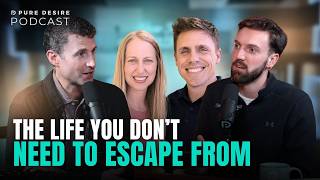
In episode 465 of the Pure Desire Podcast, host Nick Stumbo and co‑host Jon Begemann launch a new five‑week series called “The Porn‑Proof Life.” They interview relationship specialists Matthew and Joanna Rabsmith, authors of Building True Intimacy, to explore how pain tolerance, authentic self‑identity, and intentional relational work can prevent compulsive sexual behavior before it starts. The conversation frames pornography as an escape from unprocessed emotional pain and argues that external tools (accountability software, screen‑time limits) are only a shield; lasting freedom requires internal work: naming pain, slowing down, self‑reflection, and community support. The Rabsmiths introduce a “pain cycle” model, describe core childhood wounds (unloved, unsafe, defective, powerless), and explain how these drive coping behaviors. They present the “Intimacy Pyramid” (honesty → safety/trust → vulnerability → intimacy) and discuss rupture‑and‑repair, daily check‑ins (the “Honest Connection” framework), and a couples community called Renewing Us. Practical steps include naming feelings, tracking patterns, using assessments, and building intentional rituals (date nights, daily emotional check‑ins) to increase a couple’s “window of tolerance” for pain, thereby creating a life that does not need porn as an escape.
Chapters
Hello there, good listener. I am your host Nick Stumbo, and you are listening to the Pure Desire Podcast, your biblically based and clinically informed approach to healing from betrayal and breaking free from all forms of compulsive sexual behavior. And whether today is your first day with us or your 10,000th day of recovery, we hope that you will hear life-giving conversations that maybe you've never been a part of before. Today is episode 465, and here joining me is my My co-host for this brand new series is the one and only Jon Begemann. Mr. Jon, welcome back to the podcast. And I believe the first podcast you've been on that when it airs, you are a married man.
Isn't that crazy? It's also weird in the world of production where I'm like, I don't have a ring.
You're not married now, so I can't say like, hey, how's it going? We don't want to fake that.
Right, yeah, but when this is released, I'll be married.
All of our listeners should reach out and say, way to go, Jon, because he's now a married man.
Yeah, it's been a journey. This episode, seemed very fitting, whether you're dating, engaged, or married. Oh my gosh, Matthew and Joanna have so much to offer.
Yeah, I felt like it was a little bit of pre-marriage counseling for Jon. Well, I know.
I'm like, am I taking notes? Can I fill this out? Can I send this to Hailey right now? But just to say, yeah, there's so much good information here about how to do the work together. I loved how we kind of got there in the episode of going, pain is real. What we do with it is really important. And getting to do that work together is critical to get to the places of vulnerability and intimacy.
Yeah, and it's so universal. So as I mentioned, this is the beginning of a brand new series that we are calling "The Porn Proof Life." So looking at not just how do we do recovery if we're already struggling with porn, but how do we construct a life that is like shielded against the need for pornography? And there's some basic principles that we're gonna talk about throughout these next 5 weeks. And this is definitely the kind of series that you might wanna share with a friend, a family member, a kid, a parent, because it doesn't require that someone be in recovery to really get a lot out of this episode. Because the world that we're in, pornography, we've said it, we live in a pornified world and we all need to understand how do I build a life that is porn-proof? And that's really what we're doing in this first session. It's all about how do we navigate pain well so that we don't need to escape to things like pornography.
It just makes me think, right, digital protection is a piece of it, And for so many people who've like tried to porn-proof their life, they're like, "I have Covenant Eyes. Like, I've got the accountability blockers. I'm confessing to somebody." And yet, regardless of the walls that we build, we have to do the internal work of pain. 'Cause if we're not addressing it, we're going to move towards a coping behavior. And often, right, porn or masturbation or others can be that go-to coping behavior.
Yeah, and accountability software is vital, but it is a little bit like having only a shield. And that behind the shield, we're in, you know, t-shirt and shorts. And like, if that shield goes down or an arrow gets over the shield, We're in big trouble if that's all we're relying on. And so this series is going into some of the deeper topics of like, what are the internal things that need to be strengthened or changed so that we don't need to run to those old patterns of pornography? And I could think of no better couple to talk about this than our guest today, Matthew and Joanna Rabsmith. Uh, they are trained relationship specialists, speakers, and authors of the book Building True Intimacy: Creating a Connection That Stands the Test of Time. They have over 20 years of combined experience in counseling, coaching, and guiding couples toward healing and transformation. Currently, they co-lead the Rabsmith Team, where their mission is to help couples navigate the complexities of relational challenges, particularly in the aftermath of sexual addiction and betrayal trauma. Matthew and Joanna live in Memphis, Tennessee, uh, with their 3 young children. They prioritize self-care through shared adventures, new experiences, and a weekly game of pickleball. So here now is our conversation with Matthew and Joanna Rabsmith on pain tolerance in our new series, The Porn life. Matthew and Joanna, welcome back to the Pure Desire podcast.
Thanks so much, we're excited to be here.
Yeah, so great to be back.
Yeah, wonderful to have you as guests again. And if anyone wants a little more of like your story and some of the particulars of your approach to healing, I'd encourage them to find our first, uh, episode with y'all. But today we want to really kind of hone in on what does it look like to build a porn-proof life, to not just have to recover after you've already struggled with porn, but what would it look like to be a society, to be a family, to be a couple that is just living and acting in ways that, that is, it's porn-proof, so to speak. And today we're diving into this very essential topic of how do we understand and face pain in our lives rather than numb away from it. So thank you for being guests and helping us, uh, get into that today.
Appreciate it. Yeah, we're really excited about this topic, and it matters a lot to us because we, we do— I mean, our specialty is working with couples who have experienced infidelity, addiction, betrayal. They're really working through the messiness that porn has has brought on their life. And we're really passionate not only about those couples, but about everyone being able to experience a life of freedom from that, marriages that are free from that, that are really able to thrive the way God designed them to be.
Yeah, that's awesome. Well, let's jump in and just answer kind of this overview question of, uh, from a Christian perspective, what does it truly mean to pursue a porn-proof life, and how is that different from relying on willpower, rules, or fear-based accountability?
Yeah, absolutely. This is, you know, what's so interesting, as I was just kind of thinking about it, I was like, oh, porn-proofing your life before it's been introduced and destroyed all the things, it's the same steps, the same process as afterwards, right? If you have had addiction and now you're trying to heal from and, and create a life free of porn. And one of the places we often talk about, we start with, with our clients, is talking about, we call it the authentic self. A lot of times when you think about porn-proofing. It's kind of how do we keep porn out, right? And the focus is really how do we keep the negative out rather than how do we embrace the good, the beautiful, the truth of God, who he is, who God has created me to be. And we find that even in kind of recovery after addiction, that only gets you so far when I'm trying to keep the bad things out, right? It's kind of like you said, that willpower, white-knuckling rules, that fear-based, um, methods rather than if my focus is on being that authentic self, being who God created me to be, all of a sudden, like, there's no room for porn in my life. I don't need it. I don't desire it. I don't crave it. I don't have to numb out those tough emotions because I'm so connected to the truth of who I am.
And ultimately, what that's going to look like practically is that porn is ultimately an escape. It's a way of trying to get out of something. And so to porn-proof your life, what you really to do is you have to learn how to engage things. You have to learn how to engage the things that culture and a lot of our practices have taught us to avoid, right? What I realized was that for my own life, porn was about trying to get away from the emotional pain that I was experiencing on a day-to-day basis. And for a long time, I didn't even know that I was in pain. I, I would tell people, right, life is perfect, everything is wonderful, I've got God, I've got this great ministry, You know, everything in life is the way I want it, but I was actually denying the real emotional realities that I was going through. And porn became the way that I continued to deny those realities by trying to really offset those emotions. And so to be porn-proof means that I build the strength to actually engage the real emotional experiences of my present and my past. And I think that's what some people, you know, forget sometimes, is they think, okay, if porn's out, then everything's easy. No, it's that I know how to with the difficult things, and I know how to deal with them in ways that actually bring more life rather than bring death.
And I maybe have a little bit more self-awareness of other coping behaviors that I turn to that lead me towards addictions like porn, right? So most of us carry around a smartphone in our pocket or in our purse, and we don't like emotional discomfort. How many people do you see at the airport or standing in lines and they whip out their phone and they are just zoning out, right? It's a way to— that I detach from my reality, that I soothe a tiny— it may be a tiny moment of discomfort that I don't even realize is there, but I've so habituated myself to avoid that feeling that I can't handle it anymore. And then when life brings some bigger feelings of pain or discomfort, I need something that helps me numb out even more.
Yeah, Nick, it makes me think of— you and I were speaking in Florida maybe over a year ago now, and I love when you share your story of like you and Michelle had built, you had built all these walls and you're like, no here, no here, no access there. I won't do this. I won't do this. And then you realize you're like, oh, but I'm still in there, right? To your authentic, the idea of like our authentic self of like, oh, but I'm still navigating stuff. Can you, can you unpack that? Because I think it's exactly what they're saying.
Yeah. I mean, if our goal, if our goal is just to keep the bad stuff away, None of us can do that so perfectly that it's a foolproof plan. Eventually, we're gonna look for something to fill those needs, to meet those unaddressed wants and longings, or to be the answer to what do I do with this pain? You know, Gabor Maté, a psychologist, said, "Don't ask why the addiction, ask why the pain." And if we don't understand what pain drives us in life, what are the things that make us want to escape? And I think that's so spot on, Matthew. Need to think of pornography as escape, well then a pornproof life at its heart is how do I build a life I don't need to escape from?
Yeah.
The word that comes to mind for me is wholeness. Like if there's wholeness of mind, body, and spirit where we feel connected to God, self, and others, there's not that need to escape anything. And when pain comes, we lean in to God, self, and others with that awareness of, well, escaping from this isn't gonna help it. I need to lean in and, and and walk through whatever's happening. And so if we don't do that, yeah, then we're just in this place of like, try to hold it all at bay and hope it works. But eventually that structure's not gonna work for us because if on the inside we have those needs, we're gonna find ways to meet them.
Well, it just makes me think of how many times I have set app limits and screen time limits and removed things and deleted things and shared screen time passcodes in group and all of these ways in which, and I'm not even saying they're bad. I think it's a part of living—
They're part of the toolbox. —living holistically.
And I'm like, man, at times as I'm trying to help guys porn-proof their life, it's like, if we can't remove this stuff, like, we can't get to the real work. And I remember just when you were speaking in Florida, Nick, uh, just for you guys, there was a young man there who he thought he was doing okay, but he had some pretty big needs inside. And when Nick said that, he's like, that's me. Like, I have accountability, I've told my wife, I'm telling others, I have software but I'm still not healing. And I just think that's such a helpful imagery of going, again, back to your point, Joanna, of like, but regardless of how much we remove this stuff, we have to do the work internally. And if we're not doing the work, to your point, Nick, why the pain? This stuff, it's needed, but it will not save you. And I think it's why Covenant Eyes probably has so many angry customers calling them or emailing them. You didn't fix me. Exactly. Help me. I found another way around. Recovery House is like that. Yeah, that makes sense. You know, you've got some work to do. Absolutely.
And we love to share with people, like, you know, we say recovery is the good life, right? The life we're talking about, the life in which I'm living into it, that is the good life. Addiction is the wall that keeps me from the good life. A lot of people think like, I got to get all these walls to keep addiction out. But Joanna has like so wonderfully said, no, the good life is held back by addiction. And so it's actually seeing, wait, no, the things we are desiring and the things that that God wants us to have, you know, porn is what keeps us from that. It keeps us from that authentic self, that integrity that we're designed to live in. And so it's really, once you've experienced it— and I think for people who have had something overtake their life and then have the freedom of it, they have a taste of it. I mean, in some ways they're lucky because they get to go like, oh, I know what it was like. I remember that chaos and, and how much I left this like compartmentalized, you know, guarded life. This is the good life that I enjoy living. And that's what we're inviting in people in when we're talking about porn-proof, right? But not this morality conversation, but really this life and thriving conversation.
I think it's well said. It makes me think of this, like addiction is giving up, you know, everything for one thing. And to your point, it's like, no, no, no, like stop. Like you're just focusing on one thing. Actually, God's trying to give you everything. And it's the same concept with the garden, right? The enemy's like, wait, did God really say? And Adam— or sorry, Eve falls, and then Adam, for this one tree. But they had the whole garden. They had everything on offer to them. It's like, no, no, no, no, no, look, look at all the other trees. And I mean, such a common thing is, you know, Christians are turning to porn for comfort because they feel things like anger or stress or loneliness and rejection. And Matthew and Jenna are like, why do we turn there? But also, what are healthy forms of finding comfort and regulation? Because those are good things, right? To your point, porn is an escape. What are some healthy outlets of that?
Yeah, we do it. It's biologically, right, really a thing that goes on in us very naturally because our bodies are designed for self-protection, right? We— if we didn't have self-protective mechanisms, you wouldn't see humans walking off cliffs and into traffic, right, on a constant basis. And we'd be going, oh, what's wrong with And so we have these biological guards that say, hey, if something feels dangerous, problematic, threatening, right, uncomfortable, we, we want to move away from it, right? And that's the way that the brain is designed to protect us in that way. The problem is, is the brain tends to categorize things in big kind of chunks, and it says, hey, any discomfort, any problem, I'm going to move away from. I'm going to move away because it feels like a threat to me, and that threat can be physical or it can be emotional. And what's really interesting is the brain doesn't really distinguish between the two. It doesn't care if it's a bear in the room or it's a, a relationship that's breaking down or feels disconnected. To the brain, it feels exactly the same way, and it triggers those same responses, which is what we know really commonly as fight or flight. Where do I go from this, right? Anger represents that fight. It's usually about I'm upset, I'm mad, I feel like there's been an injustice, something's not right, and I want it to change. Flight is that I can't do anything about it, it's hopeless, I'm powerless, and so I just want to run from it. And so porn and these compulsive coping behaviors that, that really destroy the things we care about is that design to get away from that threat. And so it's really about being able to recognize, wait, the process is pulling me where I don't want to go. How do I turn in a different direction?
Yeah, and so understanding, right, right, you kind of already named understanding the pain that's driving the behavior is going to be key. And understanding how if that behavior is withdrawn to porn or withdrawn to my phone, either one is destructive. I have to deal with both of those by getting at the core pain, because if still withdraw, even if it's not into porn, eventually I'm going to go back there. And so going to that pain and understanding what's so interesting is that most humans have 3 to 4 core pains that they feel whenever they get emotionally triggered. And so, and that's because their pain starts being shaped very early on in their life, right? From the time they are being born, their pain is getting shaped. And those pains are the way that their brain interprets the world around them. Whenever they get triggered. And so it might be unloved, it might be unsafe, it might be failure, defective, powerless. But figuring out what are those pains that are getting triggered that tell my brain, I don't like this, run away or fight back, right? And then dealing with those, getting to the root of it, not escaping them, not running away from them, but going, what does that look to actually heal them? What does it look like to invite the truth of who God is, who God says I am, into to that narrative of pain that I carry around with me. And it's in that— and that's a long process that takes a while to do that work. But as I get more connected to those truths, I gain the ability to actually regulate the pain in those moments so I don't have to run away to those destructive coping behaviors.
Yeah. And what's really wonderful is that one of the mistakes that people make is they think that behavioral modification is going to be the solution, that if I can stop doing this bad thing and start doing this good thing, then I'll be okay. The issue is, is that I'm not doing the bad thing because I sat down and made a conscious choice to do the bad thing rather than the good thing. You know, this was my frustration growing up in church, is that, you know, they say like, don't lie. Well, I know that. I know I'm not supposed to lie. But yet every time that somebody asks me about the real things that I'm ashamed of, lies come out of my mouth. And so it's really recognizing about if I resolve the underlying pains, then the behaviors stop. And what's really interesting, what we see in the people that we work with, it's incredible how the fruits of the Spirit start to naturally flow from them, right? They, they aren't necessarily having to think about what's the good thing that I have to do. They actually start to, to show those things really naturally. They just kind of come from them. And they, and so they, they more naturally connect. They're more, they're more honest and vulnerable and gracious and kind because they're no longer protecting against that pain. And so that's why we really focus on that, because that's truly what unlocks people.
Yeah, that is all so good. Uh, I remember the first time that I went through the Genesis Process, the great recovery workbook by Michael Dye, and he talked about, you know, why do you eat so much under stress or, or fear? And he talked about that biological response, what you were saying, Matthew, of like, in our bodies, if war is coming, if there's threat, famine, we bulk up to, to gain the fat stores so we can survive what's coming. And then within that chapter, he says, and And we do the same thing with sex that God wired into our biology to make sure we procreate and continue the human species when there's threat. And yet, as you also pointed out, we don't really know the difference between real threat and perceived threat. And I just remember looking at that kind of biological response and going, "Oh my goodness, I'm just running to something that my brain is kind of made to do, but I don't realize that I'm trying to, you know, satisfy a fear that's not truly there." And so I know when you say, you know, that there's a biological response, some listeners that may be new to this field, they're like, ah, really? I think it's just hormones and desire. That there is a part of how we deal with fear, how we deal with stress and discomfort, that a part of our brain goes, oh, this is what we need to do to protect ourselves, to survive. And yet survival's really not at stake. And so if we can learn to recognize those messages, learn to see maybe the false alarms that are going off in our brain and recognize I don't have to go in that direction, I can choose something else, that really, I think, gives us not only handholds for change, but an avenue to deal with that shame. Because we realize, oh, it's not just that I'm bad, wicked, perverted, messed up, whatever voice we hear. It's somewhat my brain trying to find that comfort. And that, I think, can be very empowering to say, oh, well, I can find other ways to get comfort. But if our belief is just that, well, I'm just perverted, That's a really difficult battle to fight then, because you're like, well, how do I change that? It's just who I am. And that's what the shame message convinces us is, that is who I am. And so yeah, being free of that and just seeing like, there's a biological brain response here and I can heal, I think is very encouraging. Yeah, yeah, yeah.
It makes sense to me. I think about all the times in which, uh, I was so deeply comforted, uh, like in my pain, right? To your point of like, we run to like other things just to find comfort. I remember in my first year of recovery for anybody who's potentially beginning this journey. My friends started joking that my name, just J-O-H-N, John, they made like a little acronym using some of the letters just on the phone. I was constantly on the phone. I kept going. But I had been wrongly attached to pornography and masturbation for comforting and soothing. And in group, I felt like I got invited to rightly attach to others to find comfort and soothing. I literally remember saying in my first year of addiction, like, I think I swapped addictions. But now my addiction is talking to other people, which doesn't help because I'm an extrovert, right? The whole audience is like, yes, Jon, we understand you're an extrovert. But I'm like, man, I felt like I swapped addictions. But at the same time, I'm like, but maybe that's just how we were meant to do life in right relationship.
So Matthew and Joanna, if someone is new to this journey, they've had this podcast shared with them, a friend recommended it, and they've not really begun to recognize how their you know, disturbing behaviors or compulsive behaviors are linked to pain. How could someone begin to learn to recognize the pain from their past that could be driving them towards coping behaviors like pornography? And if we aren't familiar with this idea, how do we become aware of those root trauma or pain experiences?
I think one of the things that we found that's really helpful is that— is, is begin to name it. I think, like I said, I most of us live in a little bit of a kind of a haze of reality. We tend to not really want to look at things. We want to kind of chalk things up, and these can be done a bunch of different ways. So that's just my personality, right? That's just how I am. And so part of it is, is a willingness to look in. Self-reflection is such a key to transformation. And so just willing to be able to go, I actually want to think about myself. It's amazing when we slow people down, right? They'll tell us stories And we'll have couples come in and talk about their fight or talk about what happened, and we'll say, let's just slow down, right? Let me, let me just kind of understand this. And when people slow down and actually take a look, they will start to see patterns emerge. Like Joanna said, the brain, it tends to just like to do the same thing over and over again. It's not as complex as we think sometimes. It really loves to go, oh, when this, this, when this, this, And so if you slow down, a lot of times you can see that, and you can see how things start to look the same. You know, I can go from, from pornography to food to phone to video games to work, and they can all serve as this escape from my emotional pain. And so once I start to slow down and see the patterns, that's really helpful. And so that's really what we like people to do, because once I see the patterns then I can start to go, what is ultimately driving that? And we usually like to ask kind of two core questions. What does the pain say about kind of me as a person, right, my identity? And what does it say about how I fit into the world, my sense of safety and security? Those are the things, those are the questions that the brain is really asking when it experiences difficult emotions. Is that, is there something wrong with me or is there something wrong with the relationships, the experiences that I have with others?
Yeah. And so helping clients track kind of— we have the two other questions we say is, what were you feeling? And then what were you doing? Right? Because it starts with the feeling, but sometimes we're not aware of what the feeling is. So sometimes we have to go backwards. What was the destructive behavior you were doing that you don't want to do anymore? Okay. What was the feeling that drove it? And it might— we might have to track back a little ways, right? They may be like, I don't know. I don't— I wasn't feeling much in that moment. Okay, well, what happened earlier that day? What happened the day before? What are the circumstances in your life currently that are creating pain? And then what we'll have them do is they'll, they'll name those pain words. Sometimes literally print out a list of feeling words, right? Because a lot of people, they weren't taught, but like mad, sad, glad, you know, and they have that. So print out a list of feeling words, learn emotional vocabulary. So you can identify your feelings more easily. Once you get those 3 to 4 core pains that you tend to feel, that's when we start to track back with the client in their story, right? We want to connect to all the moments in their life, starting as early as they can remember, where they felt those core pains, because those are the moments, those are the experiences that shaped that pain for them and that are coming up in that moment. They don't realize it, right? Their brain's not cognitively, like, going through all those memories. But the place where we feel emotions in our brain, it's non-temporal. And so that means it doesn't have sense of time. And so all the times that I have felt that pain in the past come flooding me in that moment. And that's why it can feel so strong in the moment, right? Like, we'll get triggered even today with one another, and it feels really big. And we're like, why does this tiny thing feel so big? It's because my entire history of feeling unsafe is coming up in this one moment. And so helping them then understand that, gain that awareness, connects that past to the present as well.
And I think one important note is that everybody has something. A lot of times we assume that this is just associated with like trauma or these really life-altering experiences. Oftentimes when we're talking with clients, even those who have sex addiction, it will sometimes be, you know, something was said to me on the playground, right? I, I, somebody called out that I was a little overweight and I started to feel bad about my body and I started to believe about myself that I wasn't enough. And that just became a part of how I understood myself. And, and so they, it's not always these big huge experiences that people think that really contribute to these emotional experiences as adults. It's sometimes these small moments of feeling unloved or feeling unsafe that really cascade over a lifetime.
Sometimes when I ask the client, well, when's the first time you remember feeling unloved or defective? They sit for a minute and they go, I don't know why, but this memory is coming up, right? It's a memory they haven't thought about in years. They didn't even know they still remembered it. I think those moments are so powerful because it speaks to just how deeply those things get ingrained, that they can still remember that memory from 30 years ago that it didn't seem big, but it's still impacting them.
Yeah. Well, I think one of the greatest lies we see with guys or gals in group is like, I don't have pain. Like, it's such a simple lie, but that's the lie. Like, oh, like even for those listening to this podcast, they're like, oh, well, that seems, you know, nice and theoretical, but I don't have pain. It's just like, oh, trust me, you were born into a broken world just like the four of us, and we have all experienced pain. Jesus says in John 16:33, in this world you will have trouble. It's like, gosh, could we get a different promise, Jesus? You know, I would love something else right there. Yeah. And as you guys are talking, I'm just— I had a conversation recently with a close friend, and he was talking about his body, his body image. And this dude's fit, athletic, like he is the man. And yet he's like, there's a piece of pain for him that when he went to sit down on a couch when he was in high school, that he sat down and his hips were too wide to fit between these two girls for this prom photo. And the one girl, his date, got up and sat on another couch. And that point of pain, a small microcosm type moment, has just been so catastrophic in his mind to think, my body's not enough, I'm, I'm too big, people will reject me, people will walk away from me. And it's like this deep sense of pain he holds. He went through the Pillars last year and he named that moment as one of his most painful moments because of the way it's cascaded later in his And to your point, it's like, wait, where does this— where did this pain originate? What do I feel? What do I believe about myself? So many stories. Yeah. So many stories.
Well, and we have to realize that our brain works with us because we don't want to live in constant pain or feel it. So when there is a moment, especially those early moments that caused us pain, there's a sense in which we kind of insulate ourselves from feeling the pain of that moment. Moment, which when we look back might be the very thing causing us to go, oh, that wasn't that big of a deal, right? Because your brain has told you that for years so that you don't feel all the pain. But if it is the starting point, then it needs to be looked at. And I love how you described it, Joanna, that they'll say, I don't even know why I'm thinking about this, but this just came to mind. And I think that is a very common response. And as an adult, we might look back and go, well, it's really not that big of a deal. Well, you're right, to your adult brain, it's not. But remember when that experience happened, you were not an adult, you were 5 or 7 or whatever age you were. And the impact that a very quote unquote normal moment might've had on a 5-year-old is really difficult for us to comprehend as an adult. But if we could be in that 5-year-old's body and brain and think about what might I have experienced in that moment that, that might've been deeply painful. To a 5-year-old. And that could be the cascading emotion that's now stuck with me since then. So yeah, doing that work of going back and just recognizing if something's like, well, it's coming to mind, but it seems minor, you might be hitting on the very thing that's a real core part of the pain you're feeling.
And Joanna, to your point, you're talking about, man, when this happens in our marriage, all of my lies regarding feeling unsafe are triggered. And I know that for so many betrayed spouses, the struggling spouse's behavior can be absolutely triggering, not just to what's in the moment, but to your point of all these things from the past. So for the betrayed spouse, how can they recognize when this is happening, and what can they do about it? Yes, absolutely.
No, it's absolutely true. In our own relationship, because this is a big part of our story, our healing journey, We were, we were lucky enough to learn some of these things before we entered recovery, before I found out about the betrayal. And so we had really learned— we call it our pain cycle, it's a structure from Restoration Therapy— and we had learned to track our pain cycle as a couple. What are my core woundings? How do I cope in destructive ways when I get triggered? How do those coping behaviors trigger Matthew's core woundings, which leads him to cope in destructive ways, which my core woundings, right? And so we track this cycle that we would get in as a couple, and we learn to understand our own unique part in it. And so I had learned to identify my core woundings of feeling unsafe, of feeling abandoned, of feeling not cherished. And so what would you imagine I felt when I found out my husband had been betraying me for years? Things— yeah, unsafe, abandoned, not cherished, right? And I had already done some work to fight those lies and to instill truth, which was a huge blessing as I entered healing from betrayal trauma. It still was hard work, but I had some of those tools. And so learning, okay, what are those tools that are going to help me fight those lies, fight that narrative that that trauma I've experienced wants to tell me? Because that's part of what trauma does as well— it speaks lies about your worth, about your power in this world. It wants to tell you that you're powerless, that you're not worthy, right? Those kinds of things. And so being able to go, yeah, okay, this is just another another one of those experiences where those lies are going to try and feel bigger than the truth. What does it look like to continue to connect to the truth, to heal through this experience of trauma that's trying to make those lies bigger? And then, right, that awareness of— and it's not just hard because of this one experience, it's hard because of all the experiences before that I've had in my life. And so one of the things I think it's a huge challenge as you're healing from betrayal is learning to be able to separate those two things and figure out, okay, is this more the pain of the past coming up in this moment, or am I truly unsafe in this moment in a way that I need to create boundaries, that I might need to create some distance, right? Because the pain is going to tell you you're unsafe, protect, right? And sometimes that's very true in the present reality for betrayed partners, depending on what, right, what's going on in the relationship. And so learning to regulate that pain allows them to see the present more clearly and make really empowered decisions that ultimately care for themselves, protect themselves.
Yeah, that, that journey for the betrayed spouse, I think, is uniquely, uh, challenging because of what you just said, that, that it's, it's the pain of the past being dragged into the present and being amplified, and then it all meshes together. Yeah. And— and that key that you just said, being able to separate out maybe like, what is the echo of my past? And I need to kind of have a differentiation to leave that there. And maybe for another day, another time, I do need to, to revisit that because that's some of the beauty we see in recovery that a betrayed spouse does, whether they really wanted to originally or not, they get an opportunity to grow and overcome some of the pain they felt because it taps into it in new ways. But if that's always currently present in the moment they're trying to work through with, what do I do with this betrayal in my marriage? It just adds all these layers of recovery that now we're maybe putting on our spouse, um, an expectation of how they're going to make us feel that's based on our past. And, and they don't have the ability to— even if they're doing all the right things to make us feel safe in the moment, if it's also about the past, they might never be able to do enough. And so I think when we're working to reintegrate in marriage language, just that awareness of, okay, what's the current moment and what's all the past? And what's the goal right now? Is it to work through my past hurt or is it to really deal with what's currently present? That could give people some language or a sense of what's the focal point right now and maybe lead to more progress than just trying to deal with all of it at once.
Yes, absolutely.
It makes me think we have a couple of friends here locally in Oregon and we filmed their story. And she set up her childhood, sorry, her family of origin story as one in which her mom continually questioned her image. "Are you enough? Are you not enough? Are you pretty enough? Are you not pretty enough?" And when she met her husband, he's like, "You are the prettiest woman I've ever met." And he was so vocally affirming of that, but she couldn't believe it. And throughout their entire marriage, 40 years until pornography addiction was discovered, she had fought fought to battle this lie that I'm not enough from a beauty image standpoint. And I remember her saying, when I found him looking at pornography, it was as if 40 years of a lie were confirmed in a moment, and I was utterly shattered. And so this lie, or this pain from her childhood, right, compounded with betrayal that seemingly affirmed and then completely cemented this lie— I'm just like, ah, I hate Satan! I hate Satan. 'Cause I'm like, man, you know, his addiction had probably very little to do about her image, but somehow now all of this is compounding in a moment. The lies she's believed or fought her whole life now seemingly cemented by his addiction. I'm just like, ah.
And I think that's part of why that betrayal is so painful in intimate relationships, right? 'Cause it's not my job to regulate the other person or convince them of their truth. Truth. But there is this level of commitment, of trust built in that covenanting together that I'm going to try my hardest to show up in a way that always reflects the worth of, of who you are in Christ back to you, right? And in that moment, that betrayed spouse realizes that's not what's happening. That's not the person that I married.
Yeah. So one of the challenging realities of this situation is, and John, you said it, in this world, we will have trouble, we will face pain. We're not trying to create a pain-free life. So since we're all going to experience pain as we go through something difficult or challenging, how can we learn to cope or deal with the pain in healthy ways? Mm-hmm.
I think a little bit as we've been talking about it, slowing down and naming it. Like I said, the, the greatest thing that the enemy has, has convinced us of is to move on, right? To just keep moving on, to keep ignoring, to pass over. And, and really what you see to be so life-giving is the act of reflection. And so being willing to slow down and reflect on our experiences is actually how we gain that power back over the emotional weight it carries on us. And that can be done individually individually, but it's also really powerful in community. And so one of the things that we know is that when I am not only going through my emotional experiences, but I am sharing those emotional experiences with healthy other people, that is one of the greatest ways that I learned to grow my own sense of emotional strength. And so we really encourage people when they're going through this to really stop, to reflect, and to share so that they can get to, like what Joanna was saying, that connecting truth. We want people to be able to connect with the truth because it's ultimately about what story am I telling. The pain is wanting to— wanting me to tell a particular story. My pain really tried to tell a story for most of my life that I was defective, that there was something inherently wrong with me. And every time I went back to porn, every time I lied to someone and hid and I lived this two-faced life, that narrative just showed back up and said, hey, see, there it is. I told you you were defensive. Proof. And so it's proof. Exactly. Like, and just like this person that was mentioned, right, this proof that this is what is true about me. And so we have to constantly be aware of that narrative, and then we have to counteract that narrative. We have to tell a different story. And part of that is telling the story of the truth, talking about, wait a minute, I am not just my failures. I'm not just my mistakes. I'm not just my sins. I am fearfully and wonderfully made by God. And here's where I see that showing up. Here's where I see God using me, my gifts, my talents. And I'm gonna tell that story for myself. I'm going to get in line with God and share that story.
And letting myself step into those moments, right? It's, it's not by avoiding pain. It's by learning to show up stronger in those moments of pain and hold on to my truth. And so if I'm a betraying spouse hearing my partner share about the pain that I've caused them, it's going to be really easy for that shame and that pain of defective to come up. If I can't trust that I will be able to go to the truth of who I am in that moment, I'll avoid that moment, or I'll start getting defensive, or I'll minimize what they're saying. No, the pain isn't that bad. I didn't cause all that. Trying to protect my own image. Right. And so being willing to step into, lean into moments of pain helps grow our window of tolerance. For some people, though, it's important to address an underlying narrative of the goal of life is to not feel pain. I think we all carry that around. And even I think it was most apparent when I became a parent and I thought, oh, is the goal of I'd like to keep my children from experiencing pain now, right? Like, that's a lot of parenting narratives. And so going, okay, if under all of this that's what I believe is true, I won't be able to do any of the things I need to do to be able to grow that window of tolerance.
Yeah. And it's really— this is so important because when we do that, you know, one of the things we've learned in research— Brené Brown figured this out— which is that you don't selectively numb emotions. So you can't numb from feeling defective without also numbing and limiting your ability to feel capable. I feel if I, if I try to numb out and escape feeling unsafe, I won't actually feel empowered either. I will just kind of feel this, this kind of middle nothing. And so part of learning to deal with pain is actually engaging the emotional experience and going, wait, this didn't kill me. It's right. It's kind of showing the body, no, this isn't an existential threat. It will not kill me to feel the grief I have, maybe over what I've done or what was done to me. Because in feeling that, I'm also opening up my body, my brain, my soul to the feelings of what it feels like to be cherished, to feel capable, to feel secure. And so that's really, really important, that, that as we're going through these experiences, we are letting ourselves feel them in a, in an appropriate way so that we can feel the full range of emotions.
That's so well said. I love that. We got to be able to feel the lows in order to feel the highs and to, and to understand what it is to feel normal per se, right? The window of tolerance of, I feel okay, I'm okay right now. And to your point, our society is obsessed with avoiding pain. And I know that pain is specifically at a couple level can feel really volatile, right? Like, are we gonna have a good night or we're not gonna have a good night? Is this a good day, not a good day? I'm not For sure. But I'm curious, how would you guys say, like, and specifically, I know the language in maybe the clinical world is rupture and repair. Could you guys talk a little bit about how rupture and repair, when done or done well, can actually draw couples closer together if we can feel the high, the low, and the window? Wow, that kind of rhymed. How does that work well together to draw couples together, not apart?
Yeah, absolutely. That's a big part. So one of the things we talk a lot with couples in terms of building relationship and healthy relationship is our framework, the Intimacy Pyramid. And so it's a pyramid that has different levels, different layers that you build from the bottom up if you want healthy, thriving intimacy. And so it kind of goes honesty is the bottom layer, safety, trust, vulnerability, and then intimacy. And so really what you're getting at is the heart of that safety level. We want a, a, a ability as a couple to interact in safe ways. One of the ways is that we can be regulated with each other, that we're not coping in destructive ways, we aren't harming each other, and we can do that reliably. Gottman has done some research, and it needs to be about 90% of the time we're having these positive interactions, these safe, healthy, stable interactions. But then what about the, that 10%, that 10% where it's breaking down, we're getting triggered and dysregulated, we're saying things, doing things that harm each other, harm the relationship. That's where the repair comes in, because if we just leave that, that pain and that disconnection there, I start to feel our relationship as a threat, which means I'm going to be more triggered, more easily triggered the next day and the next day and the next day. So we don't want that to compound. So being able to repair in those moments rebuilds that connection And it also builds that security and safety that I trust our relationship can handle ruptures. It's not our relationship is only good if we never fight, right? It's because then it's like you start skirting certain issues that maybe will trigger an argument, but it's no, I know our relationship can handle a fight, can handle us getting disconnected, hurting one another, because we know how to fully repair that. And with my clients, I will use that word. You should feel as connected or more connected it after a repair, or you haven't really repaired it. And so I think a lot of couples know how to like gloss over it or kind of move on from it, but not truly repair it.
And what we teach couples to do is to use that reflection we were talking about earlier. Notice your patterns. If I know my patterns, then repair is really easy because I can look at a conversation between us and I can go, oh, here's where I started to get defensive, here's where I was trying to to minimize and intellectualize everything away that you were feeling. And here's where in the conversation I could see I started to shut down. And so when I go to repair, I know exactly what I'm dealing with. I'm going, hey, it wasn't okay for me to shut down and be defensive. You were trying to share something with me. You were being— you're being vulnerable and bringing that to me, and I blocked you out. And that can't— and we can't connect if I'm running away, right, from what's going on between us. And So what's really helpful is knowing myself helps me know how I want to show up in the relationship. And I can name, hey, this wasn't what I wanted to do. Now, we recognize for some couples, they're going to need a little help with that early on. And so sometimes it's nice to have an outside perspective, right? A kind of third party, a mediator, either a coach or a counselor or a mentor that helps set that up. But once you learn the ability to do that, that, you really do— you gain so much back. You gain so much traction in your relationship because then you're also not afraid to get into the messiness of life. But so many couples avoid the true messiness that would drive them actually closer together because they're afraid, ooh, if it goes wrong, we don't know how to fix this. And so once they learn, oh no, we actually do know how to repair, we know how to like each other again, they're not afraid of the challenges, and they really start to lean in.
Yeah, it feels to me like some of the answer to this question is embedded in the question because it says, how do we face pain and difficulty together? And to me, that's the starting point, is an awareness that we need to walk through this together because very much pain and isolation will go together. And I know that's my challenge or pattern that I learned from a young age. Like, you feel pain, some of my family of origin issues, other people are too busy or have too many other things on their plate plate to take care of you, you need to take care of yourself. And so that isolation withdraw, I'll deal with it on my own, I think can be present in a lot of us because pain is uncomfortable and we don't always wanna put that on other people. But if we have a perspective in our coupleship, like we're gonna walk through this together, and in a sense, your pain is my pain. And not that we take ownership of it or become, you know, codependent on one another, but in the oneness of marriage to recognize anything that affects you affects both of us. And we wanna walk through that together. Walk together and not just go to our separate corners. And there is, you know, good reasons to take space sometimes or take a breather. I don't mean that, but I just mean our attitude or mindset of we're walking through this together. That if you're dealing with something, it's not, "Oh, go deal with it. Go talk to a counselor. You know, don't talk to me." It's like, "No, how do we face this as a couple?" And I guess I'm thinking of those situations in particular where it's not about the marriage itself. It's not conflict between the two of you. It's something that's come into your life life, uh, how do we face pain together? And when we do that, I think we get to know each other in ways we don't otherwise know. We, we can connect. We're— if we're not the spouse that's maybe in that same particular pain, but we're walking through it with our spouse, that opportunity to show care and empathy and concern, and, and that builds depth of intimacy. And so I think if that's just our mindset, like, we're one, and, and if it's your pain, it's my pain, and we are gonna walk through this together. That's so different than what might be our previous MO of, well, I'm in pain, I go isolate until I get better. And then I love how you said it, Matthew, like, then we just move on and we act fine even if we're not.
Yeah, yeah. And it can be so powerful even when that pain is about the relationship. When we're working with couples in that vulnerability space of the intimacy pyramid, one of the things we walk them through through is couples grieving, right? It's not just one person grieving or the other person grieving, because— and especially for couples experiencing betrayal, they've had two very different experiences in the relationship. It can— and it can feel very disconnecting, their experience of that pain. And so being able to come together, create a shared narrative of their relationship, and being able to grieve together the pain that was experienced is so powerful in creating that sense of intimacy.
My question for you guys is just kind of deeper diving into the intimacy pyramid. Can you describe for us what happens first? Like, what's, what's the base level? I'm assuming this is like Maslow's hierarchy of needs. What's the base level? How do we— where do we begin? Where— what's the end goal? And specifically for couples of like, okay, we found some traction, we found some healing, I've been group, you know, he or she's been in group, and now, now what? Like, how do we do this together?
Together? Yeah, absolutely.
Yeah, those basic levels are really simple. It is, it is honesty, it's transparency, which it sounds so obvious, but, you know, for those of us who've been masking pain and avoiding pain, we've also been avoiding reality. So learning to be honest, like I said, and, you know, even just from going from an isolating to a sharing practice. That's a practice of honesty. And so really that base level is about learning how to be honest in the relationship space, both about what I'm doing, but about what I'm feeling, right? How I'm experiencing and doing that together so that we can deal with the real things that are in front of us. Because if we're not dealing with the real things, we go nowhere in the relationship. We, we can feel closer together. We can, we can have a lot of partnership, but we don't actually create unity. And it's in that honesty that we find out what is it that we really need to deal with, what are the things that are holding us back. And those may be those pains that I've gone unaddressed, the traumas, the compulsions that I've ignored for most of my life, or just the habits that are not helping us. That's really what, about that level of safety above honesty is, is that now that we know what's going on, how are we dealing with it? How are we showing up more consistently, more dedicated? Whether that, that is coming from my childhood or it is coming from the betrayal, how we show up still matters for who we want to be together. And it's when we're showing up in that way, that's when trust really gets established or re-established where it's been broken. And it's that trust that a lot of couples ask that 'what next' question. They're like, okay, I, I, I, I can live with this person I like them again. Right? We're stable. We want to stay together. But are we just going to kind of be okay? Or are we going to be something more? And it's from trust that we lean into the harder spaces of our life and of relationships and vulnerability. We really start to open up. We start to grieve. But we also start to take on joy and vision. One of the things we love to do with couples when they get to that trust space is we ask them to start to vision What do you imagine you want the future to be as a couple? What do you want your relationship to really look like, to express? And it's amazing what couples dream of. It's really beautiful. And so the word trust comes about building.
And then really those top levels is where you kind of said, what's the goal, right? Where are couples wanting to be? It's the vulnerability and the intimacy, the two top levels of the pyramid where couples are really, they're excited about getting there. And sometimes, though, they'll jump there too quickly without building those foundations of honesty, safety, and trust. And they'll come to us, they've done a lot of good recovery work, but they're feeling really stuck. And so sometimes we'll go backwards and go, okay, were there any pieces missed in those honesty, safety, trust levels? So that's kind of a starting place that we always start with couples who have kind of been in recovery. So one of the big things we do after we solidify kind of the honesty, safety, trust is help couples understand what does it actually look like to push into vulnerability and intimacy. Because oftentimes both partners don't really fully understand, or they weren't given good models of healthy vulnerability, healthy intimacy in relationship. And so giving them a framework for that.
Yeah, I love that, that I think many couples, we would recognize intimacy is the goal. And I don't just mean physical intimacy like sex. I mean that deep closeness and bonding. And like, how do I work on that? And but yeah, maybe we've missed some of those earlier levels of, are we building trust? Are we establishing honesty? Are those things present? Because we're probably not going to get the kind of connectedness we long for if we're ignoring those, uh, other categories. And for me, that really speaks to the word intentionality, because I know in my personality, I'm not really able to get through or get to some of this kind of deep connection with my wife life in just the in and out of a week of, you know, how do we get the boys to school and what's for dinner and are the bills paid and did you let the dog out and what are we doing this weekend? And those things are all the part of life we all do, but don't necessarily create the time and space and environment that invite the kind of connection you're talking about. So I think it's so valuable that we're really setting apart intentional time, whether it's a date night night, maybe a monthly day together, a couples retreat, times where we just know, hey, we're, we're actually going to have enough room in the schedule to not just talk about the next day and the menu for the dinner. We're going to talk about us. And if you're not creating that, I think that's one of the things honestly that recovery does for couples, because they're in pain and, you know, chaos of the addiction, it kind of forces them, like, we go to counseling together, and we sit and talk this through. And I've kind of wondered in my own life, had I been that intentional to create connection space with my wife, to go to a counselor, would we have maybe not ended up in the level of addiction I ended up in? Because I just was so busy about my routine and then hiding the things within the routine that were, were not, you know, fun to talk about, that it just kept growing. So find ways to be intentional and create that space, I think, so key.
And I just want to reflect back what you just said regarding the pyramid. If vulnerability and intimacy are not where you are, right, like that's the end goal of the pyramid, what is missing below? I feel like that's a really simple but profound question. Like, from safety, honesty, or trust, is there something we missed along the way, or is there simply I need to put more coins in the jar of 'cause I shattered the jar. And so I need to take, it's gonna take time to rebuild this. And potentially asking your spouse like, what does that look like? Or how long is this going to be? Or what do you need? What is missing on the bottom of that pyramid to get to the place of vulnerability and intimacy?
That's a great segue, Jon, into our next question. And we'll actually end here. Wanna wrap up this conversation. But in terms of like putting coins in the jar, are building that bank account. Hopefully we're not always in pain, and hopefully some people listening are in a relatively calm season of life. Things are going pretty well, and they're like, okay, geez, when the next painful thing happens, I'll maybe come back and listen to this podcast. But in this time now, if we're in a calm season of life, what practices or habits could we be doing now, whether as an individual or as a couple, that could strengthen ourselves or prepare us to face that next challenge with greater hope and peace as a couple. Yeah, absolutely.
You know, one of the things that we have that we did in our own recovery that was so powerful, and we now have all of our couples do, we always say this isn't just for recovery. This is a practice for your relationship long term to keep you guys connected. And it is a daily check-in. Like you said, life is so crazy. It is amazing how disconnected we can get so quickly just because life is crazy, right? A few weeks can go by and I can be like, I don't know that I've talked to you in 3 weeks. And so creating intentional time and space every day to share with each other on a deeper emotional level. And again, a lot of us just like, we weren't given tools how to do that. And so we had, we created a framework for our couples called the Honest Connection. That walks them through each letter is something that they share with each other. It's very simple, and just, they can practice it every single day.
Um, yeah, what's, what's really amazing is when we practice that reflection and that sharing, that's what drives connection. And it's what's connection— it's when we feel connected that it's easier to take on the harder challenges. So when that wave hits, if we've been connected as a couple We're going to be more likely to turn in rather than to turn away. And so a lot of couples forget that. They think, hey, things are good, let's drop everything, right? We don't have to do any of the exercises. And then the wave hits and they're like, oh wait, what do we do to make this go away? And they're really— the healthy couples, the couples that are thriving, they're doing just a little bit. You know, our check-in can be 15 minutes. It doesn't have to be a whole long drawn-out, right, conversation. We have 3 kids. We don't have that kind of space. Face. But if we can create some, some small moments of connections, that's really what's going to lead to the difference when, when that wave hits.
We were recently talking to somebody, and this man was mentioning that, you know, often when they got in bed to end their day, you know, his wife was looking to connect. And but as soon as his head hit the pillow, he was out. And so he literally had a chair in his room. He's like, I got a chair. And he goes, I sit down in that chair and I'm like, I'm here, honey, you share. Because if I get in that bed, I know I'm going to sleep. So he would sit in the chair first so they could connect before he got in bed, because he knew if he got in bed, he was gonna fall asleep. I'm like, that's so practical and kind of funny.
Yeah. Well, and I think it's just being okay with your rhythms or the season of life you're in. For some couples, early morning is quiet and peaceful, and that's when they connect. And neither my wife or I are early morning people. And if we had to get up at 6 AM and do this, it would be a chore. It'd be like, uh, so we're We're more night people, like evening works for us. For others, it might be you call one another on a lunch break or you go for a walk when you get home from work or you do it right after dinner, like whatever works for you, integrating some of these daily rhythms, even if, and maybe especially if you're in a good time. And I'm saying this to couples that are, you know, 3, 4, 5 years into recovery. They're like, oh, we did all that work, things are good. And now we're just kind of back into our rhythms. And over time, those rhythms, I think, do kind of drift towards apathy and a lack of connection. Asking that question of how could we, through a daily check-in, through weekly date nights, and it's not either or, it's like both and, of like taking an annual weekend away, not just to do something fun, but to actually to say the goal of this weekend away is building our intimacy and our connection. So those kinds of rhythms, whatever fits for you, building that into your life. And I think that creates then the foundation that when pain comes, because it will come, you've got some of the tools already operating to walk through that differently than just being all of a sudden hit by something that really knocks you off your, your spot. So, uh, Matthew and Joanna, this has been even better than I hoped it would be. I think you just did such an amazing job talking about recognizing pain, facing it, and I think everyone could take some incredible things out of this. So yeah, thank you for joining us. Thank you for what you do. Remind our listeners if they want learn more about you or connect with your work, how can they find, uh, the Matthew and Joanna team?
Yeah, they can find us at rapsmithteam.com. We have a couple of things that we provide people as ways to kind of get started and just resources. We do have that check-in that Joanna talked about. We'll put a link for that. We also actually just created an assessment based on the intimacy pyramid so that you can kind of go in and you can answer some questions. You can each do it, each spouse can do it, and you actually see if your scores are different or the same, which is sometimes important to know.
Um, but that's a great way for each level of the pyramid. It'll kind of assess your relationship and help you see where you're at and what maybe you need to do to keep growing towards that goal of intimacy.
And something we're really, we're really proud of and we really love is we created a couples community a few years ago for couples who are kind of in second level of recovery. They're out of the chaos and the crisis, but they're really looking for something more, and it's called Renewing Us. It's a group program where really it's, it's for couples to go from good to great. And so if a couple is out there and they're kind of asking that what next question, you know, where do we, where do we go now that we've both done all this really good work, we'd love to sit down with them and talk about that.
And it really fits with what you're talking about, about those daily habits and rituals. The goal was partly to help couples learn how to do that and integrate it. We realized when couples were coming coming and just seeing us one-on-one once a week. They were so dependent on that time with us for their relational connection rather than developing the habits on their own to continue long-term. And so it's kind of for those couples who are ready to do it on their own but need a little bit of structure and support to get there.
Yeah, yeah, that's awesome. Well, we will put that in the show notes, therabsmithteam.com. And, uh, so go there, check out the Intimacy Pyramid assessment. I know You know, many of us like assessments and how are we doing and something you do as a couple, and that couples community sounds amazing. So yeah, thank you guys for what you do, uh, for sharing your hearts with us today and for all the encouragement. It's been really awesome. Thanks so much for having us. Yeah, and to you, our listener, thank you for joining us. If you're a fan of today's content, please subscribe, write us a review, share it with somebody else, give us a like. All of these are ways that more people will find this life-giving content. It's not just about making us feel good, although admittedly a good review is like water for my soul, but it's really about the ways that other people then hear about it because it creates traction in our world of, you know, uh, SEO and social media clicks and all that. So like the Pure Desire podcast, means the world to us. If you want more information about Pure Desire's groups, resources, or counseling, you can find us at puredesire.org. Journey on, my friends. You You are not alone.










