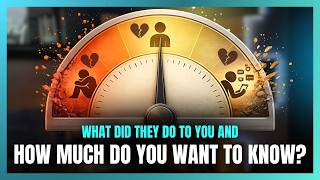
In this podcast episode, host Nick Stumbo and Dr. Janice discuss how betrayed spouses often exhibit two extreme trauma responses: hypervigilance (a compulsive need to know every detail) and pain avoidance (a refusal to hear any information). They explain why both extremes are unhealthy and explore a middle ground where truth and honesty are balanced with emotional safety. Dr. Janice uses the "coping cup" metaphor, illustrating that expanding one’s capacity for stress (making the cup bigger) reduces the spillover of hypervigilance. They warn against information overload—binge‑reading books or podcasts—because excess detail can distract from core healing work. Instead, they advocate building a larger "window of tolerance" through experiential practices, such as physical therapy, mindfulness, and concrete exercises, which help the nervous system regain resiliency. The conversation emphasizes the importance of professional guidance and a supportive "village"—community, therapists, and peers—to provide experiential learning and accountability, rather than relying solely on theoretical knowledge.
Chapters
One of the dynamics we've touched on a little bit, uh, Janice, and I feel like we get this question a lot at Pure Desire, so I'm really excited to kind of get your take on it, is we can see two ends of the spectrum with that betrayed spouse. And I think both are a trauma response. One is the spouse that now is hypervigilant, like, I need to know absolutely everything, and if you have even a lustful thought come into your brain, you will tell me about it. And, and they're on that end. And then there's the other spouse that can go to the place of, I don't want to hear about it, I want to know nothing. Like, so it's like pain avoidance. So we either have like pain shopping or pain avoidance, and we know neither extreme is going to be helpful or healthy long term. So what does it look like to come to that healthy middle where truth and honesty are a part of our relationship without veering to either extreme?
Yeah, well, well, one end of the stream— and I'll just say this is the, this is the metaphor I use with partners who are on the It's his responsibility to do everything. What do you mean there's work for me? I use the, I use the, what if my, what if I'm hit when I drive home tonight? I'm hit by somebody who runs that red light. My legs are mangled. Okay, and let's say that it turns out that the person in the car that hit me is my husband and that he is genuinely broken and sorrowful and willing to do anything on earth to help me. But the reality is, even if he will— if he's the one who will go to physical therapy 3 times a week for the next 6 months and do all that hard work, that's actually not going to help. I want to walk again. I have to do that work, kind of with that. And sometimes I think the avoidance extreme That one's, I think, more important that you are working with someone who gets and understands the concept of trauma.
Yeah.
Got it.
Like with that, and an avoidance response is, there's some things that happen in the nervous system that I'll spare you getting into the nitty-gritty with that, but there are ways to work with that response. Wow. To come alive and to to do that. So the ways to honor temporarily the hypervigilant response, which I tend to see probably more people who are hypervigilant at the beginning. Okay. That's also in the mammal world of which we are mammals. Okay. There's a threat response cycle that we all go to. Okay. So if I can help that person work to get their nervous system, like, back into a range of resiliency.
Okay.
Hypervigilance. And my team really got— they got their little tushes cooked last week, so it's not the best time to do this, but let's imagine that this is my coping cup. Okay. If it gets— if I try to pour more coffee in there than it contains, it's going to spill out. And if my nervous system takes to more than I can contain, I can cope with, I'm going to spell out in one way or another. But if my— so if I work in a way that actually helps me to big a builder cup, bigger cup, now my hypervigilance is going to go down. Because the same amount, the same amount of coffee right, is not going to flood over the sides. Yeah, right.
For those that are only listening to the podcast, you should know that Dr. Janice just held up a University of Kentucky mug, and, and their basketball team at the time of this recording is facing some challenges. So we, we feel for you. That, that is such a great illustration of how much can your cup hold. And sometimes we're going after details that if we had a chance to kind of come down a little, take a deep breath talk to other people that could give wise advice, they'd say it's going to be too much, and you think it will help but will actually make things worse. And that's a hard thing to hear when we're in the middle of discovery and finding out, like, what else don't I know? And, and we kind of get driven by this truth of, if I just knew absolutely everything, then I could heal. And it's like, you can't, you can't contain it all right now. And we're not saying that, oh, you should just be content with deception or that they're hiding it, right? But there is a timing here. There is a process. There is a learning of what will help us rebuild and what just becomes this random thought popped into my head and now I got to tell my wife and now we're dealing with that thing. It's like, that's not even the core of the recovery we need.
Yeah. So, so it also too many of details is overloading. Right. And now instead of focusing on the important parts, parts of the, the, the core information that actually helps me understand, begin to understand what's going on with me. It, it's like maybe somebody who has a very ADD brain and you can't, You're overstimulated. You can't focus on what you want to and need to focus on. And so the preparation to really figure out what do I need is a core aspect of all trauma healing.
Yeah.
And what you've— what most people who really kind of work through that, which means you got to take some time to do some work, you got to show up at physical therapy. It really does help to recognize, no, that's a distractor detail. And it will distract me from taking in. And it's not just knowing, like, because a part of knowing in truth is accepting. The truth I have. I have worked with— I sometimes say thank God that I went through my process way back in the dark ages when there weren't that many books, because— and now there's like so many, and I see people taking in, binging, yeah, like on information about his recovery, and, you know, binging on information about betrayal stuff. And nobody's stopping to actually do maybe the suggestions or the exercises in the books. Like, I I got to read it all and then I'll do it. It's like, no, no, no. You probably, if you get it from the gut, you don't have to read a ton of stuff. You have to start working to accept the truth that you have. And then, and that's, and I think some in this age, there's so much stuff out there. And thank God there are. Really glad for podcasts. But You could make a full-time job, you know, of taking this in and not like feeling like, oh, if I just find that magic piece of information, right? Yeah, that'll help. And usually it's not. There's a point where it's about accepting.
Yes.
What you have, you already know. I was just saying, that's really hard to do on your own.
Mm-hmm.
Yeah. So I think what I would have added to the That first question around the ideal disclosure is a village.
Yes. Beautiful.
It's a village for each and maybe even a village for the coupleship.
Yeah. So good.
Absolutely.
Yeah.
Which is why, yeah, you're talking about all the podcasts and the resources, which it's great. Yeah. But then it can lead to us forgetting the important piece of having the experiential side of the process, right? There's a little bit of that theory. You can read all you, you, you, you're able to. And that's great, that's knowledge. But unless you go through it, meaning really figuring out what your window of tolerance is, gaining new tools, putting that into practice so that your cup can get bigger, so that you are better prepared for what's coming, we can miss that. And that only can happen in experience, right? And relationship, as, as you were just sharing as well with community.
So good. And one of the things I try to remind couples in this place is it's appropriate to know depth not always details. So you need to know the depth of how far this goes. And I feel like that's a lot of what the full disclosure can bring is how far did this go? What did it lead them to? What else don't I know? That's appropriate. But the details of like, well, what hair color, what was the name of the website? What? And there are some details that can be a necessary part. And that's where I think the full disclosure, working with professionals, they can help you discern what is meaningful detail because it helps you understand the depth. Versus just as you brought up, Dr. Janice, it's just a distraction of, well, I got to know this, or do you have— have you ever thought about that? Are you interested? Like, the details become distraction versus we're trying to get to the depth so that we know what's ground zero and then we can rebuild.