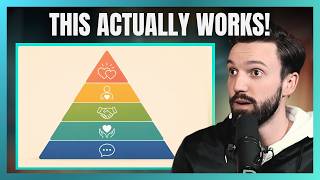
In this conversational segment, the speakers unpack the "Intimacy Pyramid" framework for couples, especially those emerging from addiction recovery. They begin with the base level—honesty and transparency—explaining how truthful sharing replaces isolation and surfaces hidden pains, habits, and traumas. The next tier focuses on safety and consistent showing‑up, which cultivates trust by demonstrating reliable, dedicated behavior. Once trust is re‑established, couples are encouraged to envision a shared future, articulating joint dreams and values. The top of the pyramid consists of vulnerability and intimacy, the desired state where partners can openly grieve, experience joy, and maintain deep connection. The discussion also highlights a common pitfall: couples jumping to vulnerability without solid foundations, leading to feeling stuck. For couples in recovery, the hosts stress revisiting missed honesty, safety, or trust work before progressing, and they provide practical guidance—such as intentional date nights, counseling, and vision‑setting exercises—to move up the pyramid deliberately.
My question for you guys is just kind of deeper diving into the intimacy pyramid. Can you describe for us what happens first? Like, what's, what's the base level? I'm assuming this is like Maslow's hierarchy of needs. What's the base level? How do we— where do we begin? Where— what's the end goal? And specifically for couples of like, okay, we found some traction, we found some healing, I've been in group, you know, he or she's been in group, And now, now what? Like, how do we do this together?
Together.
Yeah, absolutely.
Yeah, those basic levels are really simple. It is, it is honesty, it's transparency, which it sounds so obvious, but you know, for those of us who've been masking pain and avoiding pain, we've also been avoiding reality. So learning to be honest, like I said, and you know, even just from going from an isolating practice to a sharing practice, that's a practice of honesty. And so really that base level is about learning how to be honest in the relationship space, both about what I'm doing, but about what I'm feeling, right? How I'm experiencing and doing that together so that we can deal with the real things that are in front of us. Because if we're not dealing with the real things, we go nowhere in the relationship. We, we can feel closer together. We can, we can have a lot of partnership, but we don't actually create unity. And it's in that honesty that we find out what is it that we really need to deal with? What are the things that are holding us back? And those may be those pains that I've gone unaddressed, the traumas, the compulsions that I've ignored for most of my life, or just the habits that are not helping us. That's really what, about that level of safety above honesty, is, is that now that we know what's going on, how are we dealing with it? How are we showing up more consistently, more dedicated? Whether that, that is coming from my childhood or it is coming from the betrayal, how we show up still matters for who we want to be together. And it's when we are showing up in that way, that's when trust really gets established or reestablished where it's been broken. And it's that trust that a lot of couples ask that what next question. They're like, okay, I can live with this person. I like them again. Right? We're stable. We want to stay together. But are we just going to kind of be okay? Or are we going to be something more? And it's from trust that we lean into the harder spaces of our life and of relationships and vulnerability. We really start to open up, we start to grieve, but we also start to take on joy and vision. One of the things we love to do with couples when they get to that trust phase is we ask them to start to vision. What do you imagine you want the future to be as a couple? What do you want your relationship to really look like, to express? And it's amazing what couples dream up. It's really beautiful. And so the word trust comes about building.
And then really those top levels is where you kind of said, what's the goal? Or right, where are couples wanting to be? It's the vulnerability and the intimacy, the two top levels of the pyramid where couples are really— they're excited about getting there. And sometimes though, they'll jump there too quickly without building those foundations of honesty, safety, and trust. And they'll come to us, they've done a lot of good recovery work, but they're feeling really stuck. And so sometimes we'll go backwards and go, okay, were there any pieces missed in those honesty, safety, trust level. So that's kind of a starting place that we always start with couples who have kind of been in recovery. So one of the big things we do after we solidify kind of the honesty, safety, trust is help couples understand what does it actually look like to push into vulnerability and intimacy? Because oftentimes both partners don't really fully understand, or they weren't given good models of healthy vulnerability, healthy intimacy in relationship. And so giving them a framework for that.
Yeah, I love that, that I think many couples, we would recognize intimacy is the goal. And I don't just mean physical intimacy like sex. I mean that deep closeness and bonding and like, how do I work on that? And, but yet maybe we've missed some of those earlier levels of, are we building trust? Are we establishing honesty? Are those things present? Because we're probably not gonna get the kind of connectedness we long for if we're ignoring those other categories. And for me, that really speaks to the word intentionality. Because I know in my personality, I'm not really able to get through or get to some of this kind of deep connection with my wife in just the in and out of a week of, you know, how do we get the boys to school and what's for dinner and are the bills paid and did you let the dog out and what are we doing this weekend? And those things are all the part of life we all do, but don't necessarily create the time and space and environment that invite the kind of connection you're talking about. So I think it's so valuable that we're really setting apart intentional time, whether it's to date night, maybe a monthly day together, a couples retreat, times where we just know, hey, we're actually gonna have enough room in the schedule to not just talk about the next day and the menu for the dinner. We're gonna talk about us. And if you're not creating that, I think that's one of the things, honestly, that recovery does for couples, because they're in pain and, you know, chaos of the addiction, it kind of forces them, like, we go to counseling together. And we sit and talk this through. And I've kind of wondered in my own life, had I been that intentional to create connection space with my wife, to go to a counselor, would we have maybe not ended up in the level of addiction I ended up in? Because I just was so busy about my routine and then hiding the things within the routine that were not, you know, fun to talk about, that it just kept growing. So find ways to be intentional and create that space, I think is so key.