How To Limit Damage of Past Mistakes
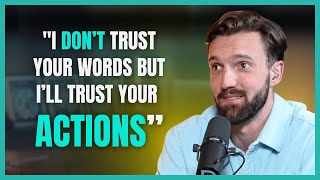
A multi-speaker YouTube conversation (hosted by Nick Stumbo) about limiting the damage of past addictive behaviors and preventing future setbacks. Speakers describe practical, concrete recovery tools (matrix of addiction, recovery action plan, three-circles model, reach out before you act out), behavioral controls (removing or locking devices, blocking internet access), and thought experiments ("$1 million relapse" hypothetical) to identify and remove temptations. The discussion also covers rebuilding trust in relationships—prioritizing actions over words, creating safety for partners, setting boundaries, and re-establishing self-trust through consistent follow-through.
What are some practical steps a person can take to limit the damage of past behaviors and prevent future setbacks?
Yeah, this is. So when we're talking about limiting the damage, this is great work that we get to do in pillar four. And one of those is the matrix of addiction. And what I think the matrix of addiction is incredibly good at is it helps us understand the predictable and the repetitive patterns that our addiction has created. And what I like to look at when I'm leading guys through these things is this is like the super highway where we can get kind of like caught up in the addiction. And before we know, like, well, this is the response where it happened before I could even become aware of it. Or like it just happened so quickly, or all of a sudden I found myself doing this. And so we get so, so wrapped up in the addiction. It's almost like we're just going through the cycle because we've done this thousands of times before. And I like to encourage guys like, what are the off ramps? And so I think of, like, tools like the recovery action plan. Like, that's a great tool that we can say, like, what is a way not to even get caught into the recovery action plan? Nick, you've said this one before. Reach out before you act out. Like, that's another one of just having community and just having those people that you can be in contact with. And then I got permission to share a story from one of the guys who's in my group currently. And this is like a this week thing that he shared. He went camping, and around 2 o' clock in the morning, he couldn't sleep, and he was getting his iPad out. And as he was getting ready to get on the iPad, a car alarm started going off in the campsite. And it immediately, like, it's one of those moments where, like God says, when you face temptation, I'll give you a way out. It's like one of those moments.
Yeah.
But I think about, like, the tools that we get to do specifically of three circles. If only there were a metaphorical car alarm. As we're going from, like, healthy behaviors into the middle circle and then to the inner circle, like, these are where these tools need to come in to where they're. They're working. Documents were in them. And I'll continue with the car alarm. If they're a car alarm and not white noise, it's helpful for us as we're in this journey to start noticing where am I at in this cycle? And if we could create things that are going off and as annoying as car alarms. That'd be so helpful.
Yeah. One of the metaphors or illustrations I've used with my groups is I'll say to them, in a hypothetical situation, if, if I were going to pay you $1 million, if you could go and relapse and no one would find out, what would you do? And whatever your answer is, it's like, well, you need to go and remove that temptation. If they know, like, well, my spouse's iPad is totally unblocked and if they were asleep, I could grab that and that's how I'd act out. Like, okay, that's what's. If the chips are down and you're in a rough place and you're thinking about going back to your old behaviors, that's what you're going to go for. So let's, let's eliminate that, whatever we need to do. And then I'll say, okay, if that's dealt with, what else would it be? And they're like, well, I actually know that, you know, this, this program on my phone doesn't work properly and I can get around, okay, what do we need to do? And I'll work with guys on. In this season where you're trying to establish sobriety and this doesn't need to be the rest of your life, but right now, what will it take? And I've had guys give up smartphones, laptops, get rid of the television in their home, not have Internet in the home. And I know in today's day and age, like, is that even possible? But it's amazing you've gotten so creative in your addiction to figure out ways to access pornography. Get equally creative to figure out how to block it and avoid it. And again, blocking and avoiding is not a long term strategy. But if it creates the fence high enough that you can stay sober, then you can do that deeper work. And I'd say initially in recovery, it's worth it. And so until your answer to that million dollar hypothetical question is, I don't even know where I'd go because everything is so locked down, taken away. Okay, well now we're in a really good place. That's how you should feel. Like, I'm not even sure where I'd go. Okay, no, no, don't try to get too creative. Like, don't try to think where else. But like, when your brain really can't think of it anymore, that's what you need. Because as long as your brain goes, well, this old laptop, I could pull it out, like, that's gonna trip you up unless you go deal with it. And that I think is some of the really practical stuff that it's beginning or early in recovery we have to do so we can establish that sobriety and then do the deeper work.
I just have two thoughts here. I'm like, if that was actually a car alarm, our world would be so loud. Could you imagine all the car alarms that are just going off in everybody's life? You're walking around the office and somebody's car alarm is going off. It's like, oh, no, I don't know what to do.
And then somebody's moving in their circles.
Exactly. The circles are moving. Uh, I just am thinking about the Xbox, the iPad, and the MacBook I have in my room that are not mine right now. I literally feel like I'm like amassing all this digital technology and at some.
Point people are giving it to you as part of their plan. That's awesome.
They're giving these guys in my group, I'm like, I think I could make like a part time job or living just selling resell, secondhand electronics. Electronics that weren't helpful for these guys. It's become kind of a joke. I'm like, what is this Xbox? Oh, yeah, that guy gave it to me months ago. So just to say it can be really practical. Nick, back to your analogy of the Stallion of like, what walls you need to build to keep yourself in a place where you can experience healing. That's the end goal, right? But to your point, it's like, let's keep, let's build these walls high enough to keep us, ourselves in a place where we can experience that healing over time. And I do think that's really critical. And I just want to say this. Who convinced us as a society that we need five plus social media platforms? Can we just make a real quick cultural commentary? You don't need five social media platforms. And so many guys in group are continuously tripping into that inner circle of relapse via social media. And it's just like, who convinced us that we need these? I'm not saying they're inherently bad or evil. I just don't think they're helpful for many men or women who are navigating addiction.
Yeah, if it's jeopardizing your sobriety, it's not worth it right now. And I've said it a lot of our events. You will never regret a wall so high you couldn't step over it. But you will always regret the one that was so low that it was easy to step over when convenience or desire suited you. And so building that wall high is a big part of that long term sobriety. So, Stuart, when we talk about limiting damage, we know that that's not just about us and our behavior, but it's what happens in relationships, particularly in the marriage. So how do we rebuild trust with others and ourselves after brokenness and maybe being in a pattern of acting out.
Such an uphill battle? I remember there was this gentleman who attended the church, and this is when Jackie and I were newly married and this guy was over helping me with a plumbing problem. And I said, hey, you've been married 50 years. Like, what would you. What would you tell me is the advice? And he said, in marriage, there's so many times where you're just going to find yourself in conflict and you just need to pick the hills that you want to die on. And for me, it was just the discovery that this was the hill worth dying on. Like, gaining back my wife's trust was totally worthy of every advance I had to make. And. And it had to be through hard comments too, because one that was common was like, I don't trust your words, but I'll trust your actions. And so I had to just not only be a man who said the right thing, but I had to be a man who did the right thing and followed through with what I said. And recently you guys had the podcast on the intimacy pyramid, or the. Yeah, the intimacy pyramid. And it starts with honesty, and then we get trust and safety. And I think, like, those foundational things is how we work to build that back up. It's. I think it's incredible. I've said this before, and I'll say it many times. My kids recognize, like, if I do a white lie where I'll, like, make a joke about something, they'll be like, oh, you're gonna have to confess that to your group on Wednesday night because that was a lie.
I love it that your kids are calling you out.
Oh, they do. And I mean, it'll be like, you're gonna have to. You're gonna have to say that in my church, children have noticed, like, a man of honesty. And that is just so different than the man I was before of protecting the secret at all costs. And lies were just part of my everyday life. I love the exercise. I think it's pillar two, where we go through the masks and look at, like, what mask do we wear? And then for me personally, that was a lot of internal work where eventually my wife came to the point where it was like, hey, God's forgiven you. I've forgiven you. When are going to start forgiving you? And, like, things like the commitment to change were, like, powerful things to see that I could, like, actually follow through with what I was saying I was going to do. And. And that was just. Those were some difficult moments because then it was just rebuilding trust with myself. Like, I had already become something that I never thought I would be. A. A man who would have an affair and cheat on my wife. And yet here I was in this place, and I had to come to terms with that. And following through with commitments like that, like little weekly commitments, were just really helpful in helping me find trust in my own story.
Stuart, you said this, and I think it's just important to say again, gaining my wife's trust back was the hill I was worth dying on. That's really profound. What a commitment.
Well, I was going to share. That was a pivotal point, I think, in my own recovery, because we were probably, for my wife And I, maybe nine, 10 months into recovery and had been doing really well, you know, sobriety the whole time. We were both in group, we were both in counseling. Like, we had been all in immersed. And you do it if you're doing that work and you've really got all the tools. Like, I just felt like I was a long ways away from a relapse. Like, I was in a healthier place. And I remember we were watching a movie, just, you know, it was like a PG 13. And a scene came on that I would describe it as not particularly overtly sexual, but it was definitely sexualized in nature. And my wife looked over and saw me watching and not turned away. And it really hurt her. She was kind of upset and angry, and I was. I felt really defensive because I knew in my heart I wasn't triggered. And I'm like, I wasn't feeling anything. Why would I turn away? And the commentary or the conversation we had, I realized that I had made my recovery, that I was the source of it. Like, well, if I was concerned about being triggered, then I would choose a boundary. But in that moment, I realized I needed to choose boundaries that were honoring and respectful of my wife's needs for safety. And just what you said, Stuart, her needs to see my actions and not my words. So it didn't matter to her if I said, oh, I wasn't triggered. I, you know, I could say whatever I wanted because I would try to use words to fix things and make her feel better. All she saw was there was an image that to her felt unsafe and. And she saw her husband watching it. And in light of our history, like, that was really hard for her. And so in that moment, now we're kind of, in a sense, backtracking, because now I'm doing damage control and no, I'm not struggling. But she had all those fears and concerns because I wasn't mindful of what she needed for safety. And it's not her job to tell me what she needs. It's really my job to protect her safety, to ask her those questions, like, do you feel safe and comfortable with us watching this film together? Is this trust me in that environment? And if she says no, not yet. And this was probably some of the hardest things, it's like, but I trusted myself. And she would say, yeah, but I don't trust you yet. It's like, oh, that's kind of the point. The problem has been that I trusted myself far too soon and would get into trouble. And I needed to really choose behaviors that made her feel safe and that were ultimately, as I look back, what I needed for long term sobriety. So that, that was a huge shift for us when I saw that limiting damage wasn't just about my needs, but really about her needs and helping us grow as a couple. Yeah, so good. Well said.










